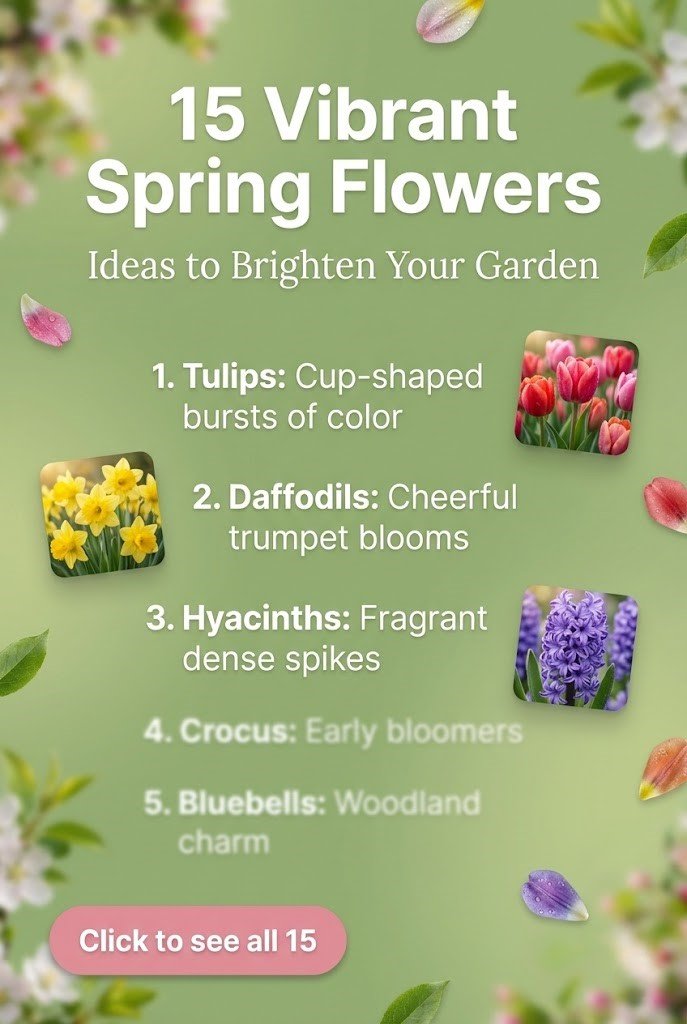
Daffodils are quintessential spring harbingers, bursting forth with cheerful yellow and white blooms that signal the end of winter. These hardy perennials not only add instant color to your landscape but also naturalize easily, returning year after year with minimal effort. Incorporating daffodils into your garden design can create a welcoming atmosphere while supporting early pollinators.
The charm of daffodils extends beyond their beauty—they’re deer-resistant, low-maintenance, and versatile in various planting schemes. From classic trumpets to delicate miniatures, daffodils offer options for every garden size and style. By exploring these ideas, you’ll learn how to maximize their impact, ensuring a spectacular display that evolves over seasons.
Eager to infuse your yard with springtime joy? These 15 daffodils ideas provide practical guidance to get you started.
1) Mass Plantings for Bold Impact
You can achieve a stunning sea of color by planting daffodils in large groups. Choose a sunny spot with well-drained soil, digging holes 6 inches deep and spacing bulbs 4-6 inches apart. Opt for varieties like ‘Dutch Master’ for classic yellow trumpets, planting in fall for spring blooms.
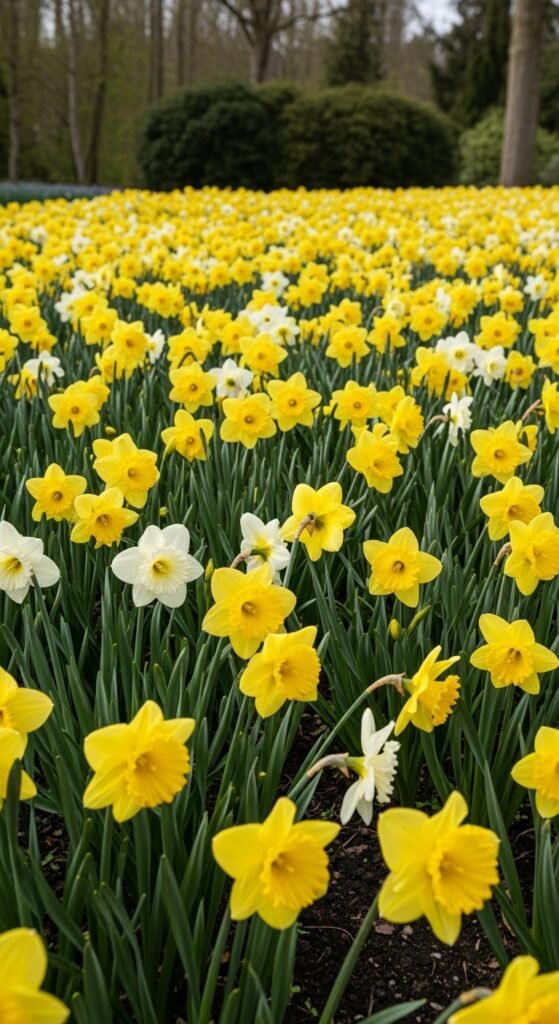
Why go mass? It creates visual drama and naturalizes over time, filling areas with increasing flowers. However, consider the post-bloom foliage—allow it to die back naturally for bulb health. Nuances include mixing early and late-blooming types for extended show.
How to: Amend soil with compost, water after planting, and mulch to retain moisture. This approach suits lawns or woodland edges, with implications for low-cost landscaping. For more on daffodils, explore daffodils varieties that thrive in your zone.
2) Daffodils in Containers for Flexibility
Bring daffodils to patios or balconies by potting them in containers. Use deep pots with drainage, filling with bulb mix and planting bulbs nose-up, covered by twice their height in soil. Select compact varieties like ‘Tete-a-Tete’ for smaller spaces.
The benefit is mobility—you can shift them indoors during cold snaps or rearrange for aesthetics. But remember, pots freeze faster, so insulate in harsh winters. Edge cases involve overwatering leading to rot, so check soil dryness.
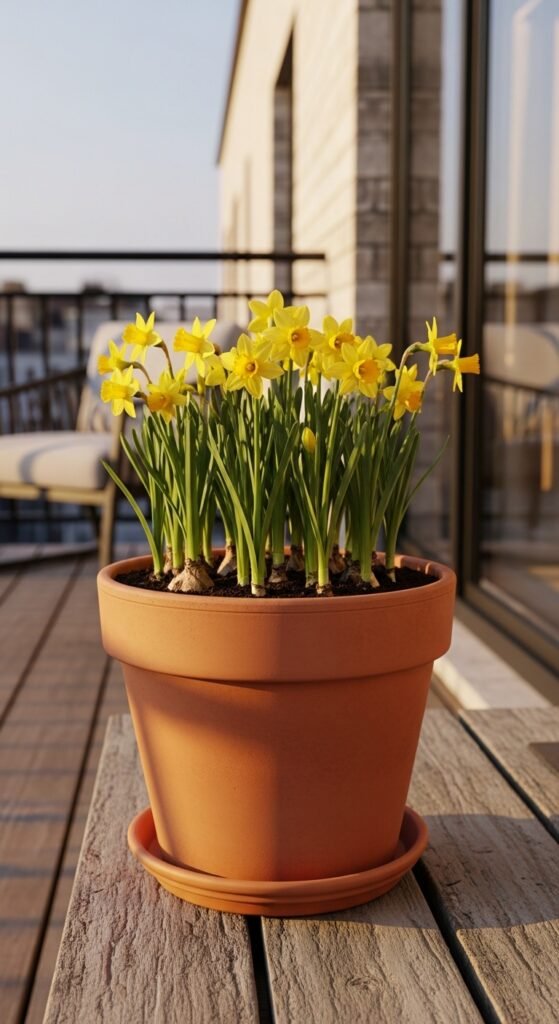
Implementation: Force bulbs indoors for early blooms by chilling in a fridge for 12-16 weeks. This idea offers urban gardening solutions, enhancing small areas. Pair with evergreens for year-round interest.
3) Border Edges with Daffodils
Frame garden beds or paths with daffodils for defined, colorful borders. Plant in rows along edges, using mid-height varieties to avoid overshadowing. Prepare soil by loosening and adding bone meal for root development.
Why borders? They provide structure and early-season color, transitioning seamlessly to summer perennials. Consider bee attraction, which boosts pollination but may increase activity near walkways.
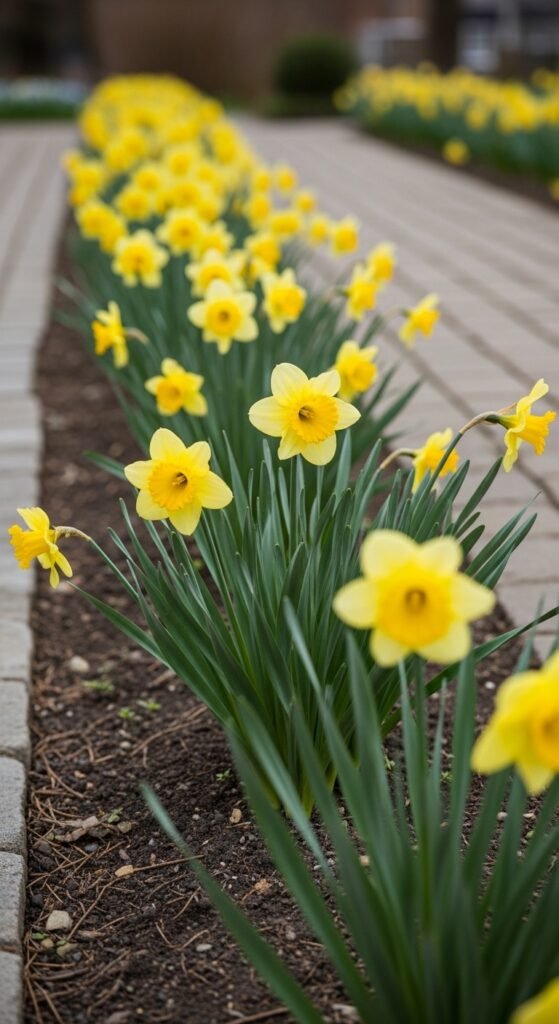
To execute: Succession plant with tulips for continuous spring display. Water moderately, fertilizing lightly in fall. This enhances curb appeal, with nuances for formal vs. cottage styles. Check out spring bulb borders for complementary ideas.
4) Naturalizing Daffodils in Lawns
Scatter daffodils across lawns for a wild, meadow-like effect. Toss bulbs randomly and plant where they land, at proper depth in turf. Choose naturalizing types like ‘Actaea’ for fragrant, white blooms.
This method yields effortless beauty, with bulbs multiplying annually. However, delay mowing until foliage yellows to recharge bulbs. Implications include reduced lawn maintenance in those areas.
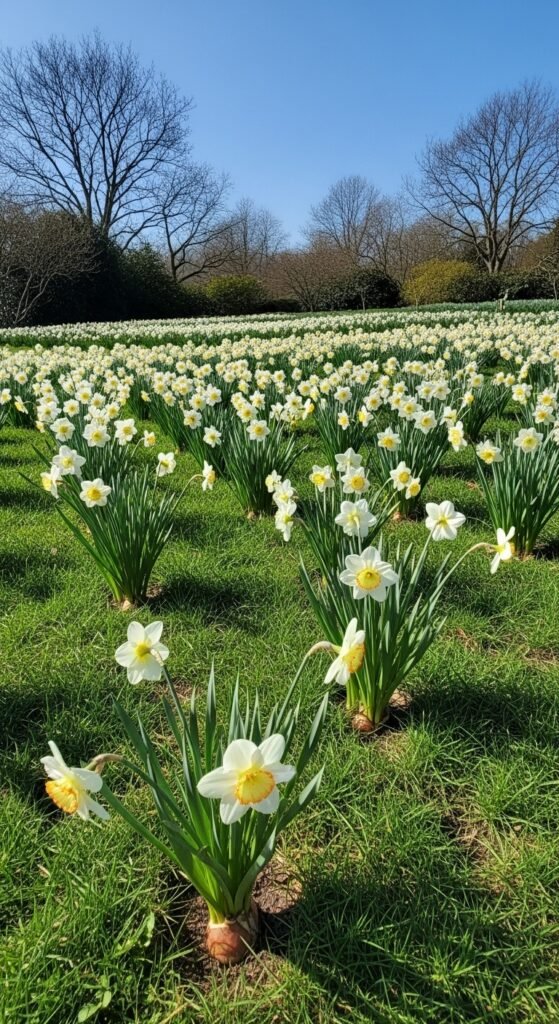
How-to: Use a bulb planter for ease, covering with sod. Ideal for large yards, but watch for shady spots where blooms weaken. This eco-friendly approach supports biodiversity.
5) Daffodils as Cut Flowers
Harvest daffodils for indoor arrangements to extend their enjoyment. Cut stems when buds show color, using clean shears and placing in cool water. Avoid mixing with other flowers due to sap toxicity.
Why cut? It brings spring indoors, brightening homes during transitional weather. Nuances: Change water daily to prevent bacterial buildup.
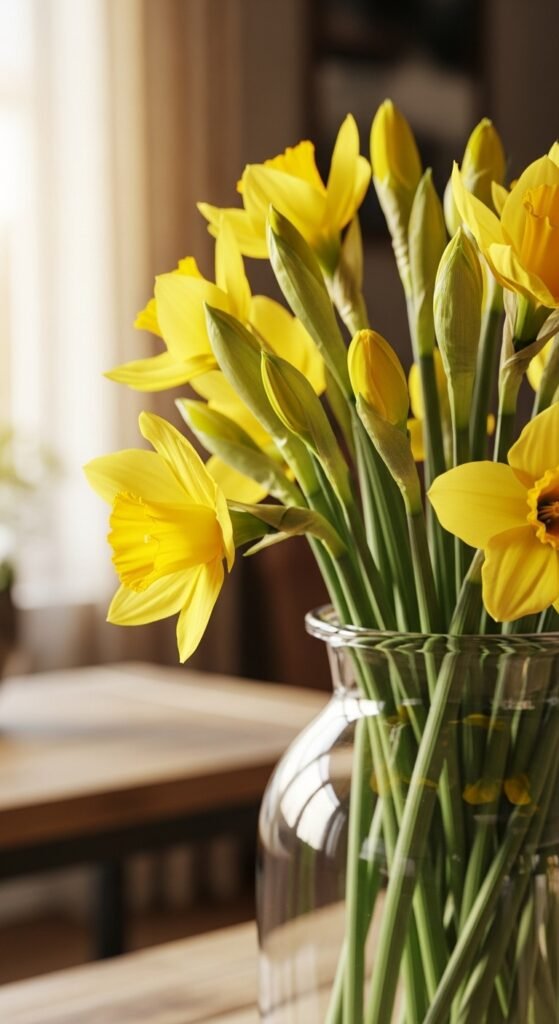
Steps: Condition in a dark, cool place overnight. This simple idea has therapeutic implications, fostering mindfulness through arranging. Experiment with vase shapes for varied displays.
6) Companion Planting with Daffodils
Pair daffodils with perennials like hostas or ferns that emerge later, hiding fading foliage. Plant bulbs among companions in fall, ensuring similar sun and soil needs.
Benefits include seamless garden transitions and pest deterrence—daffodils repel rodents. Consider height contrasts for visual layers.
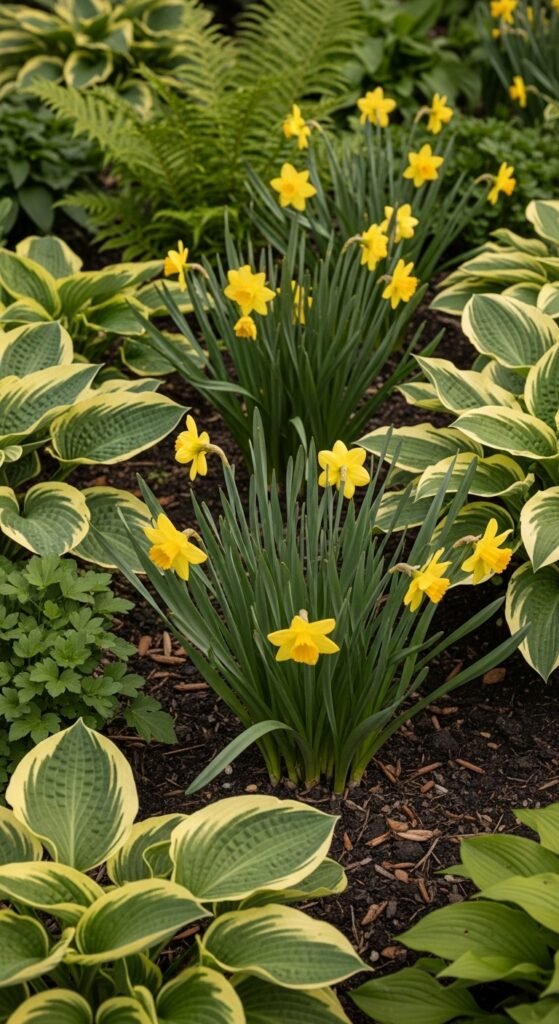
Execute by mapping plantings, watering jointly. This strategy maximizes space, with edge cases for dry vs. moist preferences. For inspiration, see daffodil companion plants that enhance blooms.
7) Forcing Daffodils Indoors
Force daffodils for winter color by potting pre-chilled bulbs in soil, keeping in cold storage for 12 weeks before bringing to warmth. Use paperwhite varieties for fragrance.
The appeal is early cheer during bleak months, but monitor for legginess in low light. Implications: Affordable home decor alternative.
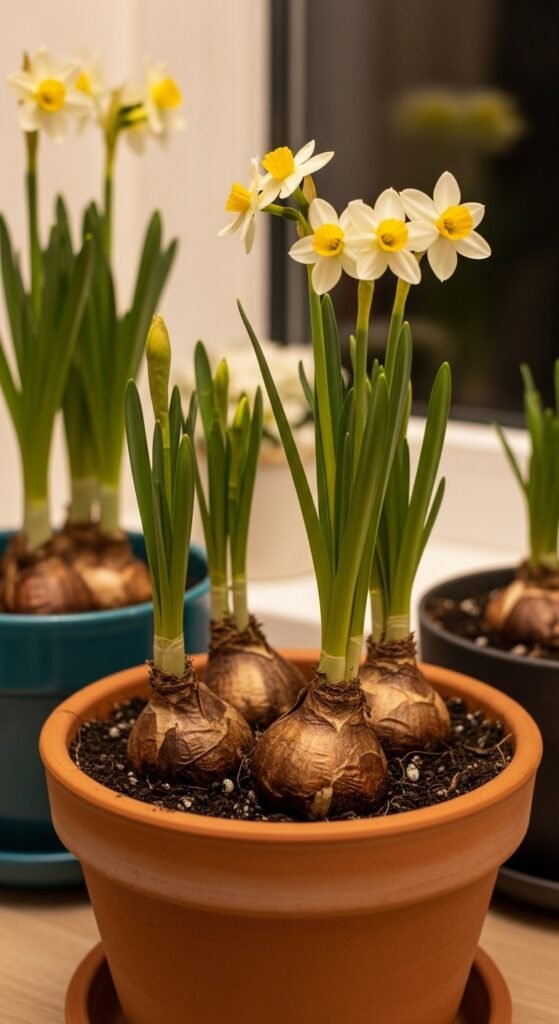
How: Gradually increase light and temperature. This technique suits apartments, offering therapeutic gardening indoors.
8) Daffodils in Rock Gardens
Incorporate daffodils into rockeries for alpine charm. Plant in gritty soil pockets among stones, choosing miniature varieties to fit scale.
Why rocks? Excellent drainage prevents rot, mimicking native habitats. Nuances: Minimal watering needed post-establishment.
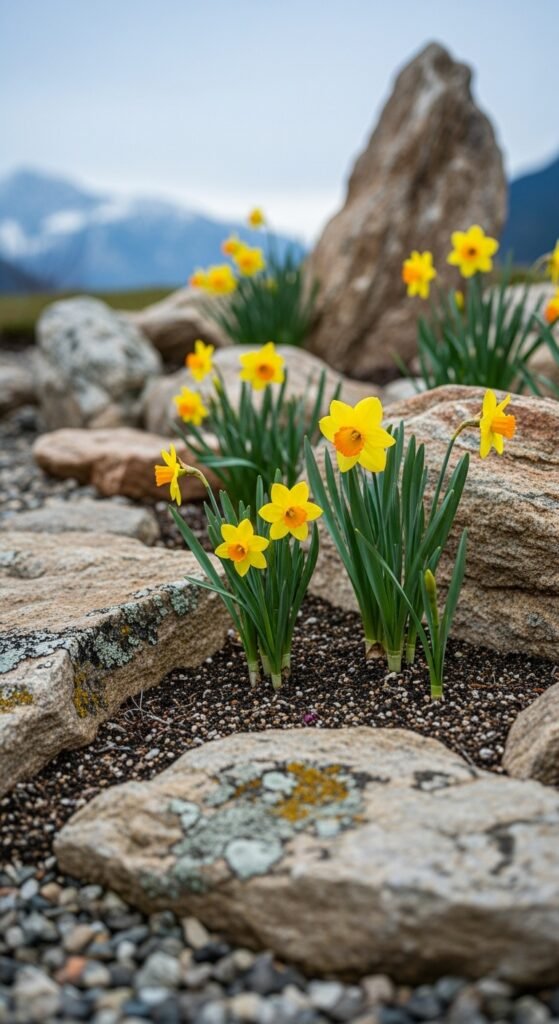
Implementation: Mulch with gravel for weed control. This low-maintenance idea elevates rugged landscapes.
9) Layered Bulb Plantings
Layer daffodils with other bulbs like crocus and tulips in the same hole for successive blooms. Place deepest first, covering appropriately.
This creates prolonged displays, optimizing space. Consider bloom times to avoid overlaps.
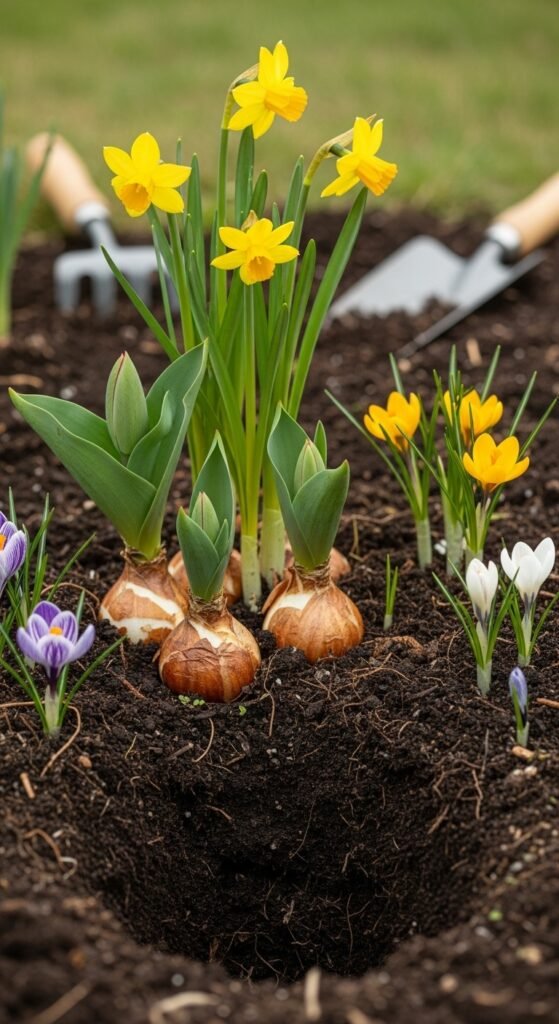
To do: Amend with compost, label for future reference. Ideal for containers or beds, with sustainability implications.
10) Daffodils for Wildlife Gardens
Attract early bees with daffodils in wildlife areas. Plant nectar-rich varieties in sunny, sheltered spots.
Benefits: Supports pollinators, enhancing ecosystem health. Edge cases: Avoid pesticides entirely.
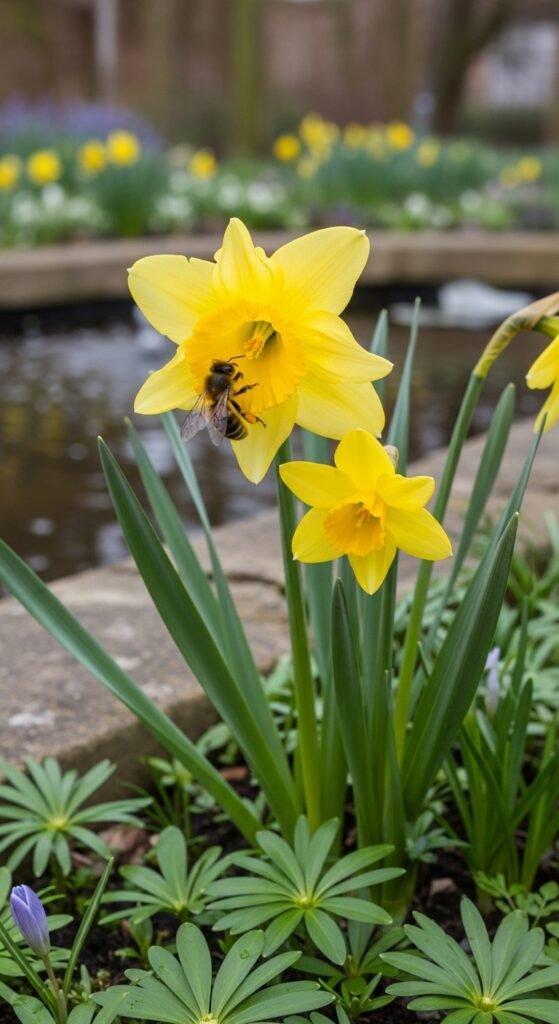
How: Group for visibility, adding water features nearby. This fosters biodiversity, aligning with eco-gardening.
11) Fragrant Daffodil Varieties
Select scented daffodils like ‘Thalia’ for aromatic gardens. Plant near seating areas to enjoy perfumes.
Why fragrance? Adds sensory depth, but consider allergies in placement.
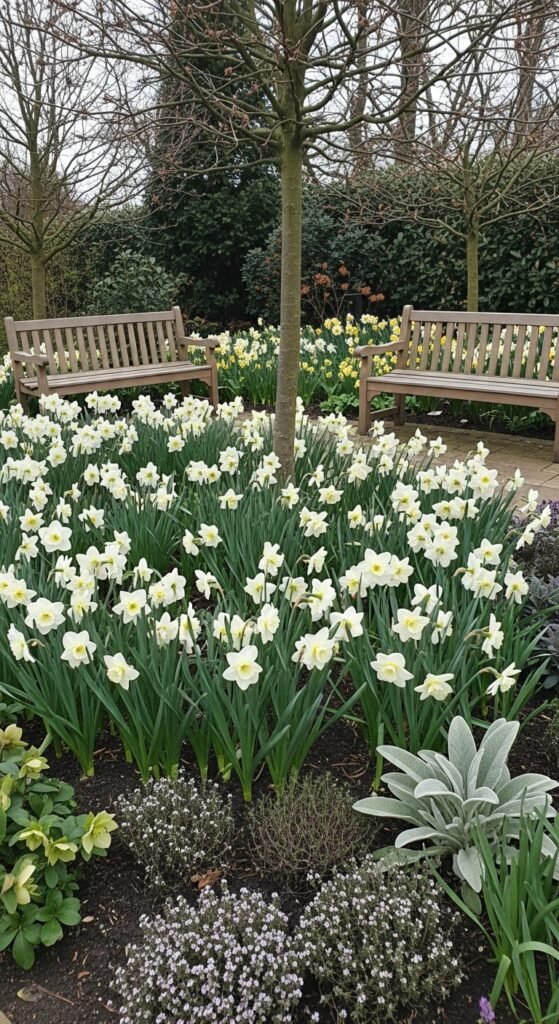
Maintenance: Standard care, with deadheading to prolong scent. Transforms ordinary spaces into havens.
12) Daffodils in Woodland Settings
Naturalize daffodils under trees for woodland magic. Scatter in dappled shade, enriching soil if needed.
This evokes wild beauty, with bulbs thriving in leaf mulch. Implications: Low intervention needed.
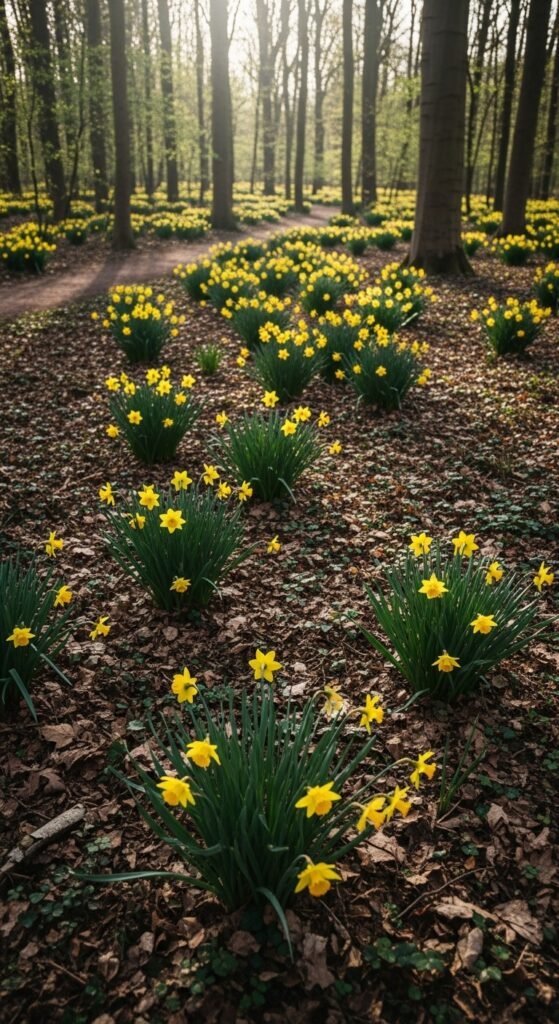
Execute: Plant in drifts for impact. Perfect for shaded yards.
13) Miniature Daffodils for Small Spaces
Use tiny daffodils in window boxes or troughs for compact charm. Plant densely in shallow containers.
Ideal for urbanites, offering big impact in little areas.
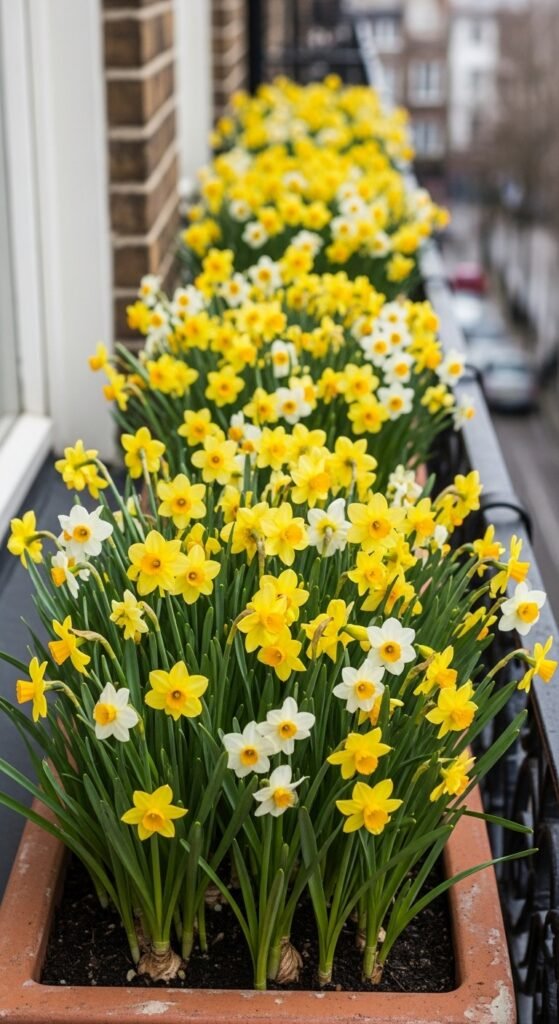
How: Overwinter protected, refreshing soil annually. Versatile for balconies.
14) Daffodils as Ground Cover
Employ spreading daffodils to cover bare ground. Plant in masses under shrubs.
Suppresses weeds while adding color. Nuances: Select vigorous types.
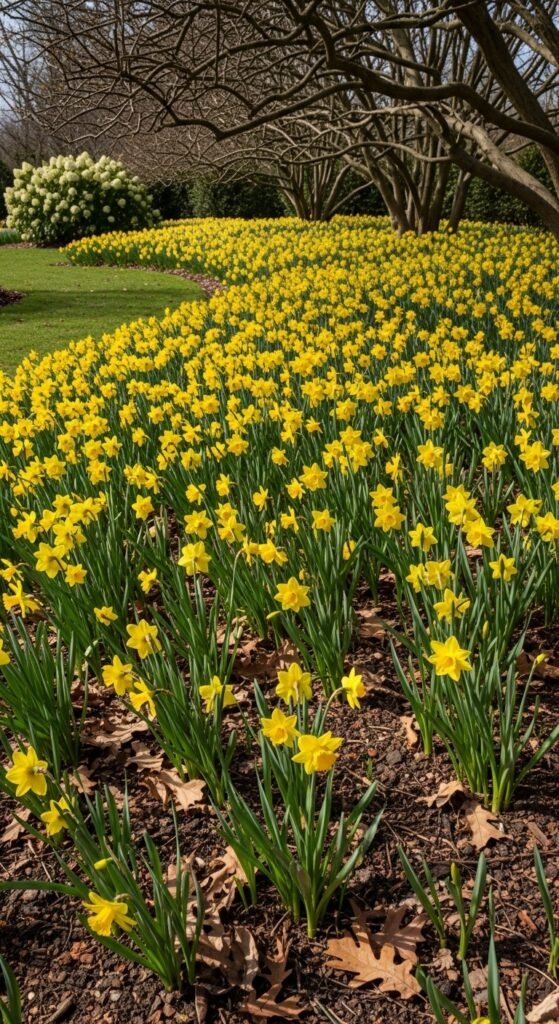
Implementation: Minimal upkeep, naturalizing freely.
15) Heirloom Daffodil Collections
Curate historic varieties for unique displays. Source from specialists, planting in dedicated beds.
Preserves heritage, with diverse forms. Implications: Educational value.
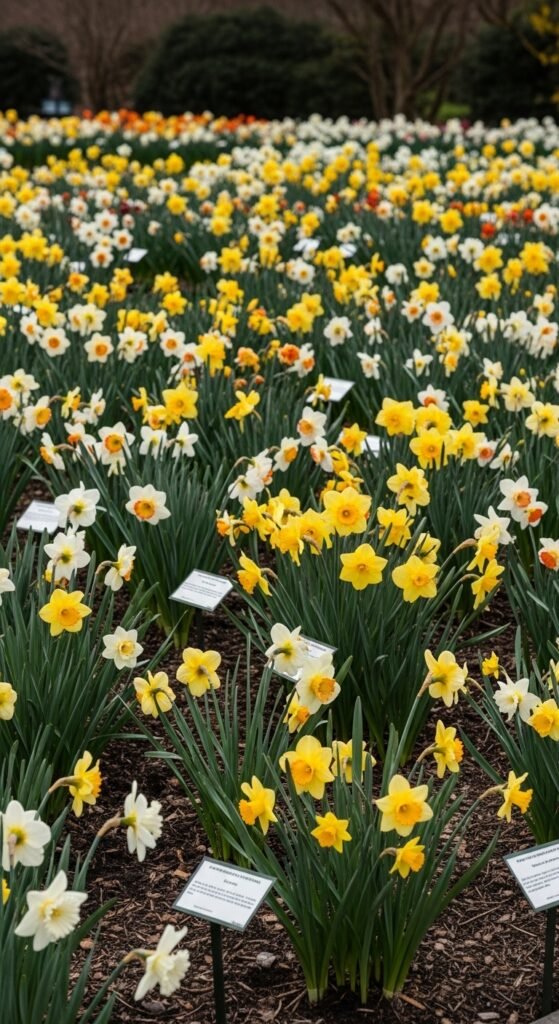
To start: Research zones, propagate carefully. Enriches garden narratives.
Key Tips for Growing Daffodils Successfully
Planting Depth and Timing
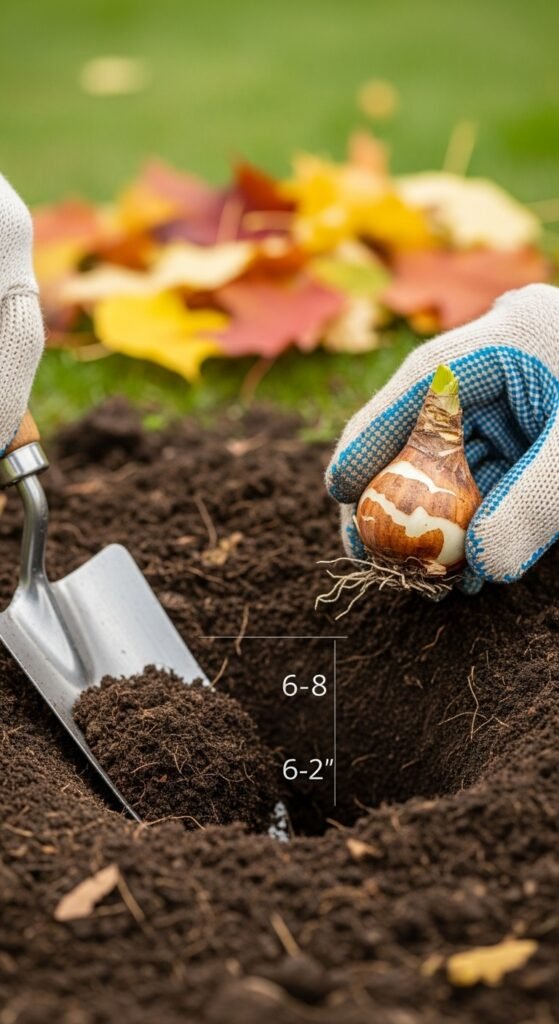
Plant bulbs in fall, 6-8 inches deep in well-drained soil to protect from frost and promote strong roots.
Pest and Disease Prevention
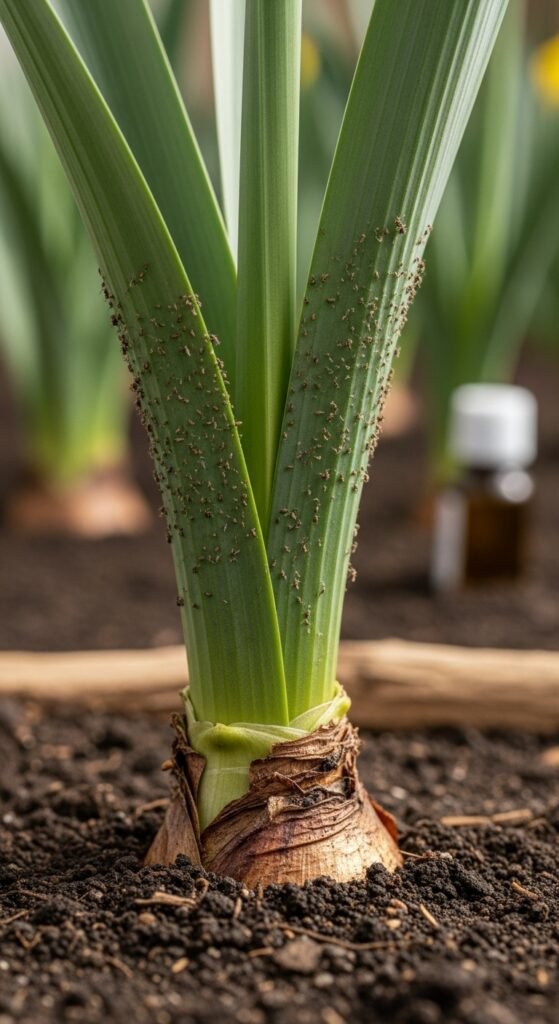
Watch for narcissus fly; use barriers or organic treatments. Ensure good air circulation to avoid fungal issues.
After-Bloom Care
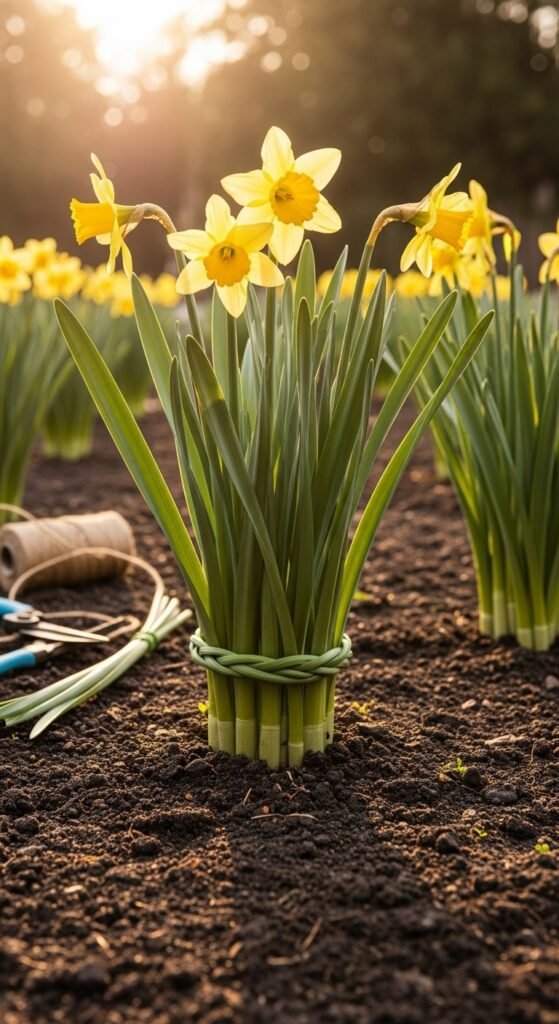
Leave foliage until yellow to nourish bulbs; braid or tie if unsightly.
Frequently Asked Questions
When do daffodils bloom?
Daffodils typically bloom in early to mid-spring, depending on variety and climate, from March to May in many regions.
Are daffodils poisonous?
Yes, all parts are toxic if ingested, especially bulbs; keep away from pets and children.
How to store daffodil bulbs?
Store in cool, dry places in paper bags; replant in fall for best results.
Can daffodils grow in shade?
They prefer full sun but tolerate partial shade; blooms may be fewer in deep shade.
Why aren’t my daffodils blooming?
Possible causes: overcrowding, poor drainage, or insufficient chilling; divide and replant as needed.