Sunflowers are more than just vibrant blooms; they’re a symbol of joy and resilience in any garden. With their bold yellow petals and towering stems, sunflowers can instantly elevate your outdoor space, providing both aesthetic appeal and practical benefits like attracting pollinators. Whether you’re a seasoned gardener or just starting out, incorporating sunflowers offers endless possibilities for creativity and functionality.
The beauty of sunflowers lies in their versatility—they thrive in full sun, grow quickly, and come in various sizes and colors. By exploring these ideas, you’ll discover how to integrate them seamlessly into your landscape, enhancing biodiversity while creating eye-catching displays. From simple plantings to elaborate designs, sunflowers can suit any garden style, making them a must-have for enthusiasts.
Ready to brighten your yard? Dive into these 15 inspiring sunflowers ideas, each packed with tips to help you succeed.
1) Towering Giant Sunflowers as Focal Points
You can create dramatic height in your garden by planting giant sunflowers, which can reach up to 12 feet tall. Start by selecting varieties like ‘Mammoth’ or ‘Russian Giant,’ sowing seeds directly in well-drained soil after the last frost. Space them about 2 feet apart to allow for their expansive growth, and stake them if needed to prevent toppling in wind.
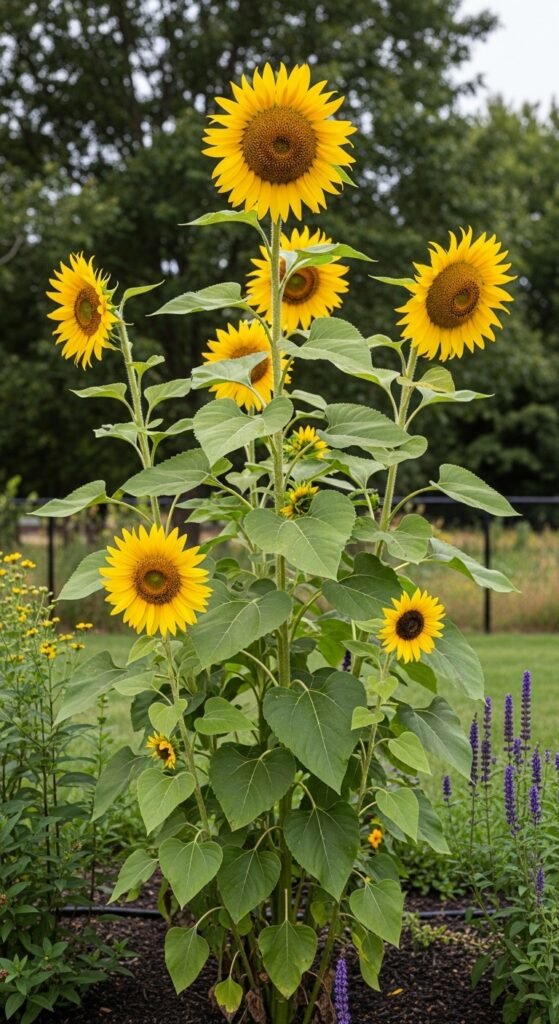
Why choose giants? They serve as natural backdrops, drawing the eye upward and adding vertical interest to flat landscapes. Plus, their large seed heads attract birds, boosting your garden’s ecosystem. Consider the implications: in smaller spaces, they might overshadow other plants, so position them at the rear of borders. For best results, ensure at least 6-8 hours of sunlight daily, and water consistently to avoid wilting.
How to maintain them? Mulch around the base to retain moisture and suppress weeds. If pests like aphids appear, use organic sprays. This idea not only provides stunning visuals but also edible seeds for harvesting, offering a multifunctional addition to your plot. Explore more on sunflowers for variety selection tips.
2) Dwarf Sunflowers in Container Gardens
For compact spaces like balconies or patios, dwarf sunflowers are ideal, growing only 1-3 feet tall. Choose pots at least 12 inches deep with good drainage, filling them with nutrient-rich potting mix. Plant seeds 1 inch deep, thinning seedlings to one per container for optimal growth.
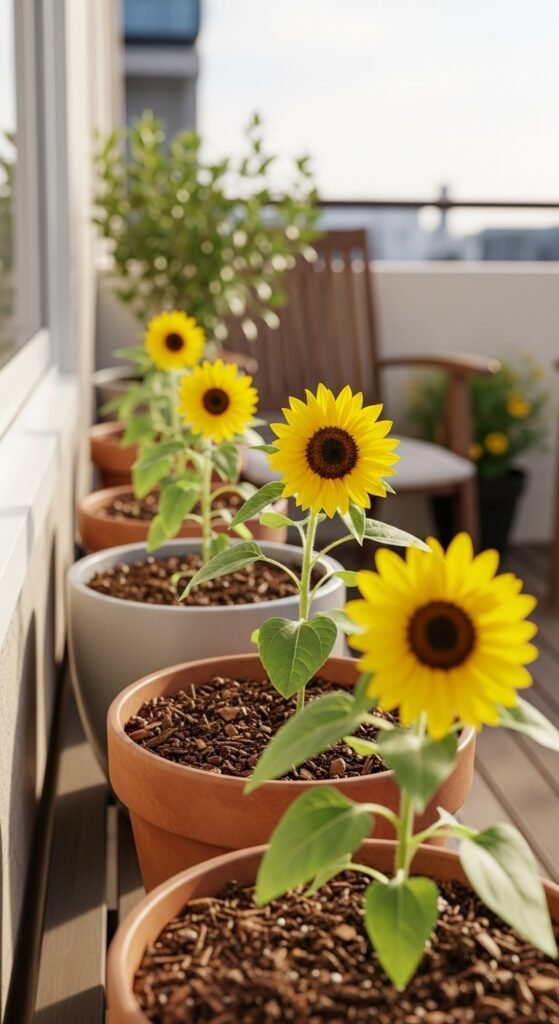
The appeal here is portability—you can move them to follow the sun or rearrange for seasonal displays. They bring cheer without overwhelming small areas, but remember, containers dry out faster, so monitor soil moisture closely. Nuances include selecting heat-tolerant varieties to handle urban microclimates.
Implementation is straightforward: fertilize every two weeks with a balanced formula, and deadhead spent blooms to encourage more flowers. This approach suits beginners, providing quick gratification with blooms in 50-60 days. Pair with herbs for a mini edible garden, considering edge cases like overwatering leading to root rot.
3) Sunflower Borders for Colorful Edges
Line your garden paths or fences with sunflower borders to create vibrant, living edges. Mix medium-height varieties like ‘Autumn Beauty’ for a multicolored effect, planting in rows spaced 18 inches apart. Prepare the soil by adding compost for fertility, ensuring full sun exposure.
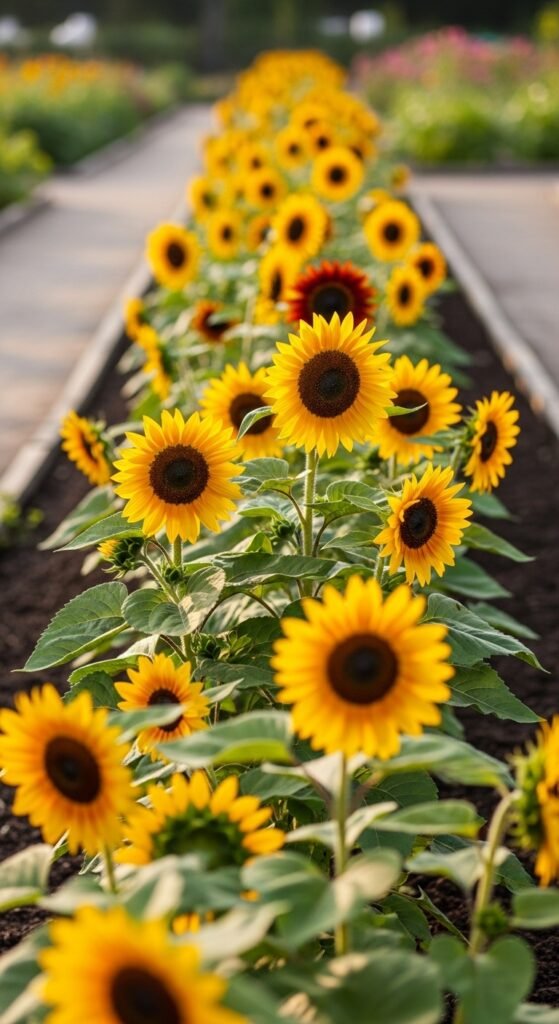
These borders not only define spaces but also act as windbreaks for delicate plants behind them. The warm tones foster a welcoming atmosphere, though consider pollinator activity which might increase bee visits—great for ecology but a nuance for allergy sufferers.
To execute, sow seeds in succession every two weeks for continuous blooming. Water deeply but infrequently to promote strong roots. This idea enhances curb appeal, with implications for privacy in open yards. For related inspiration, check out ideas on incorporating sun-loving planter ideas into your borders.
4) Creating a Sunflower Maze for Fun
Transform your larger yard into an interactive sunflower maze by planting tall varieties in a grid pattern. Map out a simple labyrinth on paper, then sow seeds in rows 3 feet apart, using string lines for straight paths. Begin early in spring for full summer enjoyment.
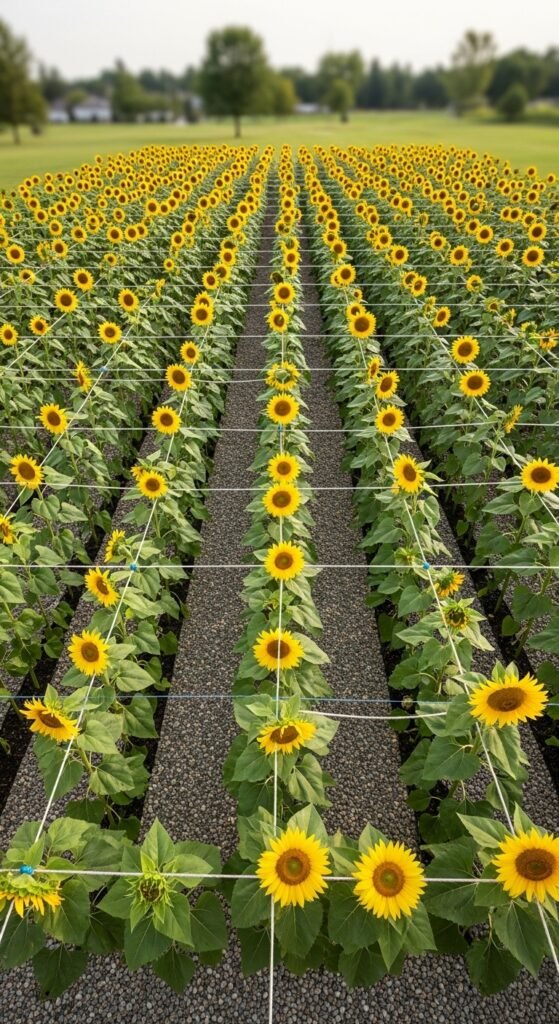
Why a maze? It adds whimsy and engages families, turning your garden into a playful destination. However, maintenance involves regular weeding and path clearing to prevent overgrowth. Edge cases include heavy rains causing mud, so consider gravel paths.
How-to tips: Thin plants to ensure sturdy stems, and harvest seeds at season’s end. This concept promotes outdoor activity while showcasing sunflowers’ height. Implications extend to community events, like hosting neighborhood tours. Balance fun with practicality for a rewarding project.
5) Sunflowers as Cut Flower Arrangements
Harvest sunflowers for indoor bouquets to bring garden freshness inside. Cut stems in the morning when buds are half-open, using sharp shears to avoid damage. Place in vases with flower food, changing water every few days to extend vase life up to a week.
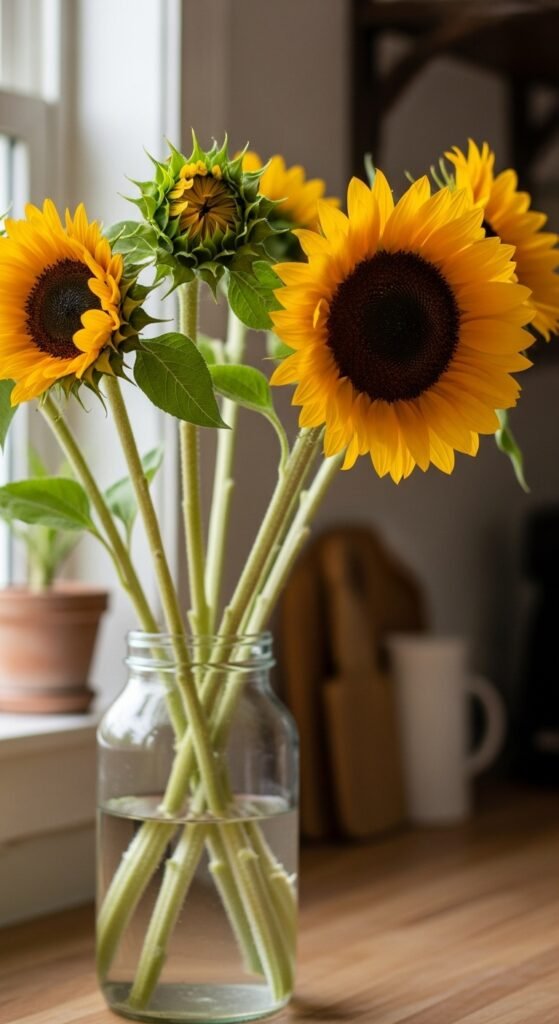
The benefit is dual enjoyment—outdoor beauty and home decor. Sunflowers’ bold presence complements rustic or modern interiors, but note their pollen can stain, so choose pollen-free varieties for cleaner arrangements.
From a how-to perspective, condition stems in warm water initially. This idea explores nuances like combining with fillers for volume. Implications include reducing garden clutter by regular cutting, encouraging more blooms. It’s a simple way to maximize your sunflowers’ versatility.
6) Attracting Pollinators with Sunflower Clusters
Group sunflowers in clusters to create pollinator hotspots. Plant 5-7 seeds per cluster, spacing groups 4 feet apart in sunny spots. Opt for nectar-rich varieties to draw bees, butterflies, and hummingbirds, enhancing your garden’s biodiversity.
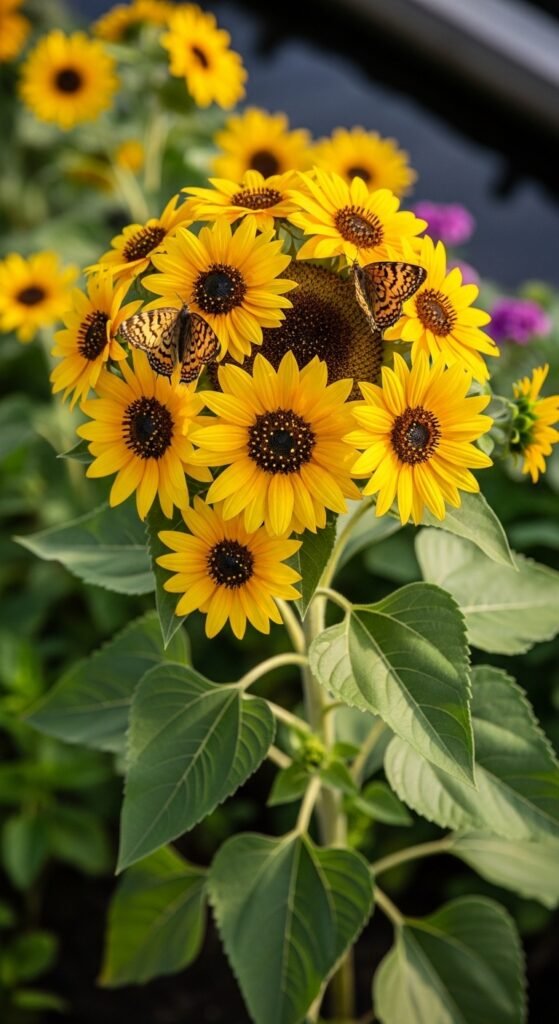
Why focus on pollinators? They improve fruit and vegetable yields nearby, supporting a healthier ecosystem. Consider the nuance of increased insect activity, which might require companion plants to deter pests.
Execution involves avoiding pesticides and providing water sources. This approach has long-term implications for sustainability, with edge cases like urban gardens benefiting from native species. Watch as your clusters buzz with life, turning sunflowers into ecological heroes.
7) Harvesting Sunflower Seeds for Snacks
Grow sunflowers specifically for seed harvesting by selecting confectionery types with large kernels. Allow heads to mature on the stalk until petals wilt, then cut and hang to dry in a ventilated area for two weeks.
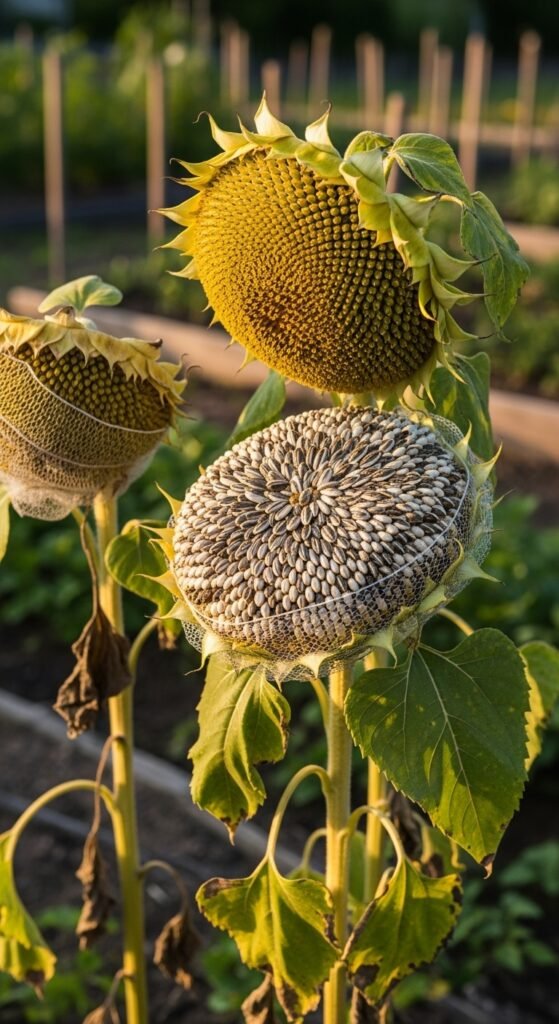
The reward is homegrown snacks—roast them with salt for a nutritious treat. This adds an edible dimension to gardening, but timing is crucial to avoid bird theft; cover heads with netting if needed.
How-to details: Shake seeds loose once dry, storing in airtight containers. Explore flavors like spicy or sweet coatings. Implications include cost savings and self-sufficiency, with nuances for allergic individuals. This idea bridges beauty and utility seamlessly.
8) Sunflower Companion Planting Strategies
Pair sunflowers with compatible plants to maximize garden health. Plant them alongside corn or beans, where sunflowers provide support and shade. Prepare beds with organic matter, sowing companions at appropriate depths.
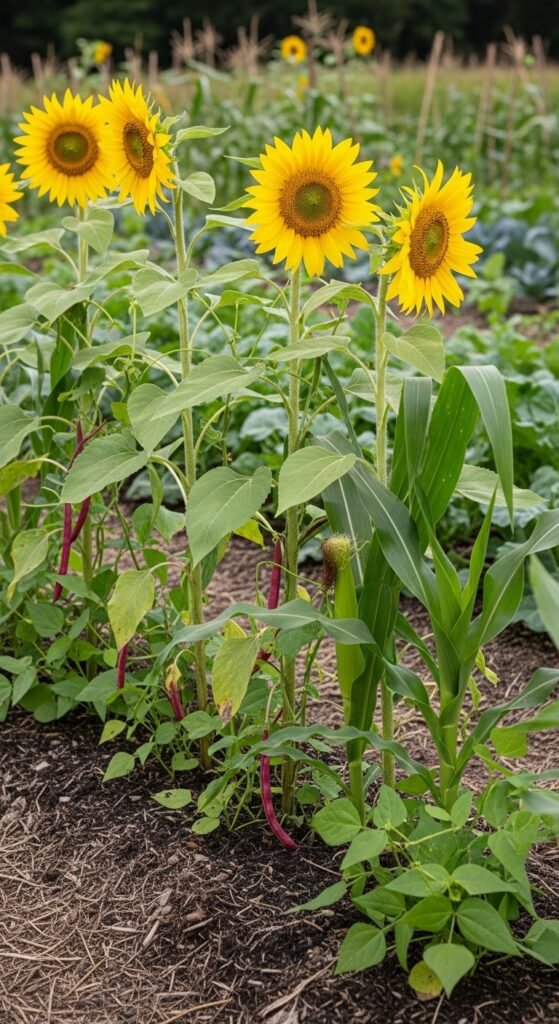
Benefits include natural pest control—sunflowers distract aphids from veggies. However, avoid overcrowding to prevent nutrient competition. Nuances involve crop rotation to maintain soil vitality.
Implement by observing growth patterns and adjusting as needed. This method enhances yields while creating visually appealing mixes. For deeper insights, explore sunflower companion flowers that thrive together.
9) DIY Sunflower Wreaths for Decor
Craft seasonal wreaths using dried sunflower heads for door or wall accents. Gather mature blooms, removing seeds if desired, and attach to a grapevine base with hot glue or wire.
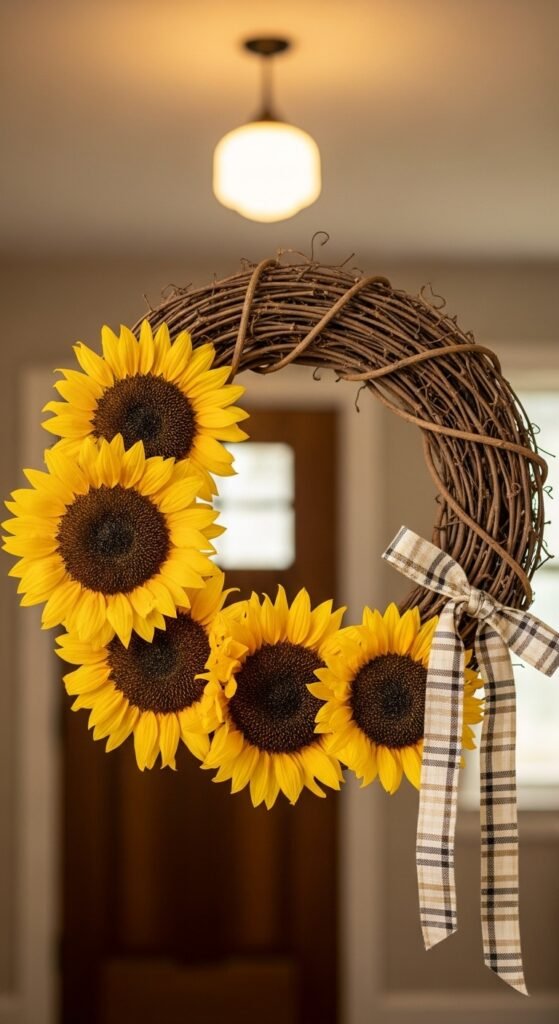
Why wreaths? They extend sunflower enjoyment beyond the growing season, adding rustic charm. Consider durability—treat with sealant for outdoor use against weather.
Step-by-step: Layer heads densely for fullness, incorporating ribbons for color. This creative outlet has implications for gifting or selling at markets. Edge cases include using artificial elements for longevity. Discover more on making a sunflower wreath with ease.
10) Sunflower Yard Art Installations
Incorporate sunflowers into yard art by planting around sculptures or creating floral installations. Position artistic elements like metal stakes amid sunflower patches for integrated designs.
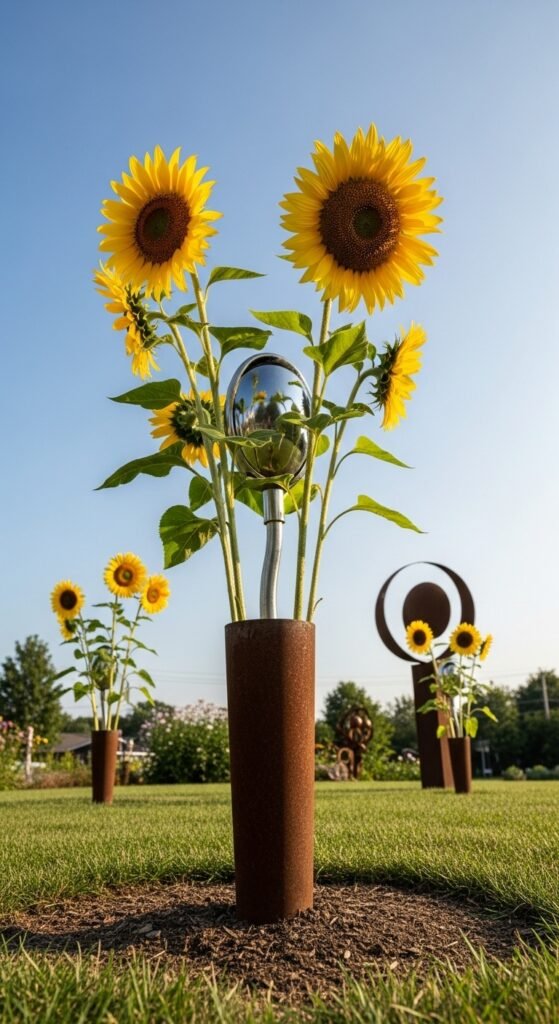
The fusion of nature and art elevates aesthetics, providing photo-worthy spots. Nuances include seasonal changes—plan for post-bloom maintenance to keep areas tidy.
How to: Select durable art pieces that complement sunflower hues. This idea fosters creativity, with implications for property value through unique landscaping. For inspiration, view examples of sunflower yard art that stand out.
11) Perennial Sunflower Beds for Longevity
Opt for perennial sunflowers like Helianthus maximiliani for beds that return yearly. Divide clumps every 3-4 years to prevent overcrowding, planting in full sun with moderate watering.
Advantages over annuals include less replanting effort and established root systems for drought resistance. However, they spread aggressively, so use barriers if space is limited.
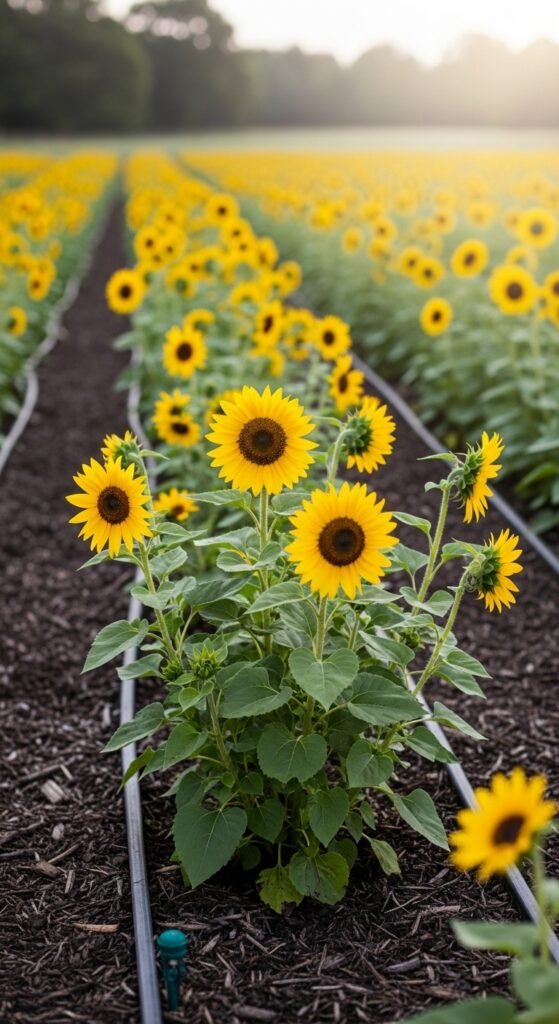
Maintenance involves fall pruning and spring mulching. This sustainable choice has ecological implications, supporting wildlife consistently. Consider varieties for height variation in your perennial setup.
12) Sunflowers in Raised Beds for Control
Use raised beds to grow sunflowers, containing their roots and improving drainage. Build frames 12-18 inches high, filling with a mix of soil and compost.
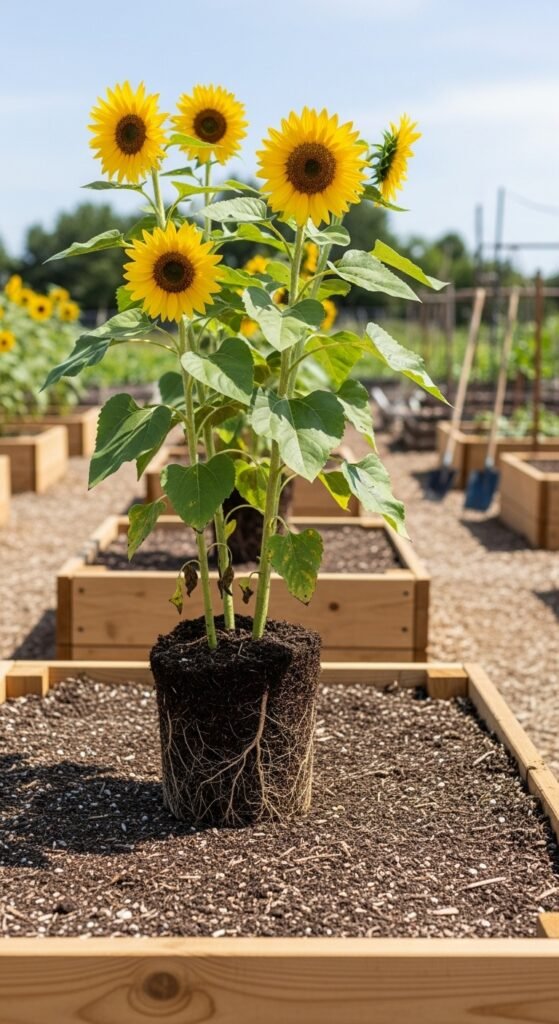
This method suits poor native soil areas, allowing precise control over conditions. Nuances include easier weeding but higher initial costs.
Plant densely for impact, rotating crops annually. Implications extend to accessibility for all ages. It’s a practical way to experiment with sunflower cultivation.
13) Edible Landscapes Featuring Sunflowers
Integrate sunflowers into edible gardens by planting amid veggies for mutual benefits. Their height shades heat-sensitive crops like lettuce.
Why edible? It maximizes space, providing flowers and food. Consider pollination boost but watch for space hogs.
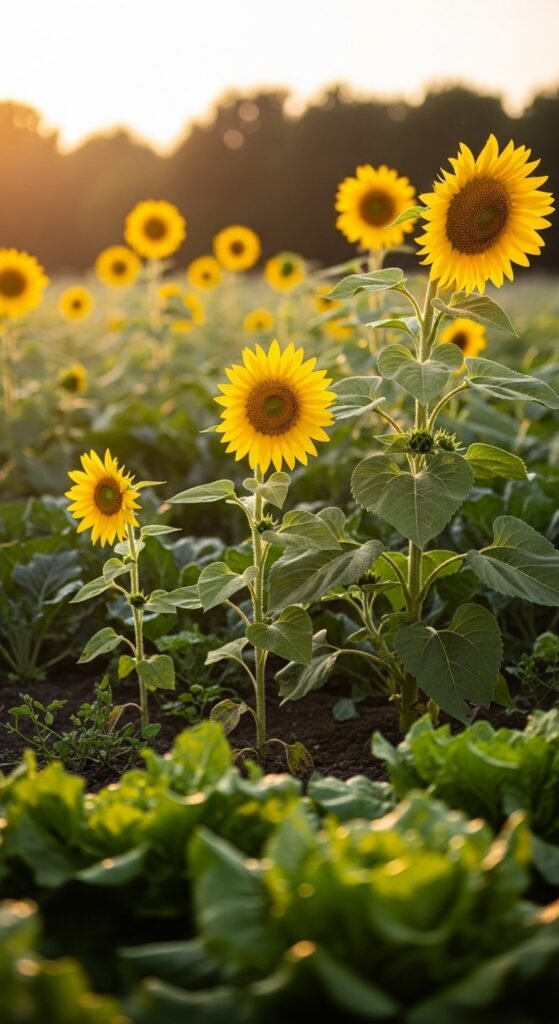
How: Succession plant for ongoing harvest. This holistic approach has health implications through fresh produce. Explore multi-functional designs.
14) Sunflowers as Privacy Screens
Utilize tall sunflowers to form temporary privacy screens along property lines. Plant in dense rows, fertilizing for robust growth.
They offer seclusion with beauty, decomposing naturally at season’s end. Nuances: Not year-round, so pair with evergreens.
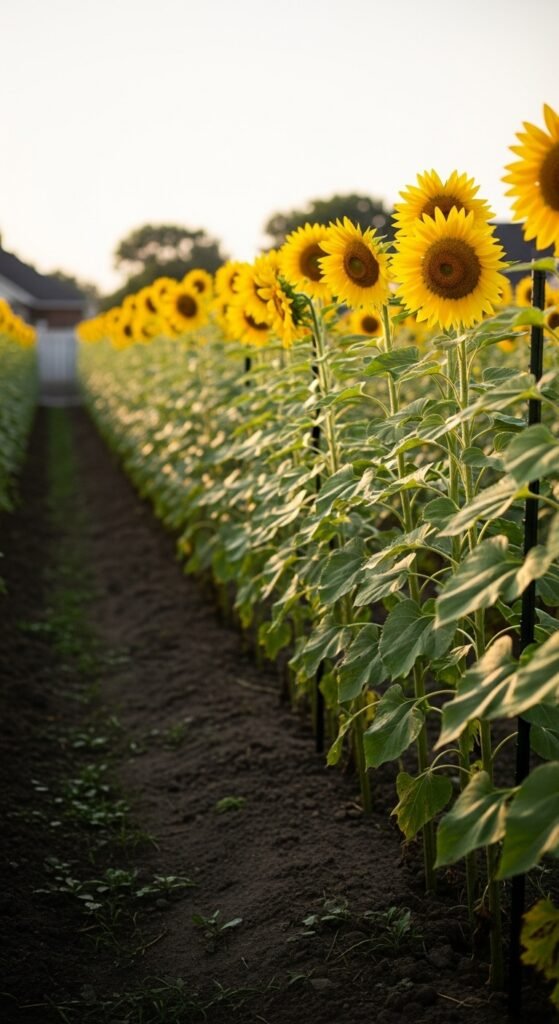
Execution: Support with trellises if windy. Implications include neighbor-friendly barriers. A clever use for vertical space.
15) Winter Sunflower Crafts from Dried Blooms
Preserve sunflowers for winter crafts like ornaments or centerpieces. Dry heads upside down, then paint or arrange creatively.
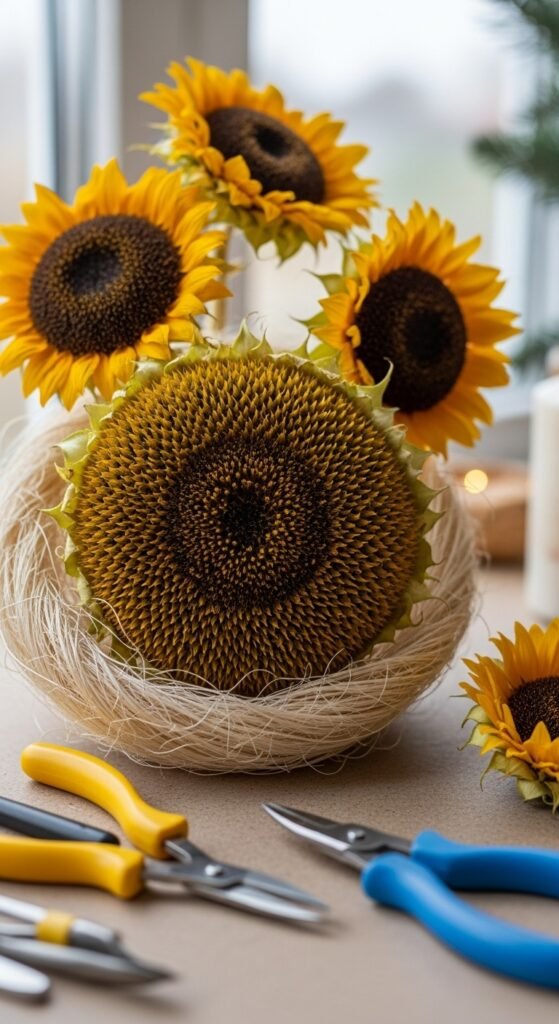
This extends seasonal joy indoors, reducing waste. Consider storage to prevent mold.
Step-by-step projects foster family bonding. Implications: Eco-friendly decor alternatives. A fitting end to your sunflower season.
Key Tips for Growing Sunflowers Successfully
Soil and Sunlight Requirements

Ensure fertile, well-draining soil with a pH of 6.0-7.5. Full sun is non-negotiable—aim for 6+ hours daily to prevent leggy growth.
Pest and Disease Management
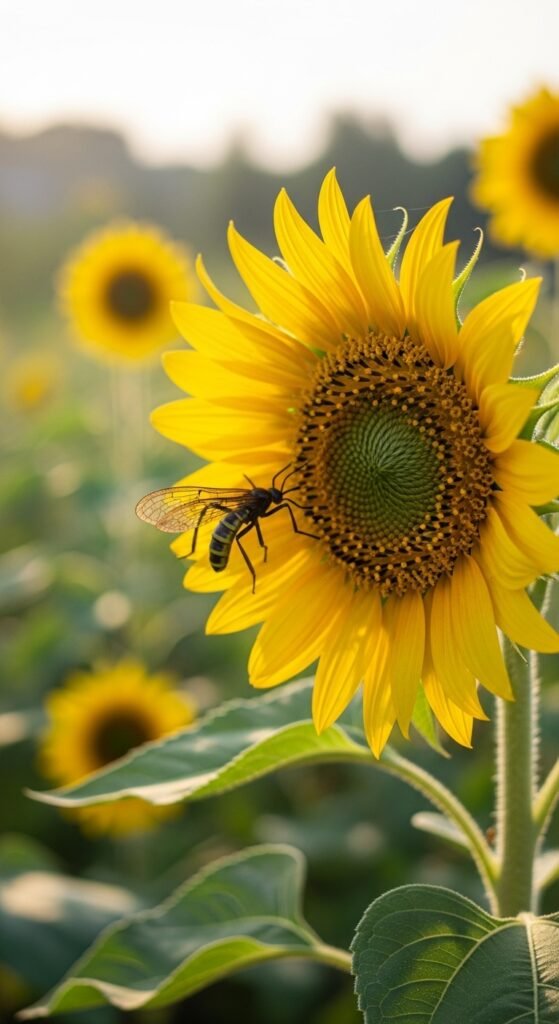
Monitor for aphids, slugs, and fungal issues. Use neem oil or companion planting to deter naturally, avoiding chemicals for pollinator safety.
Watering and Fertilizing Best Practices
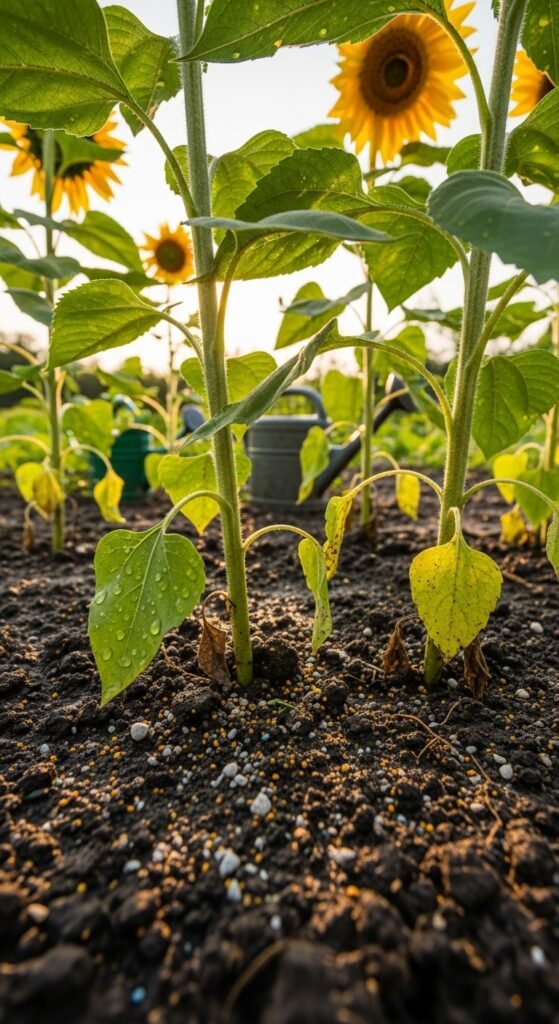
Water deeply once a week, more in heat. Apply balanced fertilizer at planting and mid-season for vigorous blooms.
Frequently Asked Questions
When is the best time to plant sunflowers?
Plant after the last frost in spring, when soil temperatures reach 50°F. This ensures strong germination and avoids cold damage.
How much space do sunflowers need?
Space varies by variety: dwarfs 6-12 inches apart, giants 2-3 feet. This prevents competition and promotes healthy airflow.
Can sunflowers grow in shade?
No, they require full sun. Partial shade leads to weak stems and fewer blooms, so choose sunny spots accordingly.
What are common sunflower pests?
Aphids, birds, and squirrels are frequent. Use netting for seeds and organic sprays for insects to protect your plants.
How do I harvest sunflower seeds?
Wait until heads droop and petals fall, then cut and dry. Roast for eating or save for next year’s planting.