
Coreopsis, often called tickseed, is a cheerful perennial that brings bursts of yellow, orange, and red to your landscape. You love how these daisy-like flowers thrive in full sun and well-drained soil, making them ideal for beginner gardeners. Native to North America, coreopsis attracts pollinators while resisting deer, ensuring your garden stays lively and low-maintenance.
Imagine planting coreopsis to create a sunny meadow vibe right in your backyard. These hardy plants bloom from early summer to fall, providing long-lasting color. Whether you’re designing a new bed or refreshing an existing one, coreopsis offers versatility. Pair it with other perennial flowers for endless combinations that enhance biodiversity and visual appeal.
With minimal care, you can enjoy robust growth. Deadhead spent blooms to encourage more flowers, and divide clumps every few years to keep them vigorous. Coreopsis adapts to various garden styles, from wild prairies to structured borders, making it a staple for any outdoor space.
1) Border Brilliance
You can transform your garden borders with coreopsis by planting them along edges for a pop of color. These flowers grow 1-3 feet tall, creating a natural frame that draws the eye. Choose varieties like ‘Moonbeam’ for soft yellow hues that soften harsh lines.
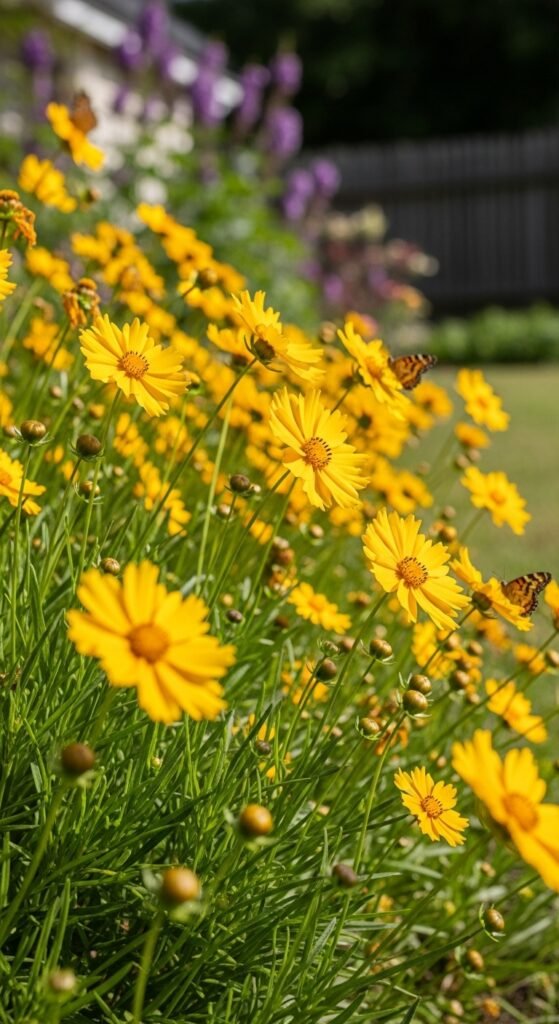
The benefit lies in their drought tolerance and ability to thrive in poor soil, reducing your watering needs. They also attract butterflies, boosting your garden’s ecosystem. For best results, space plants 12-18 inches apart in full sun.
To implement this, prepare the soil by adding compost for drainage. Plant in spring after frost danger passes. Mulch around bases to retain moisture and suppress weeds. In a cottage garden, mix with lavender for fragrant appeal. You’ll have a vibrant border that blooms all season with minimal effort.
2) Container Charm
You’ll adore growing coreopsis in containers for portable color on patios or balconies. Select compact varieties like ‘Sizzle & Spice’ that fit pots perfectly. Use well-draining soil to prevent root rot.
This approach offers flexibility, letting you move plants to sunnier spots as needed. It’s ideal for small spaces where ground planting isn’t possible. Containers also elevate flowers, making them more visible.
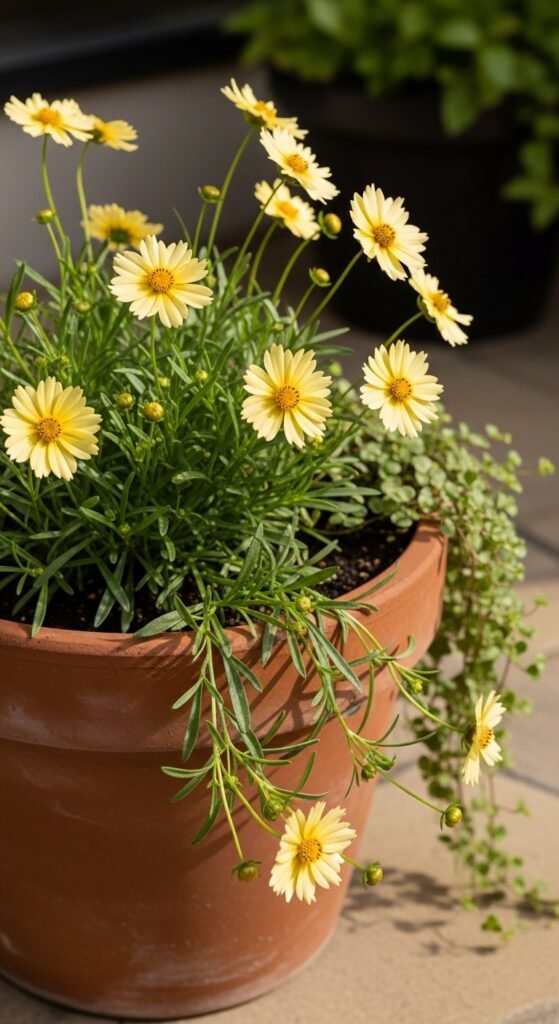
Start with a 12-inch pot, adding slow-release fertilizer. Water when the top inch of soil dries. Pair with trailing plants for dimension. In regions with harsh winters, bring indoors to overwinter. Your container garden will burst with sunny blooms, enhancing any outdoor area effortlessly.
3) Pollinator Paradise
Create a haven for bees and butterflies by incorporating coreopsis into your pollinator patches. These nectar-rich flowers draw beneficial insects, supporting local wildlife. Opt for native species like Coreopsis lanceolata for authenticity.

The advantage is improved pollination for your fruits and veggies, leading to better yields. It’s an eco-friendly way to garden sustainably. Plant in clusters for maximum impact.
Prepare sunny areas with minimal soil amendments, as coreopsis prefers lean conditions. Sow seeds directly or transplant seedlings in spring. Complement with other bee-friendly plants like coneflowers. You’ll witness a buzzing ecosystem that thrives with little intervention from you.
4) Rock Garden Radiance
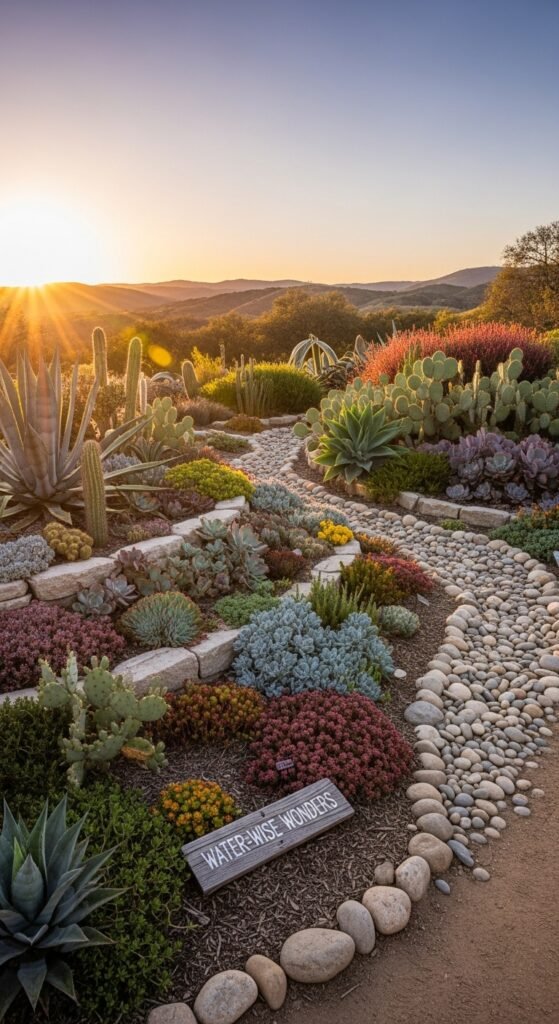
You can enhance rock gardens with coreopsis for a rugged yet colorful look. Their thread-like foliage blends seamlessly with stones, adding texture. Choose low-growing types like ‘Zagreb’ for crevices.
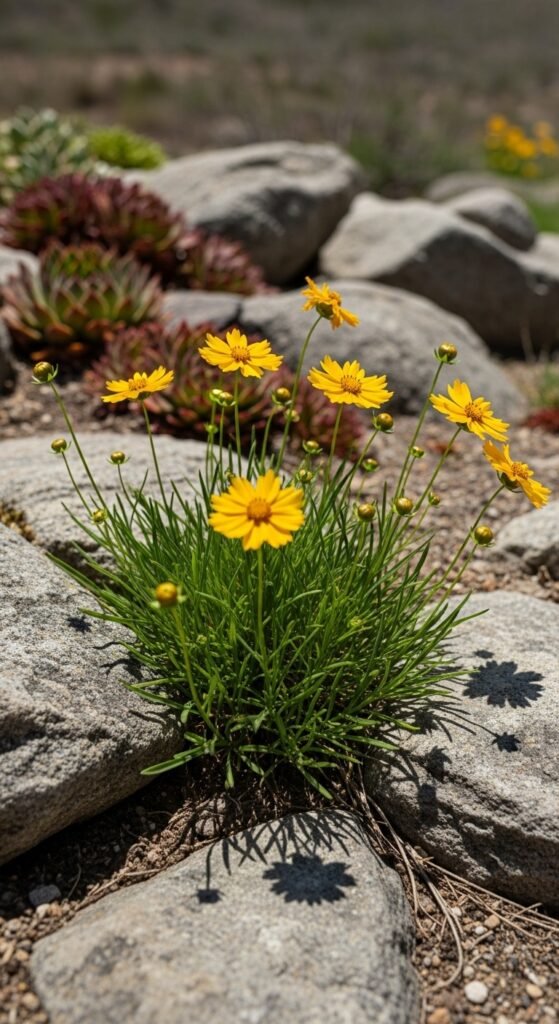
This idea excels in drainage, preventing waterlogged roots in rocky terrains. It creates a natural, low-water landscape that’s visually striking. Perfect for slopes or arid zones.
Position rocks first, then tuck plants into gaps with gritty soil. Water sparingly once established. Mix with succulents for variety. Your rock garden will glow with golden flowers, requiring only occasional weeding to maintain its charm.
5) Mixed Perennial Beds
Integrate coreopsis into mixed beds for continuous summer color. Pair with taller perennials like echinacea for layered height. This creates dynamic displays that evolve through seasons.
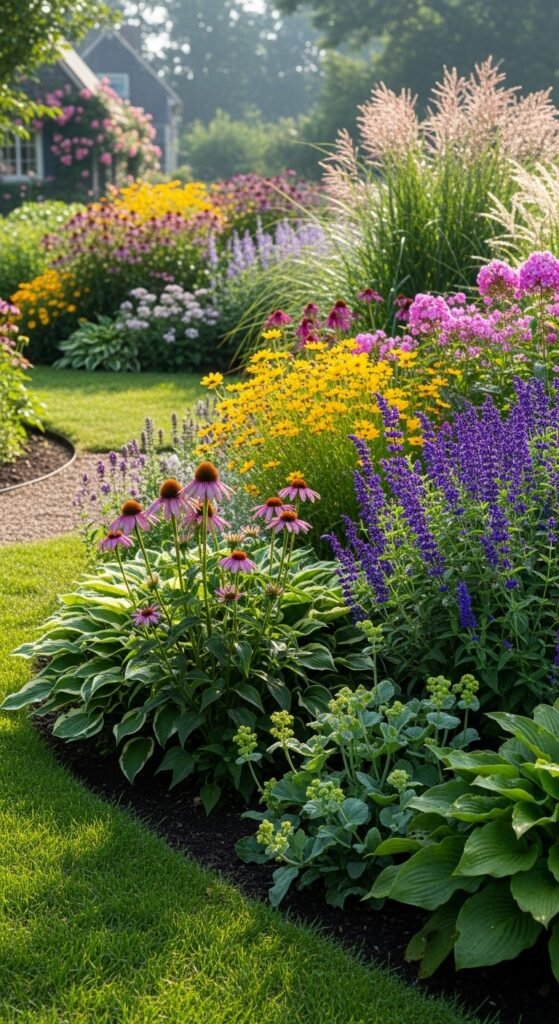
The perk is extended bloom time, filling gaps when other plants fade. It promotes biodiversity, deterring pests naturally. Ideal for creating harmonious garden scenes.
Plan bed layout by height, placing coreopsis mid-border. Amend soil if needed, but keep it lean. Deadhead regularly for reblooming. In designs inspired by full sun perennials, add grasses for movement. You’ll enjoy a thriving bed that’s easy to care for year after year.
6) Cut Flower Creations
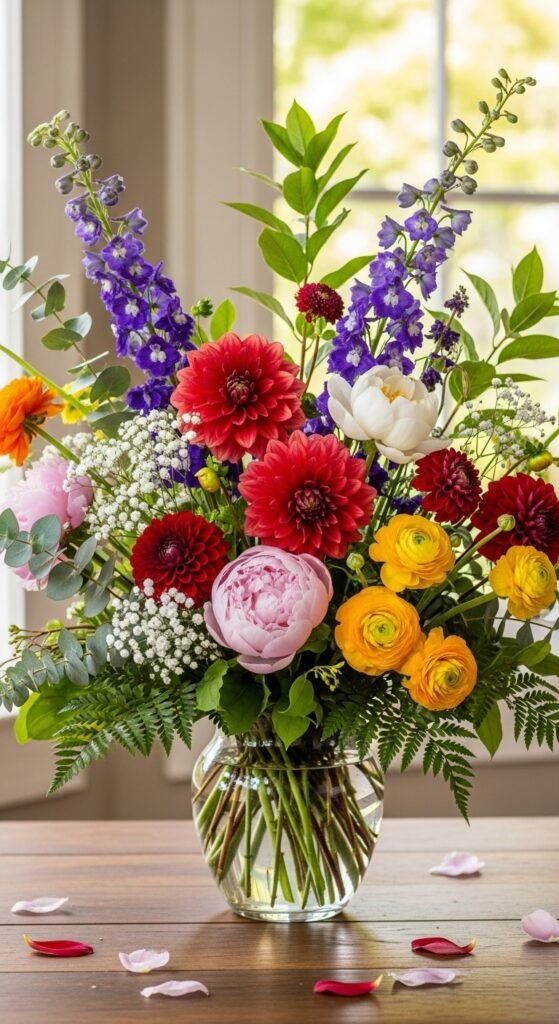
You’ll love harvesting coreopsis for fresh bouquets that brighten your home. Their long stems and vibrant colors make excellent arrangements. Grow varieties like ‘Early Sunrise’ for prolific blooms.
This provides free decor, saving money on store-bought flowers. It encourages more blooming through regular cutting. Great for sharing with friends or gifting.
Plant in dedicated rows for easy access. Cut stems in morning when buds are half-open. Use floral preservatives in vases. Combine with herbs for scented mixes. Your home will radiate garden freshness with these simple harvests.
7) Drought-Tolerant Displays
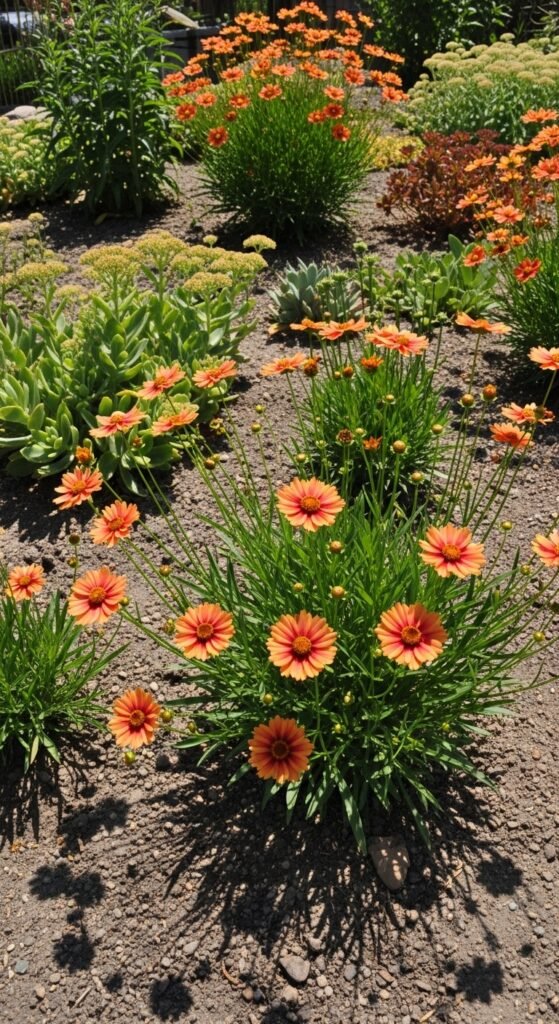
Design water-wise gardens featuring coreopsis for resilient beauty. These plants endure dry spells once established, conserving resources. Select heat-loving types like ‘Desert Coral’.
The benefit is lower water bills and environmental friendliness. It suits xeriscapes or regions with restrictions. Maintains color without constant irrigation.
Group with similar drought-tolerant plants like sedums. Mulch heavily to retain soil moisture. Avoid over-fertilizing to prevent legginess. Your garden will flourish even in challenging conditions, showcasing sustainable elegance.
8) Mass Planting Magic
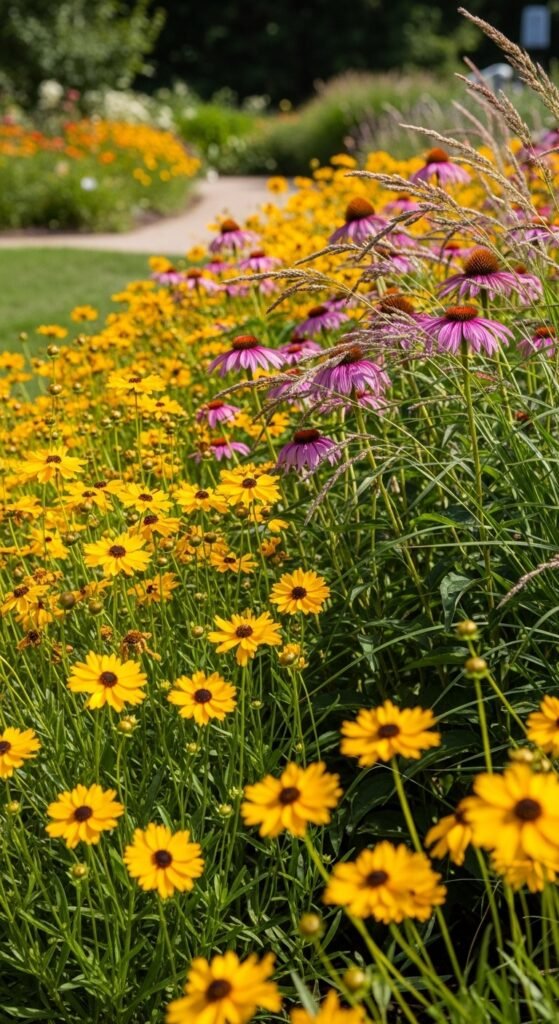
You can achieve sweeping color by mass planting coreopsis in large swaths. This creates meadow-like effects that wow visitors. Use single varieties for uniform impact.
This method offers bold statements, covering bare areas quickly. It suppresses weeds naturally through dense growth. Perfect for open lawns or fields.
Prepare soil by tilling lightly, then broadcast seeds or space transplants. Thin as needed for airflow. Mow around edges for definition. Your landscape will transform into a golden sea, buzzing with life.
9) Companion with Grasses
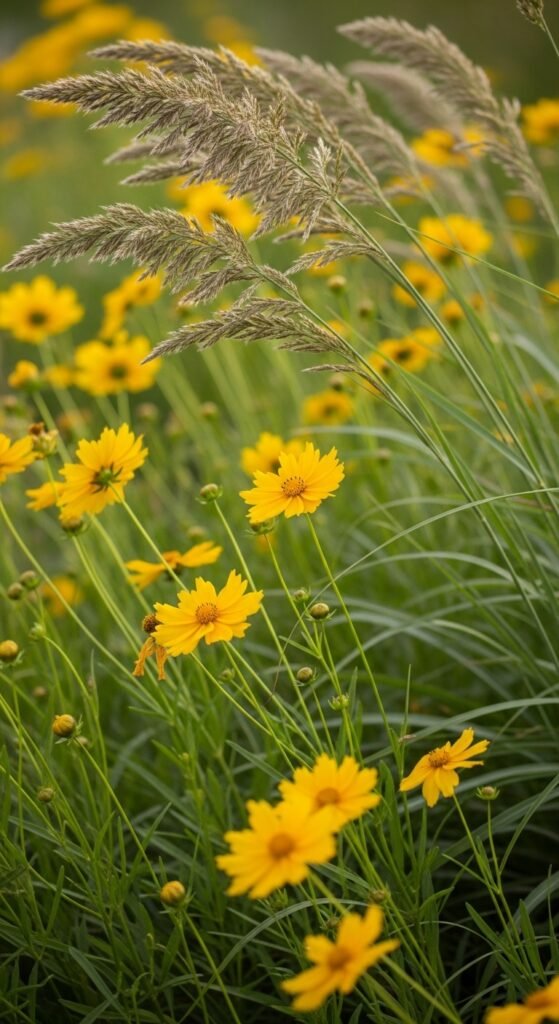
Pair coreopsis with ornamental grasses for textural contrast. The feathery plumes complement the bold flowers beautifully. Try combinations like ‘Moonbeam’ with switchgrass.
The upside is year-round interest, as grasses provide winter structure. It mimics natural prairies, enhancing wildlife habitats. Low-maintenance once established.
Plant in sunny drifts, allowing space for growth. Prune grasses in spring. Water during establishment. Your garden will sway with graceful movement, blending colors and forms seamlessly.
10) Butterfly Attractors
Invite butterflies by featuring coreopsis as nectar sources. Their flat blooms serve as landing pads for winged visitors. Choose bright varieties to draw more species.
This boosts biodiversity, creating lively scenes. It educates children about nature while controlling pests organically. Essential for conservation efforts.

Incorporate into borders or islands. Avoid pesticides to protect insects. Add host plants like milkweed. You’ll delight in fluttering displays, turning your yard into a sanctuary.
11) Edging Excellence
Use coreopsis to edge paths or beds for defined lines. Low varieties like ‘Nana’ work best for tidy borders. This guides foot traffic while adding color.
The advantage is easy mowing around neat edges. It prevents soil erosion along walkways. Enhances overall garden structure visually.

Plant in rows, spacing evenly. Shear after blooming for compactness. Mulch to minimize weeding. Your paths will be framed beautifully, inviting exploration through vibrant trails.
12) Ground Cover Glory
You can utilize spreading coreopsis varieties as ground covers to blanket slopes. ‘Zagreb’ fills in quickly, stabilizing soil. Ideal for erosion-prone areas.
This provides weed suppression without chemicals. It creates low-maintenance carpets of color. Suits banks or under trees where grass struggles.
Plant plugs in grid patterns. Water until rooted, then infrequently. Trim spent flowers. Your hillsides will bloom effortlessly, reducing upkeep significantly.
13) Vertical Accents
Incorporate tall coreopsis for vertical interest in beds. Varieties like ‘Sunray’ reach 3 feet, adding height. Perfect for back borders or focal points.

The perk is drawing eyes upward, creating depth. It balances low growers for layered designs. Attracts birds for added animation.
Stake if needed in windy spots. Plant with mid-height companions. Prune lightly for bushiness. Your garden will gain dimension, appearing more expansive and engaging.
14) Fall Extension
Extend your garden’s color into fall with late-blooming coreopsis. ‘Mercury Rising’ offers red tones for autumn vibes. Bridges summer to winter seamlessly.
This ensures season-long appeal, maximizing enjoyment. It supports late pollinators when options dwindle. Revitalizes fading landscapes.
Choose extended-bloom varieties. Deadhead consistently. Pair with mums for contrast. You’ll savor prolonged displays, keeping your outdoor space vibrant longer.
15) Wildlife Welcomes
Foster wildlife by planting coreopsis in naturalized areas. Seeds feed birds in winter, while flowers nourish insects. Creates balanced ecosystems.
The benefit is observing nature up close. It promotes sustainability without extra effort. Enhances your connection to the environment.
Scatter in meadows or edges. Allow self-seeding for expansion. Avoid tidying too soon. Your yard will teem with life, offering endless fascination.
Key Principles for Coreopsis Success
Soil and Sun Requirements
You need full sun— at least 6 hours daily— for optimal blooming. Coreopsis tolerates poor, sandy soils but thrives in well-drained conditions. Avoid heavy clay to prevent rot.
Maintenance Tips
Water new plants regularly, then sparingly. Fertilize lightly in spring. Divide every 3-4 years to rejuvenate. Pest issues are rare, but watch for aphids.
Variety Selection
Choose based on height and color. Threadleaf types offer fine texture, while grandiflora provide larger blooms. Consider your zone for hardiness.
Frequently Asked Questions
Is coreopsis deer-resistant?
Yes, its bitter taste deters deer, making it a reliable choice for gardens prone to browsing.
How often should I water coreopsis?
Once established, water deeply but infrequently, about once a week during dry spells.
Does coreopsis spread?
Some varieties spread via rhizomes or self-seeding, but they’re easy to control.
Can coreopsis grow in shade?
It prefers full sun; partial shade may reduce blooming significantly.
When does coreopsis bloom?
Typically from early summer to fall, with some varieties extending into autumn.