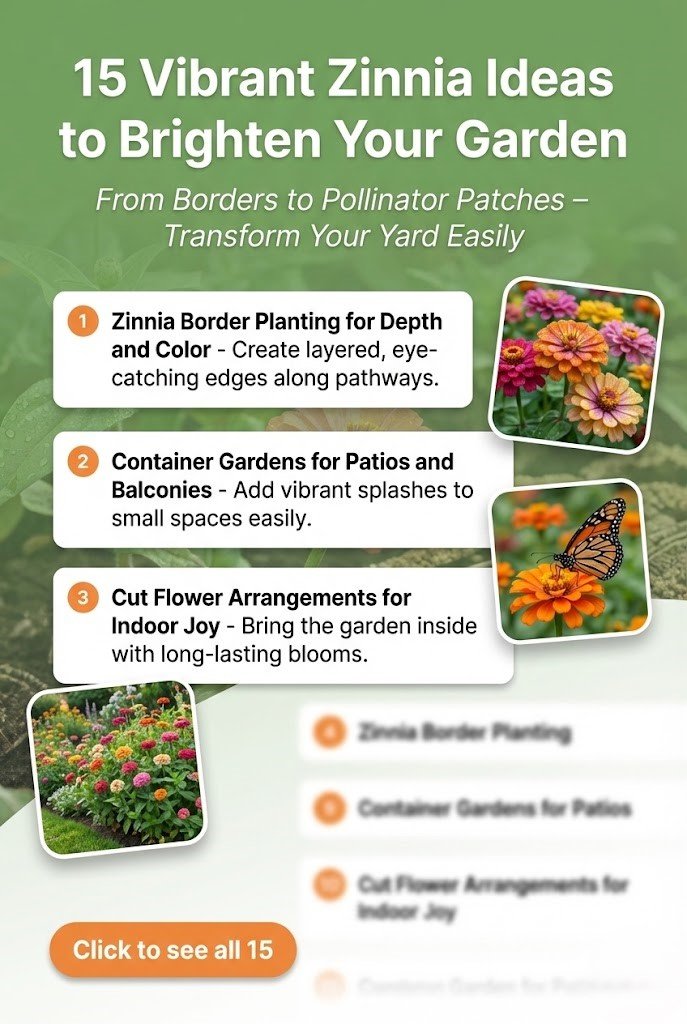
Zinnias are one of the most cheerful and versatile flowers you can add to your garden. These vibrant annuals come in a rainbow of colors, from bold reds and oranges to soft pinks and whites, making them perfect for adding pops of color wherever you need them. Native to Mexico, zinnias thrive in full sun and well-drained soil, blooming prolifically from summer until the first frost. They’re not just beautiful—they’re also low-maintenance, drought-tolerant once established, and excellent at attracting pollinators like butterflies and bees.
You’ll love how zinnias can transform even the smallest spaces into a lively oasis. Whether you’re a beginner gardener or a seasoned pro, these flowers offer endless possibilities for creativity. From borders to containers, zinnias adapt easily and provide continuous blooms with minimal effort. Plus, they’re fantastic for cutting, allowing you to bring their vibrant energy indoors. Get ready to explore 15 inspiring ideas that will help you incorporate zinnias into your landscape for maximum impact.
1) Zinnia Border Planting
You can create a stunning border by planting zinnias along the edges of your garden beds or pathways. Choose a mix of heights—dwarf varieties for the front and taller ones at the back—to add depth and interest. This setup not only defines your space but also provides a continuous display of color throughout the season. Zinnias work well in borders because they’re heat-tolerant and bloom abundantly, drawing in beneficial insects that help control pests naturally.
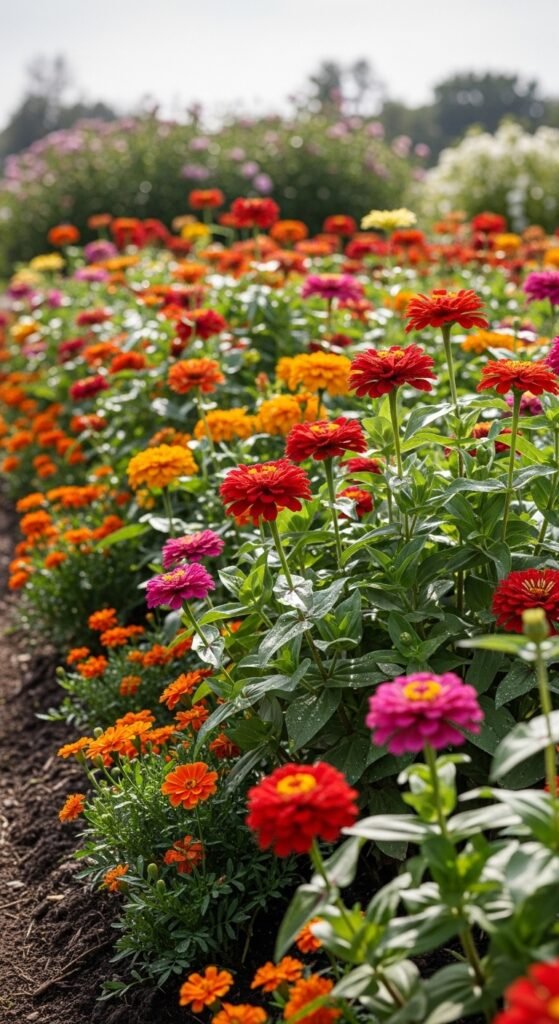
To get started, prepare the soil by loosening it and adding compost for better drainage. Plant seeds or seedlings about 6-12 inches apart after the last frost, ensuring they get at least 6 hours of sun daily. Water regularly until established, then reduce to once a week. For inspiration on full sun flowers that pair well with zinnias, consider mixing in marigolds or cosmos for a fuller look. This idea is ideal for creating a welcoming entrance to your yard.
2) Zinnia Container Gardens
Bring zinnias to your patio or balcony with container planting, where you can control soil and placement for optimal growth. Opt for large pots with good drainage to prevent root rot, and fill them with a mix of potting soil and perlite. Containers allow you to move zinnias around for the best sunlight, ensuring vibrant blooms all summer long. They’re perfect for small spaces or urban gardens lacking ground area.
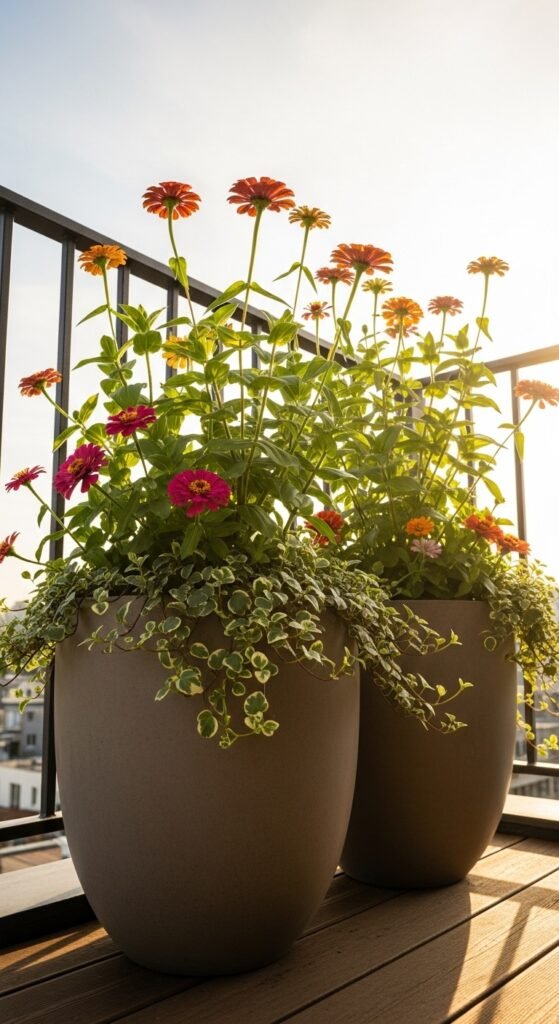
Plant taller zinnias in the center as thrillers, surrounded by trailing plants for a balanced display. Water when the top inch of soil feels dry, and fertilize every few weeks with a balanced formula. This method keeps zinnias healthy and pest-free. If you’re dealing with common issues like mildew on zinnias, good air circulation in containers helps prevent it. Experiment with color themes for a personalized touch that brightens any outdoor nook.
3) Zinnia Cut Flower Arrangements
Harvest zinnias for fresh bouquets by cutting stems early in the morning when flowers are half-open. This encourages more blooms and extends the plant’s productivity. You’ll enjoy long-lasting vases of color that bring the garden indoors, perfect for table centerpieces or gifts. Zinnias’ sturdy stems and vivid hues make them a favorite for arrangements.
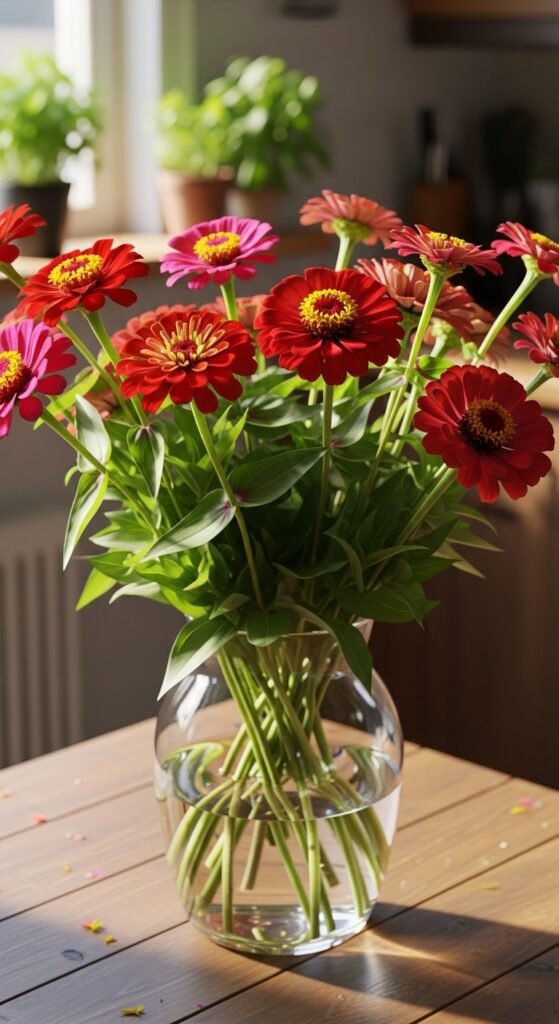
To maximize vase life, strip lower leaves and place in clean water with floral preservative. Change the water every couple of days. For a dedicated setup, plant in rows spaced 12 inches apart for easy access. Explore cut flower garden techniques to pair zinnias with dahlias or snapdragons. This idea not only beautifies your home but also promotes continuous flowering in the garden, keeping your beds tidy and productive.
4) Zinnia Companion Planting
Pair zinnias with vegetables like tomatoes or cucumbers to deter pests and attract pollinators. Their bright flowers lure beneficial insects while masking scents that attract harmful ones. This natural approach boosts your garden’s health and yield without chemicals. Zinnias thrive alongside many crops, enhancing biodiversity.
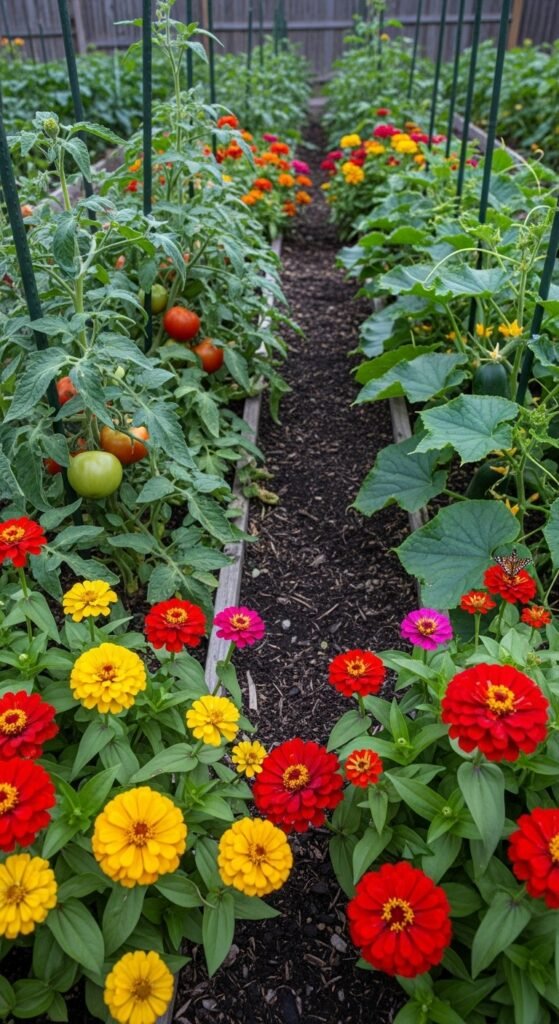
Plant zinnias around the edges of veggie beds, spacing them 8-10 inches apart. Ensure similar sun and water needs for harmony. This method improves soil health over time. For more on companion flowers for vegetables, try interspersing with marigolds for added protection. You’ll see fewer aphids and more productive plants, making your garden more efficient and eco-friendly.
5) Zinnia Butterfly Garden
Design a butterfly haven by clustering zinnias in groups of the same color to attract these pollinators. Include nectar-rich varieties in reds, pinks, and oranges for maximum appeal. Butterflies will flock to your garden, adding movement and life while aiding pollination. Zinnias’ flat blooms provide easy landing spots.
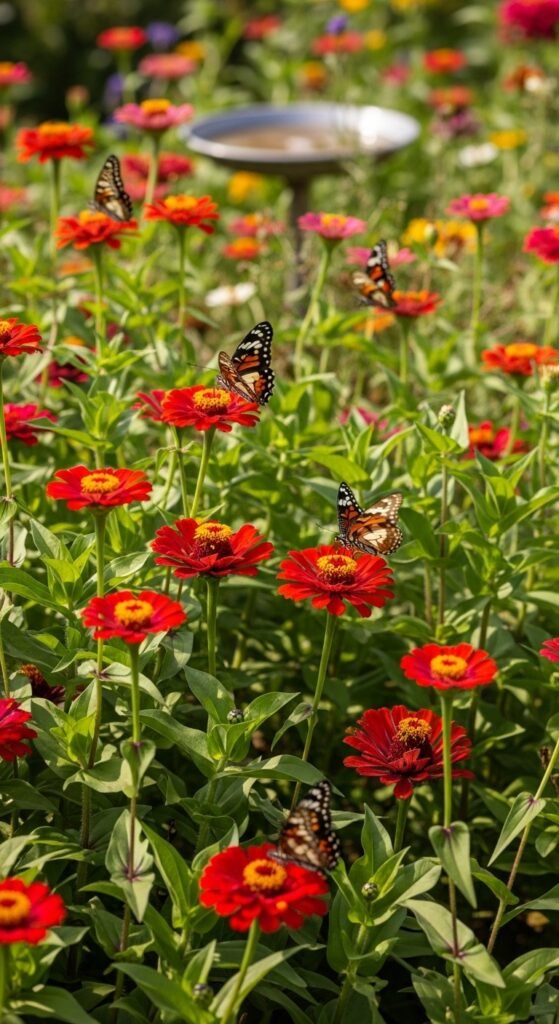
Plant in a sunny spot with shelter from wind, adding shallow water sources nearby. Deadhead spent flowers to encourage reblooming. This setup supports local wildlife. Check out butterfly flowers for complementary plants like milkweed. You’ll create a dynamic, educational space that delights visitors and benefits the ecosystem.
6) Zinnia Mass Planting
Cover large areas with dense zinnia plantings for a bold, colorful statement. Sow seeds directly in prepared beds for a sea of blooms that suppress weeds naturally. This low-effort technique delivers high impact, filling your yard with vibrant hues. Mass plantings create a meadow-like feel.
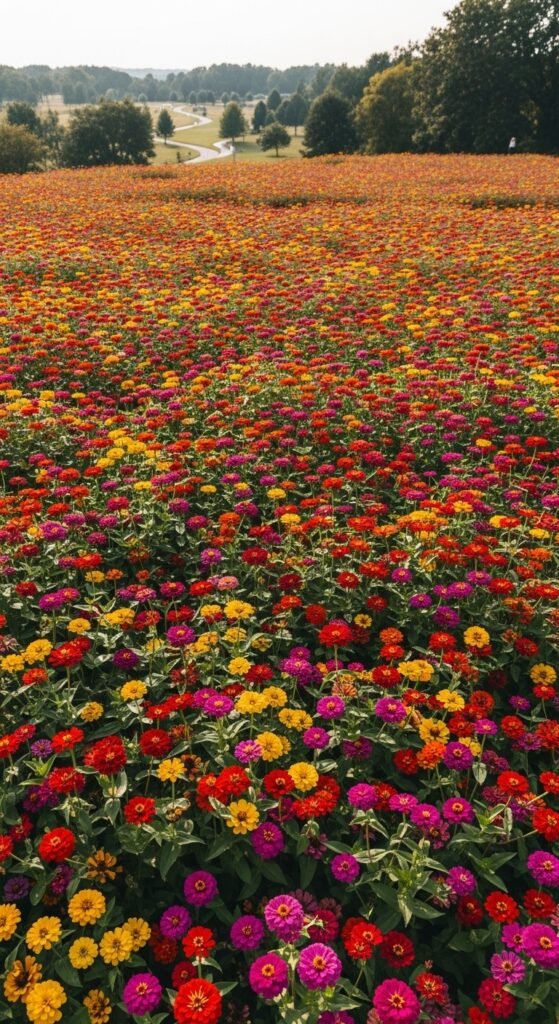
Thin seedlings to 10 inches apart for airflow and health. Water deeply but infrequently to build resilience. Ideal for slopes or unused spaces. For deer-prone areas, consider deer-resistant flowers like zinnias, which are often left alone. You’ll enjoy a low-maintenance display that’s perfect for photos and relaxation.
7) Zinnia Window Boxes
Adorn your windows with zinnia-filled boxes for curb appeal and indoor views. Use dwarf varieties to fit compact spaces, mixing colors for variety. This elevates your home’s exterior while bringing nature closer inside. Window boxes add charm without ground commitment.
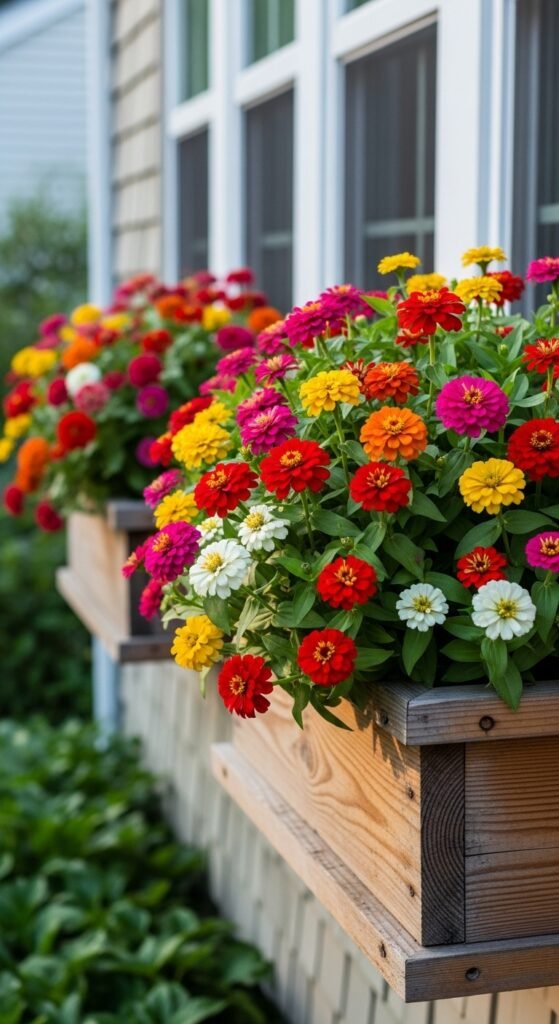
Ensure boxes have drainage and use quality potting mix. Water regularly, checking soil moisture daily in hot weather. Position for full sun. Pair with trailing ivy for texture. Explore window box ideas to incorporate zinnias seamlessly. You’ll enhance your living space with minimal effort.
8) Zinnia Pollinator Patch
Dedicate a patch to zinnias to support bees and other pollinators. Plant a mix of single and double blooms for varied nectar sources. This boosts garden productivity and contributes to environmental health. Pollinators love zinnias’ abundant resources.
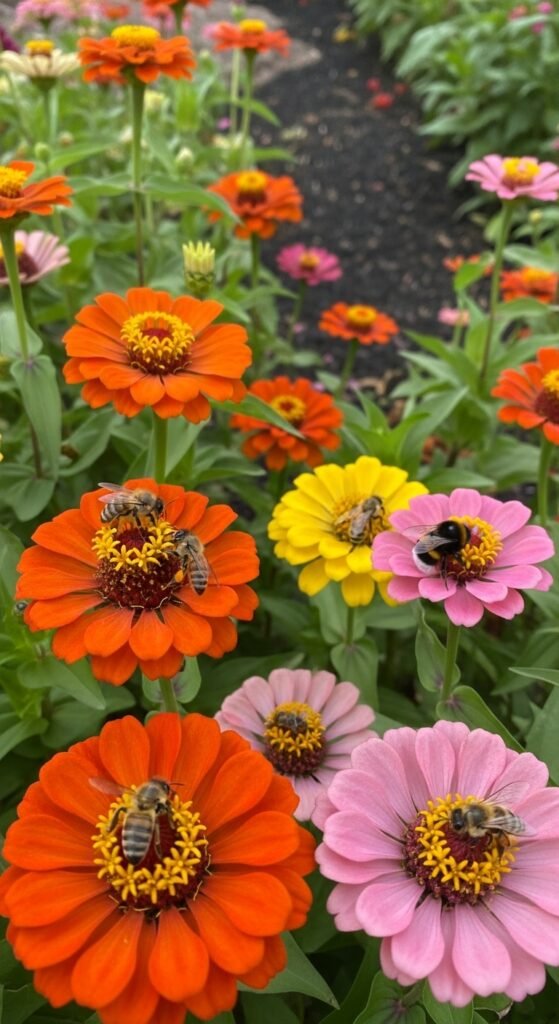
Locate in a sunny, protected area, sowing seeds in spring. Avoid pesticides to keep it safe. This simple act aids biodiversity. For more, see pollinator flowers to expand your patch. You’ll witness a thriving ecosystem right in your yard.
9) Zinnia Vertical Displays
Use trellises or fences to grow climbing zinnia varieties vertically, saving space and adding height. Train stems upward for a living wall of color. This maximizes small areas and creates privacy screens. Vertical zinnias add architectural interest.
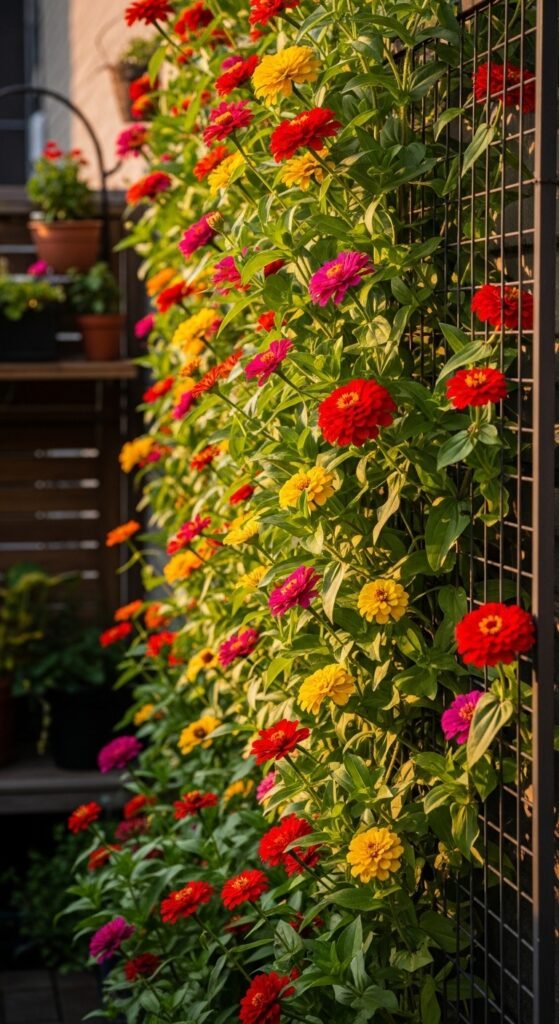
Provide sturdy supports and tie loosely as they grow. Full sun is key. Ideal for urban gardens. Combine with vines for fullness. Check vertical garden ideas for innovative setups. You’ll transform blank spaces into vibrant features.
10) Zinnia Edging Plants
Line walkways or beds with low-growing zinnias for neat, colorful edging. Their compact form defines spaces without overwhelming. This adds polish and guides the eye through your garden. Edging zinnias are easy to maintain.
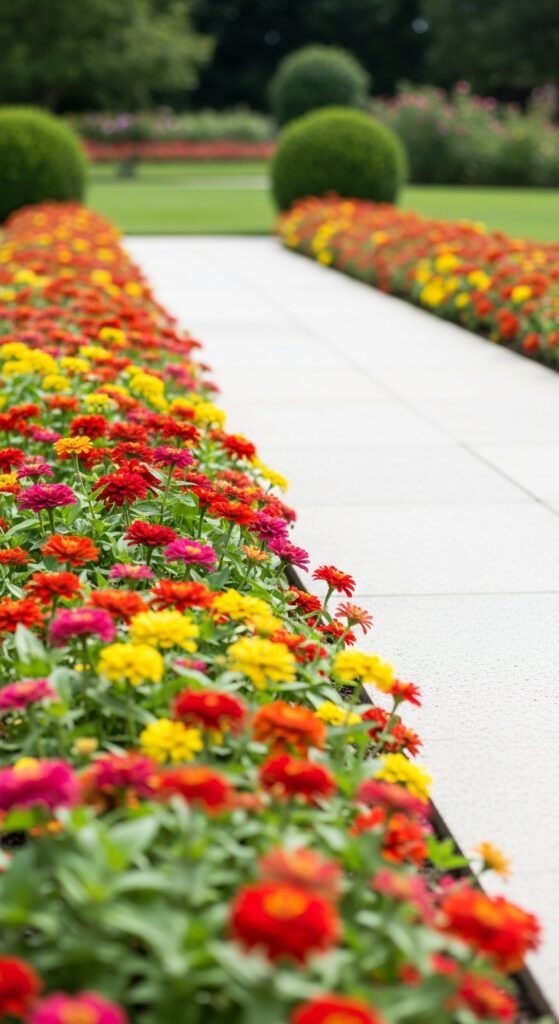
Plant closely for a solid line, watering until roots establish. Trim as needed. Perfect for formal designs. For summer vibes, explore summer flowers that complement zinnias. You’ll achieve a tidy, inviting landscape.
11) Zinnia Hummingbird Attractors
Attract hummingbirds with tubular zinnia varieties in bright reds and pinks. Plant in clusters for easy feeding. These tiny visitors add excitement and aid pollination. Zinnias provide ample nectar.
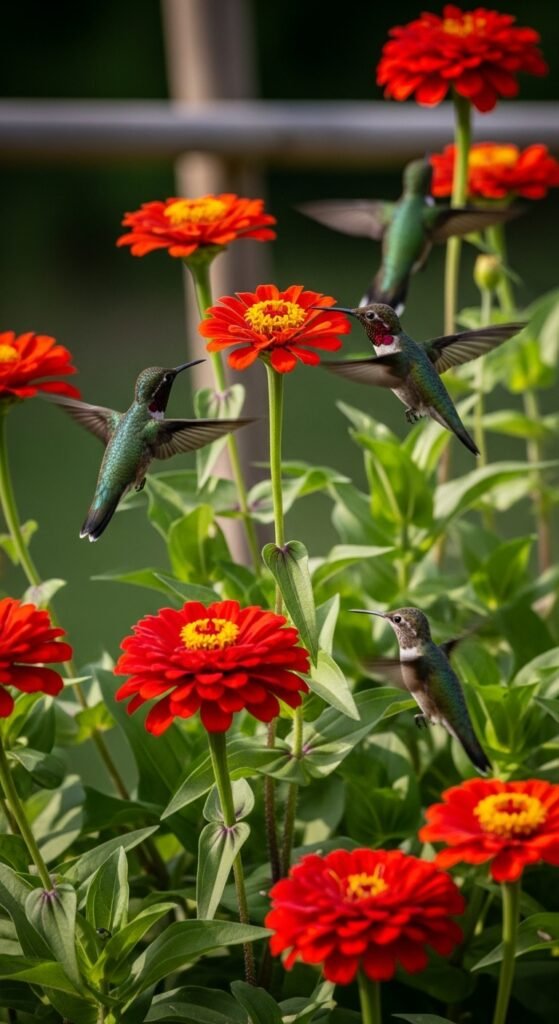
Place near windows for viewing, with perches nearby. Refresh water sources. This enhances birdwatching. See hummingbird flowers for more attractors. You’ll create a lively, interactive garden spot.
12) Zinnia Drought-Tolerant Beds
Incorporate zinnias into xeriscapes for color in dry conditions. Once established, they need little water. This saves resources while maintaining beauty. Drought-tolerant zinnias suit arid climates.
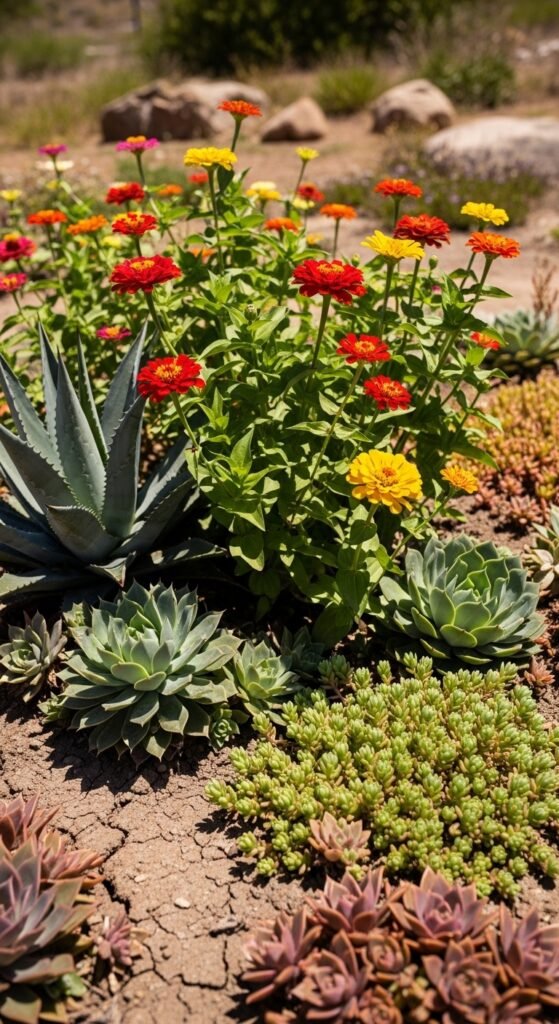
Mulch to retain moisture, planting in well-drained soil. Group with succulents. Ideal for low-water gardens. For ideas, visit drought-tolerant flowers. You’ll have a resilient, vibrant area.
13) Zinnia Fairy Garden Accents
Add zinnias to fairy gardens for whimsical pops of color among miniatures. Use small varieties for scale. This sparks imagination and delights children. Zinnias fit the magical theme.
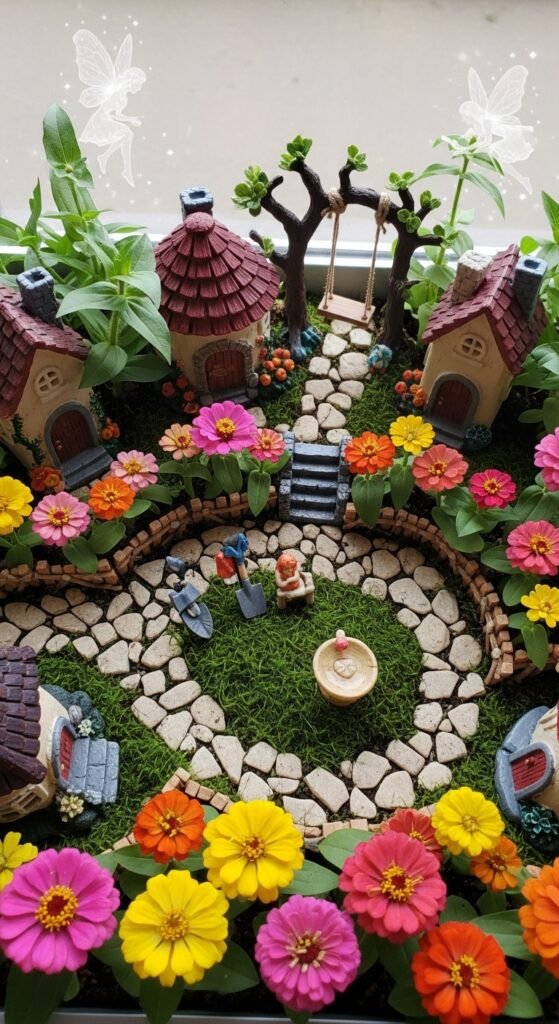
Arrange around tiny houses, with paths. Water gently. Fun for all ages. Explore fairy garden ideas for enhancements. You’ll craft an enchanting micro-world.
14) Zinnia Shade-Tolerant Mixes
Though sun-lovers, some zinnias tolerate partial shade when mixed properly. Plant with shade-friendly companions. This extends their use to varied light areas. Adaptable zinnias fill gaps.
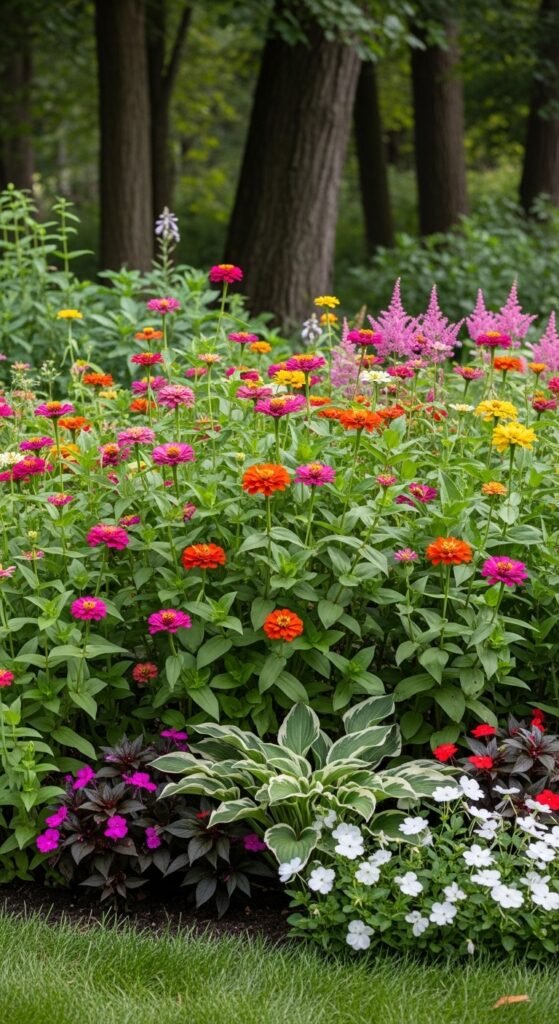
Monitor for legginess, pruning as needed. Morning sun is best. For options, see shade flowers. You’ll brighten dim spots effectively.
15) Zinnia Seasonal Extensions
Stagger plantings to extend zinnia blooms into fall. Succession sowing every two weeks keeps color going. This prolongs your garden’s vibrancy beyond summer. Zinnias adapt to cooler temps.
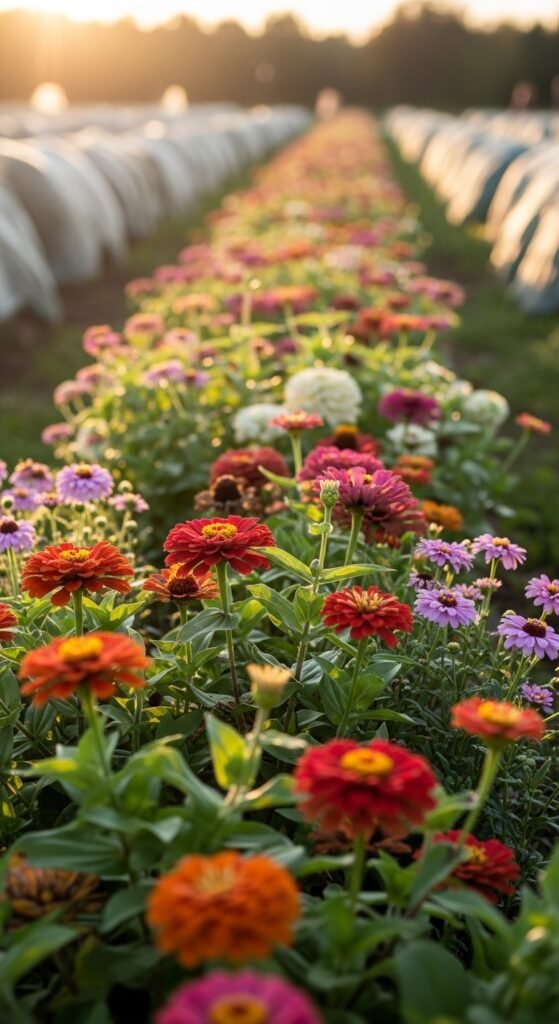
Protect from early frosts with covers. Harvest regularly. Perfect for year-round interest. For fall transitions, check fall flowers. You’ll enjoy extended beauty effortlessly.
Key Tips for Growing Zinnias
Soil and Sun Requirements
You need well-drained, fertile soil with a pH of 5.5-7.5 for zinnias. Amend with compost for nutrients. Full sun—6-8 hours daily—is essential for strong stems and abundant flowers. Avoid shady spots to prevent weak growth.
Watering and Fertilizing
Water deeply at the base to keep foliage dry, reducing disease risk. Allow soil to dry between sessions. Fertilize lightly with a balanced product every 4-6 weeks, avoiding excess nitrogen that promotes leaves over blooms.
Pest and Disease Management
Monitor for aphids or mildew; use organic sprays if needed. Good spacing ensures air flow. Remove affected parts promptly to maintain health.
Frequently Asked Questions
How long do zinnias bloom?
Zinnias typically bloom from midsummer until the first frost, providing months of color with proper care and deadheading.
Are zinnias annual or perennial?
Zinnias are annuals in most climates, completing their life cycle in one season, but they self-seed readily for future growth.
Can zinnias grow in pots?
Yes, zinnias thrive in pots with good drainage and full sun, making them versatile for various spaces.
Do zinnias attract bees?
Absolutely, their bright flowers and nectar draw bees and other pollinators, supporting garden ecosystems.
How tall do zinnias get?
Zinnia heights range from 6 inches for dwarfs to over 4 feet for tall varieties, depending on the type you choose.