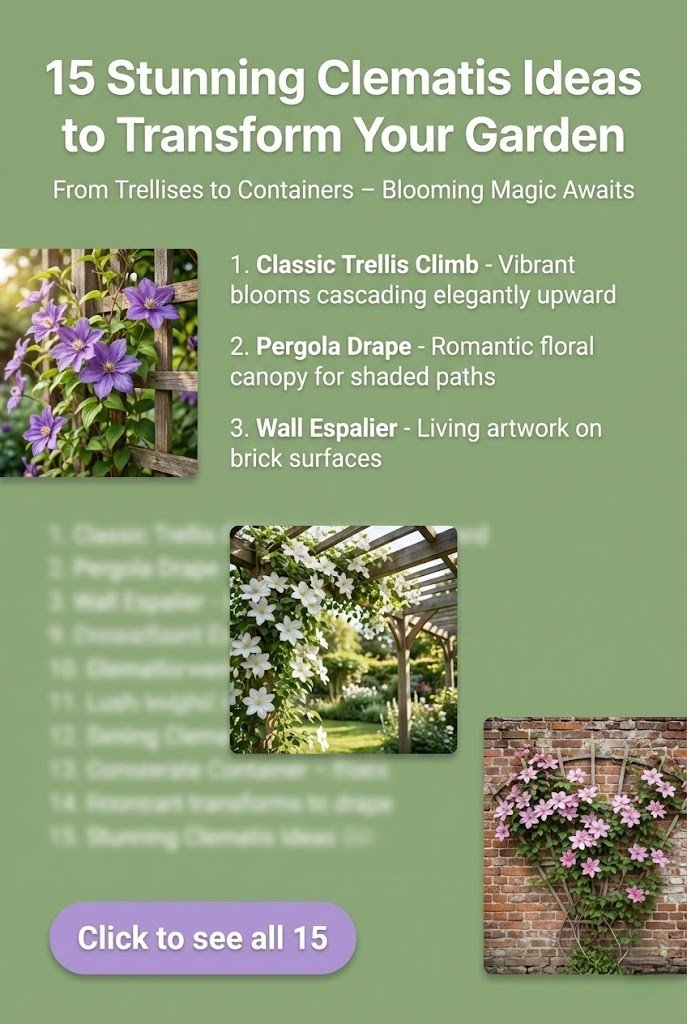
You’ve likely admired the vibrant blooms of clematis climbing gracefully over fences and trellises, adding a touch of elegance to any outdoor space. Clematis, often called the “queen of vines,” is a versatile flowering plant that thrives in various garden settings, offering stunning flowers in shades of purple, pink, white, and more. Whether you’re a seasoned gardener or just starting, incorporating clematis can elevate your landscape with its lush foliage and prolific blooms, attracting pollinators and providing vertical interest.
The beauty of clematis lies in its adaptability—you can train it to climb structures, pair it with other plants, or even grow it in containers for smaller spaces. By choosing the right varieties and providing proper care, you’ll enjoy seasons of color and fragrance. These ideas will guide you through creative ways to integrate clematis, ensuring your garden becomes a blooming paradise.
1) Classic Trellis Climb
You can create a captivating vertical display by training clematis on a simple wooden or metal trellis. This idea works perfectly for adding height to your garden beds without taking up much ground space. The key benefit is the abundant blooms that cascade like a living waterfall, enhancing privacy and visual appeal.
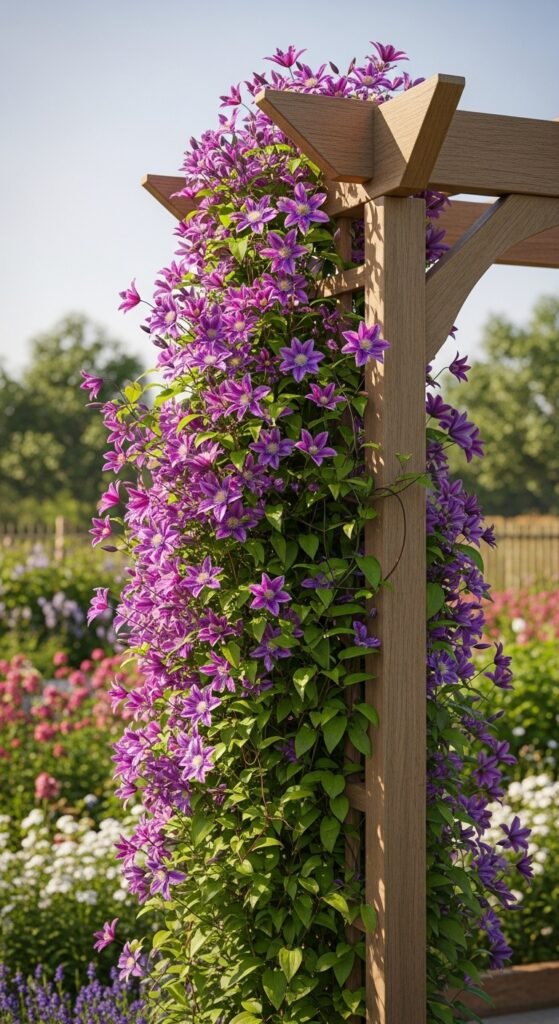
Why choose this? Clematis thrives on supports, and a trellis provides the ideal structure for its tendrils to grip. It also allows for better air circulation, reducing disease risk. To implement, select a sunny spot with well-drained soil, plant the clematis at the base, and gently guide the vines upward. Mulch around the roots to keep them cool, as clematis prefers “head in the sun, feet in the shade.” For more inspiration on supports, explore these garden trellis ideas to find the perfect match for your style.
How to maintain: Prune according to variety—early bloomers after flowering, late ones in spring. With regular watering and fertilizer, you’ll have a stunning feature that blooms from spring to fall.
2) Pergola Drape
Imagine walking under a pergola draped in cascading clematis blooms, creating a romantic shaded pathway. This idea turns an ordinary structure into a floral canopy, ideal for patios or garden entrances.
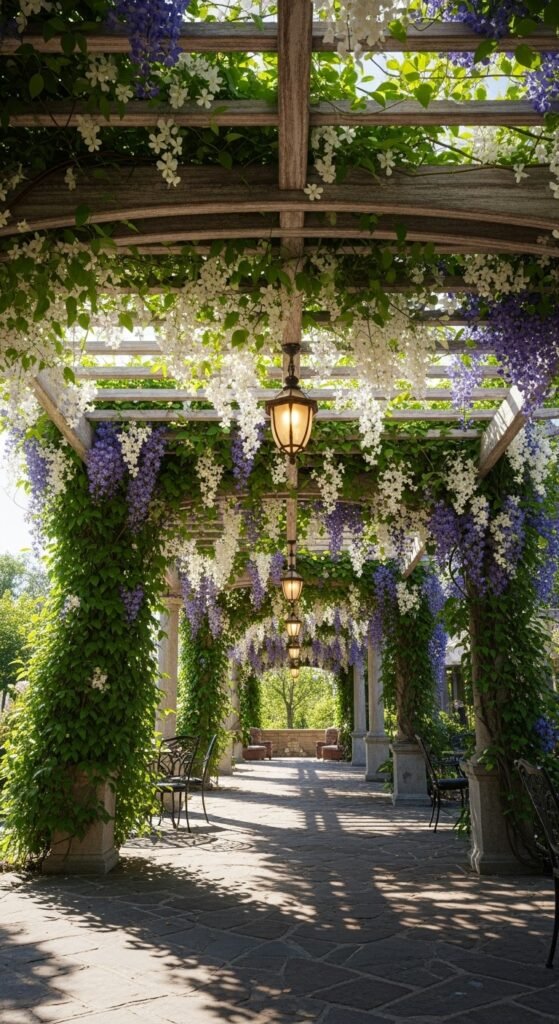
Why it works: Clematis’s vigorous growth covers pergolas quickly, offering shade and fragrance. It’s especially rewarding in hot climates where you need respite from the sun. Start by planting multiple varieties at each post base, ensuring they receive at least six hours of sunlight. Train vines along the beams using soft ties to avoid damage.
For complementary plants that climb similarly, consider adapting trellis ideas for climbing plants. Maintenance involves annual pruning to encourage new growth and prevent tangling, resulting in a lush, inviting space for relaxation.
3) Wall Espalier
You can transform a blank wall into a living artwork by espaliering clematis, training it flat against the surface for a formal look. This method saves space in urban gardens while maximizing bloom display.
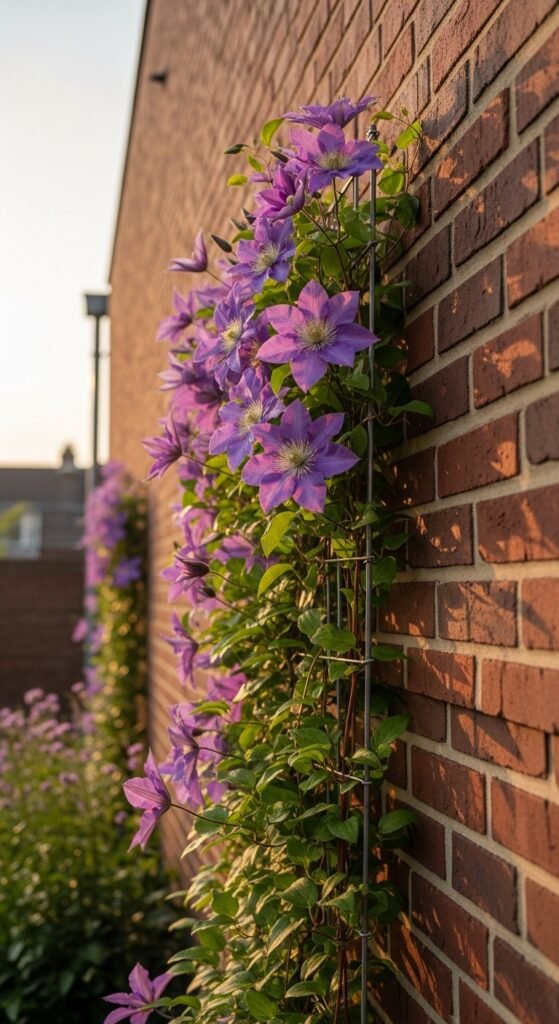
The advantage lies in its space-efficiency and ability to soften hardscapes like brick or stucco walls. Choose large-flowered hybrids for impact. Install wire supports or a trellis panel against the wall, plant clematis 12 inches away, and prune side shoots to maintain shape.
Pruning is crucial here—use techniques akin to pruning techniques similar to those for roses in early spring. With consistent care, your wall will burst with color, drawing admiration from neighbors.
4) Container Planting
For balconies or patios, grow clematis in large containers to enjoy its beauty without a traditional garden. This flexible idea allows mobility and suits renters or small-space dwellers.
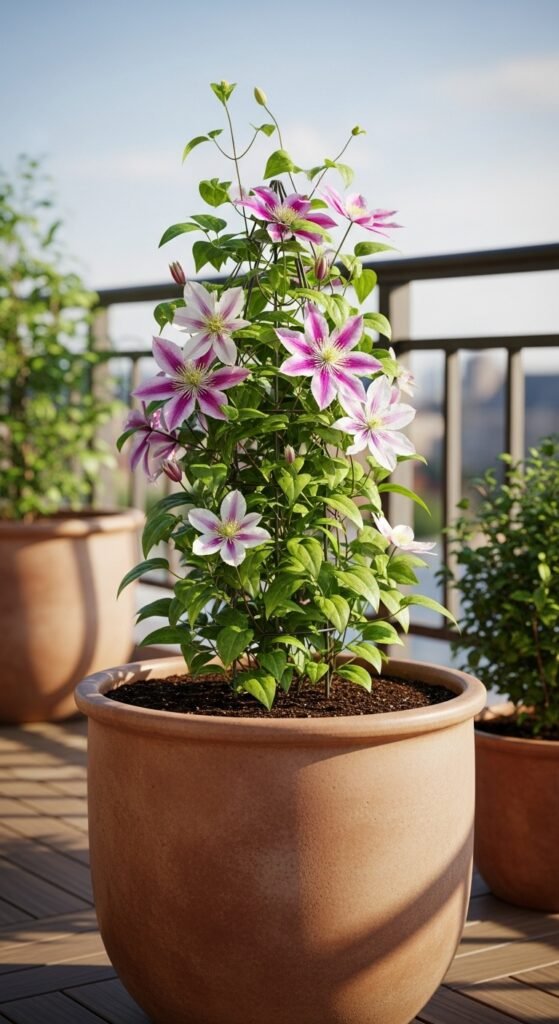
Why opt for pots? You control soil quality and drainage, vital for clematis success. Portability lets you move plants to optimal sun spots. Select a deep container with drainage holes, fill with rich compost, and add a small trellis inside for support.
Pair with seasonal flowers for added interest, drawing from spring container garden ideas. Water regularly, especially in summer, and overwinter indoors if needed for a thriving, movable display.
5) Mixed Border Integration
Incorporate clematis into mixed borders by letting it climb through shrubs or perennials, creating layered depth and extended bloom times in your flower beds.
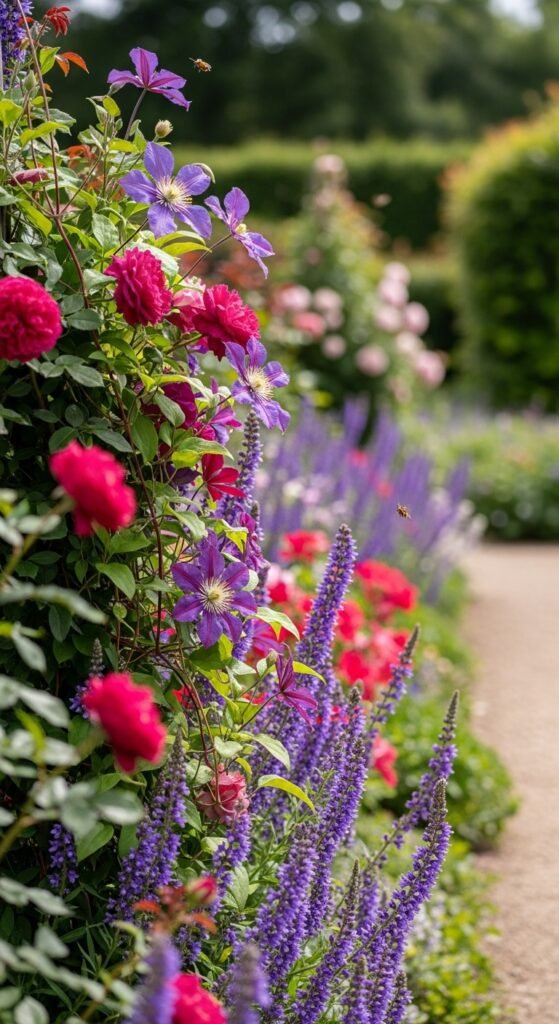
This approach maximizes garden real estate, as clematis uses vertical space while companions provide root shade. It’s ideal for pollinator-friendly gardens. Plant near host plants like roses or hydrangeas, allowing vines to weave naturally.
For protection against late frosts, apply frost protection methods. The result is a harmonious border that evolves through seasons with minimal effort.
6) Arbor Gateway
Create an enchanting entrance with clematis covering an arbor, framing pathways or gates with vibrant flowers and lush greenery.
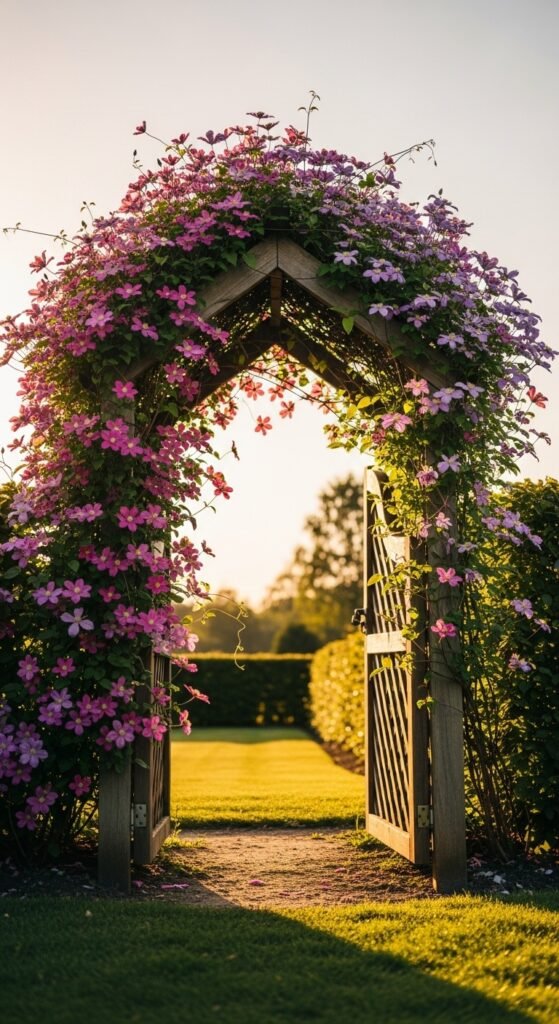
Why this captivates: It adds architectural interest and a sense of discovery to your garden. Choose vigorous varieties for full coverage. Position the arbor in partial sun, plant on both sides, and train vines over the top.
Enhance with underplantings, inspired by other spring planting options. Prune annually to keep the structure clear, ensuring a welcoming bloom-filled portal year after year.
7) Fence Cover
Turn a plain fence into a blooming barrier by planting clematis along its length, providing privacy and color in one go.
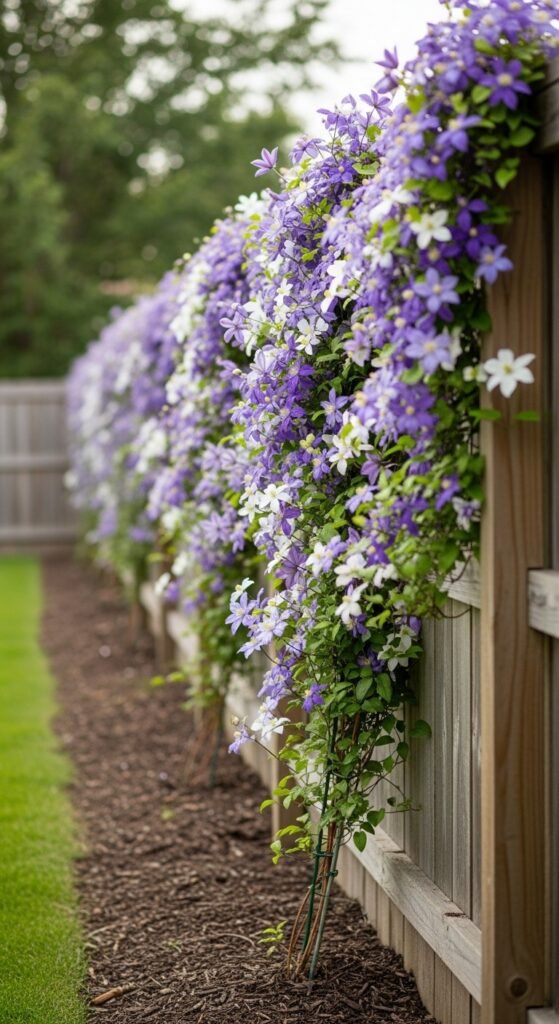
The benefit is dual: aesthetic enhancement and natural screening. Clematis grows quickly to cover unsightly fences. Dig planting holes every few feet, add supports if needed, and mulch well.
Follow general care with tips from spring gardening tips for establishment. You’ll enjoy a living fence that buzzes with bees and butterflies.
8) Obelisk Focal Point
Place a decorative obelisk in your garden bed and let clematis climb it, creating a striking vertical accent amid lower plants.
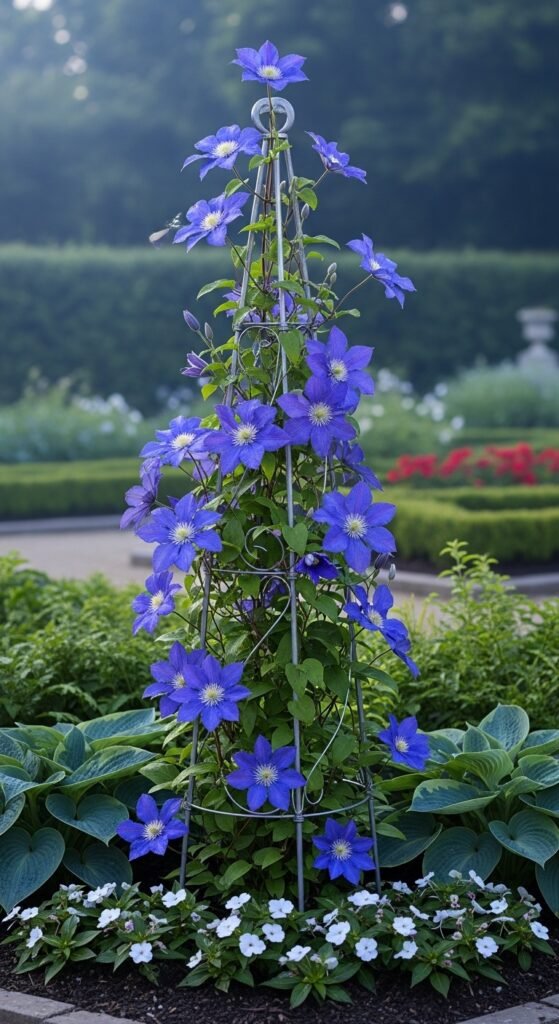
This idea draws the eye upward, adding height and drama. Perfect for formal gardens, it showcases blooms prominently. Choose a rust-resistant obelisk, plant at the base, and guide vines spirally.
Integrate into designs using food forest design principles for layered planting. Minimal pruning keeps it tidy, offering a bold statement piece.
9) Ground Cover Variety
Use low-growing clematis varieties as ground cover to suppress weeds and add color to slopes or bare areas.
Why effective: It provides erosion control and low-maintenance beauty. Plant in masses for blanket coverage, ensuring moist, fertile soil.
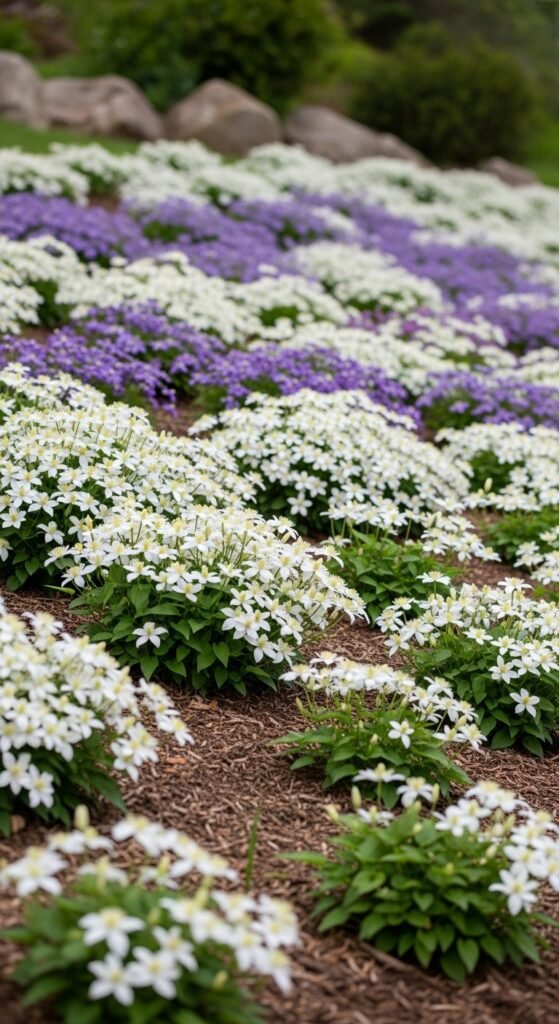
Combine with other perennials, drawing from permaculture plant guilds. Mow or trim lightly post-bloom for neatness, enjoying effortless ground-level charm.
10) Companion Planting with Roses
Pair clematis with roses for a classic combination, where vines climb through bushes for extended color and shared support.
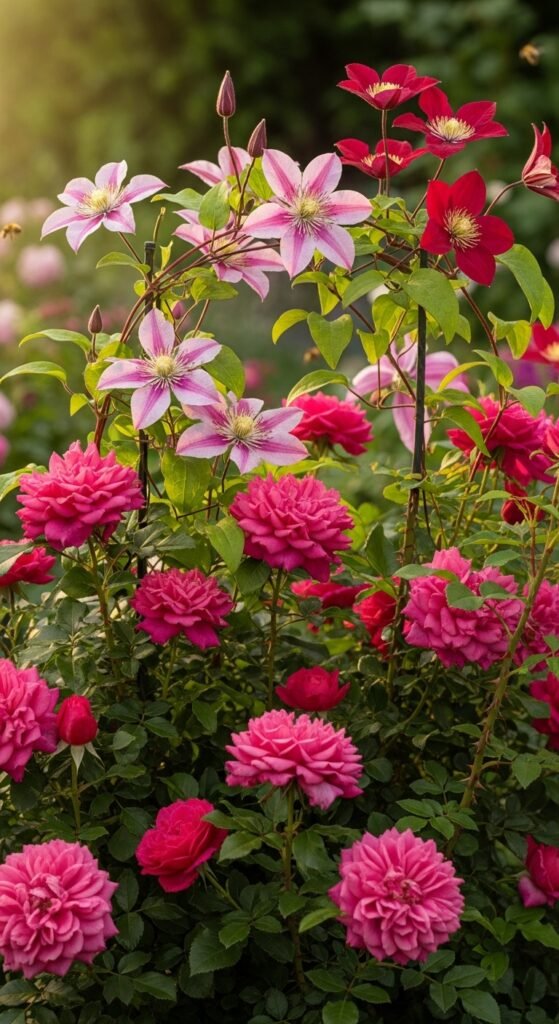
This synergy enhances both plants’ displays, with clematis filling in after rose flushes. Plant together in sunny spots with similar needs.
For pest management, incorporate mosquito-repelling plants nearby. Prune selectively to avoid interference, resulting in a romantic, fragrant duo.
11) Late Blooming Varieties
Select late-flowering clematis to extend your garden’s color into fall, bridging summer and autumn displays seamlessly.
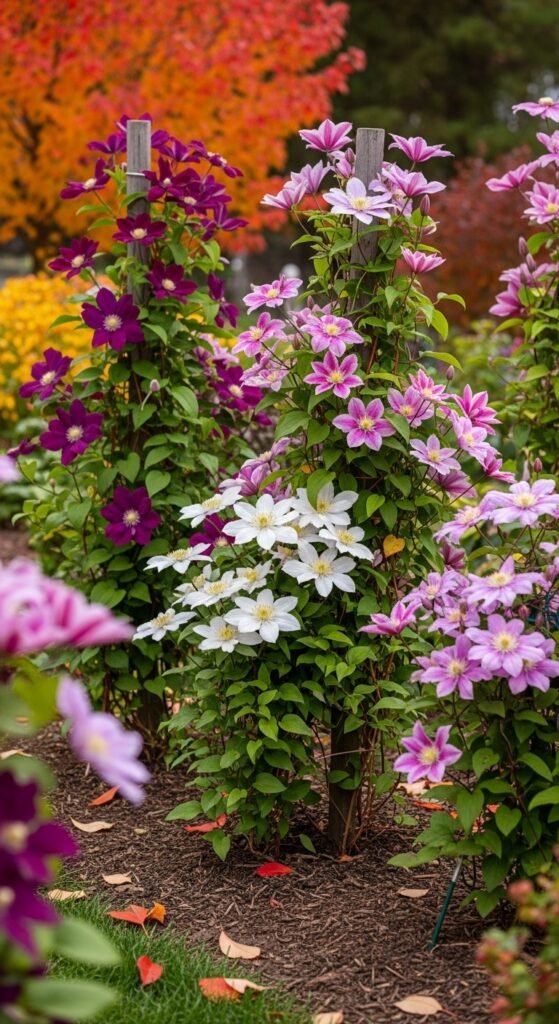
The advantage is prolonged interest when other plants fade. These varieties are hardy and easy to grow. Plant in enriched soil, provide sturdy supports.
Prepare for cooler weather with frost tips. You’ll appreciate the vibrant hues against falling leaves, keeping your garden alive longer.
12) Evergreen Clematis
Opt for evergreen clematis to maintain year-round greenery and winter interest, with blooms in milder seasons.
Why choose evergreen? It offers structure in dormant gardens. Suitable for warmer zones, plant in sheltered spots with good drainage.
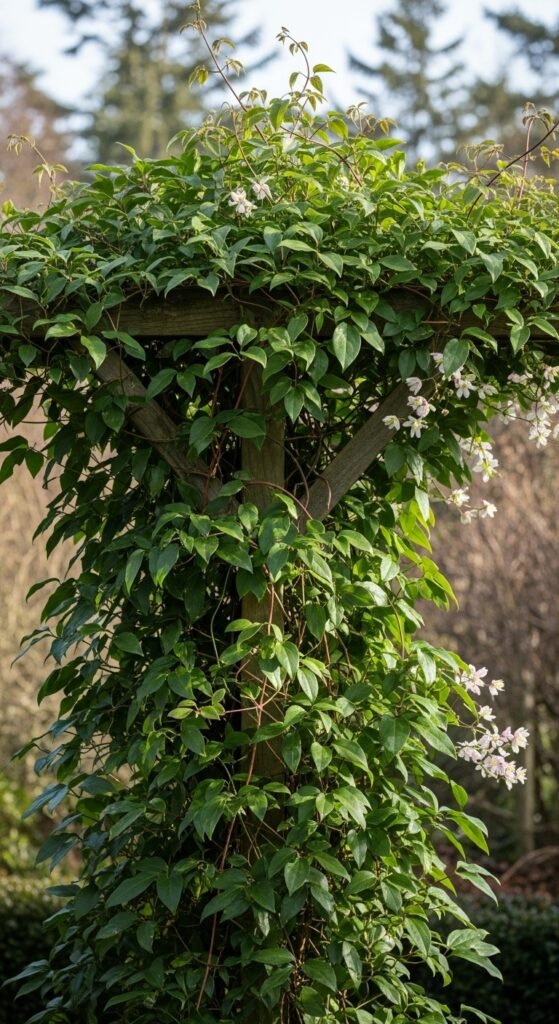
Protect from harsh winters if needed. This idea ensures your trellises stay verdant, providing habitat for wildlife.
13) Scented Clematis
Incorporate fragrant clematis varieties near seating areas to enjoy their sweet aromas while relaxing outdoors.
This sensory addition elevates garden experiences. Fragrance attracts pollinators too. Position in full sun, train on nearby structures.
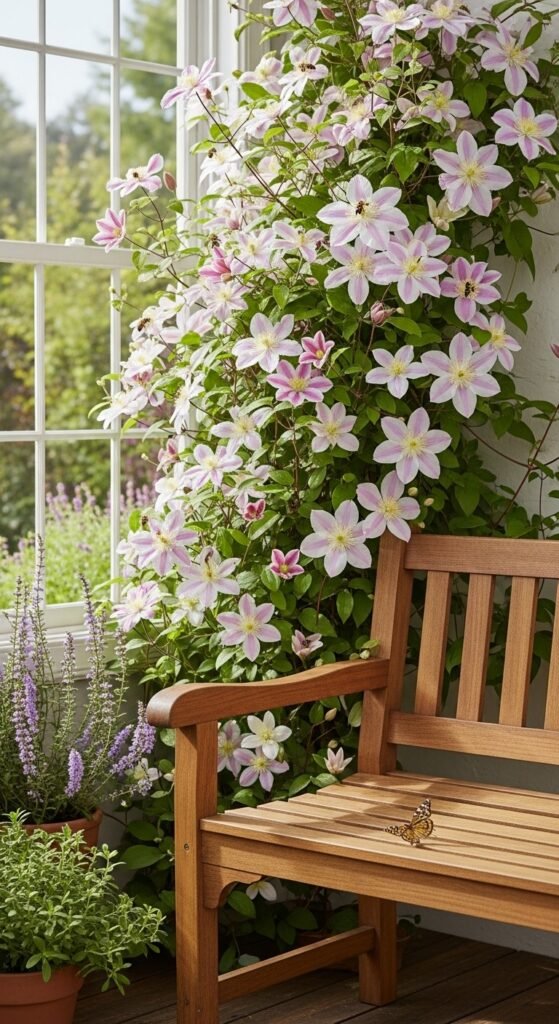
Pair with other scented plants for a perfume garden. Gentle care yields waves of delightful scents throughout blooming periods.
14) Clematis in Hanging Baskets
Grow trailing clematis in hanging baskets for elevated displays on porches or trees, adding whimsy overhead.
Ideal for limited ground space, it creates cascading beauty. Use large baskets with liners, fill with lightweight mix.
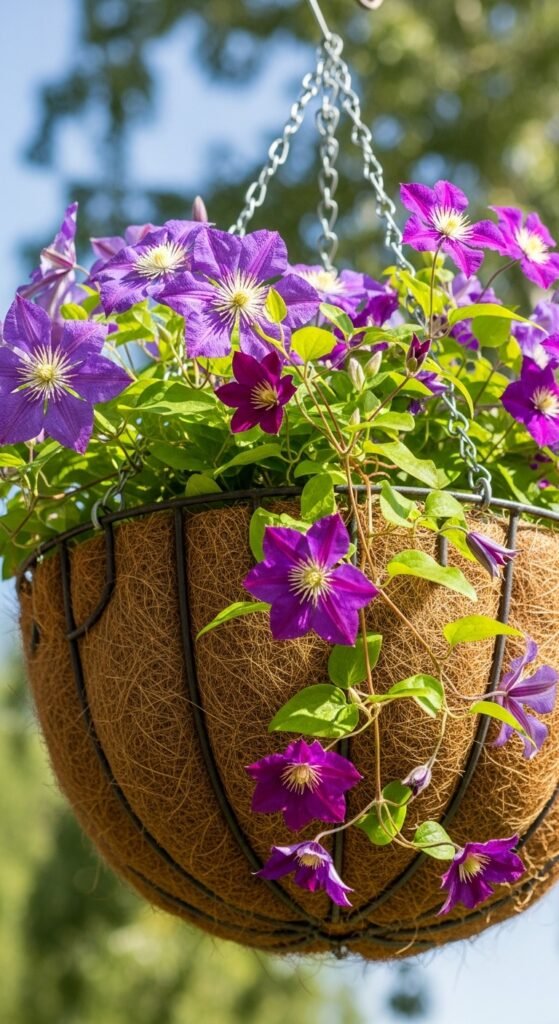
Water frequently due to exposure. This unique approach brings flowers to eye level, enchanting visitors.
15) Clematis for Shade
Choose shade-tolerant clematis to brighten dim corners, where their pale blooms glow against darker foliage.
Why it succeeds: Expands planting options in challenging areas. Plant in moist, humus-rich soil, provide light supports.
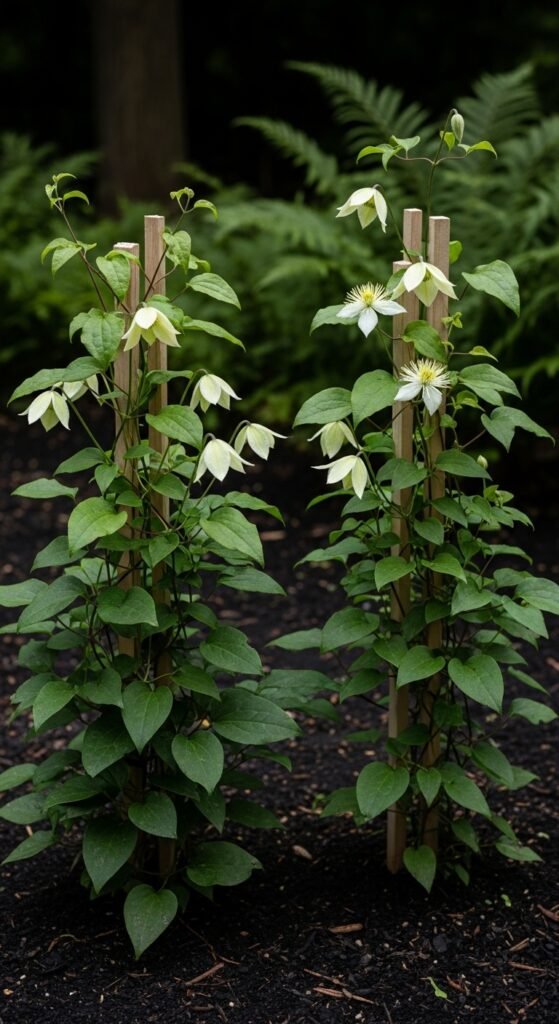
Minimal sun requirements make it versatile. You’ll transform shady spots into floral havens with ease.
Key Principles for Growing Clematis
Soil and Planting Essentials
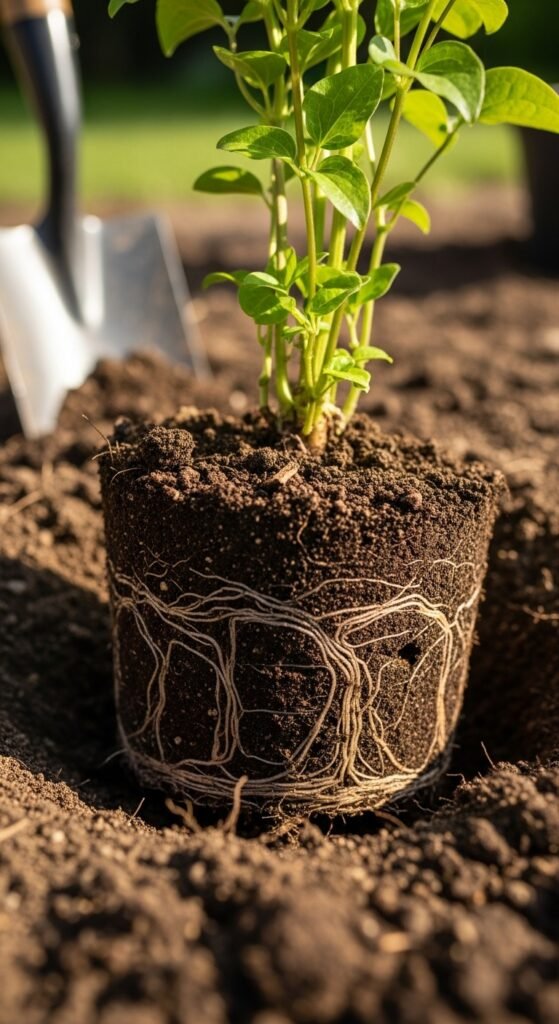
You need well-drained, fertile soil amended with compost for healthy clematis roots. Plant deeply to encourage strong stems, and always provide mulch to retain moisture.
Pruning Guidelines
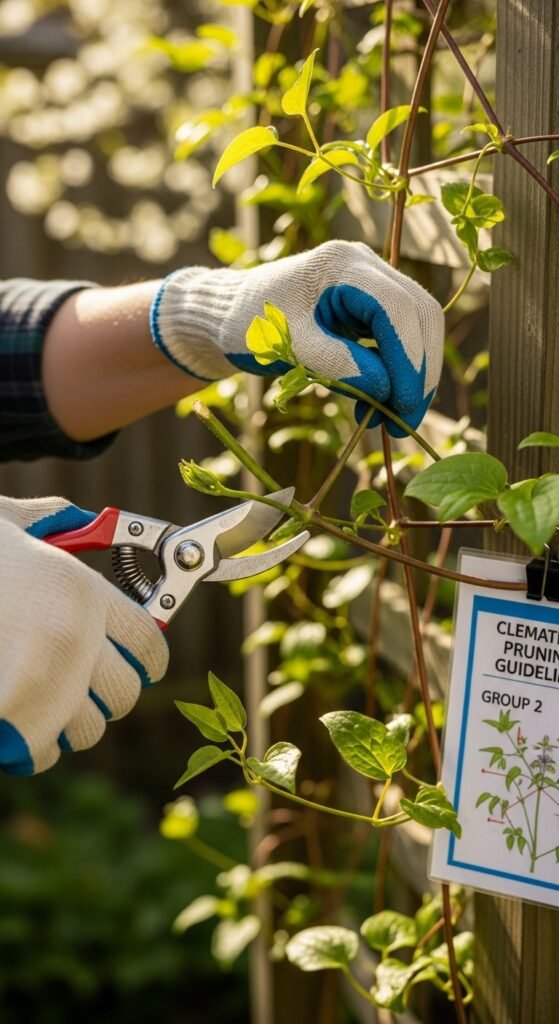
Understand your variety’s group—prune group 1 lightly after bloom, group 2 for shape, group 3 hard in spring. Proper pruning ensures vigorous growth and abundant flowers.
Support and Training Tips
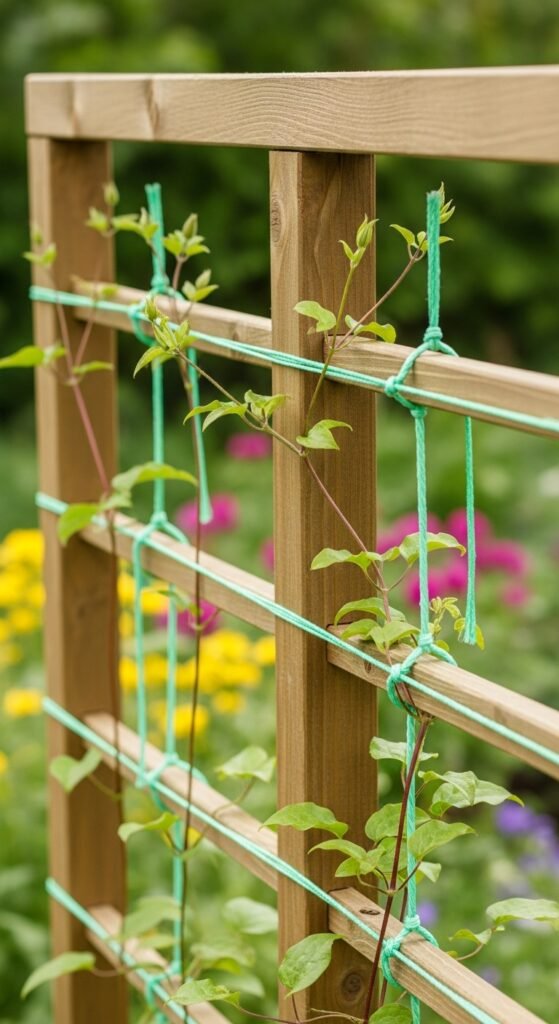
Offer sturdy supports from the start, using ties to guide vines. Regular training prevents tangles and promotes even coverage.
Frequently Asked Questions
When is the best time to plant clematis?
The ideal time is spring or fall when soil is workable and temperatures moderate, allowing roots to establish before extreme weather.
How do I deal with clematis wilt?
Improve drainage and avoid overhead watering to prevent this fungal issue. Remove affected parts promptly and apply fungicide if necessary.
Can clematis grow in pots?
Yes, with large containers and regular feeding, clematis thrives in pots, making it suitable for patios and balconies.
What companions pair well with clematis?
Roses, perennials, and shrubs provide excellent support and complementary blooms, creating diverse garden displays.
How much sun does clematis need?
Most varieties require at least six hours of sunlight, though some tolerate partial shade, depending on the type.