You’ve likely spotted the cheerful yellow petals and dark centers of Black Eyed Susans popping up in gardens and wild areas alike. These hardy perennials, known scientifically as Rudbeckia hirta, are native to North America and thrive in a variety of conditions. With their daisy-like blooms that last from summer into fall, they add vibrant color and attract pollinators like bees and butterflies, making them a favorite for eco-friendly gardeners.
Incorporating Black Eyed Susans into your landscape not only enhances visual appeal but also promotes biodiversity. They’re low-maintenance, drought-tolerant once established, and deer-resistant, saving you time and effort. Whether you’re a beginner or seasoned gardener, these flowers offer endless possibilities to create eye-catching displays that endure through the seasons.
Ready to transform your space? Explore these 15 creative ideas to integrate Black Eyed Susans, complete with tips on what makes each approach work, why it’s beneficial, and how to get started.
1) Vibrant Border Planting
Imagine lining your garden beds with a sea of golden blooms that sway gently in the breeze. Border planting with Black Eyed Susans creates a natural edge that defines your space while adding height and texture. Pair them with shorter plants in front for a layered look that draws the eye.
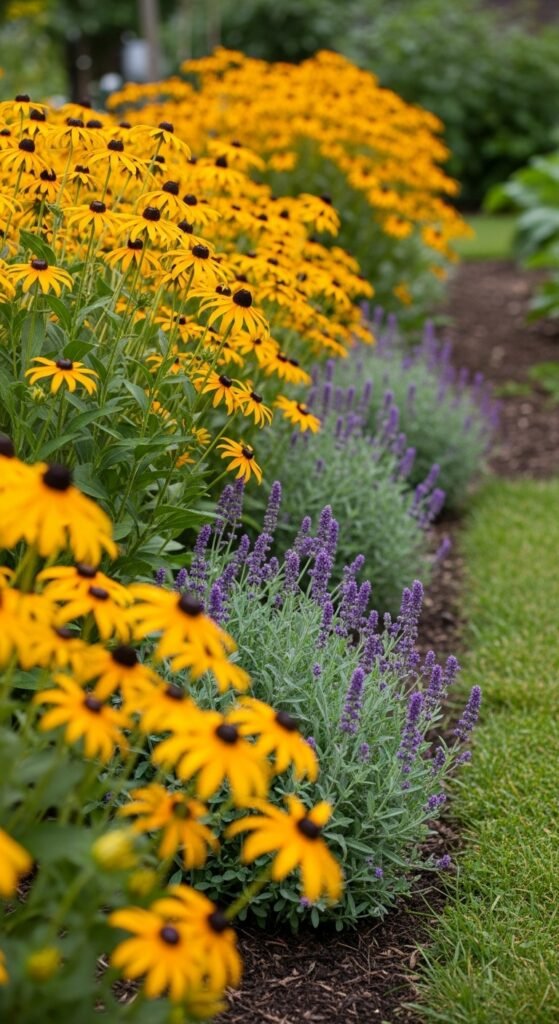
This idea shines because it maximizes visual impact with minimal effort. The flowers’ bright yellow contrasts beautifully with green foliage, and their perennial nature means they return year after year, reducing replanting needs. Plus, they thrive in full sun, making them ideal for exposed borders.
To implement, prepare soil by loosening it and adding compost for drainage. Plant seedlings or seeds 12-18 inches apart in spring after the last frost. Water regularly until established, then enjoy their resilience. For added variety, intersperse with other perennial flowers like coneflowers to extend the bloom season and support local wildlife.
2) Charming Container Displays
Bring the sunny charm of Black Eyed Susans to patios, balconies, or entryways by planting them in containers. Choose large pots to accommodate their root systems, and mix with trailing vines or low-growers for a fuller appearance.
Containers offer flexibility, allowing you to move plants for optimal sun exposure or seasonal rearrangements. This method is perfect for small spaces or renters, providing bursts of color without permanent garden beds. The flowers’ drought tolerance once rooted makes them forgiving for occasional neglect.
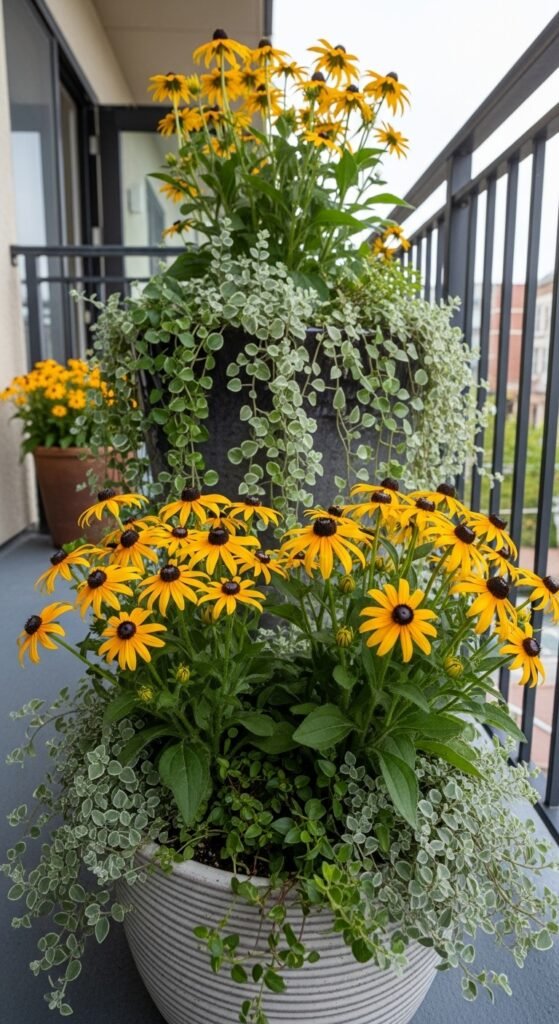
Select well-draining pots and fill with a quality potting mix. Sow seeds or transplant in early summer, spacing multiple plants for density. Place in full sun and water when the top inch of soil dries. Enhance the setup by combining with low-maintenance flowers to create a portable mini-garden that brightens any spot.
3) Wildflower Meadow Mix
Transform a section of your yard into a naturalistic meadow by seeding Black Eyed Susans alongside other wildflowers. This creates a relaxed, prairie-like vibe with waves of yellow dominating the summer landscape.
Meadows promote biodiversity, attracting birds and insects while requiring less mowing and watering than traditional lawns. They’re cost-effective and eco-friendly, turning underused areas into thriving habitats.
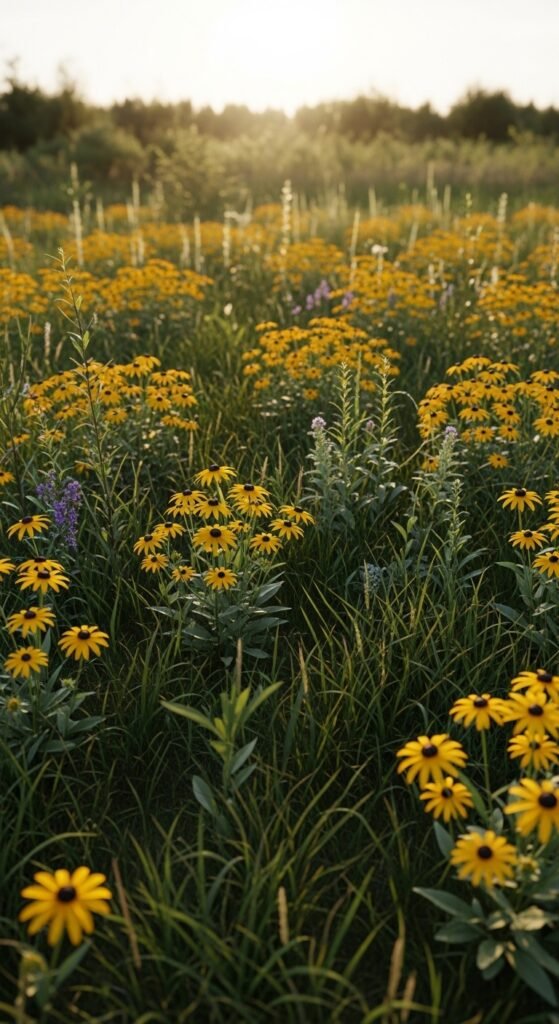
Clear the site of grass, scatter seeds in fall for natural stratification, and lightly rake into soil. Minimal watering encourages deep roots. For authenticity, include native species from our guide on native flowers to foster a self-sustaining ecosystem that evolves beautifully over time.
4) Pollinator Paradise Patch
Dedicate a garden patch to Black Eyed Susans to draw in bees, butterflies, and hummingbirds. Their nectar-rich centers make them a magnet for pollinators, enhancing your garden’s ecological value.
This idea supports declining pollinator populations while boosting your veggie yields through better pollination. It’s rewarding to watch the activity, and the flowers’ long bloom period ensures continuous attraction.
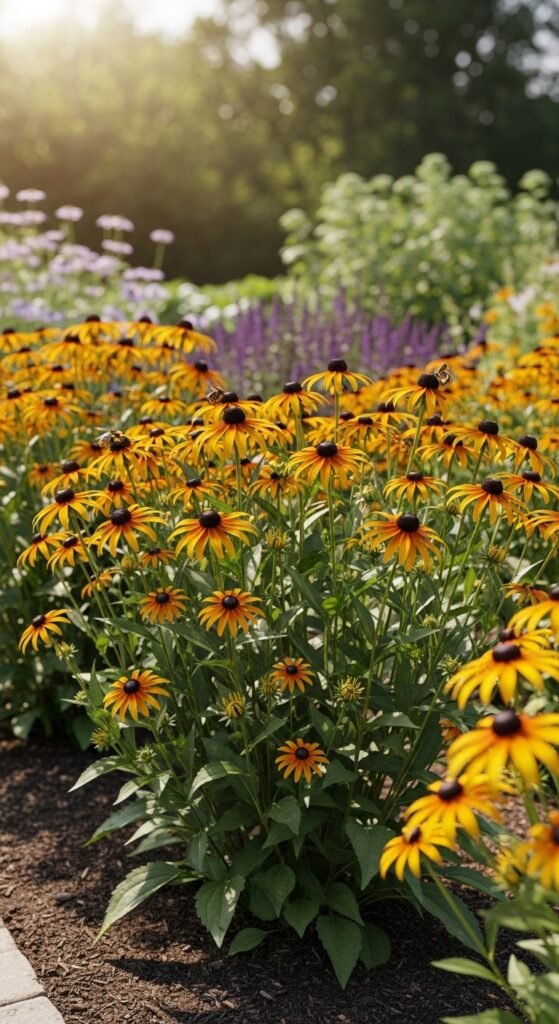
Plant in clusters in sunny spots with average soil. Avoid pesticides to protect visitors. Complement with other pollinator flowers like bee balm for a diverse haven. Mulch lightly to retain moisture, and deadhead spent blooms to prolong flowering.
5) Elegant Cut Flower Arrangements
Harvest Black Eyed Susans for indoor bouquets, where their sturdy stems and vivid colors shine in vases. Mix with greens or other blooms for rustic or modern displays.
Cut flowers bring the outdoors in, brightening homes and events. They’re long-lasting in water, and regular cutting encourages more blooms in the garden.
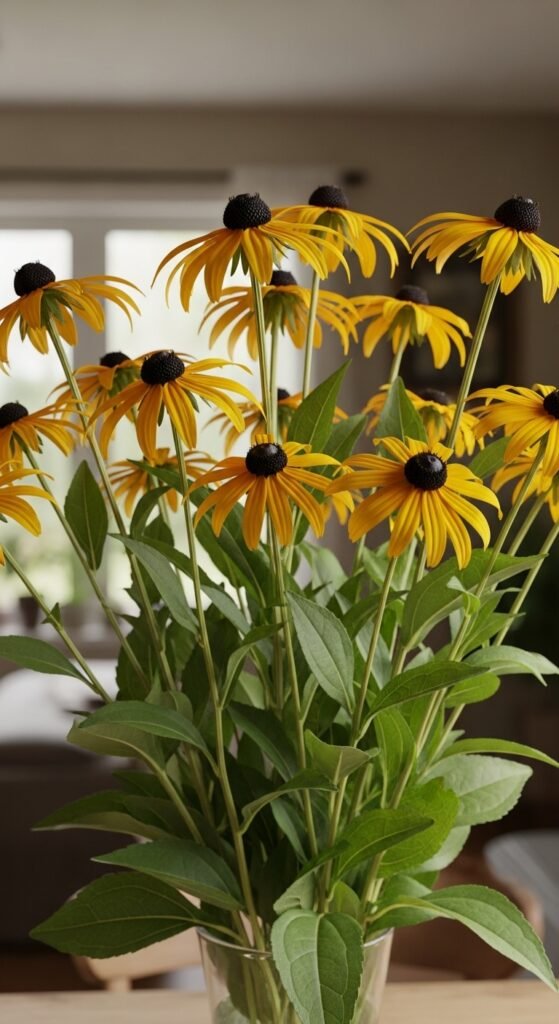
Grow in rows for easy access, cutting stems in the morning when hydrated. Use floral preservatives in vases. Draw inspiration from our cut flower garden tips to create arrangements that capture summer’s essence year-round.
6) Ornamental Grass Companions
Pair Black Eyed Susans with tall ornamental grasses for a textured, dynamic border. The flowers’ bold yellow pops against the grasses’ feathery plumes.
This combination adds movement and interest, with grasses providing winter structure after flowers fade. It’s low-water and low-care, ideal for sustainable landscapes.
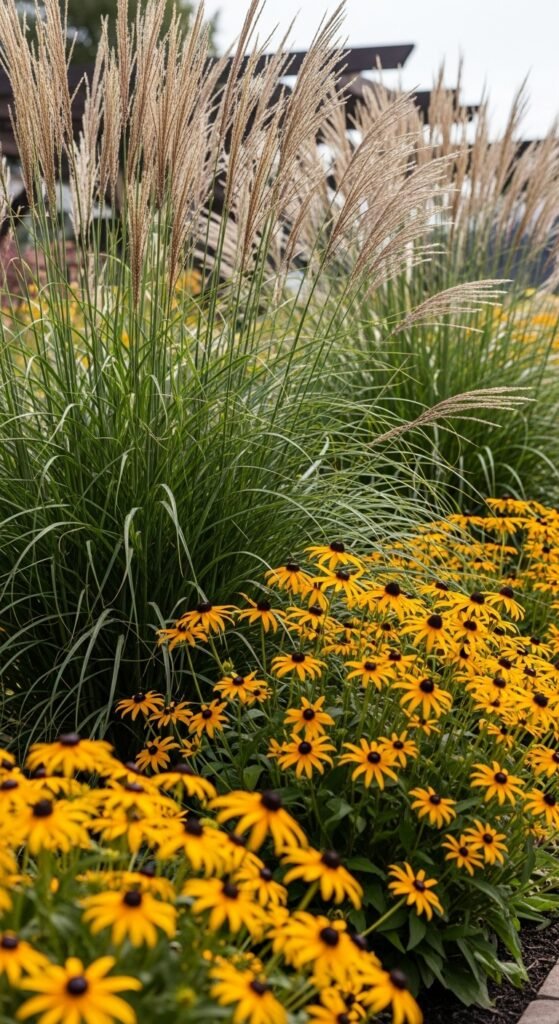
Plant grasses first, then intersperse Susans. Choose varieties like switchgrass for height contrast. Maintain by dividing grasses every few years. Explore more in our article on full sun flowers for complementary sunny pairings.
7) Rock Garden Accents
Incorporate Black Eyed Susans into rock gardens for pops of color amid stones and succulents. Their upright form contrasts nicely with low-growing plants.
Rock gardens mimic natural habitats, conserving water and suiting sloped or poor-soil areas. The flowers add seasonal vibrancy without overwhelming the minimalist aesthetic.
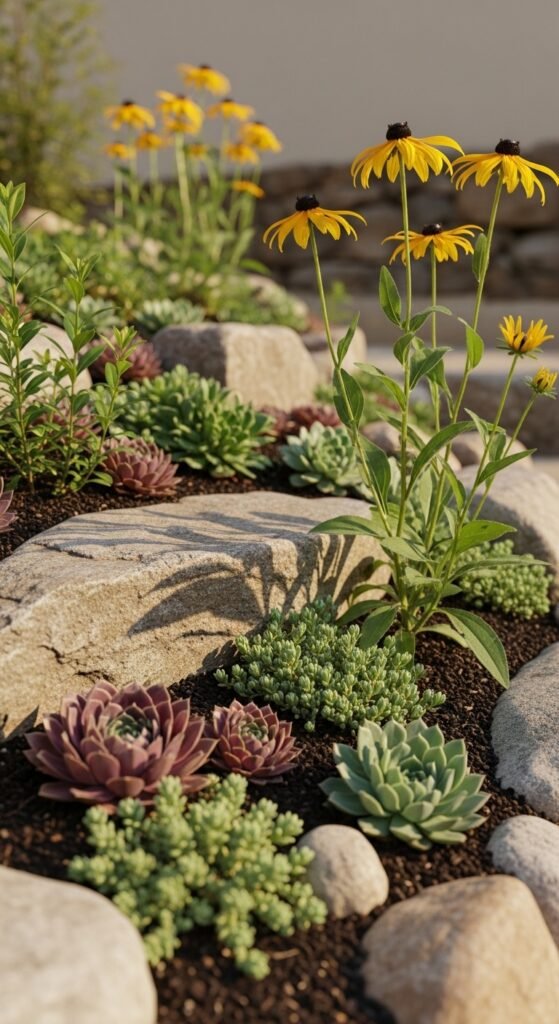
Position in crevices with amended soil for drainage. Water sparingly. For resilience, combine with drought-tolerant flowers to create a hardy, low-effort display.
8) Pathway Lining Charm
Line walkways with Black Eyed Susans to guide visitors through your garden with golden borders. This frames paths beautifully, enhancing navigation and appeal.
Path linings create welcoming entrances and highlight garden features. The flowers’ height adds enclosure without blocking views.
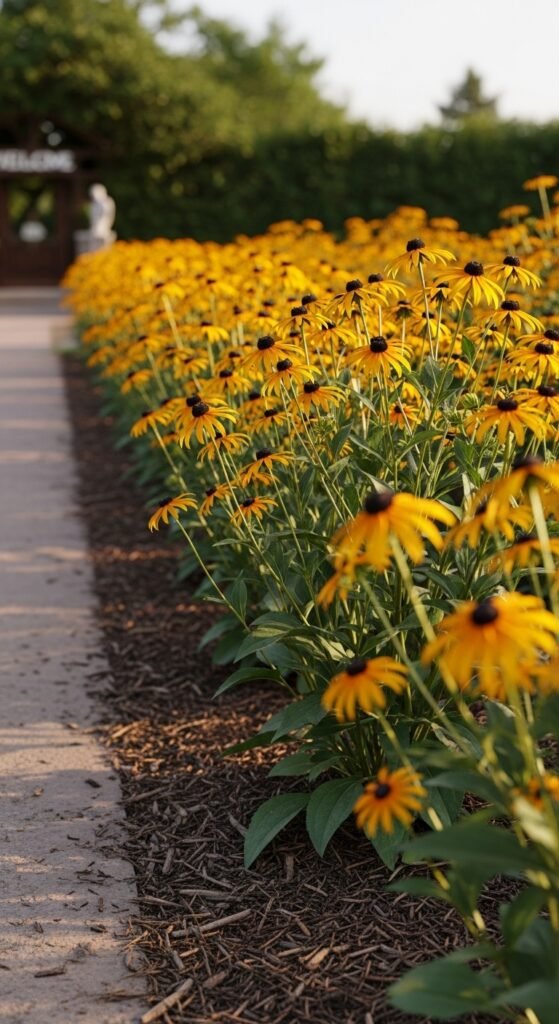
Plant along edges in full sun, spacing for air flow. Mulch to suppress weeds. Integrate with cottage garden flowers for a quaint, storybook feel.
9) Mass Planting Spectacle
Create bold swaths by mass planting Black Eyed Susans in large groups. This delivers high-impact color visible from afar.
Mass plantings simplify maintenance and maximize pollinator benefits. They’re striking in open spaces, mimicking wild growth.
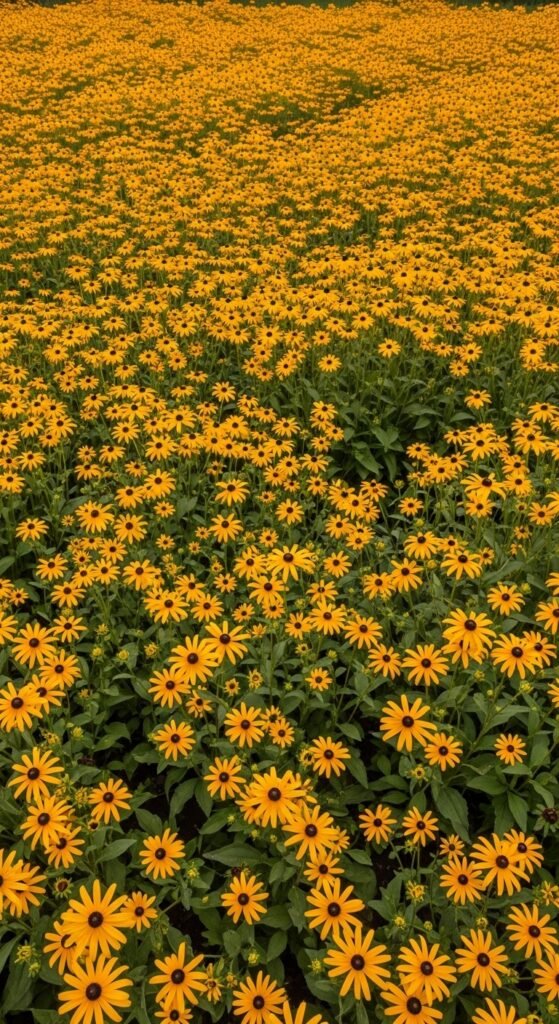
Prepare soil, plant densely in spring. Thin as needed. For extended interest, mix with deer-resistant flowers to deter browsers while keeping the display intact.
10) Butterfly Attracting Haven
Design a dedicated area with Black Eyed Susans to lure butterflies. Their flat blooms serve as landing pads for feeding.
This fosters wildlife observation and aids butterfly conservation. It’s educational for families and adds lively motion to gardens.
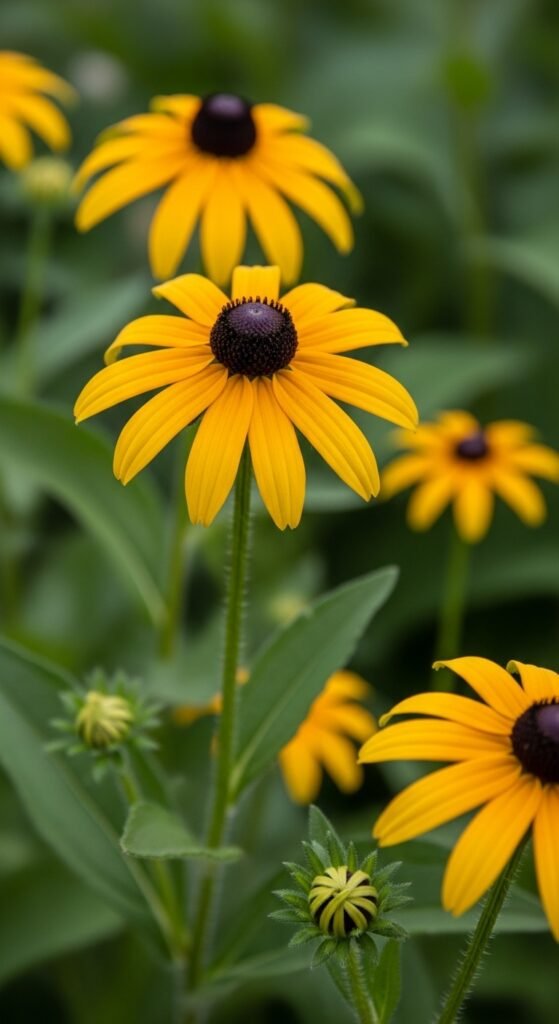
Plant in sunny, sheltered spots. Include host plants. Learn more from our butterfly flowers guide to build a complete habitat.
11) Drought-Resistant Landscape
Use Black Eyed Susans in water-wise designs, grouping with similar plants for efficient irrigation zones.
Drought-tolerant setups save water and time, thriving in hot climates. They maintain beauty during dry spells.
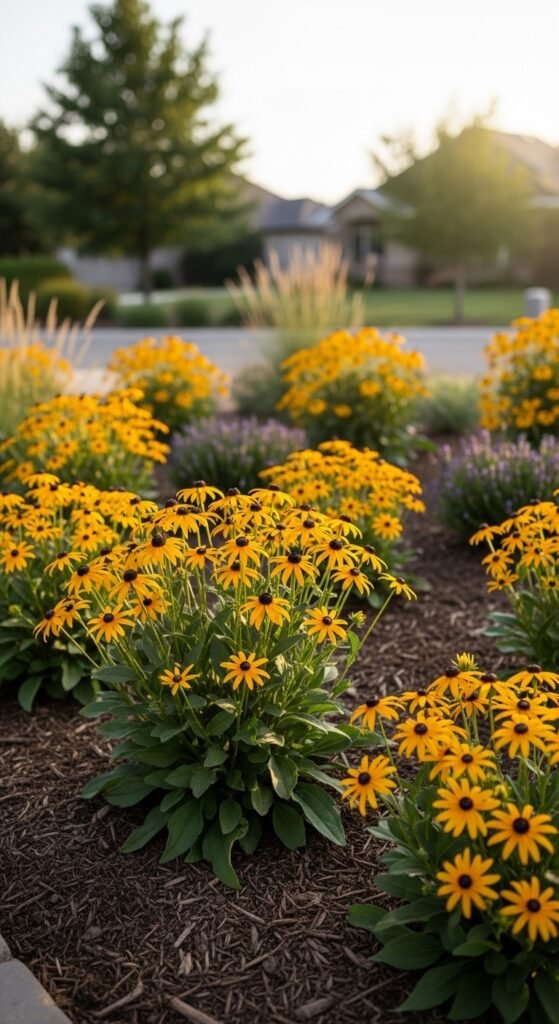
Amend soil for drainage, mulch heavily. Pair with selections from drought-tolerant flowers for a resilient, vibrant yard.
12) Cottage Garden Integration
Blend Black Eyed Susans into cottage-style gardens for a casual, abundant look. Mix with herbs and annuals for charm.
Cottage gardens evoke nostalgia and support diverse planting. They’re forgiving and full of personality.
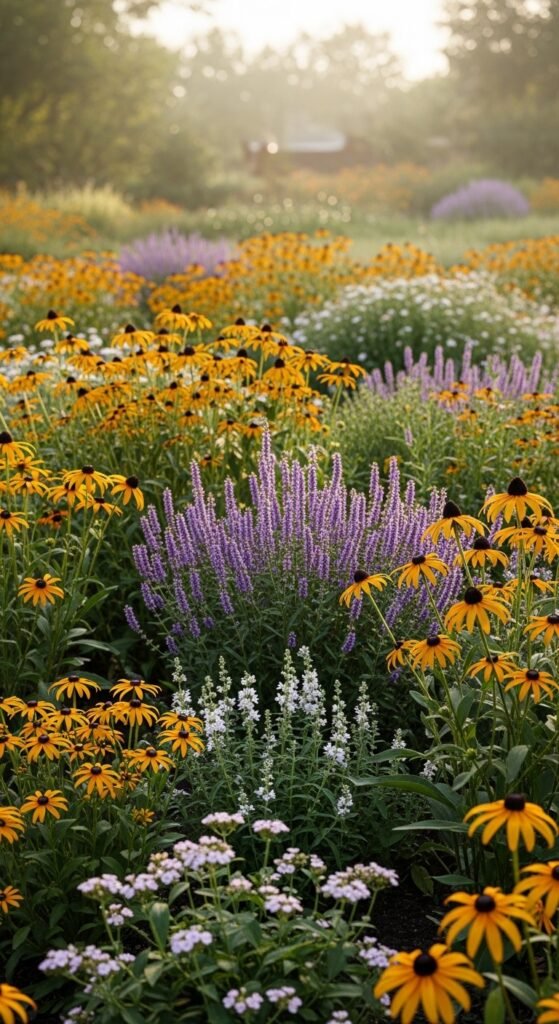
Plant informally, allowing self-seeding. Enhance with ideas from cottage garden flowers for layered, romantic beds.
13) Fall Color Extension
Leverage Black Eyed Susans’ late blooms to extend color into autumn, pairing with fall foliage plants.
This bridges seasons, keeping gardens lively longer. It’s ideal for transitional displays.

Plant in mixed borders. Deadhead for reblooming. Combine with fall flowers for seamless seasonal shifts.
14) Native Plant Ensemble
Feature Black Eyed Susans in native-themed gardens to celebrate local flora. Group with grasses and shrubs.
Native plants require less care and support ecosystems. They’re authentic and sustainable.
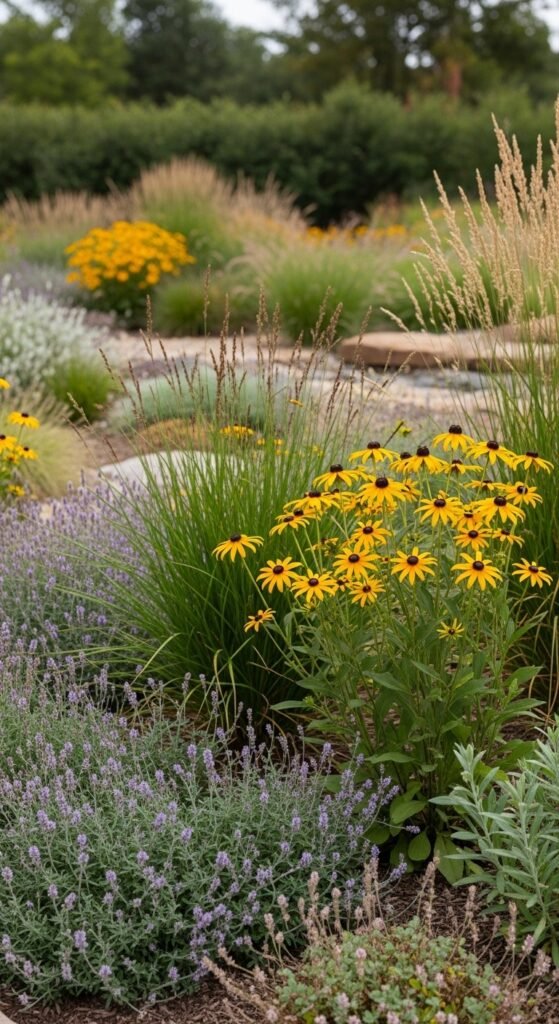
Select site-appropriate companions. Minimal intervention needed. Dive deeper with our native flowers resources.
15) Vertical Garden Accents
Incorporate Black Eyed Susans at the base of trellises or walls, allowing climbers to frame them vertically.
Vertical accents maximize space and add dimension. Great for small gardens or urban settings.
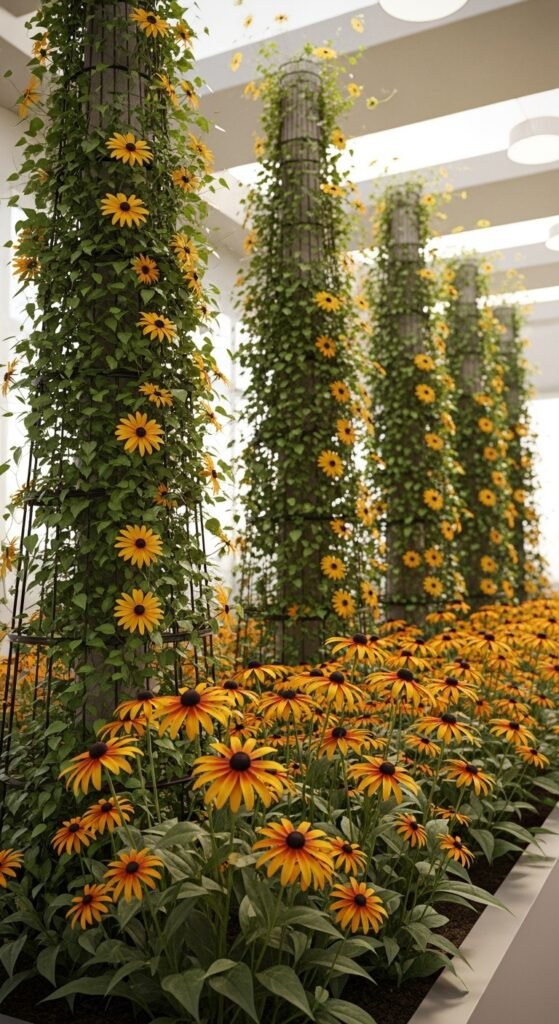
Plant below supports, train vines upward. For low-effort verticality, reference low-maintenance flowers to keep the focus effortless.
Key Principles for Growing Black Eyed Susans
Soil and Sunlight Requirements

Black Eyed Susans prefer well-drained, average soil with a neutral pH. Full sun exposure— at least six hours daily—promotes robust growth and abundant blooms. Amend heavy clay with organic matter to improve drainage and prevent root rot.
Watering and Maintenance Tips
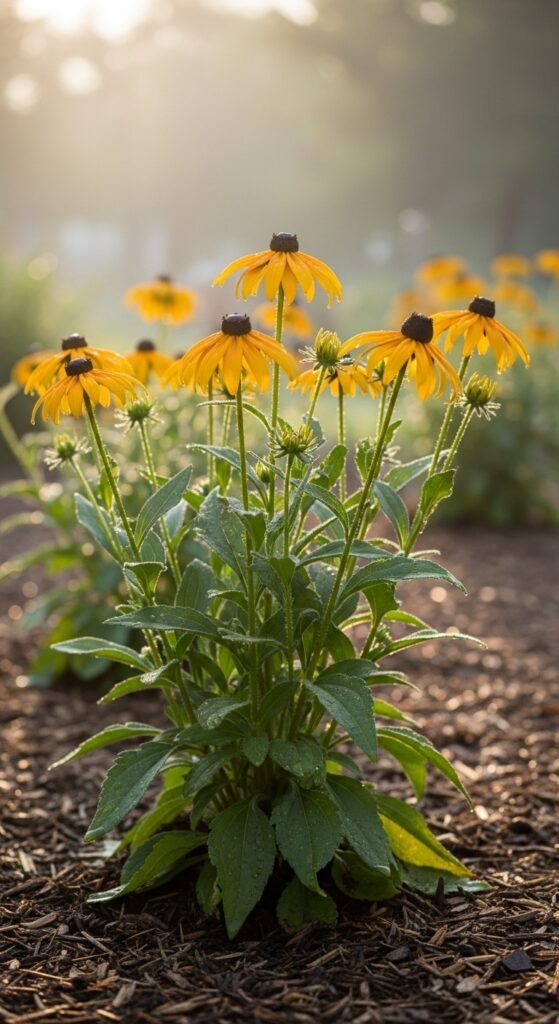
Water deeply but infrequently to encourage deep roots, especially during establishment. Once mature, they’re tolerant of dry conditions. Deadhead faded flowers to extend blooming, and divide clumps every 3-4 years to maintain vigor.
Common Pests and Diseases
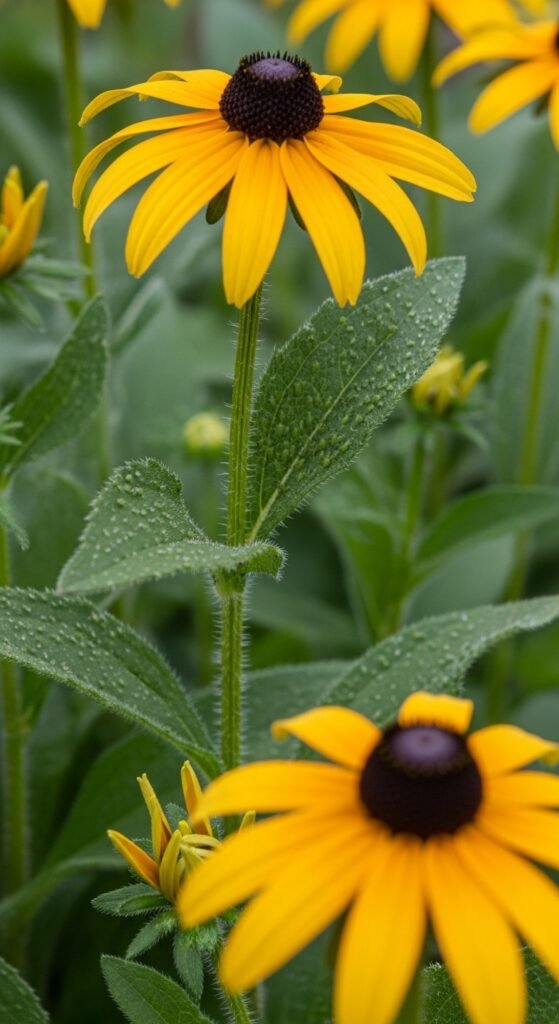
Watch for aphids or powdery mildew in humid conditions. Use organic sprays if needed, and ensure good air circulation. These plants are generally resilient, with few serious issues when grown in suitable environments.
Frequently Asked Questions
When is the best time to plant Black Eyed Susans?
Spring after the last frost or early fall allows roots to establish before winter. This timing ensures strong growth and blooming in the following season.
How do I propagate Black Eyed Susans?
Divide mature clumps in spring or fall, or collect seeds from dried heads for sowing. Both methods are straightforward and yield new plants economically.
Are Black Eyed Susans invasive?
While they self-seed readily, they’re not typically invasive. Manage spread by deadheading before seeds form if containment is desired.
Can Black Eyed Susans grow in shade?
They prefer full sun but tolerate partial shade, though blooming may be reduced. Aim for morning sun with afternoon protection in hot climates.
What companions pair well with Black Eyed Susans?
Grasses, coneflowers, and salvia complement their form and color. Choose plants with similar sun and water needs for harmonious growth.