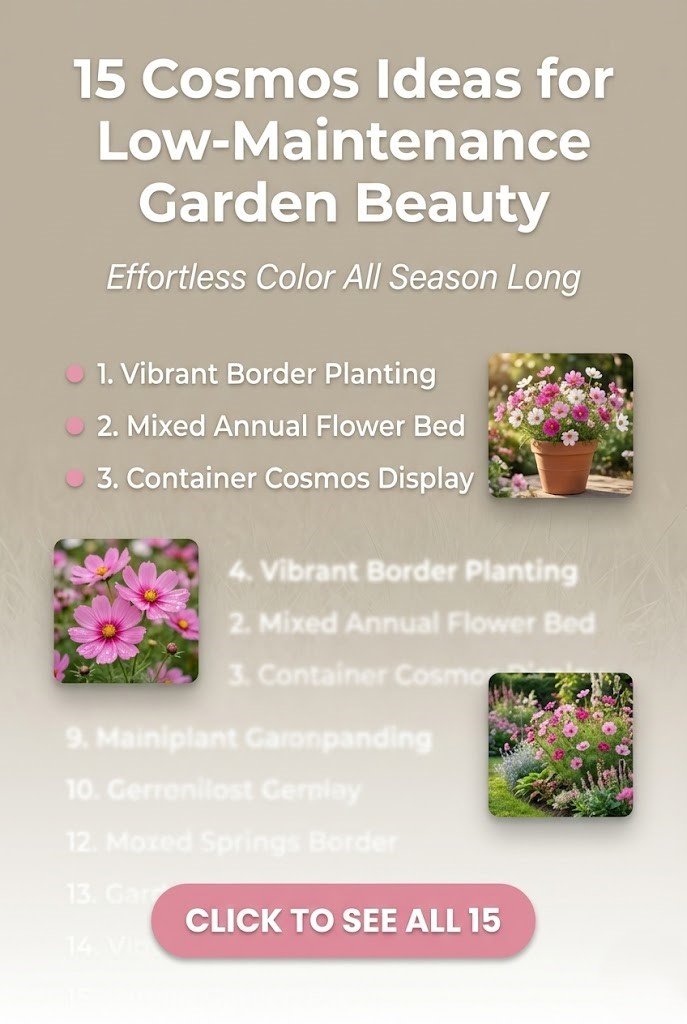
Cosmos flowers are a delightful addition to any garden, known for their vibrant, daisy-like blooms that come in shades of pink, white, orange, and even chocolate. These annuals are easy to grow from seed, thriving in full sun and well-drained soil, making them ideal for beginners and seasoned gardeners alike. Originating from Mexico, cosmos bring a touch of wild beauty with their feathery foliage and long-lasting flowers that attract pollinators like butterflies and bees.
Incorporating cosmos into your landscape not only adds color and height but also promotes biodiversity. They bloom from summer to fall, providing continuous interest when many other plants fade. Whether you’re aiming for a casual cottage look or a structured border, cosmos offer versatility without demanding much maintenance. Their drought tolerance once established makes them a smart choice for water-wise gardening, helping you create a sustainable and visually appealing outdoor space.
Explore these 15 ideas to inspire your cosmos planting. Each suggestion includes practical tips on implementation, highlighting the unique benefits to enhance your garden’s appeal and functionality.
1) Vibrant Border Planting
You can create a stunning border by planting cosmos along the edges of your garden beds. This idea involves sowing seeds directly in the soil after the last frost, spacing them about 12 inches apart for a full, bushy effect. Choose a mix of varieties like ‘Sensation’ for tall, showy blooms that reach up to 4 feet.

The why behind this is simple: borders with cosmos add height and color, drawing the eye and defining spaces naturally. They sway gently in the breeze, creating movement, while their bright hues contrast beautifully with greener shrubs. Plus, they attract beneficial insects, supporting a healthy ecosystem.
To achieve this, prepare the soil by loosening it and adding compost for nutrients. Water lightly until established, then enjoy low-maintenance beauty. For added interest, interplant with marigolds to deter pests naturally. This setup requires minimal weeding, as cosmos grow densely, suppressing unwanted growth effectively.
2) Mixed Annual Flower Bed
Integrate cosmos into a bed with other annuals for a riot of color throughout the season. Plant them alongside zinnias and snapdragons, sowing seeds in clusters for a patchwork effect. Opt for shorter varieties like ‘Sonata’ if space is limited, ensuring they don’t overshadow companions.
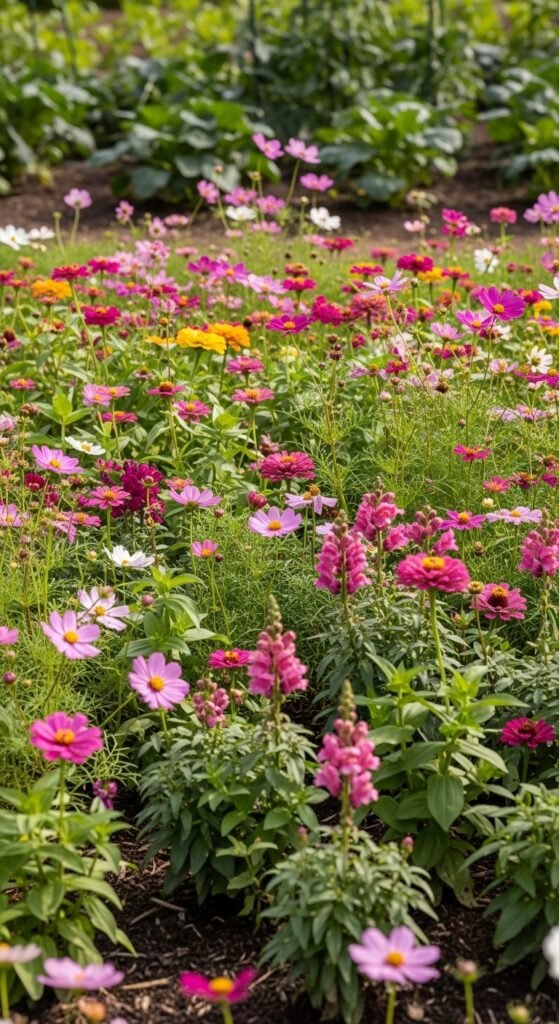
This approach works because annuals like cosmos fill gaps quickly, providing instant gratification compared to perennials. They extend the blooming period, offering continuous flowers when planned successionally. Moreover, this diversity boosts pollinator activity, enhancing garden vitality and yield if near vegetables.
Start by sketching your bed layout, then till the soil and incorporate organic matter. Sow cosmos seeds shallowly, covering lightly, and thin seedlings to promote airflow. Mulch to retain moisture. Consider pairing with zinnias for complementary colors and heights, creating a visually balanced display that’s easy to maintain.
3) Container Cosmos Display
Grow cosmos in pots or containers for flexible placement on patios or balconies. Use large containers with drainage holes, filling with potting mix amended for good aeration. Select compact varieties such as ‘Bright Lights’ to prevent toppling in wind.
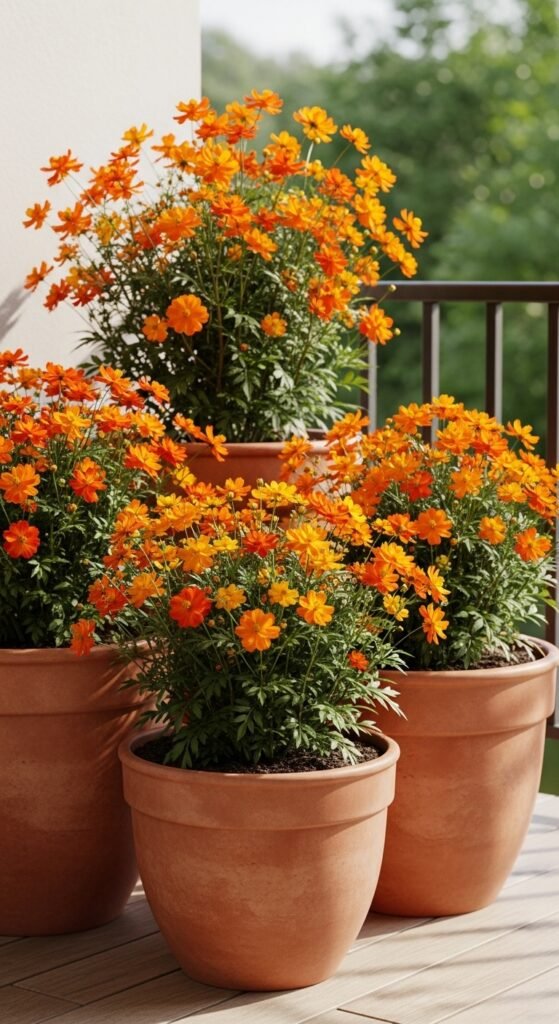
The benefit lies in mobility—you can move them to sunnier spots or indoors during threats. Containers allow cosmos in small spaces, adding vertical interest when grouped. They also simplify care, isolating issues like pests without affecting the whole garden.
Plant seeds indoors 4-6 weeks before last frost, transplanting once seedlings are sturdy. Water consistently but avoid sogginess. Fertilize sparingly with a balanced formula. For a thematic touch, combine with trailing plants, drawing inspiration from container flower arrangements to maximize visual impact in confined areas.
4) Cut Flower Cosmos Garden
Dedicate a section to cosmos specifically for cutting, planting in rows for easy access. Choose long-stemmed types like ‘Versailles’ for bouquets. Succession sow every two weeks to prolong harvest.
Why this idea shines: Cosmos make excellent cut flowers, lasting up to a week in vases with fresh water. This encourages more blooms through regular picking, extending the season. It also brings garden beauty indoors, enhancing home decor economically.
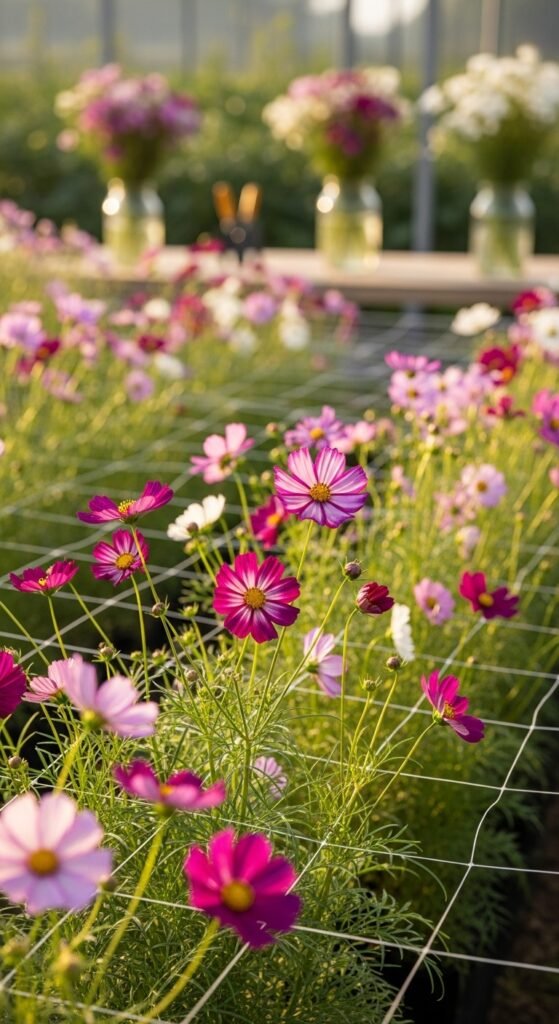
Prepare rows by raking soil smooth, sowing seeds thinly. Support taller stems with netting. Harvest in the morning when buds are half-open. Explore cut flower garden techniques for tips on conditioning stems, ensuring your arrangements stay vibrant longer while promoting ongoing garden productivity.
5) Butterfly-Attracting Cosmos Patch
Design a patch focused on cosmos to lure butterflies, planting in full sun with nectar-rich varieties. Mix colors to create a welcoming habitat, spacing plants to allow air circulation.
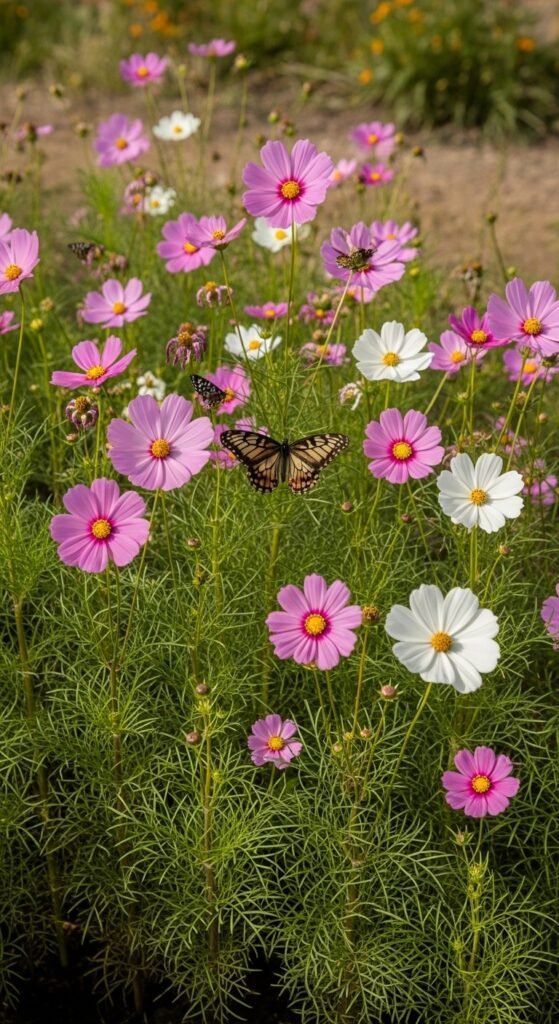
This is advantageous as cosmos’ open blooms provide easy access for butterflies, boosting pollination rates garden-wide. It fosters biodiversity, naturally controlling pests through predator-prey balance. Visually, the fluttering adds dynamic charm to your space.
Sow seeds directly after soil warms, thinning to 18 inches. Avoid pesticides to protect visitors. Complement with other attractors; for more ideas, check butterfly-friendly flowers. Water at base to prevent fungal issues, enjoying a lively, eco-friendly garden feature.
6) Cottage-Style Cosmos Integration
Incorporate cosmos into a cottage garden for that charming, informal look. Scatter seeds among perennials and herbs, allowing self-seeding for a natural progression.
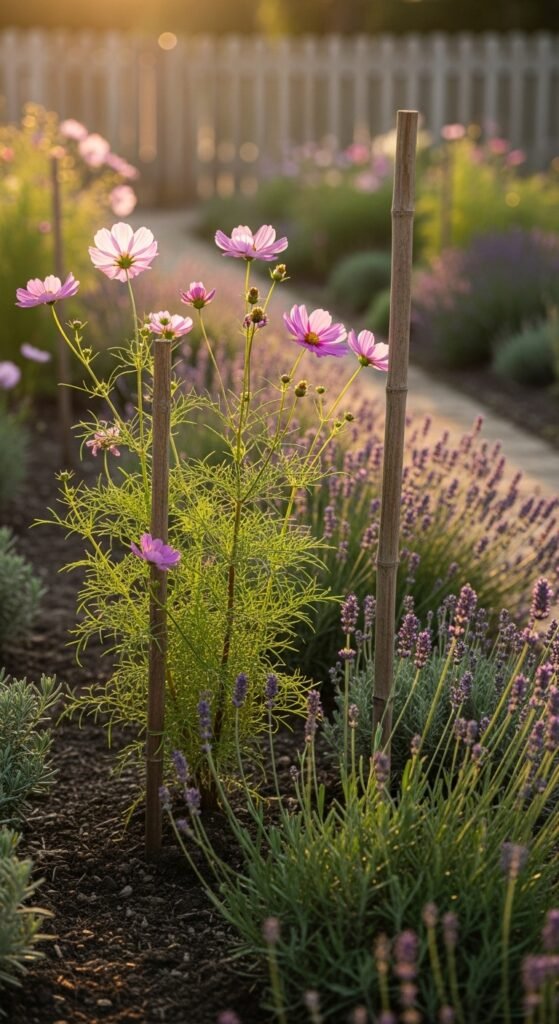
The appeal is in the relaxed aesthetic—cosmos soften edges, blending seamlessly with diverse plants. They require little upkeep, thriving in average soil, and reseed annually, reducing replanting efforts. This style evokes timeless romance while being forgiving for novices.
Loosen soil, broadcast seeds, and rake lightly. Mulch sparingly to encourage self-sowing. Pair with traditional companions like lavender for fragrance. Draw from cottage garden flower selections to curate a cohesive, enduring landscape that’s both picturesque and practical.
7) Mass Planting for Impact
Plant cosmos en masse in a dedicated area for a bold color statement. Use a single variety or color for uniformity, sowing densely in prepared beds.
This method delivers wow factor through sheer volume, transforming bland spaces into vibrant meadows. It’s cost-effective, as seeds are inexpensive, and the density suppresses weeds naturally. Pollinators flock, enhancing overall garden health.

Clear the area, amend soil if needed, and sow in drills for even coverage. Thin as necessary. Water evenly until germination. For similar dramatic effects, consider sunflowers as tall accents. This approach yields a low-effort, high-reward display perfect for larger yards.
8) Companion Planting with Vegetables
Pair cosmos with veggies like tomatoes or peppers to enhance growth and deter pests. Plant around garden edges or intersperse for integrated benefits.
Why it works: Cosmos attract predatory insects that control aphids and other threats, improving crop yields organically. Their height provides light shade, reducing bolting in greens. This symbiotic setup promotes sustainable gardening practices.
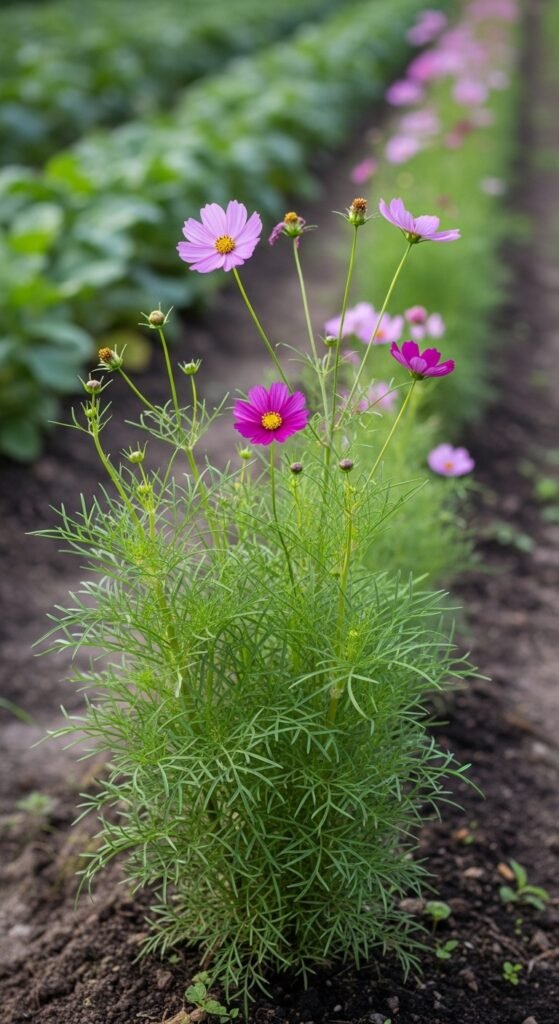
Sow cosmos seeds alongside veggie starts, ensuring they don’t compete for nutrients. Monitor spacing for airflow. For optimal pairings, reference companion flowers for vegetables. This idea merges beauty with utility, creating a productive, pest-resilient plot.
9) Hanging Basket Cosmos
Utilize cosmos in hanging baskets for elevated color bursts. Choose trailing or compact varieties, planting in well-draining baskets lined with coco fiber.
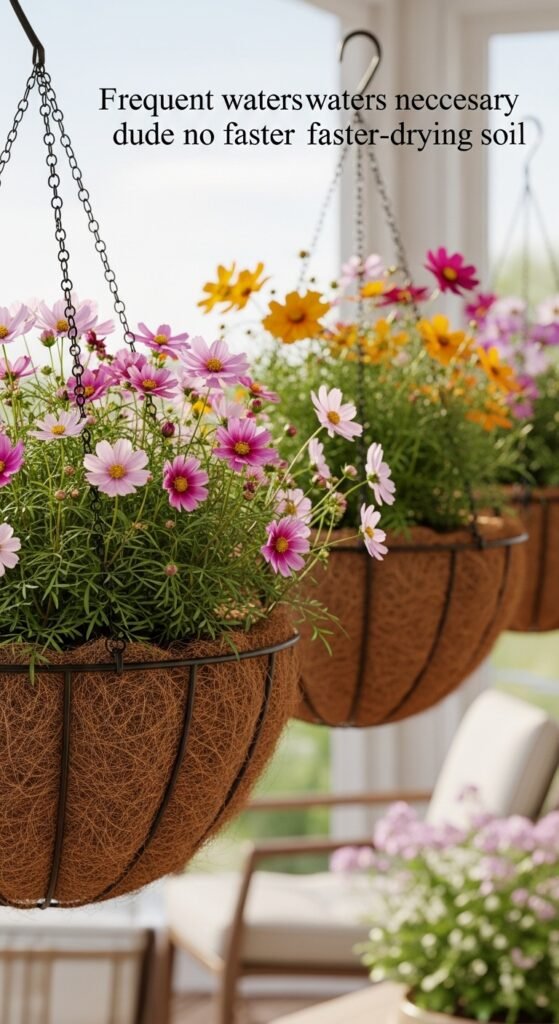
Benefits include space-saving for small areas, adding vertical dimension. Baskets protect from ground pests and allow easy relocation for sun optimization. They bring blooms to eye level, enhancing enjoyment.
Fill with lightweight mix, sow seeds or transplant seedlings. Hang in sunny spots, watering frequently due to faster drying. Fertilize monthly. Inspire your setup with hanging basket flower ideas, crafting a cascading, maintenance-light feature.
10) Background Filler in Perennial Beds
Use cosmos as fillers behind perennials, sowing in gaps for seasonal height and color. Select taller types to backdrop shorter plants.
This fills voids left by dormant perennials, maintaining year-round interest. Cosmos self-seed, potentially naturalizing, while their airy form doesn’t overwhelm. It bridges seasons seamlessly.
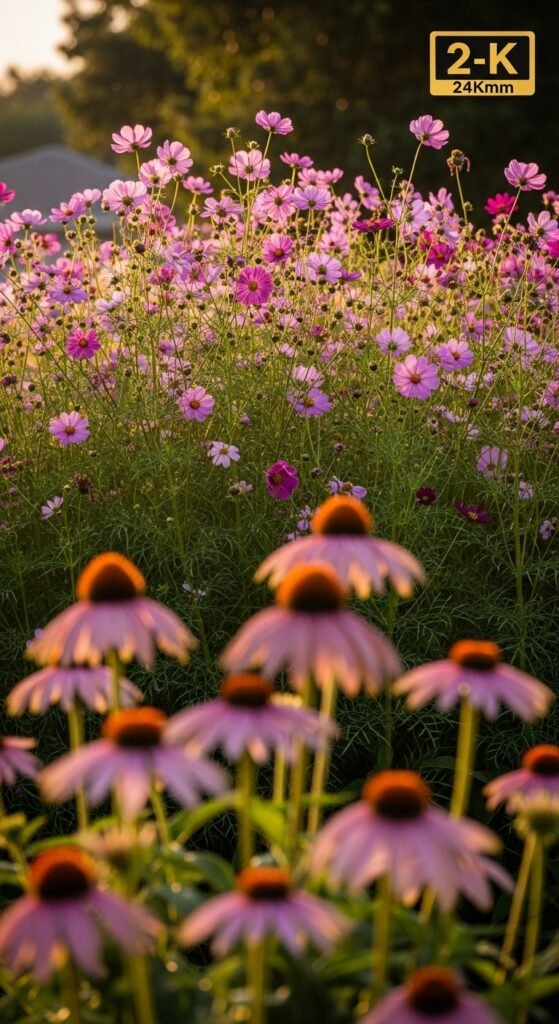
Scatter seeds in spring, thinning to avoid crowding. Deadhead for prolonged blooms. Complement with perennial flower options for layered depth. This technique creates a dynamic, evolving bed with minimal annual input.
11) Wildflower Meadow Simulation
Create a mini meadow by mixing cosmos with native wildflowers, broadcasting seeds over prepared ground for a naturalistic vibe.
Advantages: Low maintenance once established, it supports wildlife and requires less water. The informal look suits eco-conscious gardeners, mimicking prairies for biodiversity.

Rake soil, sow mix, and press lightly. Water gently until growth. For authenticity, incorporate wildflower meadow strategies. This idea yields a resilient, ever-changing landscape that’s environmentally beneficial.
12) Pathway Edging with Cosmos
Edge paths with cosmos for guided, colorful walks. Plant along borders, using low-growing varieties for neat definition.
This softens hardscapes, adding whimsy and fragrance. It directs foot traffic, protecting beds, while blooms invite closer inspection. Easy to implement, it enhances accessibility.

Dig shallow trenches, sow seeds, and cover. Mulch paths for contrast. Explore pathway flower enhancements for varied textures. This simple addition transforms ordinary walks into delightful journeys.
13) Patio Pot Arrangements
Arrange cosmos in pots around patios for instant ambiance. Group varying sizes and colors for eclectic charm.
Why effective: Pots add flexibility, refreshing outdoor living areas seasonally. Cosmos thrive in containers, bringing height without permanence. They create intimate, pollinator-friendly zones.
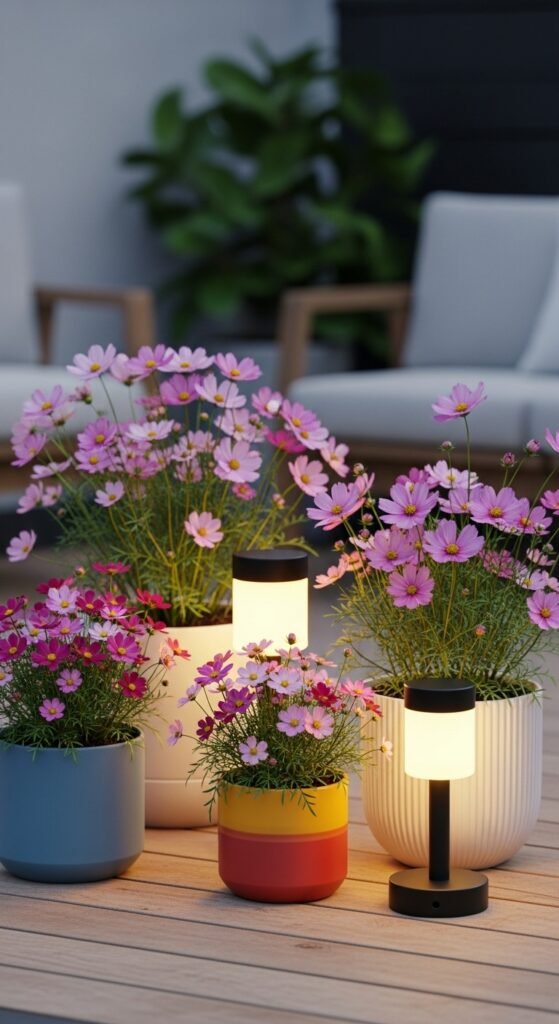
Use quality soil, plant densely for fullness. Position for sun exposure. For design tips, see patio planter ideas. This setup elevates gatherings with effortless floral elegance.
14) Interplanting with Perennials
Interplant cosmos among perennials like coneflowers for hybrid vigor. Sow in open spots to fill and contrast.
Benefits: Cosmos extend bloom times, masking perennial dieback. They add annual vibrancy to stable beds, encouraging reseeding for continuity. This blend maximizes space efficiently.
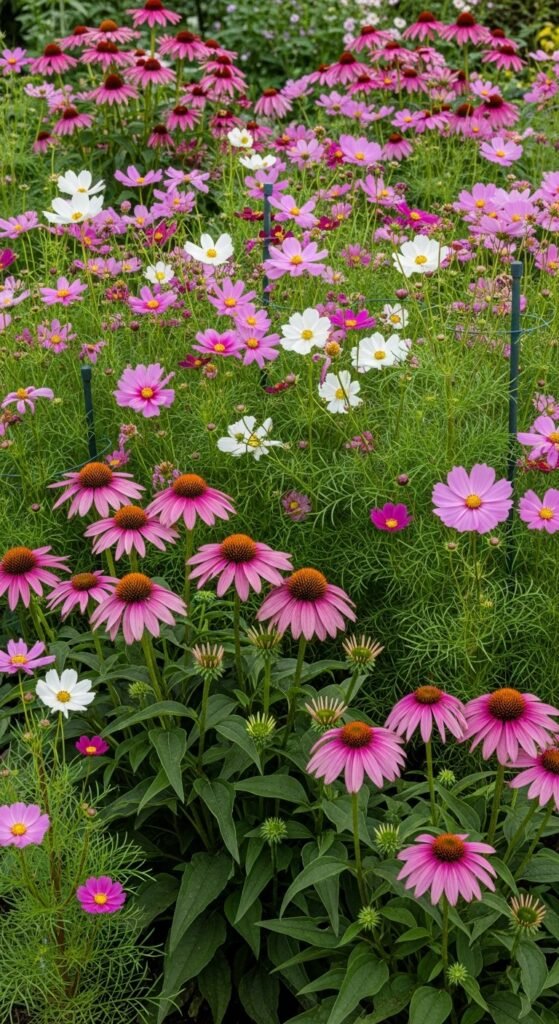
Assess light, sow accordingly, and thin. Support if needed. Pair with echinacea for pollinator synergy. This method crafts a textured, multi-seasonal tapestry.
15) Themed Color Cosmos Gardens
Design gardens around cosmos color themes, like all pinks or oranges, for cohesive aesthetics. Plant in blocks or gradients.
This creates focal points, evoking moods—soft pastels for calm, bold hues for energy. It’s artistic, allowing personalization while cosmos’ ease suits experimentation.

Plan palette, sow varieties accordingly. Maintain with deadheading. For combinations, consult flower color combination guides. This idea turns your garden into a living canvas of harmony.
Key Principles for Growing Cosmos
Soil and Site Selection
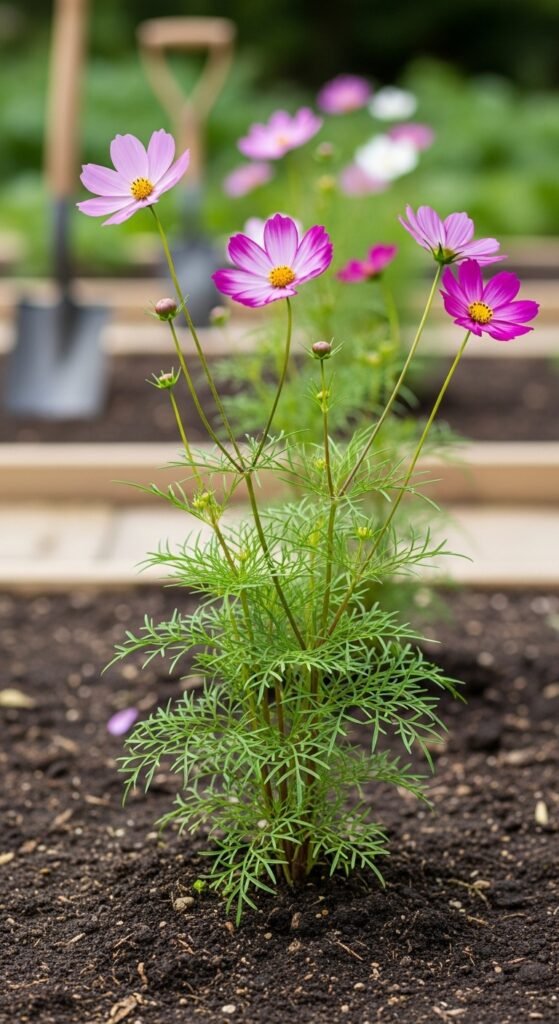
Choose well-drained, average soil in full sun—cosmos tolerate poor conditions but avoid rich earth to prevent legginess. Test pH for neutrality; amend if necessary with compost sparingly.
Maintenance and Care Tips
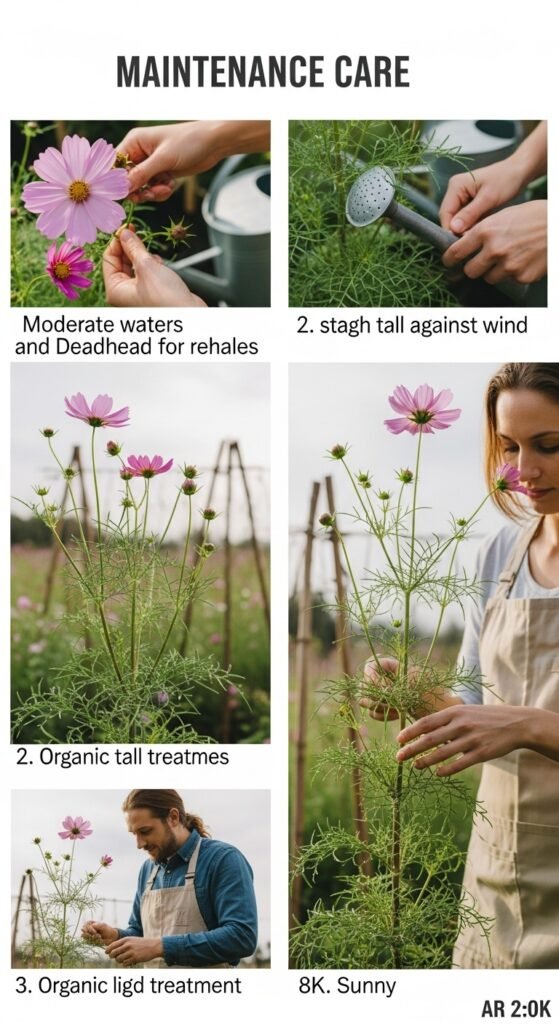
Water moderately, allowing dryness between sessions. Deadhead regularly to encourage reblooming. Stake tall varieties in windy areas. Monitor for aphids, treating organically.
Common Challenges and Solutions
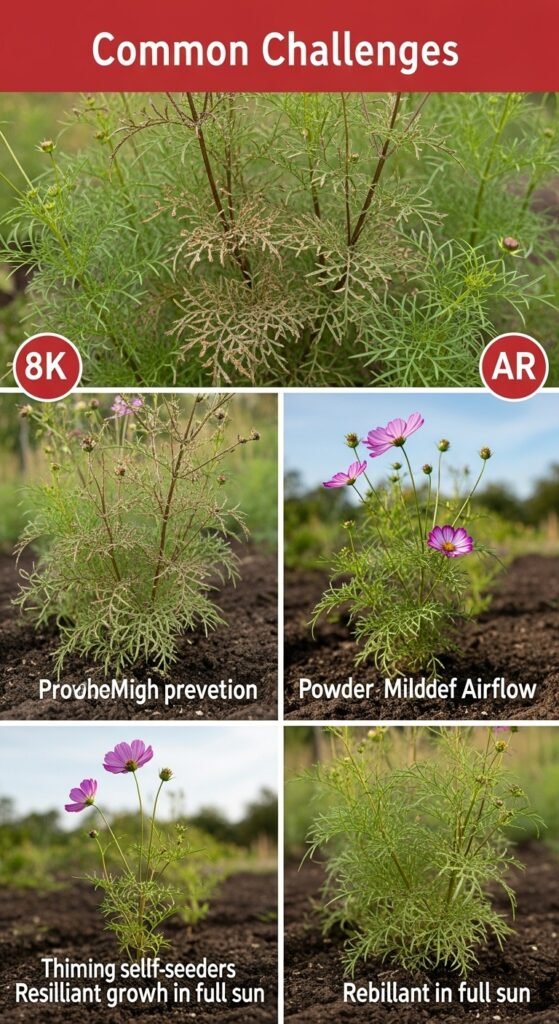
Address powdery mildew with airflow; prevent damping-off by not overwatering seedlings. If self-seeding overwhelms, thin promptly. These steps ensure robust growth despite minor issues.
Frequently Asked Questions
Do cosmos come back every year?
Cosmos are annuals, completing their life cycle in one season, but they readily self-seed, often returning in subsequent years if conditions allow.
How tall do cosmos grow?
Depending on the variety, cosmos can reach 2 to 6 feet tall, with dwarf types staying compact for smaller spaces.
Can cosmos grow in shade?
Cosmos prefer full sun for best blooming; partial shade may result in fewer flowers and taller, weaker stems.
When should I plant cosmos seeds?
Sow outdoors after the last frost or start indoors 4-6 weeks earlier for a head start on the growing season.
Are cosmos deer-resistant?
While not entirely deer-proof, cosmos’ feathery texture and scent often deter browsing, making them a relatively safe choice in wildlife-prone areas.