15 Stunning Peony Ideas to Transform Your Garden
Peonies are timeless perennial flowers cherished for their lush, fragrant blooms and vibrant colors. These showstoppers can turn any garden into a romantic paradise, offering bursts of pink, white, red, or yellow from late spring to early summer. As a gardener, you’ll appreciate how peonies require minimal maintenance once established, making them ideal for both beginners and experts. Their large, ruffled petals not only attract pollinators but also provide excellent cut flowers for indoor arrangements.
Beyond their beauty, peonies symbolize prosperity and good fortune in many cultures, adding a layer of meaning to your landscape. Whether you’re planting them in borders, containers, or as focal points, these ideas will help you maximize their potential. Dive into these creative suggestions to cultivate peonies that thrive and enchant year after year.
1) Classic Border Planting
You can create a stunning garden border by planting peonies along walkways or fences. This idea involves grouping them in clusters of three to five for a fuller look. What makes this effective is their height variation—tall varieties reach up to 3 feet, providing structure while shorter ones fill in gaps. Why choose this? It offers a low-maintenance perimeter that bursts into color annually, enhancing curb appeal without constant upkeep.
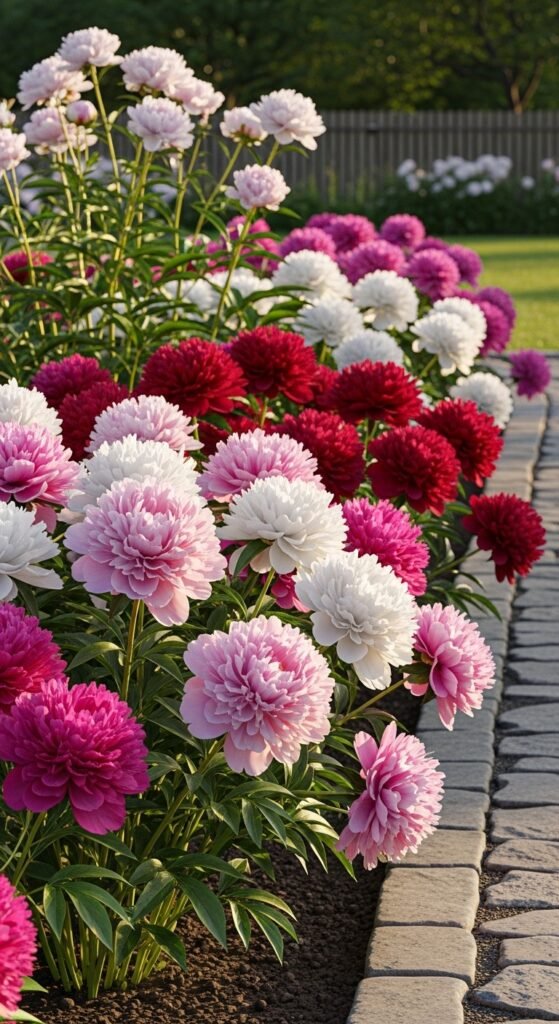
To implement, select a sunny spot with well-drained soil, spacing plants 3-4 feet apart. Amend the ground with compost for nutrients. In spring, watch as buds form, and use stakes for support against wind. This setup pairs beautifully with other perennials, creating a dynamic display. For more inspiration on arranging blooms in your yard, check out our guide on front yard flower bed ideas. Expect your border to mature in 2-3 years, rewarding you with abundant flowers.
2) Companion Planting with Herbs
Pair peonies with aromatic herbs like lavender or rosemary to boost garden health and aesthetics. This approach involves interspersing herbs around peony bases. The benefit lies in natural pest deterrence—herbs repel aphids and ants that sometimes bother peonies. Why it works: The contrasting textures and scents create a sensory haven, while herbs provide ground cover to retain moisture.
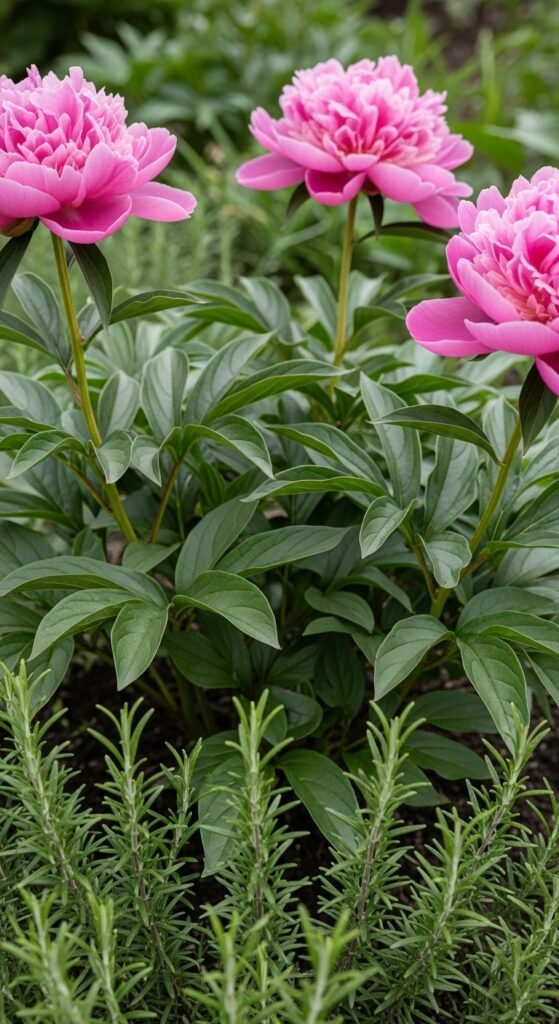
Start by choosing companion plants that thrive in similar conditions: full sun and rich soil. Plant herbs 1-2 feet from peony roots to avoid competition. Water moderately and mulch to suppress weeds. Over time, this symbiotic planting enhances biodiversity, attracting beneficial insects. If you’re interested in pollinator-friendly options, explore our bee-friendly plants list. Your garden will not only look vibrant but also function as a balanced ecosystem.
3) Container Gardening for Small Spaces
You don’t need a large yard to enjoy peonies—grow them in containers for patios or balconies. Select dwarf varieties like ‘Bowl of Beauty’ for compact growth. This method’s advantage is mobility; move pots to optimize sunlight or protect from frost. Why opt for containers? They allow urban gardeners to experience these blooms without soil limitations.
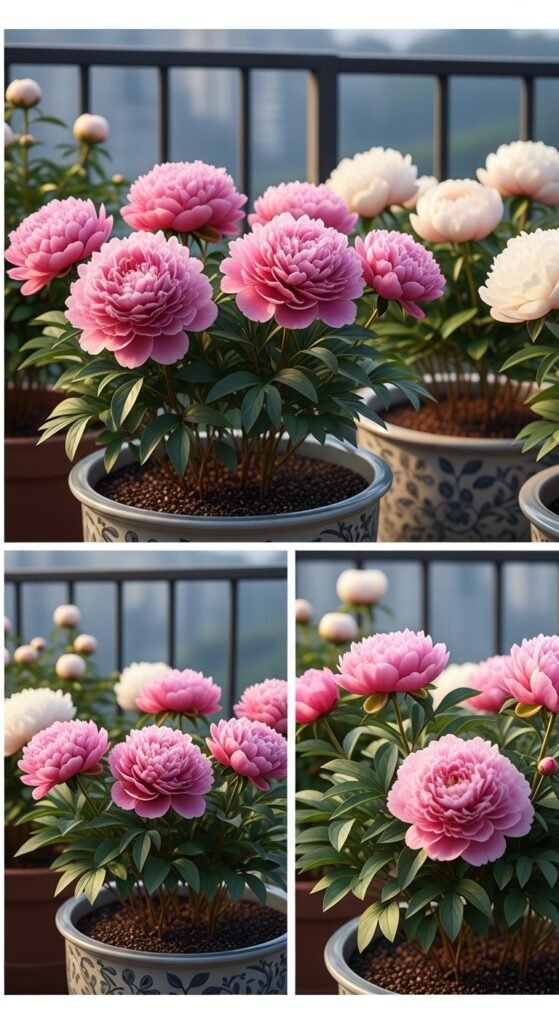
Choose deep pots (at least 18 inches) with drainage holes, filling with potting mix enriched with perlite. Plant tubers in fall, eyes up, and water sparingly until established. Position in 6+ hours of sun. Fertilize in spring for robust flowers. This idea extends to creative displays, perhaps alongside other potted blooms. For shade-tolerant alternatives if needed, consider our spring hydrangea care tips. Enjoy fresh-cut peonies right from your doorstep.
4) Cut Flower Arrangements
Harvest peonies for stunning indoor bouquets that last up to a week. Cut stems when buds are marshmallow-soft for optimal vase life. The key benefit is bringing garden freshness indoors, perfect for table settings or gifts. Why this idea shines: Peonies’ voluminous petals create luxurious, romantic displays with minimal effort.
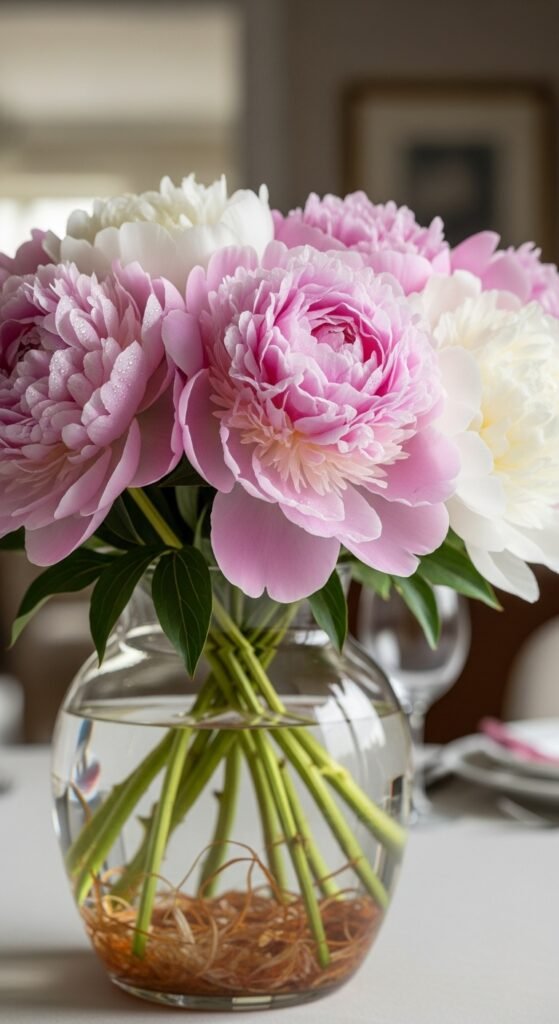
To do it right, use sharp shears early in the morning, placing stems in warm water immediately. Remove lower leaves to prevent rot. Arrange with fillers like ferns or baby’s breath for balance. Change water every two days, adding flower food. This extends your enjoyment beyond the garden season. For more on floral centerpieces, see our article on table centerpiece flowers. Transform your home with these effortless, elegant arrangements.
5) Peony Supports and Staking
Prevent floppy stems by installing supports early in the season. Use metal rings or tomato cages around emerging shoots. This technique’s strength is maintaining upright growth, protecting blooms from mud and breakage. Why essential? Heavy rain or wind can topple mature peonies, ruining their display.
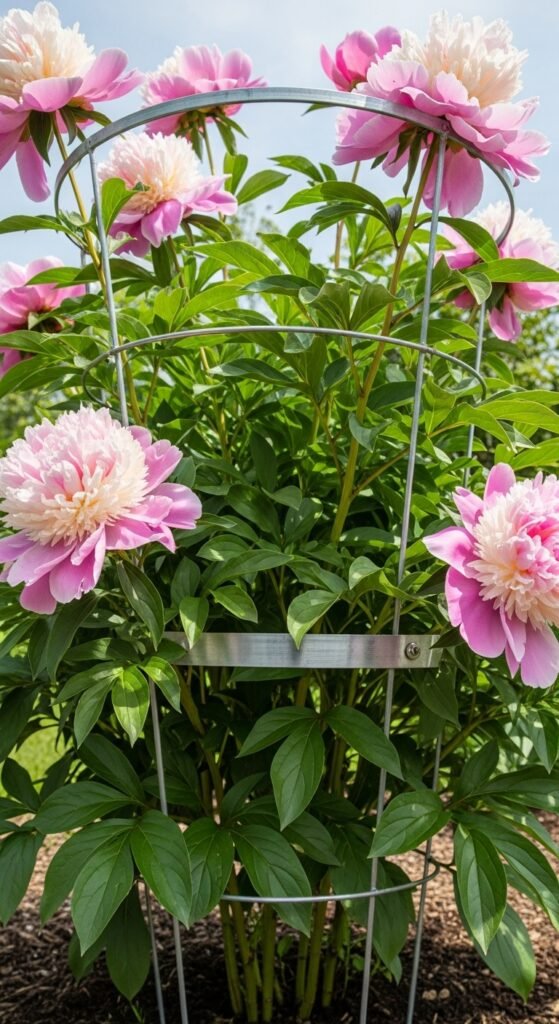
Insert stakes when plants are 12 inches tall, ensuring they’re hidden by foliage. Tie loosely with soft twine if needed. Remove in fall after foliage dies back. This simple step ensures picture-perfect bushes. Combine with mulching for added stability. If you’re pruning other flowers, our summer rose care guide offers similar support advice. Your peonies will stand tall, showcasing their beauty fully.
6) Dividing and Propagating Peonies
Expand your collection by dividing established peonies every 5-10 years. This involves digging up clumps in fall and separating tubers. The upside is rejuvenating overcrowded plants for better blooming. Why propagate? It’s cost-effective, yielding new plants identical to the parent.
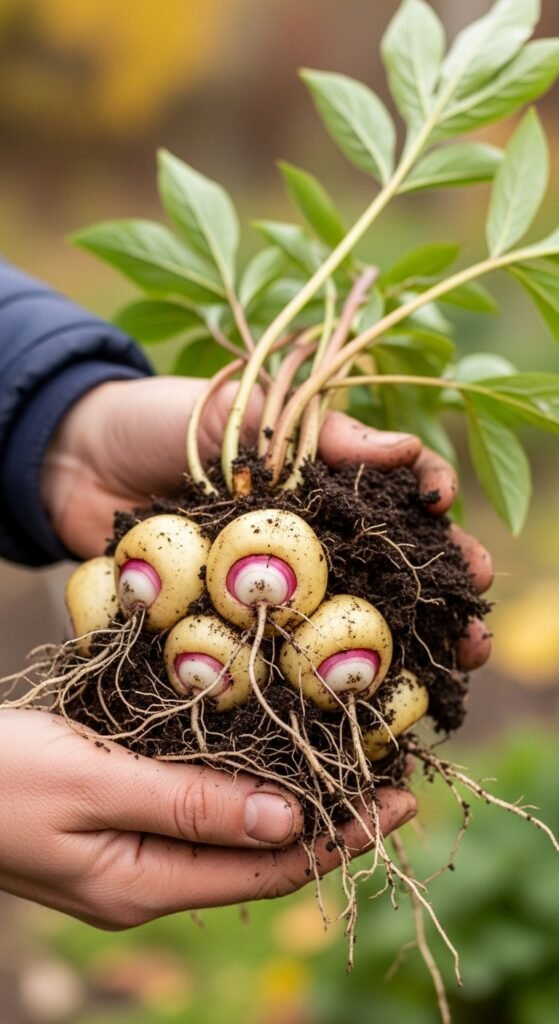
Carefully lift the root ball, washing off soil to see divisions. Each section needs 3-5 eyes. Replant immediately at the same depth. Water well and mulch. Patience is key—new plants may take a year to flower. This method keeps your garden thriving. For edible bloom options during waits, check spring edible flowers. Soon, you’ll have more peonies to share or transplant.
7) Peony Varieties for Extended Bloom
Select a mix of early, mid, and late-season peonies for continuous flowers. Varieties like ‘Coral Charm’ (early) and ‘Sarah Bernhardt’ (late) extend the show. This strategy’s merit is a longer display, from May to July depending on climate. Why diversify? It maximizes color and fragrance over weeks.
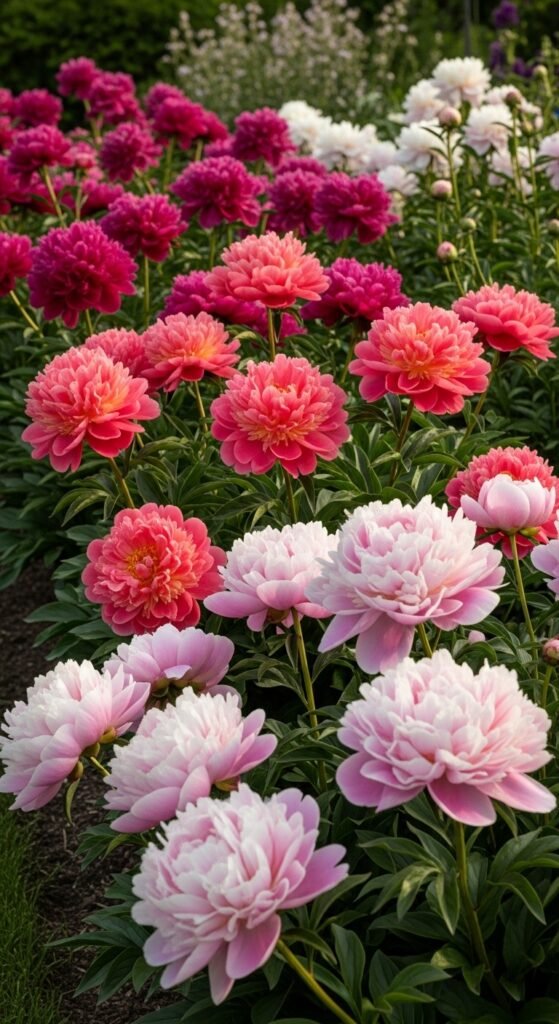
Research zones—peonies prefer 3-8. Plant in groups for impact, ensuring similar care needs. Deadhead spent blooms to encourage energy redirection. This creates a sequential spectacle in your beds. Pair with perennials for year-round interest. Explore related blooms in our hydrangea wreath ideas for complementary designs. Your garden will pulse with life throughout spring.
8) Soil Preparation for Healthy Roots
Prepare soil meticulously before planting peonies for robust growth. Amend with organic matter to achieve loamy, well-draining conditions. The core advantage is preventing root rot, a common issue in heavy clay. Why focus here? Proper pH (6.5-7.0) unlocks nutrients for larger blooms.
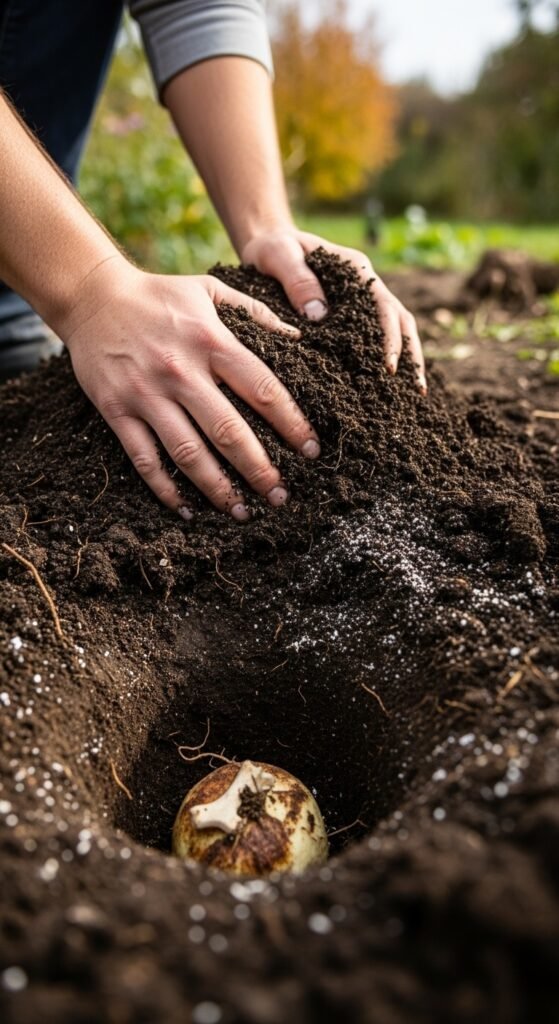
Test soil and add lime if acidic. Dig holes twice the tuber size, incorporating bone meal for phosphorus. Plant in fall for spring establishment. Mulch to regulate temperature. This foundation ensures longevity—peonies can live 50+ years. For ground cover companions, see perennial groundcovers. Invest time upfront for decades of splendor.
9) Pest and Disease Management
Monitor peonies for common issues like botrytis or ants, treating promptly. Use organic sprays for fungal diseases. This proactive approach’s benefit is preserving foliage and flowers, ensuring healthy returns. Why manage pests? Untreated problems can weaken plants over time.
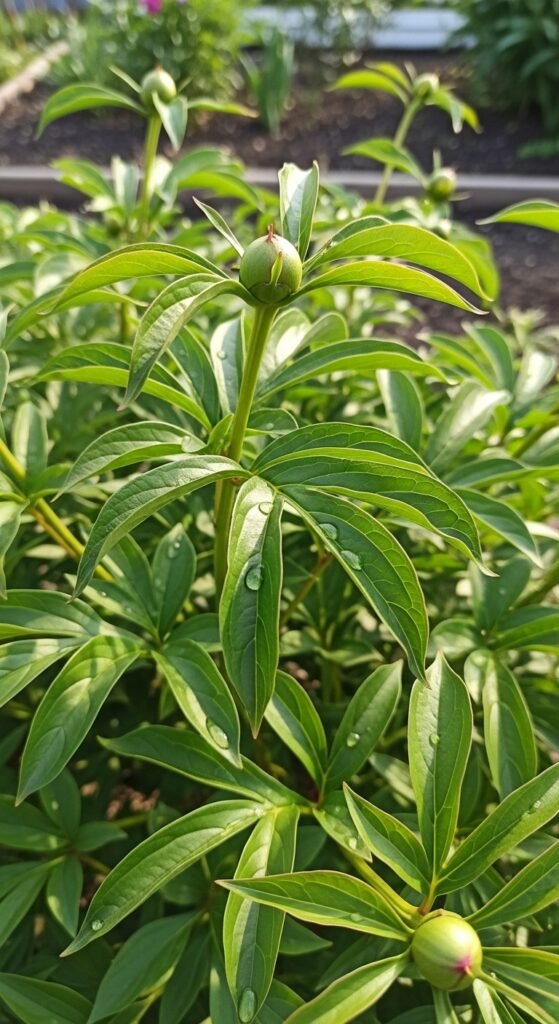
Encourage airflow by spacing properly. Remove debris in fall to reduce overwintering spores. Neem oil deters insects naturally. Inspect weekly during growth. This keeps your peonies vigorous. Integrate with pollinator plants for natural balance. Our pressed flower crafts can use healthy petals post-season. Stay vigilant for thriving bushes.
10) Fertilizing Schedule for Optimal Growth
Feed peonies sparingly with balanced fertilizer in early spring and after blooming. Avoid high-nitrogen formulas to prevent leggy growth. The value is promoting strong roots and abundant buds without excess foliage. Why fertilize? It replenishes soil depleted by heavy flowering.
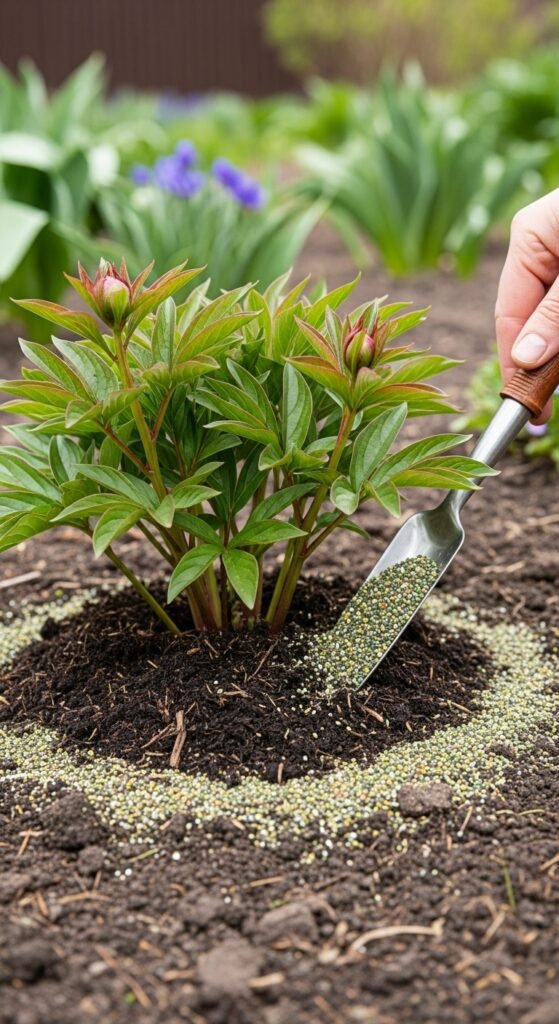
Apply granular 10-10-10 around driplines, watering in. Skip during planting year. Compost top-dressing provides slow-release nutrients. This regimen supports longevity. Combine with watering tips for best results. For crafty uses of blooms, try our flower crown DIY. Nourished peonies reward with spectacular shows.
11) Landscaping Focal Points
Use peonies as standalone stars in lawns or near entrances for dramatic effect. Plant solo or in trios for emphasis. This design’s strength is drawing the eye, creating visual anchors in landscapes. Why as focal points? Their bold size and color command attention.
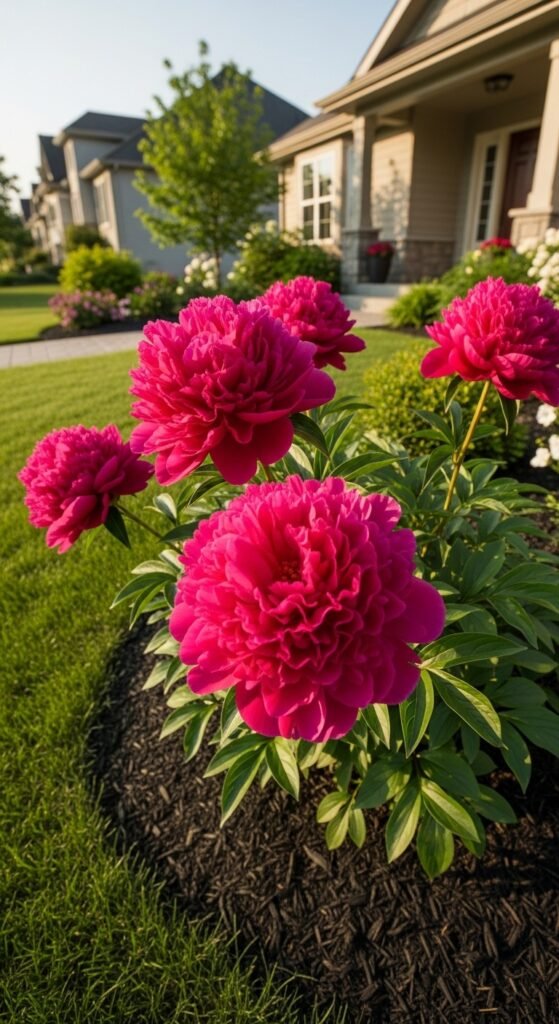
Choose elevated spots with good drainage. Surround with low growers to highlight. Light mulching accents form. This elevates overall garden aesthetics. For wreath inspirations using petals, visit peony wreath. Your space will gain instant charm and structure.
12) Drying Peonies for Crafts
Preserve peony blooms by air-drying for year-round decor. Hang upside down in a dark, dry space. The perk is extending beauty into wreaths or potpourri. Why dry? It captures essence without fresh maintenance.
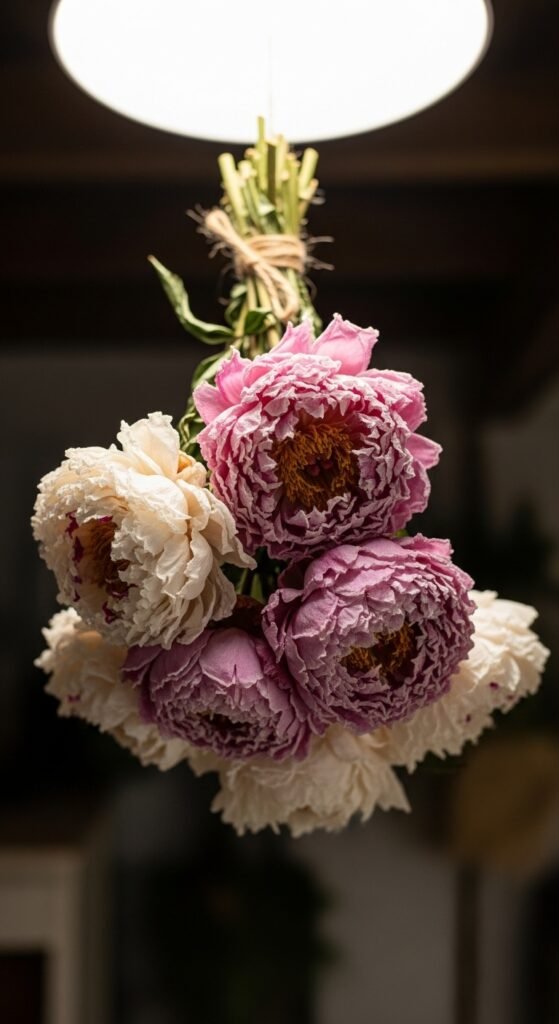
Select fully open flowers, removing leaves. Bundle loosely and suspend for 1-2 weeks. Store in airtight containers. This yields materials for creative projects. Experiment with colors for variety. Complement with other preserved blooms from our guides. Dried peonies add timeless elegance indoors.
13) Winter Care and Protection
Prepare peonies for winter by cutting back foliage after frost. Mulch lightly to insulate roots. This care’s importance is safeguarding against freeze-thaw cycles. Why protect? It ensures spring vigor in cold climates.
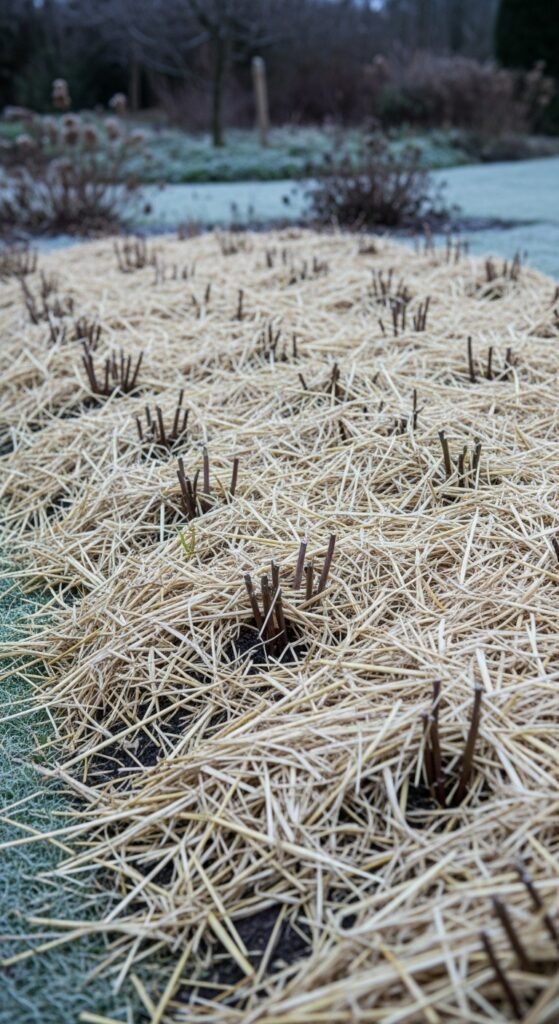
Remove dead stems to ground level. Apply 2-4 inches of straw or leaves. Uncover in early spring. This routine promotes health. For overwintering tips on similar plants, explore related articles. Your peonies will emerge stronger annually.
14) Peony in Mixed Perennial Beds
Integrate peonies with irises, daylilies, or hostas for layered interest. This blends heights and bloom times. The advantage is a cohesive, ever-changing bed. Why mix? It fills gaps post-peony season.
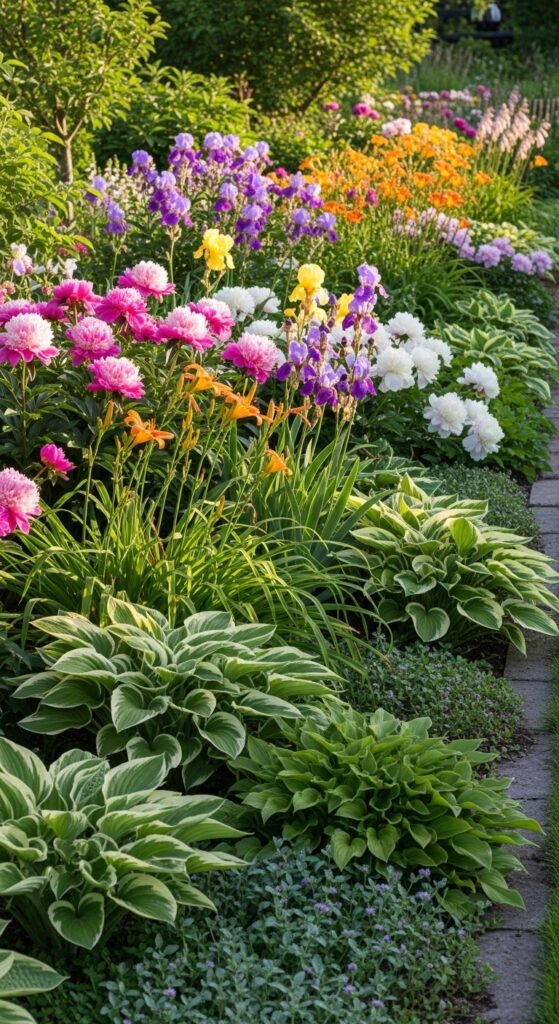
Plan for succession—early bulbs, then peonies, followed by summer perennials. Space accordingly. This creates a tapestry of color. Enhance with edging for definition. Your garden bed becomes a living artwork.
15) Eco-Friendly Peony Gardening
Adopt sustainable practices like rainwater harvesting and organic pest control for peonies. This eco-approach’s benefit is reducing environmental impact while thriving. Why go green? It supports biodiversity and soil health.
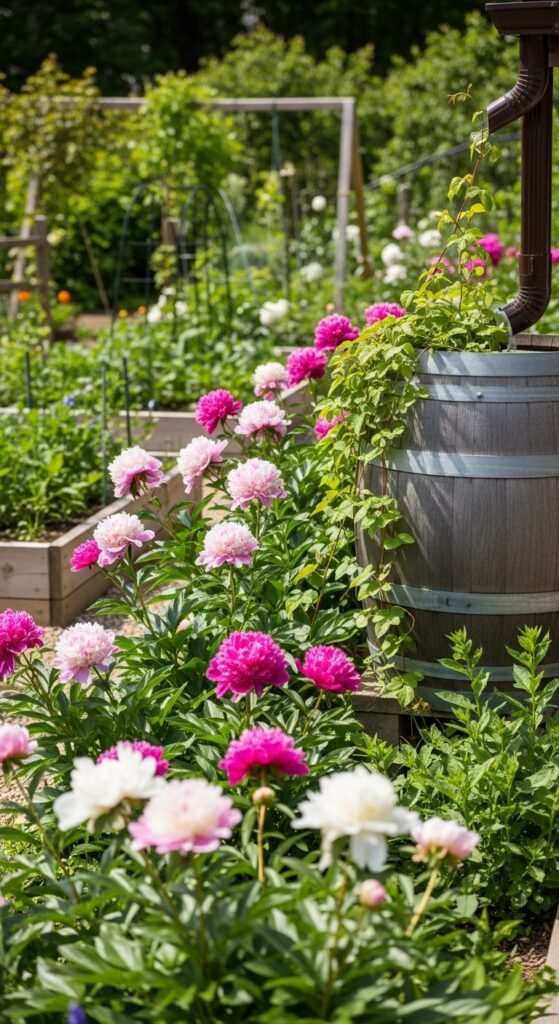
Use companion planting and natural fertilizers. Avoid chemicals. This fosters a resilient garden. Collect rain for watering. Your peonies will flourish ethically, inspiring others.
Key Principles for Peony Success
Choosing the Right Location
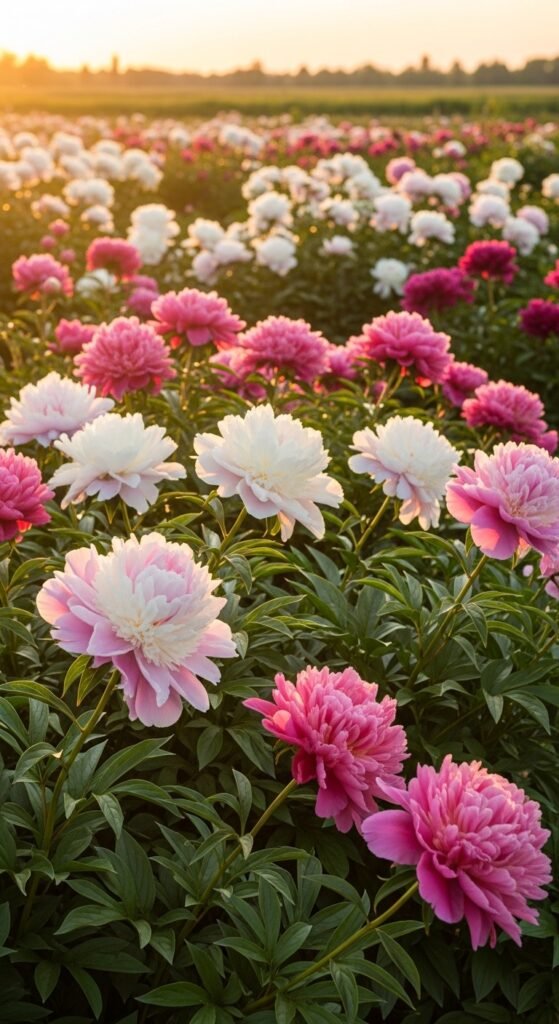
Select sites with 6-8 hours of sunlight and protection from strong winds. Good air circulation prevents diseases.
Watering Best Practices
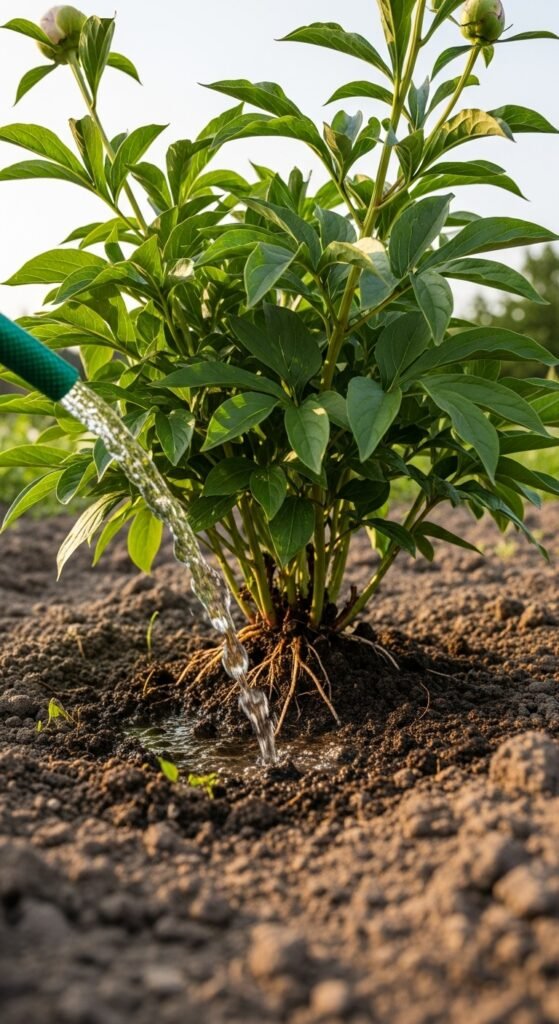
Water deeply but infrequently, allowing soil to dry between sessions. Overwatering leads to rot.
Pruning Techniques
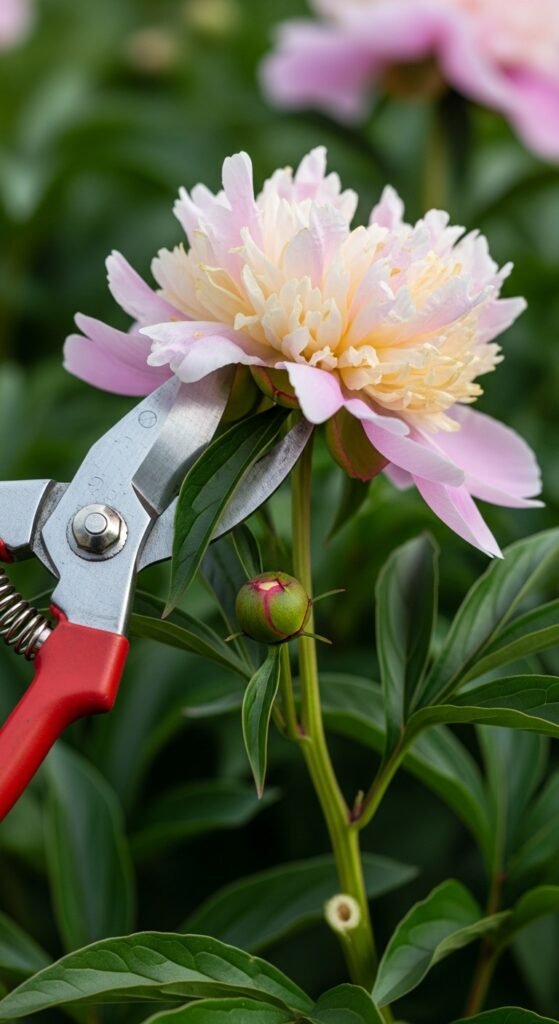
Deadhead faded flowers and cut back in fall. Avoid spring pruning to protect buds.
Frequently Asked Questions
When do peonies bloom?
Peonies typically bloom in late spring to early summer, depending on variety and climate. Early types start in May, while late ones extend into June.
How deep should I plant peony tubers?
Plant tubers with eyes 1-2 inches below soil surface. Too deep delays blooming; too shallow risks frost damage.
Can peonies grow in shade?
Peonies prefer full sun but tolerate light shade. In heavy shade, they produce fewer flowers and weaker stems.
How often should I divide peonies?
Divide every 5-10 years when crowded. Fall is best, allowing roots to establish before winter.
Are peonies deer-resistant?
Peonies are somewhat deer-resistant due to their scent, but young plants may need protection in high-deer areas.