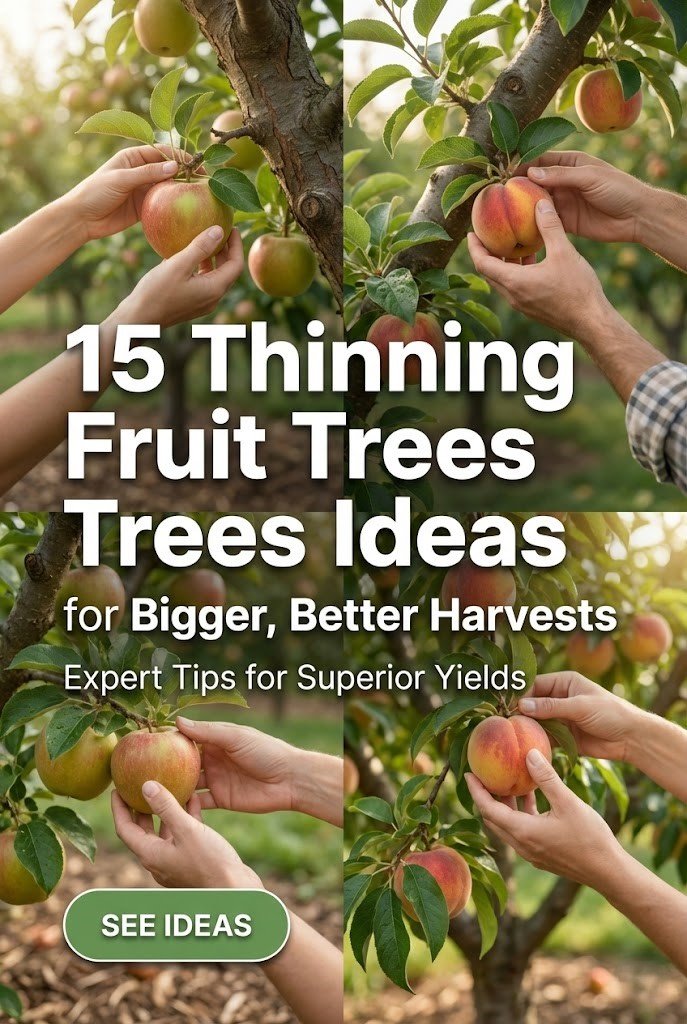
Thinning fruit trees is a crucial practice in orchard management that involves selectively removing excess fruit to improve the quality and size of the remaining produce. By reducing the number of fruits on each branch, you allow the tree to channel its energy more efficiently, resulting in healthier trees and superior yields. This technique not only prevents branch breakage from overload but also minimizes the risk of disease by enhancing air circulation.
Whether you’re tending to apples, peaches, or citrus, mastering thinning fruit trees can transform your garden into a productive paradise. It promotes even ripening and reduces biennial bearing, where trees alternate between heavy and light crops. With the right approach, you’ll enjoy bountiful, flavorful fruits year after year, making your efforts in the garden truly rewarding.
Ready to dive in? These 15 ideas will guide you through effective strategies, tailored to various tree types and conditions, ensuring your orchard thrives.
1) Start with Early Season Assessment
You begin thinning fruit trees by evaluating your orchard early in the season, right after petal fall when fruits are about the size of a marble. This initial assessment helps identify overcrowded clusters where multiple fruits compete for resources. By spotting these areas promptly, you can prioritize which fruits to remove, focusing on damaged or misshapen ones first.
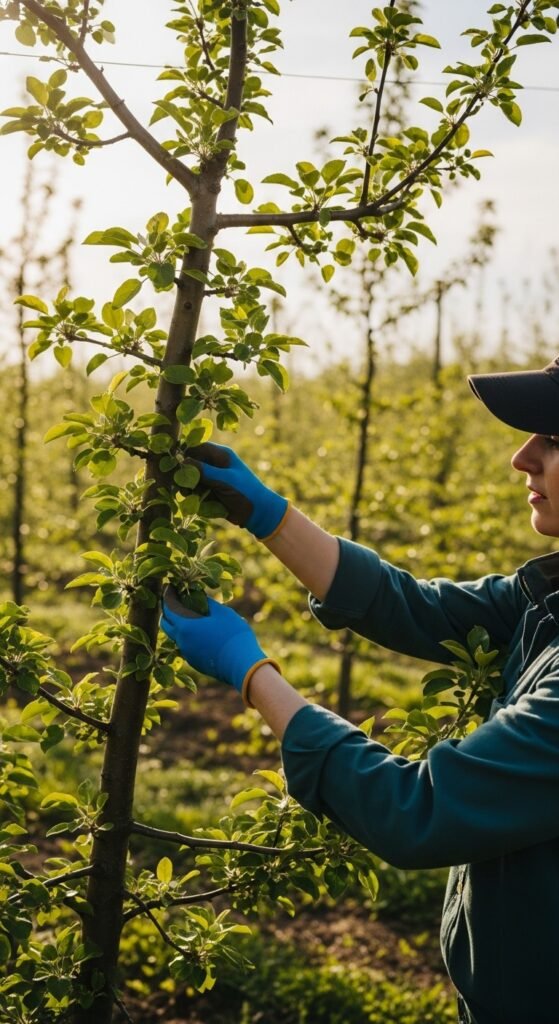
The key benefit here is preventing energy waste on inferior produce, allowing the tree to nurture fewer, superior fruits. This leads to larger sizes and better flavor. To execute, walk through your orchard with pruning shears, gently twisting off excess fruits while leaving the strongest in each cluster.
Remember, early intervention sets the tone for the entire growing season. For more on timing your plantings to align with thinning schedules, check out our guide on when to plant fruit trees.
2) Employ Cluster Thinning Techniques
Cluster thinning involves removing fruits from densely packed groups, typically leaving one or two per cluster depending on the tree variety. You target the smallest or weakest fruits, ensuring space between the remaining ones—aim for 4-6 inches apart on most branches. This method is particularly effective for apples and pears, where overcrowding is common.
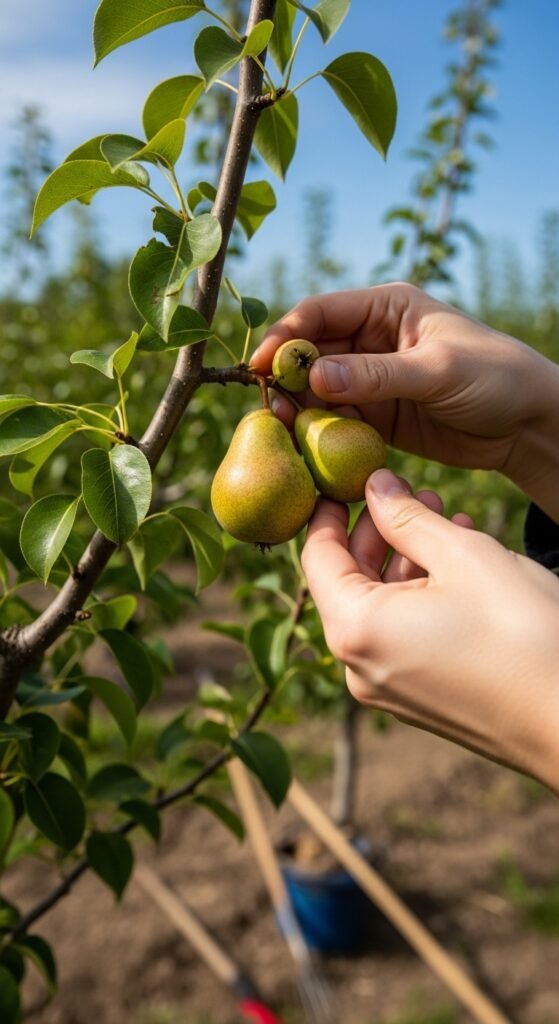
Why bother? It enhances fruit quality by reducing competition for nutrients and sunlight, leading to uniform sizing and ripeness. Plus, it mitigates pest issues by improving airflow. How-to: Use your fingers for small fruits or shears for larger ones, working methodically from the tree’s base upward.
Incorporate this into your routine for consistent results. If you’re dealing with apple varieties, pair it with proper pollination knowledge from our apple tree pollination tips.
3) Prioritize Hand Thinning for Precision
Hand thinning is the go-to method for most home gardeners, allowing you to carefully select which fruits to keep. You gently twist and pull excess fruits off the branch, focusing on those that are deformed, diseased, or too close together. This tactile approach gives you full control over the process.
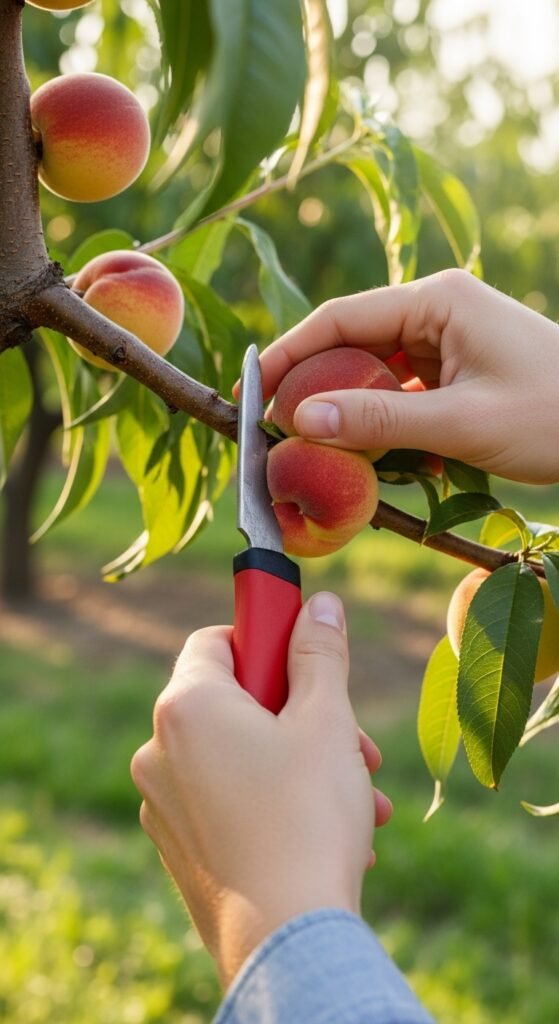
The advantage lies in its accuracy, minimizing damage to the tree while maximizing the potential of retained fruits. It’s ideal for smaller orchards where you can afford the time. Start when fruits are pea-sized, and repeat if necessary as they grow.
For trees like peaches that require aggressive thinning, this technique shines. To complement your efforts, explore fertilization strategies in our article on fruit tree fertilizing.
4) Use Pole Thinners for Tall Trees
For mature fruit trees that tower overhead, pole thinners extend your reach without ladders. These tools feature a long handle with a cutting or grabbing mechanism at the end, letting you remove fruits from high branches safely. You position the tool carefully and snip or pull as needed.
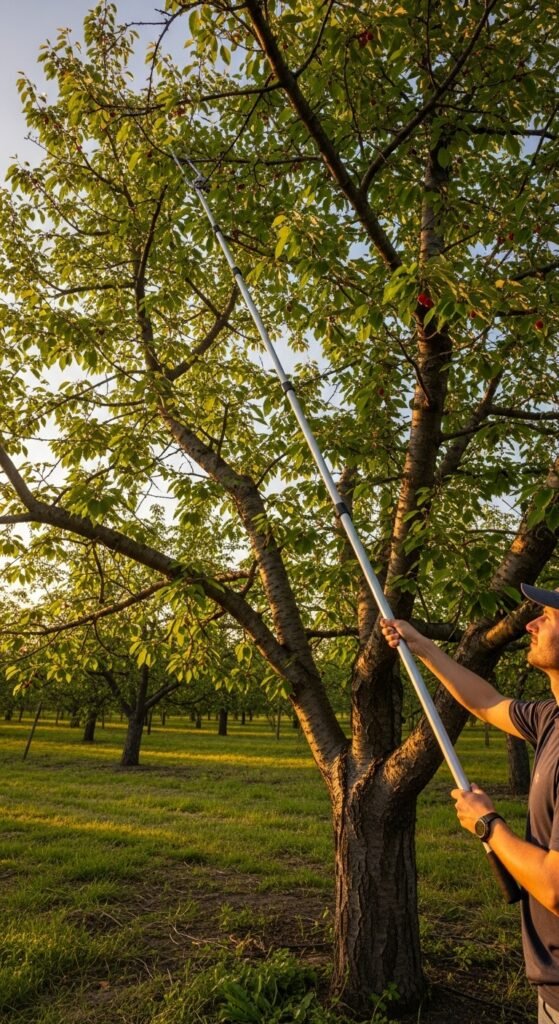
This idea saves time and reduces injury risk, making thinning accessible for larger trees. It’s especially useful for cherries or tall apple varieties. Practice on lower branches first to get the hang of it, ensuring clean removals.
Integrate this with overall tree shaping; for structured growth, consider our insights on espalier fruit trees.
5) Thin for Disease Prevention
Thinning fruit trees isn’t just about size—it’s a proactive step against diseases like fungal infections that thrive in crowded conditions. By spacing fruits adequately, you improve air circulation and sunlight penetration, drying foliage faster and deterring pathogens.
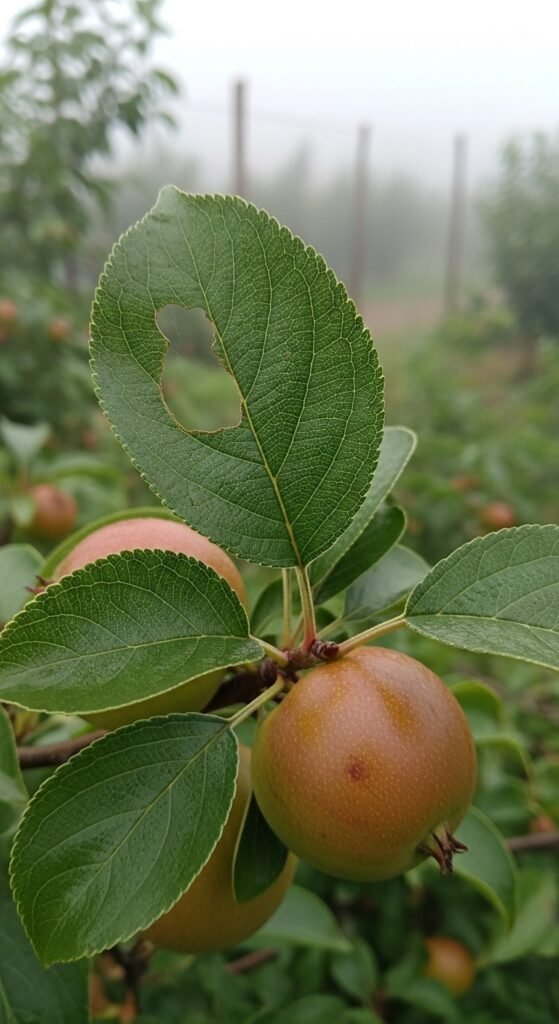
The payoff is healthier trees with fewer chemical interventions needed. Focus on removing fruits touching each other or showing early signs of spots. This is crucial in humid climates where issues like peach leaf curl can spread rapidly.
Apply this strategy diligently, and for specific prevention tips, refer to our guide on peach leaf curl prevention.
6) Balance Load Across Branches
To avoid branch breakage, distribute the fruit load evenly by thinning more heavily on weaker limbs. You assess each branch’s strength and remove excess fruits accordingly, aiming for a balanced canopy that supports the weight without strain.
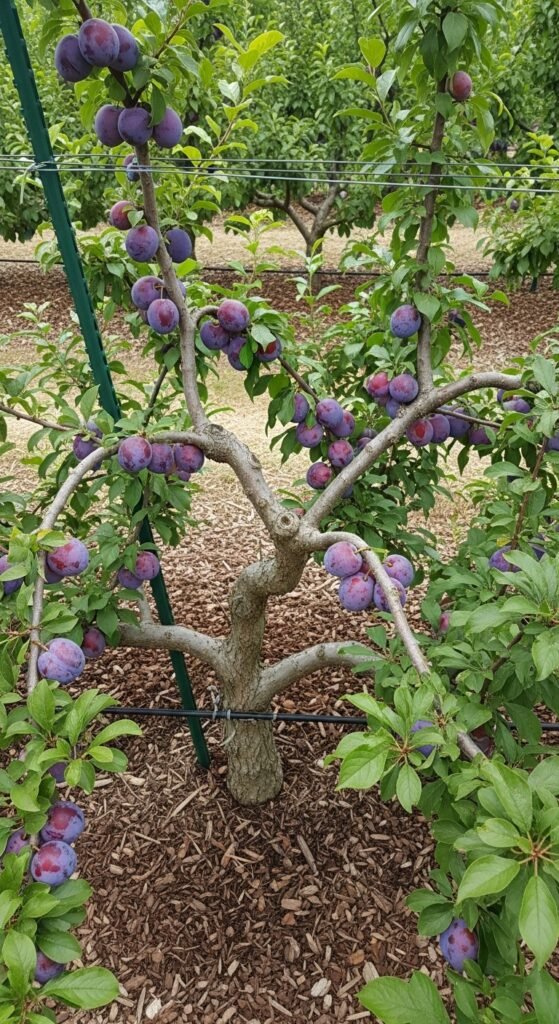
This promotes structural integrity and longevity of your trees, preventing costly damage. It’s vital for heavy-bearing varieties like plums. Work systematically, stepping back often to evaluate the overall shape.
Combine with pruning for optimal results; dive deeper into techniques with our apple pruning guide.
7) Adapt Thinning for Apple Trees
Apples often set fruit in clusters of five or more, so thin to one king bloom fruit per cluster for premium results. You identify the central, largest fruit and remove the others, spacing keepers 6-8 inches apart.
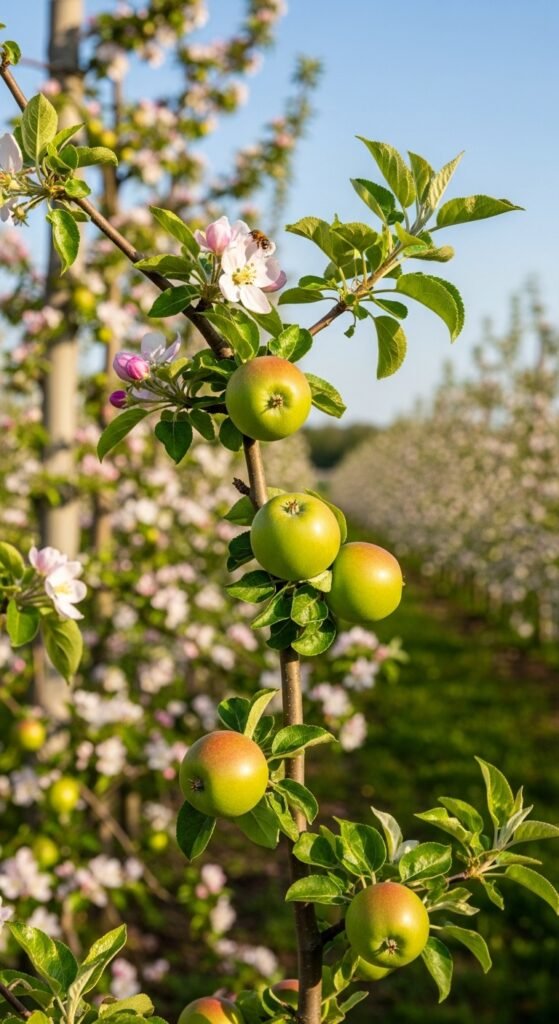
Why? It yields larger, crisper apples with better color and fewer pests. This also curbs alternate bearing. Perform in stages if needed, starting early June drop.
For pollination that enhances set before thinning, check our apple tree pollination resource.
8) Master Peach Tree Thinning
Peaches require aggressive thinning—remove up to 75% of fruits to achieve fist-sized harvests. You space them 6-8 inches apart, eliminating doubles and small ones first.
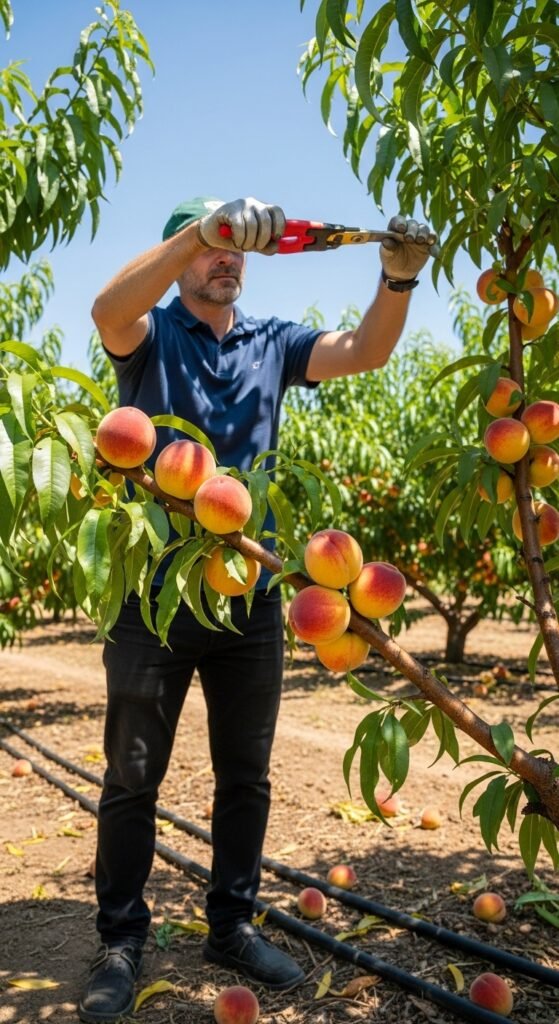
The reward is juicy, flavorful peaches without split pits or limb breaks. Do this when fruits are walnut-sized, using shears for efficiency.
To protect against common ailments during growth, see our advice on preventing peach leaf curl.
9) Optimize Pear Tree Thinning
For pears, thin to two fruits per cluster, spacing 5-7 inches to prevent fire blight spread. You focus on upright fruits, removing downward-facing ones prone to issues.
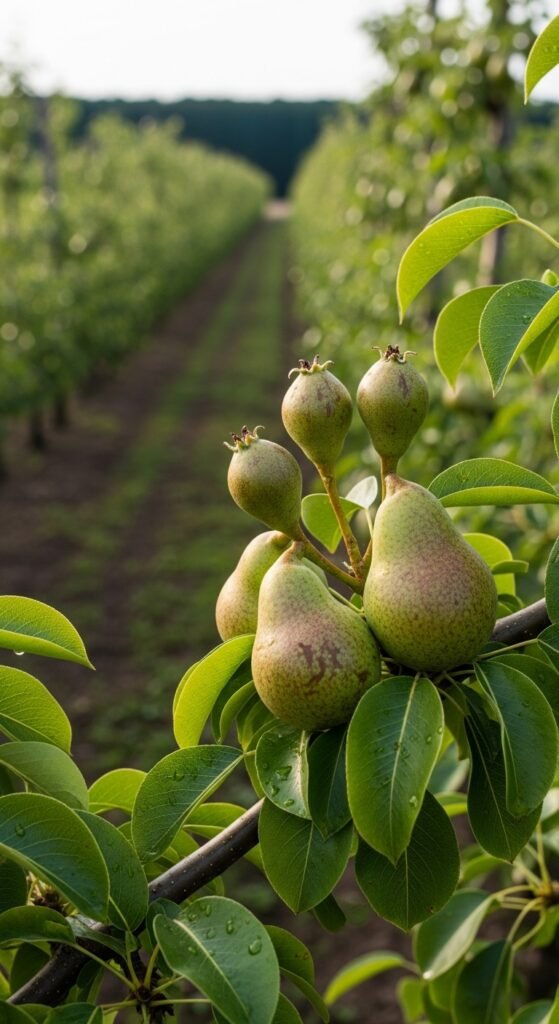
This ensures uniform ripening and disease resistance, yielding sweet, storable pears. Thin post-June drop for accuracy.
If fire blight concerns arise, consult our detailed post on pear tree fire blight.
10) Strategize for Plum Trees
Plums benefit from thinning to every 4-6 inches, reducing the risk of brown rot in dense clusters. You remove damaged fruits and thin heavily on young trees to build strength.
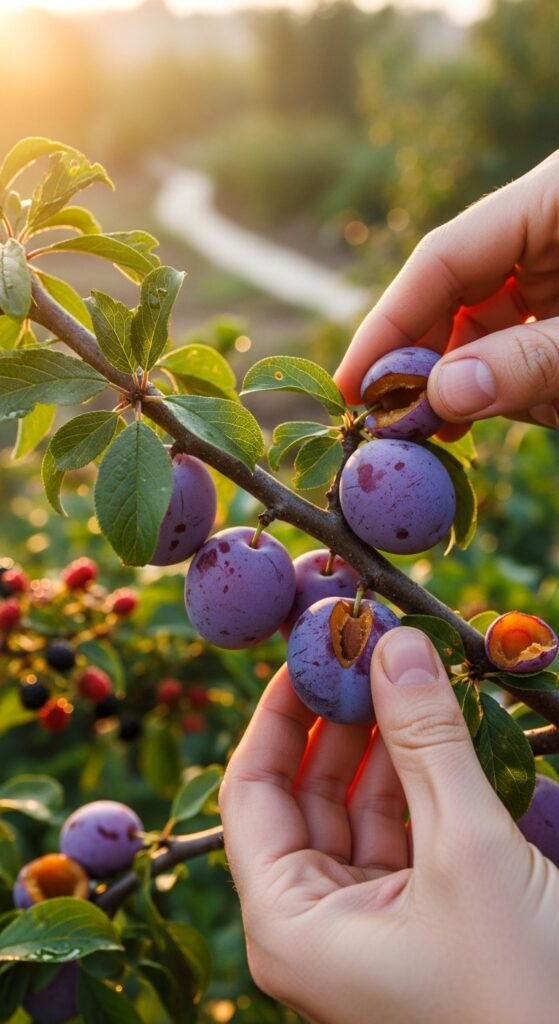
Expect plumper, sweeter plums with less waste. Act when fruits are dime-sized, repeating if overload persists.
For cross-pollination that boosts initial set, use our plum pollination chart.
11) Handle Citrus Tree Thinning
Citrus trees rarely need heavy thinning, but remove clusters exceeding three fruits to enhance size. You target interior fruits lacking sunlight, using clippers for clean cuts.
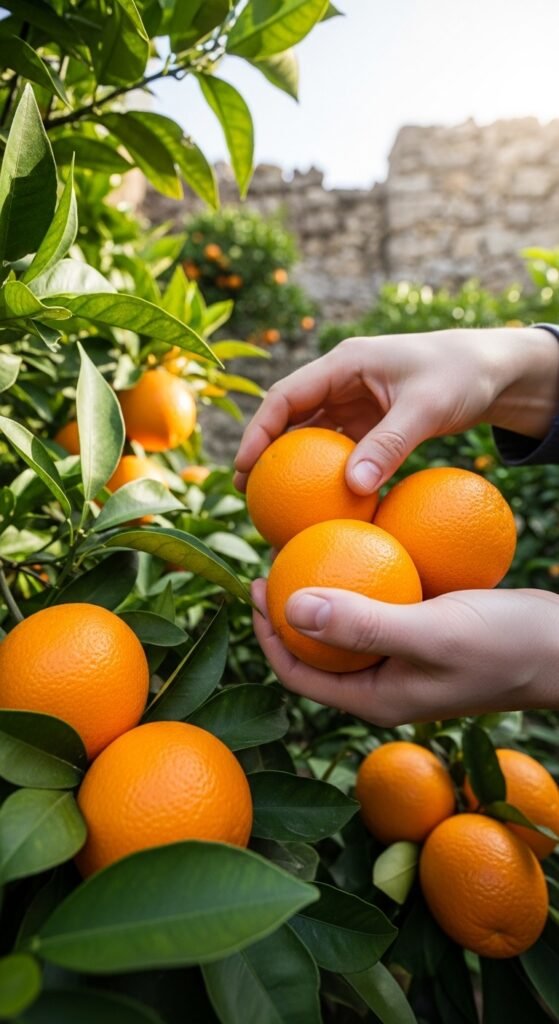
This leads to thicker peels and juicier segments, ideal for home consumption. Thin in late spring after natural drop.
Support growth with proper nutrients via our fruit tree fertilizing guide.
12) Incorporate Berry Bush Thinning
While not trees, thinning raspberries involves removing excess canes post-harvest, akin to fruit thinning. You keep 4-6 strong canes per foot, promoting airflow.
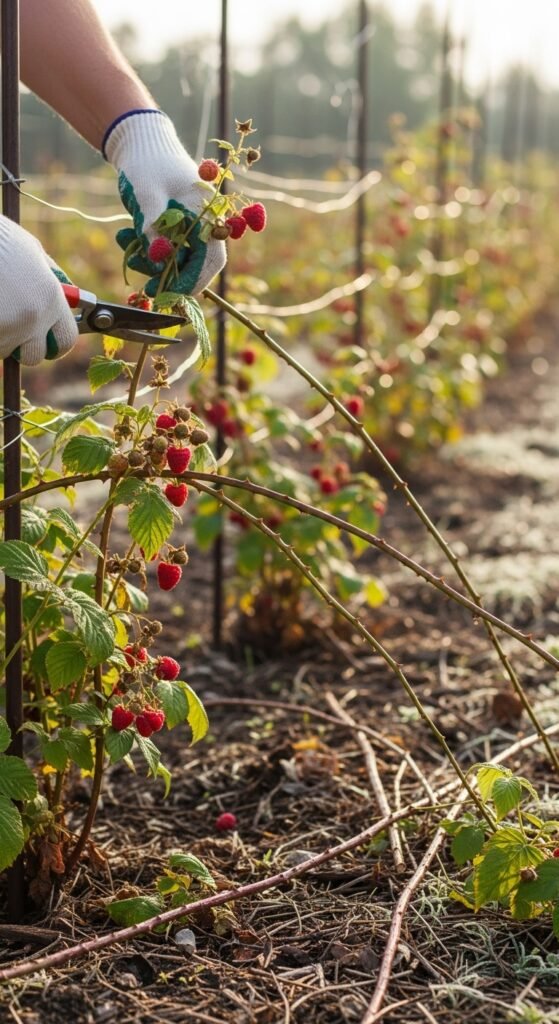
Result? Bigger berries and easier picking. Apply similar principles to tree fruits for consistency.
For detailed cane management, read our raspberry pruning tips.
13) Protect Against Birds Post-Thinning
After thinning, your remaining fruits become prime targets for birds, so implement netting immediately. You drape fine-mesh over trees, securing at the base.
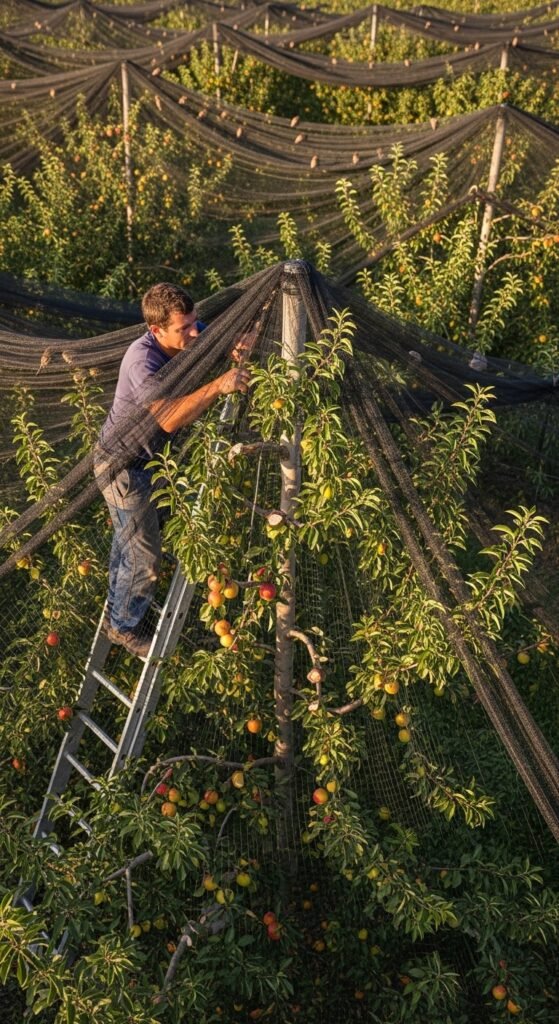
This safeguards your hard-earned harvest without chemicals. Choose reusable options for sustainability.
For installation best practices, visit our article on bird netting fruit trees.
14) Monitor and Adjust for Weather
Weather impacts thinning needs—drought may require lighter thinning to conserve energy, while wet seasons demand more to prevent rot. You observe conditions and adapt, thinning conservatively in stress.
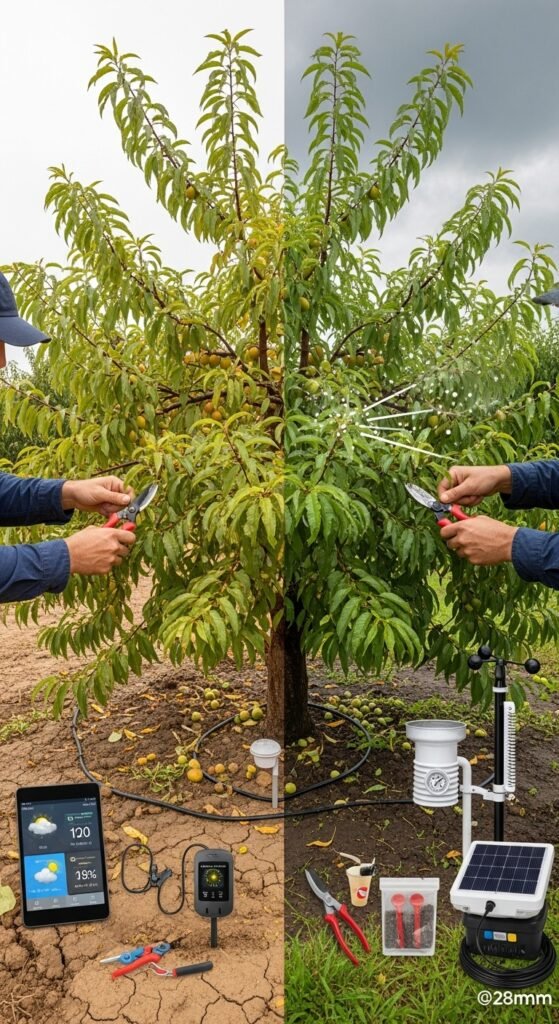
Maintains tree resilience and yield stability. Track forecasts and inspect regularly.
Align with planting schedules using our fruit tree planting guide.
15) Evaluate and Learn from Each Season
After harvest, review your thinning efforts by noting fruit quality and tree health. You journal what worked, adjusting for next year—like thinning more aggressively on certain varieties.
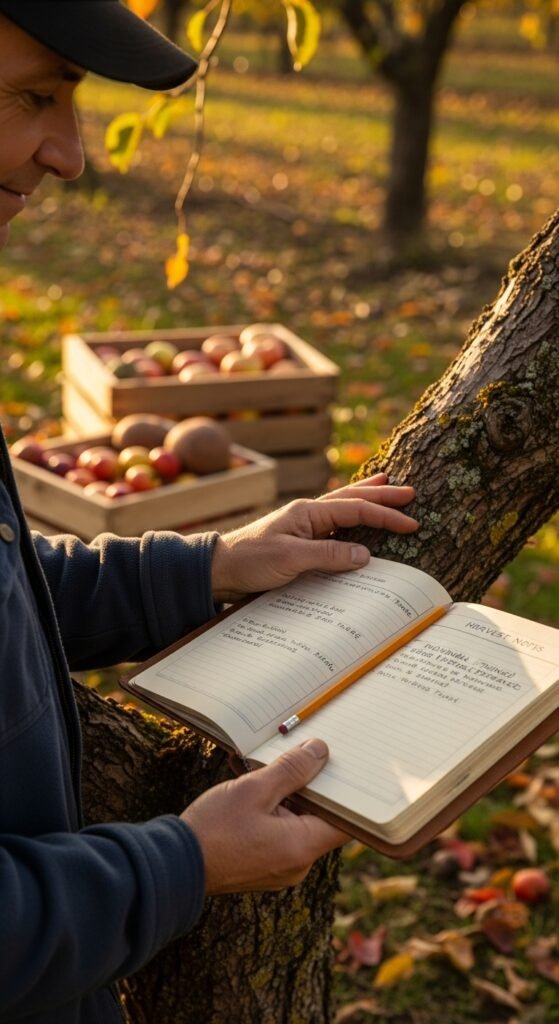
Builds expertise for ongoing improvements. This reflective practice turns good orchards great.
For structured training methods, explore espalier techniques.
Key Principles of Thinning Fruit Trees
Timing Your Thinning Efforts
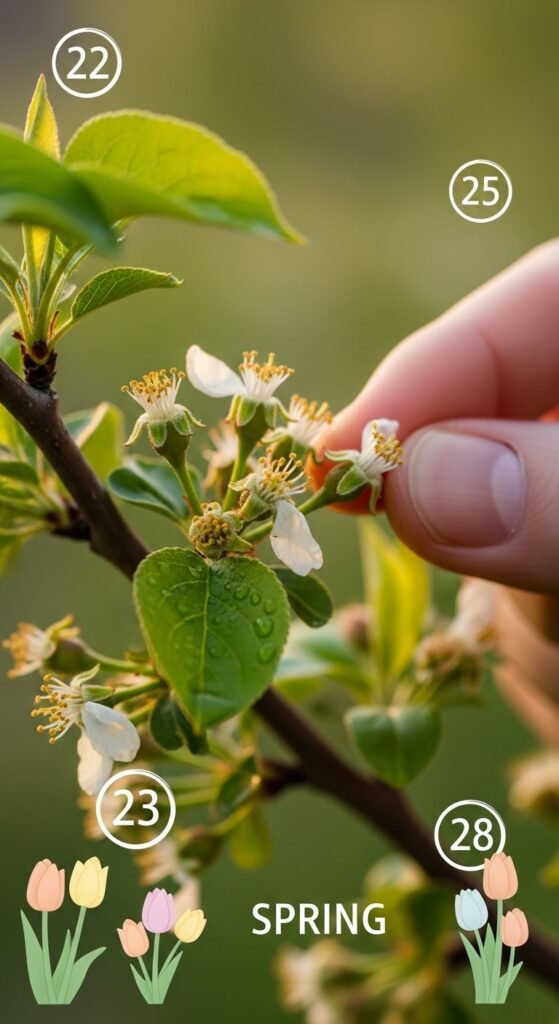
Ideal thinning occurs 3-4 weeks after bloom, post-natural drop. You avoid early stress but act before fruits enlarge too much.
Determining How Much to Thin
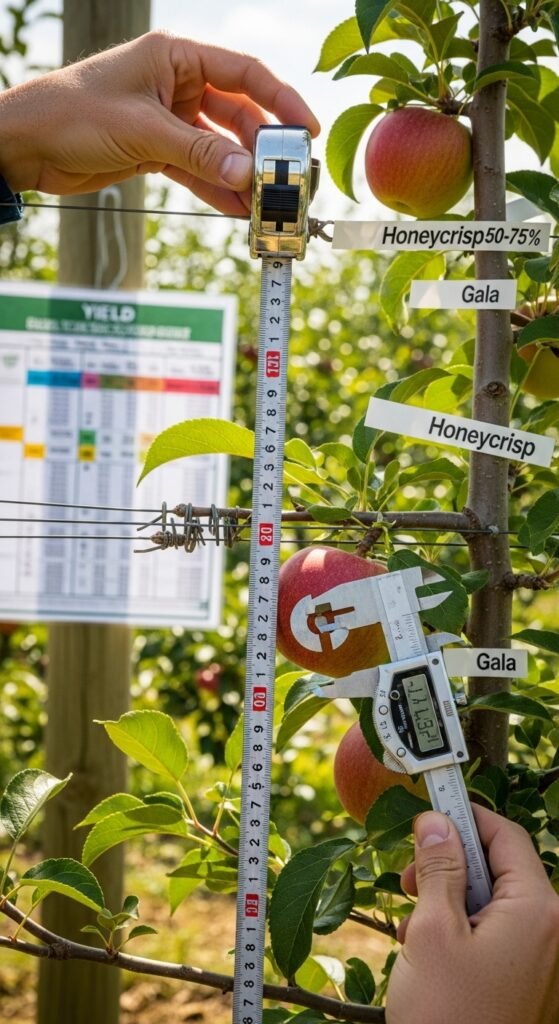
Aim to remove 50-75% based on variety—more for peaches, less for apples. You gauge by branch vigor and past yields.
Choosing the Best Tools
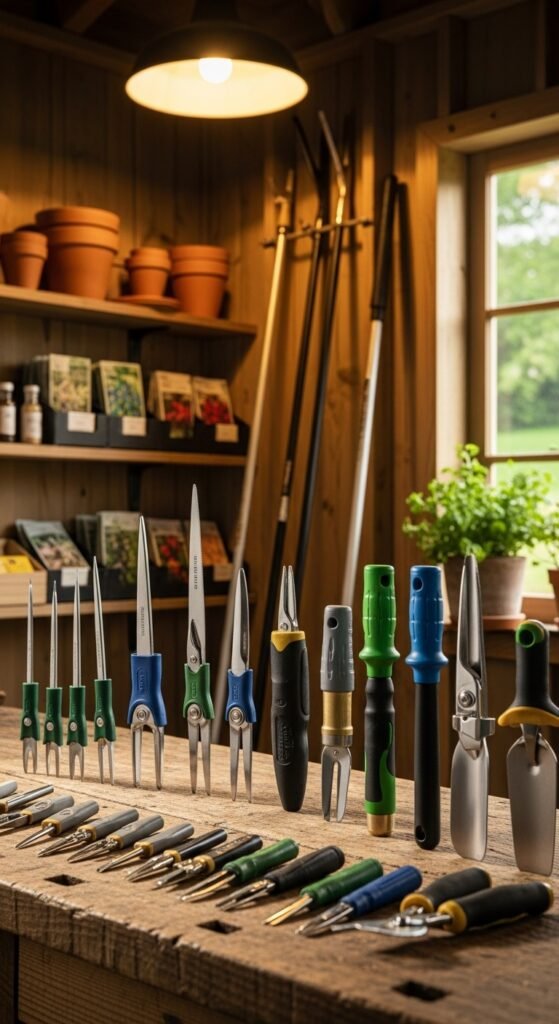
From fingers to pole thinners, select based on tree size. You prioritize sharp, clean tools to prevent disease transmission.
Frequently Asked Questions
What is the main purpose of thinning fruit trees?
The primary goal is to improve fruit quality by reducing competition, leading to larger, healthier produce and preventing tree stress.
When is the best time to thin fruit trees?
Typically, thin when fruits are small, about 2-4 weeks after petal fall, allowing the tree to redirect energy effectively.
How do I know if I’ve thinned enough?
Look for adequate spacing between fruits—4-8 inches depending on the type—and monitor for even branch loading without overcrowding.
Can thinning help with pest control?
Yes, by improving airflow and sunlight, thinning reduces humidity that fosters pests and diseases, promoting overall tree health.
Is thinning necessary for all fruit trees?
While beneficial for most, some self-thinning varieties like certain cherries require less intervention, but monitoring is always key.