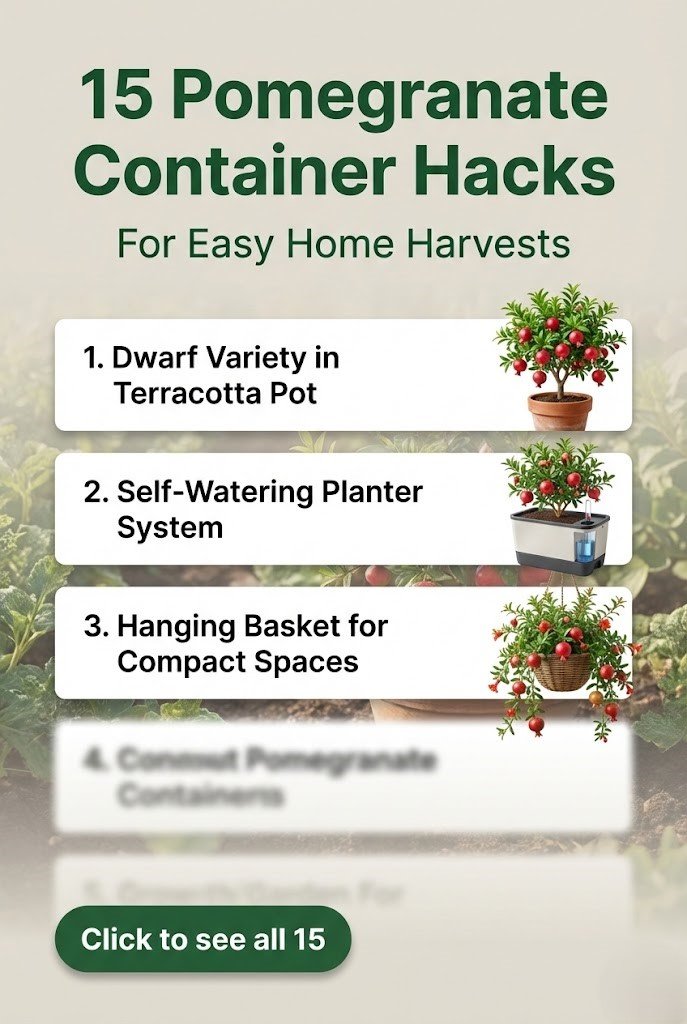
Growing pomegranates in containers is a fantastic way to enjoy this vibrant fruit even if you have limited space. Whether you’re dealing with a small balcony, patio, or urban garden, a pomegranate container allows you to cultivate these nutrient-rich trees without needing a large yard. Pomegranates thrive in pots, offering juicy, antioxidant-packed fruits while adding ornamental value with their bright flowers and glossy leaves.
The key to success lies in choosing the right container, soil, and care routine. You’ll benefit from fresh, homegrown produce, improved air quality, and the satisfaction of sustainable gardening. Plus, container growing makes it easier to protect your plant from harsh weather or pests. Dive into these ideas to inspire your own pomegranate container setup and reap the rewards of a thriving, fruitful plant.
1) Dwarf Variety in Terracotta Pot
You can start with a dwarf pomegranate variety like ‘Nana’ in a classic terracotta pot for excellent drainage and aesthetic appeal. This setup prevents root rot while allowing the roots to breathe, promoting healthy growth and abundant fruiting. Why choose terracotta? It regulates soil temperature, keeping roots cool in summer and insulated in winter.
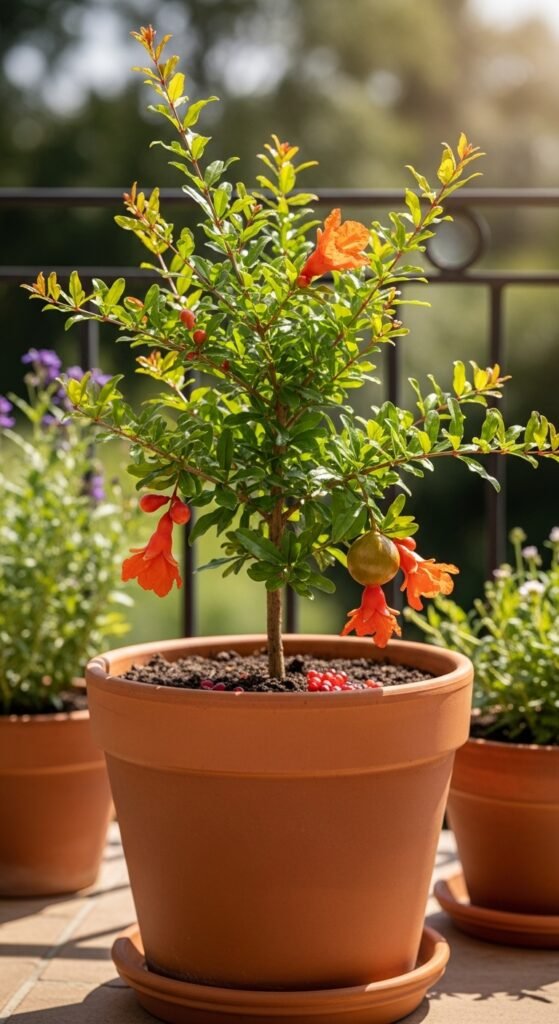
To implement this, select a 15-20 gallon pot with drainage holes. Fill it with well-draining potting mix enriched with compost for nutrients. Place it in full sun, watering deeply but infrequently to mimic the plant’s native arid conditions. Prune regularly to maintain shape and encourage bushiness. For optimal soil preparation, consider using a potting soil calculator to get the right amount. This idea yields a compact tree up to 3 feet tall, perfect for patios.
2) Self-Watering Planter System
Opt for a self-watering pomegranate container to ensure consistent moisture without overwatering. These planters have a reservoir that wicks water up to the roots, ideal for busy gardeners or hot climates where soil dries quickly. The benefit? Reduced stress on the plant leads to better fruit quality and fewer issues like cracking.
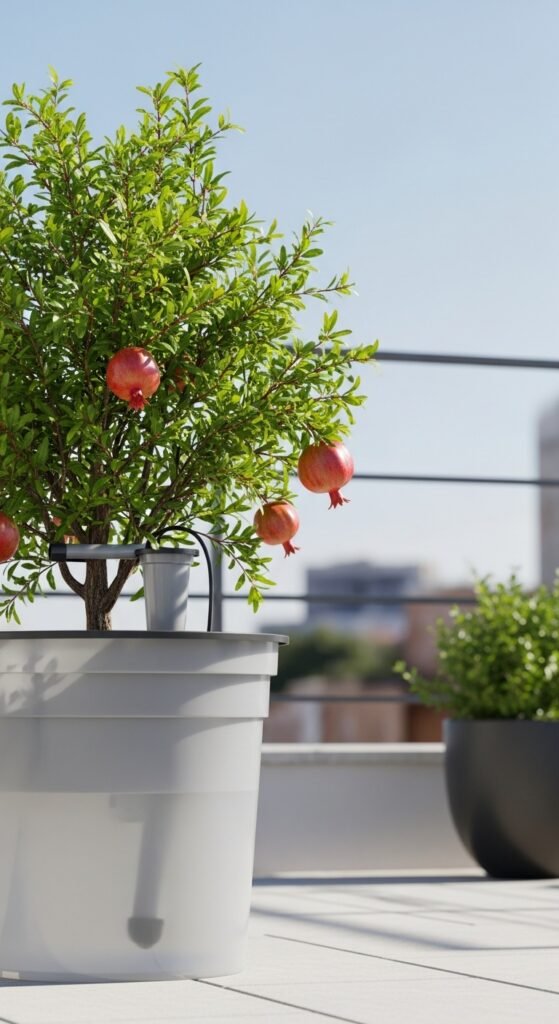
Choose a large plastic or resin self-watering pot, at least 18 inches deep. Plant your pomegranate seedling in a mix of perlite, sand, and organic matter for aeration. Position in a sunny spot, filling the reservoir as needed. Monitor for nutrient buildup by flushing occasionally. This method pairs well with wicking bed techniques for enhanced efficiency, resulting in vigorous growth and a bountiful harvest in limited spaces.
3) Hanging Basket for Compact Spaces
For ultra-small areas, try a hanging pomegranate container using a sturdy basket. Dwarf varieties hang gracefully, saving floor space while adding vertical interest. This idea maximizes sunlight exposure and improves air circulation, reducing disease risks and enhancing pollination for more fruits.
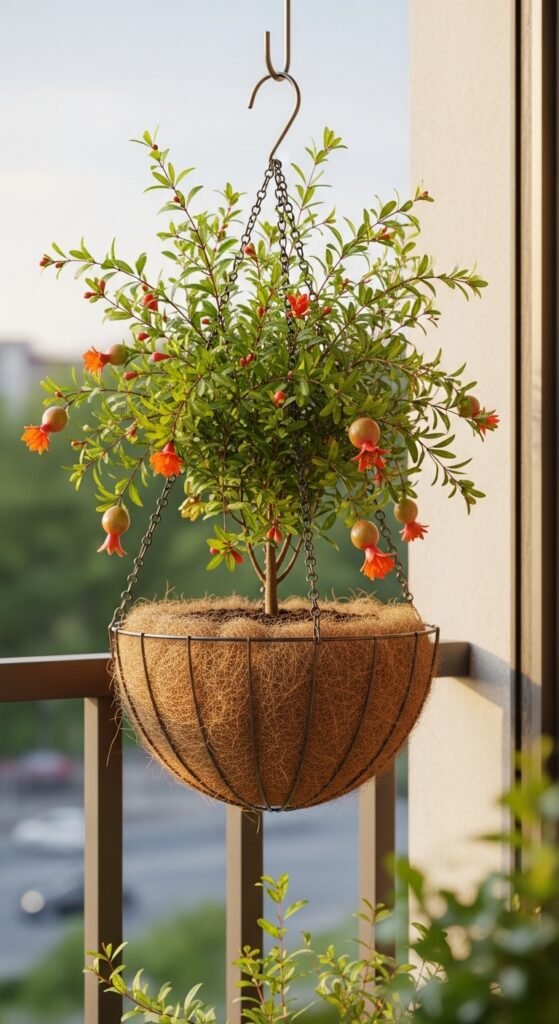
Select a wire or macrame basket lined with coco fiber, around 14 inches in diameter. Use lightweight soil to prevent excess weight, planting at the same depth as the nursery pot. Hang in a location with 6-8 hours of sun, watering when the top inch feels dry. Support with strong hooks to handle the mature plant’s weight. Integrate this with spring porch planter ideas for seasonal flair, creating an eye-catching display that yields sweet pomegranates.
4) Upcycled Barrel Container
Transform an old wine barrel into a rustic pomegranate container for eco-friendly gardening. Halved barrels provide ample root space and excellent insulation, helping maintain stable soil temperatures. This sustainable choice reduces waste while offering a charming, vintage look to your outdoor area.
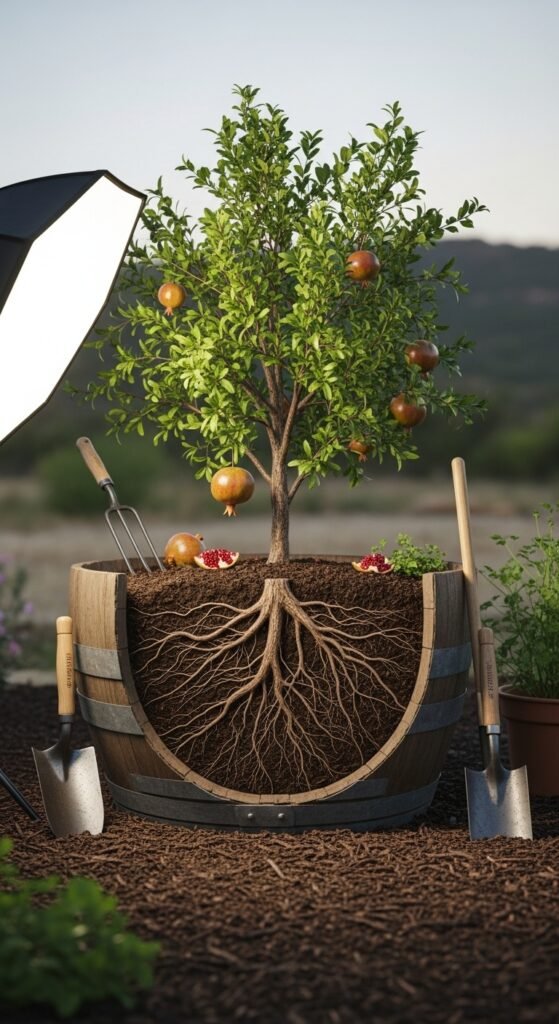
Cut the barrel in half, drill drainage holes, and line with landscape fabric. Fill with a balanced potting mix, planting your tree centrally. Place in full sun, mulching the surface to retain moisture. Fertilize monthly during growing season for robust fruiting. Calculate your mulch needs with a mulch calculator to avoid over-application. This setup supports larger varieties, delivering abundant harvests with minimal environmental impact.
5) Tiered Pot Arrangement
Create a tiered pomegranate container by stacking pots of varying sizes. This vertical design saves space and allows companion planting at lower levels, like herbs that deter pests. The structure improves drainage and aesthetics, making it ideal for balconies or small yards.
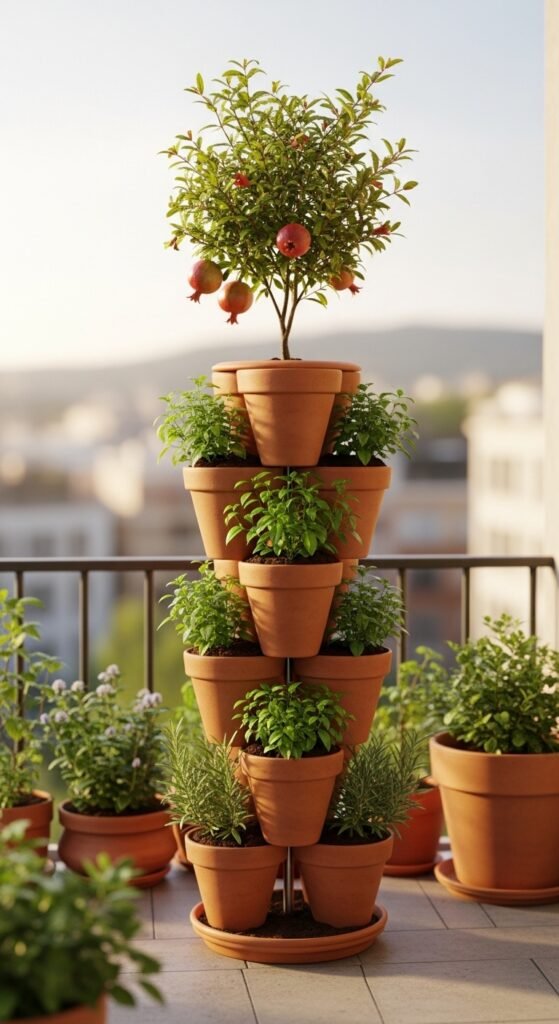
Use three terracotta pots graduating in size, securing them with a central rod. Plant the pomegranate in the top pot with sandy loam soil. Add shade-tolerant plants below. Ensure full sun exposure, watering from top to bottom. Rotate periodically for even growth. For spacing companions, refer to a plant spacing calculator. This innovative idea boosts biodiversity and fruit production in compact areas.
6) Fabric Grow Bag Option
Utilize fabric grow bags for your pomegranate container to promote air pruning of roots, preventing circling and encouraging a fibrous system. These bags are lightweight, portable, and foldable for storage, perfect for seasonal moves or renters.
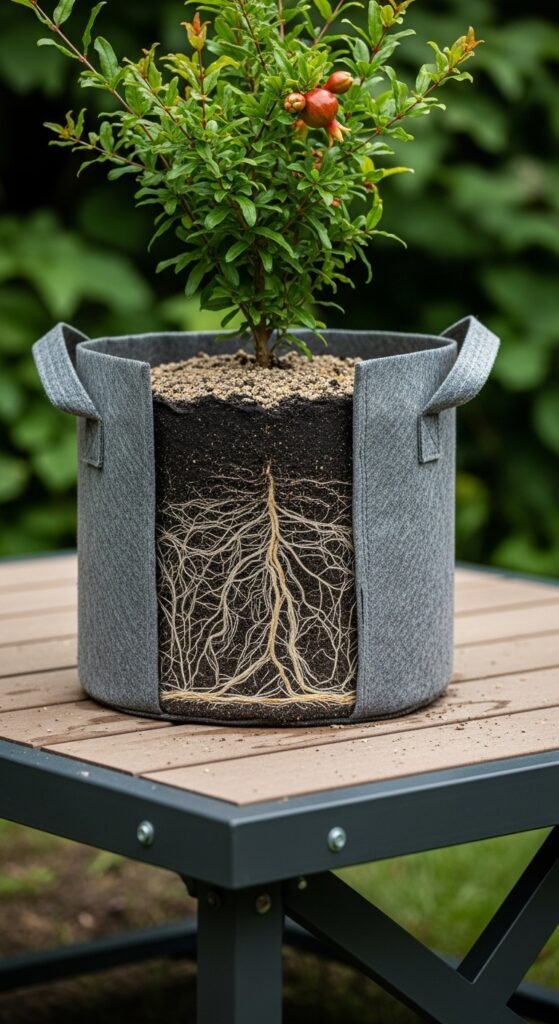
Choose a 20-gallon fabric bag with handles. Fill with well-aerated soil, planting deeply for stability. Position in sunny, sheltered spots, watering more frequently due to faster drying. Apply organic fertilizer to support flowering. This method enhances root health, leading to stronger trees and better yields. Complement with fall container garden ideas for year-round interest.
7) Ceramic Glazed Pot Elegance
Select a glazed ceramic pot for your pomegranate container to retain moisture longer and add colorful flair. The non-porous surface minimizes evaporation, benefiting the drought-tolerant plant in humid climates. This choice combines functionality with decorative appeal.
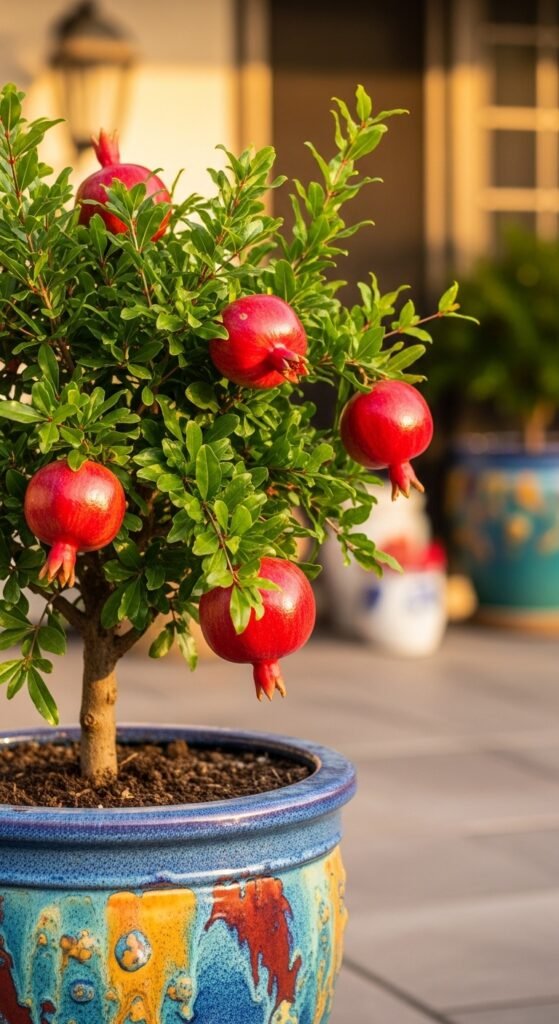
Pick a 16-24 inch pot with drainage. Use cactus mix amended with compost for nutrients. Site in bright light, pruning to shape. Protect from frost by moving indoors. For compost ratios, use a compost calculator. Enjoy vibrant blooms and fruits while elevating your garden’s style.
8) Mobile Cart-Mounted Container
Mount your pomegranate container on a wheeled cart for easy mobility. This allows you to chase sunlight or protect from weather, optimizing growth conditions. Ideal for variable climates, it extends the growing season and simplifies maintenance.
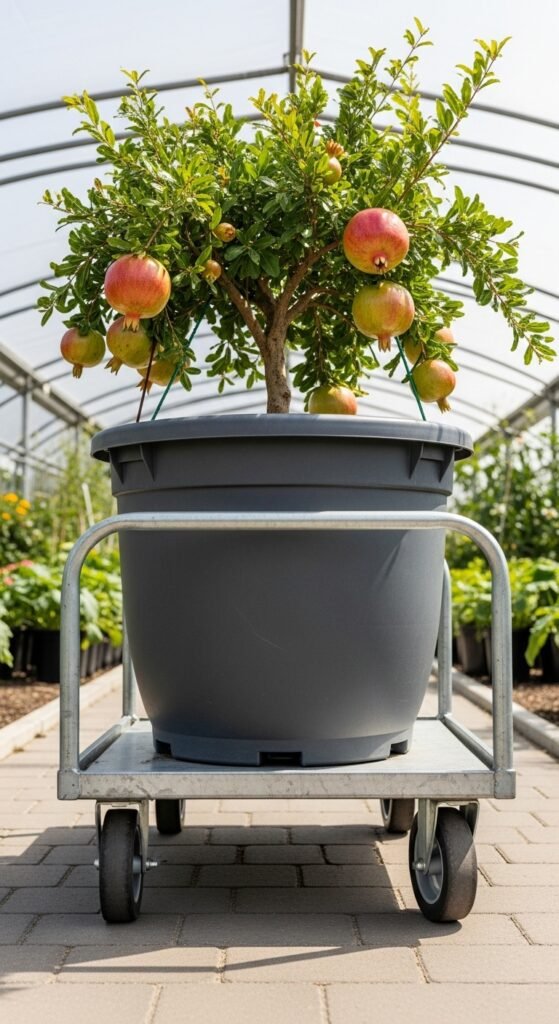
Secure a large plastic pot to a plant caddy. Plant in rich, draining soil, ensuring stability. Wheel to sunny areas daily if needed. Stake for support against wind. This flexible setup maximizes harvests. Integrate patio herb garden ideas around the base for added utility.
9) Raised Bed-Style Box
Build a wooden box as a pomegranate container for a raised bed feel in small spaces. This provides deep rooting area and better soil control, fostering healthy development and easier harvesting.
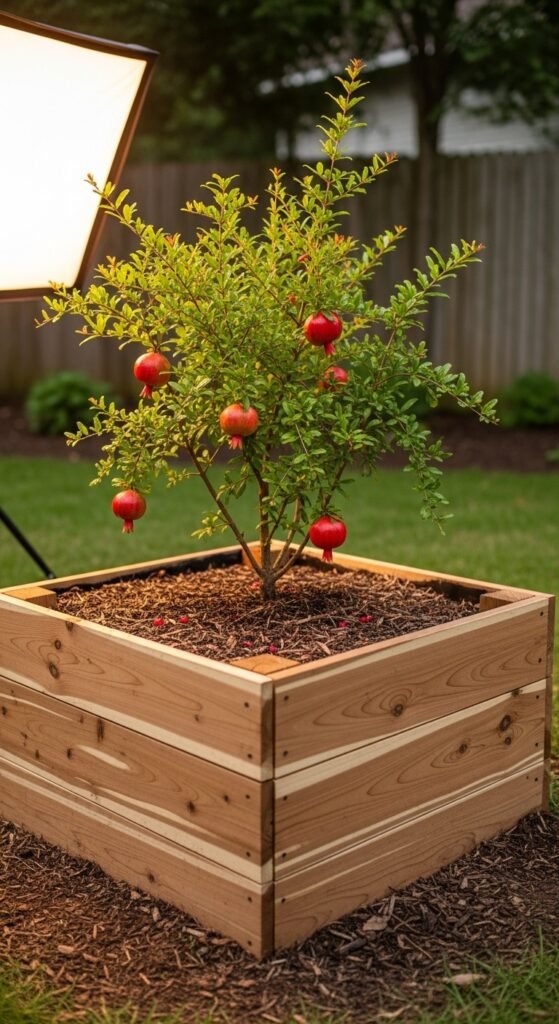
Construct a 2×2 foot cedar box, 18 inches deep. Line and fill with custom mix. Plant centrally, mulching heavily. Place in sun, irrigating consistently. Treat wood naturally to avoid chemicals. For irrigation, explore drip irrigation setup options. Yield larger fruits with this sturdy design.
10) Window Box Integration
Incorporate a pomegranate into a window box container for urban dwellers. Dwarf types fit well, bringing fruit production to eye level while beautifying windowsills.
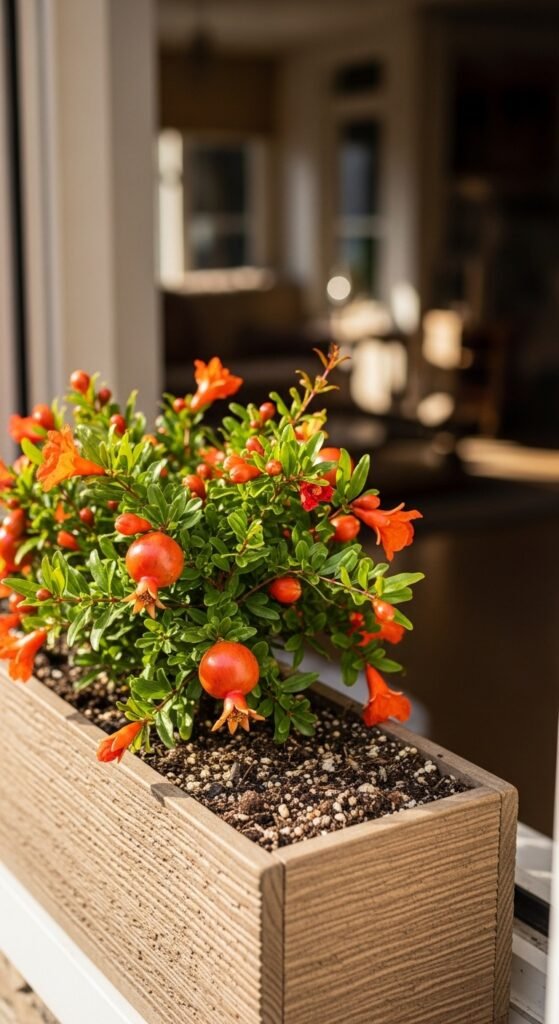
Use a long, shallow box with drainage. Mix soil for lightness, planting off-center. Ensure 6 hours of sun, watering carefully. Pinch tips for bushiness. This space-saver delivers fresh pomegranates conveniently. Draw from spring container garden ideas for vibrant combinations.
11) Hydroponic Container Setup
Experiment with a hydroponic pomegranate container for soil-free growing. Nutrient solutions deliver precise feeding, accelerating growth and fruiting in controlled environments like indoors.
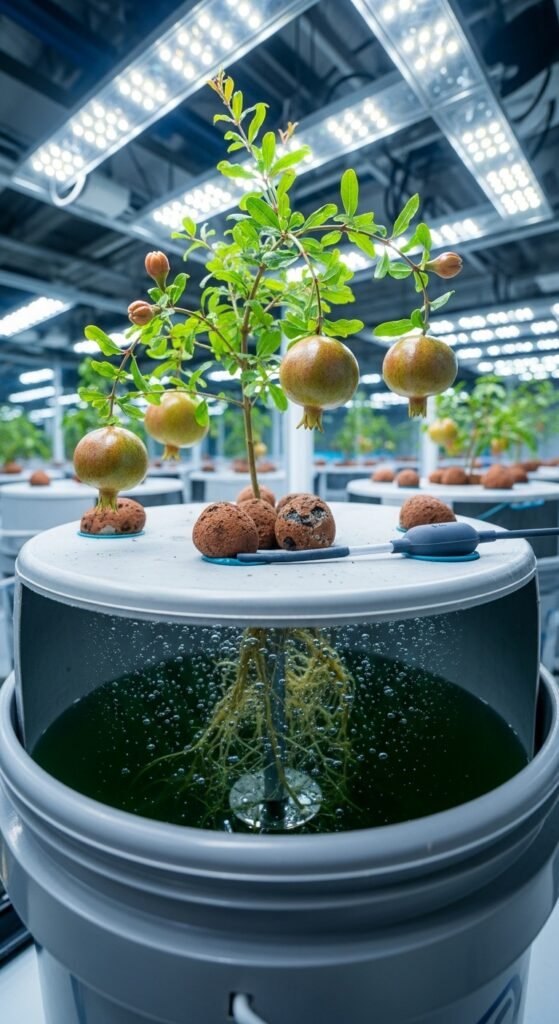
Set up a deep water culture system in a 5-gallon bucket. Use clay pebbles for support, circulating oxygenated solution. Provide grow lights if needed. Monitor pH levels closely. This high-tech idea suits year-round production, offering clean, efficient harvests without traditional soil.
12) Decorative Urn Planter
Plant in an ornate urn as your pomegranate container for a sculptural element. Stone or resin urns offer stability and elegance, enhancing formal gardens while supporting the tree’s needs.
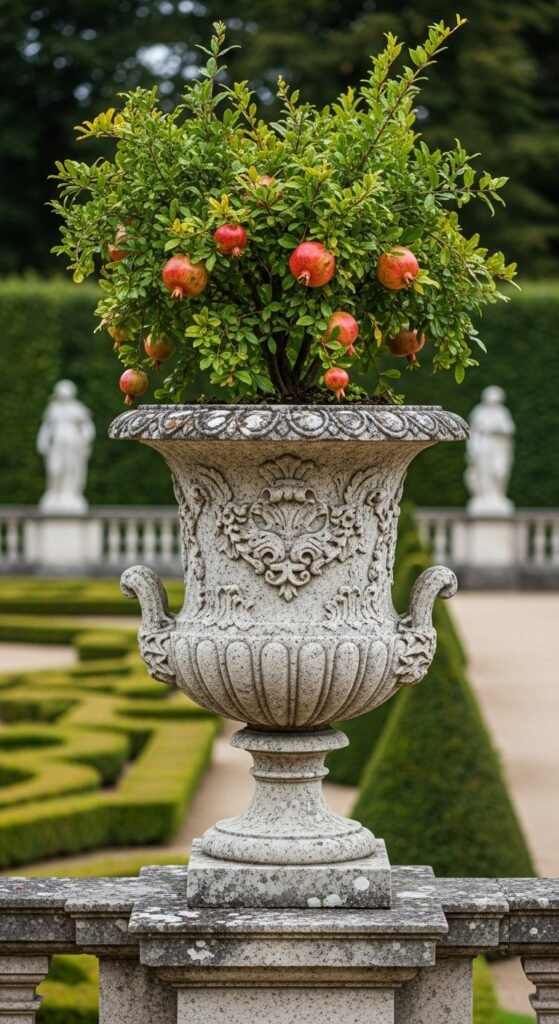
Choose a wide-mouthed urn with holes. Fill with gritty mix, planting securely. Site in protected sun, fertilizing sparingly. Overwinter indoors in cold zones. This luxurious setup produces striking fruits amid beautiful foliage.
13) Companion Planting Pot
Design a companion pomegranate container with beneficial plants like marigolds or basil. These repel pests and attract pollinators, improving overall health and yield without chemicals.
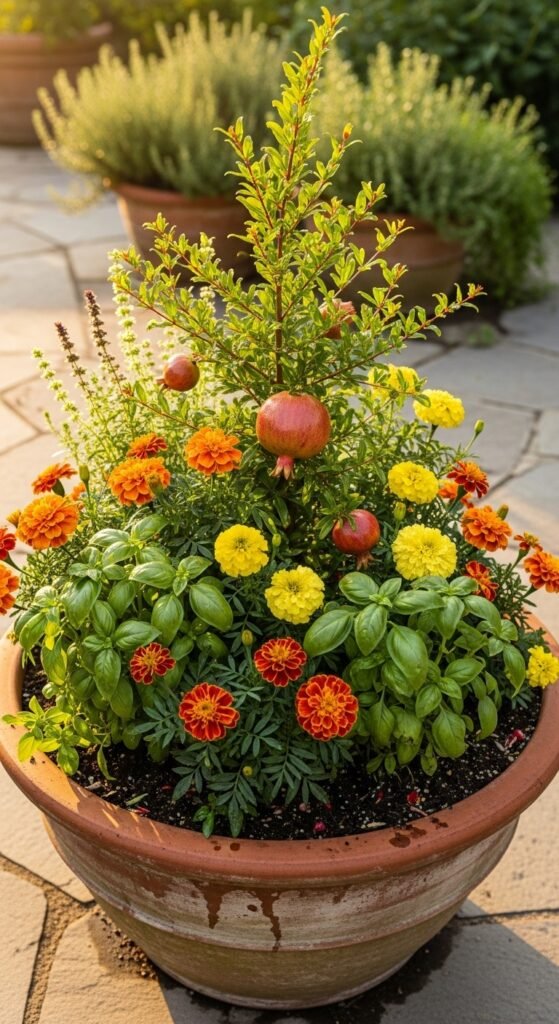
Use a large pot, planting pomegranate centrally with companions around. Select sunny, well-drained spots. Water and feed collectively. Rotate crops seasonally. This symbiotic approach boosts ecosystem balance and fruit quality.
14) Vertical Tower Container
Employ a vertical tower for your pomegranate container to stack growth layers. This saves horizontal space, allowing multiple plants in one unit for diverse harvests.
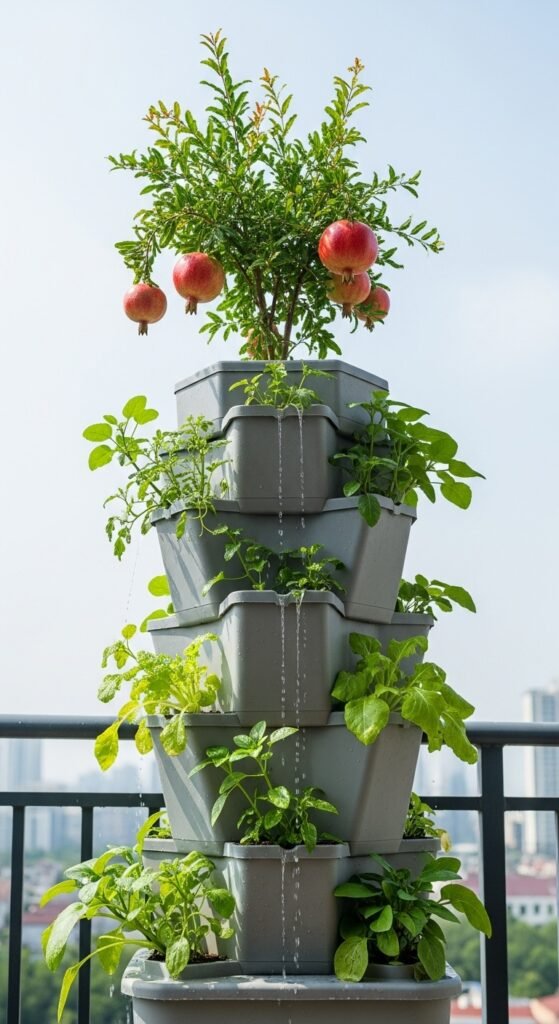
Assemble a tower pot system, placing pomegranate at top. Use soilless media for lightness. Ensure full sun, dripping water from above. Fertilize diluted solutions. Ideal for balconies, it maximizes output in minimal footprints.
15) Eco-Friendly Recycled Tire
Repurpose a tire as a pomegranate container for budget-friendly, durable growing. Stacked tires create deep beds, retaining heat for warmer roots and extended seasons.
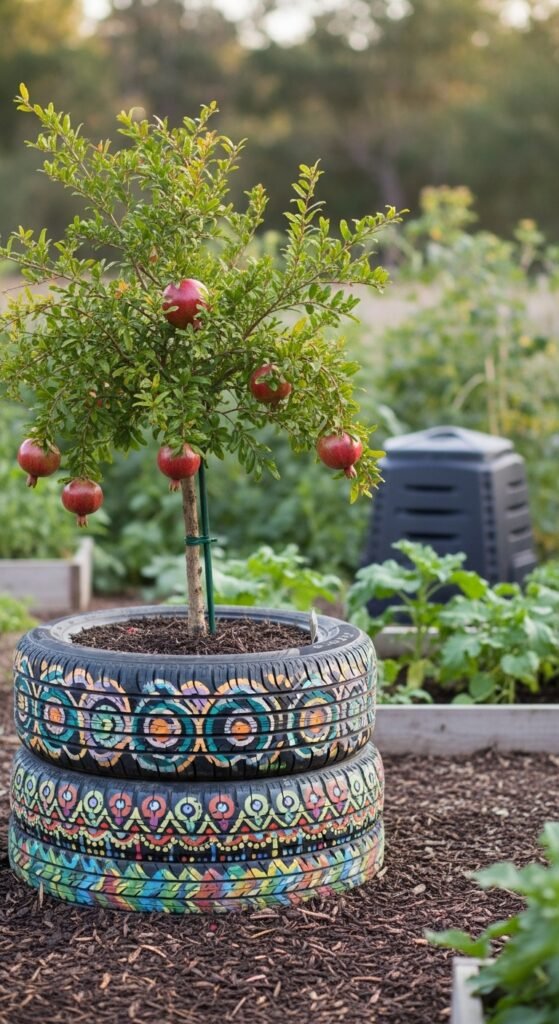
Paint and stack tires, filling with soil. Plant deeply, mulching top. Position in sun, monitoring moisture. Leach toxins first if concerned. This upcycled idea promotes sustainability while yielding plentiful fruits.
Key Principles for Pomegranate Container Success
Soil and Drainage Essentials
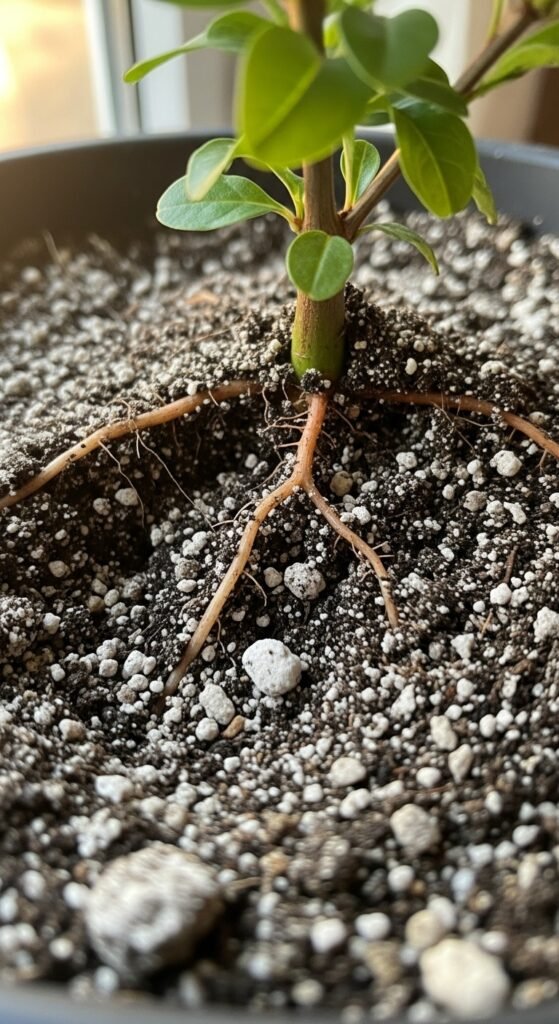
Always prioritize well-draining soil to prevent waterlogged roots, mixing sand and perlite for optimal texture. Good drainage is crucial for pomegranates, as they hate wet feet.
Sunlight and Positioning Tips
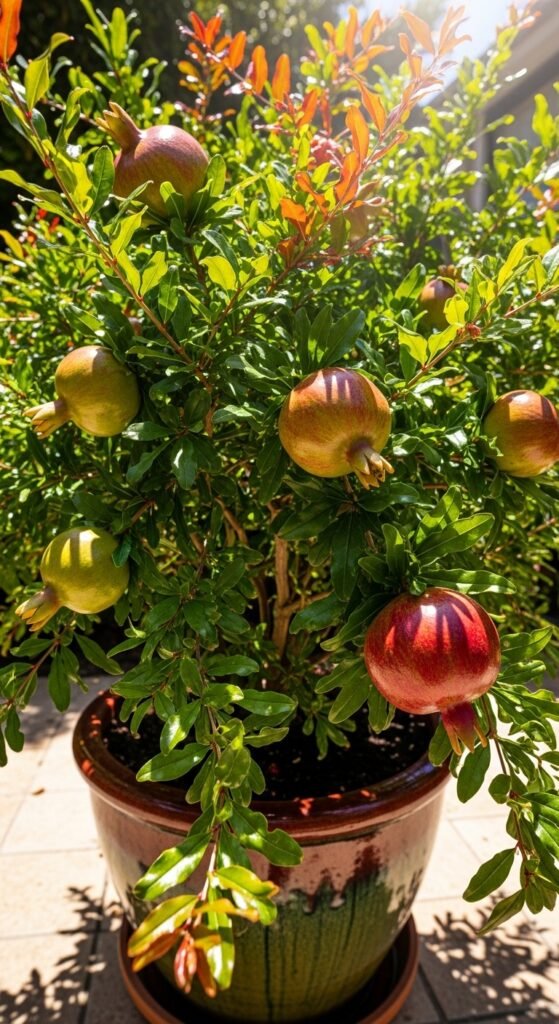
Position your container in full sun for at least 6 hours daily to ensure flowering and fruit set. Rotate pots for even exposure.
Pruning and Maintenance Guidelines
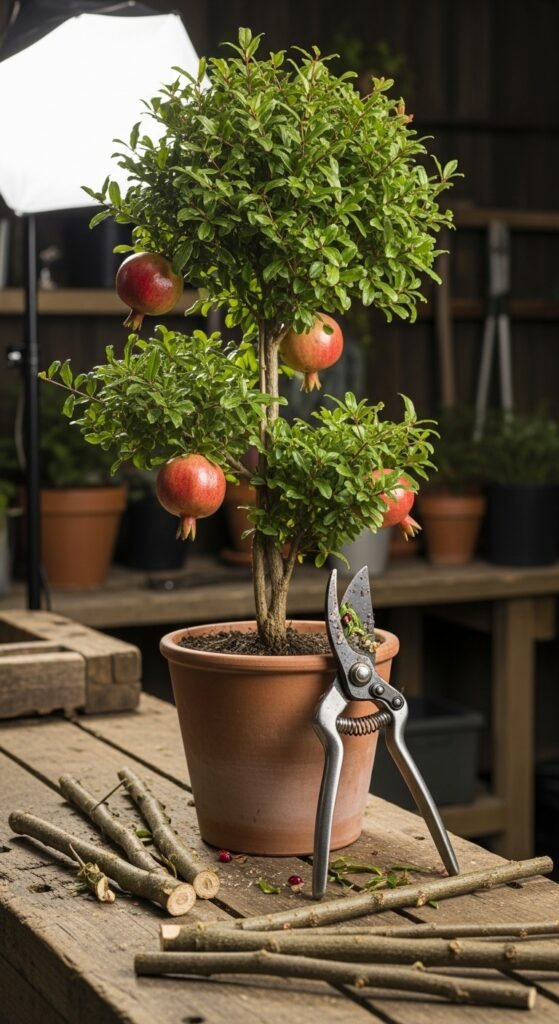
Prune in late winter to shape and remove dead wood, encouraging productive branches. Regular feeding with balanced fertilizer supports vigorous growth.
Frequently Asked Questions
Can pomegranates grow well in containers?
Yes, dwarf varieties thrive in containers with proper care, offering flexibility for small spaces and easy mobility.
What size container is best for a pomegranate tree?
A 15-25 gallon pot provides ample room for roots, depending on the variety’s mature size.
How often should I water my pomegranate container?
Water deeply when the top 2 inches of soil dry out, typically every 7-10 days, adjusting for climate.
Do pomegranates need full sun in pots?
Absolutely, they require 6-8 hours of direct sunlight daily for optimal fruit production.
Can I overwinter a pomegranate container indoors?
Yes, move to a cool, bright indoor spot in zones below 7 to protect from frost.