
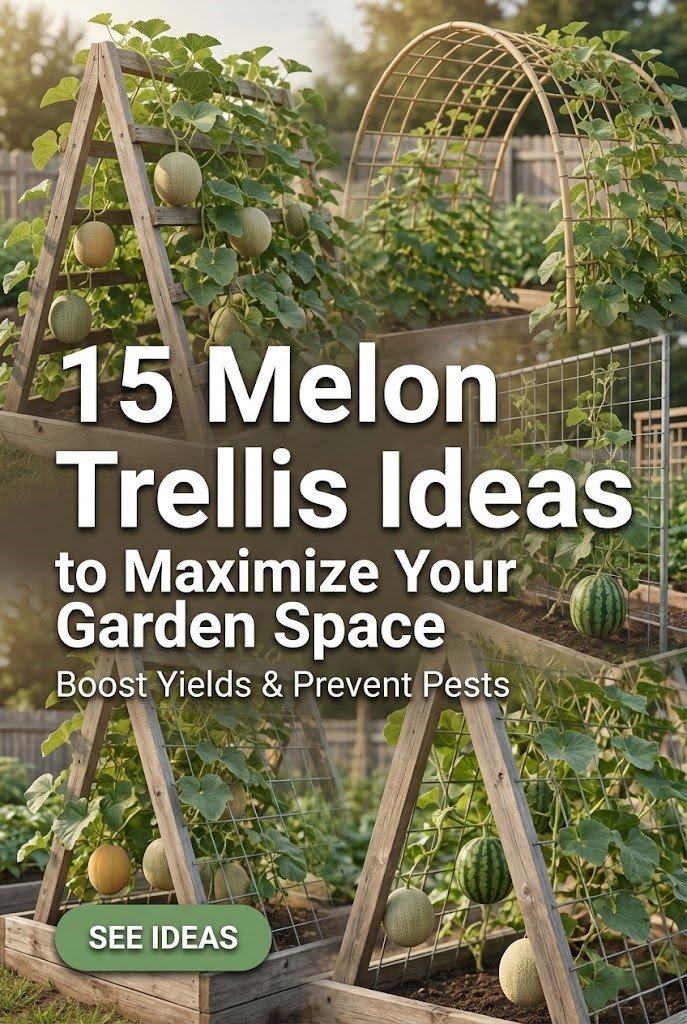
Growing melons vertically can transform your garden, allowing you to cultivate juicy fruits even in limited spaces. Melon trellis ideas focus on supporting the heavy vines and fruits while promoting better airflow and sunlight exposure. By elevating your plants, you reduce the risk of pests and diseases that thrive on the ground, leading to healthier crops and easier harvesting.
Whether you’re a seasoned gardener or just starting out, incorporating a trellis system for melons encourages efficient use of vertical space, freeing up ground for other plants. These structures not only enhance productivity but also add aesthetic appeal to your outdoor area. With the right melon trellis ideas, you can enjoy bountiful harvests without sprawling vines overtaking your yard.
Explore these 15 innovative designs, each tailored to different garden styles and skill levels. You’ll find practical tips on materials, construction, and maintenance to get started right away.
1) A-Frame Wooden Trellis
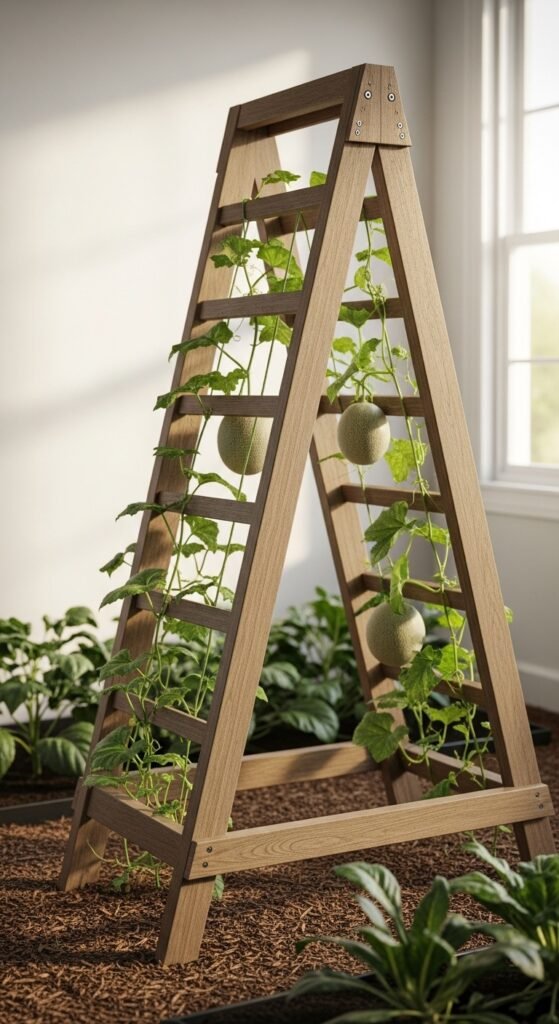
You can build an A-frame trellis using simple lumber like 2x4s hinged at the top to form a sturdy triangle. This design stands independently in your garden bed, providing ample support for melon vines to climb on both sides. Add horizontal slats or wire mesh for the vines to grip as they grow upward.
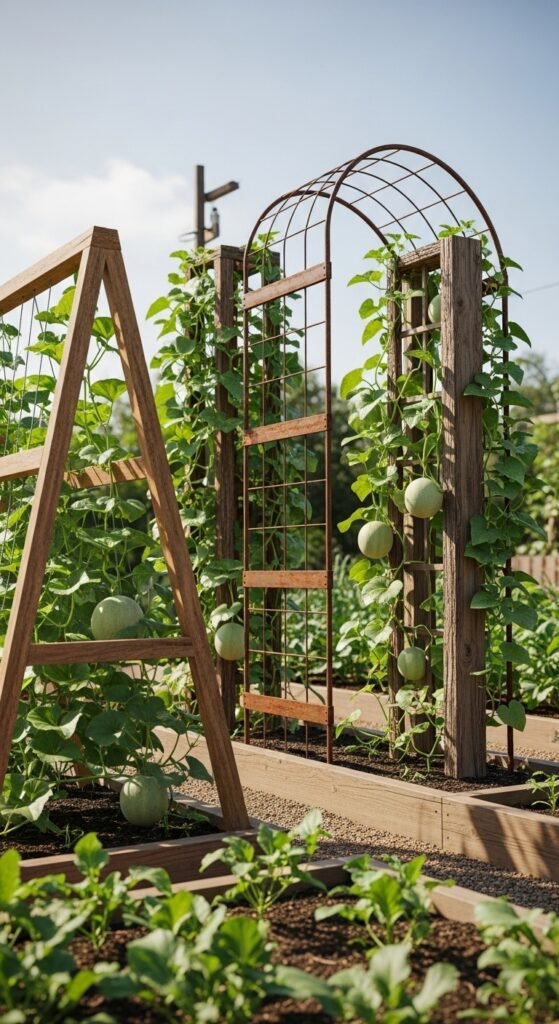
Why choose this? It maximizes vertical space, preventing fruit from rotting on damp soil and improving air circulation to fend off mildew. You’ll harvest cleaner melons with less bending over, making gardening more enjoyable. Plus, it doubles as a shady spot for other plants underneath.
To construct, cut four legs to equal lengths, attach crossbars, and secure with screws. Plant your melons at the base and train the vines gently. For similar vine supports, check out our guide on cucumber trellis ideas to adapt techniques for various crops. Maintain by checking for stability during heavy fruiting seasons.
2) Cattle Panel Archway
Form a graceful arch by bending a 16-foot cattle panel into a semi-circle and securing the ends into the ground with stakes. This creates a tunnel-like structure perfect for melon vines to cascade over, forming a natural walkway in your garden.
The benefits are clear: It offers robust support for heavy melons, enhances garden aesthetics, and allows easy access for pollination and picking. Vines growing overhead mean fruits hang down for simple harvesting, reducing strain on your back.
Installation is straightforward—anchor the panel firmly and weave vines through the grid as they elongate. Use soft ties if needed to guide growth. This setup works well for other climbers too; explore cattle panel arch variations for inspiration. Regularly inspect for rust and prune excess foliage to maintain airflow.
3) Bamboo Teepee Structure
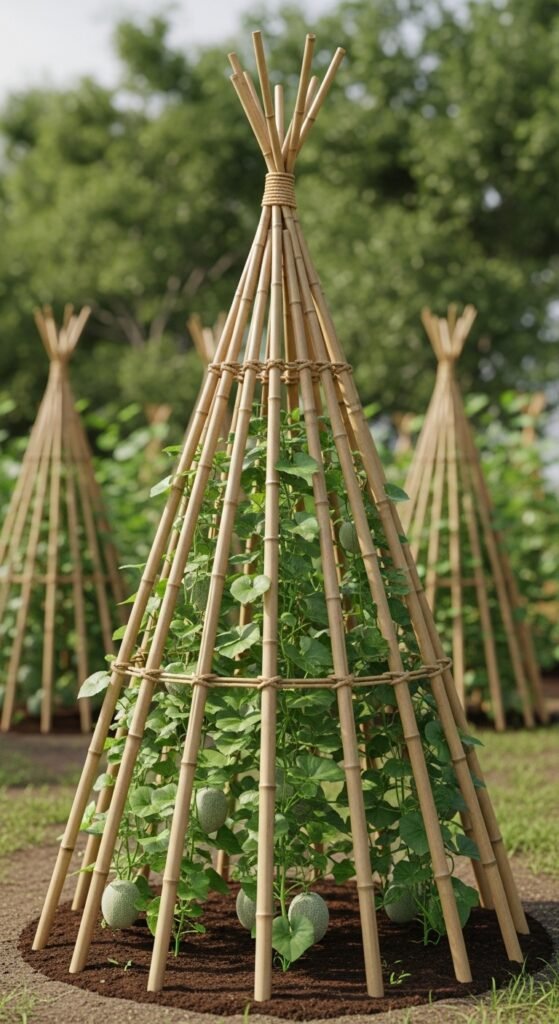
Gather long bamboo poles and lash them together at the top with twine to create a conical teepee. This rustic design fits seamlessly into natural garden settings, providing multiple sides for melon vines to ascend.
Key advantages include affordability and eco-friendliness, as bamboo is renewable. It promotes even sun exposure and better pest control by lifting plants off the ground, resulting in sweeter, blemish-free melons.
Assemble by inserting poles into the soil in a circle and binding the tops. Plant seeds around the base and encourage vines to wrap around. For bean varieties, our bean teepee trellis article offers complementary building tips. Water consistently at the roots and add mulch to retain moisture.
4) Vertical Netting System
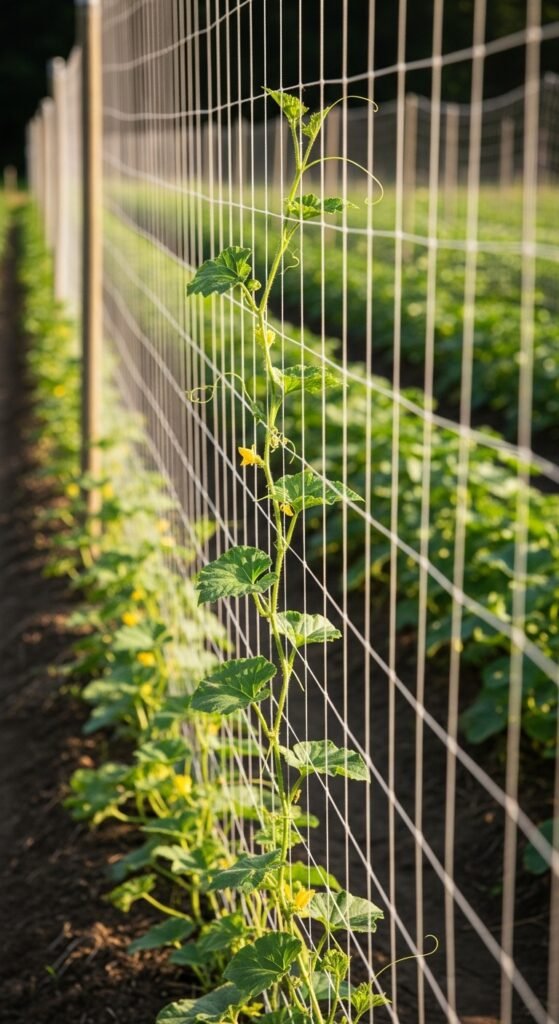
Stretch nylon or plastic netting between two sturdy posts driven into the ground, creating a flat vertical plane for melon vines. This simple setup is ideal for row planting in vegetable gardens.
Why it works well: It’s lightweight yet strong, allowing vines to weave through easily while supporting fruit weight with slings if necessary. You’ll save space and reduce weeding efforts, focusing more on enjoying your harvest.
Set up by spacing posts 6-8 feet apart and attaching netting tautly. Train young vines onto the mesh. Similar to techniques for peas, see our pea trellis designs for mesh alternatives. Monitor for tangles and harvest promptly to avoid overloading the net.
5) Wall-Mounted Wire Grid
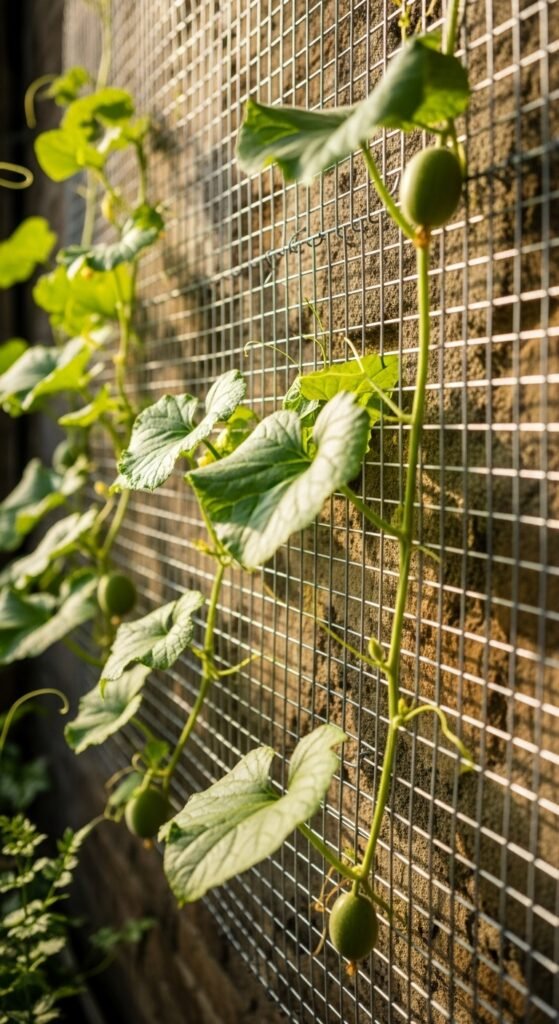
Attach a grid of galvanized wire or hardware cloth to a sunny wall or fence, turning unused vertical surfaces into productive growing areas for melons.
Benefits abound: It utilizes existing structures, conserves ground space, and provides warmth from the wall for faster ripening. Your melons will be protected from ground pests, yielding higher quality fruit.
Install anchors and stretch wire horizontally and vertically. Guide vines upward with clips. For broader vertical concepts, our vertical garden ideas can expand your options. Prune side shoots to direct energy to fruit production.
6) Pergola-Style Overhead Trellis
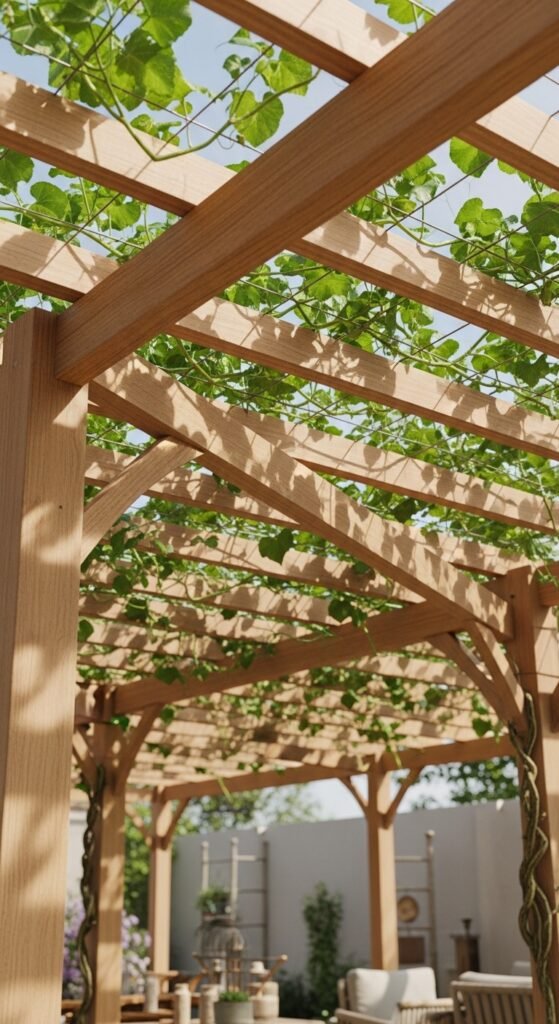
Construct a pergola frame with posts and crossbeams, then add wires or slats for vines to climb across the top. This creates a shaded seating area beneath while growing melons above.
This dual-purpose design enhances your outdoor living space, offers strong support for heavy loads, and improves fruit quality through dappled light. You’ll appreciate the aesthetic and functional integration.
Build the frame securely, then string wires. Plant at the base of posts. Draw from garden trellis ideas for customization. Fertilize regularly and use hammocks for larger fruits.
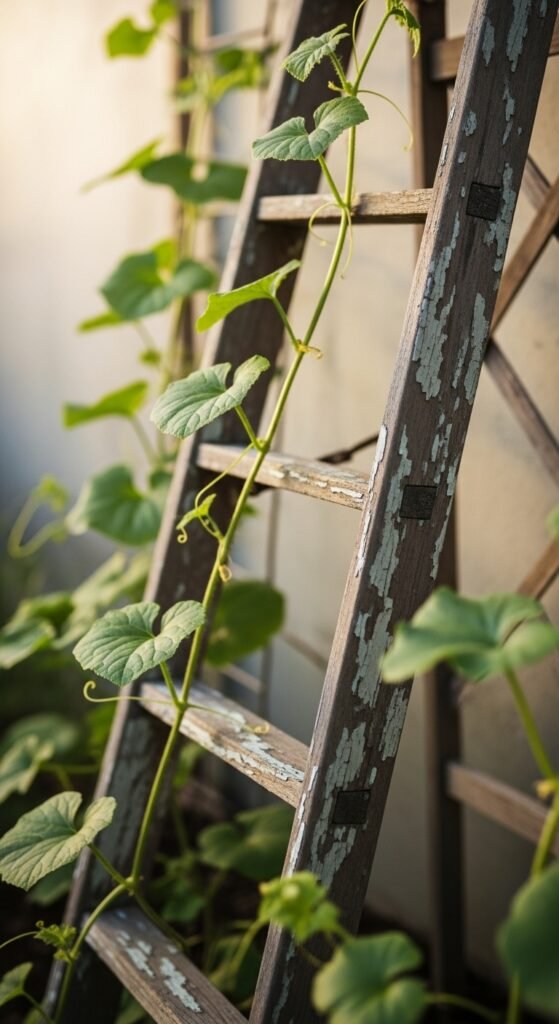
7) Repurposed Ladder Trellis
Lean an old wooden ladder against a wall or stake it upright, using the rungs as natural supports for melon vines to climb.
Why repurpose? It’s cost-effective and adds vintage charm, while providing excellent ventilation to prevent diseases. Harvesting becomes effortless as fruits are at eye level.
Secure the ladder firmly and tie vines to rungs. For squash companions, reference squash vine borer control to protect your plants. Paint if desired for weather resistance.
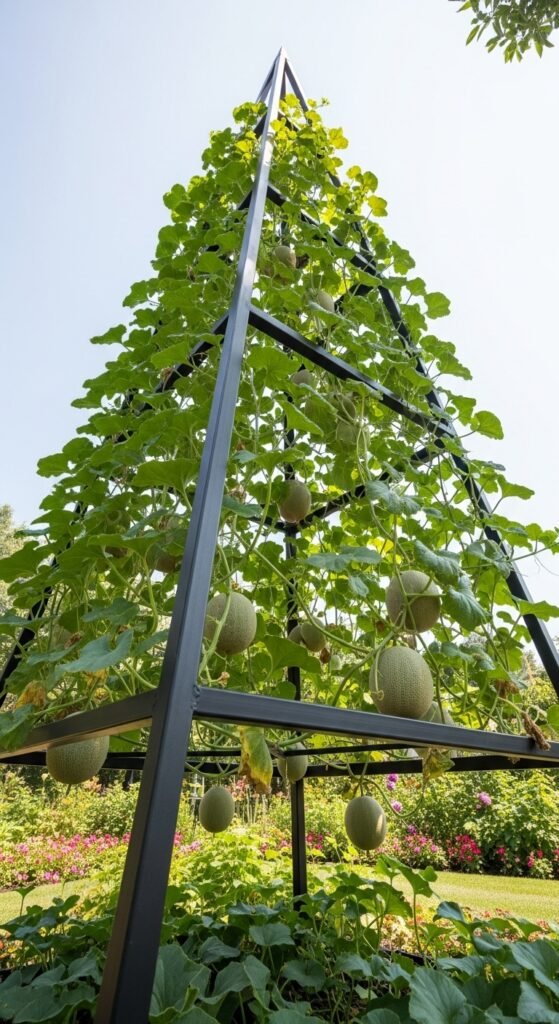
8) Obelisk Pyramid Trellis
Erect a tall, four-sided obelisk made from wood or metal, tapering to a point, ideal for focal points in your garden beds.
Standout perks: It offers 360-degree climbing space, elevates fruits for easy picking, and adds architectural interest. Your melons will thrive with improved sun access.
Assemble panels and connect at the top. Plant around the base. Similar to obelisk trellis for flowers, adapt for edibles. Stake deeply for stability.
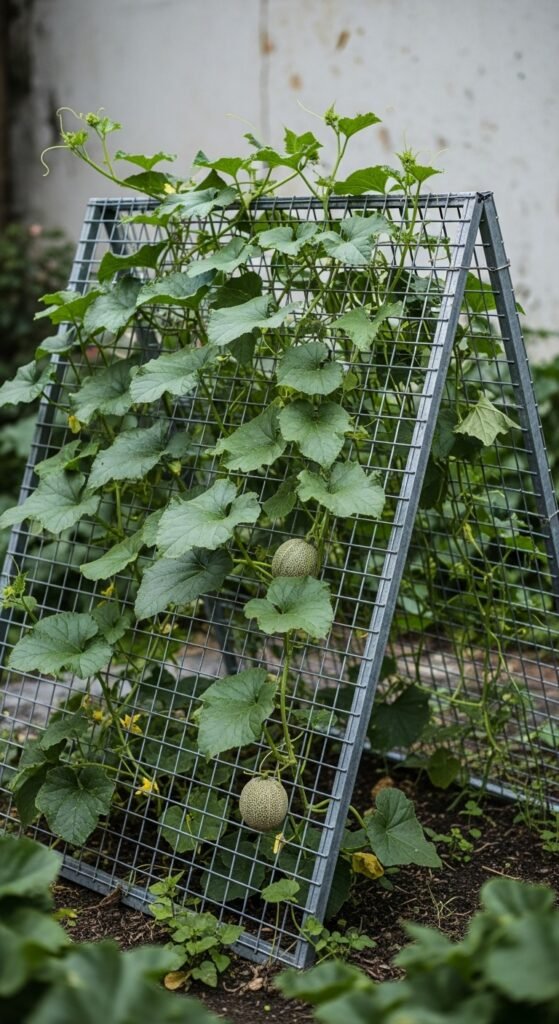
9) Wire Mesh Panel Lean-To
Prop wire mesh panels against each other or a structure to form a lean-to shelter, allowing vines to cover the surfaces.
This setup excels in small spaces, providing shade below and robust support above. It minimizes soil contact, reducing rot and pests for healthier yields.
Fasten panels securely and guide growth. For tomato parallels, view vertical tomato trellis. Add supports for heavy melons.
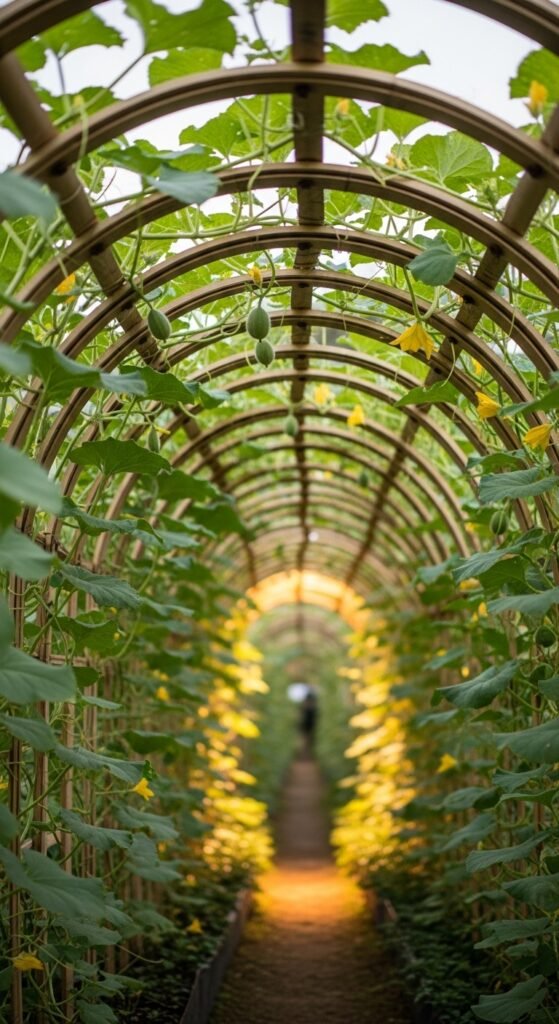
10) Bamboo Arch Tunnel
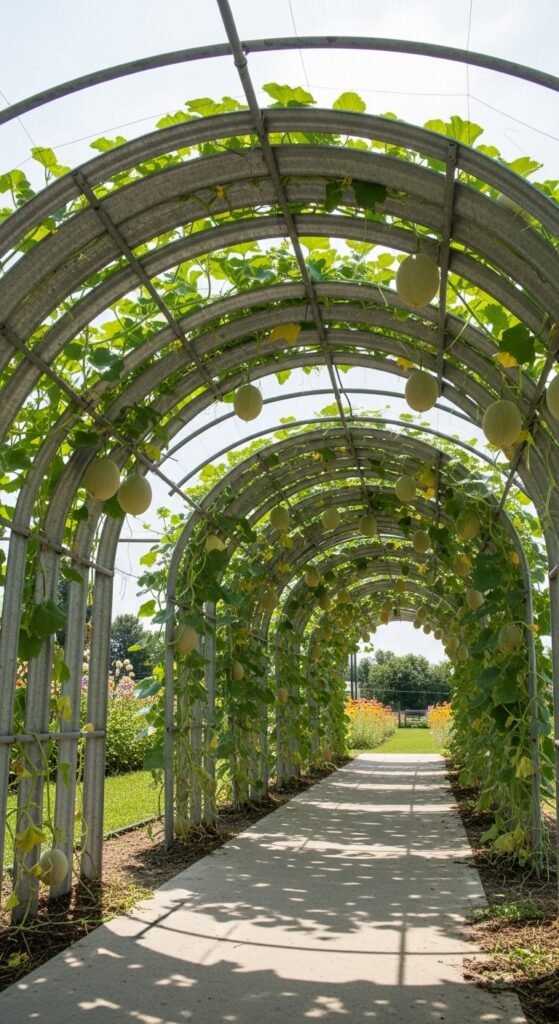
Bend flexible bamboo into arches and connect them in a row to form a tunnel, perfect for immersive garden paths.
Advantages include creating a microclimate for better growth, aesthetic appeal, and efficient space use. You’ll walk through your harvest, picking ripe melons overhead.
Anchor arches and lash cross pieces. Train vines along the curve. Inspired by melon trellis basics.
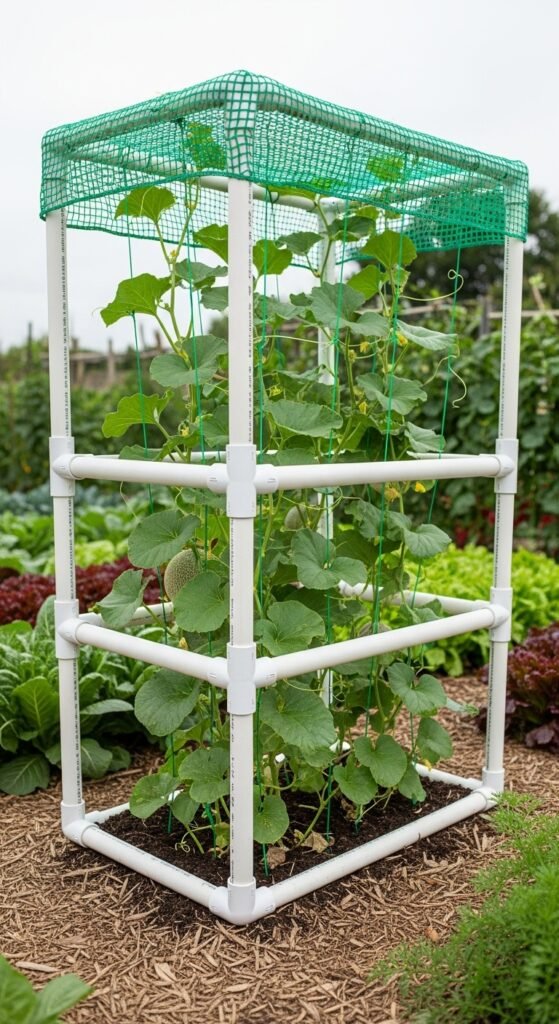
11) PVC Pipe Frame Trellis
Use PVC pipes connected with fittings to build a customizable frame, adding netting or strings for climbing.
Why PVC? It’s durable, lightweight, and inexpensive, resisting weather while supporting vine weight. Customize to your garden’s dimensions for optimal fit.
Assemble the skeleton and attach supports. Plant and train accordingly. Check maintenance tips in related articles.
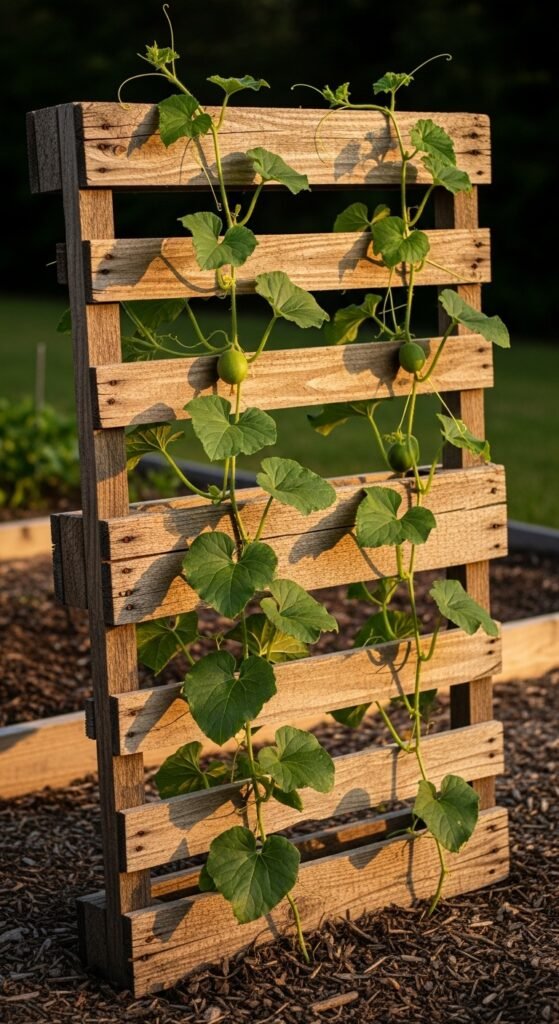
12) Wooden Pallet Vertical Stand
Stand a pallet upright, reinforcing with stakes, and use the slats for vines to weave through.
This upcycled option saves money, reduces waste, and provides multi-level support. Enjoy cleaner fruits and simpler care routines.
Secure in place and guide vines. Pair with herb ideas for mixed planting.
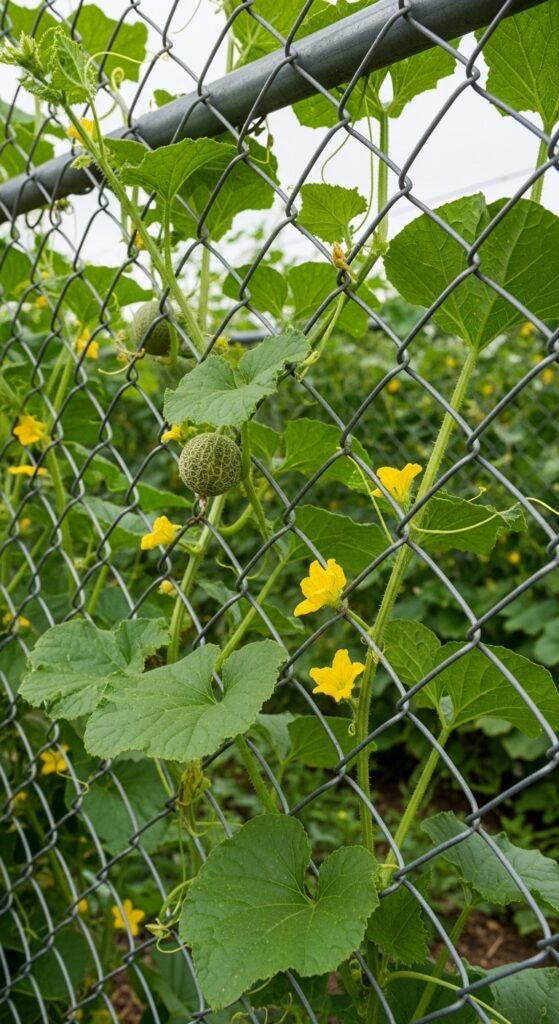
13) Chain Link Fence Integration
Utilize an existing chain link fence as a trellis by training melon vines directly onto it.
Benefits: No extra build required, strong and permanent support, integrates seamlessly. Maximizes boundary space for productive gardening.
Weave vines through links gently. Monitor for even growth.
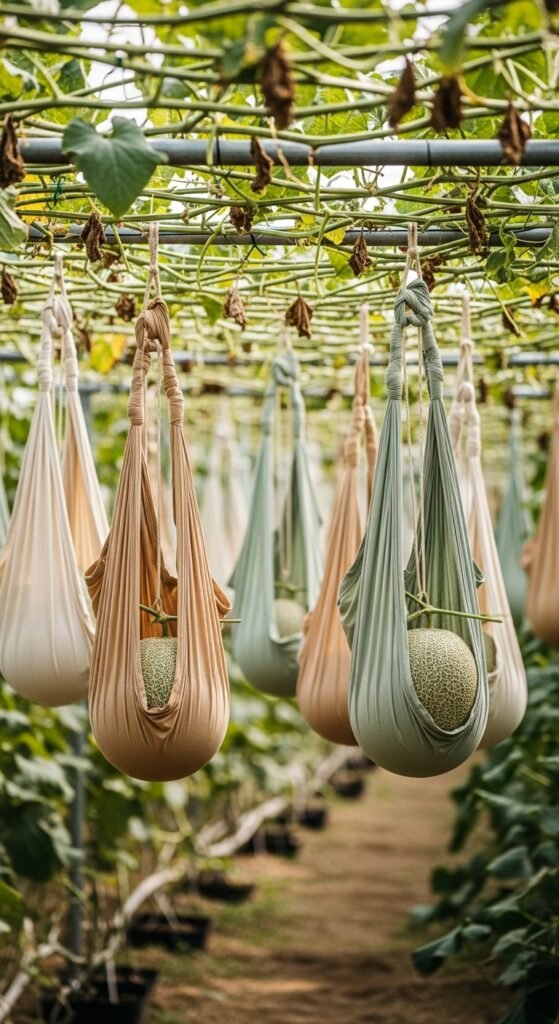
14) Hanging Sling Supports
Install overhead beams or wires and use fabric slings to cradle individual melons as they grow on climbing vines.
Essential for heavy fruits, it prevents stem breakage, ensures even ripening, and adds a unique visual element. Your plants stay healthy longer.
Tie slings securely under developing melons. Combine with basic frames.
15) Repurposed Door Arch Trellis
Prop old doors into an arch shape, hinging if needed, and let vines cover the surfaces.
This creative reuse adds character, provides solid support, and repurposes materials sustainably. It creates a charming garden entrance with functional growth space.
Stabilize the structure and train vines. Enjoy the eclectic look.
Key Principles for Successful Melon Trellising
Choosing the Right Materials
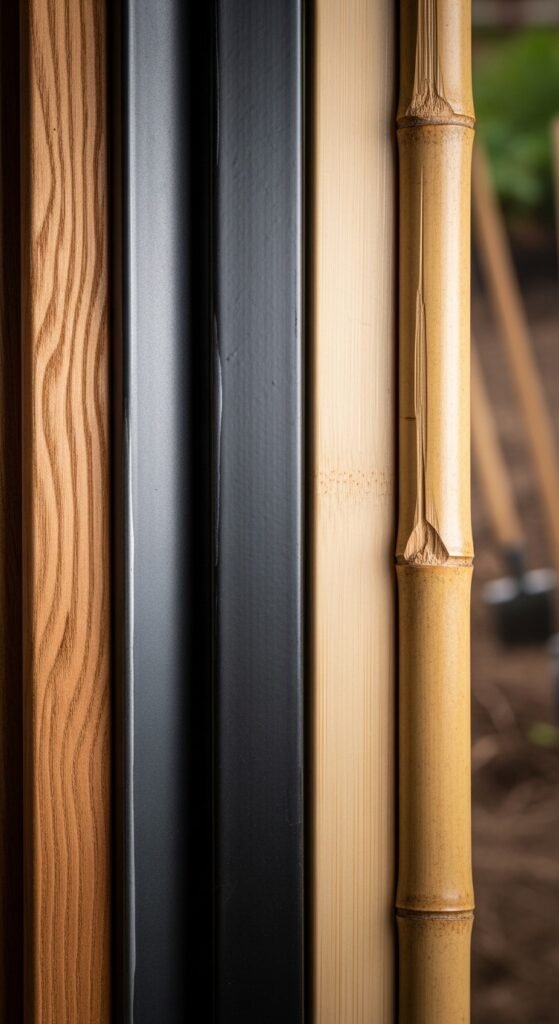
Select durable, weather-resistant materials like treated wood, metal, or bamboo to ensure longevity. Consider weight-bearing capacity for heavy melons and ease of assembly for your skill level.
Planting and Training Techniques
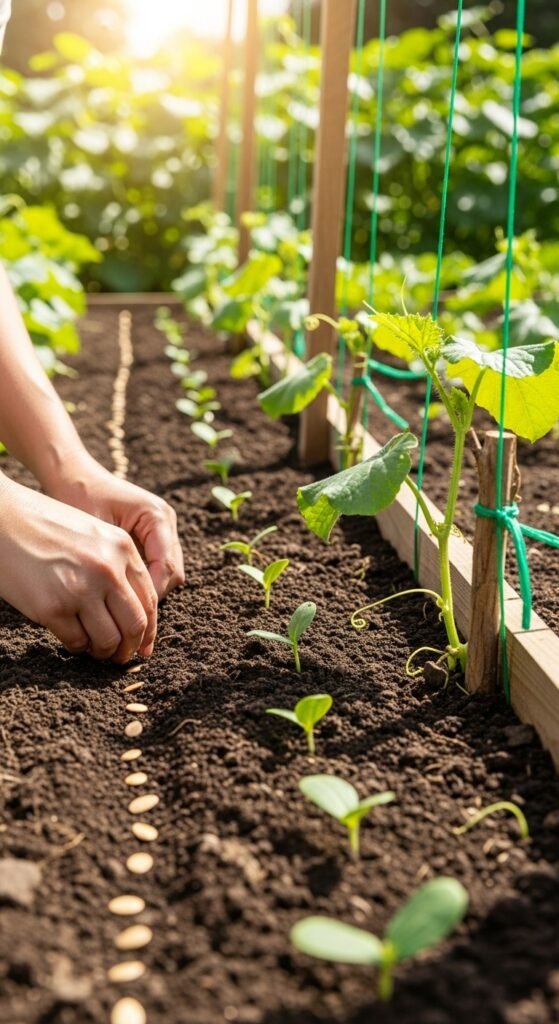
Plant melon seeds in well-drained soil with full sun. Gently guide young vines onto the trellis using soft ties, pruning to encourage upward growth and fruit production.
Maintenance and Troubleshooting
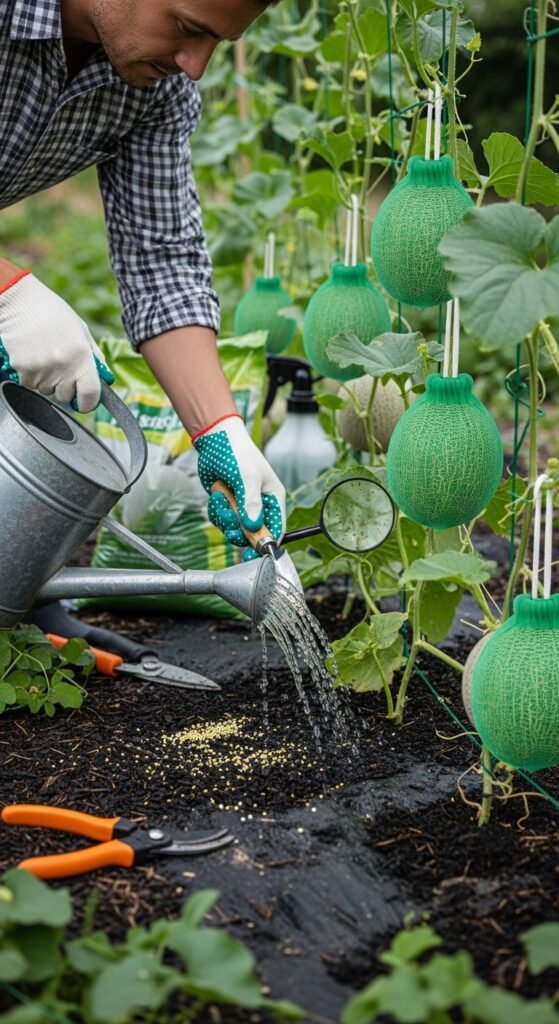
Water deeply but infrequently, fertilize with balanced nutrients, and inspect for pests. Use slings for large fruits and rotate crops annually to maintain soil health.
Frequently Asked Questions
What types of melons work best on trellises?
Smaller varieties like cantaloupe and honeydew thrive on trellises, as their fruits are lighter and easier to support. Larger watermelons may require additional slings.
How much space do melon vines need on a trellis?
Allow 4-6 feet of vertical height and 2-3 feet width per plant. Space multiple plants 3-4 feet apart to prevent overcrowding.
Can I grow melons on a trellis in containers?
Yes, use large pots with good drainage and sturdy trellises anchored securely. Ensure consistent watering and nutrient supply.
When should I harvest trellised melons?
Pick when the fruit slips easily from the vine, the underside turns yellow, and the tendril nearest the fruit dries up.
Do trellised melons need extra support?
For heavier fruits, yes—use mesh bags or fabric slings to cradle them and prevent stem damage as they mature.