Protecting your fruit trees from birds is essential if you want to enjoy a bountiful harvest. Bird netting for fruit trees acts as a physical barrier, preventing birds from pecking at ripening fruits like apples, cherries, or peaches. This method is humane, eco-friendly, and highly effective, especially during peak fruiting seasons. By installing netting properly, you can reduce crop losses significantly while allowing pollinators and beneficial insects to access the trees through appropriately sized mesh.
You’ll find that bird netting not only safeguards your produce but also minimizes the need for chemical deterrents. It’s a versatile solution suitable for backyard orchards or small farms. Whether you’re dealing with common pests like robins or starlings, these ideas will help you implement netting strategies that fit your garden’s layout and tree varieties. Consider factors like tree size, fruit type, and local bird species to optimize protection.
From simple draping techniques to advanced frame systems, these approaches offer practical ways to integrate netting seamlessly. You’ll also discover tips for maintenance and complementary methods to enhance overall orchard health, ensuring your efforts yield the best results.
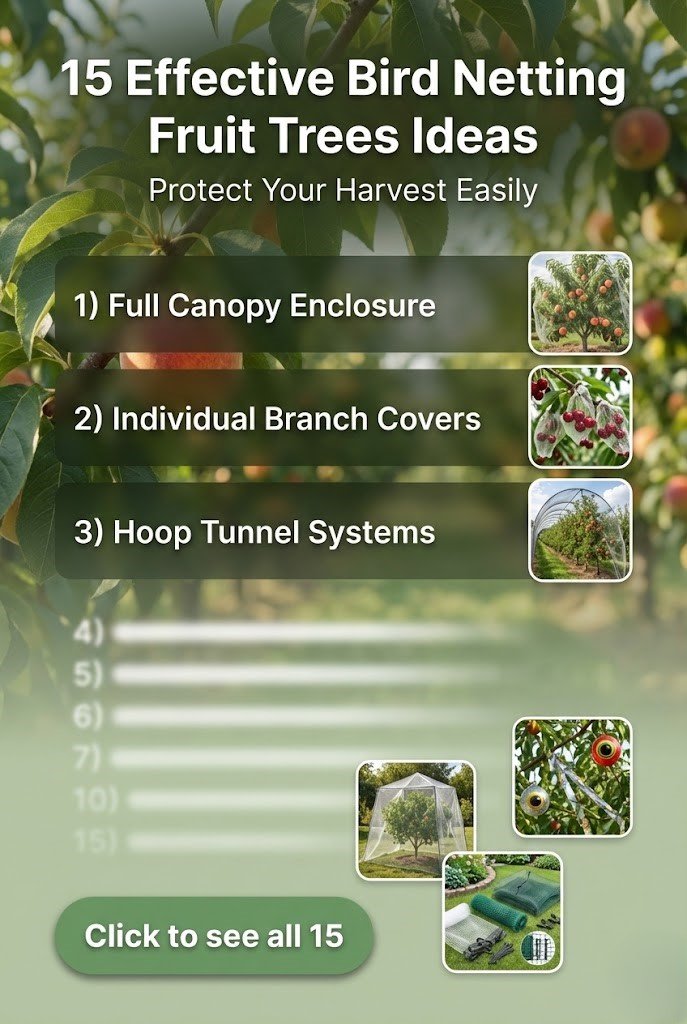
1) Full Canopy Enclosure for Mature Trees
You can create a complete protective shield by draping bird netting over the entire canopy of mature fruit trees. This method ensures no gaps for birds to sneak through, safeguarding every branch and fruit cluster. Start by selecting heavy-duty netting with a mesh size of about 1/2 inch to allow sunlight and rain penetration while keeping birds out. Use poles or existing structures to support the net above the tree, preventing it from sagging and damaging branches.
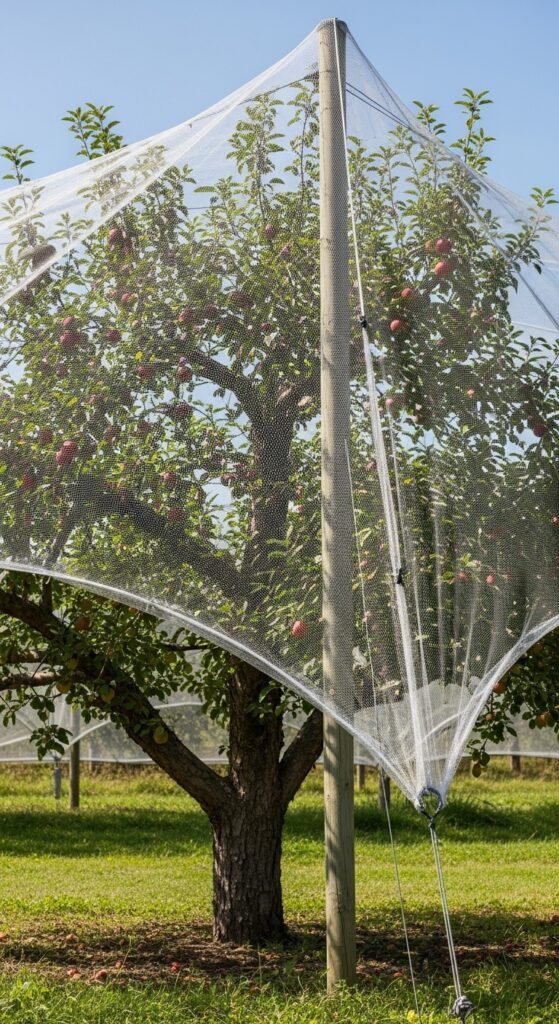
The key benefit here is comprehensive coverage, which is ideal for high-value crops like cherries or peaches where even minor bird damage can ruin the harvest. You’ll need to secure the netting at the base with weights or ties to stop birds from entering underneath. Installation is best done after flowering but before fruits ripen, giving you time to adjust for tree growth. For added effectiveness, combine this with thinning fruit trees to improve air circulation and reduce stress on branches under the net.
How to implement: Measure your tree’s diameter, add extra for drape, and enlist help to lift the net over the top. Regular checks prevent tangles with wildlife, maintaining an ethical approach. This setup lasts multiple seasons with proper storage, offering long-term value for your orchard investment.
2) Individual Branch Covers for Young Saplings
For young fruit trees, you might opt for targeted protection by covering individual branches with smaller netting bags or sleeves. This approach is perfect when your saplings have limited fruit production, allowing you to focus resources efficiently. Choose lightweight, breathable netting to avoid restricting growth, and secure each cover with twist ties or clips for easy removal during inspections.
Selective safeguarding minimizes material use and simplifies installation, making it ideal for beginners or small-scale gardens. It also permits better airflow around uncovered parts, reducing fungal risks. Apply these covers as fruits begin to form, ensuring they expand with the produce. This method works well for trees like young apples or pears, where birds target specific clusters.
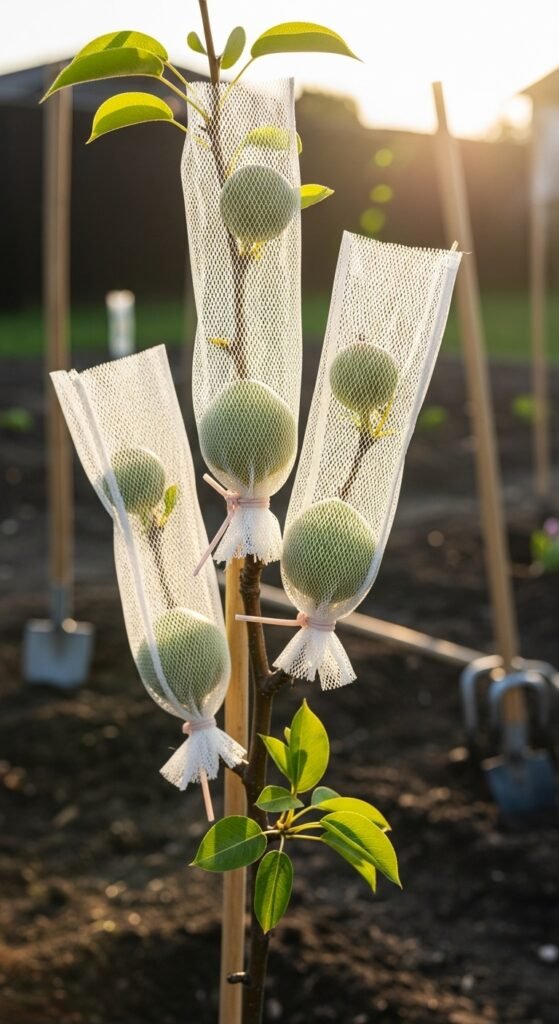
To execute: Cut netting into appropriate sizes, slip over branches, and cinch at the base. Pair this with pruning apple trees to shape the canopy for easier coverage in future years. You’ll appreciate the flexibility, as you can reuse the bags and scale up as your trees mature.
3) Hoop Tunnel Systems for Row Plantings
If your fruit trees are planted in rows, you can set up hoop tunnels draped with bird netting for linear protection. This creates a temporary enclosure that’s easy to assemble and disassemble. Use PVC pipes or metal hoops bent into arches, spaced every few feet along the row, then cover with netting secured by clips or buried edges.
The primary advantage is scalable defense for multiple trees, promoting uniform protection while allowing access for harvesting. It’s particularly useful for berry bushes or dwarf fruit varieties in aligned setups. Install after pollination to avoid interfering with bees, and ensure the structure withstands wind with stakes.
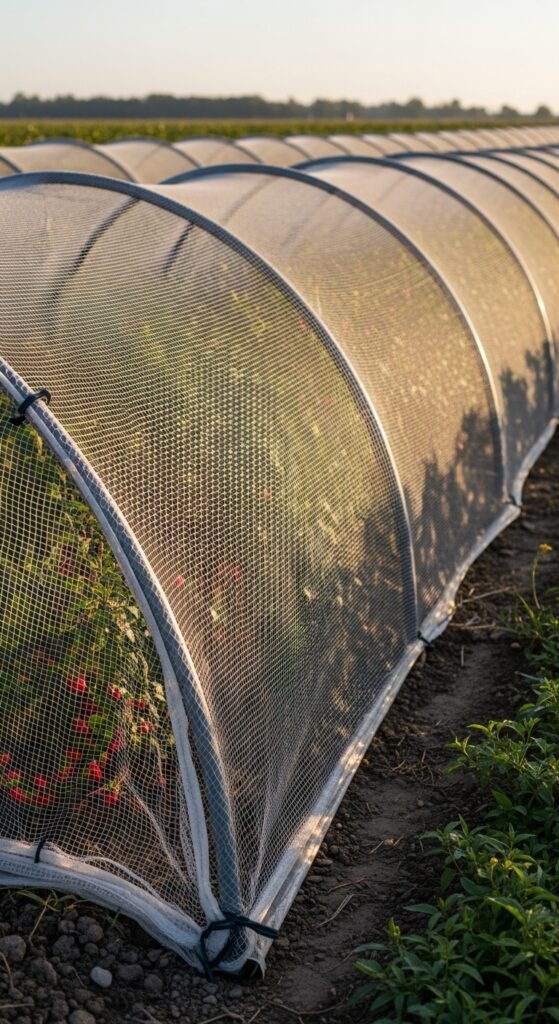
Implementation steps: Calculate row length, insert hoops into the ground, and pull netting taut over the top. For enhanced care, integrate this with raspberry pruning techniques if including berry canes. You’ll find this system cost-effective and adaptable, evolving with your garden’s expansion.
4) Frame-Supported Netting for Dwarf Varieties
You’ll benefit from building simple wooden or metal frames around dwarf fruit trees to support bird netting. This elevated structure keeps the net away from fruits, preventing damage and tangling. Design the frame to match the tree’s height and spread, using sturdy materials like bamboo or rebar for durability.
Stable and accessible protection is the highlight, as it allows you to lift sections for maintenance without full removal. Ideal for compact orchards, this method suits trees like columnar apples or mini peaches. Construct before fruit set, ensuring ventilation holes if needed for hot climates.
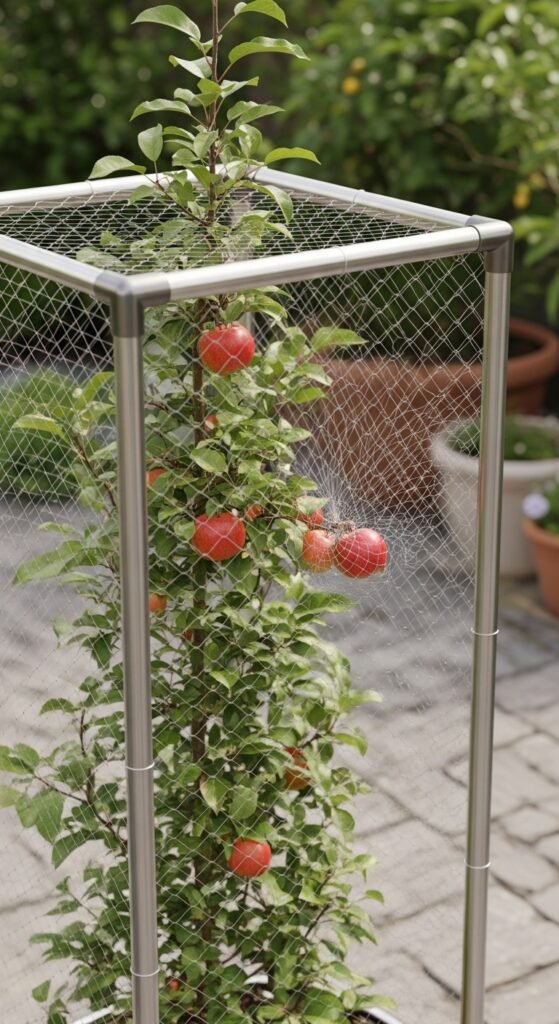
How-to: Assemble the frame with connectors, drape netting over, and fasten with hooks. Complement with columnar fruit trees for space-efficient gardening. Regular monitoring ensures no wildlife entrapment, keeping your approach humane and effective over time.
5) Combined Netting with Reflective Deterrents
Enhance your bird netting by incorporating reflective tapes or discs along the edges for added deterrence. You hang these shiny elements to create movement and flashes that scare birds away before they approach the net. This hybrid method reduces attempts to breach the barrier, extending netting lifespan.
The multi-layered defense combines physical and visual repellents, offering superior protection for sensitive fruits like berries or grapes. It’s especially effective in areas with persistent bird populations. Attach deterrents loosely so they sway in the breeze, installing alongside netting during ripening stages.
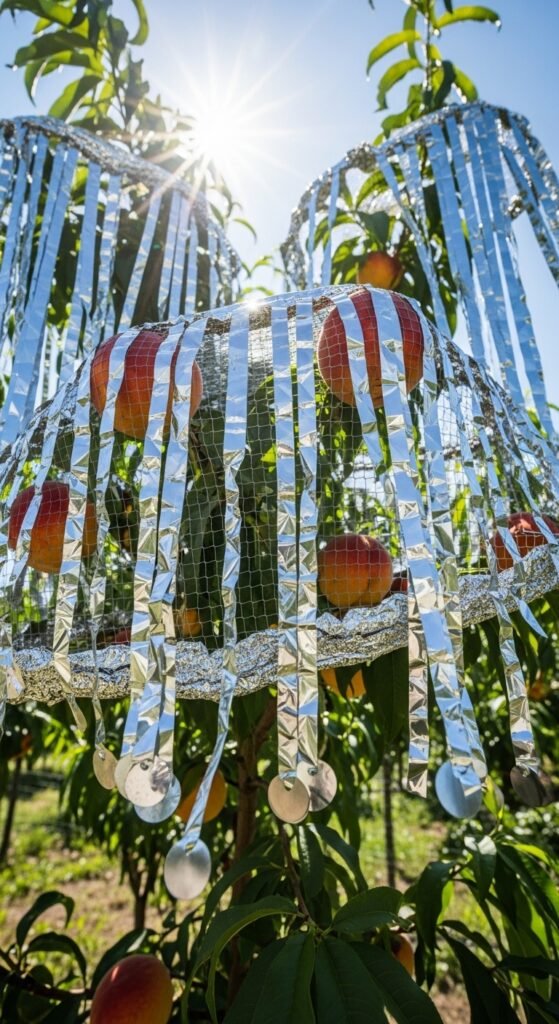
To apply: Thread tapes through netting holes or tie discs at intervals. For better results, align with pruning grapevines to expose more areas to reflections. You’ll notice fewer bird interactions, making this a smart, low-effort upgrade to standard netting.
6) Seasonal Roll-On Netting for Quick Deployment
You can use roll-on bird netting systems that allow quick deployment and storage for seasonal use. These involve pre-measured rolls attached to poles or hooks around your fruit trees. Simply unroll during threat periods and retract when not needed, saving time and effort.
Efficient seasonality shines here, protecting against migratory birds without permanent fixtures. Suited for orchards with varying harvest times, like mixed apple and pear varieties. Set up anchors in advance, ensuring smooth operation throughout the growing cycle.
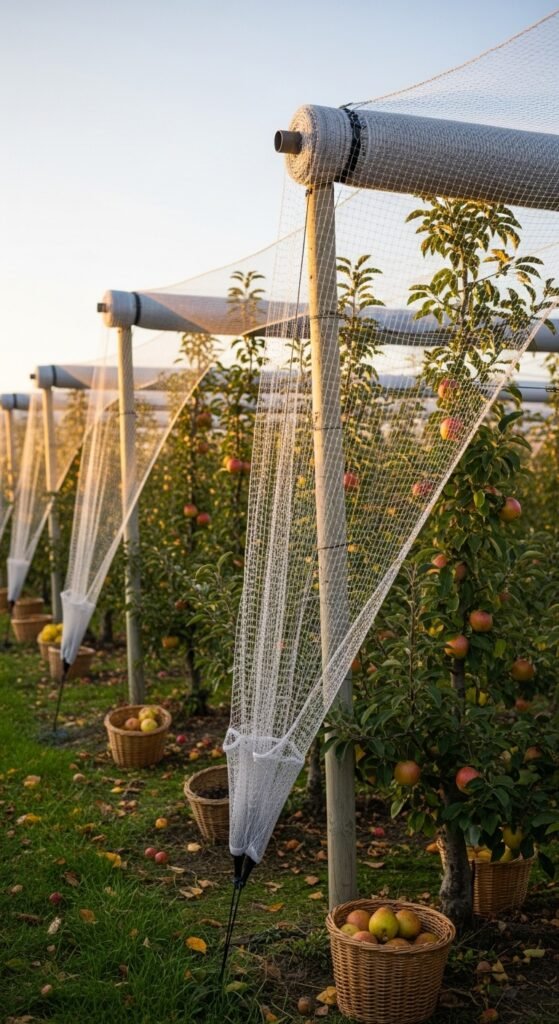
Execution: Mount rolls on sturdy supports, extend over trees, and secure ends. Integrate with apple tree pollination knowledge to time installations post-bloom. This reusable system proves economical, adapting to your orchard’s changing needs year after year.
7) Mesh Size Optimization for Pollinator Access
Optimize your bird netting by selecting mesh sizes that deter birds while permitting pollinators like bees to pass through. You aim for openings around 1/4 to 1/2 inch, balancing protection with ecological benefits. This ensures fruit set isn’t compromised by restricted insect access.
The core perk is ecosystem-friendly safeguarding, supporting biodiversity in your garden. Crucial for trees reliant on pollination, such as plums or cherries. Test different meshes in small areas before full implementation, observing pollinator activity.
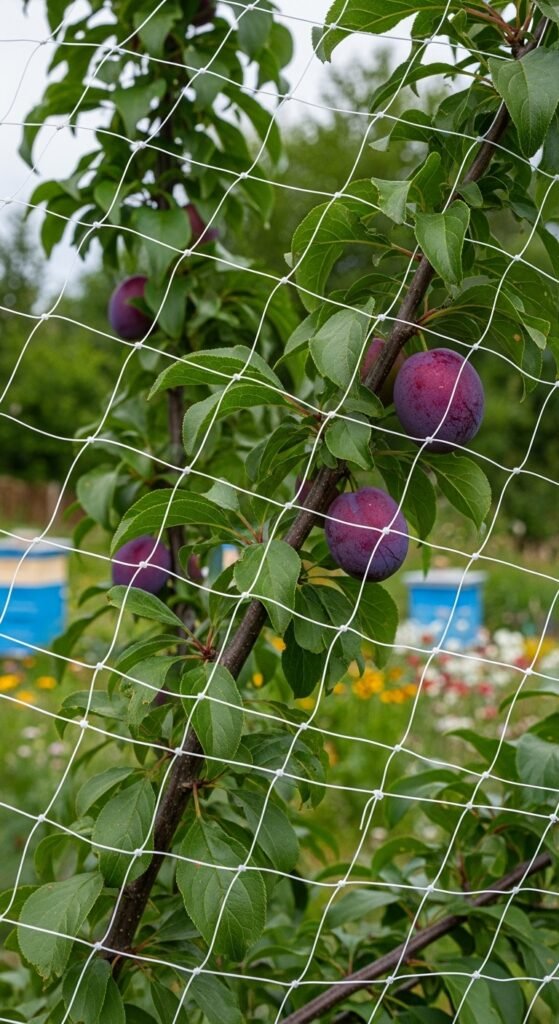
How to choose: Research local bird sizes and select accordingly, installing loosely for movement. Pair with plum pollination charts for variety-specific timing. You’ll foster a healthier orchard, with netting that aligns with sustainable practices.
8) Ground-Level Securing to Prevent Under-Entry
To block birds from slipping under your netting, you secure the bottom edges firmly to the ground using stakes, rocks, or soil burial. This creates a sealed perimeter around fruit trees, eliminating entry points. Focus on even tension to avoid sags that birds exploit.
Complete barrier integrity prevents losses from ground-foraging species, enhancing overall efficacy. Essential for low-branching trees like peaches where fruits hang near the base. Apply after draping the net, checking for gaps weekly.
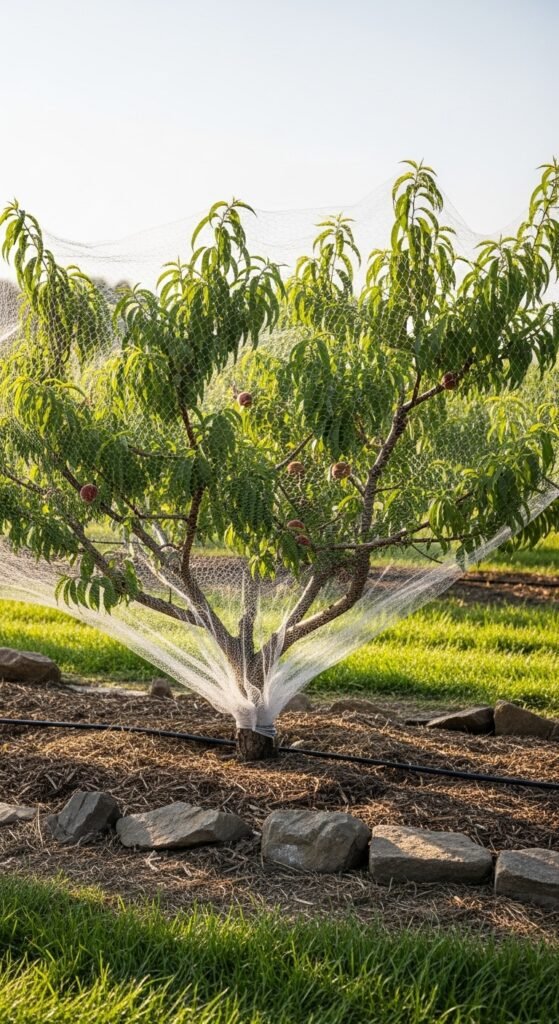
Implementation: Pin edges every foot, overlapping sections if needed. Combine with peach leaf curl prevention for holistic tree health. This technique ensures your netting remains impenetrable, maximizing harvest yields.
9) Reusable Zip-Tie Fastenings for Easy Adjustments
You can employ reusable zip ties or clips to fasten bird netting, allowing quick adjustments as trees grow or for harvesting. These fasteners provide secure holds without damaging the material, facilitating partial openings when needed.
The advantage lies in flexible management, making netting less of a hassle during peak seasons. Great for frequently accessed trees like figs or berries. Choose UV-resistant ties for longevity, spacing them evenly around the structure.
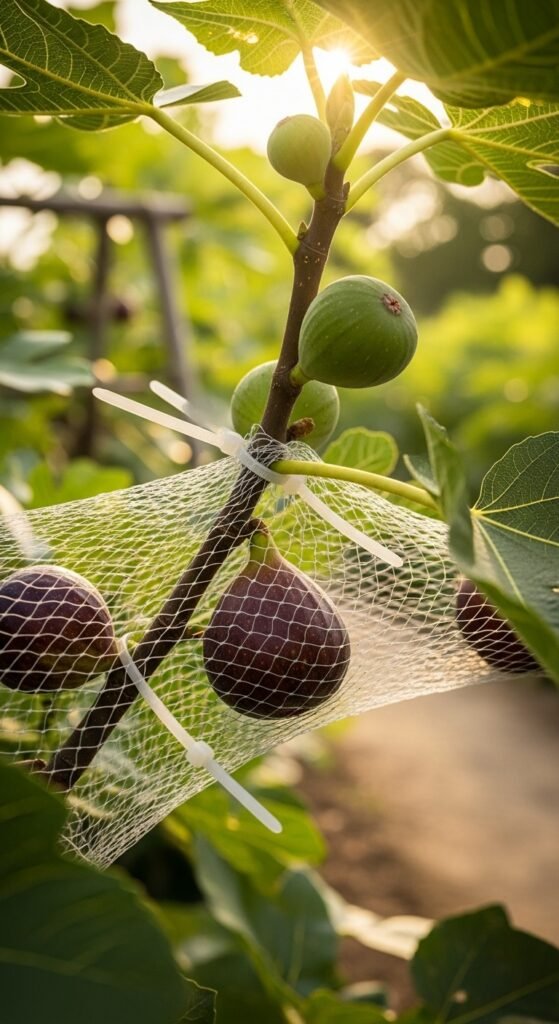
To use: Loop ties through mesh and around branches or frames, tightening as required. Align with pruning fig trees to streamline access points. You’ll value the convenience, turning protection into a seamless part of your routine.
10) Integrated Trellis-Netting for Climbing Fruits
For climbing fruit like grapes or kiwis, you integrate bird netting directly into trellis systems. This built-in approach covers vines comprehensively as they grow along supports. Design the trellis with netting channels or hooks for easy attachment.
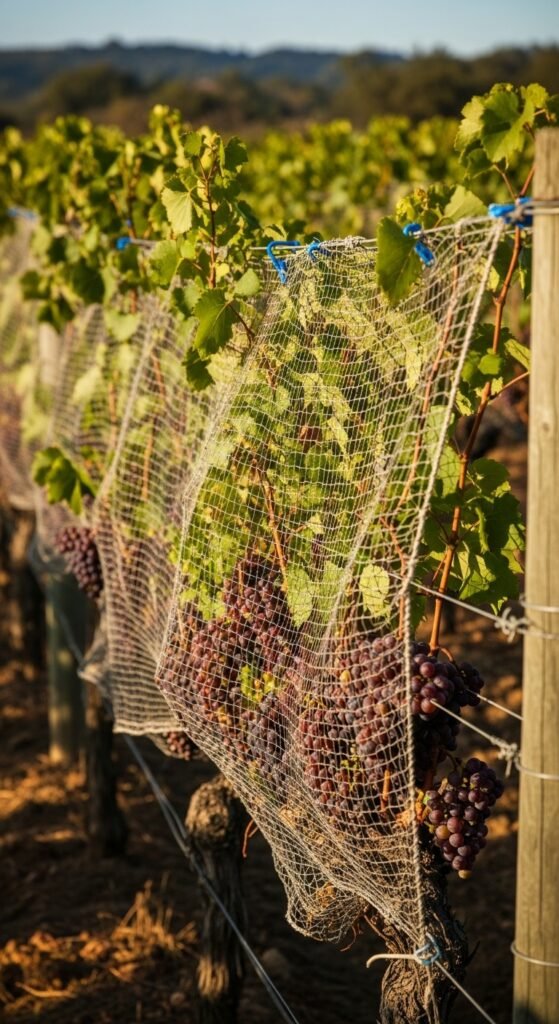
Structural synergy offers tailored protection for vining habits, reducing setup time. Ideal for space-optimized gardens with espaliered setups. Install netting after training vines, ensuring full coverage without restricting expansion.
Steps: Build trellis first, then affix netting panels. Enhance with espalier fruit trees techniques for flat profiles. This method yields professional results, boosting both aesthetics and functionality in your orchard.
11) Wind-Resistant Anchoring Techniques
You reinforce bird netting against wind by using ground anchors or weighted bases around fruit trees. This prevents billowing or tearing during gusts, maintaining protection integrity. Opt for spiral stakes or sandbags for reliable hold-downs.
The benefit is weatherproof durability, crucial in exposed areas with variable climates. Suited for taller trees where wind catch is higher. Anchor every few feet, testing stability post-installation.
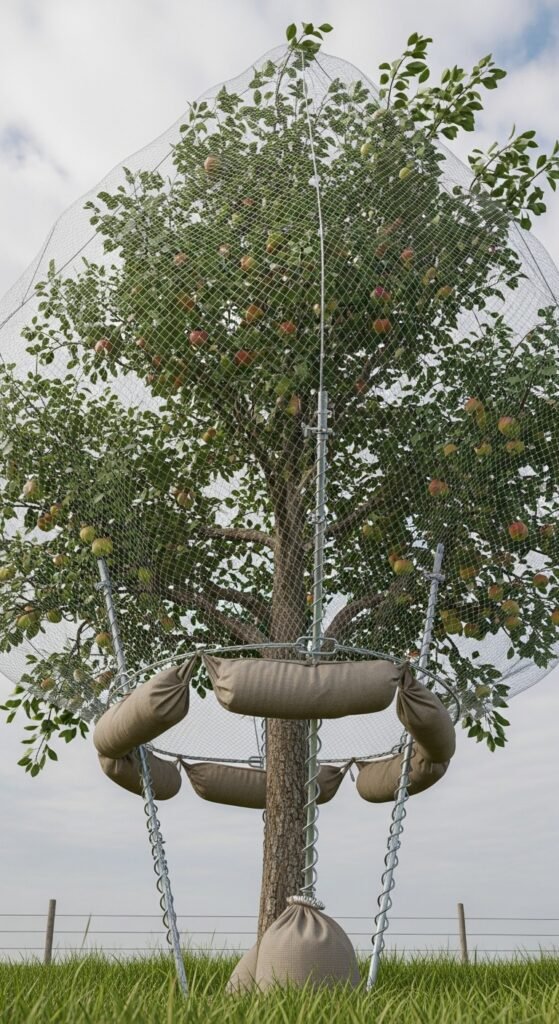
How-to: Drive stakes into soil, hook netting edges, and add weights as backup. Coordinate with fruit tree fertilizing schedules to minimize disturbances. You’ll secure peace of mind, knowing your netting withstands elements effectively.
12) Layered Netting for Multi-Tree Clusters
In clustered fruit tree arrangements, you layer netting over groups for shared protection. This communal approach saves material and time, creating a mini-enclosure for several trees. Ensure overlaps are sealed to maintain continuity.
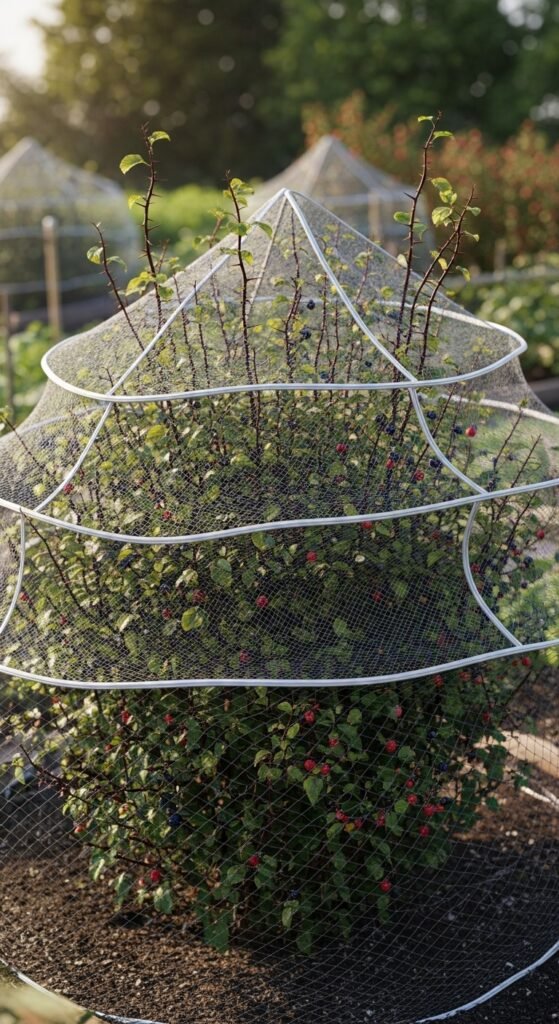
Group efficiency optimizes resources in dense plantings, like mixed berry patches. Effective for companion-planted orchards enhancing biodiversity. Plan layouts to accommodate growth, installing supports between trees.
Execution: Drape large sheets over clusters, securing perimeters. Link with blueberries companion plants for synergistic benefits. This scalable idea grows with your garden, promoting collective safeguarding.
13) DIY Bamboo Frame Supports
You craft affordable supports from bamboo poles to elevate bird netting above fruit trees. These natural frames are lightweight yet strong, blending into garden aesthetics. Assemble into tepees or arches tailored to tree shapes.
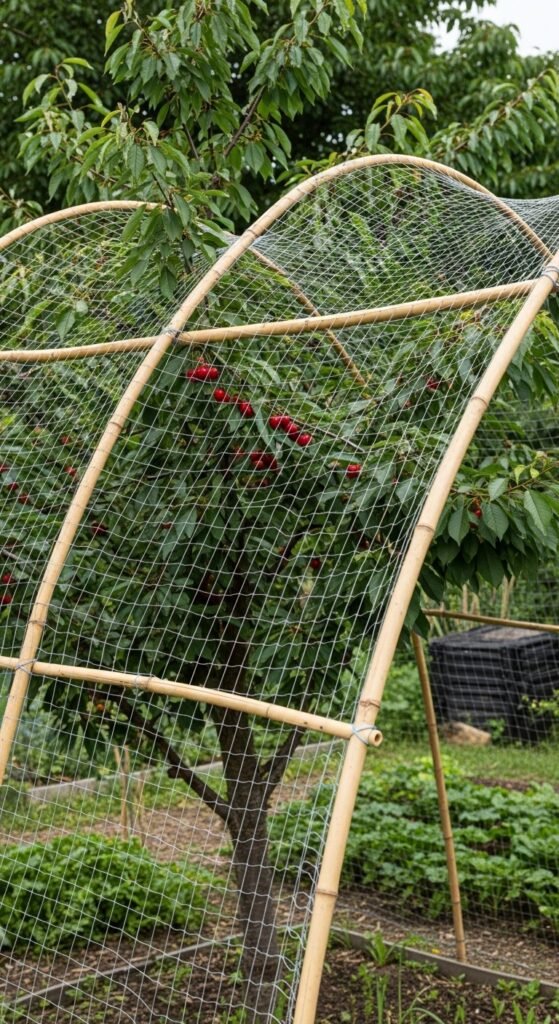
The perk is customizable eco-friendliness, using renewable materials for sustainable protection. Perfect for organic gardens with varied tree sizes. Bind poles with twine, positioning to avoid branch contact.
To build: Cut bamboo to length, form structures, and cover with netting. Pair with when to plant fruit trees guidance for timely setups. You’ll create bespoke solutions that enhance your orchard’s natural appeal.
14) Netting with Access Panels for Harvesting
Incorporate zippered or velcro panels into your bird netting for easy access during harvesting. You sew or attach openings strategically, allowing entry without full removal. This feature streamlines picking while keeping protection intact.
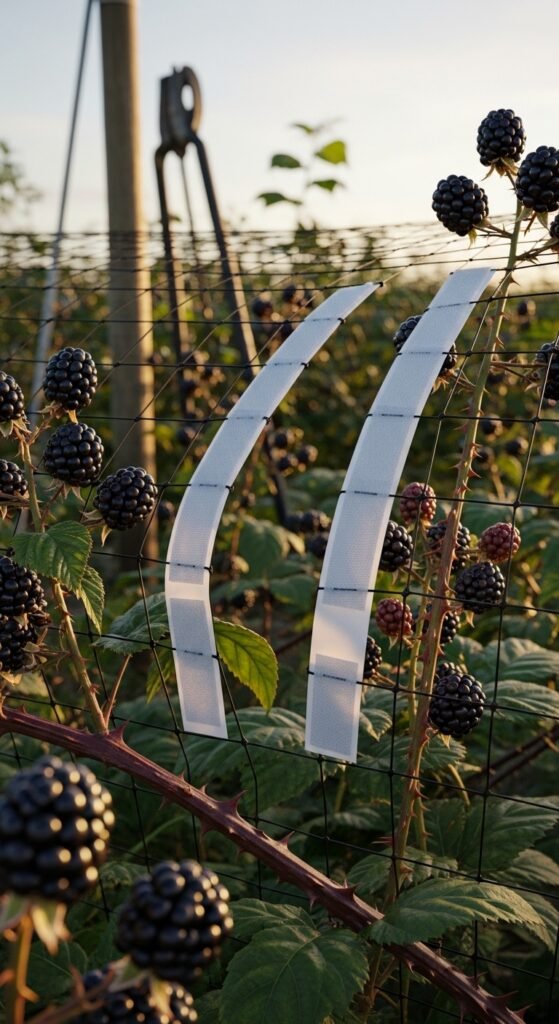
Convenient accessibility reduces labor, ideal for frequent harvests like continuous berry producers. Suits family gardens where quick checks are common. Design panels near main fruit zones, reinforcing edges for durability.
Implementation: Cut slots in netting, add closures, and test functionality. Combine with blackberry trellis ideas for supported access. This thoughtful modification makes netting user-friendly, encouraging consistent use.
15) Eco-Friendly Biodegradable Netting Options
Choose biodegradable bird netting made from natural fibers like jute or cotton for environmentally conscious protection. You deploy these temporary barriers that decompose after use, reducing waste. Select options with appropriate strength for your tree loads.
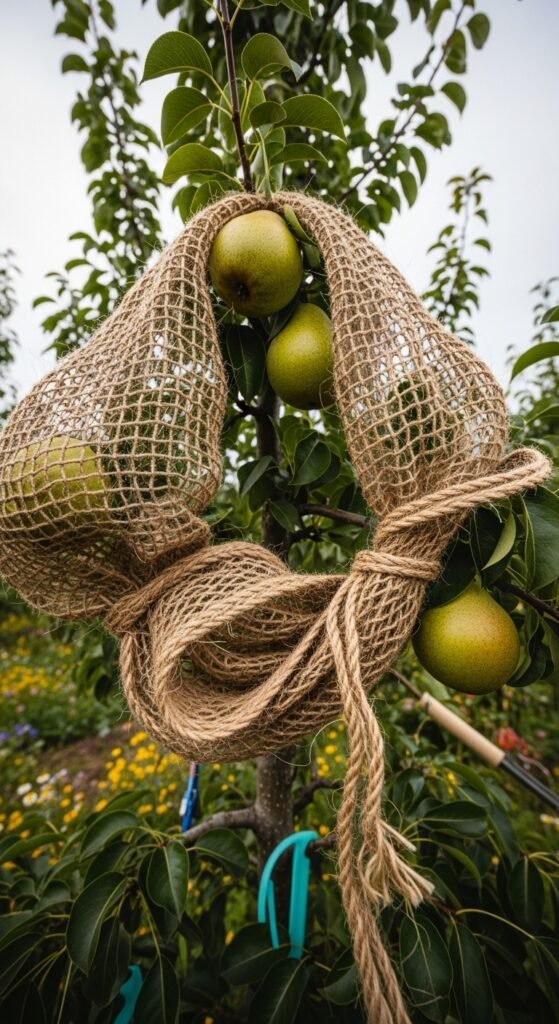
The main gain is sustainable guardianship, aligning with green gardening principles without compromising efficacy. Suitable for short-season fruits or trial setups. Monitor degradation rates, replacing as needed during the cycle.
How to utilize: Install similarly to standard netting, composting remnants post-season. Integrate with pruning pear trees for optimized coverage. You’ll contribute to eco-health, setting a positive example in your community.
Key Principles for Successful Bird Netting
Timing and Installation Best Practices
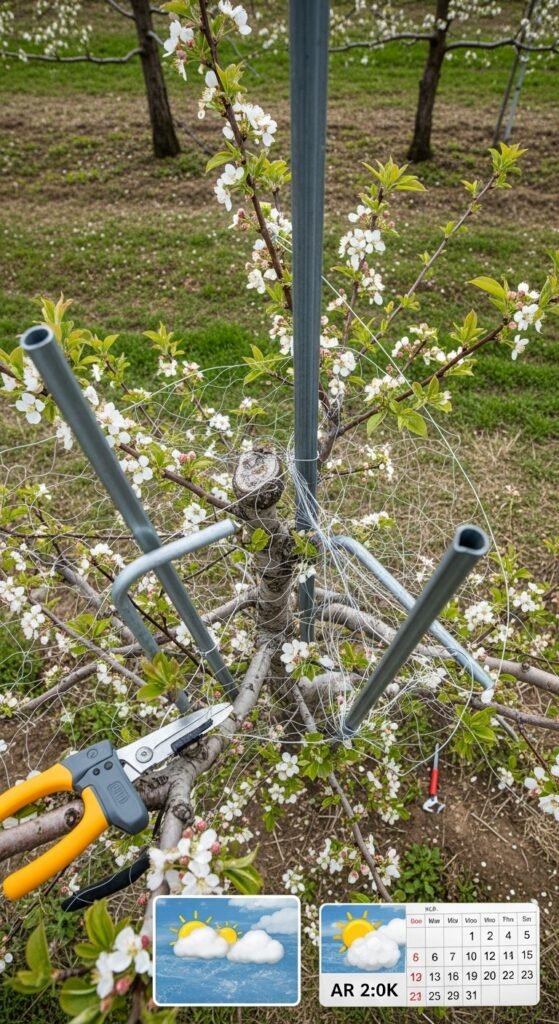
You should install bird netting after flowering but before fruits color up, typically 2-4 weeks pre-ripening. This timing maximizes pollination while minimizing bird attraction. Consider weather patterns, avoiding windy days for setup to prevent tears.
Maintenance and Wildlife Considerations
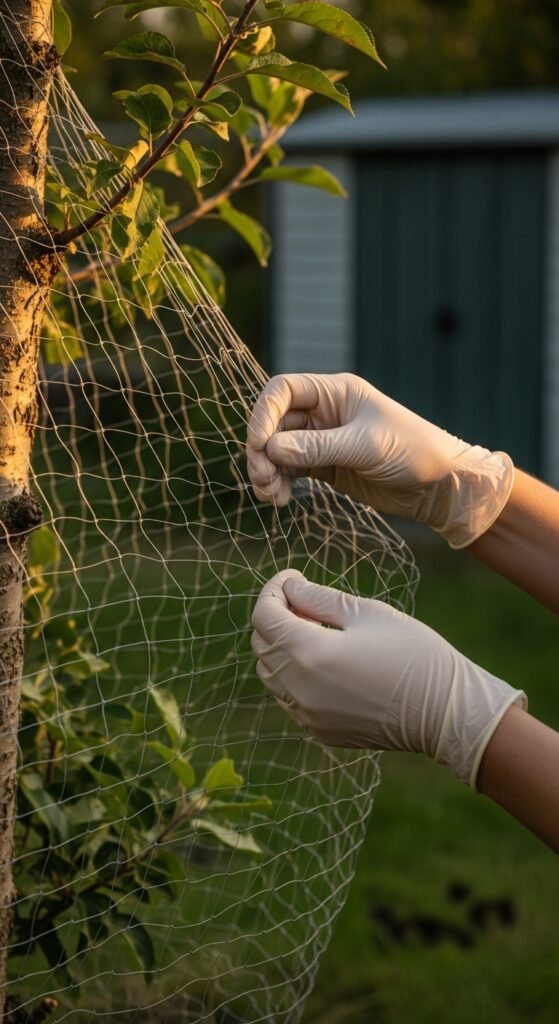
Regular inspections every few days help spot entanglements or damage. You gently free any trapped animals, using finer mesh if small wildlife is an issue. Clean and store netting dry to prevent mold, extending its usability.
Complementary Bird Deterrent Strategies
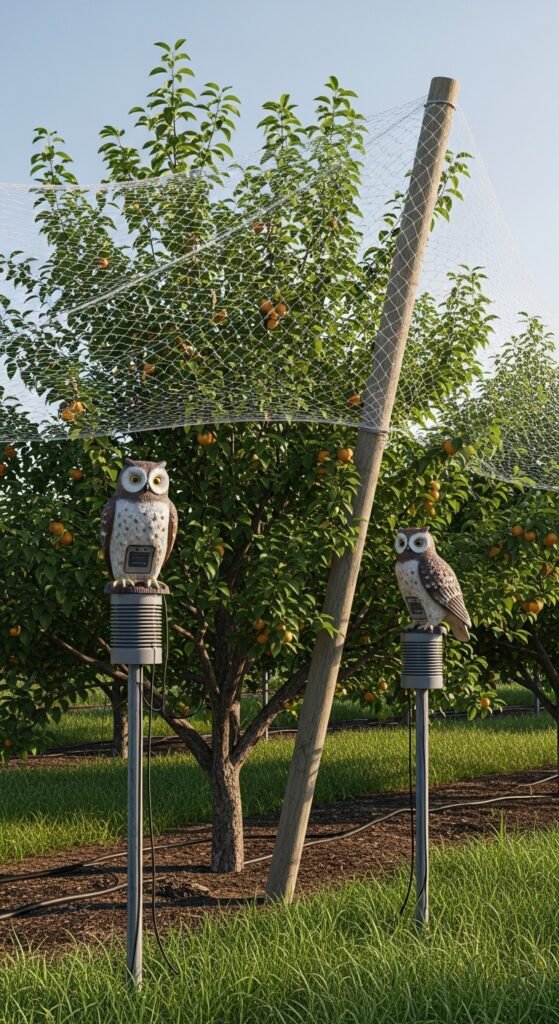
Supplement netting with audio scarers or predator decoys for layered protection. You rotate methods to prevent bird habituation, incorporating habitat modifications like removing nearby perches. This holistic approach enhances long-term orchard resilience.
Frequently Asked Questions
What size mesh is best for bird netting on fruit trees?
A 1/2-inch mesh strikes a balance between bird exclusion and allowing pollinators through. Smaller meshes risk restricting beneficial insects, while larger ones may let smaller birds in. Adjust based on local species.
How do I prevent netting from damaging tree branches?
Use supportive frames or poles to keep netting elevated. Avoid tight draping; allow some slack for growth. Pad contact points with soft materials if needed to minimize abrasion.
Can bird netting be reused multiple seasons?
Yes, with proper care. Clean thoroughly after use, repair tears, and store in a dry, dark place. Quality netting can last 3-5 years or more under normal conditions.
What if birds still access the fruit despite netting?
Check for gaps at the base or overlaps. Reinforce securing methods and consider adding visual or auditory deterrents. Persistent issues may require professional-grade materials or alternative strategies.
Is bird netting safe for the environment?
When used responsibly, yes. Opt for UV-stabilized, non-toxic materials and monitor for wildlife entrapment. Biodegradable options further reduce impact, supporting sustainable gardening practices.