You’ve decided to grow blueberries, those delicious, antioxidant-packed berries that thrive in acidic soil. But to maximize your harvest and create a balanced ecosystem, incorporating companion plants is key. Companion planting involves strategically placing plants together to enhance growth, deter pests, and improve soil health. For blueberries, which prefer pH levels between 4.5 and 5.5, companions that share similar soil preferences or offer protective benefits can make all the difference.
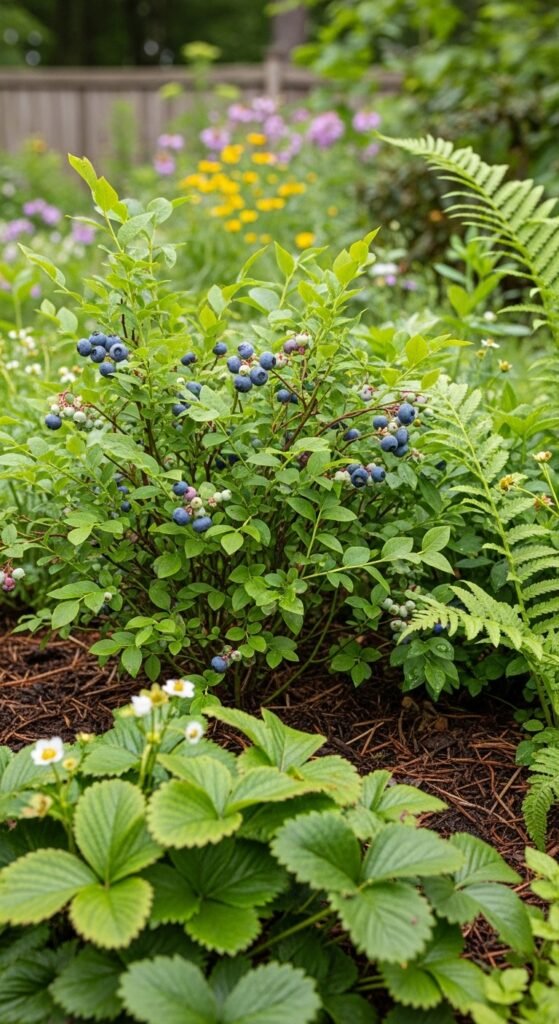
By choosing the right companions, you can boost pollination, reduce weed competition, and naturally repel insects without harsh chemicals. This approach not only increases your blueberry yields but also promotes biodiversity in your garden. Whether you’re planting in raised beds or containers, these pairings will help your bushes flourish. Let’s explore 15 excellent options, each with practical advice on integration.
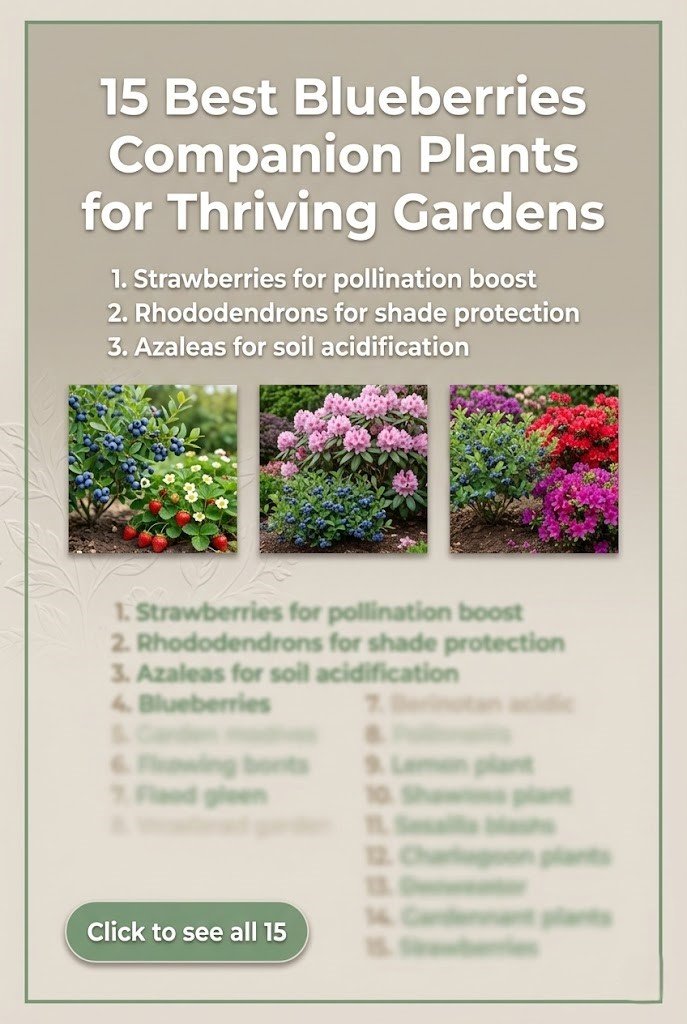
1) Strawberries
Strawberries make an excellent companion for blueberries, as both thrive in acidic soil and enjoy similar growing conditions. These low-growing perennials act as a living mulch, suppressing weeds and retaining soil moisture around your blueberry roots. The key benefits include enhanced pollination from shared bee attraction and natural pest deterrence, since strawberries can help repel slugs and snails that might otherwise target your berries.
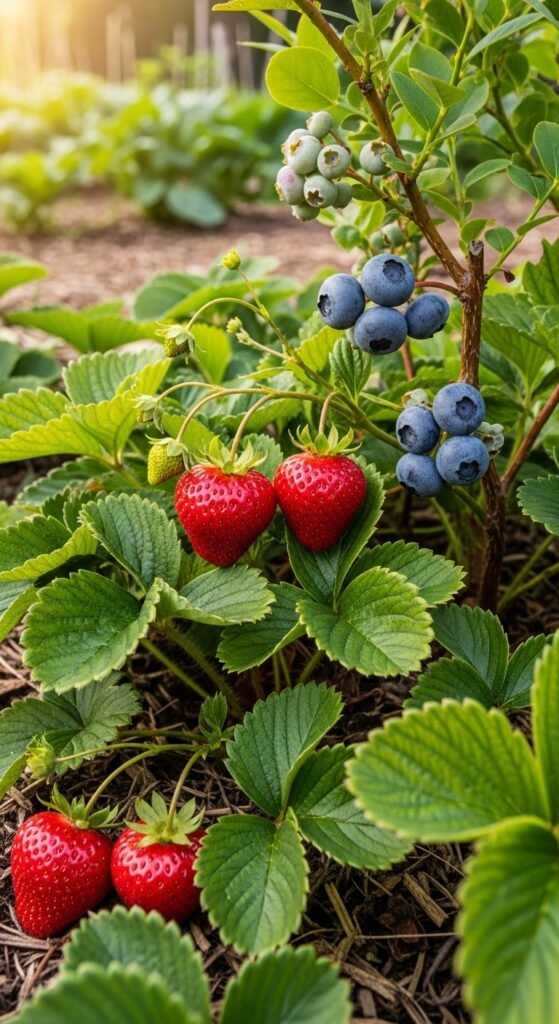
To plant them effectively, space strawberries about 12-18 inches apart around the base of your blueberry bushes, ensuring they don’t compete for nutrients. You can interplant them in rows or clusters in your garden bed. Keep the soil consistently moist but well-drained, and mulch with pine needles to maintain acidity. If you’re growing blueberries in containers, consider a separate pot nearby for strawberries to avoid overcrowding. This combination not only saves space but also creates a productive, low-maintenance berry patch that yields fresh fruit throughout the season.
2) Rhododendrons
Rhododendrons, with their vibrant blooms and evergreen foliage, pair beautifully with blueberries due to their shared love for acidic, well-drained soil. These shrubs provide dappled shade that protects blueberry bushes from intense afternoon sun, while their root systems help improve soil structure over time. Key benefits include increased biodiversity and natural windbreaks, which can shield your berries from harsh weather and promote healthier growth.
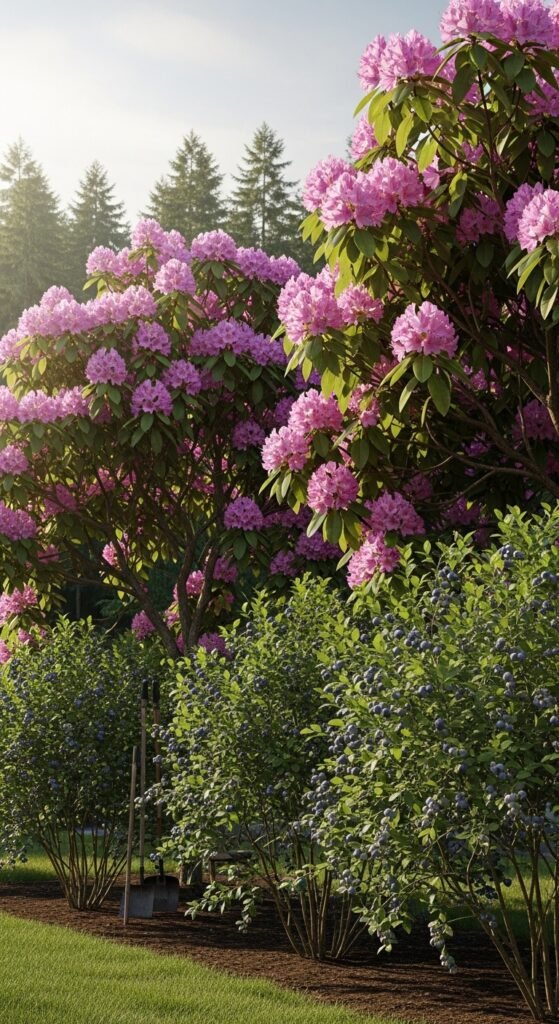
Plant rhododendrons 3-5 feet away from your blueberries to allow ample room for both to expand. Choose varieties that match your climate zone for best results. Amend the soil with organic matter like peat moss to ensure the pH stays optimal—check out our guide on blueberry soil pH for tips. Water deeply but infrequently, and prune lightly after flowering to maintain shape. This duo creates a stunning, low-effort landscape that attracts pollinators and enhances your garden’s aesthetic appeal year-round.
3) Azaleas
Azaleas are close relatives to rhododendrons and offer similar advantages as companions to blueberries, thriving in the same acidic environments. Their shallow roots complement blueberries without competing aggressively for resources, and their spring flowers draw in beneficial insects. The primary benefits are soil acidification from leaf litter and added visual interest, turning your berry patch into a colorful haven.
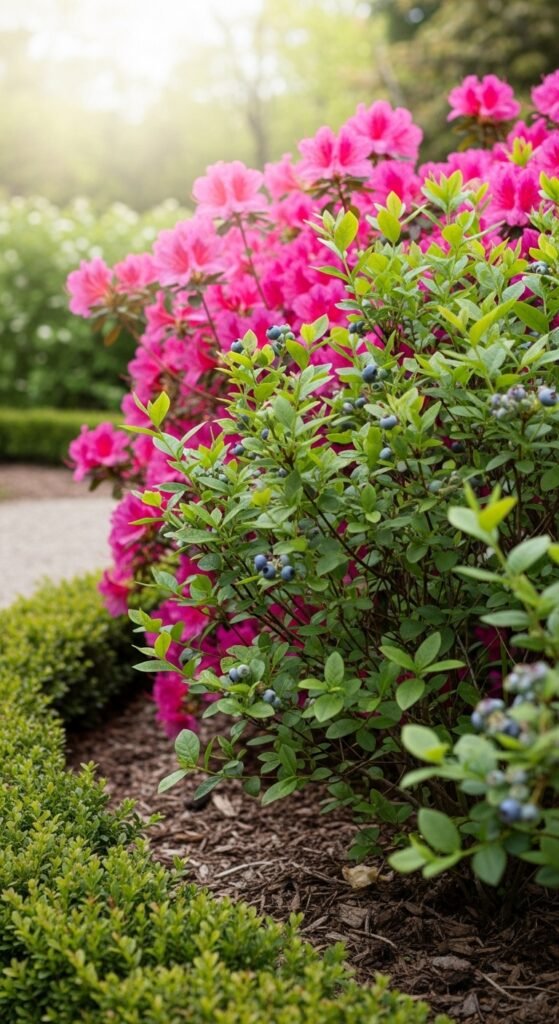
Position azaleas 2-4 feet from blueberry plants, grouping them for a natural hedge effect. Select evergreen or deciduous types based on your preferences. Maintain mulch around both to conserve moisture and suppress weeds. For pruning, follow our advice on how to prune blueberries and apply similar techniques to azaleas post-bloom. Regular watering during dry spells is crucial, but avoid overwatering to prevent root rot. This partnership fosters a symbiotic relationship, boosting overall garden health and productivity.
4) Pine Trees
Pine trees serve as long-term companions for blueberries, contributing acidic needles that naturally lower soil pH as they decompose. Their tall stature provides wind protection and partial shade, ideal for blueberries in hotter climates. Benefits encompass improved soil fertility and habitat for wildlife, creating a more resilient ecosystem in your yard.
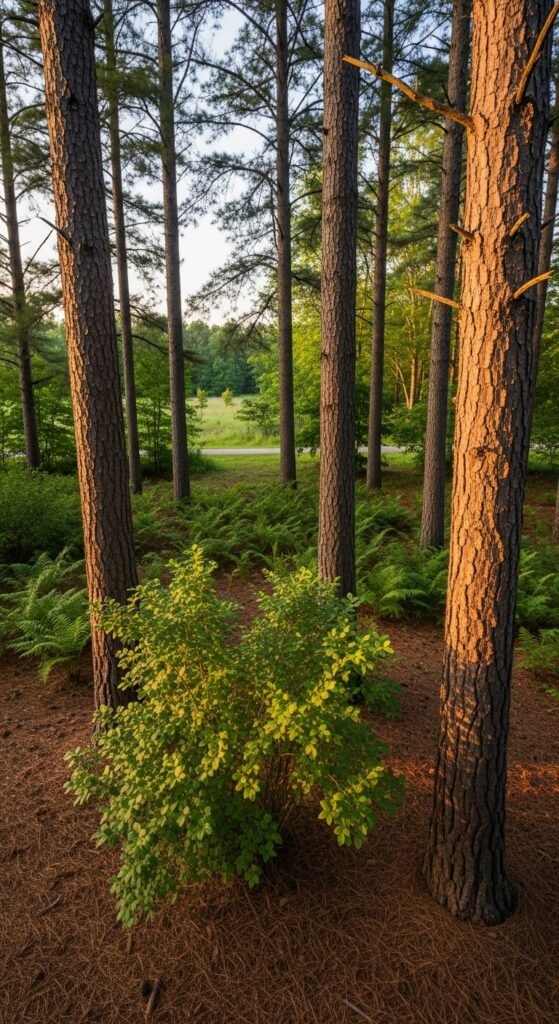
Plant smaller pine varieties or dwarfs 10-15 feet away to avoid overshadowing. Use fallen needles as mulch around your blueberries for ongoing acidification. Monitor soil moisture, as pines can compete for water in dry areas. If incorporating herbs nearby, refer to our companion planting herbs guide for compatible options. Prune lower branches if needed to allow light penetration. This combination mimics natural forest conditions, promoting vigorous blueberry growth with minimal intervention.
5) Ferns
Ferns, with their feathery fronds, excel as understory companions for blueberries, tolerating acidic soil and shaded spots. They act as a ground cover, reducing erosion and maintaining humidity around roots. Key advantages include moisture retention and aesthetic texture, enhancing the woodland feel of your garden.
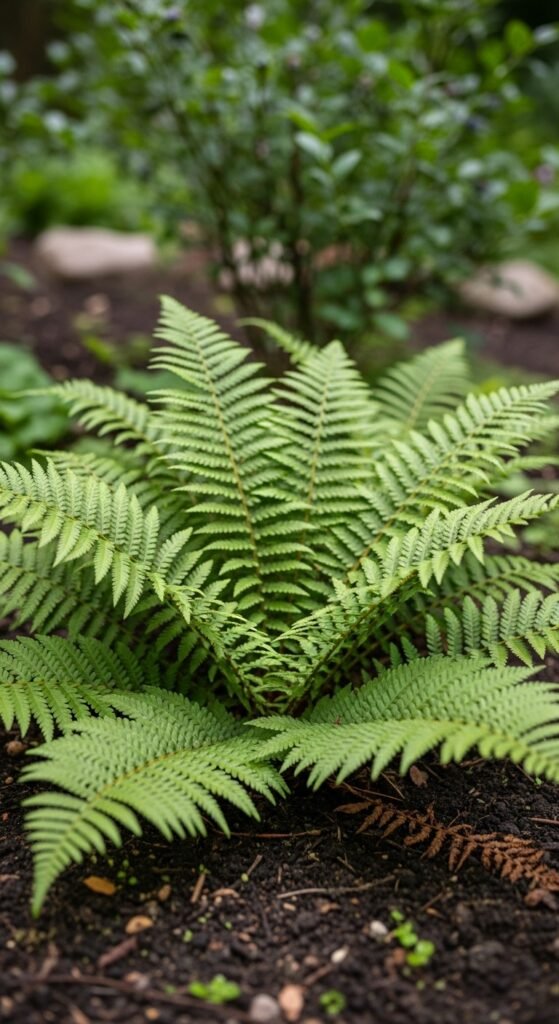
Scatter ferns around blueberry bases, spacing them 1-2 feet apart for dense coverage. Choose native varieties like lady ferns for better adaptation. Keep the area mulched and water consistently to mimic their preferred damp conditions. For pest management, ferns can help deter some insects naturally. If planning a vegetable integration, explore companion planting vegetables. Divide overcrowded ferns every few years to keep them thriving alongside your berries.
6) Cranberries
Cranberries share blueberries’ affinity for boggy, acidic soils, making them perfect companions in wetter garden areas. These low-growing vines spread to form a mat, suppressing weeds and conserving water. Benefits feature cross-pollination potential and extended harvest seasons, providing a bounty of tart berries.
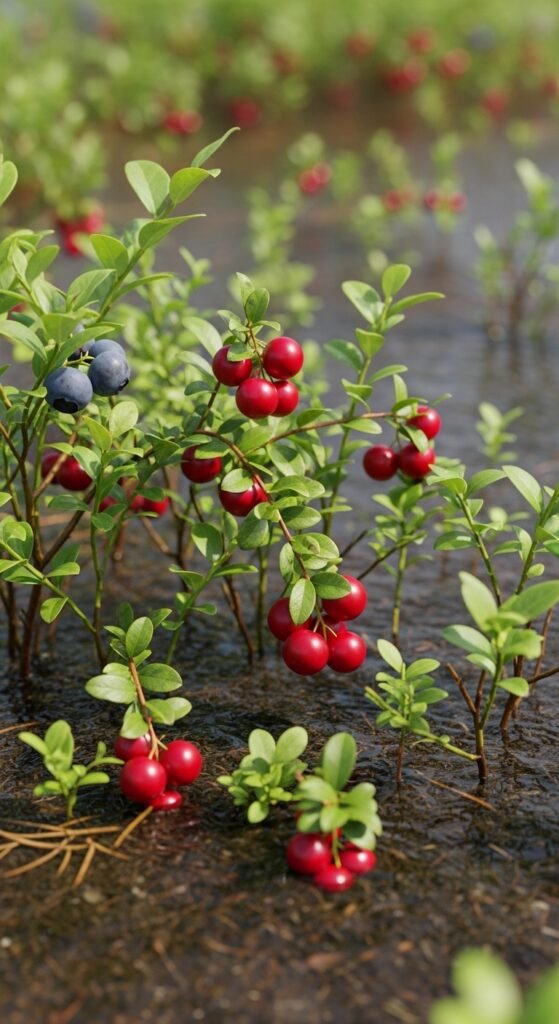
Plant cranberries in low spots near blueberries, allowing 1-2 feet of space for spreading. Amend with sphagnum moss for ideal conditions. Flood occasionally if possible to simulate natural habitats. For watering tips, see our article on watering blueberries. Harvest in fall when berries turn red. This pairing creates a productive wetland-inspired garden that’s both functional and beautiful.
7) Lingonberries
Lingonberries, also known as cowberries, complement blueberries with their compact growth and acid-loving nature. They produce small, tangy fruits and serve as an evergreen ground cover. The main benefits are soil stabilization and additional edible yields, diversifying your berry options.
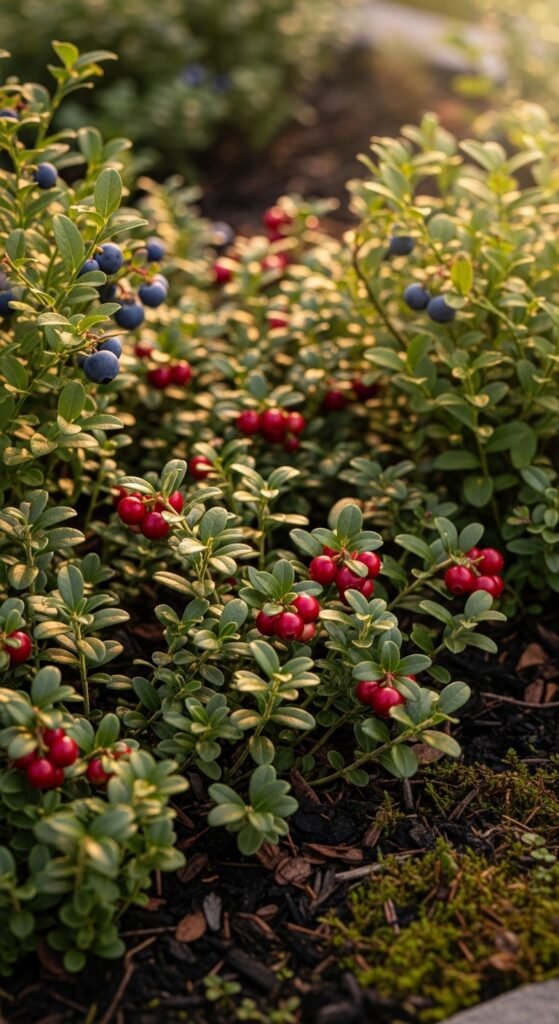
Interplant lingonberries around blueberry bushes, spacing 12-18 inches apart. They tolerate partial shade well. Mulch heavily with acidic materials to retain moisture. Prune lightly to encourage bushiness, similar to blueberry maintenance. If attracting pollinators, consider adding bee-friendly plants. This Scandinavian-inspired combo offers year-round interest and multiple harvests.
8) Thyme
Thyme, a hardy herb, works well with blueberries by attracting pollinators with its tiny flowers and repelling pests like cabbage worms. It prefers well-drained, acidic soil and grows low to the ground. Benefits include improved pollination and natural weed suppression, making your garden more efficient.
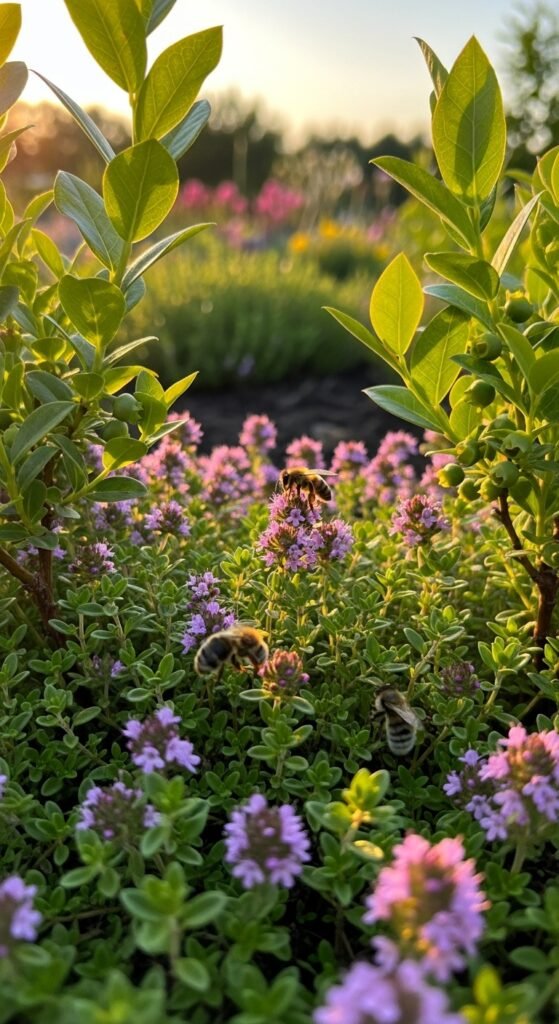
Tuck thyme plants between blueberries, about 8-12 inches apart. Harvest leaves regularly to promote growth. It’s drought-tolerant once established, aligning with blueberry watering needs. For more herb ideas, check our herb companion chart. This aromatic addition enhances culinary options while supporting berry production.
9) Basil
Basil brings flavor and function to your blueberry patch, deterring aphids and mosquitoes with its strong scent. It enjoys the same sunny spots and slightly acidic soil. Key perks are pest control and companion flavor pairings for your kitchen harvests.
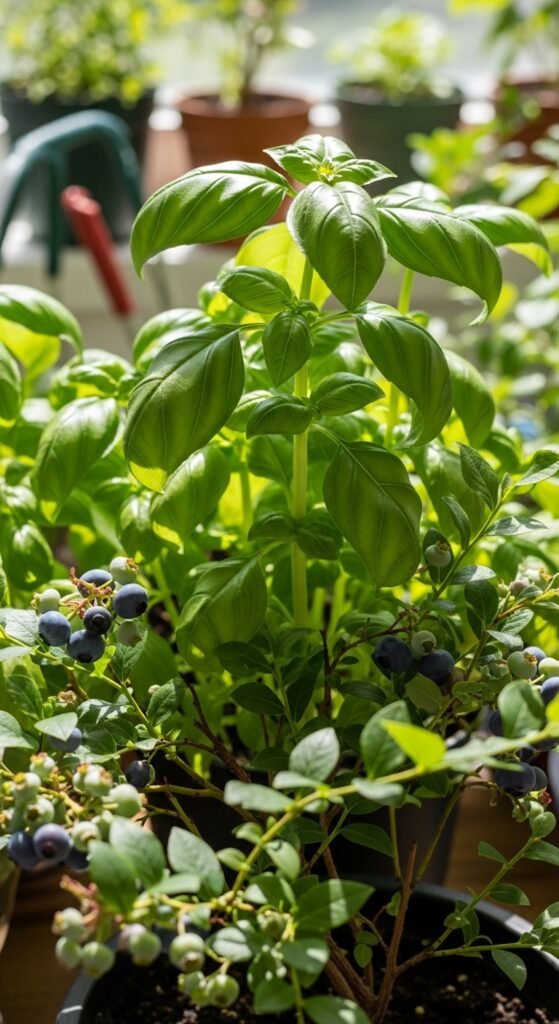
Plant basil 10-12 inches from blueberries, pinching tops to encourage bushiness. Rotate annually to prevent soil depletion. Water consistently but avoid wetting leaves to prevent fungal issues. If dealing with insects, basil pairs well with mosquito-repelling plants. Enjoy fresh basil in salads alongside your berries for a garden-to-table experience.
10) Marigolds
Marigolds are classic companions, repelling nematodes and other soil pests that can harm blueberry roots. Their bright blooms attract beneficial insects and add color. Benefits encompass root protection and visual enhancement, creating a vibrant, healthy space.
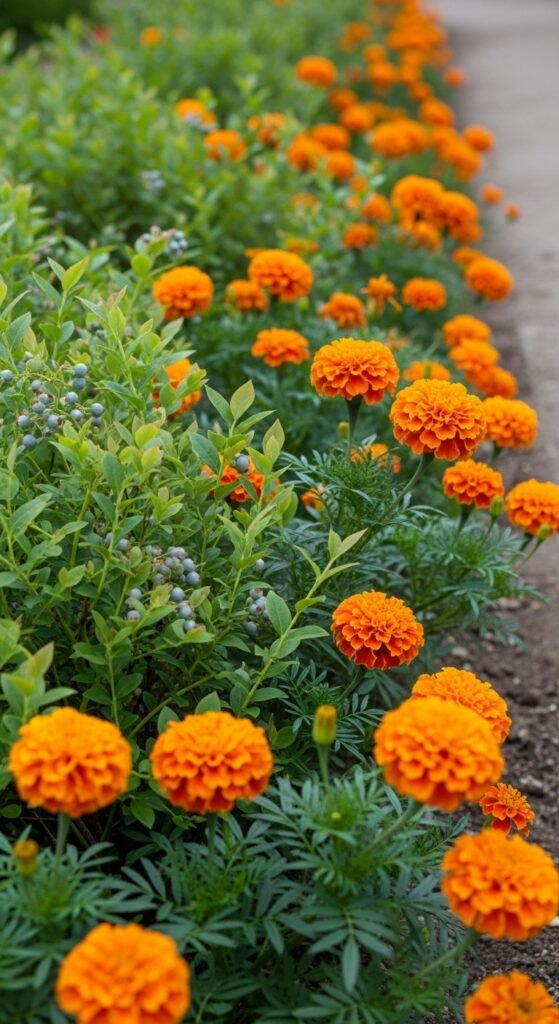
Sow marigold seeds or transplants around blueberry perimeters, spacing 8-10 inches. They thrive in full sun. Deadhead spent flowers to prolong blooming. For flower companions, see our guide on companion flowers for vegetables. This easy annual boosts your garden’s defenses naturally.
11) Nasturtiums
Nasturtiums act as trap crops, luring aphids away from blueberries while their peppery flowers and leaves are edible. They cascade nicely as ground cover in acidic soils. Advantages include pest diversion and culinary versatility, adding fun to your gardening.
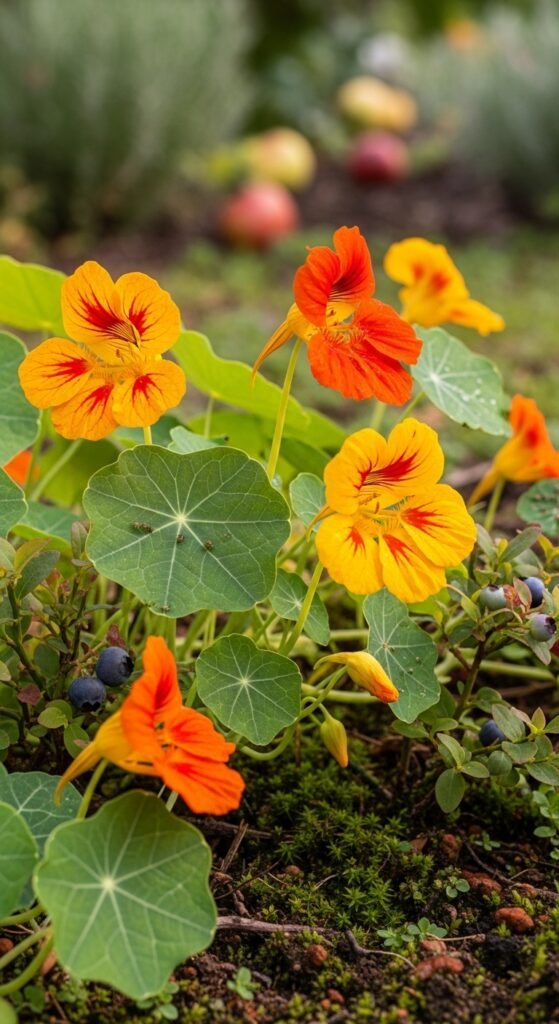
Plant nasturtiums 12 inches apart near blueberries. They self-seed easily. Water moderately and harvest often. Their trailing habit complements bushy berries. Integrate with herbs for layered benefits.
12) Garlic
Garlic’s pungent aroma deters pests like Japanese beetles and aphids from blueberries. It also improves soil health with its antifungal properties. Benefits feature natural pest repellent and space efficiency, fitting well in mixed beds.
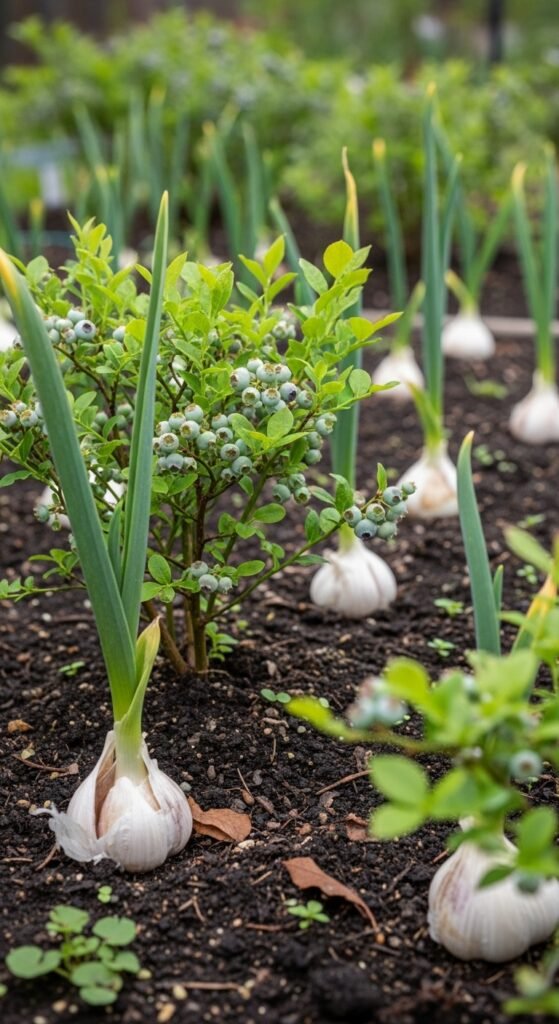
Plant garlic cloves in fall around blueberries, 6 inches apart. Harvest in summer. Rotate positions yearly. This allium enhances overall garden resilience.
13) Onions
Onions provide similar pest-repelling benefits to garlic, keeping away carrot flies and other insects. They grow compactly in acidic conditions. Key gains are insect control and companion harvesting, offering dual produce.
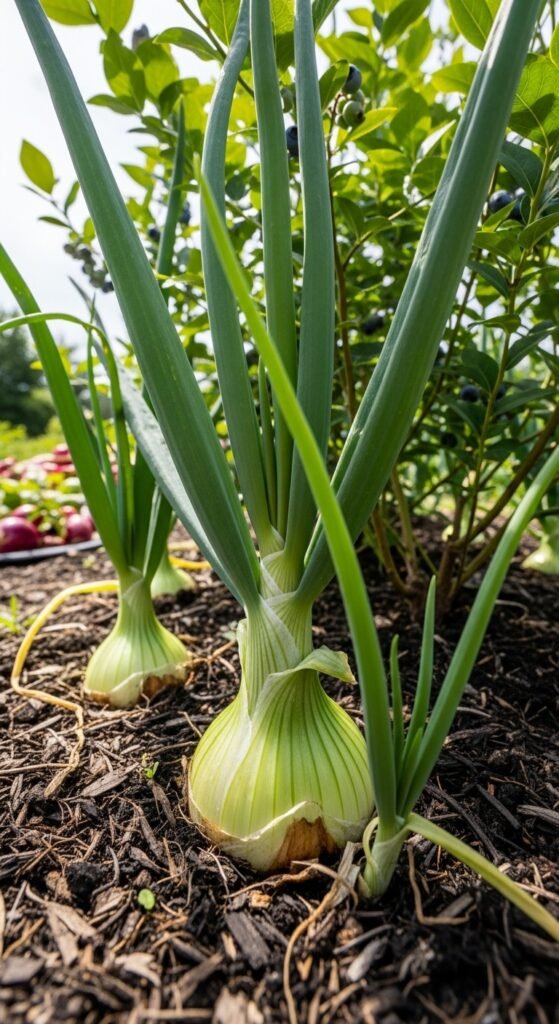
Space onion sets 4-6 inches from blueberries. Water evenly. Pull as needed for green onions or bulbs. This pairing maximizes plot utility.
14) Borage
Borage attracts bees and other pollinators to boost blueberry yields, while its leaves enrich compost. It self-seeds in suitable soils. Benefits include enhanced pollination and soil amendment, supporting sustainable practices.
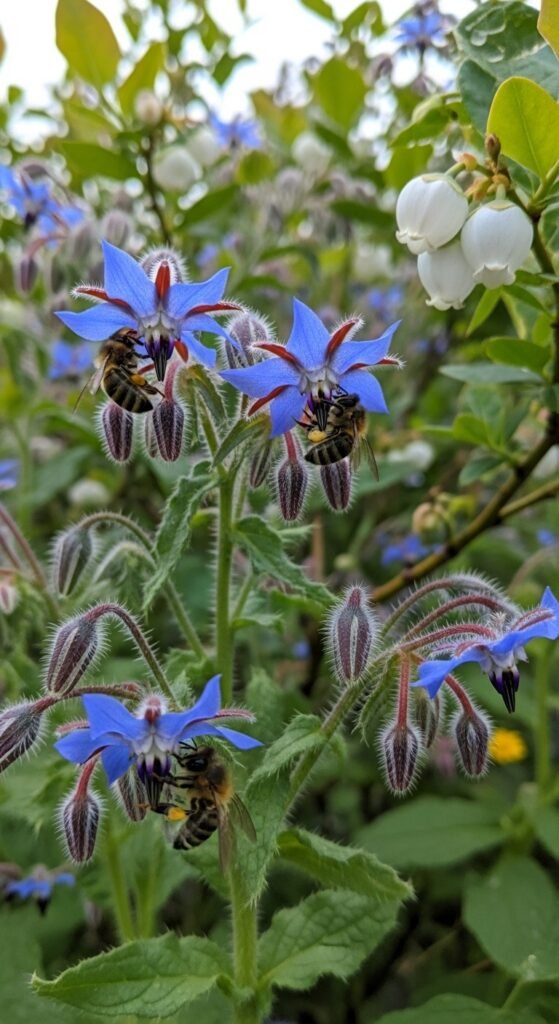
Scatter borage near blueberries, thinning to 12 inches. Harvest young leaves. Its blue flowers add charm.
15) Comfrey
Comfrey acts as a dynamic accumulator, drawing nutrients deep from soil for blueberries to access. Its leaves make excellent mulch or tea. Perks encompass nutrient cycling and mulch provision, fostering long-term soil health.
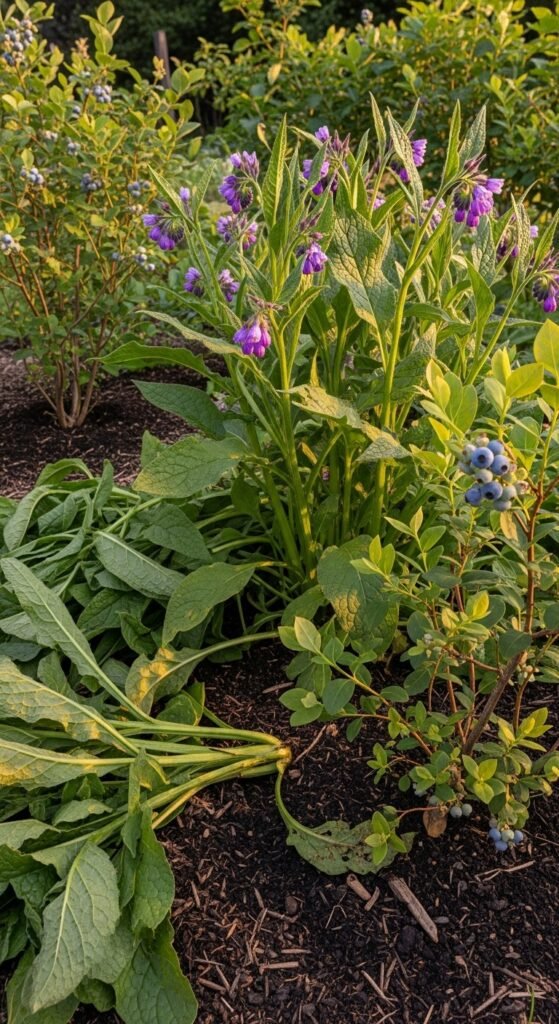
Plant comfrey 2-3 feet away, as it spreads. Chop and drop leaves seasonally. Use cautiously to avoid invasiveness.
Key Principles of Companion Planting with Blueberries
Soil Preparation and Maintenance
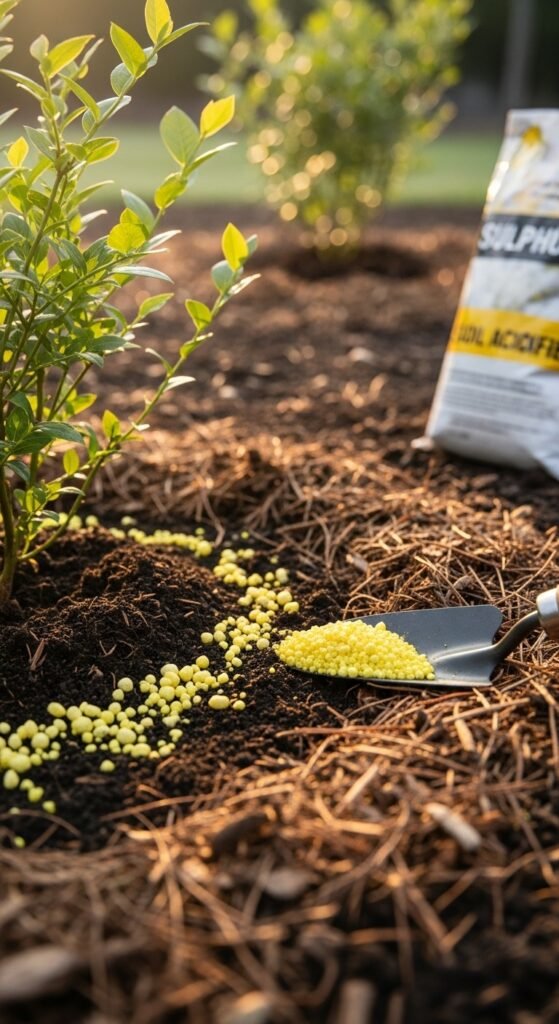
Start by testing your soil pH and amending with sulfur or pine mulch to achieve the ideal acidic range. Incorporate companions that tolerate or enhance this environment for symbiotic growth.
Pest Management Strategies
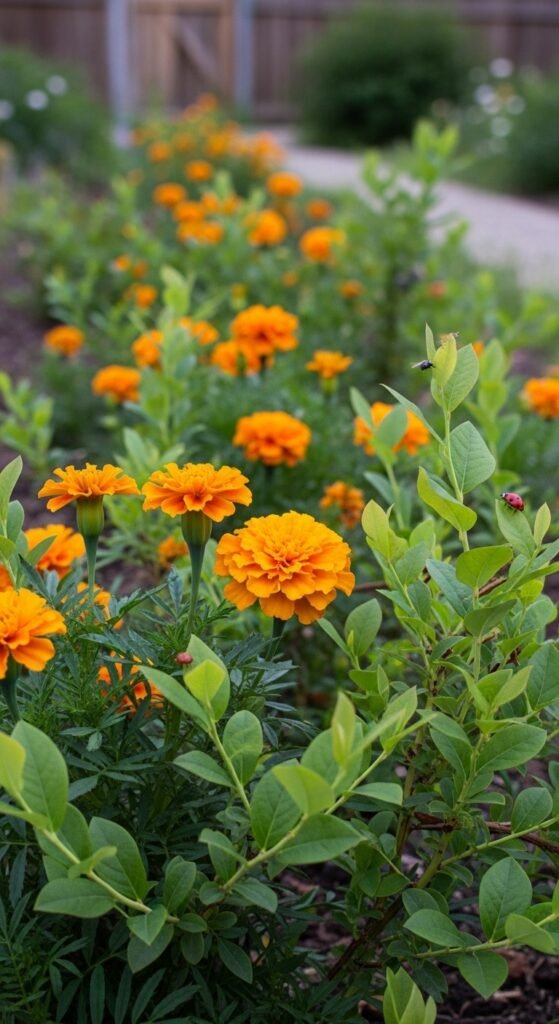
Choose plants that naturally repel common blueberry pests, reducing the need for interventions. Rotate companions annually to prevent buildup of issues.
Pollination and Biodiversity Tips
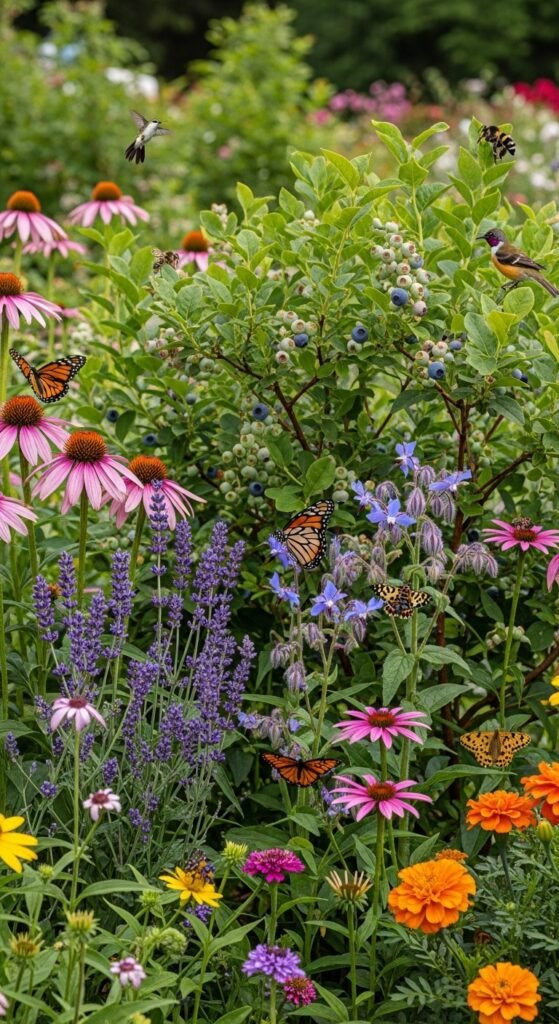
Select flowering companions to attract bees and birds, increasing fruit set. Diversify plant types for a balanced, resilient ecosystem.
Frequently Asked Questions
What are the best companion plants for blueberries?
The best companions include acid-loving plants like rhododendrons, azaleas, and strawberries, as well as pest-repellers such as marigolds and garlic. These enhance growth and protect against issues.
Can I plant vegetables near blueberries?
Yes, but choose acid-tolerant ones like potatoes or avoid close proximity to prevent competition. Focus on herbs and flowers for optimal results.
How do companion plants benefit blueberries?
They improve soil acidity, deter pests, attract pollinators, and provide ground cover, leading to healthier bushes and better yields.
What plants should I avoid planting near blueberries?
Avoid alkaline-loving plants like brassicas or those that compete heavily for water, such as large trees or invasive species.
When should I plant companions with blueberries?
Plant in spring after the last frost, allowing time for establishment. Perennials can go in fall in milder climates for root development.