Growing strawberries in containers is a fantastic way to enjoy fresh, juicy berries even if you have limited space. Whether you’re in an apartment with a small balcony or a house with a sunny patio, container gardening allows you to cultivate these delicious fruits without a traditional garden bed. Strawberries thrive in pots because they have shallow roots, making them ideal for various container setups that provide good drainage and ample sunlight.
The value of planting strawberries in containers lies in their versatility and convenience. You can move them around to catch the best sun exposure, protect them from pests, and even bring them indoors during harsh weather. This method also minimizes weed issues and soil-borne diseases, leading to healthier plants and higher yields. Plus, it’s a fun, accessible project for beginners and seasoned gardeners alike, promoting sustainability in urban environments.
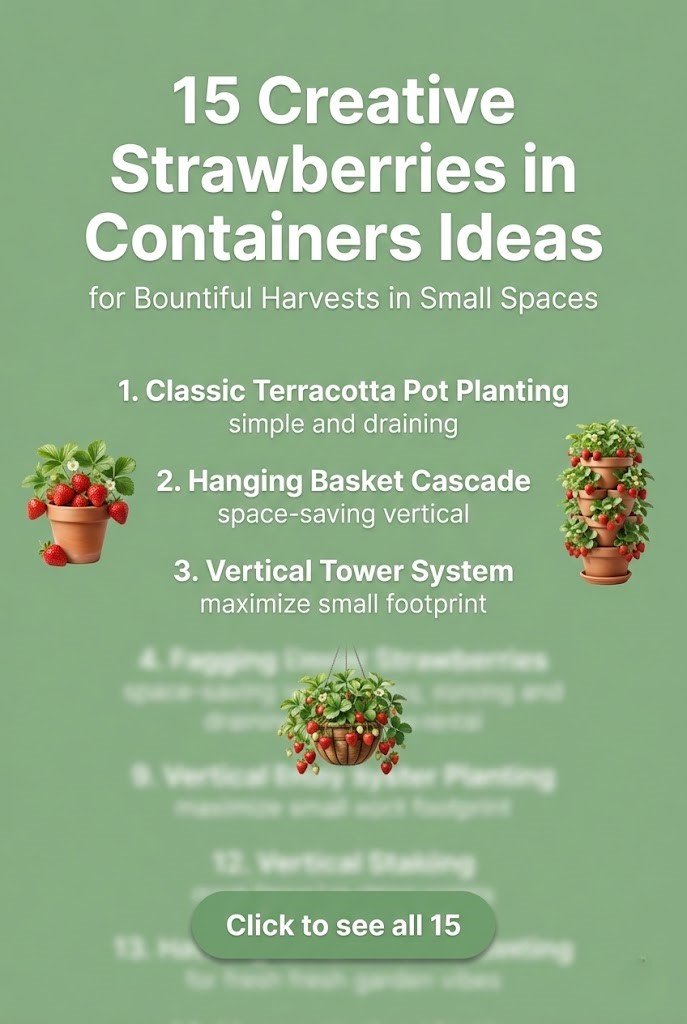
Ready to get started? Explore these 15 ideas, each packed with practical advice on what to do, why it works, and how to implement it for your own strawberry success.
1) Classic Terracotta Pot Planting
You start with a simple terracotta pot, which is porous and promotes healthy root growth by allowing excess moisture to evaporate. This setup is perfect for beginners because it’s straightforward and mimics natural soil conditions. The key benefit is excellent drainage, preventing root rot that’s common in overwatered strawberries.
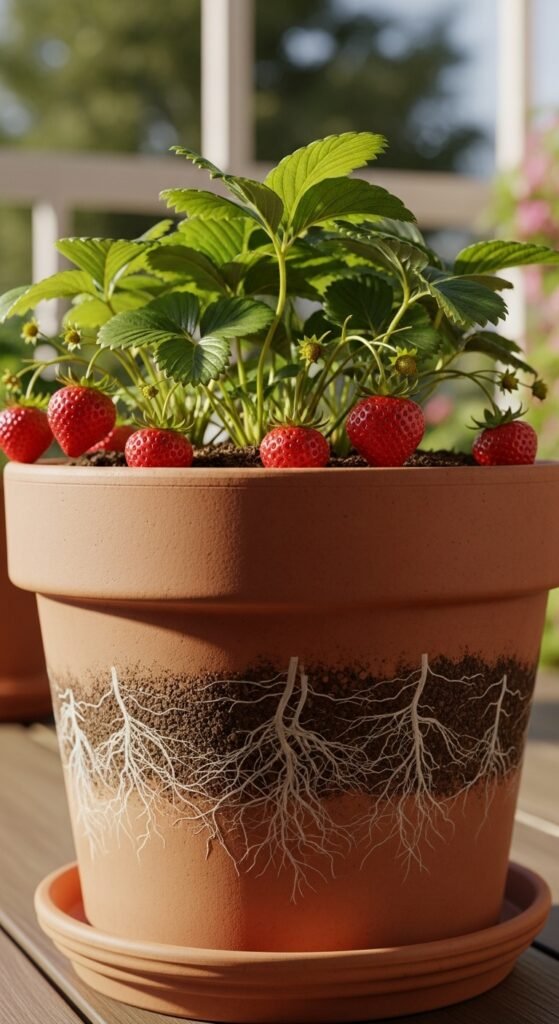
Why choose this? Terracotta regulates temperature, keeping roots cool in hot weather, and it’s affordable with a rustic charm that enhances your patio aesthetic. You’ll harvest sweeter berries since the material doesn’t leach chemicals into the soil.
How to do it: Select a 12-inch pot with drainage holes. Fill with well-draining potting mix enriched with compost. Plant strawberry crowns at soil level, spacing them 6 inches apart if using multiples. Water deeply but infrequently, and place in a spot with 6-8 hours of sun. Fertilize every two weeks with a balanced organic feed for optimal growth.
2) Hanging Basket Cascade
Imagine strawberries dangling from a hanging basket, their runners cascading down like a living waterfall. This idea utilizes vertical space, ideal for balconies or porches where floor area is limited. The baskets allow air circulation around the plants, reducing fungal diseases.
Why it works wonders: Elevated positioning deters ground pests like slugs, and the aesthetic appeal turns your space into a vibrant display. You’ll enjoy easier harvesting without bending over, and the setup maximizes sunlight exposure from all angles.
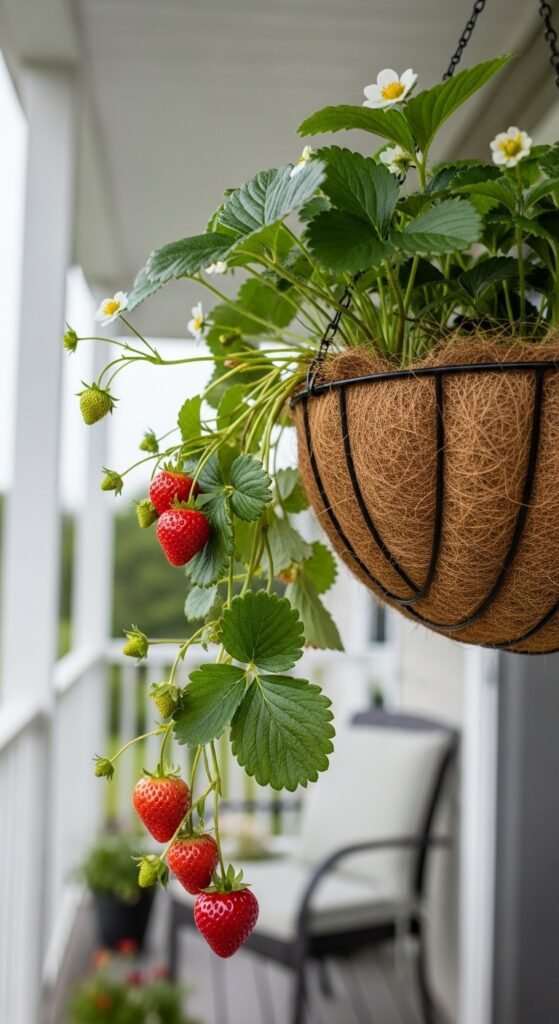
To set it up: Choose a 14-inch wire basket lined with coconut coir. Plant everbearing varieties around the edges and top. Hang in a sunny location using sturdy hooks. Keep soil moist but not soggy; mulch with straw to retain moisture. For added protection, companion plant with mosquito-repelling plants nearby to keep bugs at bay.
3) Vertical Tower System
Stack pots or use a purpose-built tower to create a multi-level strawberry haven. This vertical approach packs more plants into a small footprint, perfect for urban dwellers.
Why opt for this? It boosts yield per square foot and improves air flow, minimizing powdery mildew risks. The tower’s height makes picking berries effortless, and it’s a striking focal point in your garden area.
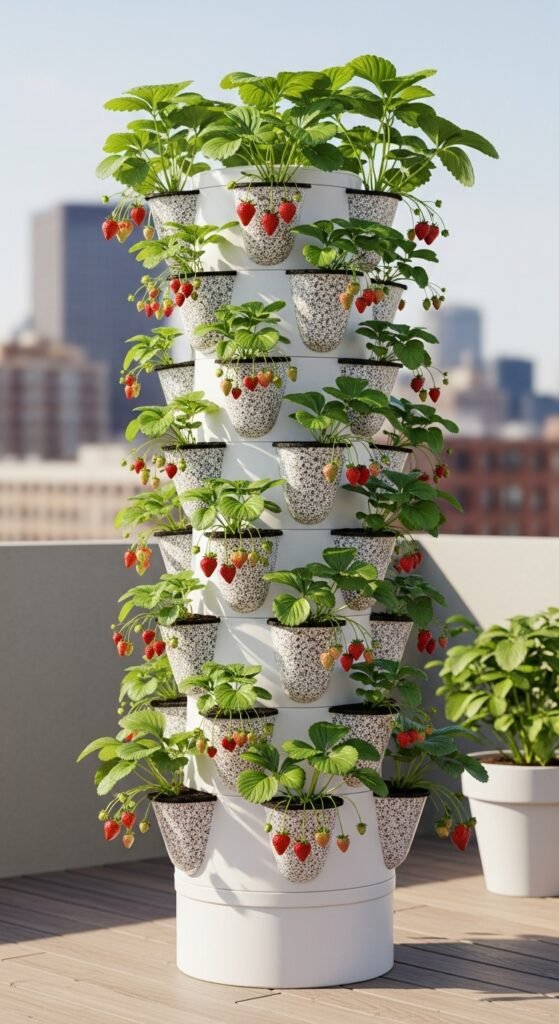
Implementation steps: Assemble a PVC pipe tower or stack graduated pots with drainage. Fill each level with potting soil mixed with perlite for aeration. Plant strawberries in pockets or holes, ensuring roots are covered. Water from the top to trickle down, and rotate the tower weekly for even sun. If vines get unruly, incorporate simple garden trellis ideas for support.
4) Window Box Wonderland
Transform your windowsill into a productive strawberry patch using long, narrow boxes. This brings the garden right to your view, blending indoors and out.
The advantages are clear: Convenient access for daily care, and the boxes capture morning sun perfectly for ripening fruits. It’s space-efficient and adds curb appeal to your home.
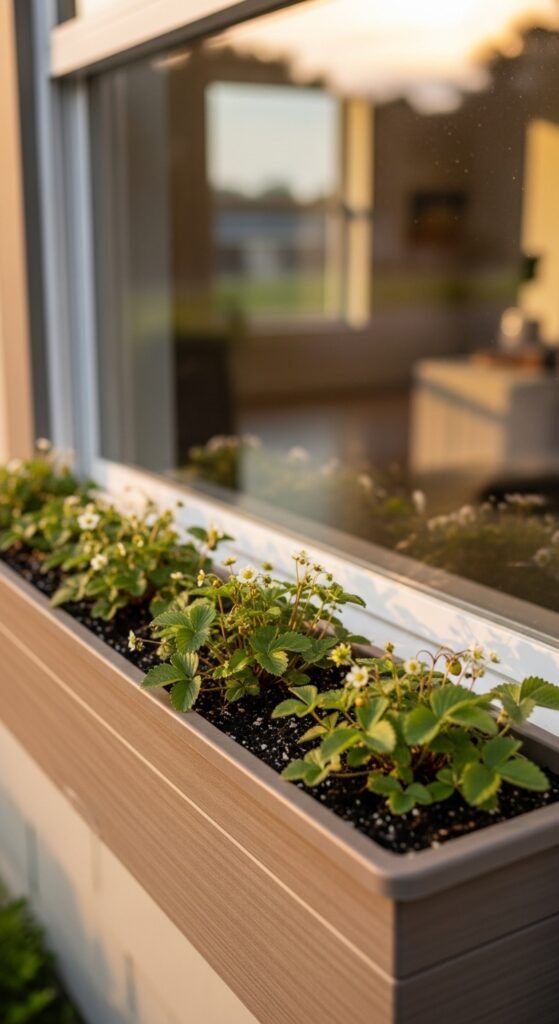
How-to guide: Mount secure boxes outside windows, lined with plastic for longevity. Use a lightweight soil blend to avoid excess weight. Plant alpine strawberries for compact growth. Water regularly, checking soil moisture daily in warm weather. To enhance privacy, pair with trailing varieties that mimic patio privacy plants.
5) Recycled Bucket Bonanza
Upcycle old buckets into strawberry containers, drilling holes for drainage. This eco-friendly option repurposes materials you might already have.
Why it’s brilliant: Cost-effective and sustainable, reducing waste while providing deep root space for vigorous plants. Buckets are portable, letting you chase the sun or shelter from storms.
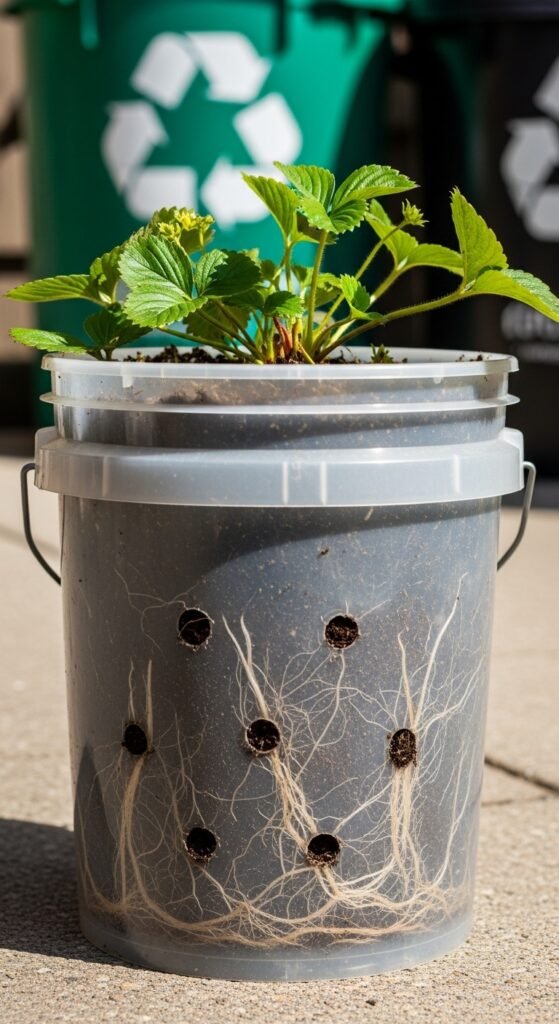
Steps to success: Clean a 5-gallon bucket thoroughly. Drill multiple bottom holes. Fill with organic potting mix and plant crowns shallowly. Position in full sun, watering when the top inch dries. For pest control, learn from strategies in handling Japanese beetles in the garden.
6) Traditional Strawberry Jar
A classic strawberry jar with side pockets allows plants to grow out from multiple levels, creating a sculptural element.
Benefits include maximized planting density in a compact form, ideal for small patios. The design promotes even watering and harvesting ease.
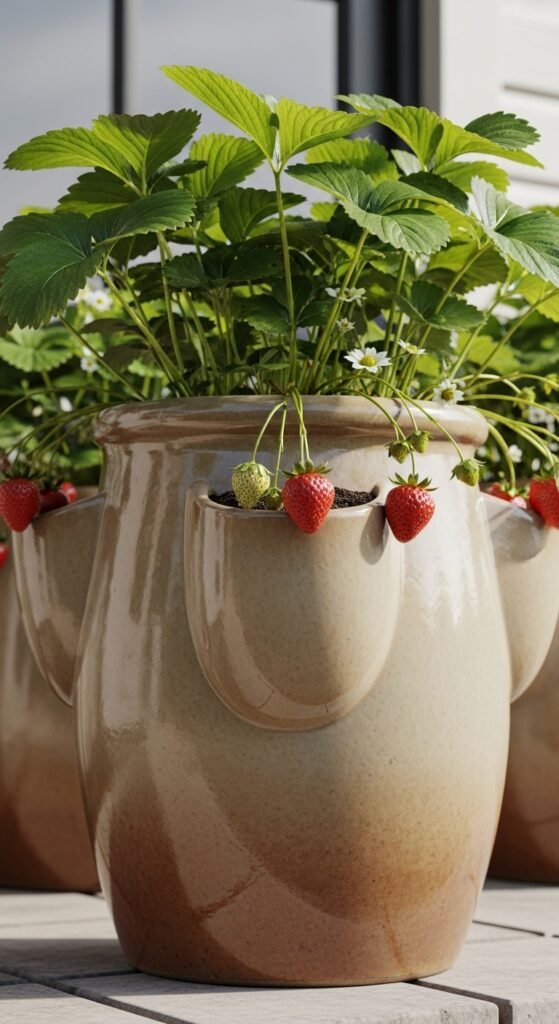
To execute: Select a glazed ceramic jar to retain moisture. Layer gravel at the bottom, then soil. Insert plants into pockets, starting from the bottom. Top with more strawberries. Keep in partial shade during peaks; use shade cloth for gardens if needed for protection.
7) Self-Watering Planter Setup
Incorporate a reservoir system in your container to maintain consistent moisture, crucial for strawberries’ shallow roots.
Why choose self-watering? It reduces watering frequency and prevents stress from dry spells, leading to juicier berries and less maintenance.
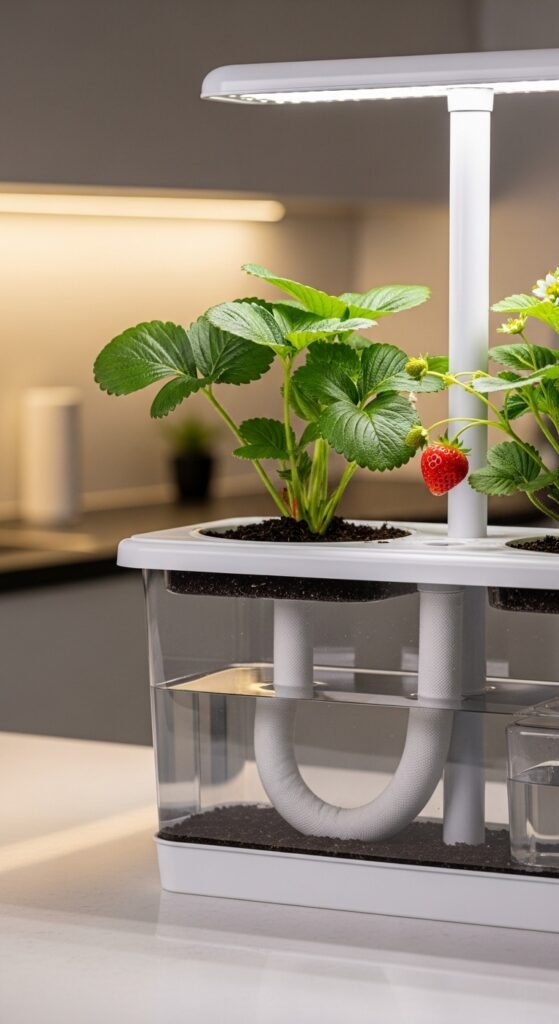
How it works: Buy or DIY a planter with a water chamber. Fill the soil section with a wick material like rope to draw up moisture. Plant as usual, filling the reservoir weekly. This method echoes efficient wicking bed techniques for sustained hydration.
8) Companion Planting Combo
Pair strawberries with compatible herbs or flowers in the same container to create a mini ecosystem.
The perks: Natural pest deterrence and improved pollination, fostering healthier growth without chemicals. It also optimizes space and adds visual interest.
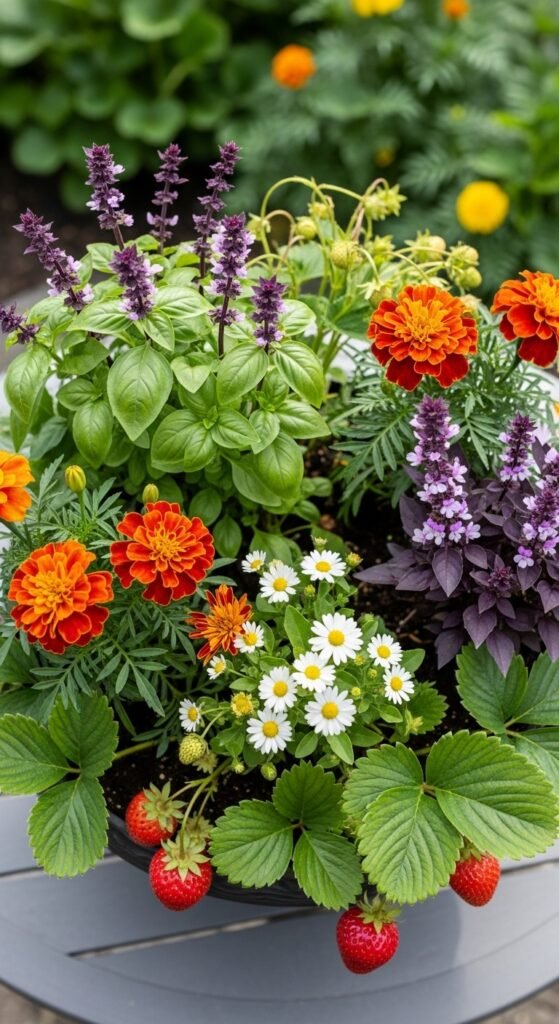
Practical tips: In a large pot, plant strawberries with basil or marigolds. Ensure good spacing for air flow. Water evenly, fertilizing with compost tea. Draw inspiration from permaculture guilds for balanced plant communities.
9) Hydroponic Container System
Set up a soil-less hydroponic kit in containers for nutrient-rich, water-based growing.
Why go hydro? Faster growth and higher yields with precise control over nutrients, perfect for indoor or controlled environments.
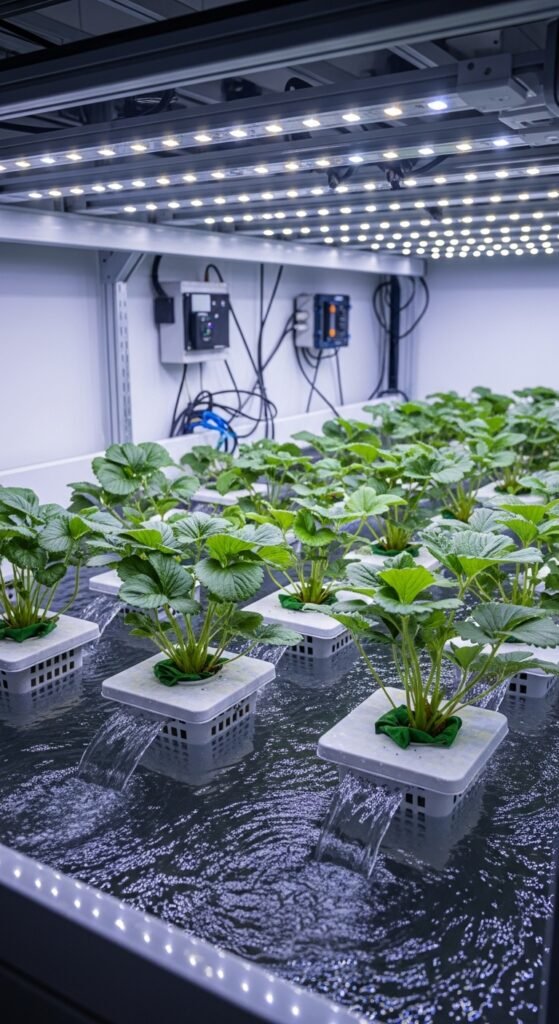
Setup process: Use net pots in a reservoir with circulating water. Add hydroponic nutrients tailored for fruits. Monitor pH between 5.8-6.2. Place under grow lights if outdoors isn’t sunny enough, adapting principles from polyculture gardens.
10) Balcony Railing Straddlers
Special planters that hook over railings turn unused edges into strawberry spots.
Advantages: Space-saving and accessible, bringing berries right to your lounging area without floor clutter.
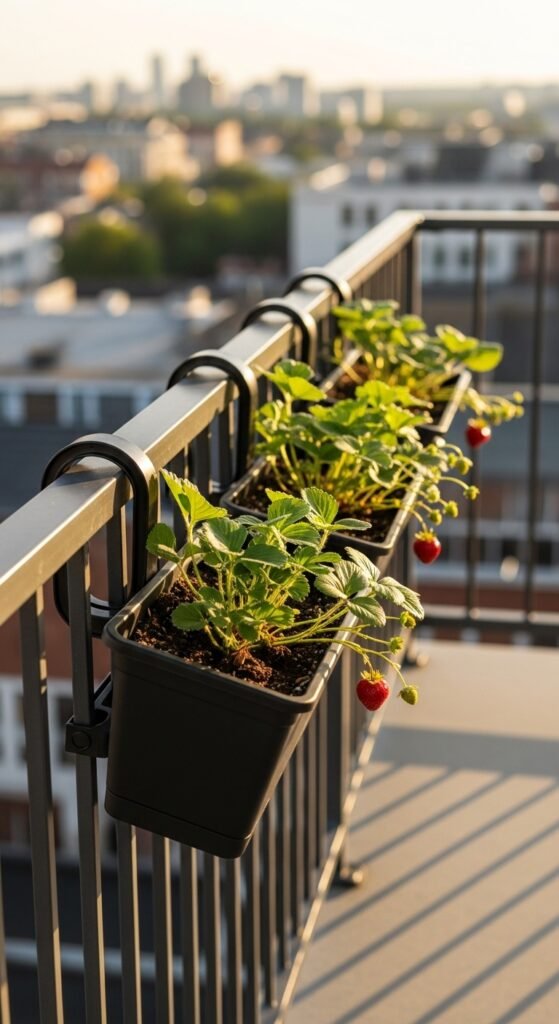
How to install: Choose adjustable saddles for railings. Fill with enriched soil, planting compact varieties. Secure firmly and water carefully to avoid drips. For added efficiency, consider layouts similar to keyhole gardens.
11) Tiered Stand Spectacle
Arrange multiple pots on a tiered stand for a stepped display of strawberries.
Why effective: Enhanced sunlight distribution to all levels, preventing shading and promoting uniform ripening.
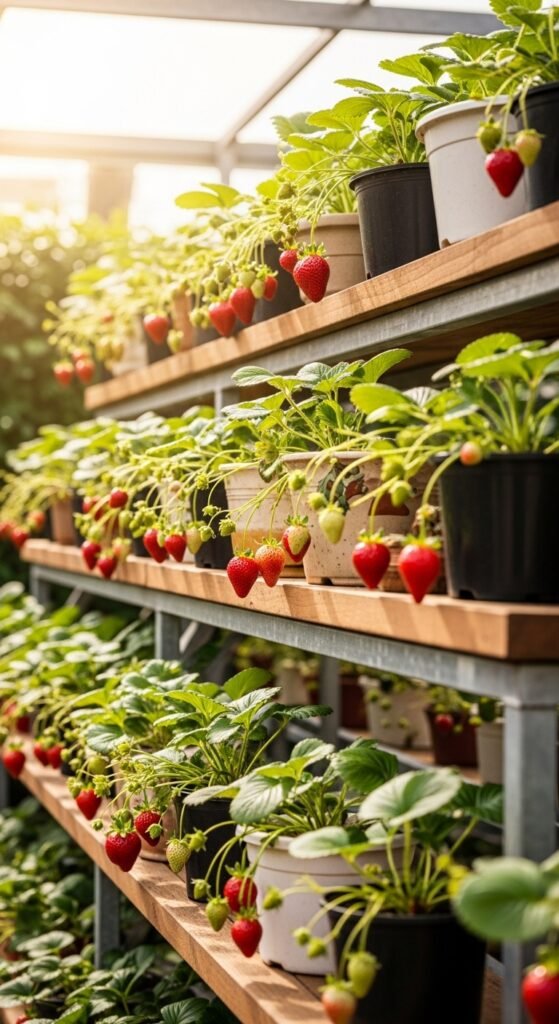
Execution: Assemble a metal or wood stand. Place varying pot sizes on tiers, filling with soil. Plant densely on top, sparsely below. Rotate for even exposure, incorporating vertical elements like those in trellis ideas for cucumbers.
12) Grow Bag Grove
Use fabric grow bags for flexible, breathable containers that encourage strong roots.
Benefits: Improved aeration and portability, making them easy to move or store off-season.
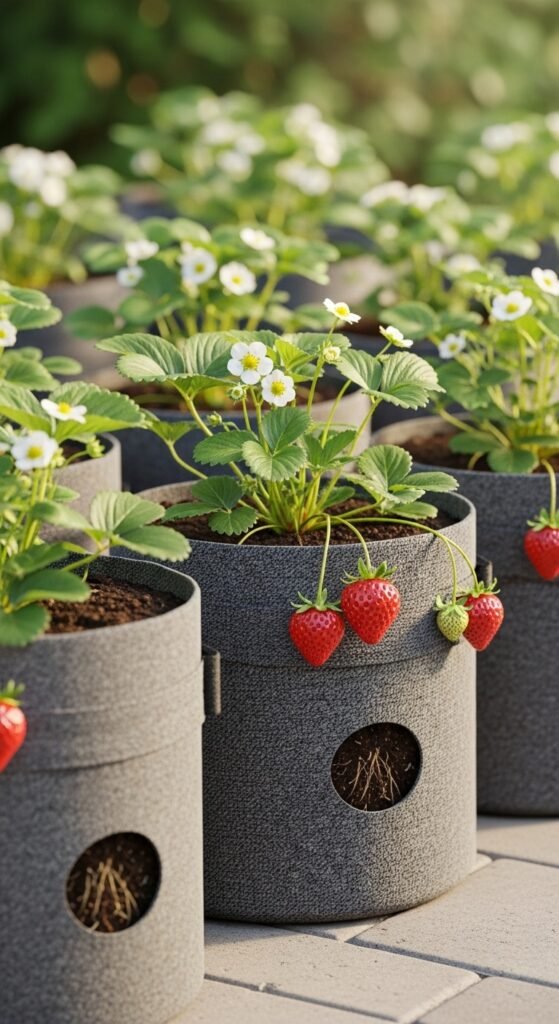
Steps: Select 10-gallon bags. Fill with potting mix, planting strawberries shallowly. Group in sunny spots. The fabric prevents overwatering, akin to natural drainage in patio herb garden ideas.
13) Pallet Planter Project
Repurpose a wooden pallet into a vertical planter by adding soil pockets between slats.
Why worthwhile: Upcycled and cost-free, providing ample space for many plants in a slim profile.
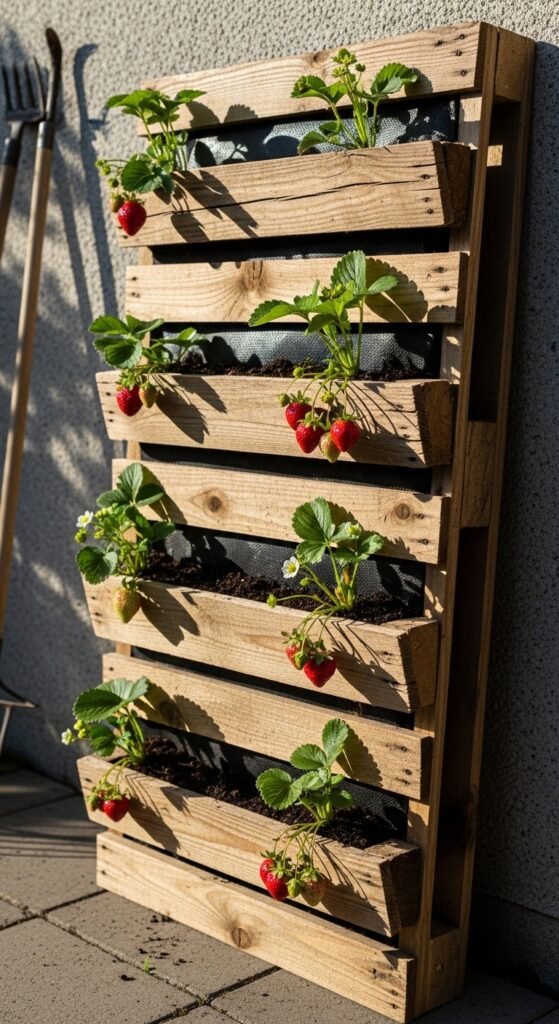
To build: Stand the pallet upright, staple landscape fabric to create pockets. Fill with soil and plant. Lean against a wall in sun. This DIY vibe complements sustainable hugelkultur bed concepts.
14) Gutter Garden Innovation
Mount rain gutters horizontally or vertically for linear strawberry rows.
Perks include Customizable lengths and easy installation, fitting awkward spaces like fences.
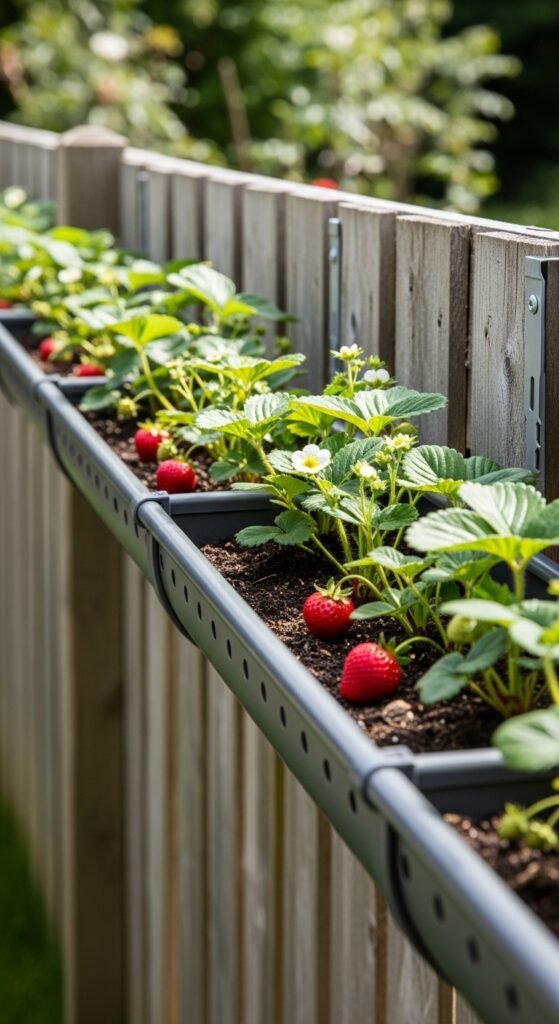
How-to: Drill drainage holes in gutters. Cap ends, fill with soil. Hang or attach securely. Plant along the length. Water gently; it’s a space-saver like advanced food forest designs.
15) Wheelbarrow Whimsy
Convert an old wheelbarrow into a mobile strawberry bed, adding whimsy to your yard.
Why fun and functional: Mobility for optimal positioning and a large volume for robust plants.
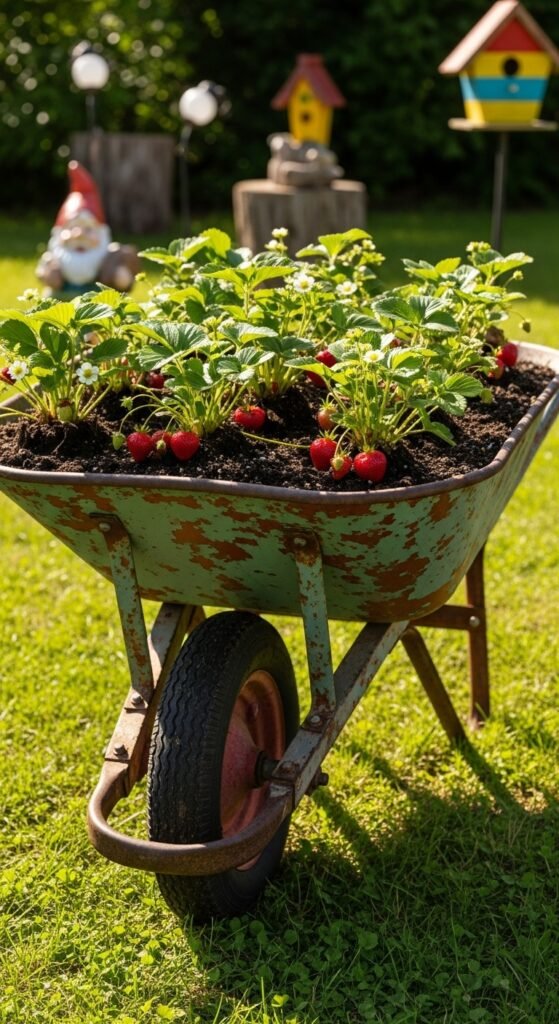
Implementation: Drill drainage in the bottom. Fill with rich soil. Plant in clusters. Wheel to sunny or shaded areas as needed. This playful approach ties into creative outdoor ideas, ensuring bountiful harvests.
Key Principles for Success
Soil and Nutrition Essentials
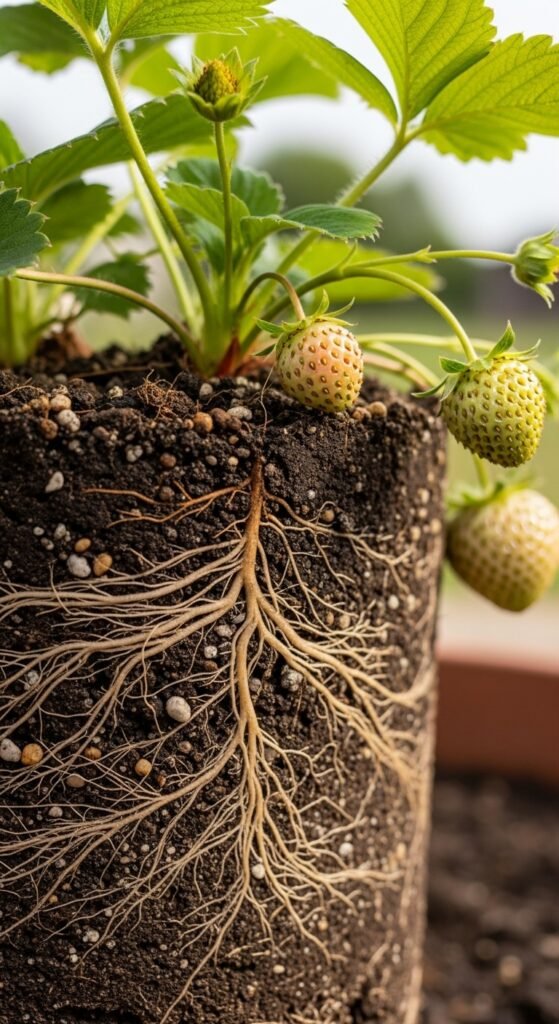
You need acidic, well-draining soil with a pH of 5.5-6.5 for strawberries. Mix in organic matter like compost for nutrients. Fertilize with potassium-rich feeds to boost fruiting.
Pest and Disease Management
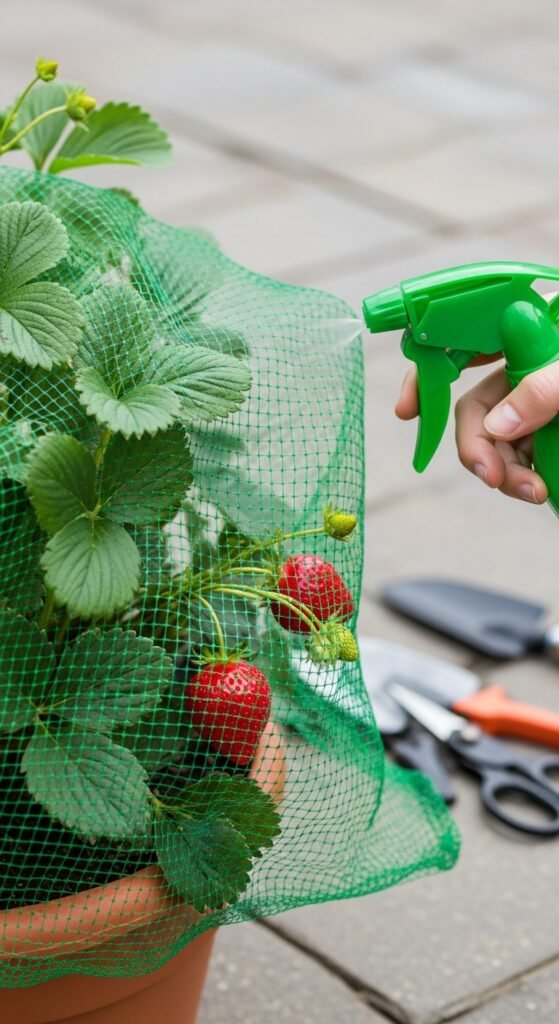
Monitor for aphids, slugs, and birds. Use netting for protection and organic sprays. Rotate containers to disrupt pest cycles.
Watering and Sunlight Tips
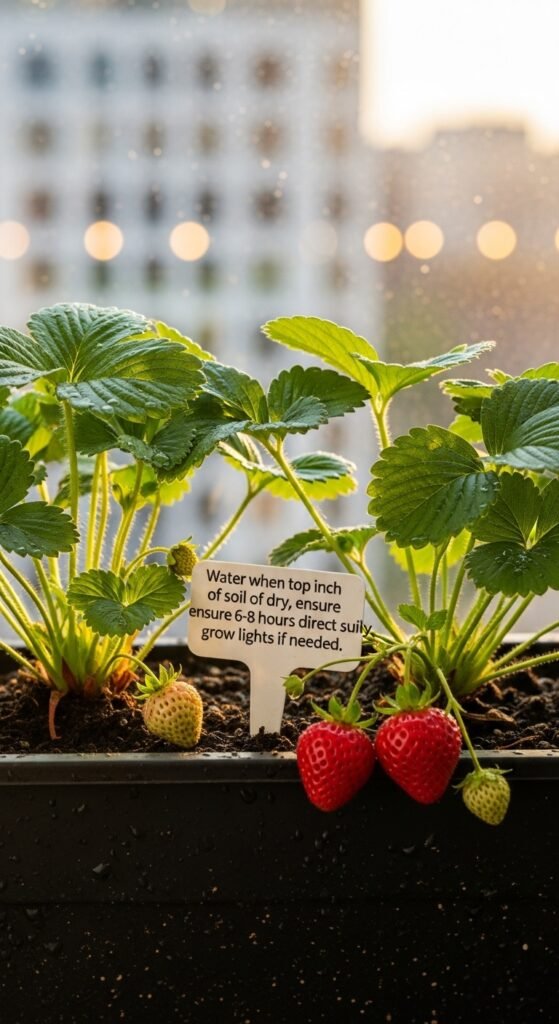
Aim for consistent moisture without waterlogging. Provide 6-8 hours of direct sun daily, supplementing with grow lights indoors if necessary.
Frequently Asked Questions
Can I grow strawberries in containers year-round?
Yes, with proper care. In colder climates, move containers indoors or insulate them during winter to protect roots from freezing.
What size container is best for strawberries?
A minimum of 8-12 inches deep and wide per plant, but larger for multiples to allow root spread and prevent crowding.
How often should I fertilize container strawberries?
Every 2-4 weeks during the growing season with a balanced, organic fertilizer diluted to half strength to avoid burn.
Do strawberries in containers need full sun?
They thrive in full sun but can tolerate partial shade, though yields may decrease. Aim for at least 6 hours of direct sunlight.
What’s the best strawberry variety for containers?
Everbearing or day-neutral types like ‘Seascape’ or ‘Alpine’ perform well, producing fruits continuously in compact spaces.