Growing blueberries in containers opens up a world of possibilities, especially if you lack garden space or deal with poor soil conditions. These compact bushes thrive in pots, allowing you to enjoy fresh, antioxidant-rich berries right on your patio or balcony. By selecting the right varieties and setup, you can achieve impressive yields without the need for a traditional plot.
The key to success lies in understanding blueberries’ preferences for acidic soil, consistent moisture, and ample sunlight. This approach not only maximizes your harvest but also makes maintenance easier, as you can move containers to optimize conditions. Whether you’re a beginner or seasoned gardener, these ideas will help you cultivate healthy plants that produce abundantly season after season.
With proper care, your container-grown blueberries can yield fruit for years, providing a rewarding and sustainable addition to your home. Dive into these innovative strategies to transform your space into a berry haven.
1) Dwarf Varieties for Compact Growth
You’ll love starting with dwarf blueberry varieties like ‘Top Hat’ or ‘Sunshine Blue’ for your container setup, as they naturally stay small, reaching only 1-2 feet tall. This makes them perfect for limited spaces without sacrificing fruit production. These compact plants focus energy on berry development rather than excessive foliage, giving you a higher yield per square foot.
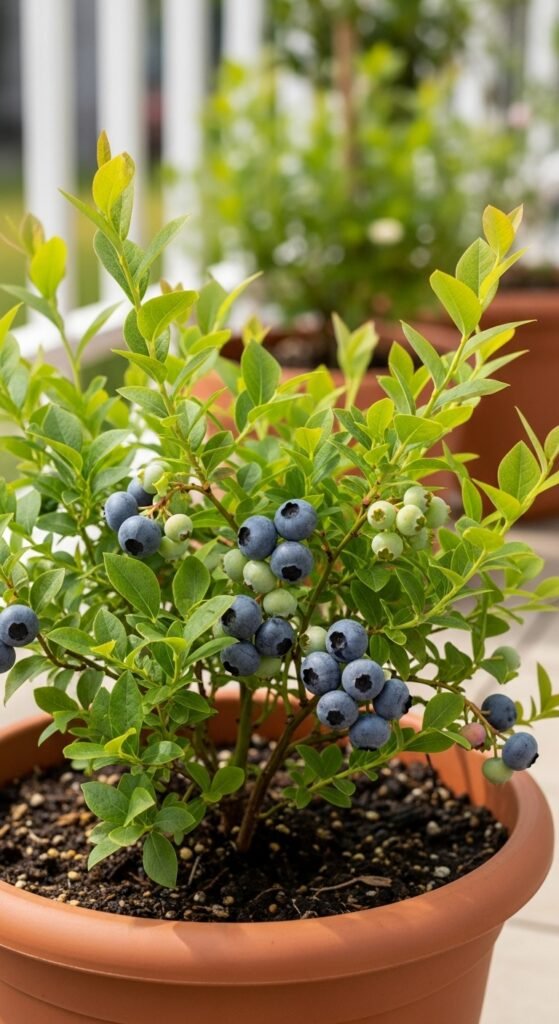
Why choose dwarfs? They require less pruning and are easier to protect from pests, ensuring healthier bushes overall. Plus, their size allows for multiple pots in one area, increasing your total harvest. To get started, plant in a 5-gallon container with acidic soil, positioning in full sun for at least 6 hours daily.
How to implement: Fill your pot with a mix designed for acid-loving plants, water thoroughly after planting, and fertilize monthly during the growing season. Monitor for proper drainage to prevent root rot, and you’ll soon enjoy clusters of sweet berries ready for picking.
2) Acidic Soil Mix Customization
You can create the ideal environment by customizing your soil mix to maintain a pH between 4.5 and 5.5, essential for blueberry nutrient uptake. Combine peat moss, pine bark, and perlite in equal parts for excellent drainage and acidity, preventing common issues like yellowing leaves.
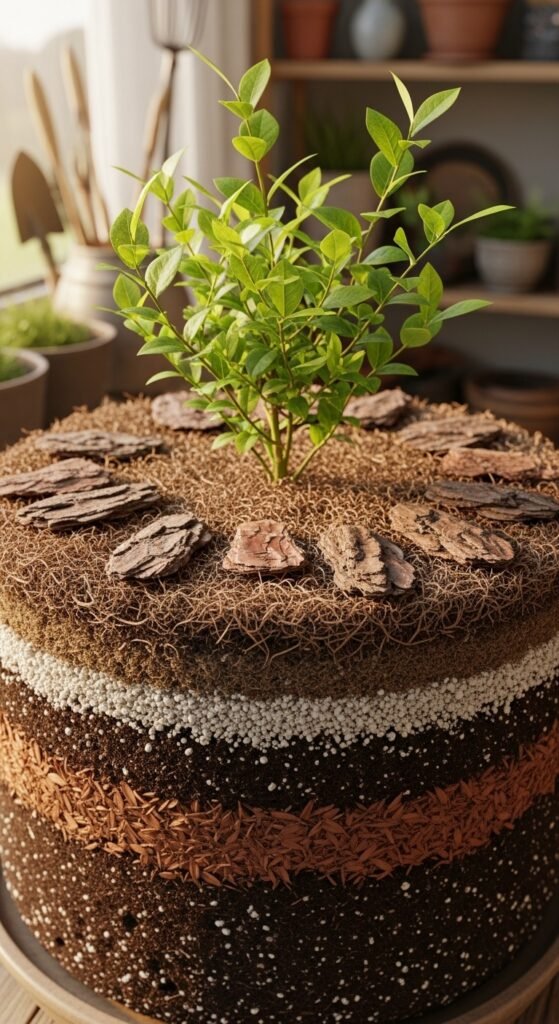
This tailored approach boosts plant health, leading to more vibrant growth and larger fruit sets. It’s a game-changer for container gardening, where soil quality directly impacts success. For best results, test your mix periodically and adjust with sulfur if needed to keep conditions optimal.
To execute, layer the bottom with gravel for drainage, add your custom blend, and plant at the same depth as the nursery pot. Water with rainwater to avoid raising pH, and mulch the top to retain moisture. Check out our guide on blueberry soil pH for more tips on maintaining acidity.
3) Self-Watering Container Systems
Implement self-watering containers to ensure consistent moisture, crucial since blueberries hate drying out but also can’t stand soggy roots. These systems use a reservoir that wicks water up as needed, reducing your watering frequency by up to 50%.
The benefit is stress-free plants that produce juicier berries, as even hydration supports steady growth. Ideal for busy gardeners or hot climates, this method minimizes evaporation and prevents overwatering errors. You’ll see healthier foliage and fewer disease problems as a result.
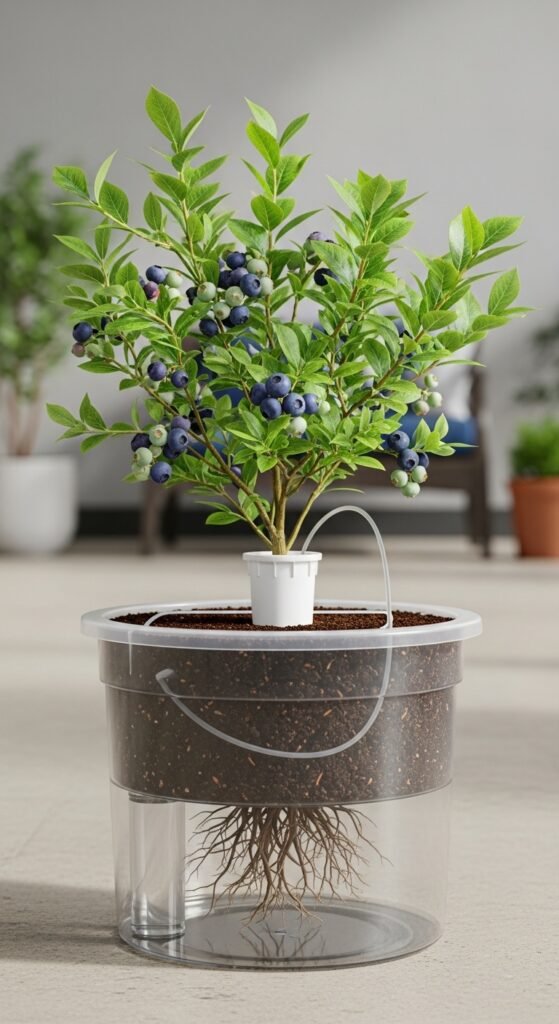
Set it up by choosing a pot with a built-in reservoir or DIY one using a plastic bin insert. Fill with your acidic mix, plant your bush, and top off the water chamber weekly. This innovation pairs well with mobile setups for ultimate flexibility in your gardening routine.
4) Mobile Pot Arrangements
You’ll appreciate arranging your containers on wheeled platforms for easy mobility, allowing you to chase the sun or shelter from harsh weather. This flexibility ensures your blueberries get 6-8 hours of light daily while protecting them from extreme conditions.
Mobility enhances air circulation and pest management, as you can rotate pots to promote even growth. It’s especially useful in urban settings where space shifts seasonally. Expect stronger plants and better yields from this adaptive strategy.
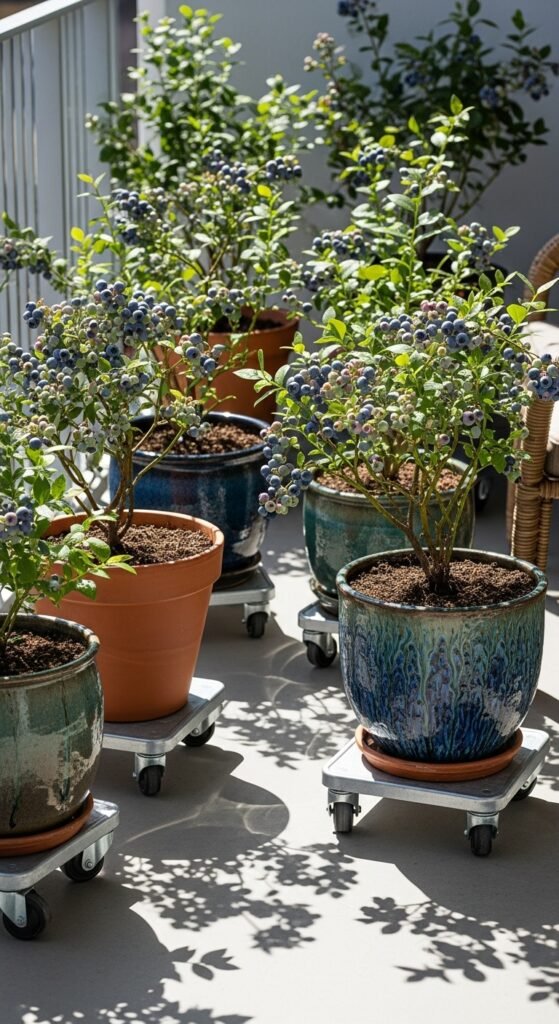
To begin, select sturdy dollies rated for your pot’s weight, secure the containers, and position initially in a sunny spot. Move as needed throughout the day or year, combining with companion plants for added biodiversity in your portable orchard.
5) Companion Planting Pairings
Pair your blueberries with compatible companions like basil or thyme in adjacent containers to repel pests naturally and improve pollination. These herbs deter insects while attracting beneficial bees, boosting your berry production without chemicals.
This symbiotic setup enhances soil health and creates a mini ecosystem, making your container garden more resilient. You’ll notice fewer issues and more flavorful fruit from the improved environment. It’s a smart, space-efficient way to garden organically.
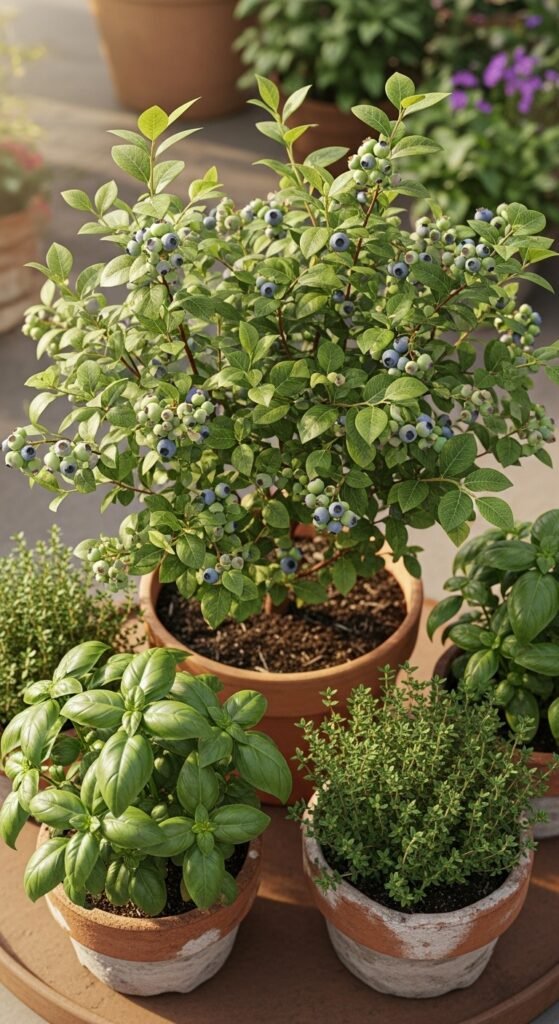
Arrange by placing herb pots around your blueberry container, ensuring similar sun and water needs. Prune both regularly for airflow. For more ideas, explore our article on blueberries companion plants to find the best matches for your setup.
6) Vertical Stacking Solutions
Maximize vertical space by stacking containers or using tiered planters, allowing multiple blueberry bushes in a small footprint. This method increases your harvest potential while adding visual interest to your patio or balcony.
Stacking promotes better drainage and air flow, reducing disease risks in humid areas. It’s perfect for apartment dwellers seeking abundant yields. You’ll enjoy easier harvesting from elevated positions and a striking display of cascading foliage.
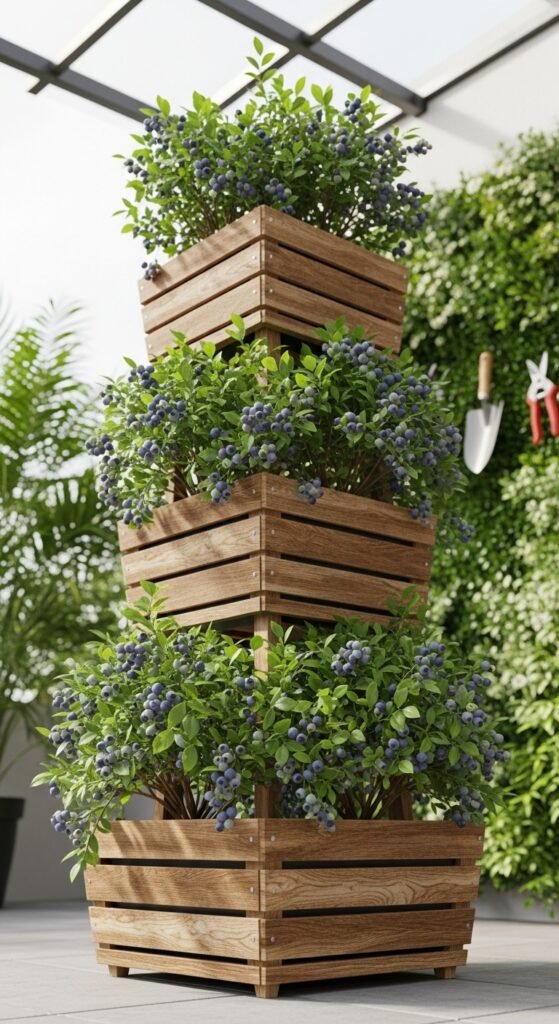
Build by securing stable tiers with dowels, filling each level with acidic soil, and planting dwarfs on top. Water from the bottom up to avoid runoff, and rotate the structure periodically for even sun exposure.
7) Organic Mulch Layering
Apply a 2-3 inch layer of pine needles or bark mulch to retain moisture and suppress weeds, mimicking blueberries’ natural woodland habitat. This organic cover slowly acidifies the soil as it decomposes, supporting long-term health.
Mulching conserves water and regulates soil temperature, protecting roots from extremes. You’ll see fewer watering sessions and more consistent berry size. It’s an easy, low-cost way to boost plant vigor in containers.
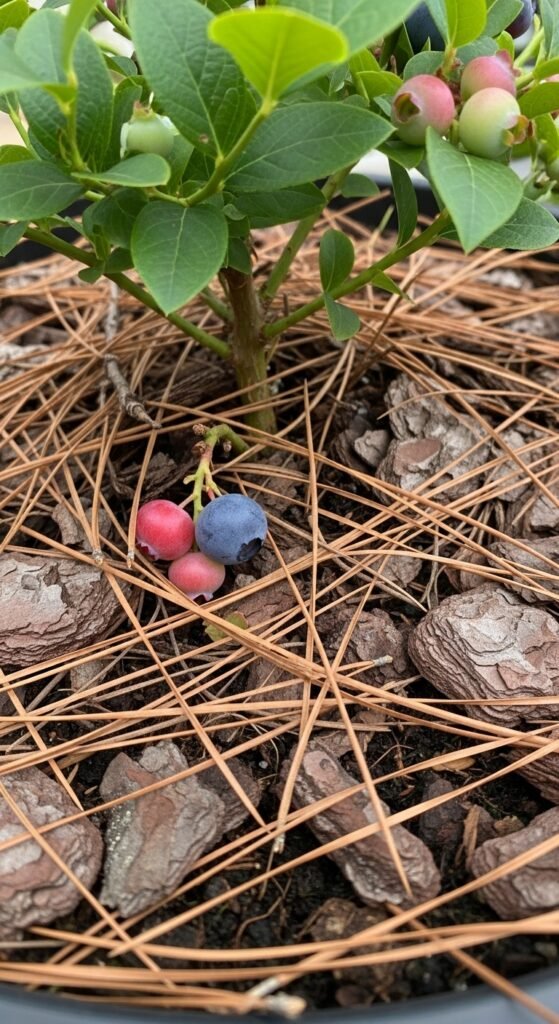
Spread evenly around the base after planting, avoiding direct stem contact. Refresh annually in spring. Combine with self-watering systems for ultimate moisture management in your portable berry patch.
8) Drip Irrigation Integration
Integrate a simple drip system to deliver water directly to roots, minimizing waste and leaf wetness that can cause fungal issues. This targeted approach ensures deep hydration, encouraging robust root systems for better fruiting.
Drip irrigation saves time and water, ideal for container setups where evaporation is high. Your plants will thrive with steady supply, leading to plumper berries and extended harvest periods. It’s a worthwhile investment for serious growers.
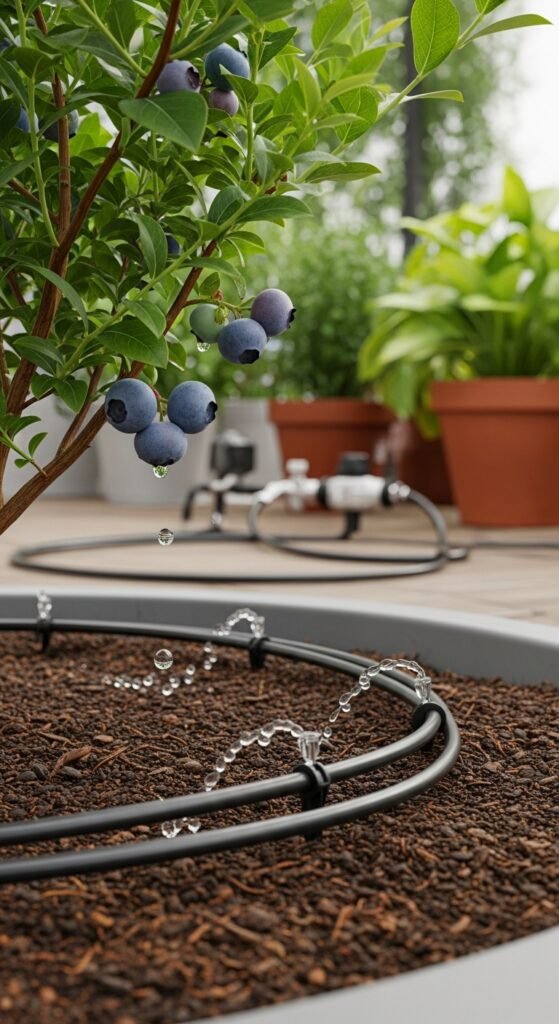
Install emitters in each pot, connect to a timer for automated watering. Adjust flow based on weather. For broader container tips, see our piece on drip irrigation for planters to optimize your system.
9) Winter Protection Strategies
Protect your containers in winter by wrapping with burlap or moving to a sheltered spot, insulating roots from freezing temperatures. Blueberries are hardy but pots expose them more than ground planting.
Proper overwintering preserves plant energy for spring growth, ensuring reliable blooming and fruiting. You’ll avoid losses and maintain productive bushes year after year. This care extends the life of your investment significantly.
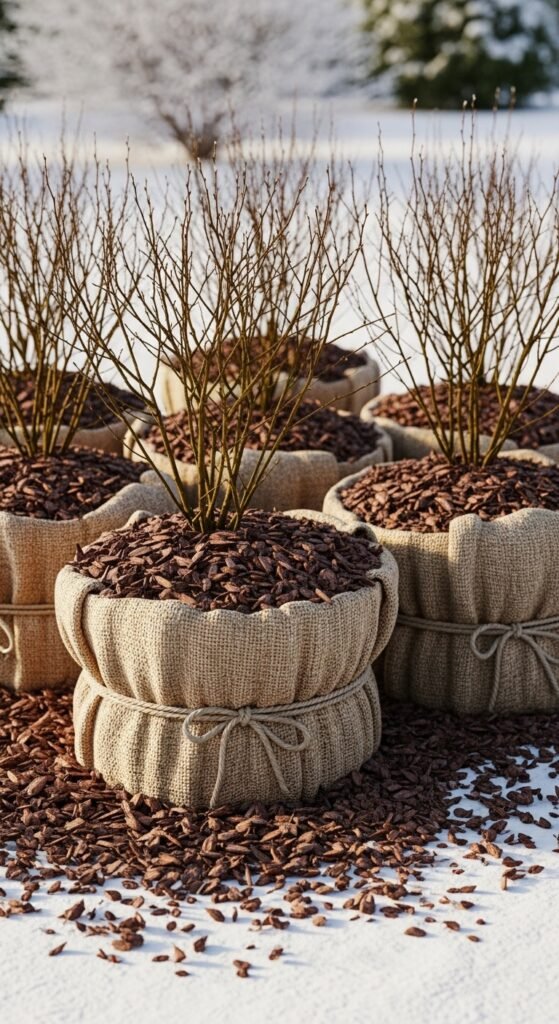
Group pots together for shared warmth, add extra mulch, and cover during severe frosts. Monitor for thawing to water sparingly, preventing dry-out in dormant periods.
10) Natural Pest Deterrents
Use natural deterrents like neem oil sprays or companion marigolds to keep pests at bay without harsh chemicals. These methods target common threats like aphids while preserving beneficial insects.
Organic control maintains berry quality and safety for consumption. You’ll foster a balanced ecosystem, reducing future infestations naturally. It’s essential for healthy, productive container plants.
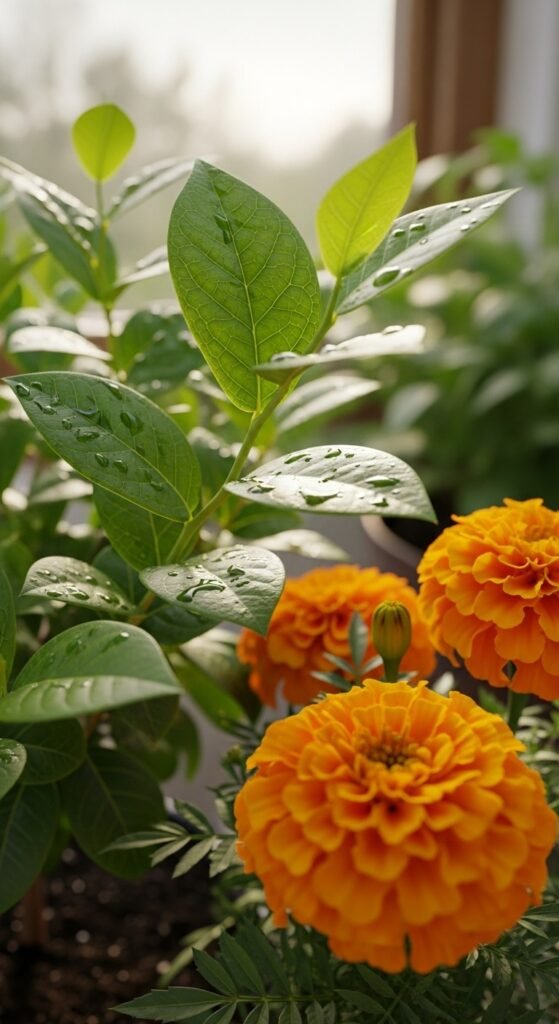
Apply weekly during active seasons, inspecting leaves regularly. Rotate with soapy water rinses for variety. This integrates well with your overall maintenance routine for thriving bushes.
11) Pollination Enhancement Tools
Enhance pollination by gently shaking branches or using a soft brush to transfer pollen, especially in wind-protected areas. This mimics bee activity, increasing fruit set dramatically.
Better pollination means more berries per bush, maximizing your container’s output. It’s a simple technique that pays off in abundance, particularly for solo plants without cross-varieties.
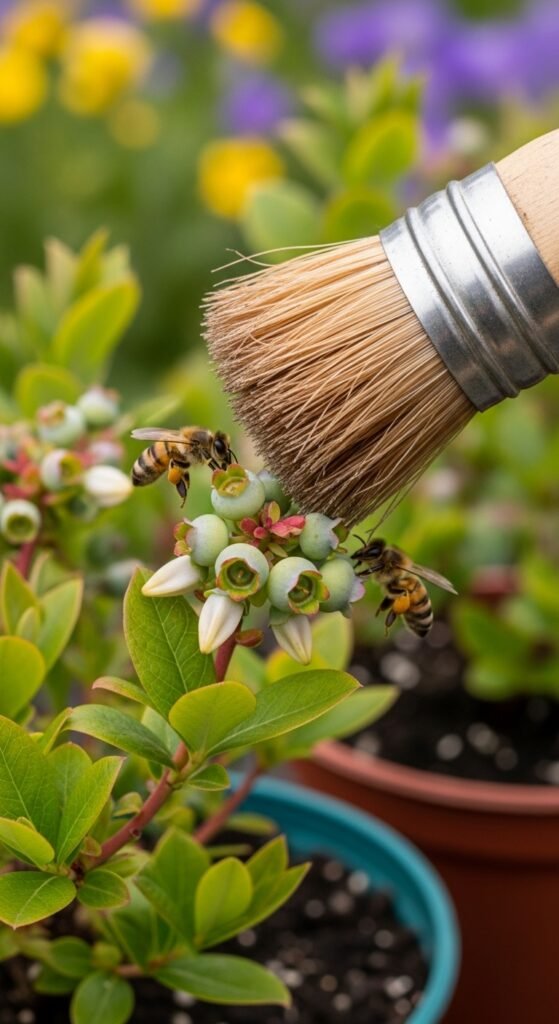
Perform daily during flowering, focusing on open blooms. Attract bees with nearby flowers for natural help, combining efforts for optimal results in your setup.
12) pH Monitoring Routines
Establish a routine to monitor soil pH monthly using test kits, adjusting with amendments to stay in the ideal range. Consistent acidity ensures nutrient availability, preventing deficiencies.
Regular checks catch issues early, promoting vigorous growth and sweet berries. You’ll avoid common pitfalls like iron chlorosis, keeping leaves green and plants productive.
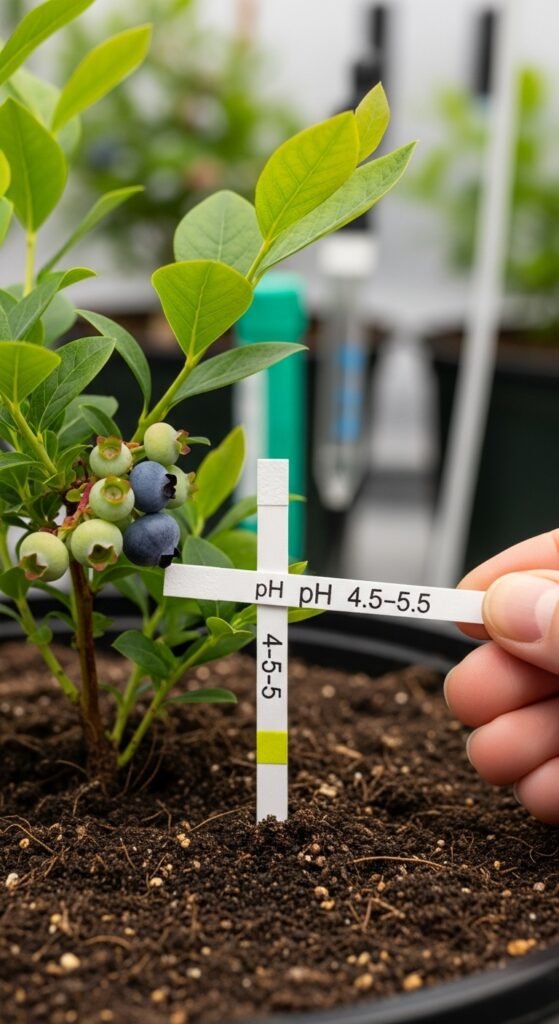
Test after watering, following kit instructions. Add lime or sulfur as needed, retesting after two weeks. This practice is foundational for container success.
13) Pruning for Bushier Plants
Prune annually in late winter to encourage bushier growth and larger yields, removing old wood and shaping for airflow. This rejuvenates plants, focusing energy on fruit production.
Proper pruning reduces disease and improves light penetration, resulting in healthier bushes. You’ll harvest more accessible berries from well-maintained structures.
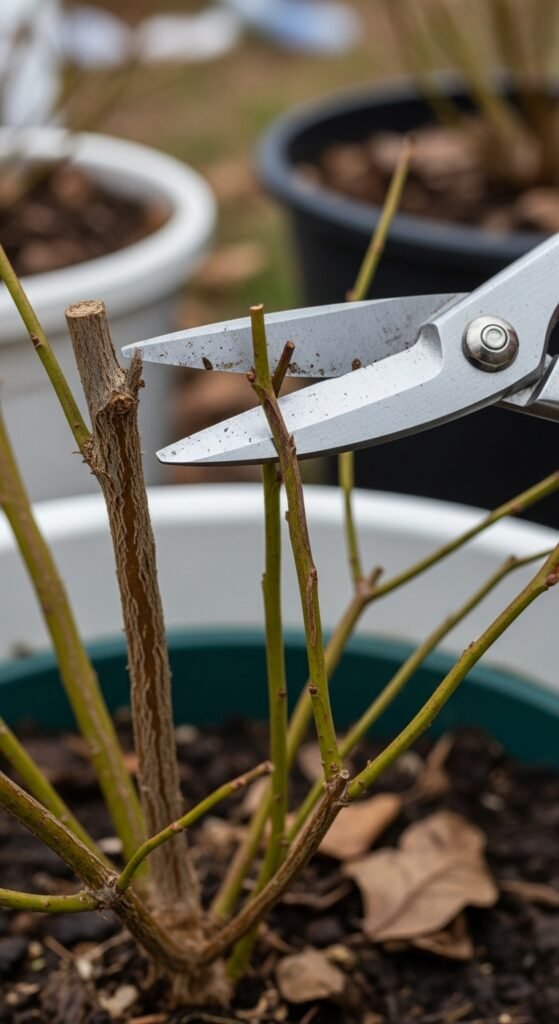
Use sharp shears, cutting back one-third of oldest canes at base. Shape remaining for open center. Refer to our detailed guide on prune blueberries for expert techniques.
14) Fertilizer Scheduling Plans
Develop a fertilizer schedule using acid-specific formulas applied in spring and mid-summer for balanced nutrition. This timed feeding supports blooming and fruit development without excess.
Consistent nutrition yields sweeter, plumper berries and stronger plants. You’ll prevent burn and deficiencies, optimizing container-limited resources effectively.
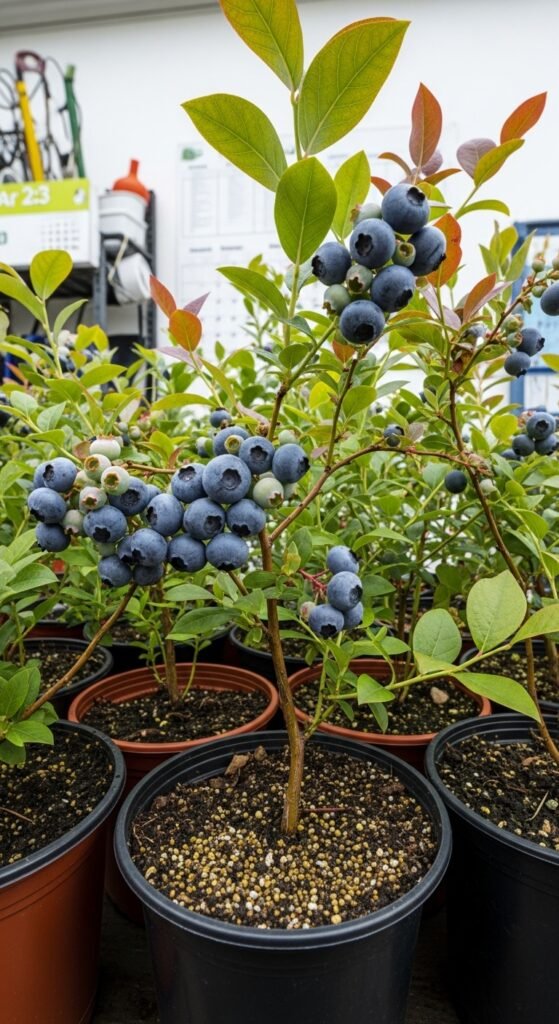
Dilute granular types in water for even distribution, following label rates. Avoid late-season applications to harden off for winter, integrating with your watering routine.
15) Harvest Timing Optimization
Optimize harvest by picking when berries are fully blue and easily detach, checking every few days during peak season. This ensures peak sweetness and extends the picking window.
Timely harvesting encourages more production, as bushes continue setting fruit. You’ll enjoy the freshest flavor while preventing overripe losses to birds or drop.
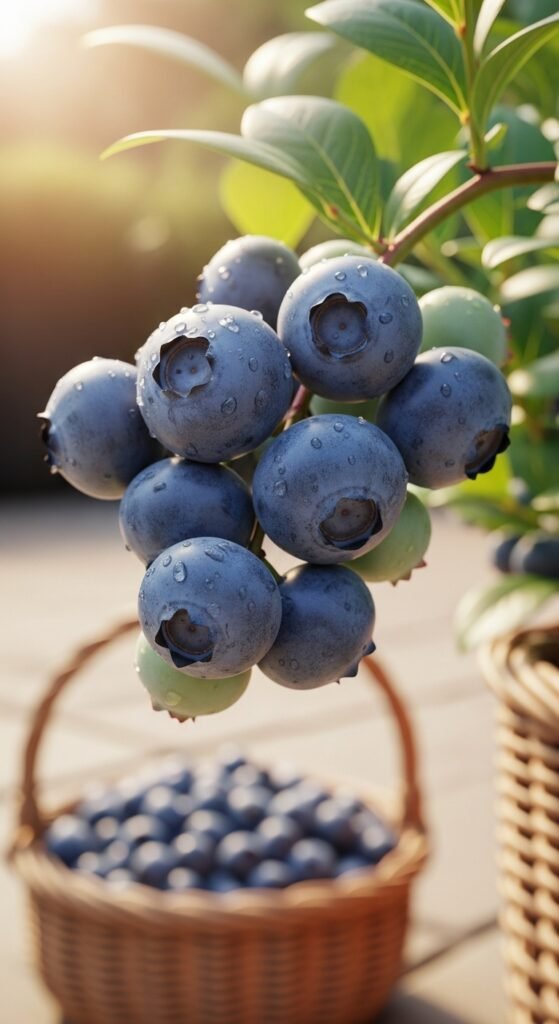
Gently twist off ripe ones into containers, refrigerating immediately. Track varieties for staggered ripening, prolonging your fresh supply throughout summer.
Key Principles for Container Blueberry Success
Soil and Drainage Essentials
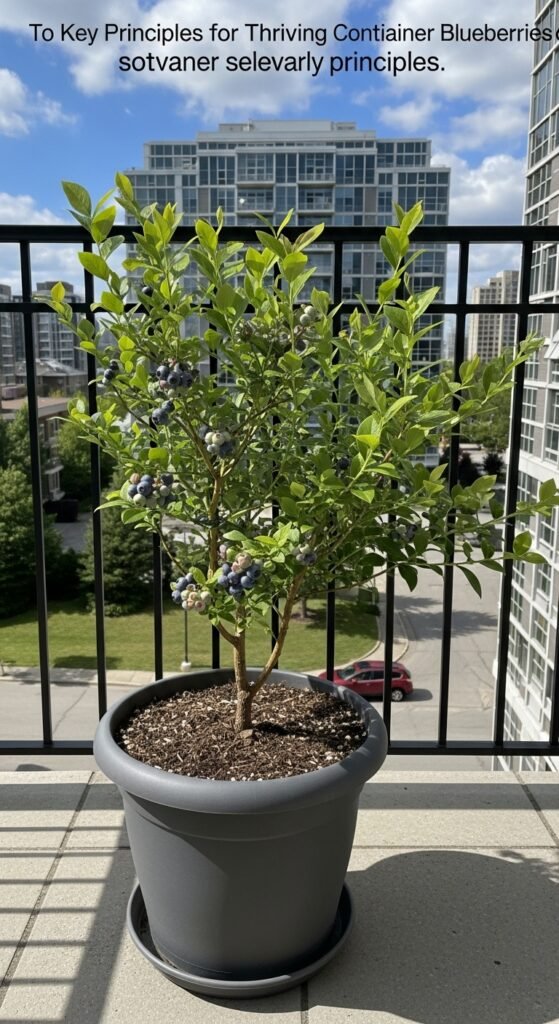
Always prioritize well-draining, acidic soil to mimic blueberries’ native conditions, preventing root issues and promoting uptake of key nutrients like iron.
Watering and Moisture Management
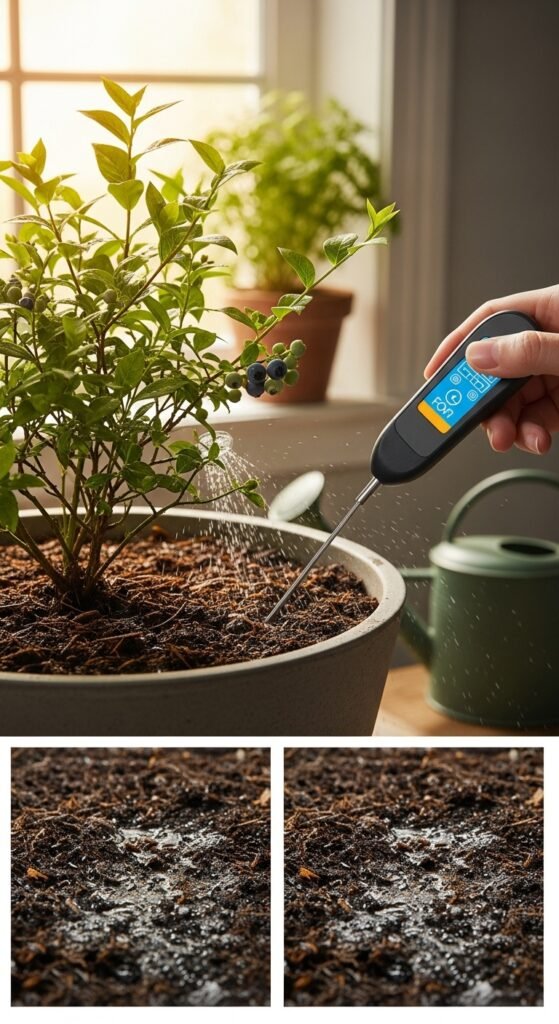
Maintain even soil moisture without waterlogging, using mulch and monitoring to avoid stress that impacts fruit quality and plant health.
Sunlight and Positioning Tips
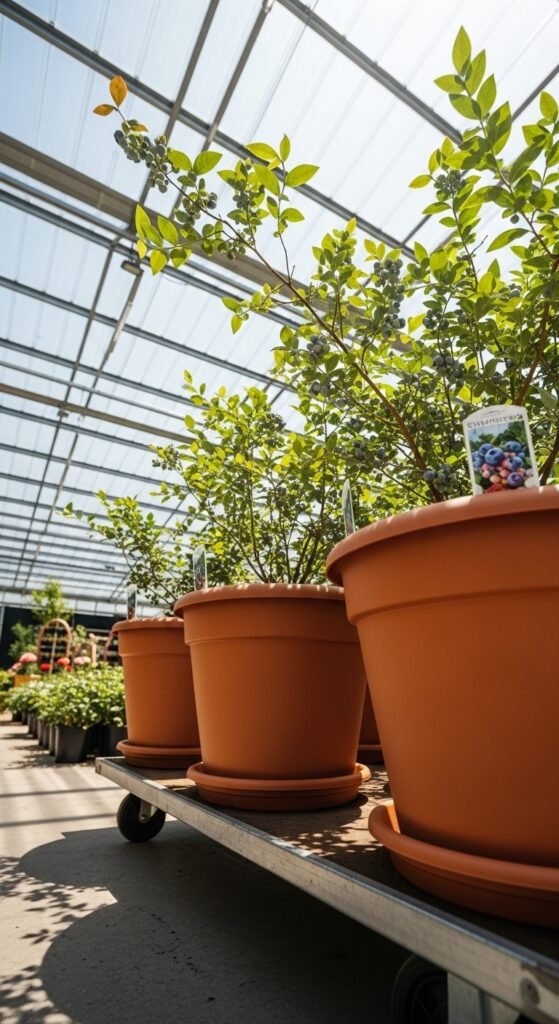
Position for maximum sun exposure while allowing mobility to adjust for seasonal changes, ensuring robust photosynthesis for energy and growth.
Frequently Asked Questions
Can I grow blueberries in small containers?
Yes, start with at least 5-gallon pots for dwarfs, upgrading as plants mature to accommodate root expansion and stability.
How often should I water container blueberries?
Water when the top inch of soil feels dry, typically 2-3 times weekly in summer, adjusting for rainfall and humidity.
What varieties work best in pots?
Opt for compact types like ‘Patriot’ or ‘Northsky’ that stay manageable and produce well in confined spaces.
Do blueberries need full sun in containers?
They thrive with 6-8 hours of direct sunlight daily, but provide afternoon shade in very hot climates to prevent scorch.
How do I overwinter potted blueberries?
Move to a protected area, insulate pots, and mulch heavily to shield roots from freezing while allowing dormancy.