

Pruning your raspberry bushes is a crucial step in maintaining their health and maximizing fruit production. By removing old, diseased, or overcrowded canes, you encourage new growth that leads to larger, sweeter berries. Whether you’re dealing with summer-bearing or everbearing varieties, proper raspberry pruning helps prevent pests and diseases while improving air circulation and sunlight penetration.
Understanding the basics of raspberry pruning can transform your garden. You’ll see stronger plants that are easier to harvest from, with fewer tangles and more robust yields. This guide breaks down 15 practical techniques, each designed to fit seamlessly into your gardening routine for optimal results.
Start by assessing your raspberry patch in late winter or early spring, when the plants are dormant. With the right approach, you’ll enjoy a thriving berry harvest season after season.
1) Identify Your Raspberry Variety
Before you grab your pruners, determine if your raspberries are summer-bearing or everbearing. Summer-bearing types produce fruit on second-year canes, while everbearing ones yield on both first- and second-year growth. This distinction is key because it dictates your pruning strategy. Misidentifying can lead to reduced yields or unnecessary removal of productive canes.
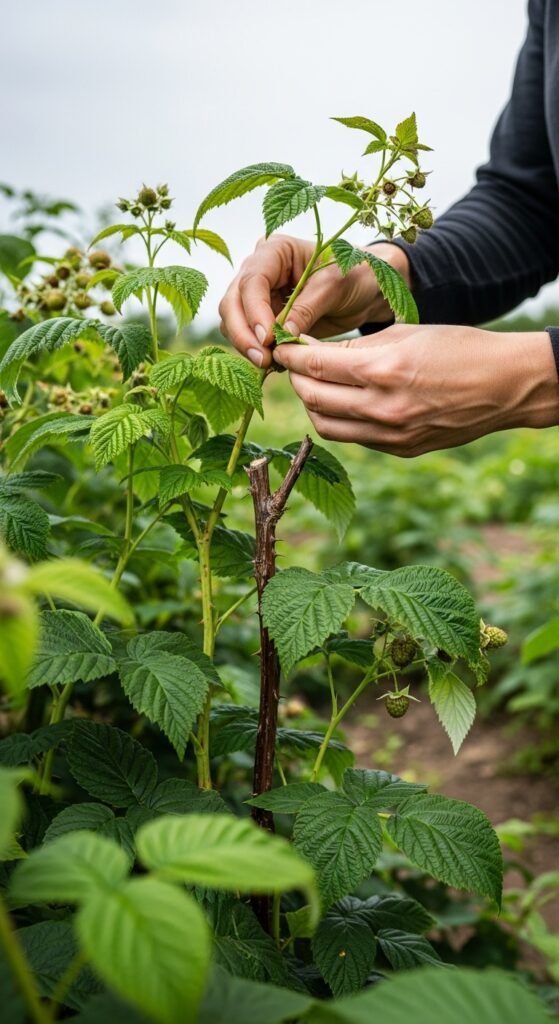
Why does this matter? Proper identification ensures you prune at the right time and in the right way, promoting vigorous growth and abundant berries. For instance, everbearing varieties require less aggressive pruning to maintain continuous production.
How to do it: Check plant tags or observe fruiting patterns from the previous season. If berries appear in early summer on older canes, it’s likely summer-bearing. Once identified, tailor your approach—perhaps drawing parallels to pruning blueberries for similar berry bushes—to achieve the best outcomes in your garden.
2) Prune During Dormancy
The ideal time for major raspberry pruning is late winter or early spring when plants are dormant. This minimizes stress and allows wounds to heal before new growth begins. Pruning during this period also makes it easier to spot dead or diseased canes without foliage in the way.
This technique is essential because it prevents the spread of diseases and encourages healthy, productive canes. You’ll notice improved plant structure and better fruit quality as a result.
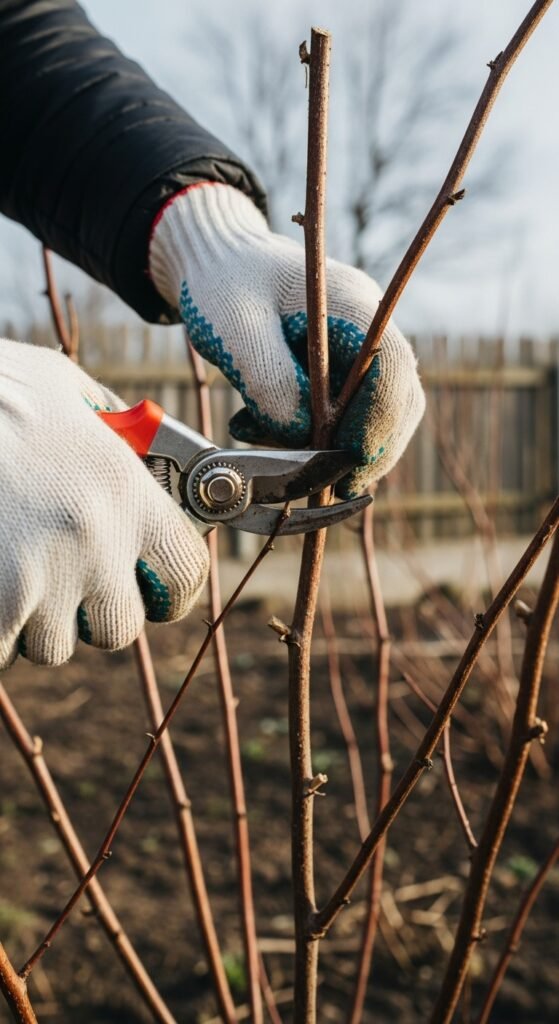
To execute, wait until after the last frost threat but before buds swell. Use sharp tools to cut back canes, focusing on removal rather than shaping. For related timing insights, consider how this aligns with a general fruit tree pruning calendar to coordinate your garden tasks efficiently.
3) Remove Dead and Diseased Canes
Start your pruning session by eliminating any dead, damaged, or diseased canes. These appear brittle, discolored, or spotted and can harbor pests or pathogens that threaten the entire patch.
Removing them is vital for plant health, as it reduces disease risk and redirects energy to stronger, fruit-bearing growth. You’ll end up with a cleaner, more productive raspberry bush.
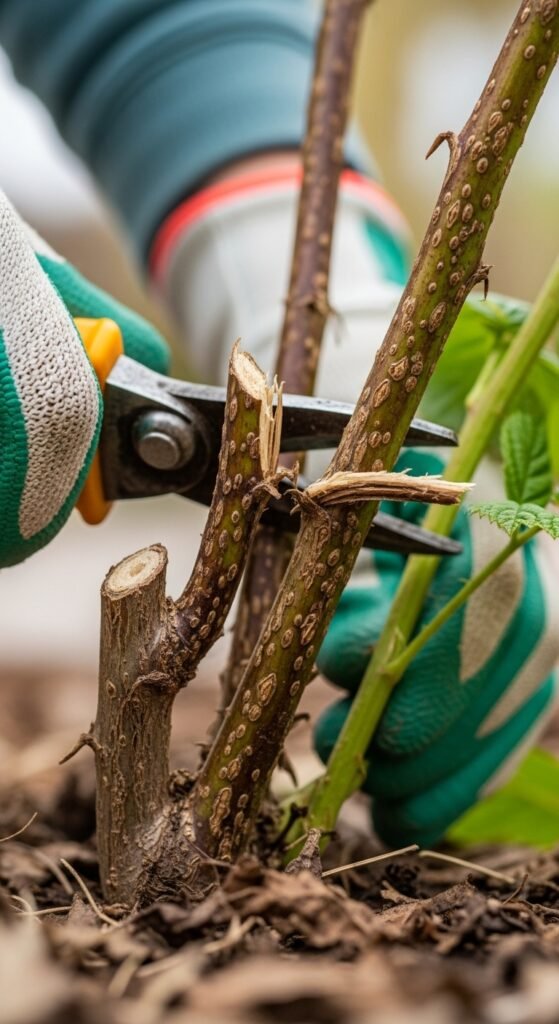
Cut these canes at ground level using clean pruners to avoid spreading issues. Dispose of cuttings away from the garden. This step is similar to maintenance in other berries, like addressing problems in pruning blackberries, ensuring overall vitality.
4) Thin Out Overcrowded Canes
Overcrowding leads to poor air flow and increased disease susceptibility. Thin your raspberry bushes by selecting the strongest 4-6 canes per foot of row, removing the rest.
This promotes better sunlight exposure and berry size, making harvesting easier and plants healthier. Why skip it? Crowded canes compete for nutrients, resulting in smaller yields.
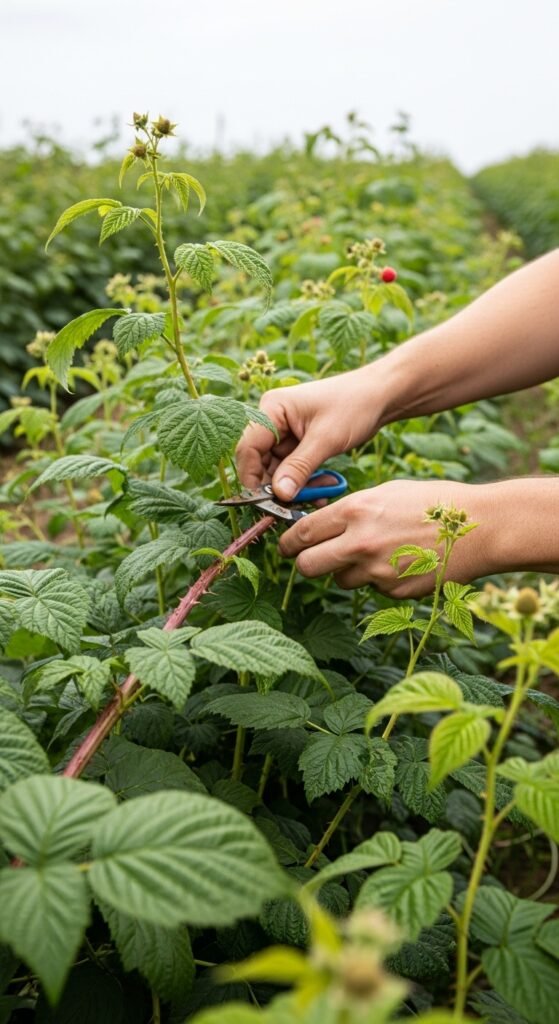
How: Space canes evenly, cutting extras at the base. For everbearing types, focus on first-year canes too. Think of it like managing vine density in pruning grapevines for optimal production.
5) Cut Back Spent Canes
After harvest, immediately remove canes that have fruited. For summer-bearing raspberries, these are the second-year canes that turn woody post-production.
This clears space for new growth and prevents energy waste on non-productive parts, leading to more vigorous primocanes for next season.
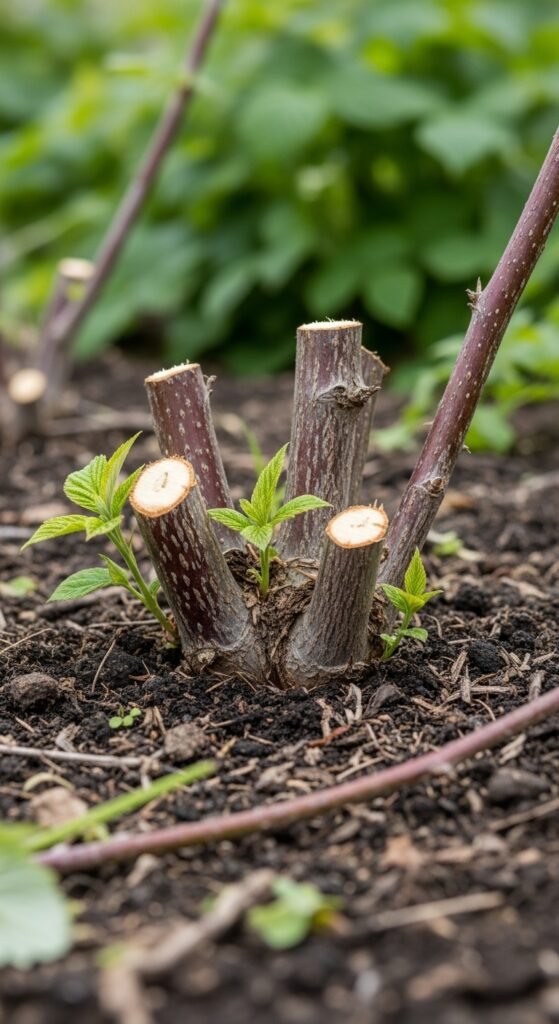
Slice them flush with the soil. For everbearing, cut only the top fruited sections if planning a fall crop. This mirrors selective removal in herbs like rosemary pruning to encourage fresh shoots.
6) Tip Prune for Bushier Growth
Tip pruning involves snipping the ends of young canes to encourage lateral branching. Do this in late summer on primocanes reaching 3-4 feet tall.
It results in more fruiting sites and compact plants, ideal for smaller gardens. Without it, canes may grow too tall and floppy.
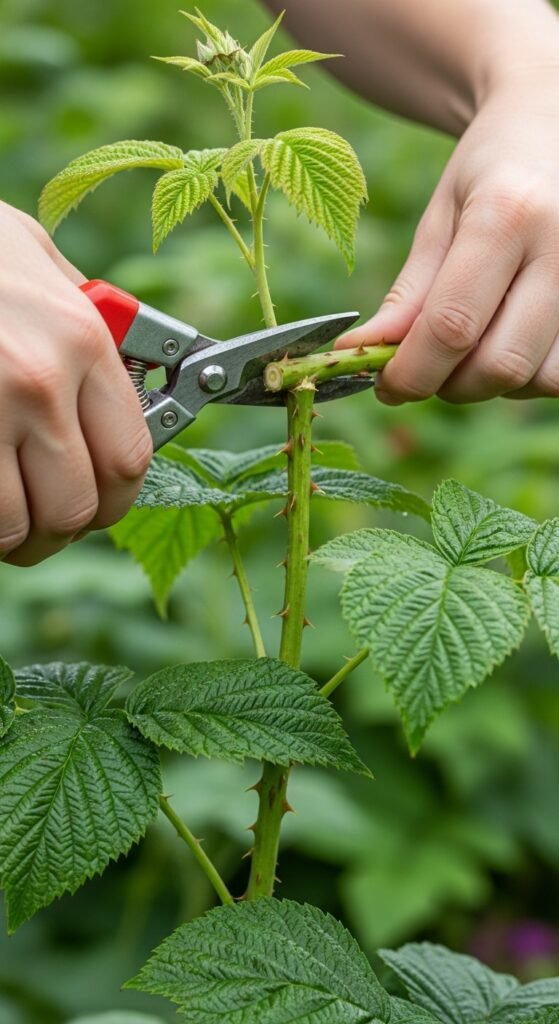
Remove 6-12 inches from tips with sharp shears. This technique boosts yield similarly to methods used in pepper pruning for increased branching.
7) Support Pruned Bushes
After pruning, install supports like trellises or wires to keep remaining canes upright. This prevents bending under berry weight and improves access.
Support enhances air circulation, reducing mold risks and easing harvest for healthier, higher-quality fruit.
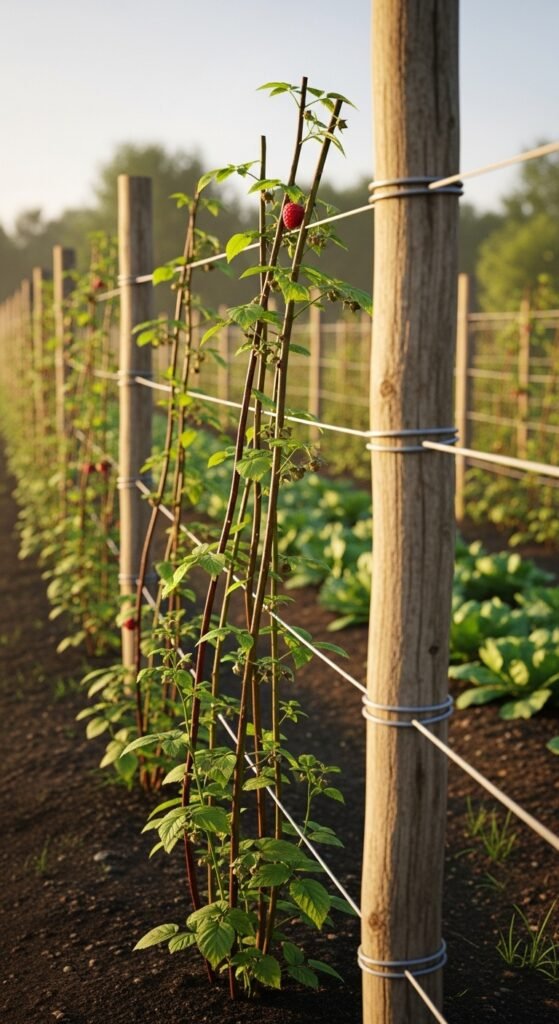
Tie canes loosely to structures. Explore various designs, such as those in raspberry supports, to find what suits your patch best.
8) Prune for Disease Prevention
Target pruning to remove any signs of disease, like canker spots or wilted tips, throughout the growing season.
This proactive step curbs spread, safeguarding your entire harvest. Regular checks during pruning keep issues at bay.
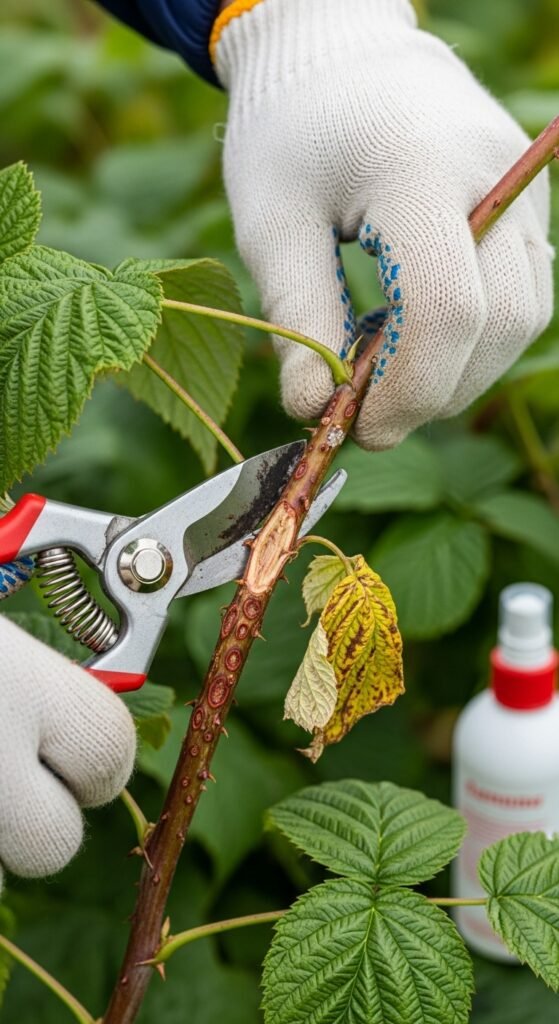
Cut affected parts well below symptoms and sterilize tools between cuts. Compare to preventive measures in spring pest control for comprehensive garden health.
9) Handle Young Plants Gently
For first-year raspberries, limit pruning to removing weak or damaged canes only. Avoid heavy cuts to allow establishment.
This fosters strong root systems and future productivity, ensuring robust bushes in subsequent years.
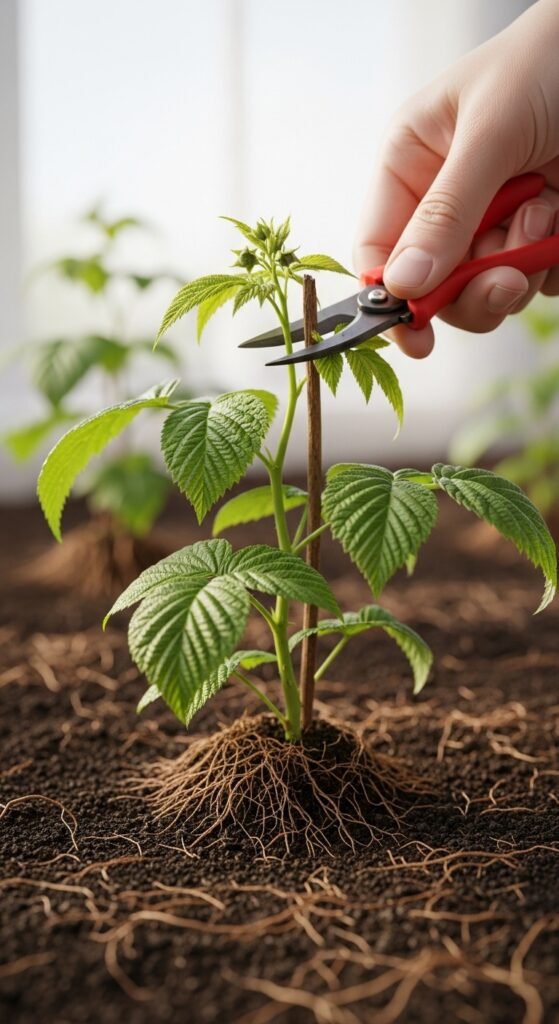
Focus on training rather than reduction. It’s akin to initial care in growing blueberries in containers, emphasizing foundation over immediate yield.
10) Perform Summer Maintenance Prunes
In mid-summer, lightly prune to remove suckers emerging between rows. This keeps the patch contained and energy focused.
It prevents overgrowth, promoting tidier rows and better fruit access. Neglect can lead to invasive spreading.
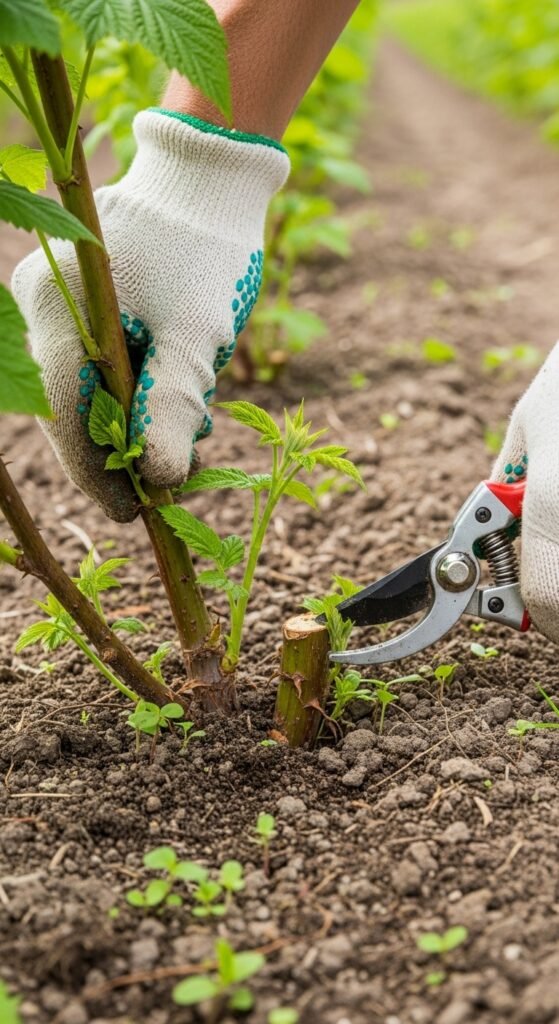
Pull or cut suckers at soil level. This ongoing task complements broader strategies like those in spring gardening tips.
11) Winterize with Final Prunes
Before winter, prune out weak canes and shorten tall ones to 4-5 feet to withstand snow and wind.
This protects plants from damage, ensuring spring vigor and early growth.
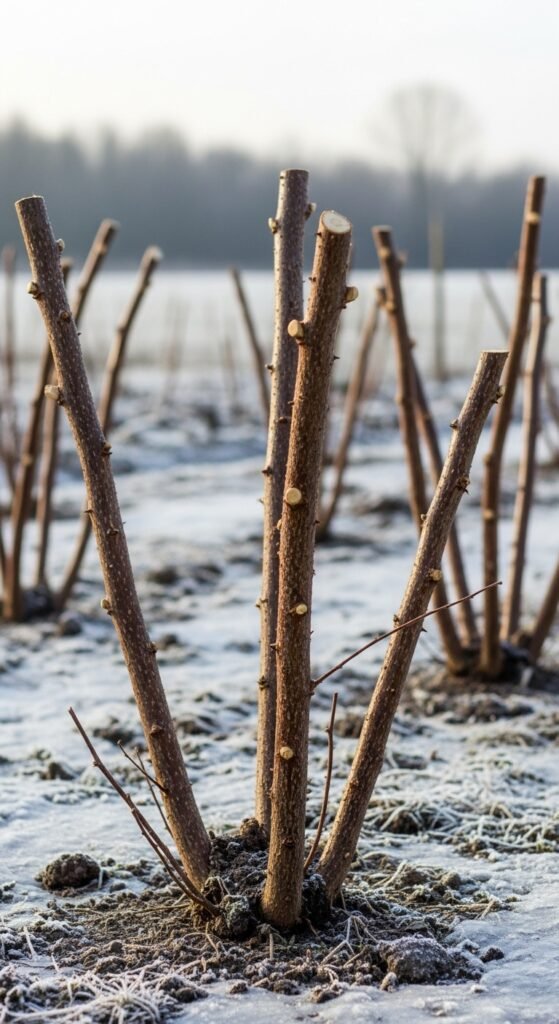
Cut at an angle for water runoff. Similar to preparing other perennials, as in lavender pruning for overwintering.
12) Use Proper Tools for Clean Cuts
Invest in sharp bypass pruners and loppers for precise, clean cuts that heal quickly and reduce disease entry.
Good tools make pruning efficient, leading to healthier plants with minimal stress.
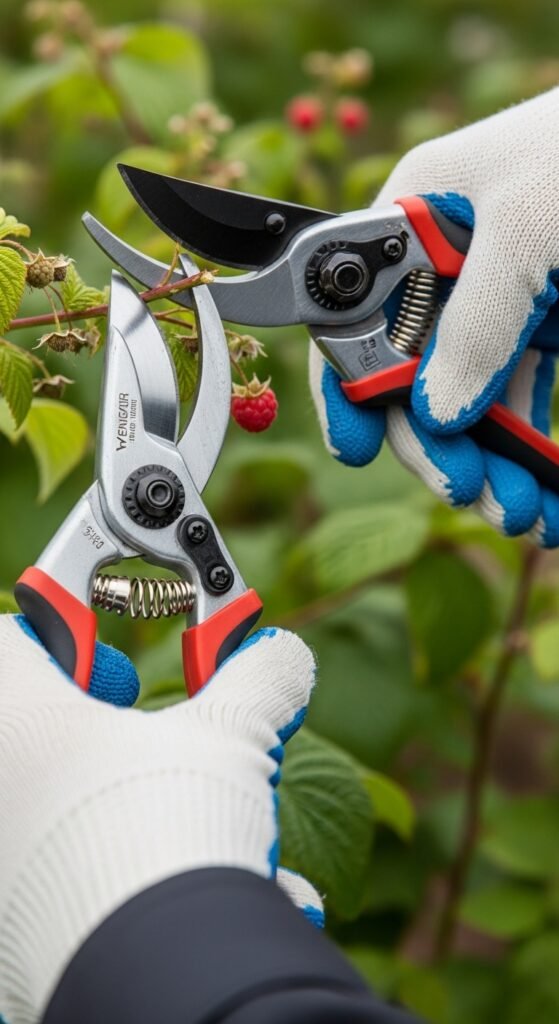
Sterilize with alcohol between uses. This essential practice echoes tool care in how to prune roses.
13) Encourage Airflow Through Pruning
Prune to open up the center of bushes, spacing canes for better ventilation.
This reduces humidity-related issues like mildew, fostering disease-resistant, productive plants.
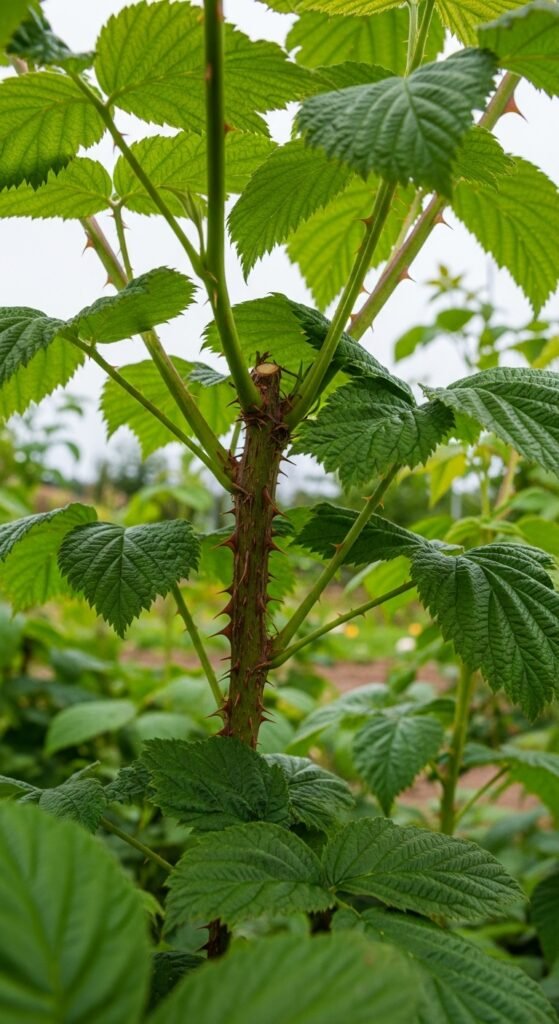
Remove crossing canes carefully. Relate to airflow benefits seen in pruning blackberries.
14) Monitor and Adjust Annually
Each year, assess pruning results and adjust based on plant performance and yield.
This iterative approach optimizes techniques for your specific conditions and maximum berries.
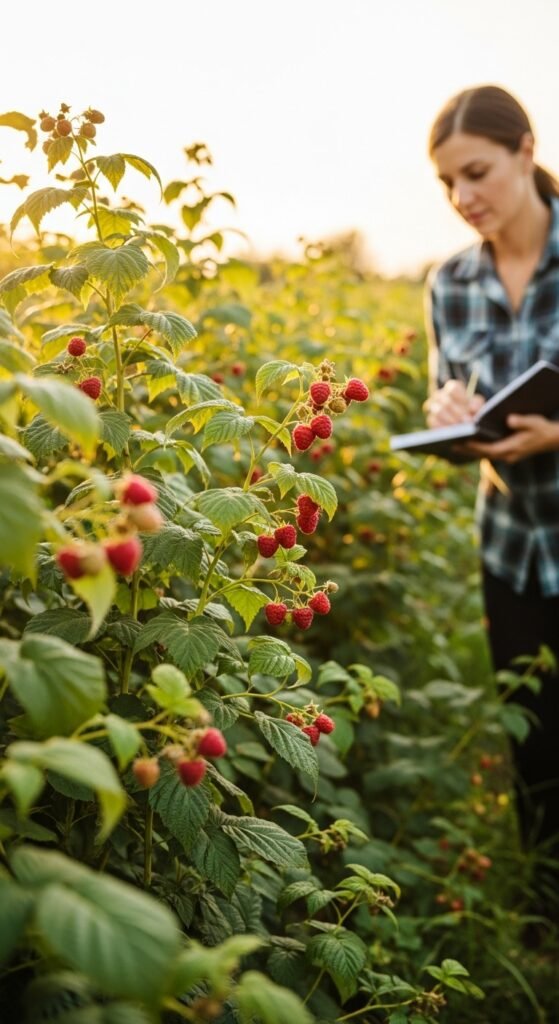
Keep records of changes. Draw from patterns in related fruits, like pruning blueberries.
15) Combine Pruning with Companion Planting
After pruning, integrate companions like marigolds to deter pests and enhance soil health.
This holistic method boosts overall resilience and yield without chemicals.
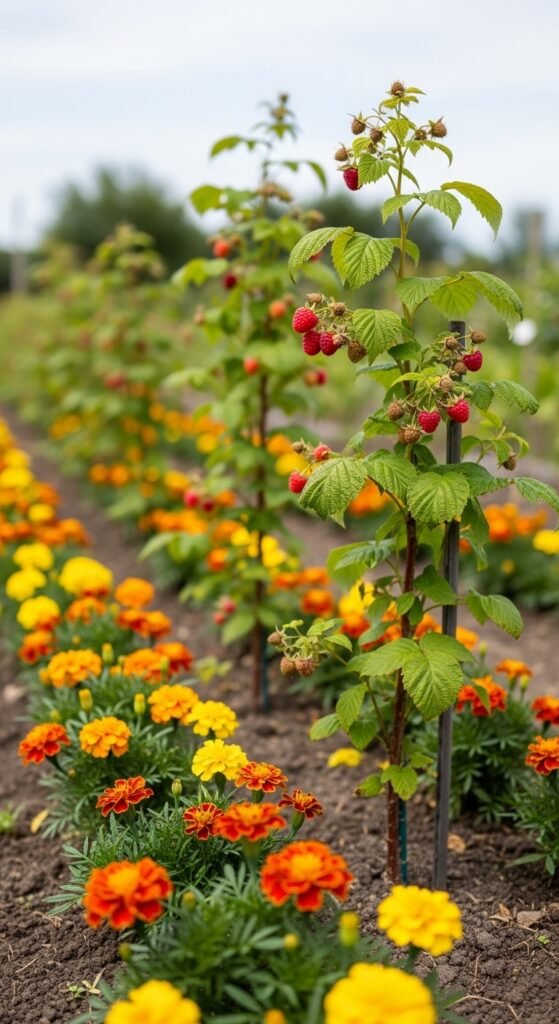
Plant strategically around bases. For ideas, see blueberries companion plants, adaptable to raspberries.
Key Principles of Raspberry Pruning
Understanding Cane Lifecycle
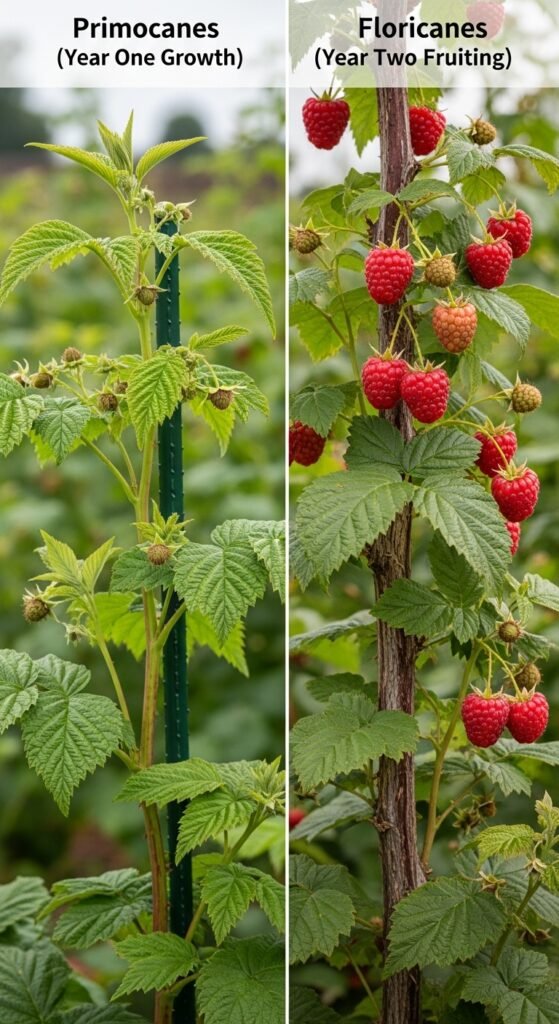
Raspberry canes have a two-year cycle: primocanes grow in year one, floricanes fruit in year two. Pruning respects this for sustained production.
Balancing Growth and Yield
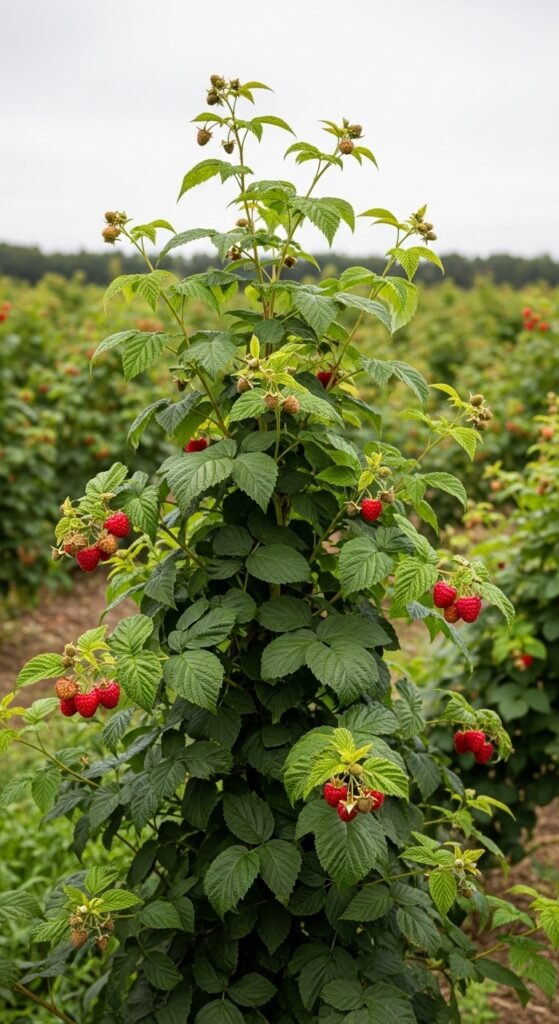
Aim for a mix of new and mature canes. Over-pruning reduces harvest; under-pruning causes congestion.
Seasonal Considerations
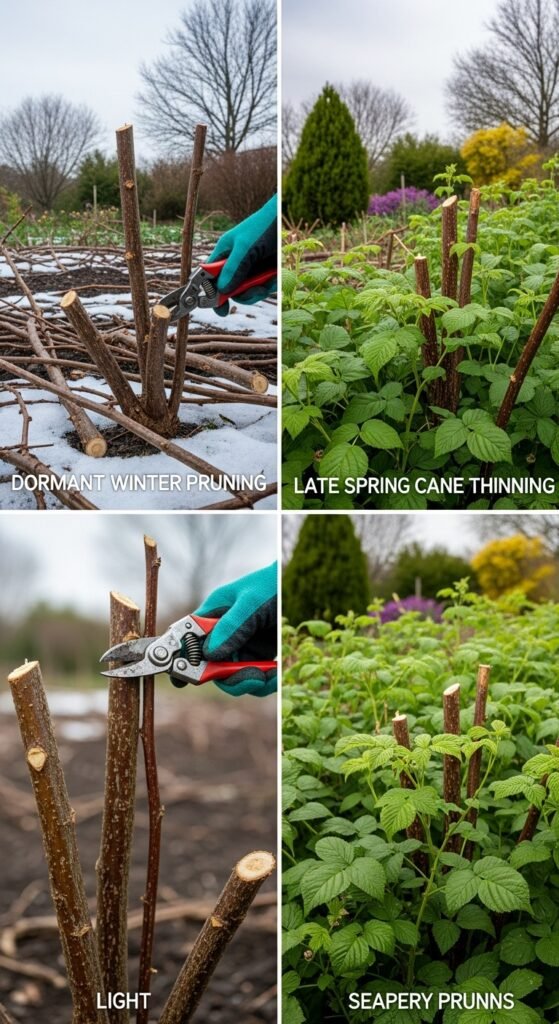
Align prunes with weather and growth stages to minimize shock and maximize recovery.
Frequently Asked Questions
When is the best time to prune raspberries?
The optimal time is late winter for dormant pruning, with light maintenance in summer after harvest.
How do I tell summer-bearing from everbearing raspberries?
Summer-bearing fruit once on old canes; everbearing produce twice, on new and old growth.
What tools do I need for pruning?
Sharp pruners, loppers, and gloves suffice for most tasks.
Can pruning prevent raspberry diseases?
Yes, by improving airflow and removing infected parts promptly.
How much should I prune each year?
Remove about one-third of canes, focusing on the oldest and weakest.