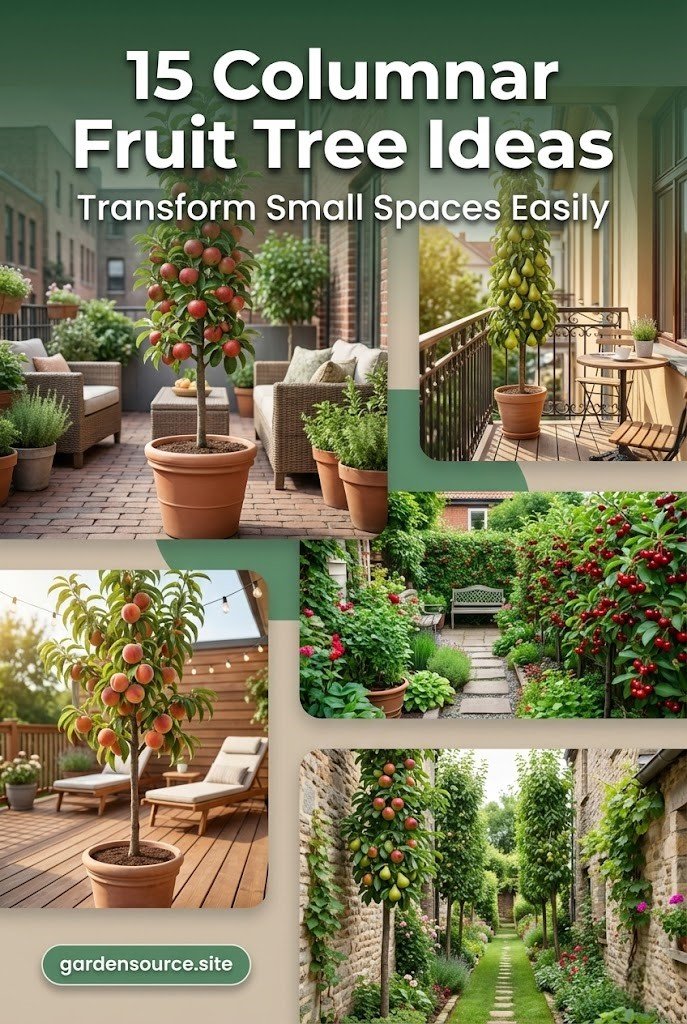
If you’re looking to grow your own fruit but have limited space, columnar fruit trees are a game-changer. These unique varieties grow tall and narrow, often reaching 8-10 feet high while staying just 2-3 feet wide, making them perfect for patios, balconies, or tight urban gardens. Unlike traditional fruit trees that spread out, columnar types focus their energy on vertical growth, producing abundant fruit without needing much room.
You’ll love how these trees combine productivity with aesthetics, offering fresh, homegrown apples, pears, or cherries right at your doorstep. They’re low-maintenance, resistant to many common diseases, and ideal for beginners. By incorporating columnar fruit trees into your landscape, you can enjoy seasonal harvests while enhancing your outdoor area’s visual appeal. Plus, they thrive in containers, allowing flexibility in placement and easy protection during harsh weather.
Whether you’re a city dweller or simply optimizing a compact yard, these ideas will inspire you to start your mini orchard. Let’s explore 15 creative ways to integrate columnar fruit trees for maximum impact and yield.
1) Scarlet Sentinel Apple Trees for Urban Patios
You can plant Scarlet Sentinel apple trees in large containers on your patio, where their slender form fits perfectly without overwhelming the space. These columnar apples produce crisp, red fruits ideal for snacking or baking, thriving in full sun with well-draining soil. The key benefit is their space efficiency, allowing you to harvest dozens of apples from a tree that’s only 2 feet wide.
Why choose this? It maximizes vertical space, turning a small patio into a productive fruit zone. For best results, ensure cross-pollination by planting another apple variety nearby, like a dwarf type. Water consistently and mulch to retain moisture, especially in hot summers.
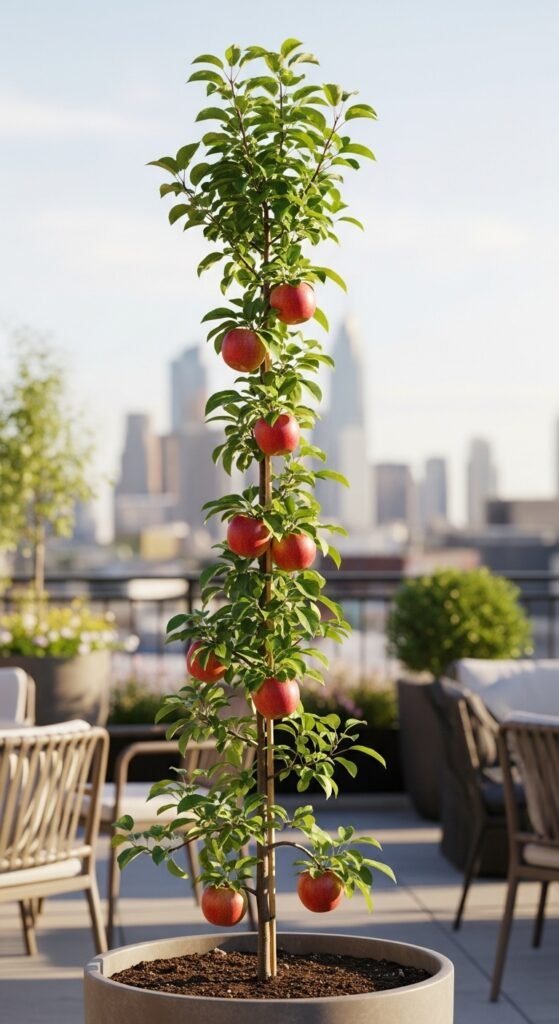
How to implement: Select a 20-gallon pot, fill with potting mix enriched with compost, and position in a sunny spot. Prune lightly in winter to maintain shape, following a simple apple pruning guide for healthy growth. Expect your first harvest in 2-3 years, providing fresh produce right outside your door.
2) Northpole Apple Trees Along Garden Fences
Line your garden fence with Northpole apple trees, creating a natural, fruit-bearing border that’s both functional and decorative. These columnar varieties grow upright against supports, producing juicy green apples perfect for pies or fresh eating. They adapt well to espalier techniques for even more space savings.
The appeal lies in their dual role as privacy screens and edible landscapes, enhancing your yard’s biodiversity. Imagine picking apples while enjoying your outdoor space—it’s practical and rewarding. They require minimal pruning and are hardy in zones 4-8.
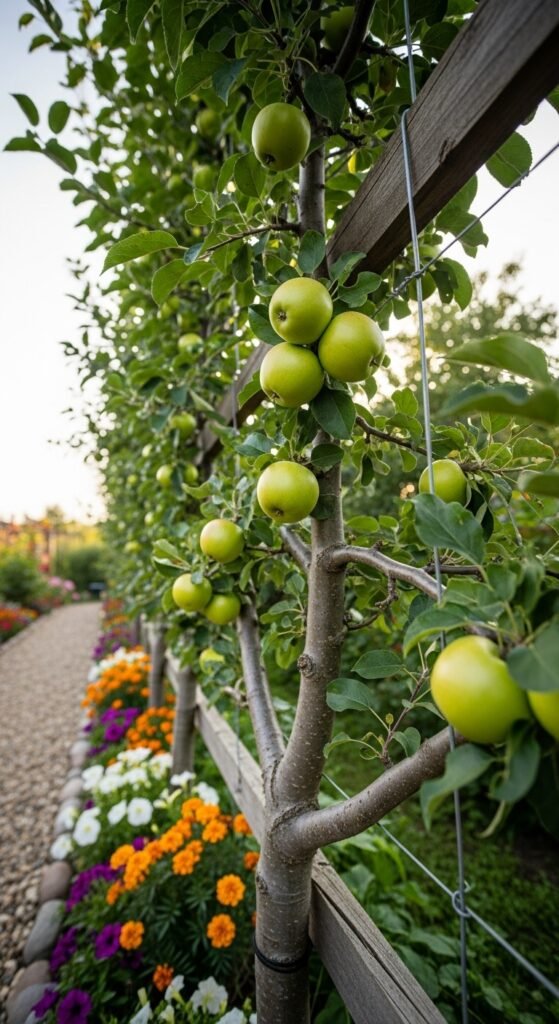
To get started, space trees 3-4 feet apart along the fence, securing with ties if needed. Fertilize in spring with a balanced mix, and protect from birds using netting. For similar space-saving ideas, consider incorporating espalier fruit trees nearby to diversify your harvest.
3) Golden Sentinel Apple Trees in Container Gardens
Opt for Golden Sentinel apple trees in oversized pots to create a mobile mini-orchard on your deck or balcony. These yellow-fruited columnar trees deliver sweet, golden apples while staying compact, ideal for renters who might relocate.
This approach offers flexibility, letting you move trees to sunnier spots or indoors during freezes. It’s great for urban gardeners facing space constraints, yielding fruit without permanent planting.
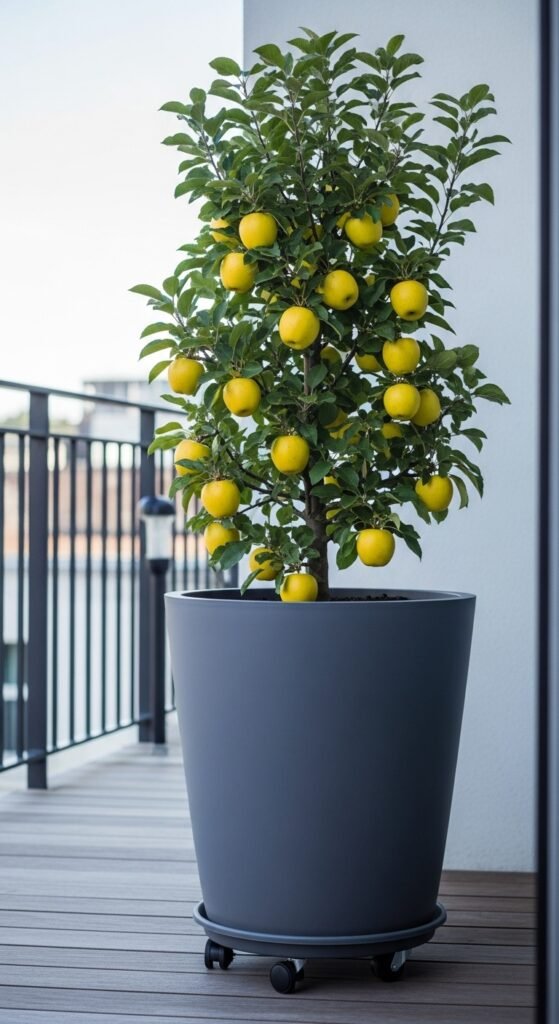
Implementation is straightforward: Use a wheeled planter for easy movement, plant in acidic soil, and water deeply but infrequently. Add companions like herbs at the base for pest control. When fertilizing, follow guidelines for fruit tree fertilizing to boost yields and health.
4) Urban Sentinel Pear Trees for Balcony Orchards
Transform your balcony into a pear paradise with Urban Sentinel pear trees, whose narrow habit suits elevated, limited areas. These produce juicy, green pears with a sweet flavor, ripening in late summer for fresh enjoyment.
Why it works: Balconies often get ample sun, and these trees’ vertical growth minimizes shading on seating areas. They’re self-pollinating, so one tree is enough for fruit set, making them beginner-friendly.
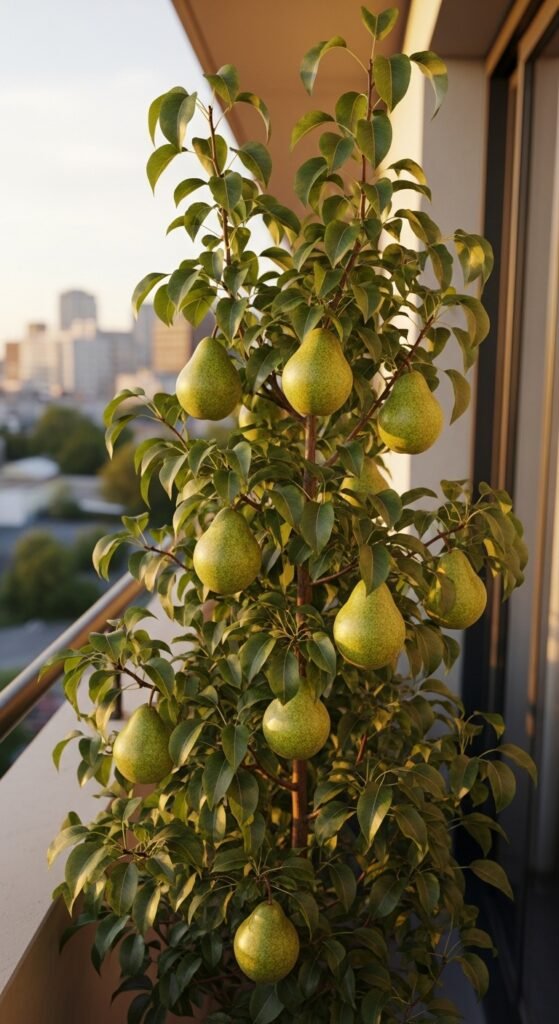
Plant in deep containers with drainage, using pear-specific rootstock if available. Monitor for fire blight and treat promptly. To prevent issues like this, check out preventive tips for pear tree fire blight. Harvest when pears yield slightly to pressure for peak ripeness.
5) Blushing Delight Pear Trees in Small Yards
Incorporate Blushing Delight pear trees into tiny backyards, where their columnar shape allows clustering without crowding. These blush-red pears are crisp and aromatic, excellent for salads or preserves.
The benefit? You get orchard vibes in suburbia, with trees that resist common pests better than spreading varieties. It’s a smart way to use vertical space for sustainable food production.
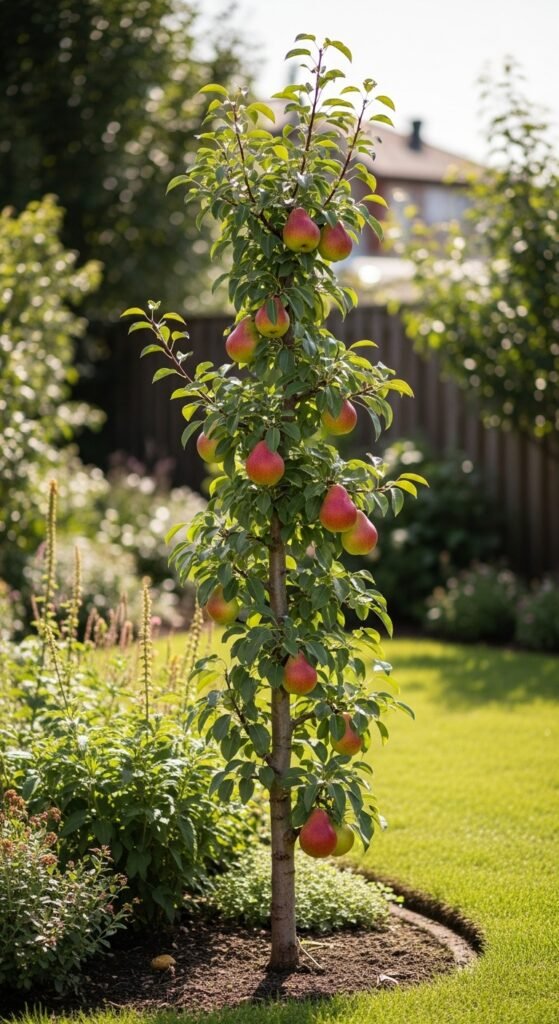
How: Dig narrow holes amended with compost, spacing 4 feet apart. Thin fruits early to encourage larger yields, as detailed in resources on thinning fruit trees. Mulch heavily and irrigate during dry spells for consistent growth.
6) Cherry Columnar Trees for Edible Hedging
Use columnar cherry trees like Crimson Pointe to form an edible hedge, providing sweet cherries while defining garden zones. Their upright form creates a lush, fruit-laden barrier that’s visually striking.
Ideal for privacy, these trees offer seasonal color from blossoms to red fruits. They’re suited to zones 5-8 and require full sun for best production.
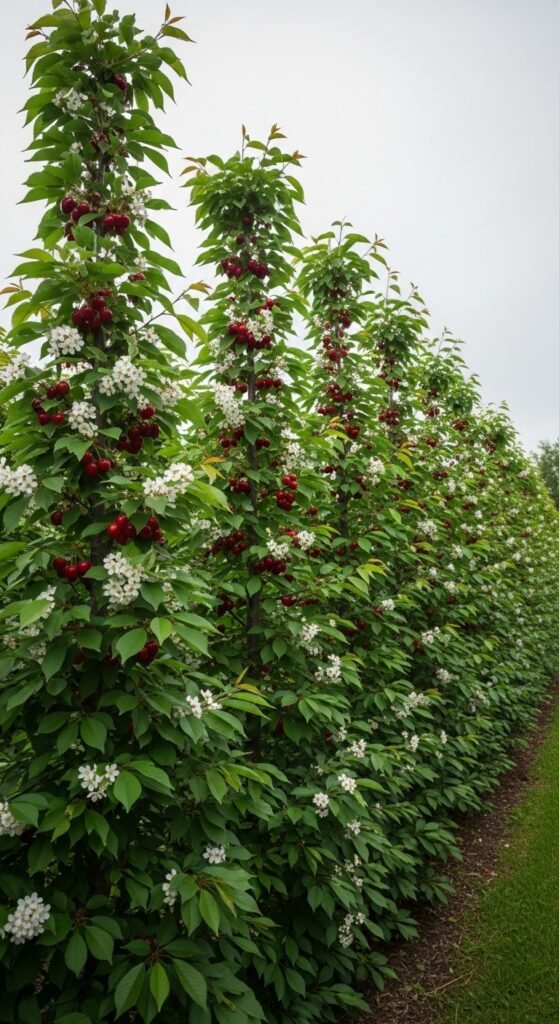
To establish: Plant in rows, pruning to maintain height. Protect ripening fruit with bird netting for fruit trees. Pollination improves with a companion variety, ensuring bountiful harvests year after year.
7) Plum Columnar Varieties in Mixed Borders
Integrate columnar plum trees, such as Blue Tower, into flower borders for a mix of ornamentals and edibles. These produce plump, purple plums with tangy-sweet flesh, adding flavor to your landscape.
Why blend them? It maximizes biodiversity, attracting pollinators while providing fresh fruit. Compact growth prevents overshadowing perennials below.
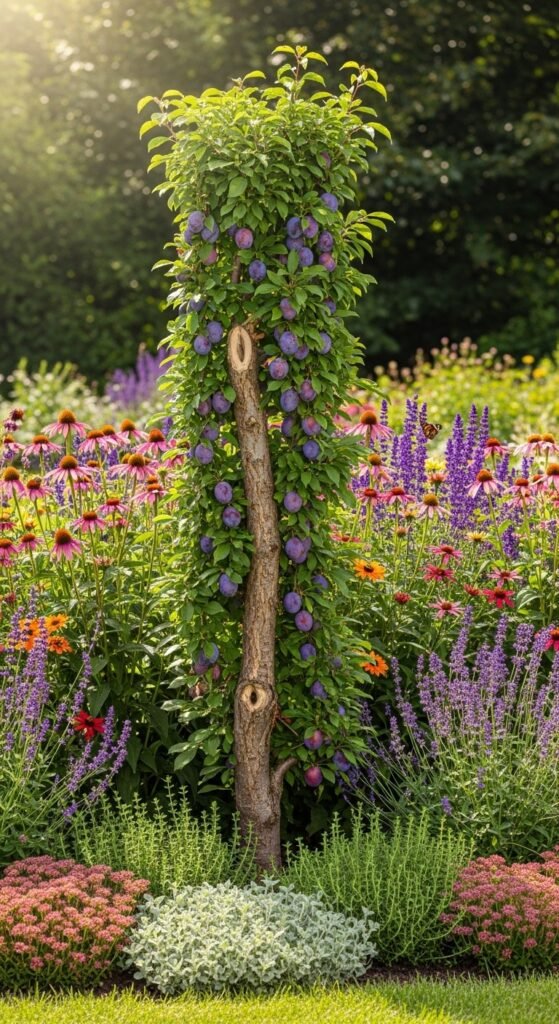
Start by selecting sunny borders, planting with good air circulation to avoid fungal issues. Refer to a plum pollination chart for compatible varieties. Prune after harvest to shape and promote vigor.
8) Peach Columnar Trees for Warm Climates
In sunnier regions, columnar peach trees like Crimson Rocket thrive, offering fuzzy, juicy peaches in a slim profile. Perfect for patios where heat accumulates, aiding ripening.
The advantage is fresh peaches without a large footprint, with trees resistant to some curls if managed well. It’s a tropical touch for temperate gardens.
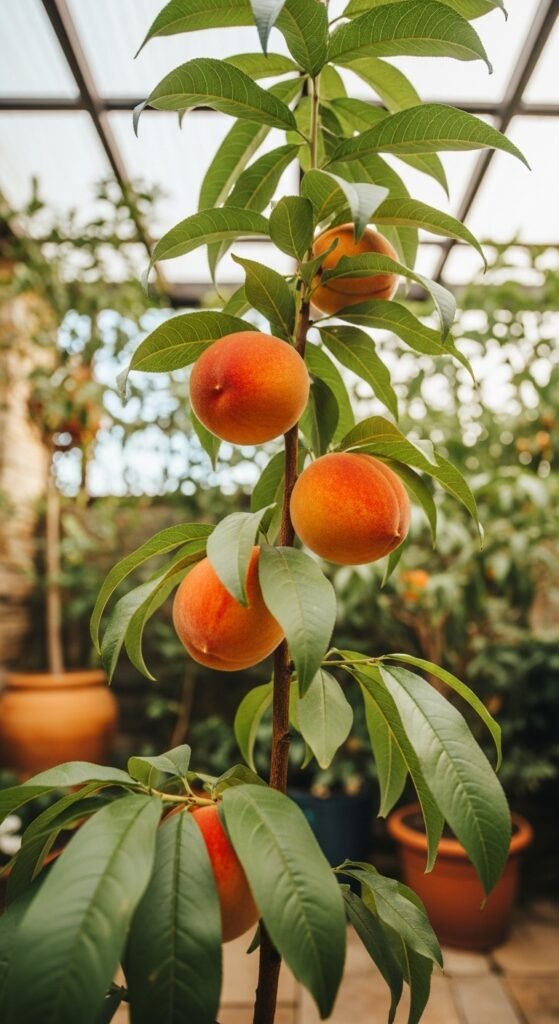
Implementation: Pot or plant in well-drained soil, applying preventive sprays. For more on disease control, explore peach leaf curl prevention. Water at the base to keep foliage dry.
9) Mixing Columnar Fruits with Blueberries in Containers
Pair columnar fruit trees with container-grown blueberries for a berry-fruit combo that’s space-efficient and flavorful. Blueberries’ acidic soil needs complement many columnar apples or pears.
This guild approach enhances pollination and soil health, creating a mini ecosystem. You benefit from diverse harvests in one area.
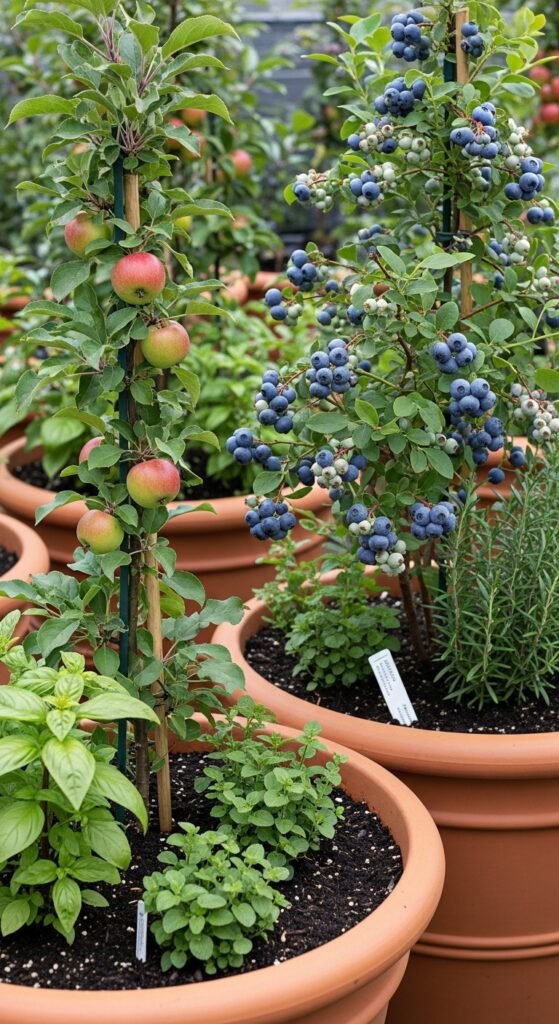
How to: Use large shared planters, adjusting pH as needed. For blueberry success, see tips on growing blueberries in containers. Mulch with pine needles and fertilize sparingly.
10) Columnar Trees in Small Greenhouses for Year-Round Protection
House columnar fruit trees in a compact greenhouse to extend seasons and shield from elements. This setup suits colder climates, allowing earlier blooms and later harvests.
Why? It protects against frost and pests, boosting yields. Vertical trees fit neatly inside without wasting space.
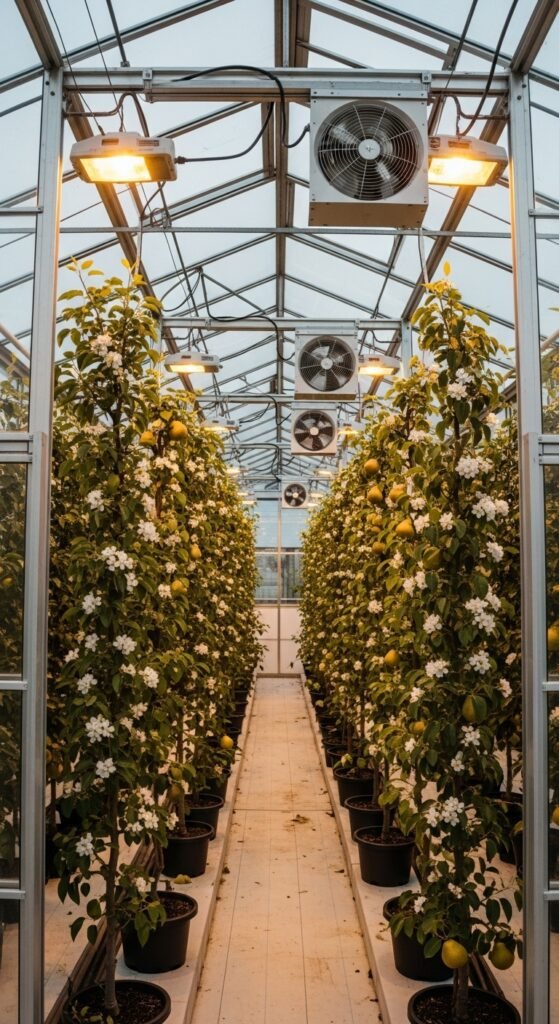
Select a small structure, ventilating well. For inspiration, browse small greenhouse ideas. Position trees centrally for even light, and monitor humidity levels.
11) Creating a Columnar Fruit Alley in Narrow Pathways
Plant columnar fruit trees along walkways to form a fruitful alley, turning passages into productive spaces. Mix varieties for sequential harvesting throughout the season.
The charm is in the accessibility—pick fruit as you stroll. It’s efficient for small lots, adding shade and scent.
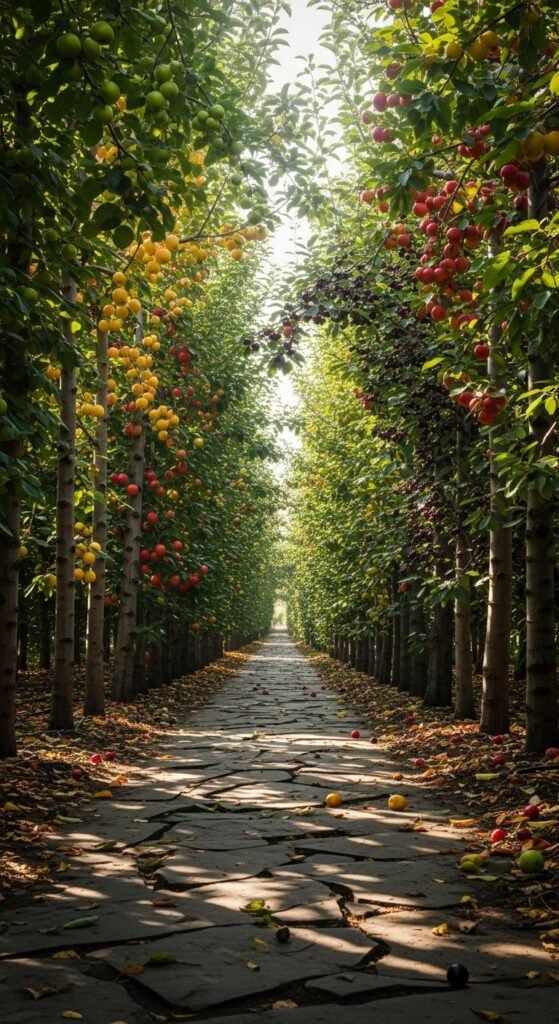
To build: Space evenly, training branches upward. Incorporate permaculture elements like permaculture guilds for companions. Maintain with annual pruning per a fruit tree pruning calendar.
12) Columnar Apples with Pollinator-Friendly Companions
Surround columnar apple trees with pollinator plants to boost fruit set naturally. Herbs and flowers attract bees, enhancing yields without chemicals.
Ecological benefits include better biodiversity and healthier trees. It’s a sustainable way to garden.
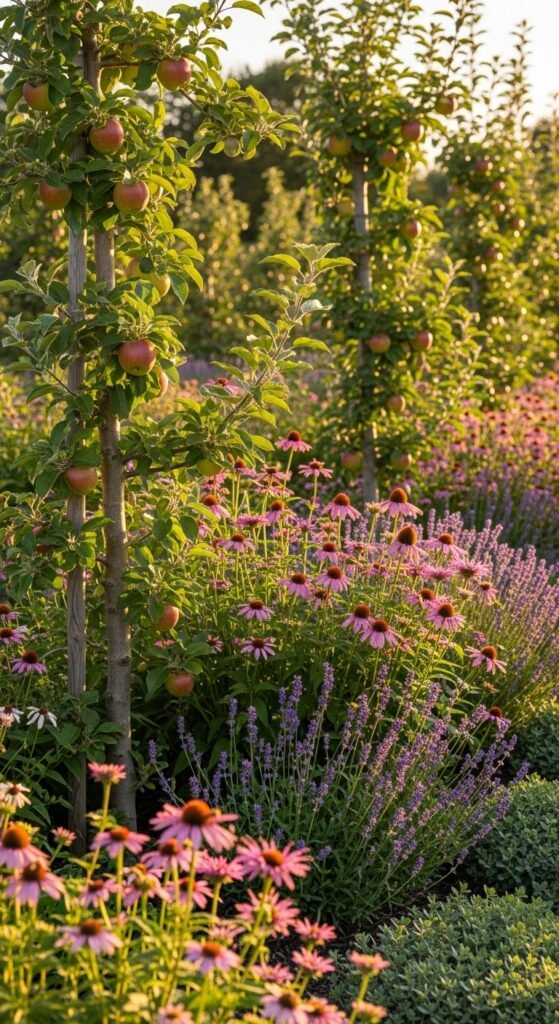
Choose companions like lavender or marigolds. For pollination details, review apple tree pollination. Plant at the base, ensuring they don’t compete for water.
13) Vertical Columnar Orchards in Urban Settings
Develop a vertical orchard using columnar fruit trees on rooftops or vertical walls, ideal for city living. Their slim design suits elevated, windy spots.
Why pursue this? It utilizes unused space for food security and greenery in concrete jungles.
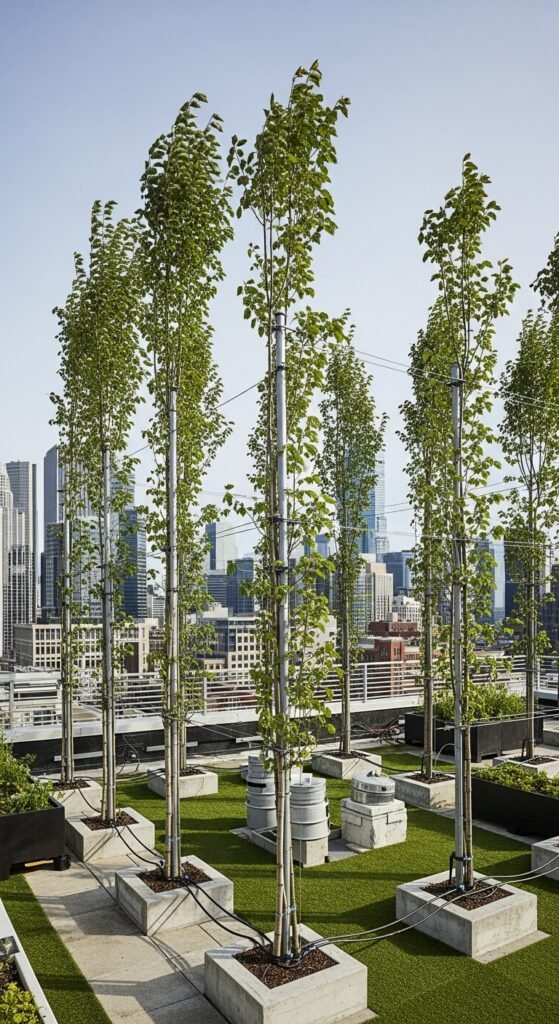
Secure with supports, irrigating via drip systems. Time planting with advice on when to plant fruit trees. Harvest using extendable tools for safety.
14) Columnar Pears in Raised Beds for Easy Access
Install columnar pear trees in raised beds for improved drainage and accessibility, especially for those with mobility needs. Beds elevate roots, preventing waterlogging.
The perk is easier maintenance and harvesting, with beds allowing soil customization.
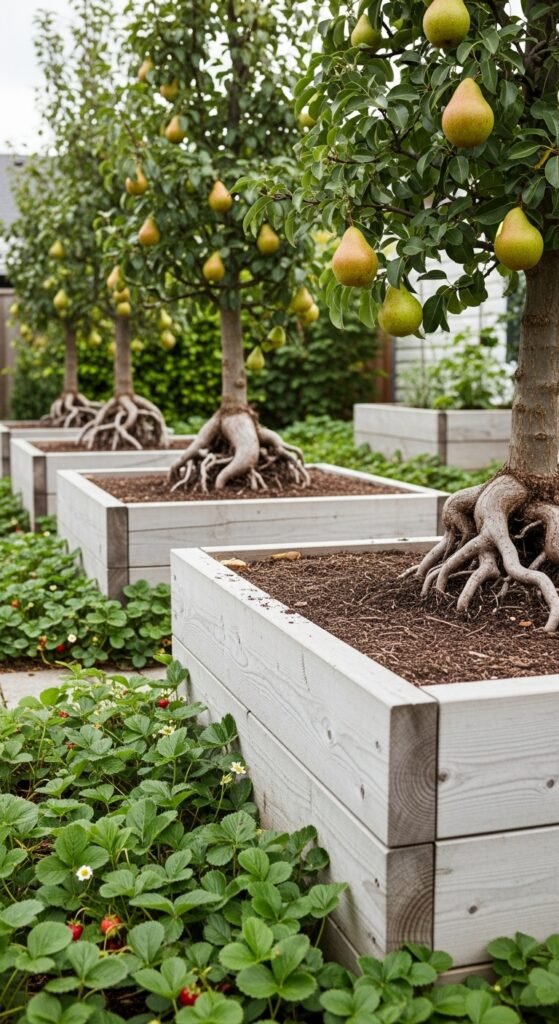
Build 2-foot-high beds, filling with loamy mix. Pair with strawberries below, inspired by strawberry raised beds. Prune to keep reachable heights.
15) Integrating Columnar Fruits into Food Forests
Weave columnar fruit trees into a food forest design, layering with understory plants for a self-sustaining system. Their height adds canopy without spread.
Sustainable yields come from this permaculture method, reducing work over time.
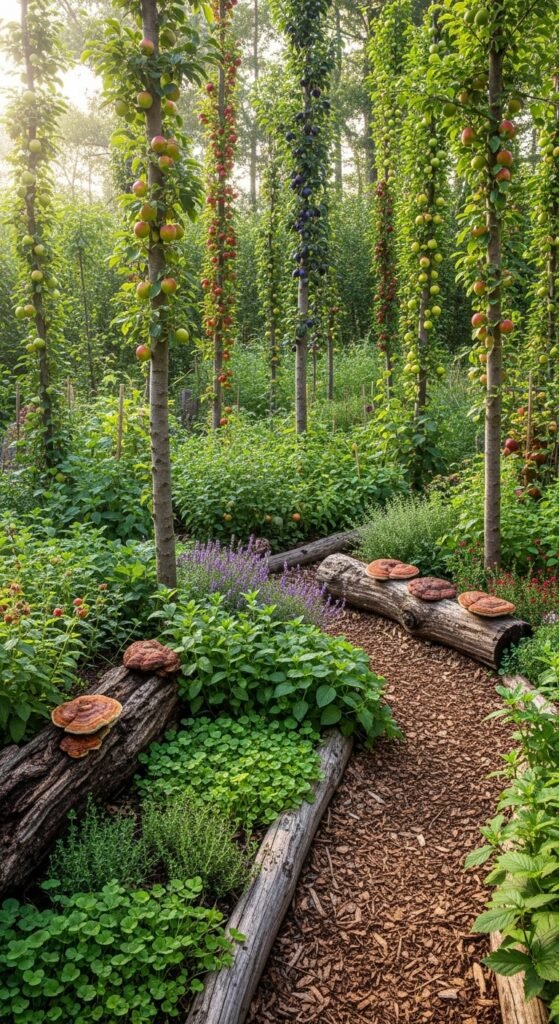
Plan zones carefully, incorporating perennials. For design tips, explore food forest design. Monitor for balance, adjusting as the ecosystem matures.
Key Principles for Growing Columnar Fruit Trees
Site Selection and Soil Preparation
Choose full-sun locations with at least 6-8 hours of direct light daily. Prepare soil by testing pH (aim for 6.0-7.0) and amending with organic matter for drainage.
Maintenance and Pruning Essentials
Prune annually in dormant season to remove dead wood and shape. Water deeply weekly, and apply mulch to conserve moisture and suppress weeds.
Pest and Disease Management
Monitor for aphids or fungal issues, using organic sprays. Encourage beneficial insects and maintain air flow to prevent problems.
Frequently Asked Questions
What are columnar fruit trees?
Columnar fruit trees are specially bred varieties that grow tall and narrow, ideal for small spaces. They produce full-sized fruit on a compact frame.
Do columnar fruit trees need pollination?
Many are self-pollinating, but planting compatible varieties nearby can improve yields. Check specific cultivar requirements for best results.
How tall do columnar fruit trees get?
Most reach 8-12 feet high while staying 2-3 feet wide, depending on the variety and pruning practices.
Can columnar fruit trees grow in pots?
Yes, they’re excellent for containers. Use large pots with good drainage and move them as needed for sun or protection.
When is the best time to plant columnar fruit trees?
Plant in early spring or fall when the soil is workable, allowing roots to establish before extreme weather.