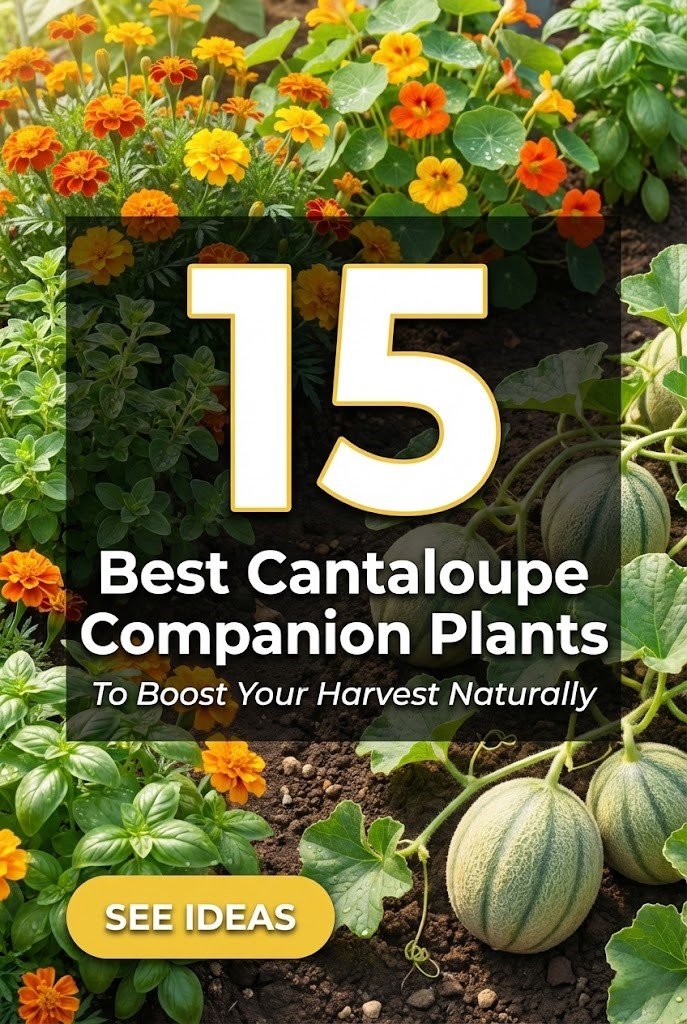
You’ve decided to grow cantaloupes in your garden, and you’re looking to maximize their potential through smart companion planting. Cantaloupe companion plants are those that grow harmoniously alongside your melons, offering benefits like pest deterrence, improved pollination, and enhanced soil health. By strategically pairing cantaloupes with compatible plants, you create a balanced ecosystem that promotes vigorous growth and abundant yields.
Companion planting isn’t just about space efficiency; it’s a natural way to reduce chemical interventions and foster biodiversity. For instance, certain herbs and flowers can repel common pests that target cantaloupes, such as aphids or cucumber beetles, while others attract beneficial insects. This approach draws from traditional gardening wisdom and modern permaculture principles, ensuring your cantaloupes thrive amid a supportive plant community. As you plan your garden, consider factors like sunlight needs, spacing, and soil compatibility to achieve the best results.
Whether you’re a novice or seasoned gardener, incorporating these cantaloupe companion plants can transform your patch into a productive haven. Let’s explore 15 excellent options, each with detailed insights on what they are, why they work well, and how to integrate them effectively.
1) Marigolds
Marigolds are vibrant annual flowers known for their bright orange and yellow blooms, making them a popular choice in vegetable gardens. As cantaloupe companion plants, they excel at repelling nematodes and other soil-borne pests that can damage melon roots. Their strong scent masks the aroma of your cantaloupes, deterring aphids and squash bugs, while also attracting pollinators like bees to improve fruit set.
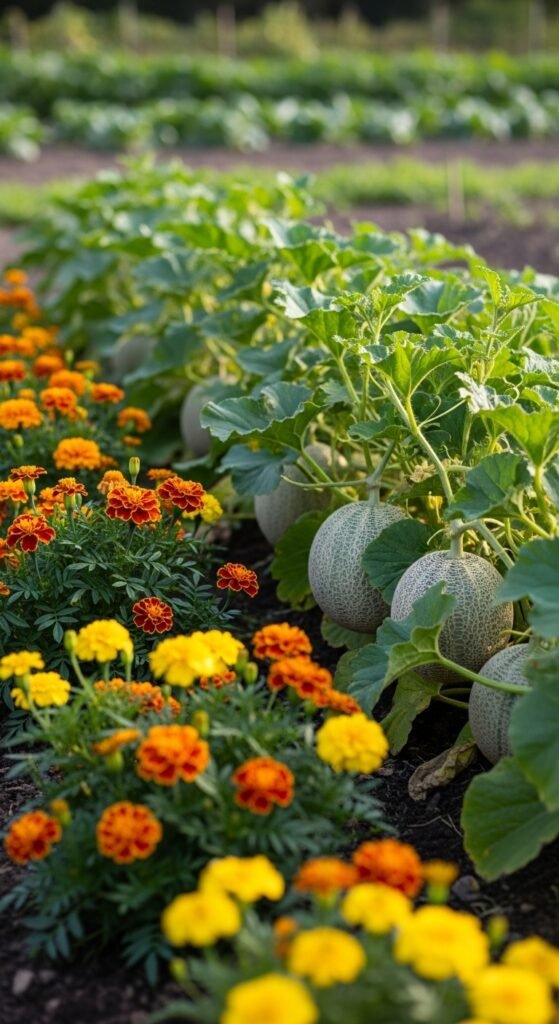
Why do marigolds pair so well with cantaloupes? They promote healthier soil by suppressing harmful organisms and adding visual appeal to your garden beds. In a companion planting for pests strategy, marigolds act as a natural barrier, reducing the need for pesticides and fostering a more sustainable growing environment. You’ll notice fewer pest issues and potentially larger, sweeter melons as a result.
To integrate marigolds, plant them around the perimeter of your cantaloupe patch or intersperse them between vines. Sow seeds directly after the last frost, spacing them 8-12 inches apart in full sun. They thrive in well-drained soil similar to what cantaloupes prefer, requiring minimal water once established. Deadhead spent blooms to encourage continuous flowering throughout the season, ensuring ongoing protection and beauty.
2) Nasturtiums
Nasturtiums are trailing edible flowers with peppery leaves and colorful blooms, often used as ground cover in gardens. As effective cantaloupe companion plants, they trap aphids and other pests, drawing them away from your melons. Their sprawling habit provides shade for the soil, retaining moisture and suppressing weeds around cantaloupe vines.
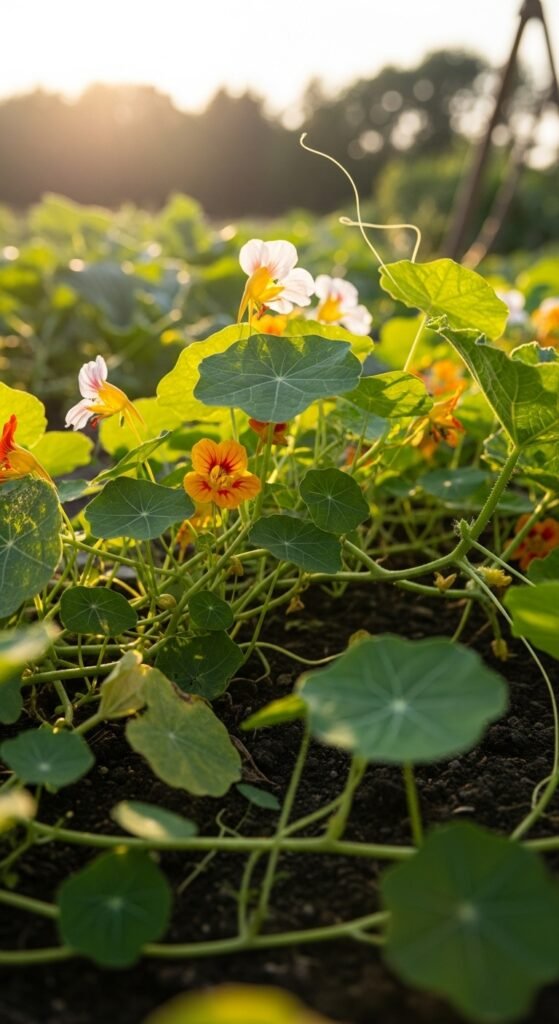
The reason nasturtiums shine alongside cantaloupes is their dual role in pest management and pollination support. They lure beneficial insects like hoverflies, which prey on soft-bodied pests, while their flowers attract bees essential for melon fertilization. This synergy aligns with polyculture garden practices, enhancing overall biodiversity and yield without synthetic inputs.
Plant nasturtium seeds directly in the garden once soil warms, positioning them near cantaloupe hills to allow trailing over the edges. They prefer full sun to partial shade and poor to average soil, making them low-maintenance partners. Water moderately, avoiding overhead irrigation to prevent fungal issues. Harvest leaves and flowers for salads, adding a functional edible element to your companion setup.
3) Oregano
Oregano is a hardy perennial herb with aromatic leaves, commonly used in culinary applications. When grown as cantaloupe companion plants, it repels pests like cucumber beetles and aphids through its potent scent, while attracting beneficial predators such as ladybugs.
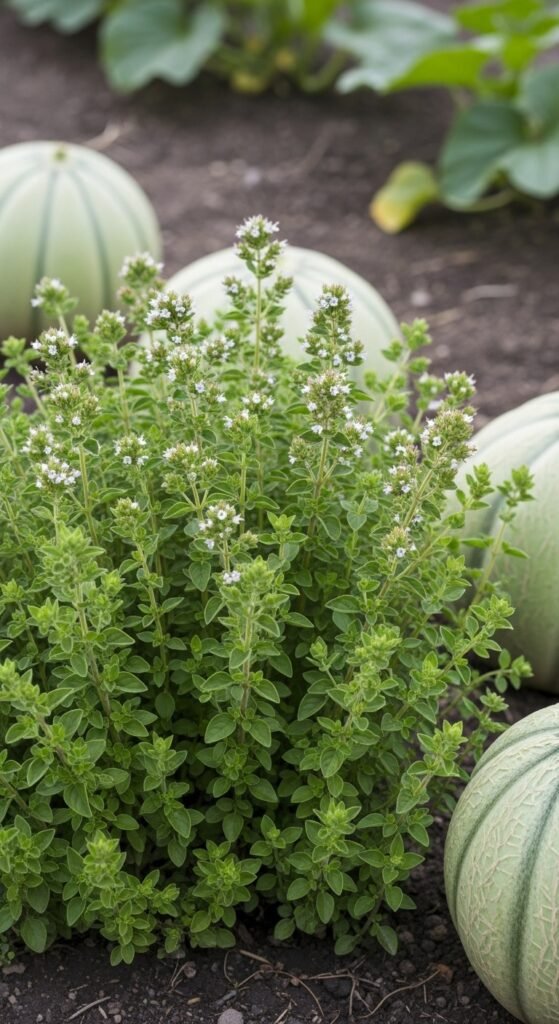
Oregano’s compatibility with cantaloupes stems from its ability to improve air circulation and deter fungal diseases common in melon patches. As part of a permaculture guilds design, it contributes to soil health by preventing erosion and adding organic matter when mulched. You’ll benefit from reduced pest pressure and more robust melon plants.
To incorporate oregano, plant transplants or divisions around cantaloupe mounds in full sun and well-drained soil. Space them 12-18 inches apart to allow spreading. Harvest leaves regularly to keep the plant bushy and productive. In colder climates, mulch heavily for winter protection, ensuring perennial returns to support your annual melons.
4) Basil
Basil is an annual herb prized for its flavorful leaves, thriving in warm conditions much like cantaloupes. As companion plants, basil repels flies, mosquitoes, and thrips that can plague melon vines, while enhancing the flavor of nearby fruits through subtle aromatic influences.
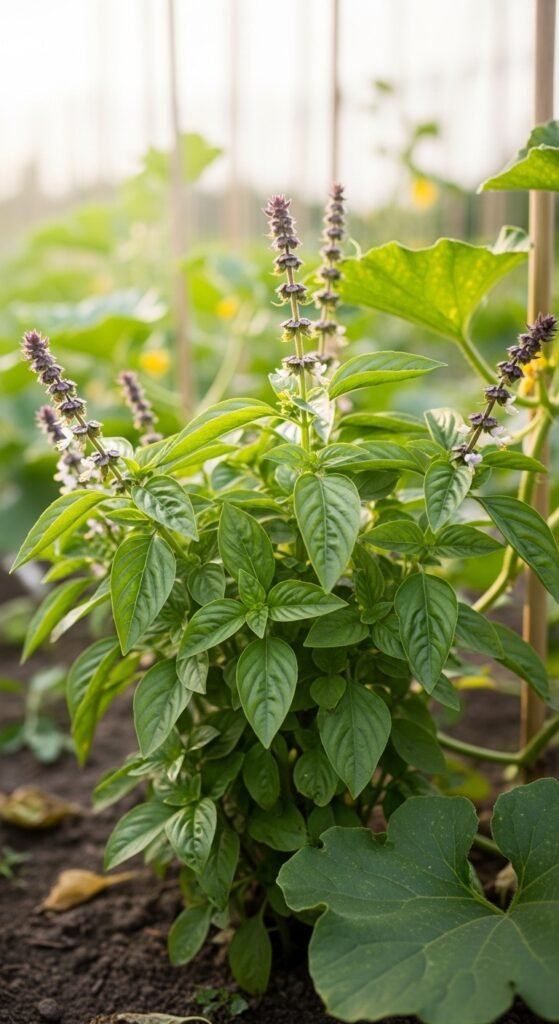
Why choose basil for your cantaloupes? It promotes better growth by attracting pollinators and beneficial insects, creating a harmonious garden ecosystem. In line with companion planting vegetables techniques, basil’s presence can lead to higher yields and fewer disease outbreaks, making your gardening efforts more rewarding.
Sow basil seeds indoors and transplant after frost danger, placing them interspersed among cantaloupe plants. They need full sun, consistent moisture, and rich soil. Pinch tops to encourage bushiness and prevent flowering too early. Companion planting with basil also allows for easy harvesting, adding fresh herbs to your summer meals straight from the garden.
5) Borage
Borage is a self-seeding annual herb with star-shaped blue flowers and cucumber-flavored leaves. As cantaloupe companion plants, it attracts a plethora of pollinators, boosting fruit production, while deterring pests like tomato hornworms that might cross over to melons.
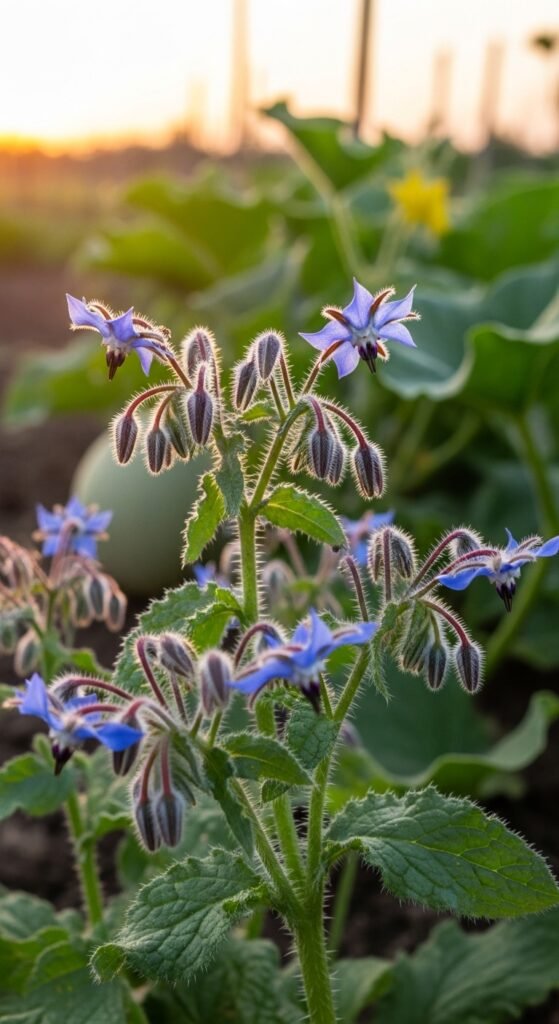
Borage excels with cantaloupes by improving soil structure through its deep roots and adding trace minerals when decomposed. This fits into bee-friendly plants list strategies, enhancing pollination rates and overall garden vitality. You may see increased melon size and sweetness due to better fertilization.
Direct sow borage seeds in spring around your cantaloupe area, in full sun with moderate soil. Space 12 inches apart, allowing some to self-seed for future seasons. The edible flowers can be used in salads, providing an additional harvest while supporting your primary crop.
6) Dill
Dill is an annual herb with feathery foliage and yellow umbel flowers, often used for pickling. Serving as cantaloupe companion plants, dill attracts beneficial wasps that parasitize pests like aphids and caterpillars, protecting your melons naturally.
The synergy between dill and cantaloupes lies in enhanced pest control and pollination. Dill’s flowers draw in hoverflies and bees, crucial for melon success. Incorporating dill aligns with companion flowers for vegetables approaches, fostering a resilient garden with minimal intervention.
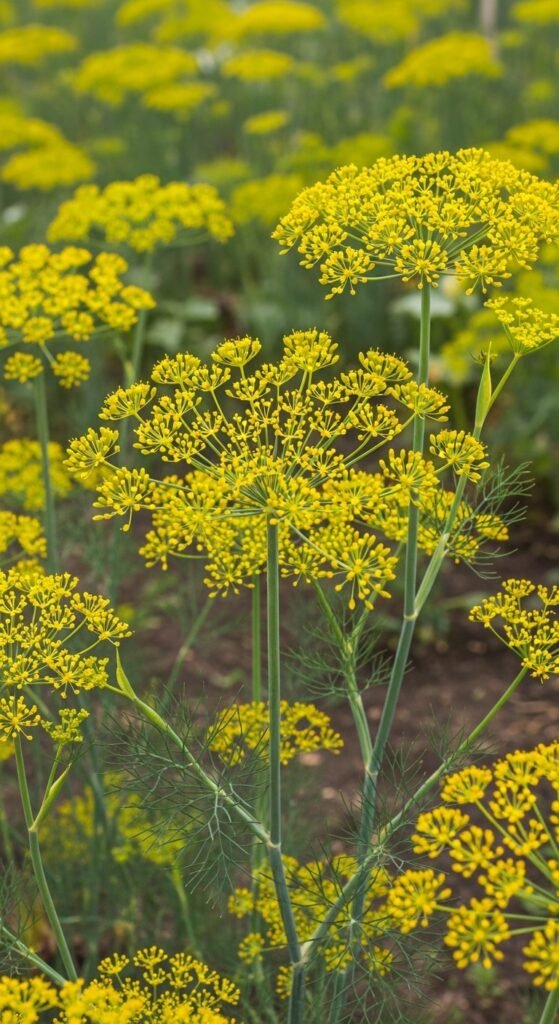
Plant dill seeds directly in the garden after frost, scattering them near cantaloupe vines in sunny spots. It tolerates poor soil but needs consistent watering. Harvest young leaves for flavor, allowing some plants to flower for ongoing benefits. Be mindful of its height to avoid shading smaller plants.
7) Bush Beans
Bush beans are compact legumes that fix nitrogen in the soil, enriching it for heavy feeders like cantaloupes. As companion plants, they provide mutual support by shading soil and reducing weed competition.
Bush beans work well with cantaloupes because they replenish soil nutrients, promoting vigorous vine growth and better fruit quality. This nitrogen-fixing trait is key in sustainable melon trellis systems, where vertical growth maximizes space and airflow.
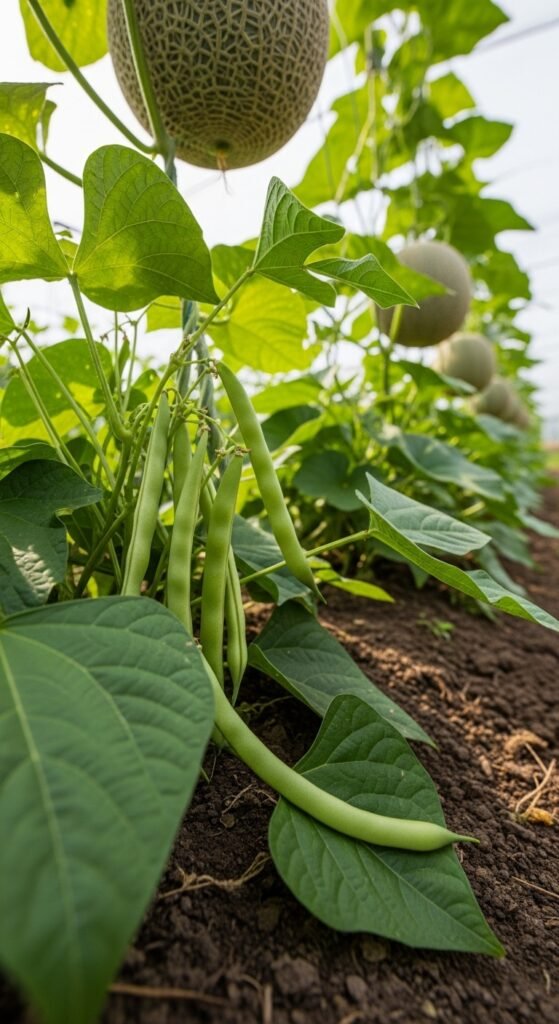
Sow bush bean seeds directly around cantaloupe hills after soil warms, spacing 4-6 inches apart in rows. They prefer full sun and well-drained soil. Harvest pods regularly to encourage production, and at season’s end, till plants into soil for added fertility in future plantings.
8) Corn
Corn is a tall grass crop that provides natural support and shade for sprawling cantaloupe vines. As companion plants, corn’s structure allows melons to climb or spread beneath, optimizing vertical space.
Why pair corn with cantaloupes? It creates a microclimate that retains moisture and deters pests through height barriers. This classic combination, inspired by traditional Three Sisters planting, enhances yield in cucumber beetle control efforts by confusing insect navigation.
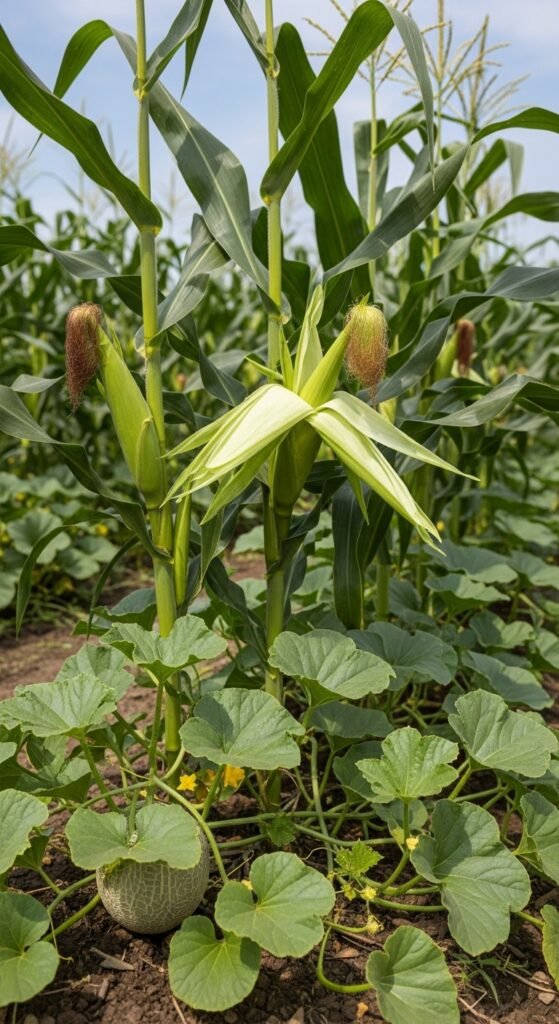
Plant corn in blocks for pollination, then sow cantaloupe seeds at the base once corn reaches 6 inches. Ensure full sun and fertile soil with ample water. Harvest corn ears when ready, leaving stalks for melon support until frost.
9) Garlic
Garlic is a bulbous allium with strong antimicrobial properties, making it ideal as cantaloupe companion plants to ward off fungal diseases and pests like aphids.
Garlic’s benefits include soil sterilization against pathogens and repelling rodents that might damage melons. It complements squash bug control methods, creating a protective zone for healthier plants and higher quality fruit.
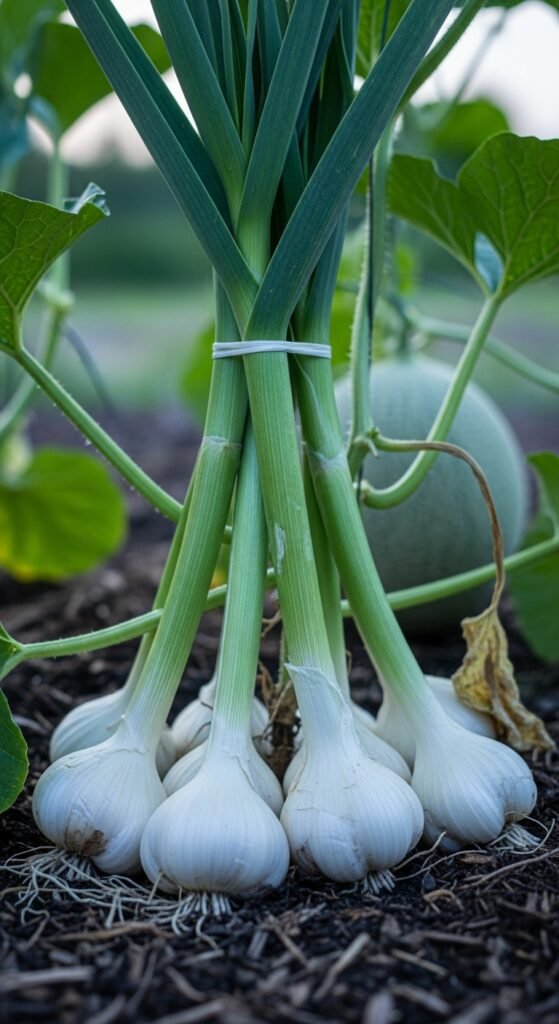
Plant garlic cloves in fall around future cantaloupe sites for overwintering, or in spring for smaller bulbs. Space 6 inches apart in sunny, well-drained areas. Harvest when tops yellow, using greens as mulch for added protection.
10) Onions
Onions are pungent alliums that deter pests through their scent, serving as excellent cantaloupe companion plants by protecting against thrips and maggots.
Onions improve cantaloupe health by enhancing soil biology and preventing weed encroachment. Their role in integrated pest management aligns with mosquito repelling plants strategies, reducing overall insect pressure in the garden.
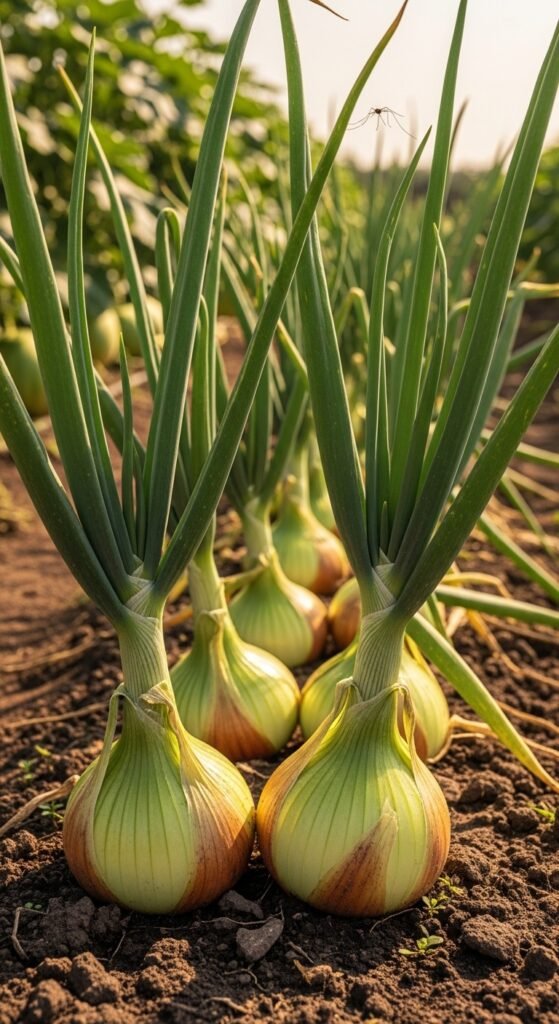
Sow onion sets or seeds early in the season around cantaloupe beds, in full sun with moderate water. Space 4-6 inches apart. Harvest bulbs when tops fall over, curing them for storage while benefiting your melons.
11) Radishes
Radishes are quick-growing root vegetables that break up soil and deter cucumber beetles when used as cantaloupe companion plants.
Their fast maturation allows intercropping without competition, while roots aerate soil for better melon root development. Radishes fit into rotational planting, supporting sustainable vegetable production.
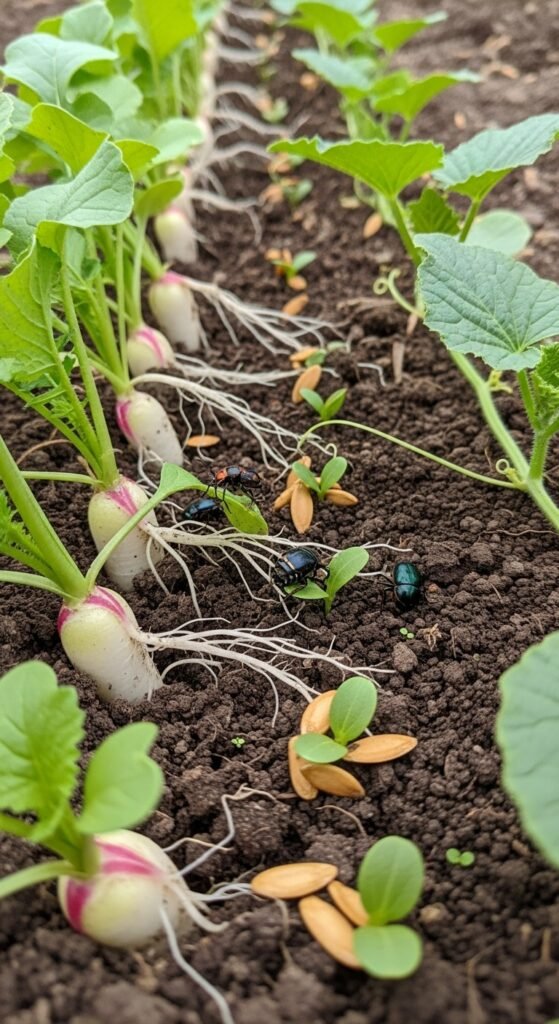
Direct sow radish seeds early, interspersing with cantaloupe seeds in sunny spots. Harvest in 3-4 weeks, creating space for expanding vines. Replant successionally for continuous protection throughout the season.
12) Tansy
Tansy is a perennial herb with fern-like leaves and yellow button flowers, repelling ants and flies as cantaloupe companion plants.
Tansy deters a range of pests while attracting beneficial insects, enhancing garden resilience. Its medicinal properties add value beyond companionship.
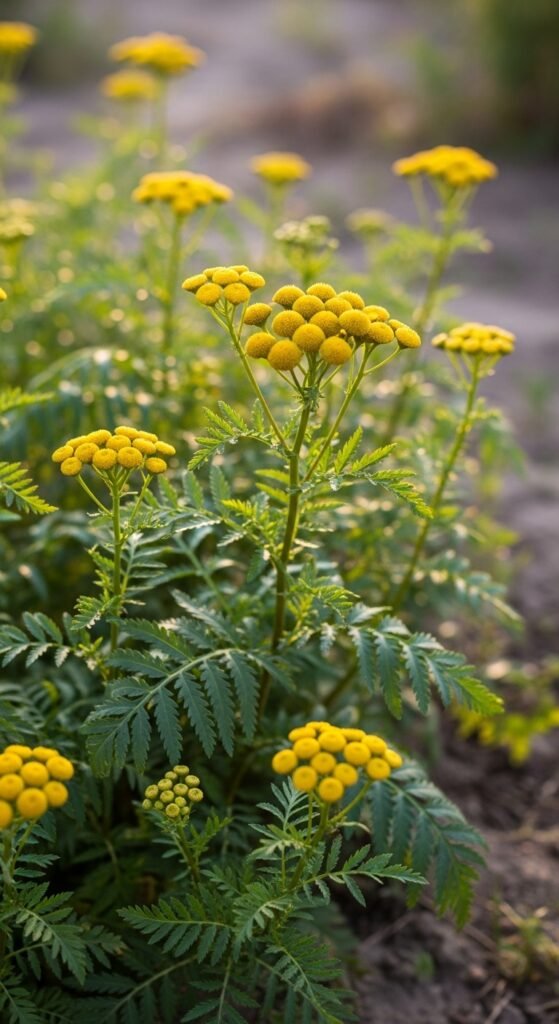
Plant tansy divisions in spring around melon patches, in full sun with dry soil. Contain its spread by dividing regularly. Use cut foliage as mulch for extra pest repellence.
13) Bee Balm
Bee balm is a perennial flower with vibrant blooms, attracting pollinators crucial for cantaloupe fruit set as companion plants.
It resists powdery mildew, a common melon issue, and adds color to the garden. Bee balm supports biodiversity in pollinator-focused designs.
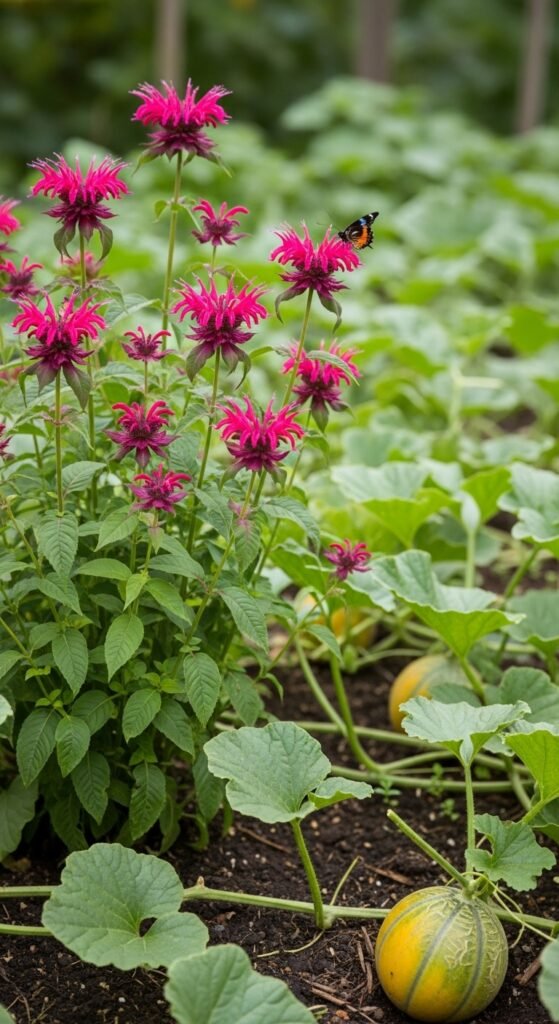
Plant bee balm transplants near cantaloupes in moist, sunny soil. Space 18-24 inches apart. Deadhead to prolong blooming, ensuring steady pollinator visits.
14) Collard Greens
Collard greens are leafy brassicas that provide ground cover and trap pests away from cantaloupes when companion planted.
They enrich soil with nutrients upon decomposition and tolerate heat well alongside melons. Collards offer edible yields in mixed beds.
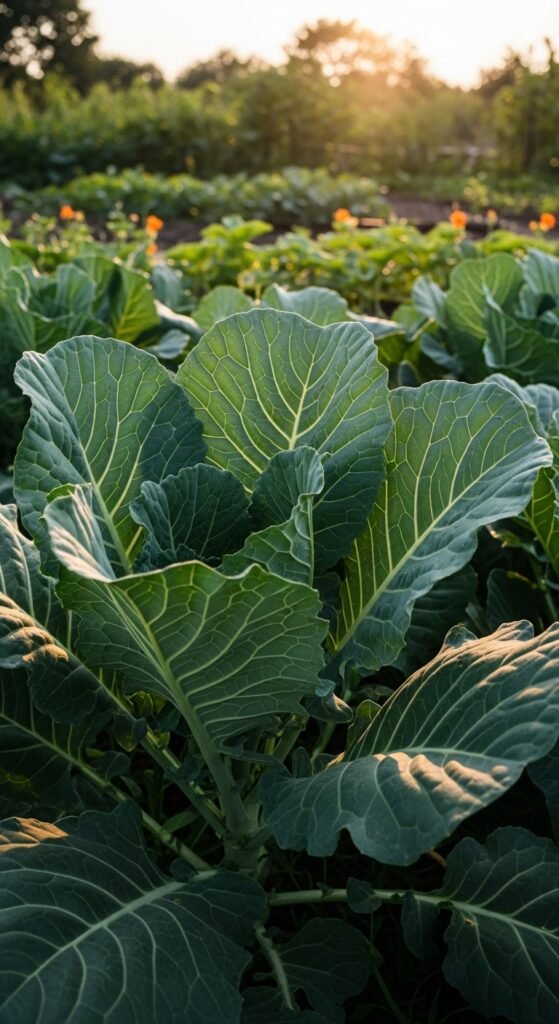
Transplant collards around melon vines in full sun, spacing 12 inches. Harvest outer leaves continuously. They bolt in heat, providing shade benefits.
15) Lettuce
Lettuce is a cool-season green that shades soil and utilizes space under cantaloupe vines as companion plants.
It matures quickly, avoiding competition, and cools roots for better melon growth. Lettuce adds diversity to salad gardens.
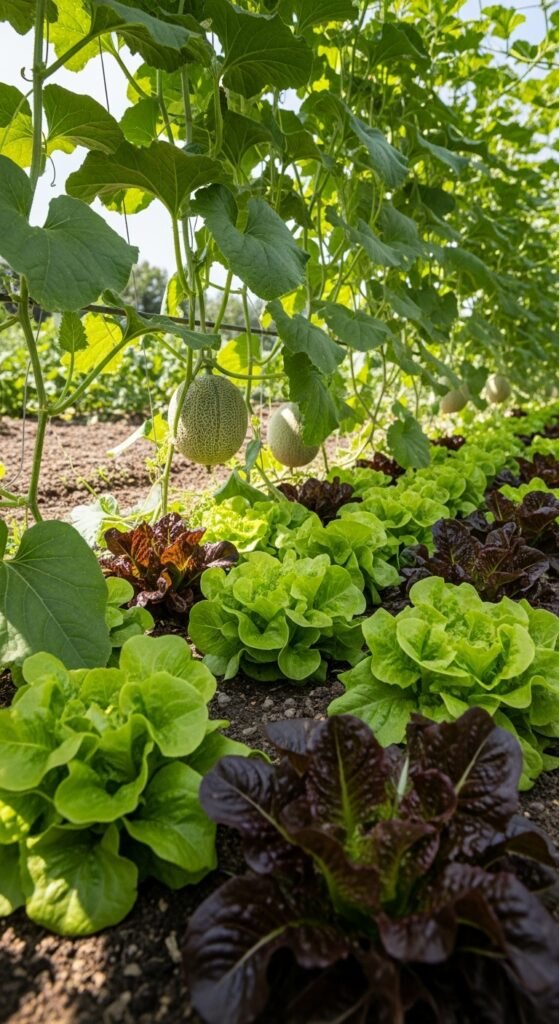
Sow lettuce seeds early between cantaloupe hills, in partial shade from vines. Harvest as needed, replanting for succession. It bolts in summer, transitioning space to melons.
Key Principles of Cantaloupe Companion Planting
Pest Management Strategies
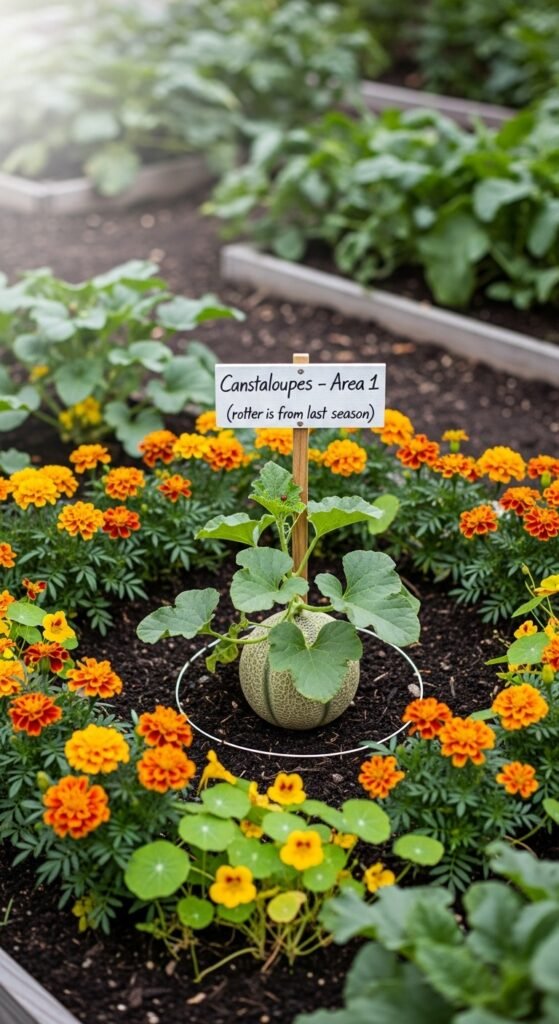
Focus on plants that repel specific pests like cucumber beetles or aphids, creating natural barriers. Rotate companions annually to prevent soil depletion and maintain efficacy.
Soil Health and Nutrient Cycling
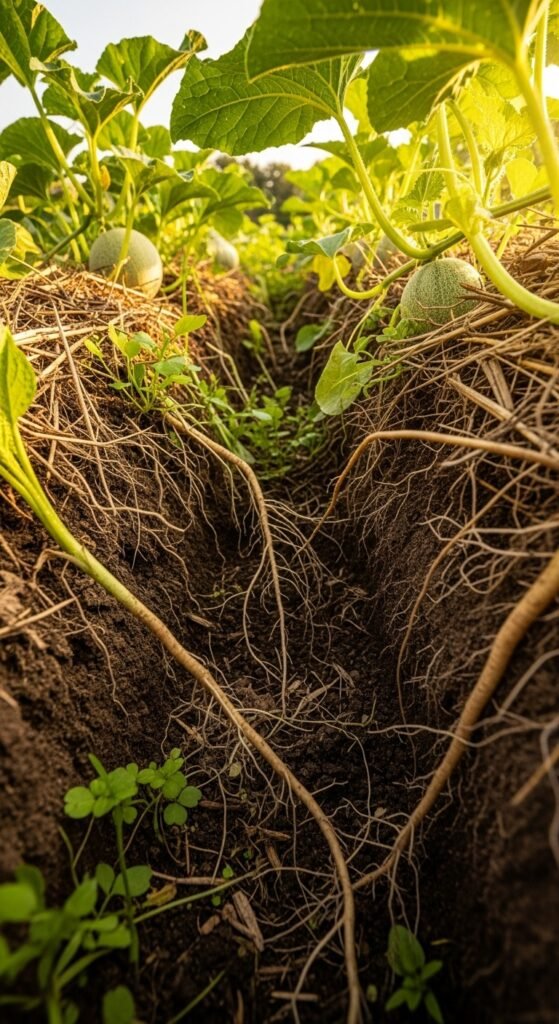
Incorporate nitrogen-fixers and deep-rooted plants to enhance fertility. Mulch with companions’ residues to retain moisture and suppress weeds effectively.
Pollination and Biodiversity Enhancement
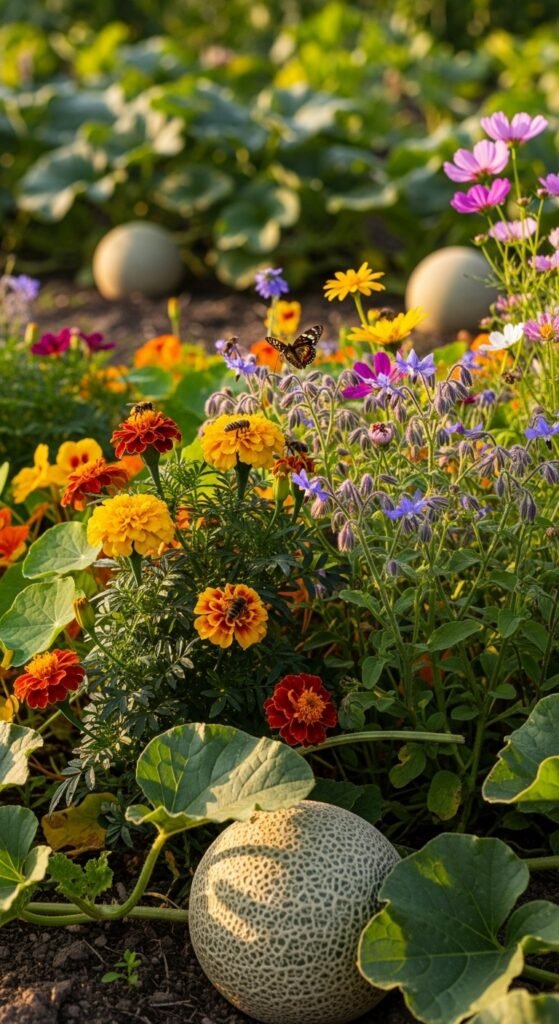
Select flowering companions to attract bees and other pollinators. Diverse plantings reduce monoculture risks, promoting a balanced ecosystem for sustained yields.
Frequently Asked Questions
What are the best companion plants for cantaloupes to deter pests?
Marigolds, nasturtiums, and garlic are excellent for repelling common pests like aphids and beetles, protecting your melons naturally.
Can I plant other melons near cantaloupes?
Avoid planting watermelons or other cucurbits nearby to prevent cross-pollination and disease spread; opt for diverse companions instead.
How do companion plants improve cantaloupe yields?
They enhance pollination, enrich soil, and reduce pest damage, leading to healthier vines and more abundant, flavorful fruits.
Are there any plants to avoid with cantaloupes?
Steer clear of potatoes, fennel, and other melons, as they can compete for nutrients or attract similar pests.
When should I plant companions with cantaloupes?
Plant most companions simultaneously or slightly earlier in spring, after the last frost, to establish protection early in the season.