
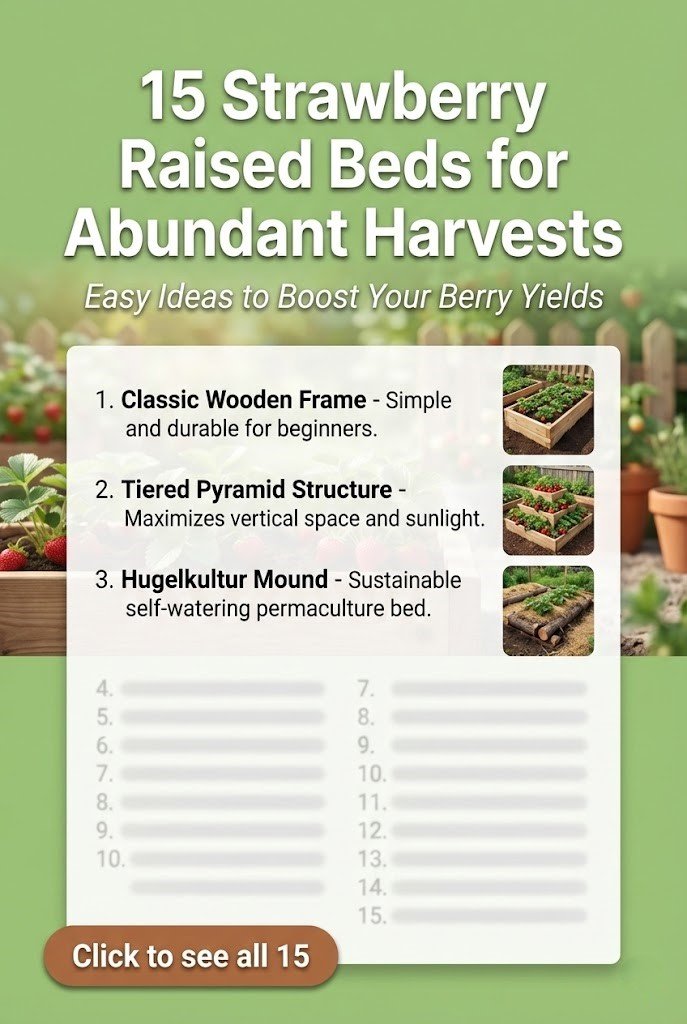
Strawberry raised beds offer an efficient way to cultivate these juicy fruits in your garden, elevating the plants above ground level to improve drainage, soil quality, and accessibility. By using raised beds specifically designed for strawberries, you can control the growing environment more effectively, preventing issues like soil compaction and weed invasion that often plague traditional ground planting. This approach not only maximizes your space but also enhances yield, making it ideal for both novice and experienced gardeners looking to enjoy fresh, homegrown strawberries.
The value of strawberry raised beds lies in their ability to provide optimal conditions for root development and fruit production. Strawberries thrive in well-drained, nutrient-rich soil, and raised beds allow you to customize the mix to suit their needs, such as incorporating acidic amendments for better growth. Additionally, they make harvesting easier on your back and knees, while deterring pests and diseases. Whether you have a small balcony or a sprawling backyard, these ideas will inspire you to create productive setups that yield abundant harvests season after season.
Exploring various designs, you’ll discover how strawberry raised beds can integrate sustainability, aesthetics, and functionality. From simple DIY constructions to innovative self-watering systems, each idea addresses different aspects like space constraints, maintenance ease, and environmental impact, ensuring you find the perfect fit for your gardening style.
1) Classic Wooden Frame Bed
You start with a basic wooden frame, constructing a rectangular box from untreated cedar or redwood boards to avoid chemical leaching into the soil. This design elevates your strawberries about 12-18 inches off the ground, providing excellent drainage and warmer soil temperatures for faster growth. The key benefit is durability and natural insulation, keeping roots protected from temperature fluctuations.
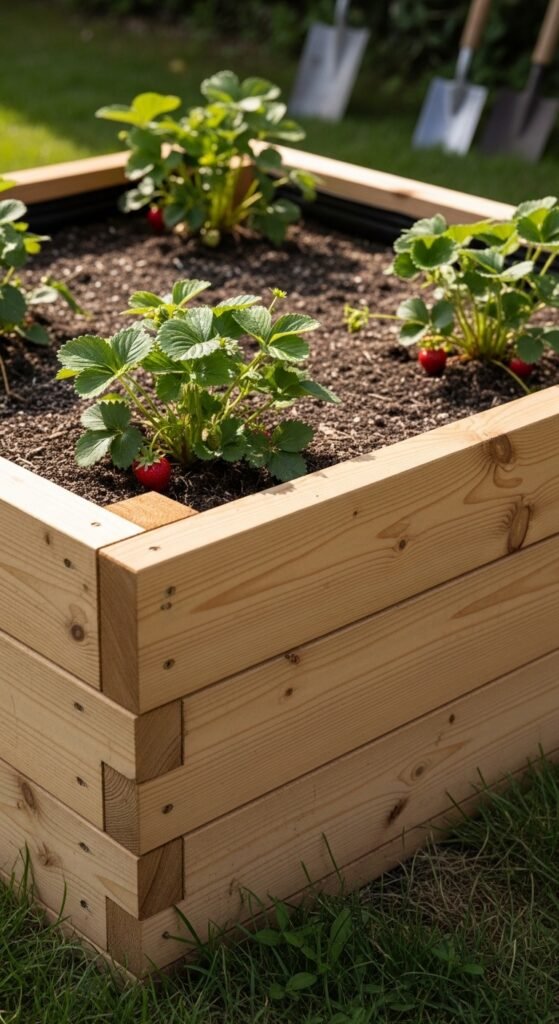
Why choose this? Strawberries love loose, fertile soil, and this setup lets you fill it with a custom mix of compost, peat, and vermiculite for optimal pH around 6.0-6.5. It reduces bending during harvest and minimizes weed competition, leading to healthier plants and bigger yields. Plus, it’s cost-effective for beginners.
How to build: Measure your space, cut boards to size (e.g., 4×8 feet), assemble with screws, and line the bottom with landscape fabric. Fill with soil, plant runners 12 inches apart, and mulch with straw. For added protection, consider integrating raised bed irrigation to maintain consistent moisture without overwatering.
2) Tiered Pyramid Structure
You create a multi-level pyramid using stacked wooden boxes or terraced soil mounds, allowing strawberries to cascade down the sides for a visually striking display. This vertical approach maximizes sunlight exposure on all levels, promoting even ripening and air circulation to prevent fungal issues.
The why is simple: It saves space while increasing planting density, ideal for small yards where you can grow more berries in less area. Strawberries’ shallow roots fit perfectly in the shallower top tiers, while deeper bottoms support companion plants like herbs.
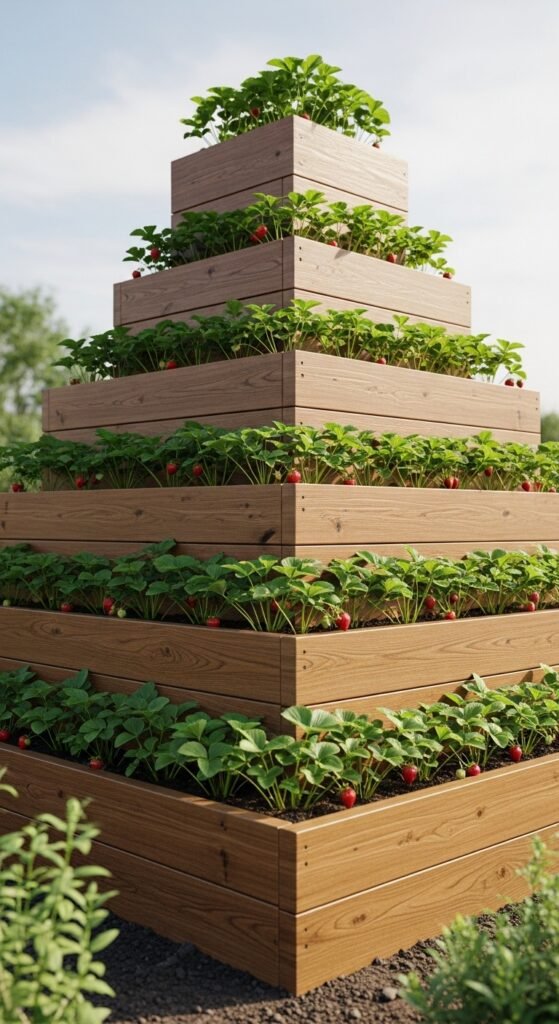
To build, start with a large base frame, add progressively smaller ones on top, securing with stakes. Fill each level with enriched soil, plant everbearing varieties for continuous harvest, and water from the top to trickle down. Draw inspiration from vertical strawberry tower designs to enhance efficiency.
3) Hugelkultur Mound Bed
You build this by layering logs, branches, and organic debris at the base, topped with soil to form a raised mound that decomposes over time, releasing nutrients. This permaculture technique mimics natural forest floors, perfect for strawberries needing consistent moisture and fertility.
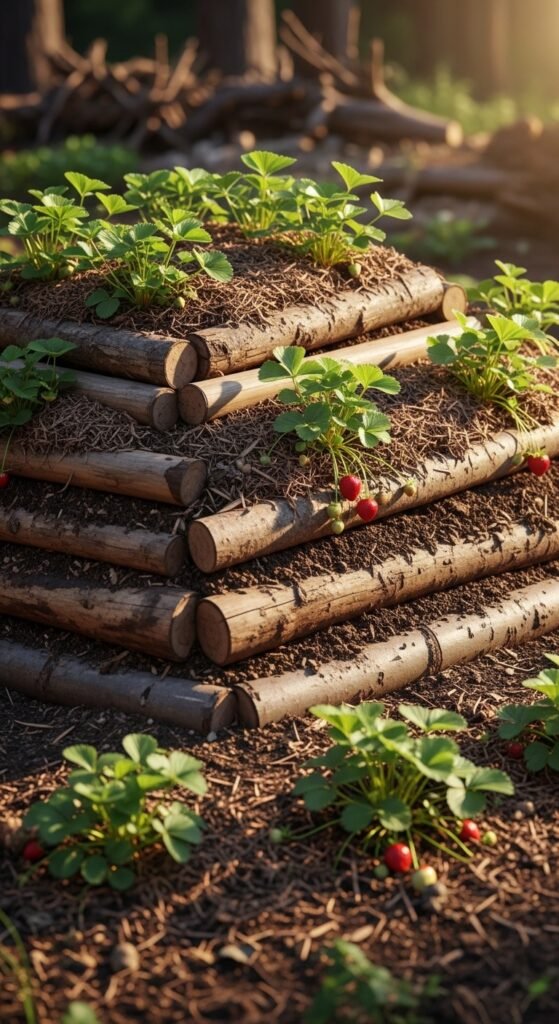
Why it works: It improves soil structure and retains water naturally, reducing irrigation needs by up to 50% while building long-term soil health. As the wood breaks down, it feeds beneficial microbes, leading to robust plants resistant to drought.
How: Dig a shallow trench, pile woody materials, cover with compost and soil to 2-3 feet high. Plant strawberries on the slopes, mulching heavily. For more details on this method, check out our guide on hugelkultur beds to optimize your setup.
4) Galvanized Metal Trough
You repurpose long metal troughs or build custom ones from corrugated sheets, lining them to prevent soil-metal contact and ensure longevity. These sleek beds heat up quickly in spring, extending the growing season for early strawberry crops.
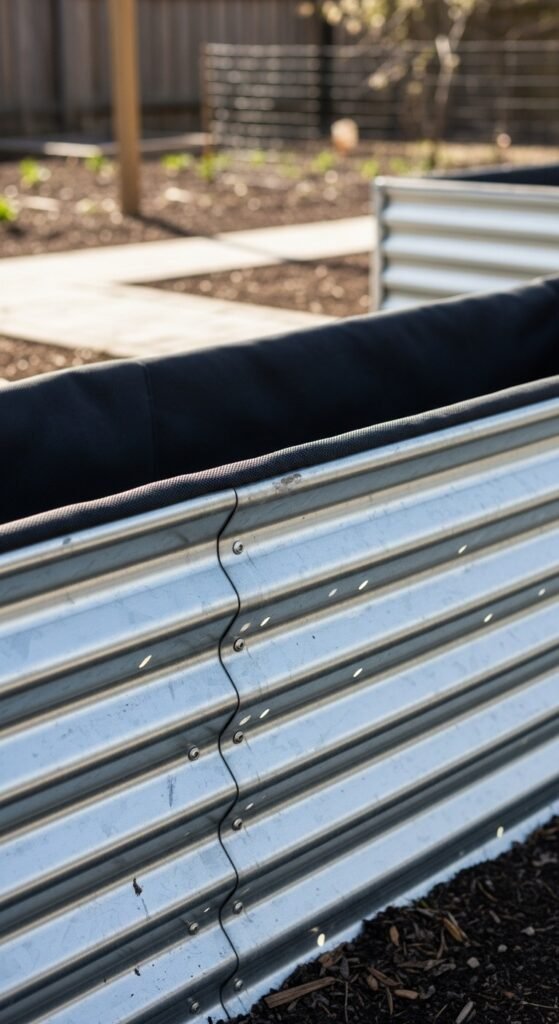
The benefit? They offer superior durability against rot and pests, lasting years with minimal maintenance, while their height deters slugs and rabbits. The reflective surface can also boost light to lower leaves.
Assembly: Secure panels into a frame, add drainage holes, line with fabric, and fill with acidic soil mix. Space plants in rows, incorporating drip lines for even watering. Pair this with tips from watering strawberries to avoid common pitfalls like root rot.
5) Cinder Block Modular Bed
You arrange cinder blocks in a rectangular or circular pattern, filling the hollows with soil for extra planting space along the edges. This no-tool build allows easy expansion and customization for irregular yard shapes.
Why opt for it: It’s budget-friendly and highly adaptable, with blocks providing thermal mass to stabilize soil temperatures, benefiting strawberry roots during fluctuating weather. The pockets are great for herbs that companion-plant well.
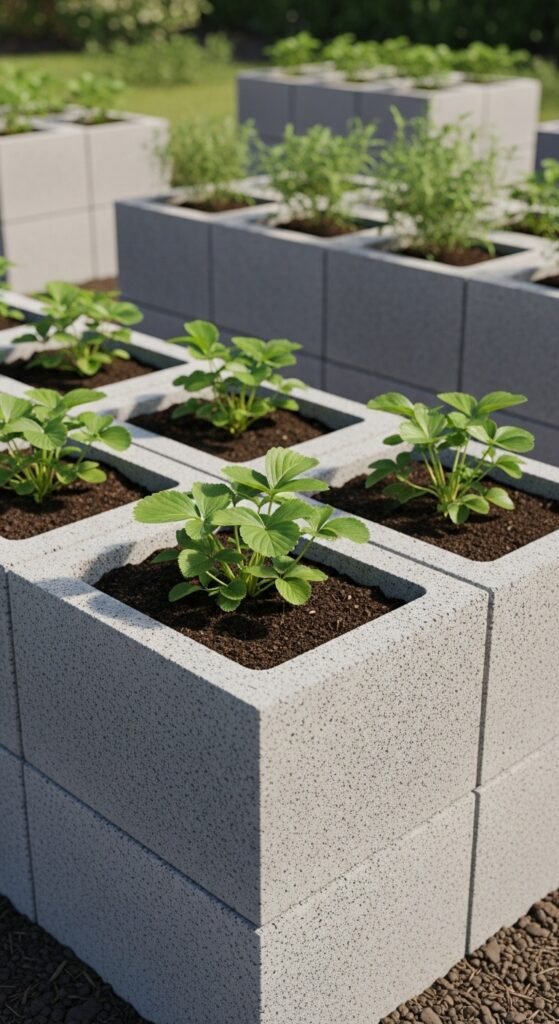
How to: Stack blocks two-high, level the ground, fill with compost-enriched soil. Plant main bed with June-bearing strawberries, edges with pollinators. Enhance with compost for raised beds to boost nutrient levels.
6) Vertical Wall Planter Integration
You attach pocket planters or gutters to a raised bed’s sides, creating a vertical extension for trailing strawberry varieties. This hybrid combines horizontal and vertical growing for maximum output in compact spaces.
The advantage: It doubles your harvest area without extra footprint, improving airflow to reduce mildew risks while making picking accessible from all angles.
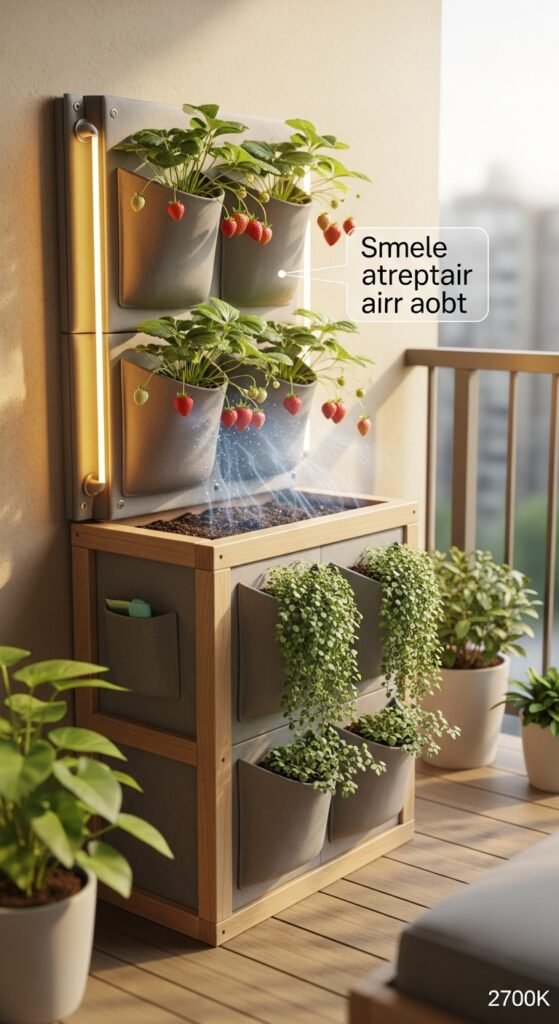
Build by constructing a standard bed, then mounting vertical elements securely. Fill pockets with lightweight soil, plant alpine strawberries. For similar concepts, explore strawberry planter ideas to refine your design.
7) Self-Watering Wicking System
You incorporate a reservoir and wicking fabric at the bed’s base, allowing soil to draw moisture as needed for consistent hydration. This is especially useful for strawberries sensitive to dry spells.
Why choose: It minimizes watering chores and prevents stress-induced low yields, conserving water while promoting deep roots for healthier plants.
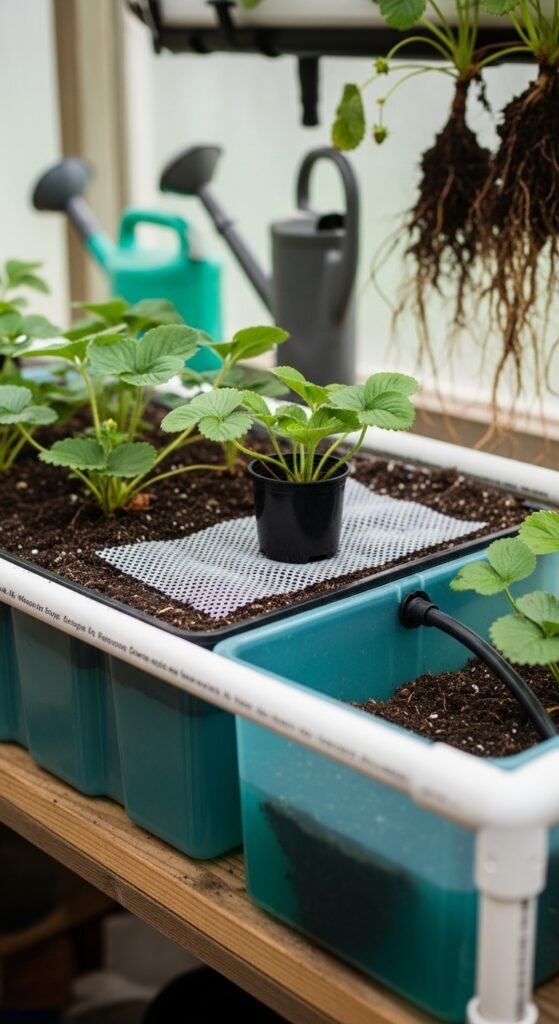
How: Build a framed bed with a false bottom, add PVC pipes for filling the reservoir, layer wicking material and soil. Plant day-neutral varieties, monitor via access tubes. Learn more about wicking beds for advanced setups.
8) Keyhole Circular Bed
You design a round bed with a central compost access “keyhole” for easy nutrient addition, surrounding it with planting areas sloped outward.
Benefits include: Efficient space use and built-in composting, enriching soil organically as you tend strawberries, leading to vibrant growth and flavor.
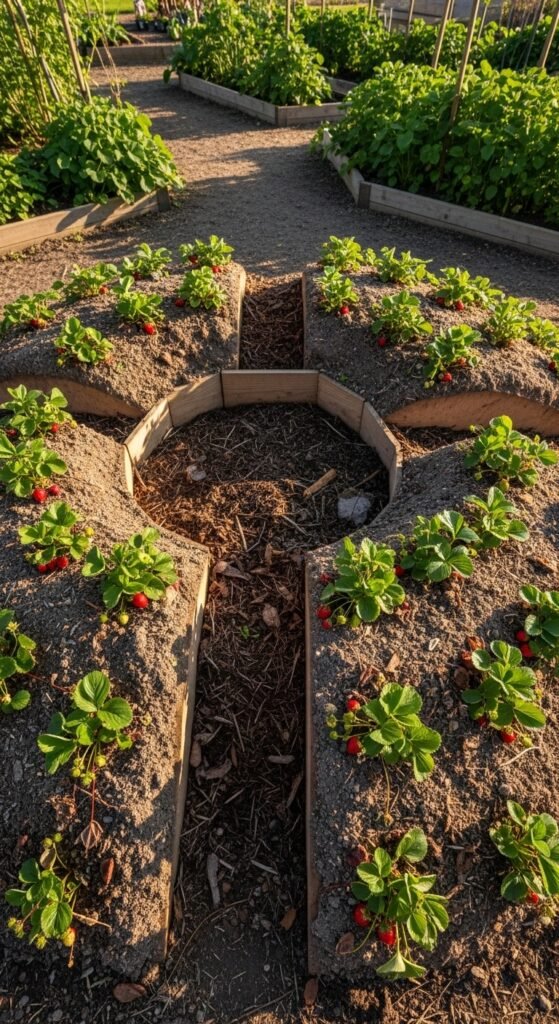
To create: Pile soil in a 6-foot diameter circle, cut a wedge for access, add compost bin in center. Plant everbearers around the perimeter. This aligns with keyhole garden principles for sustainability.
9) Pallet Wood Recycled Bed
You disassemble pallets to form rustic frames, sanding edges for safety and treating with linseed oil for weather resistance.
Why: It’s eco-friendly and low-cost, repurposing waste while providing good aeration for strawberry roots, reducing disease incidence.
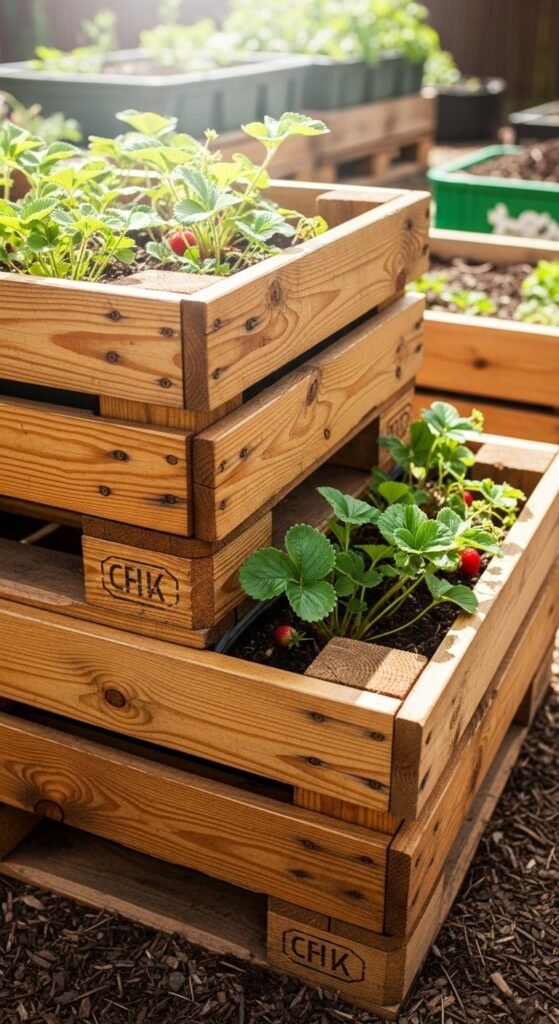
Assembly: Nail slats into boxes, line bottoms, fill with balanced soil. Plant in grids, mulch. For more upcycling, see strawberry tower DIY projects.
10) Straw Bale Temporary Bed
You condition straw bales by watering and fertilizing to initiate decomposition, then plant directly into the tops for a no-dig option.
The perk: Quick setup with natural insulation, ideal for renters or testing locations, decomposing into compost after the season.
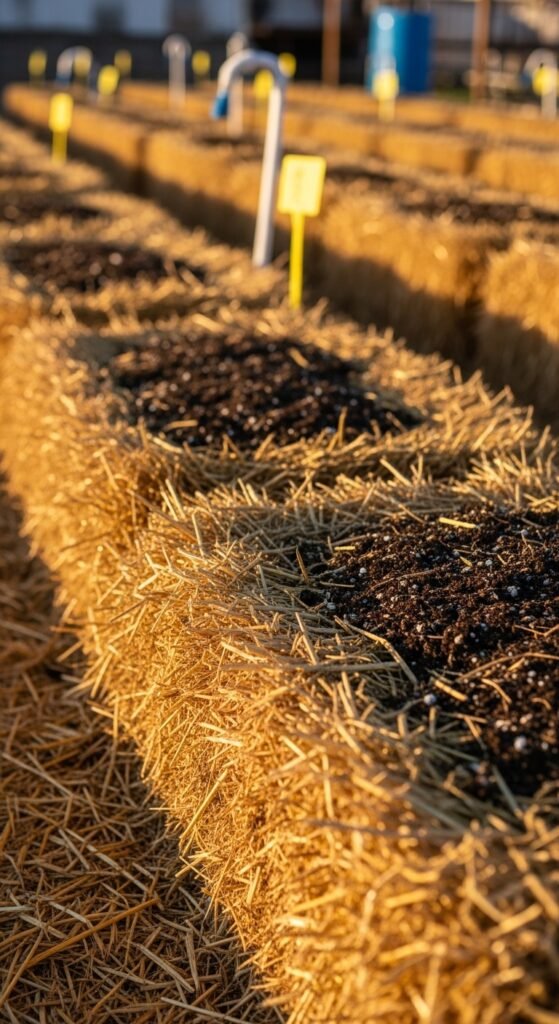
How: Arrange bales in rows, soak for weeks, top with soil, plant seedlings. Water frequently. Complement with strawberries in pots for hybrid approaches.
11) Fabric Bag Raised Bed
You use breathable fabric pots or bags elevated on stands, allowing air pruning of roots for healthier systems.
Why it excels: Portability and superior drainage, preventing waterlogging in rainy areas while being lightweight for rooftop gardens.
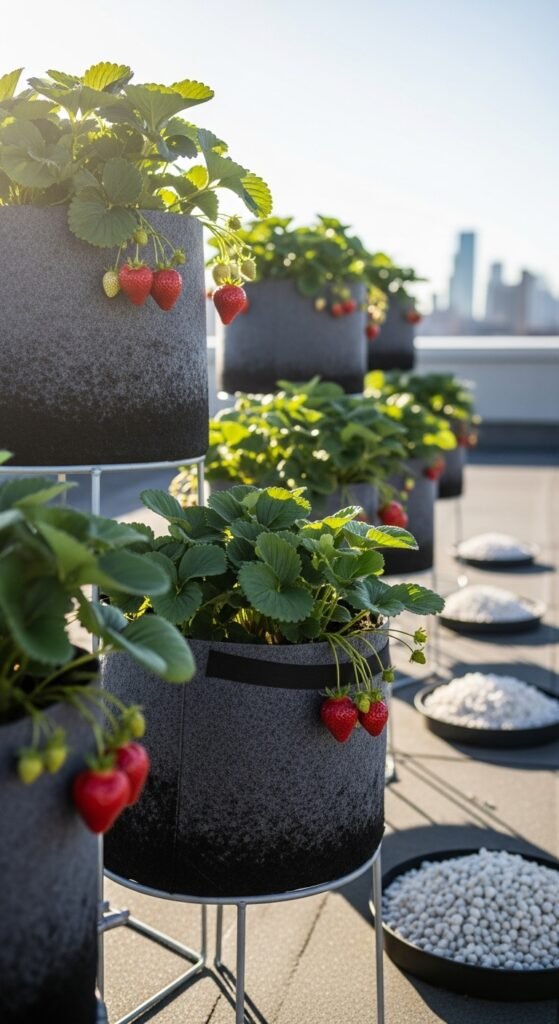
Setup: Choose large bags, fill with strawberry-specific mix, place on frames. Plant densely, fertilize monthly. This method pairs well with overwintering strawberries techniques.
12) Stone or Brick Permanent Bed
You mortar stones or bricks into sturdy walls, creating long-lasting beds that blend seamlessly with landscape designs.
Benefits: Aesthetic appeal and heat retention, warming soil for earlier planting and protecting against erosion over years.
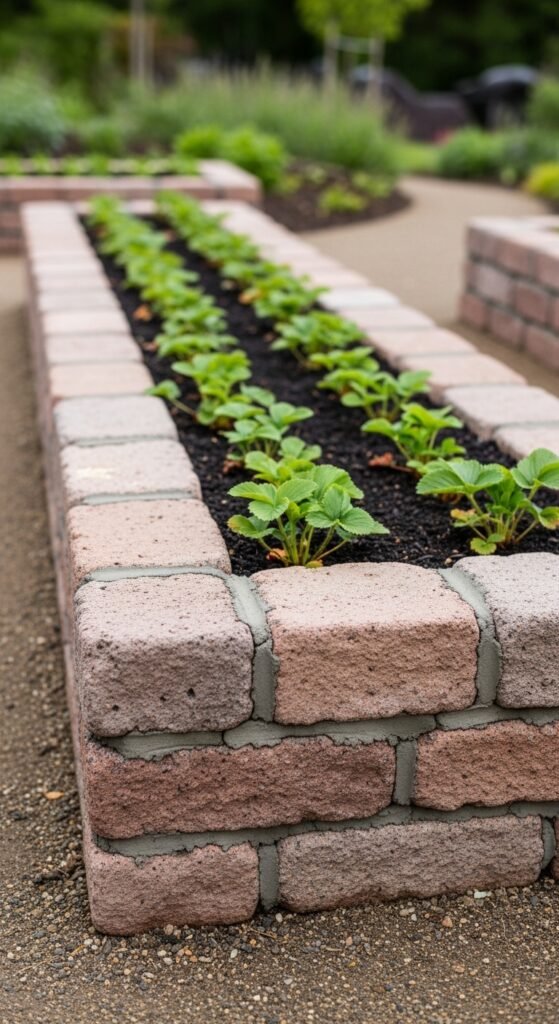
Build: Excavate base, lay foundation, stack materials, fill with layered soil. Plant perennial strawberries for ongoing harvests.
13) Recycled Material Mosaic Bed
You combine tires, bottles, or scrap metal into unique shapes, ensuring safety by lining to avoid contaminants.
Why: Promotes sustainability and creativity, turning waste into functional art while providing insulated growing spaces.
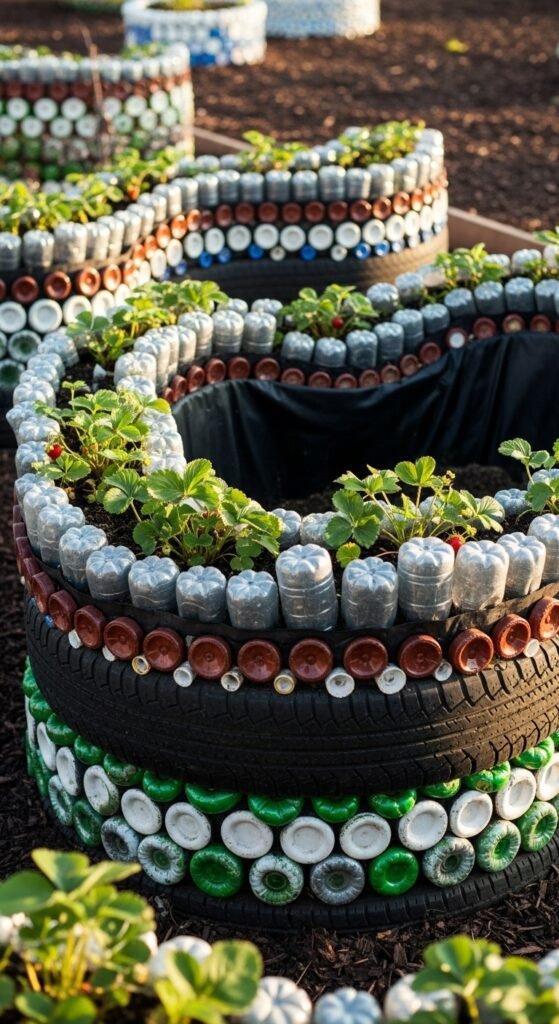
How: Stack items securely, fill gaps with soil, top off. Plant and mulch. Inspire from various strawberry planter ideas.
14) Mobile Wheeled Cart Bed
You construct or buy wheeled planters, allowing you to move strawberries to optimal sun or shelter as needed.
The advantage: Flexibility for changing conditions, protecting from frost or excess rain, extending the season.
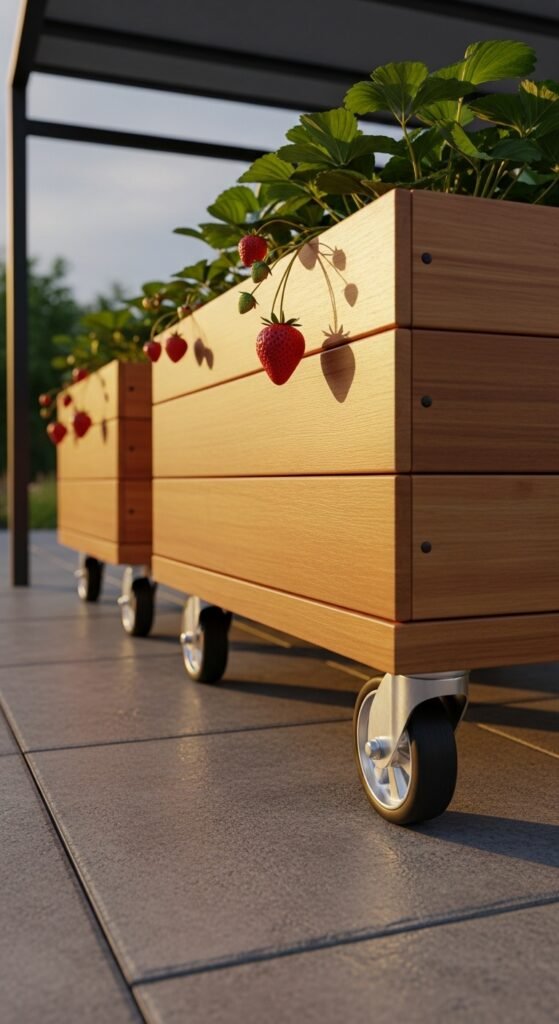
Assembly: Attach casters to wooden boxes, fill with lightweight media, plant. Roll indoors if required.
15) Trellis-Integrated Climbing Bed
You add trellises or nets to the bed sides, training strawberry vines upward for better space use and fruit exposure.
Why: Enhances yield through vertical growth, reducing ground contact diseases and easing harvest.
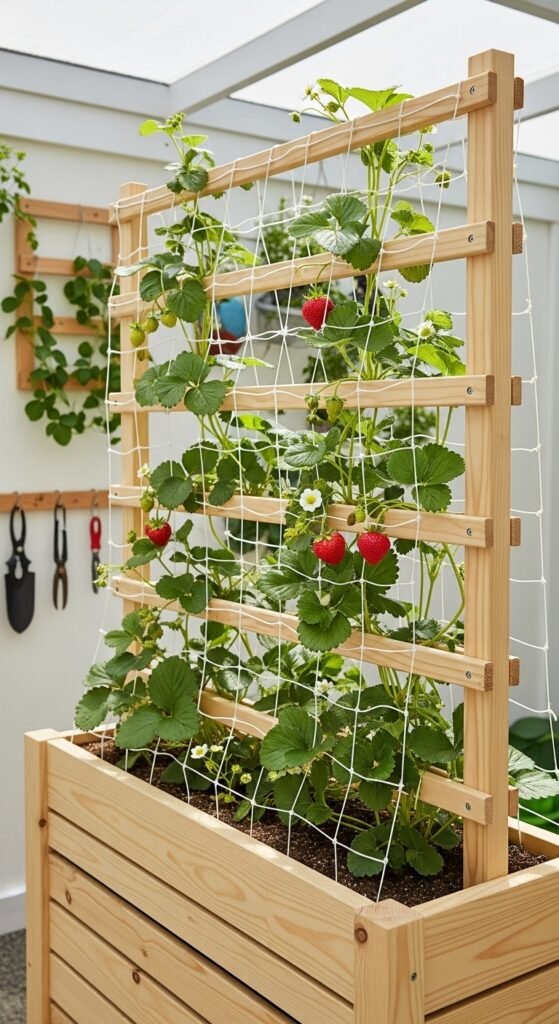
To implement: Build bed, install supports, tie runners. This works great with climbing varieties.
Key Principles for Successful Strawberry Raised Beds
Soil Composition and pH Management
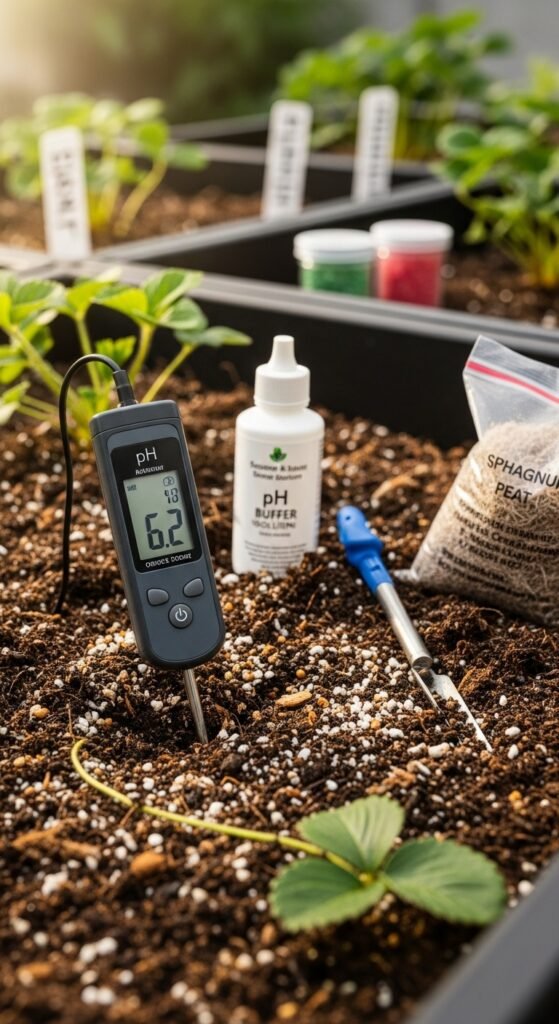
You must prioritize a well-draining mix with organic matter, aiming for pH 5.8-6.2 to maximize nutrient uptake. Test and amend annually for best results.
Pest and Disease Prevention Strategies
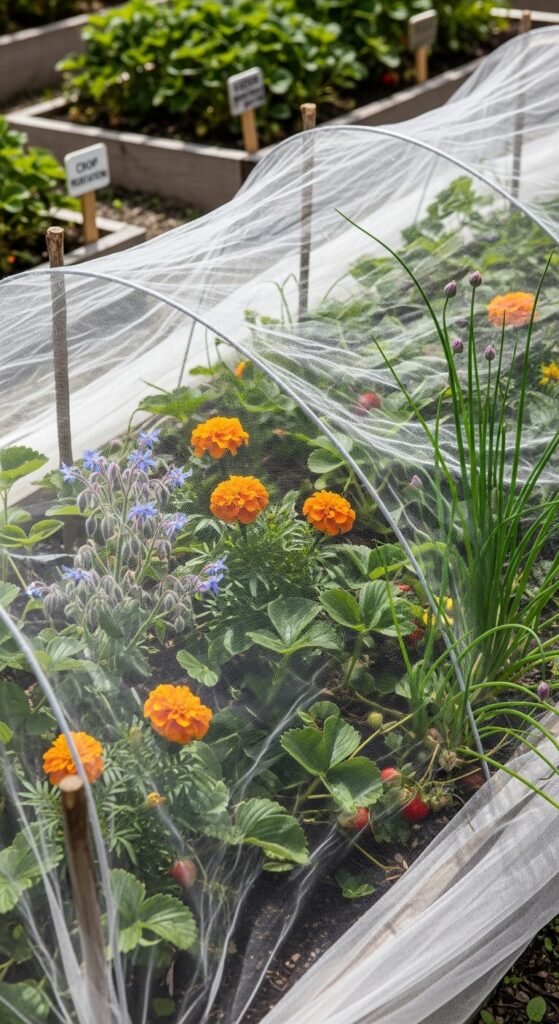
Implement crop rotation, netting, and companion planting to ward off common threats like birds and fungi, ensuring vigorous plants.
Maintenance and Harvesting Tips
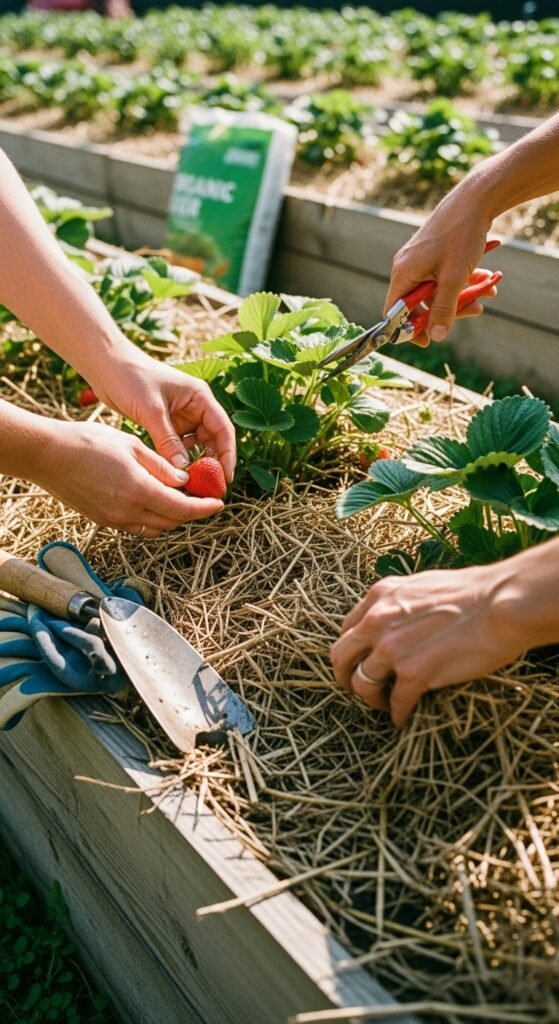
Regular mulching, pruning runners, and fertilizing during bloom will sustain productivity, with gentle picking preserving plant health.
Frequently Asked Questions
How deep should strawberry raised beds be?
Aim for 8-12 inches deep to accommodate shallow roots while allowing ample soil for nutrients and drainage, preventing overcrowding as plants spread.
What is the best location for strawberry raised beds?
Choose a sunny spot with at least 6-8 hours of direct light daily, sheltered from strong winds, to promote sweet fruit development and minimize disease.
How often should you water strawberries in raised beds?
Water consistently to keep soil moist but not soggy, typically 1-2 inches per week, adjusting for rainfall and using mulch to retain moisture.
Can you grow other plants with strawberries in raised beds?
Yes, companions like onions, thyme, or marigolds deter pests and enhance growth, but avoid tall plants that shade the strawberries.
When is the best time to plant strawberries in raised beds?
Plant in early spring or fall, depending on variety, to establish roots before extreme weather, ensuring a strong start for the next season.