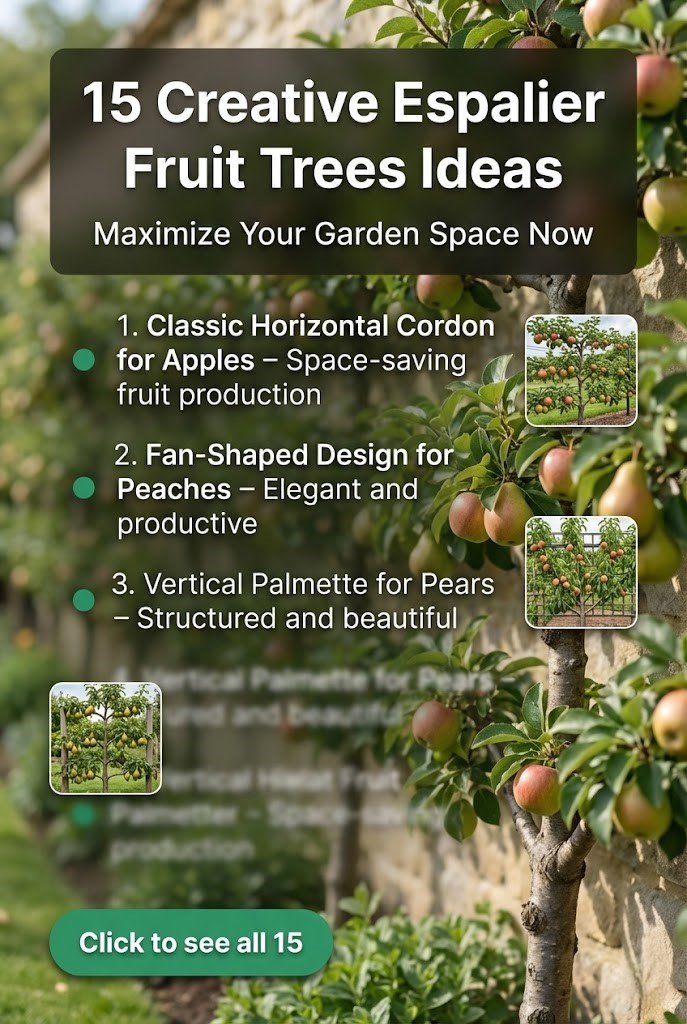
Espalier fruit trees are a timeless gardening technique where you train trees to grow flat against a wall, fence, or trellis, creating both functional and artistic elements in your landscape. Originating from European monasteries centuries ago, this method allows you to cultivate bountiful harvests in limited spaces while enhancing the aesthetic appeal of your garden. By guiding branches into specific patterns, espalier promotes better air circulation, sunlight exposure, and easier pest management, leading to healthier trees and higher fruit yields.
Whether you’re dealing with a small urban yard or simply want to add a touch of elegance to your outdoor area, espalier fruit trees offer versatility and efficiency. You’ll enjoy the satisfaction of picking fresh apples, pears, or peaches right from your structured display. This approach not only saves space but also turns your garden into a living work of art, blending productivity with beauty. Dive into these ideas to discover how you can implement espalier techniques tailored to your needs.
1) Classic Horizontal Cordon for Apples
You start with a young apple tree, planting it against a south-facing wall for optimal sun exposure. The horizontal cordon involves training branches in straight lines at even intervals, typically 12-18 inches apart, using wires or a sturdy frame. This pattern is ideal for dwarf varieties, allowing you to control growth and encourage fruiting spurs along each tier.
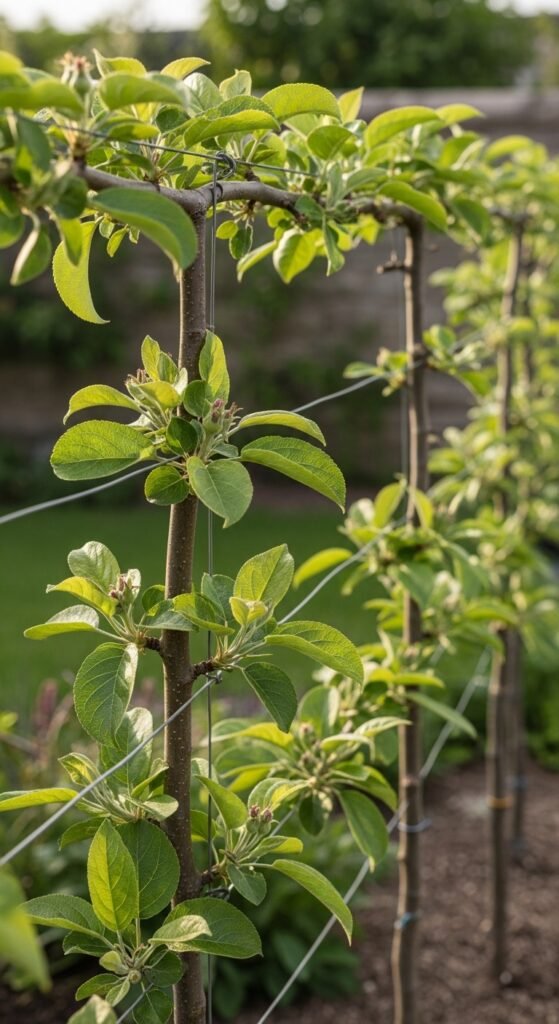
Why choose this? It maximizes vertical space in narrow areas, providing abundant harvests while maintaining a neat appearance. The structured form makes harvesting straightforward, reducing the need to bend or reach awkwardly. Plus, it improves airflow, minimizing disease risks common in denser canopies.
How to do it: In early spring, prune side shoots to direct energy horizontally, tying them gently to supports. Regular summer pruning keeps the shape intact. For best results, refer to our guide on pruning apple trees effectively to ensure vigorous growth and fruit production. Expect your first fruits in 2-3 years with consistent care.
2) Fan-Shaped Design for Peaches
Imagine transforming a sunny fence line into a productive peach display with a fan espalier. You select a vigorous peach variety and train branches to radiate outward like a fan, securing them to a trellis with soft ties. This open structure allows ample light penetration to all parts of the tree.
The benefits are clear: Enhanced fruit quality due to even ripening, and easier access for thinning and picking. In smaller gardens, this method turns unused vertical space into a fruitful asset, while the blooming flowers add seasonal beauty.
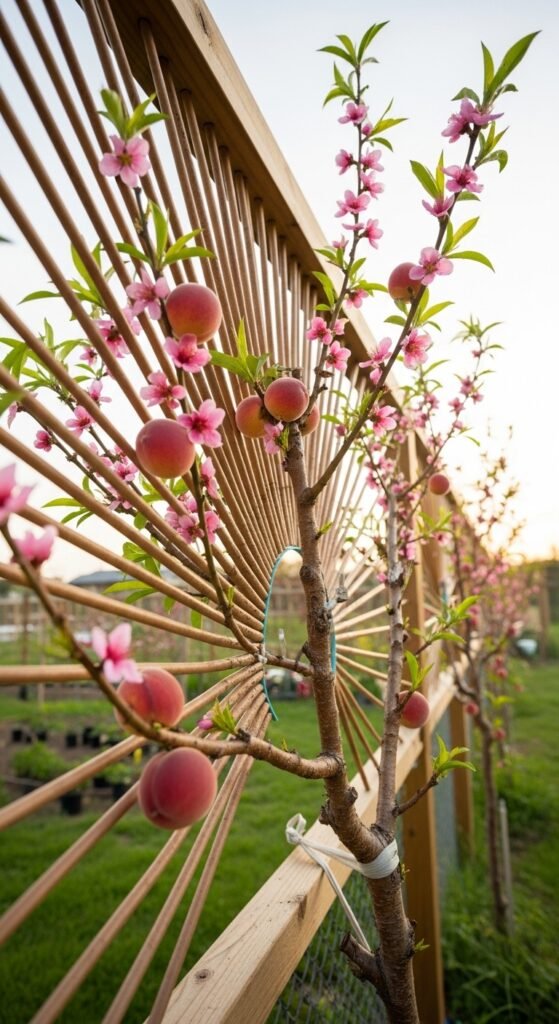
Implementation is straightforward—plant in well-drained soil, then prune in late winter to establish the fan arms. Ongoing maintenance involves removing inward-growing shoots. To prevent issues like leaf curl, integrate tips from our article on preventing peach leaf curl, ensuring your espalier remains healthy and productive for years.
3) Vertical Palmette for Pears
For pears, the vertical palmette offers an elegant, upright form where you guide branches into parallel vertical lines, creating a ladder-like effect. Position your tree near a sturdy wall or free-standing frame, using espalier wires spaced 15 inches apart for support.
This idea excels in providing space-efficient productivity, perfect for balconies or patios. The vertical orientation facilitates better pollination and reduces shading, leading to sweeter, juicier pears. It’s also visually striking, serving as a natural divider in your garden.
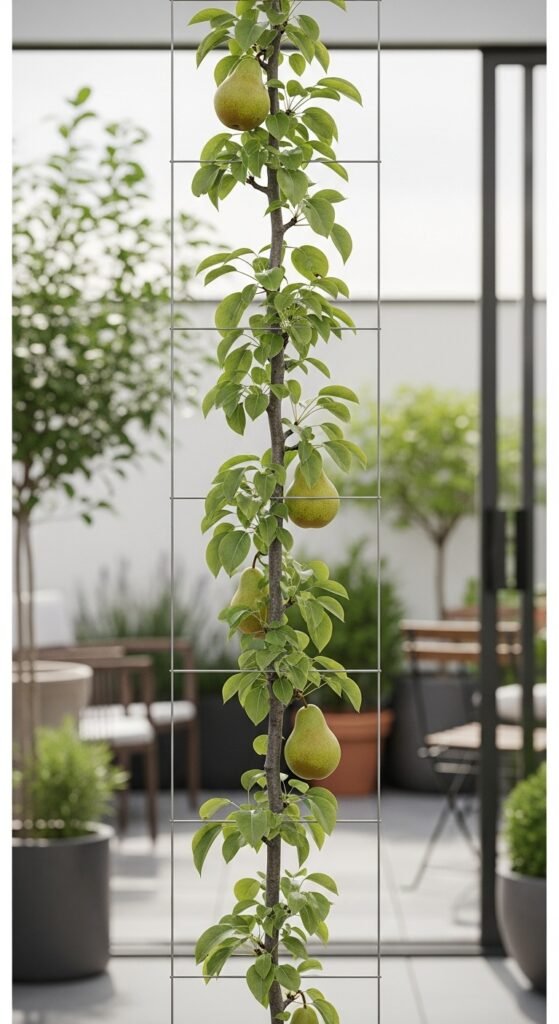
Begin by selecting a semi-dwarf pear rootstock. Prune in dormant season to shape the tiers, tying new growth as it emerges. For optimal results, cross-reference with our detailed advice on how to prune pear trees, which helps maintain balance and vigor in your espalier setup.
4) U-Shape Configuration for Compact Areas
You can create a U-shaped espalier by training the main branches to form a curved bottom with upward arms, ideal for enclosing small courtyards or pathways. Use flexible young trees like apples or pears, attaching them to a custom curved trellis.
Why it works: It offers privacy and shade while yielding fruits within arm’s reach. This design optimizes airflow and light, decreasing fungal problems and boosting yield in confined spaces.
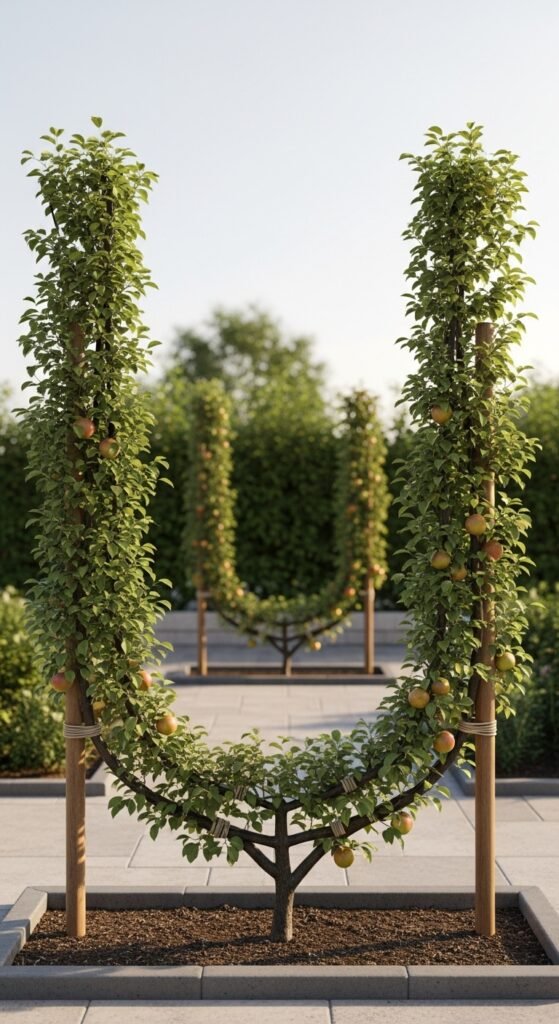
To execute, plant centrally and bend branches gradually over months, securing with ties. Summer pruning refines the shape. Enhance your technique by exploring our resource on fruit tree pruning calendar to time your efforts perfectly for robust growth.
5) Belgian Fence Pattern for Multiple Trees
The Belgian fence involves interlacing branches from several trees to form a diamond lattice, creating a living hedge. You plant fruit trees like apples or pears in a row, spacing them 3-4 feet apart, and train them diagonally to intersect.
Benefits include high-density planting for maximum output in minimal space, plus an ornamental barrier that’s both functional and beautiful. It encourages cross-pollination naturally among varieties.
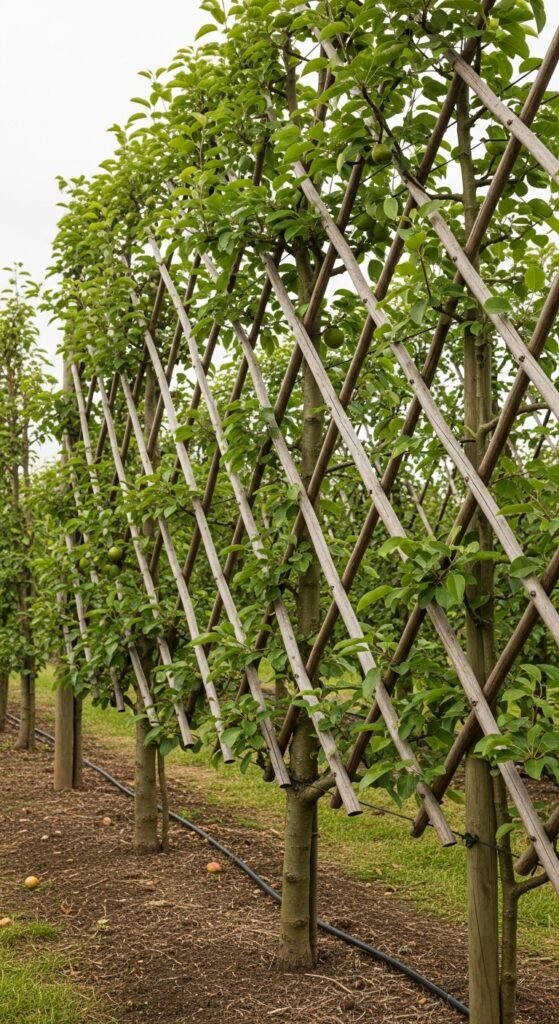
Start with whips or young saplings, crossing and tying branches as they grow. Prune excess growth annually. For pollination success, check our guide on apple tree pollination strategies, which can be adapted to this intricate design.
6) Diamond Lattice for Aesthetic Appeal
You craft a diamond pattern by training branches to cross at angles, forming geometric shapes on a flat support. Suitable for various fruit trees, this adds a sculptural element to your garden walls.
This approach delivers artistic value alongside bounty, making your space feel like a formal estate. The open lattice improves sun exposure, resulting in flavorful fruits and fewer pests.
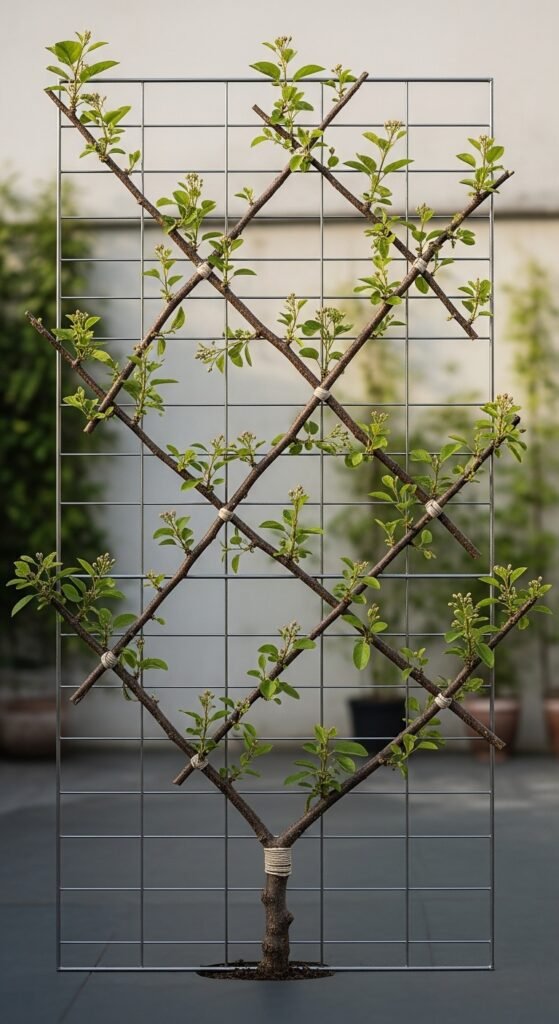
Plant and secure to a grid frame, pruning to maintain intersections. Incorporate fertilizing tips from our article on fertilizing fruit trees to support healthy development in this detailed structure.
7) Against a Sunny Wall for Warm Climates
Utilize heat-retaining walls by espaliering trees directly against them, choosing heat-loving fruits like peaches. The wall provides microclimate benefits, extending the growing season.
Key advantages: Extended ripening periods and protection from winds, leading to superior fruit quality. It’s ideal for urban settings where space is premium.
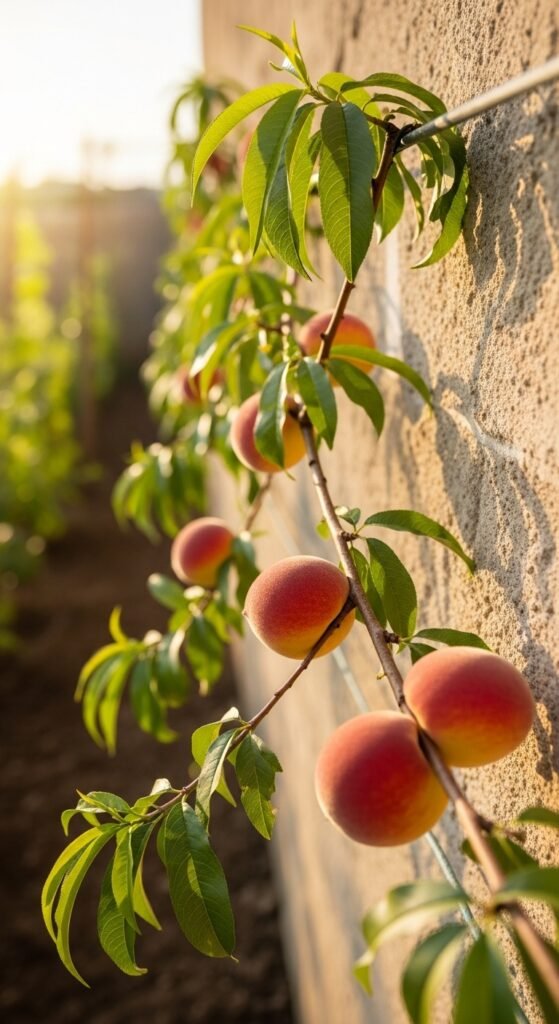
Install wires on the wall, plant at the base, and train branches flat. For planting timing, reference our insights on when to plant fruit trees to establish strong roots.
8) Free-Standing Trellis for Versatile Placement
You set up a standalone trellis in open areas, training trees on both sides for double the harvest. This allows placement anywhere in your yard without walls.
It provides flexibility and increased yield, serving as a garden focal point or divider. The structure enhances air flow, reducing disease.
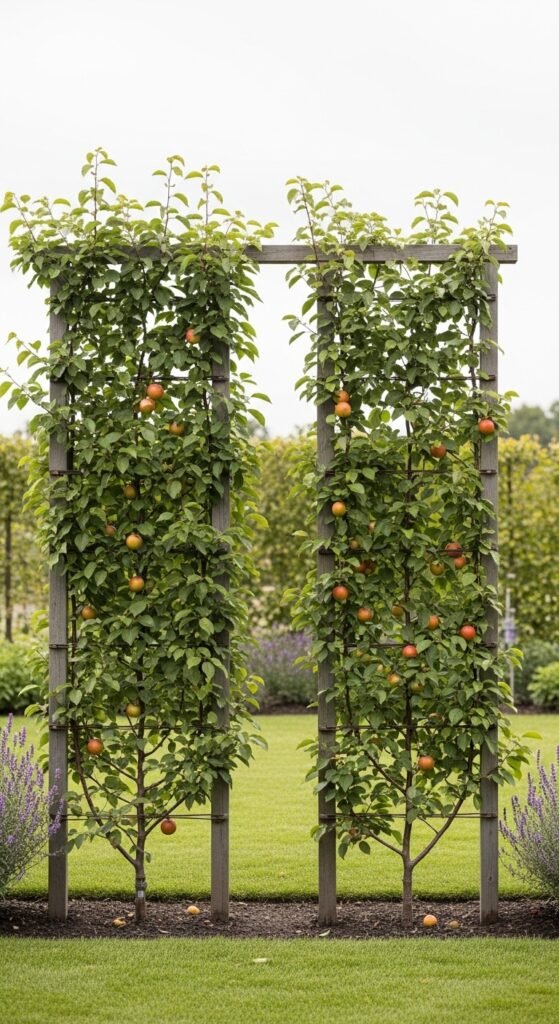
Build a robust frame, plant trees at the base, and guide growth. Draw from our collection of garden trellis ideas for sturdy, attractive supports.
9) Container Espalier for Patios
For renters or small spaces, grow espalier in large pots, moving them as needed. Select dwarf varieties and use portable trellises.
Offers portability and ease, bringing fruits to balconies without permanent installation. It’s great for experimenting with patterns.
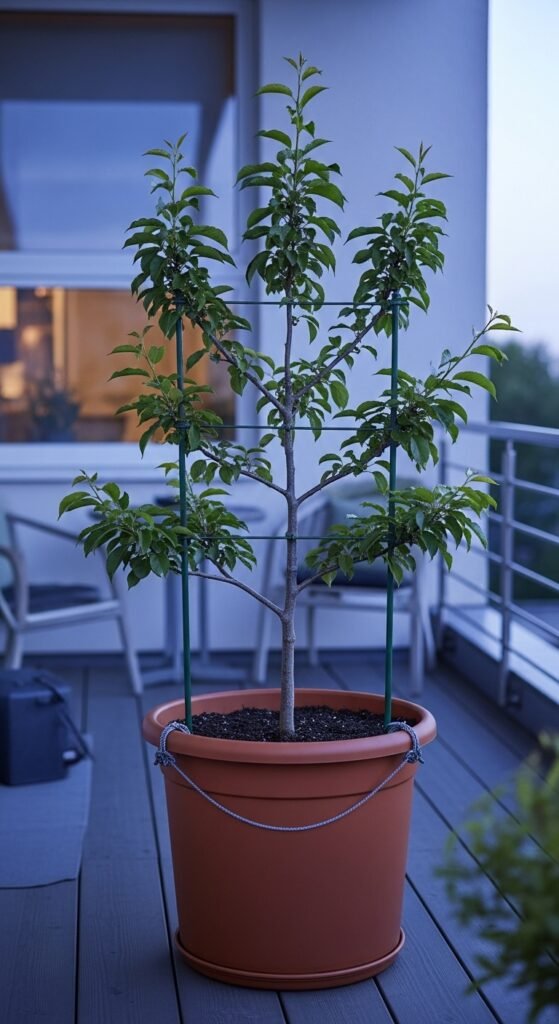
Choose well-draining containers, train branches, and prune regularly. To thin for better fruits, use techniques from thinning fruit trees.
10) Mixing Fruit Types for Diversity
You combine apples, pears, and peaches on one espalier frame, ensuring compatible rootstocks and pollination needs.
This yields variety in harvests and extends the fruiting season, maximizing your investment in space and time.
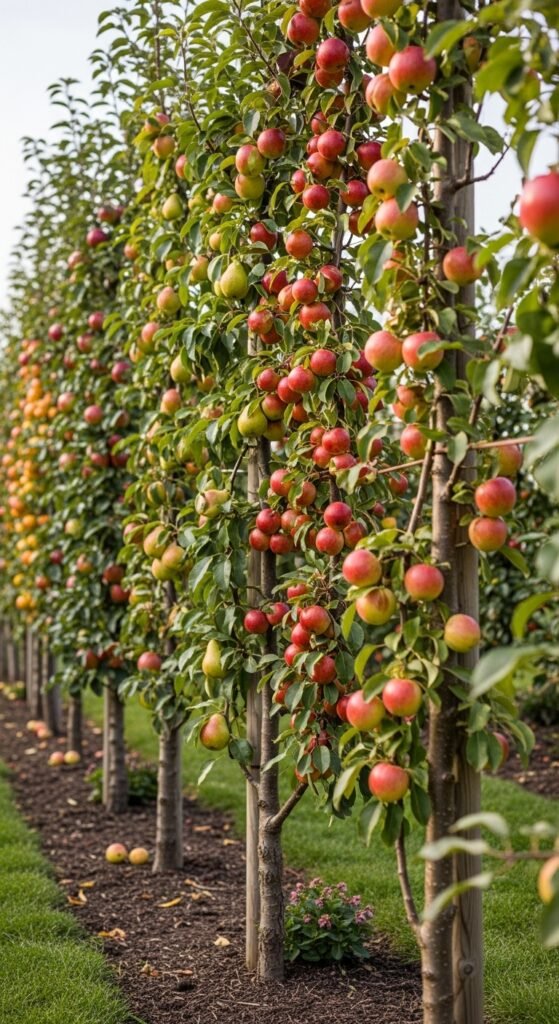
Graft or plant closely, training together. For specific pruning, see our peach tree pruning guide alongside others.
11) Ornamental with Flowering Companions
Integrate climbing flowers like clematis with your espalier fruit trees for added color and pollinator attraction.
Enhances biodiversity and beauty, improving pollination rates and overall garden health.
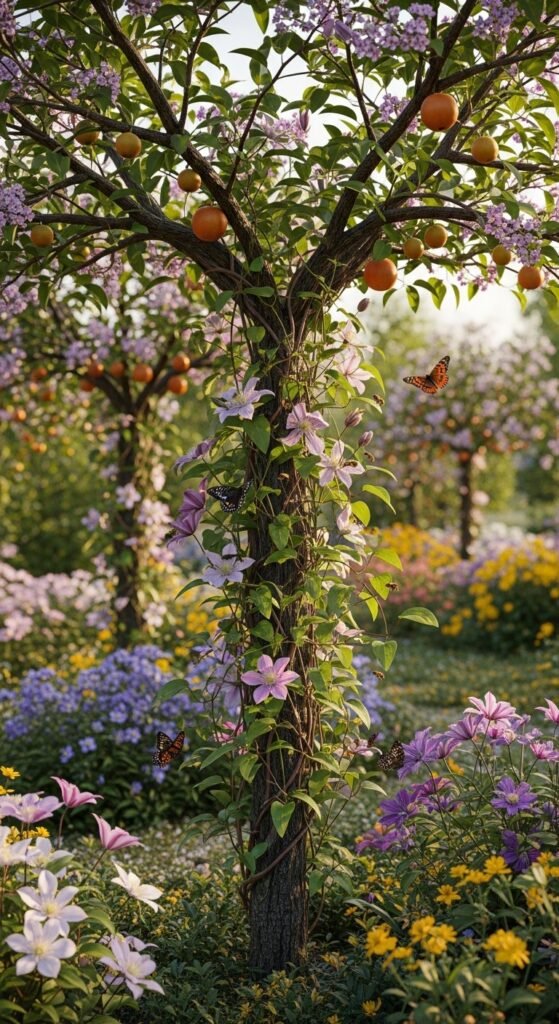
Plant companions at the base, weaving through branches. Explore blackberry trellis ideas for similar integrated supports.
12) In Urban Gardens for Sustainability
Adapt espalier to city lots by using vertical walls, turning concrete jungles into green oases with fruit production.
Promotes self-sufficiency and eco-friendliness, reducing food miles while beautifying urban spaces.
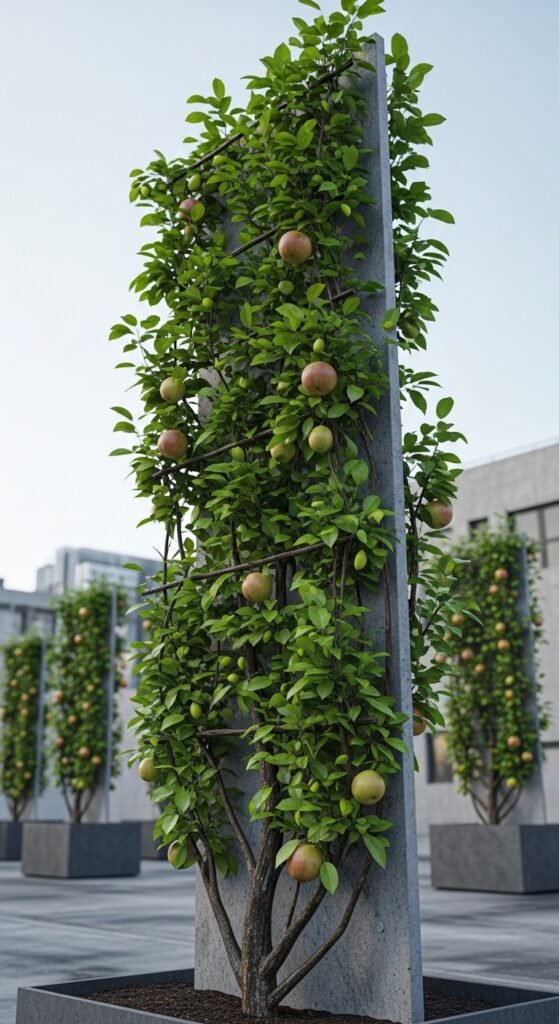
Secure to building facades, prune for compactness. Incorporate espalier pruning techniques for maintenance in tight areas.
13) For Privacy Screens with Dense Growth
Create living screens by densely training espalier trees along fences, blocking views while providing fruits.
Delivers privacy plus productivity, ideal for suburban backyards seeking seclusion.
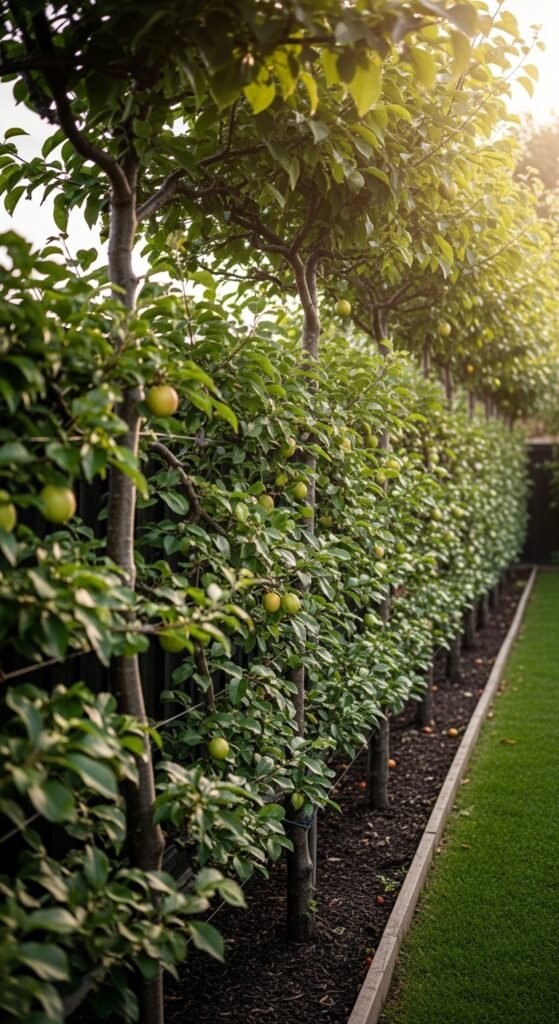
Plant in rows, encourage fuller branching. Use our pear tree fire blight management to keep screens healthy.
14) Heritage Varieties for Unique Flavors
Choose heirloom fruit trees for espalier, preserving biodiversity and enjoying rare tastes.
Offers culinary diversity and heritage value, connecting you to gardening traditions.
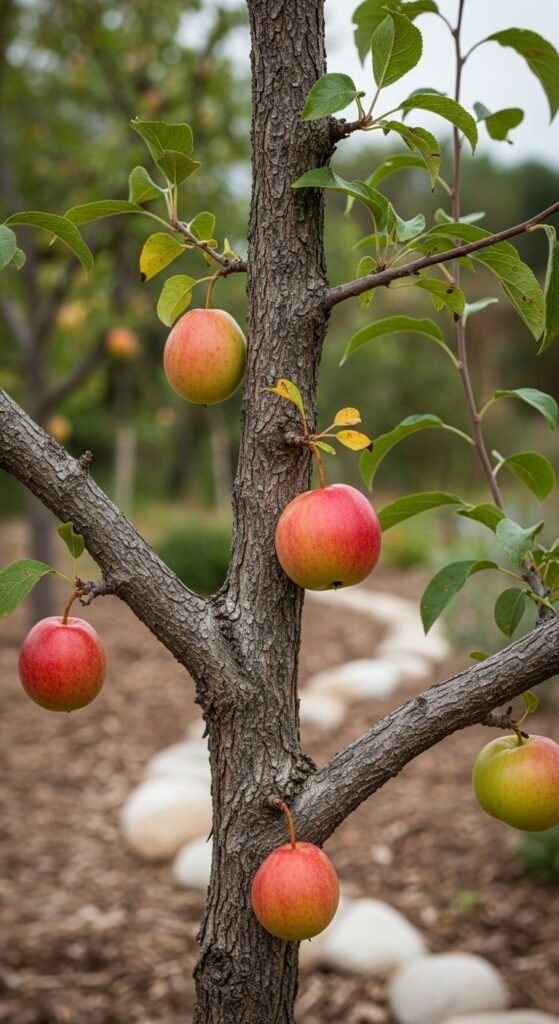
Source from nurseries, train as usual. Fertilize per our fruit tree fertilizing recommendations for vitality.
15) Low-Maintenance Options with Dwarf Stocks
Opt for dwarf rootstocks in simple cordon forms to minimize pruning efforts while still harvesting abundantly.
Provides ease for busy gardeners, with compact size suiting modern lifestyles.
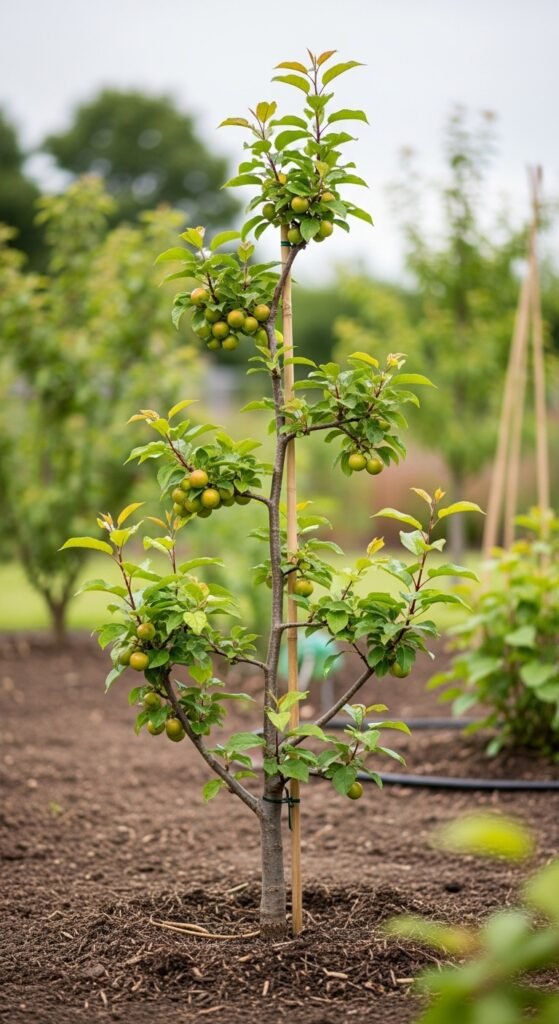
Plant in enriched soil, train minimally. Time planting with optimal fruit tree planting seasons for quick establishment.
Key Principles of Espalier Fruit Trees
Selecting the Right Varieties
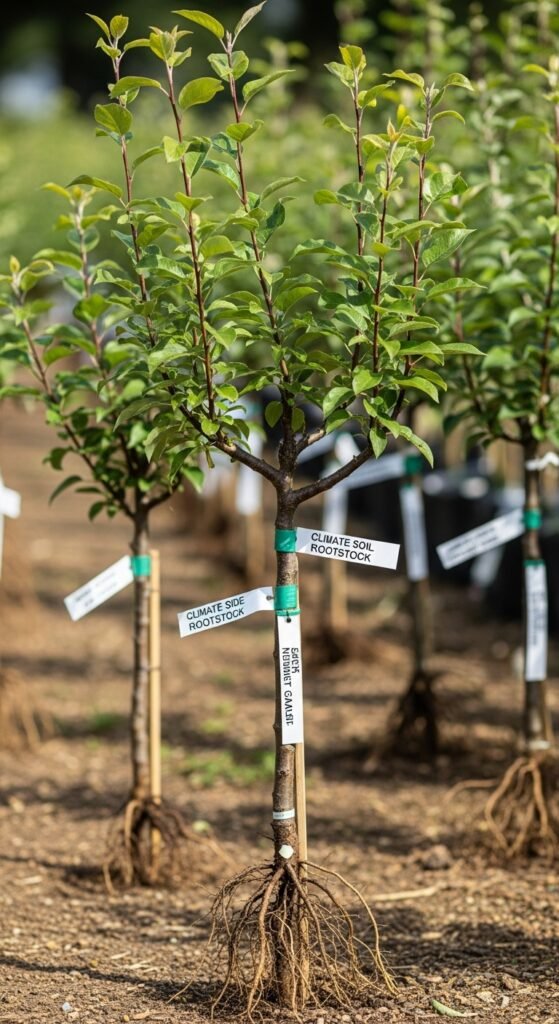
You should choose fruit trees that respond well to training, such as apples, pears, and peaches on dwarf or semi-dwarf rootstocks. Consider your climate zone and soil type to ensure compatibility and success.
Pruning and Training Essentials
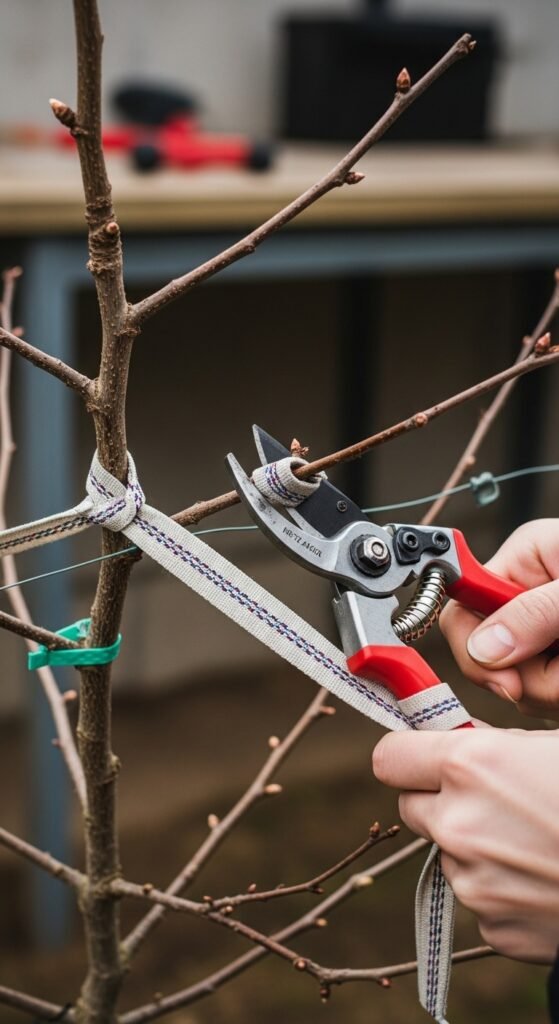
Regular pruning is crucial—focus on summer for shape and winter for structure. Use soft ties to avoid damaging bark, and always prune above buds to direct growth.
Maintenance and Troubleshooting
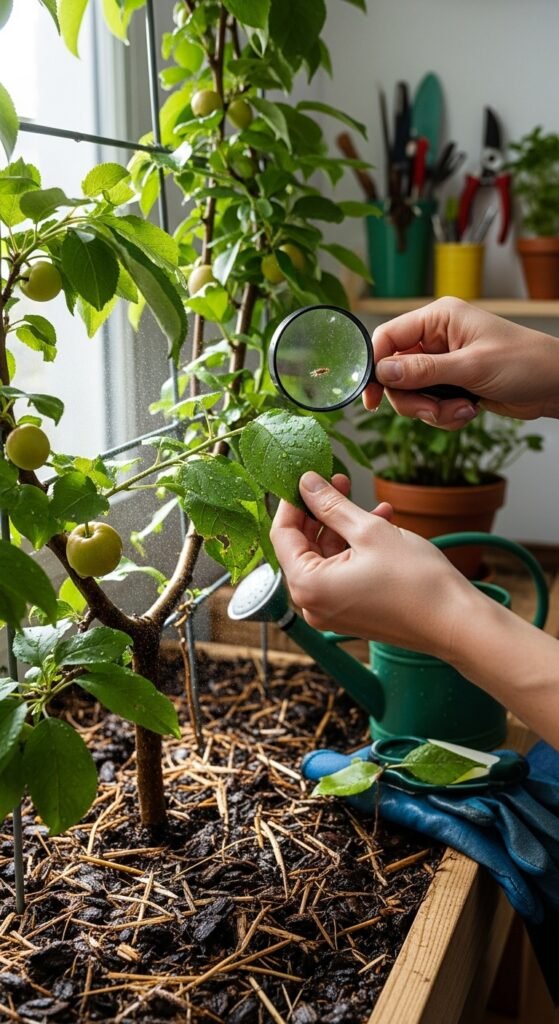
Monitor for pests and diseases, watering deeply but infrequently. Mulch around bases to retain moisture, and fertilize sparingly to prevent excessive vegetative growth.
Frequently Asked Questions
What fruit trees are best for espalier?
Apples, pears, peaches, and cherries are excellent choices due to their flexible branches and responsiveness to training. Select varieties suited to your local climate for optimal results.
How much space do espalier fruit trees need?
They require about 6-10 feet of horizontal space per tree, depending on the pattern, but only 1-2 feet of depth since they’re grown flat.
When should I start training an espalier tree?
Begin with young, flexible trees in their first or second year. Initial training happens in spring as new growth emerges.
Do espalier trees produce as much fruit as standard trees?
Yes, often more per square foot due to better light exposure and air circulation, though total yield may be slightly less than a full-sized tree.
How do I protect espalier trees from pests?
Use organic sprays, encourage beneficial insects, and inspect regularly. Netting can safeguard fruits from birds and larger pests.