Creating the perfect soil mix for herbs is key to growing vibrant, flavorful plants right in your garden or on your windowsill. Herbs like basil, mint, and rosemary thrive in well-draining, nutrient-rich soil that mimics their natural Mediterranean or woodland habitats. By customizing your soil mix, you ensure optimal root development, prevent waterlogging, and boost essential oil production for more aromatic leaves.
Whether you’re a beginner or seasoned gardener, experimenting with different soil mixes can transform your herb garden. These ideas focus on balancing aeration, moisture retention, and fertility, using common ingredients like compost, perlite, and peat. You’ll discover how simple tweaks can lead to healthier plants and bountiful yields, all while keeping things organic and sustainable.
Ready to dig in? Let’s explore these soil mix for herbs variations that cater to various growing conditions, from containers to raised beds.
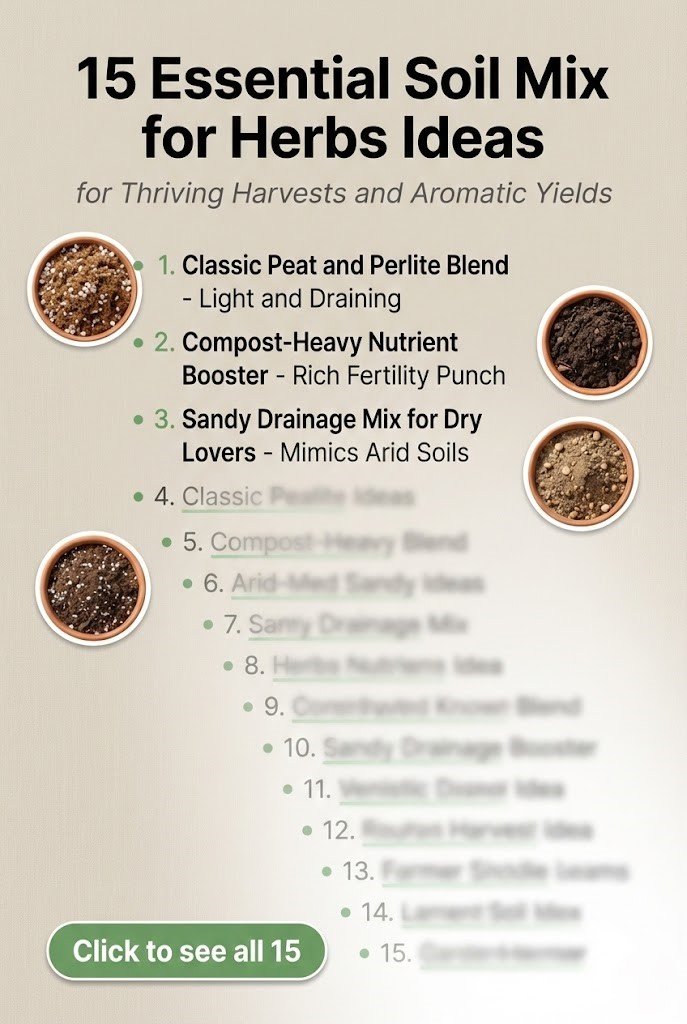
1) Classic Peat and Perlite Blend
You start with a basic peat moss base, mixed with perlite for drainage and compost for nutrients. This soil mix for herbs provides a light, airy texture that prevents compaction, ideal for root growth in potted setups.
Why does it work? Herbs hate soggy roots, and this combination retains just enough moisture while allowing excess water to escape, reducing rot risks. It’s especially great for Mediterranean herbs like rosemary, which prefer drier conditions. Plus, the organic matter from compost feeds your plants steadily, promoting lush foliage without chemical fertilizers.
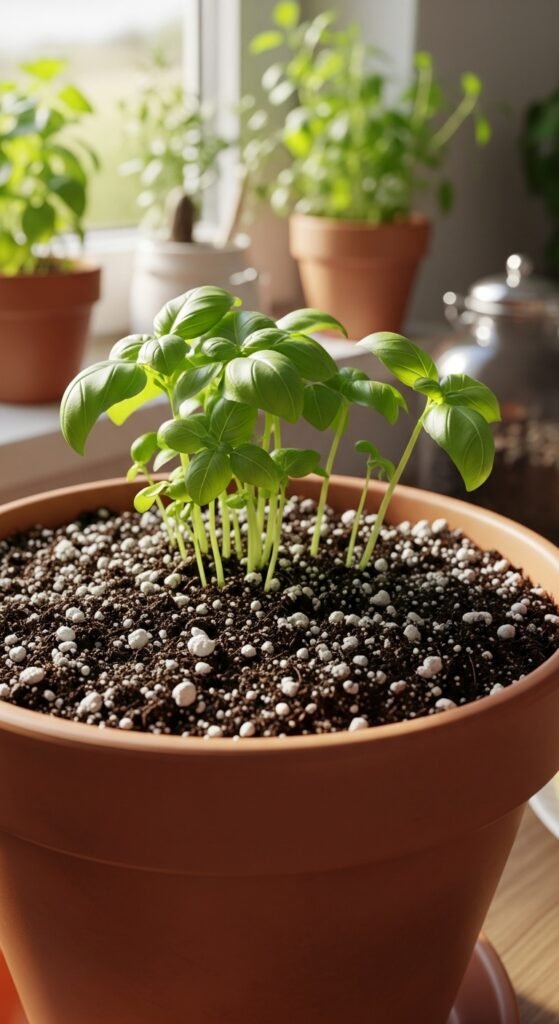
To make it, combine two parts peat moss, one part perlite, and one part compost. Mix thoroughly in a large container, then fill your pots. For alternatives to perlite, consider our guide on perlite vs pumice to fine-tune drainage. Water lightly after planting, and watch your herbs flourish in this balanced medium.
2) Compost-Heavy Nutrient Booster
Focus on rich, aged compost as the star, blended with garden soil and vermiculite. This soil mix for herbs delivers a fertility punch, perfect for heavy feeders like basil that crave organic matter for robust growth.
The benefits shine in flavor enhancement—nutrient-dense soil leads to more potent essential oils in your herbs. It also improves soil structure over time, fostering beneficial microbes that aid in disease resistance. Avoid over-fertilizing; the compost provides slow-release nutrition throughout the season.
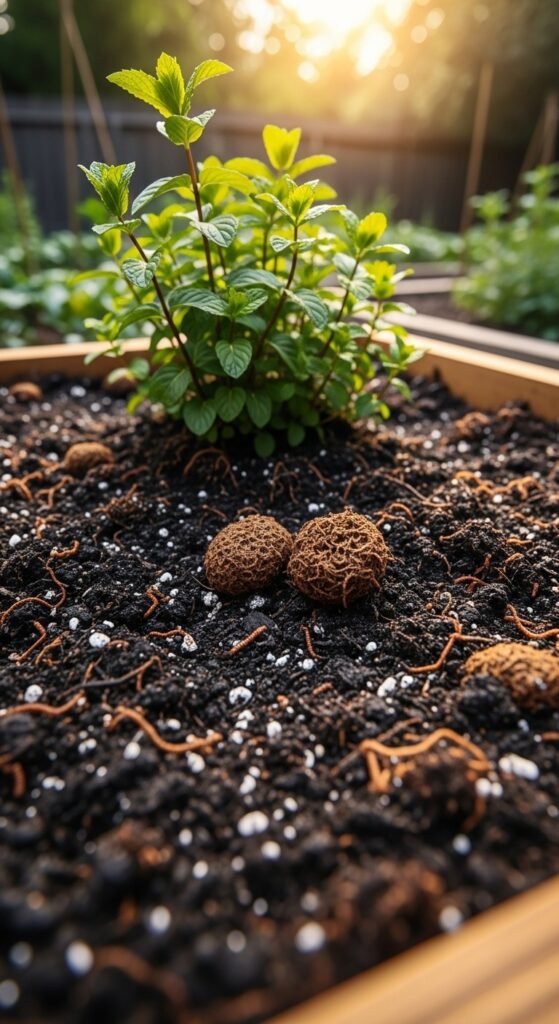
Prepare by mixing three parts compost with one part garden soil and one part vermiculite for aeration. Ensure the compost is well-rotted to prevent burning tender roots. If you’re composting at home, explore compost tea for an extra nutrient kick. Plant your herbs directly, mulching the top to retain moisture and suppress weeds.
3) Sandy Drainage Mix for Dry Lovers
Incorporate coarse sand into your base of potting soil and peat, creating a fast-draining soil mix for herbs like thyme and oregano that originate from arid regions.
This setup mimics rocky, well-aerated native soils, preventing fungal issues in humid climates. You’ll notice stronger stems and intensified aromas as the plants adapt to slight stress, concentrating their flavors. It’s economical too, using readily available materials.
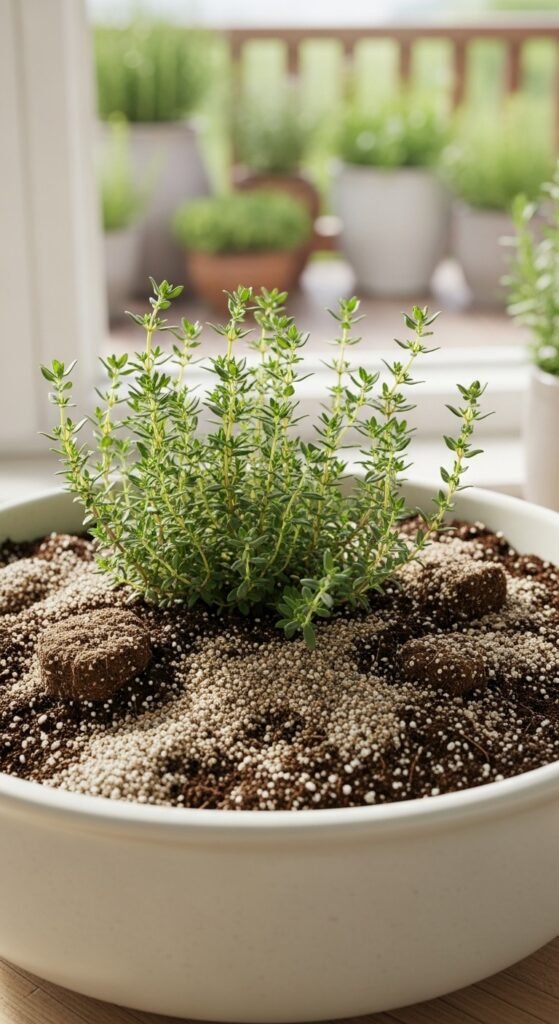
How-to: Blend two parts potting soil, one part sand, and one part peat. Test drainage by watering; it should flow through quickly. For indoor applications, pair this with our tips on best soil for indoor herbs. Adjust ratios based on your local humidity to keep roots happy and healthy.
4) Vermiculite-Enhanced Moisture Retainer
Use vermiculite as a key additive in a mix of compost and coco coir, ideal for herbs such as mint that prefer consistently moist but not waterlogged soil.
Why choose this? Vermiculite holds water and nutrients efficiently, releasing them slowly to roots, which is crucial during hot spells. It lightens heavy soils, improving aeration and reducing compaction for better oxygen flow. Your herbs will reward you with vigorous growth and fewer watering chores.
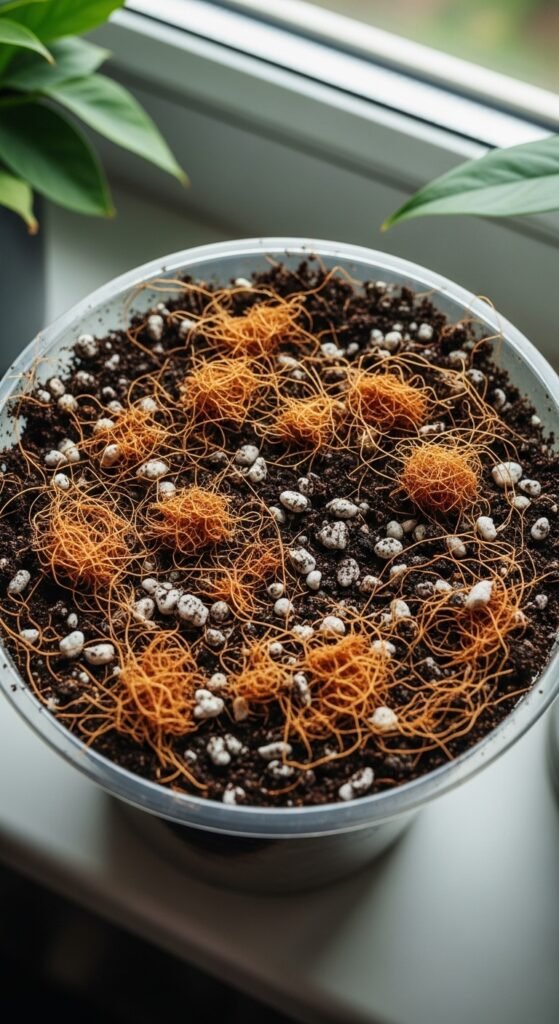
Craft it by combining equal parts compost, coco coir, and vermiculite. Stir well for even distribution. If propagating, this pairs well with potting mix for cuttings. Plant seedlings gently, ensuring the mix surrounds roots completely for optimal establishment.
5) Biochar-Infused Sustainable Option
Add biochar to a standard potting mix with perlite and fertilizer, creating an eco-friendly soil mix for herbs that enhances carbon sequestration while nourishing plants.
The advantages include improved water retention and microbial activity, leading to healthier root systems. Biochar neutralizes toxins and stabilizes pH, making it versatile for various herb types. It’s a long-term investment, as it doesn’t break down quickly.
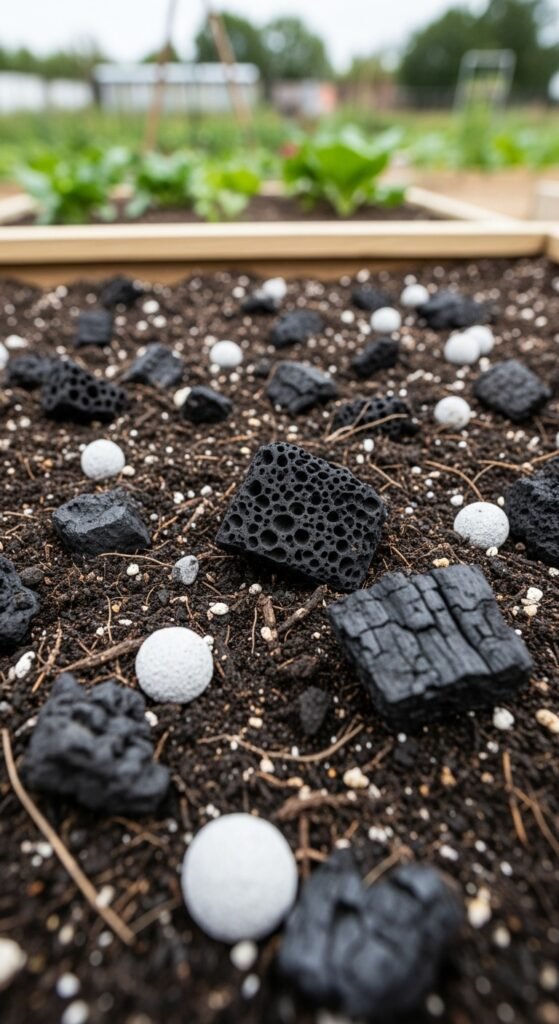
To prepare, mix one part biochar with three parts potting soil and one part perlite. Incorporate a handful of organic fertilizer. Learn more about its benefits in biochar for soil. Use this in raised beds for perennial herbs, refreshing annually for sustained vitality.
6) Coco Coir-Based Eco Mix
Replace peat with coco coir, adding perlite and compost for a renewable soil mix for herbs that’s pH-neutral and highly absorbent.
This choice supports sustainability while providing excellent drainage and aeration. Herbs grow faster in this medium, with reduced risk of overwatering issues. It’s lightweight, perfect for container gardening on balconies or indoors.
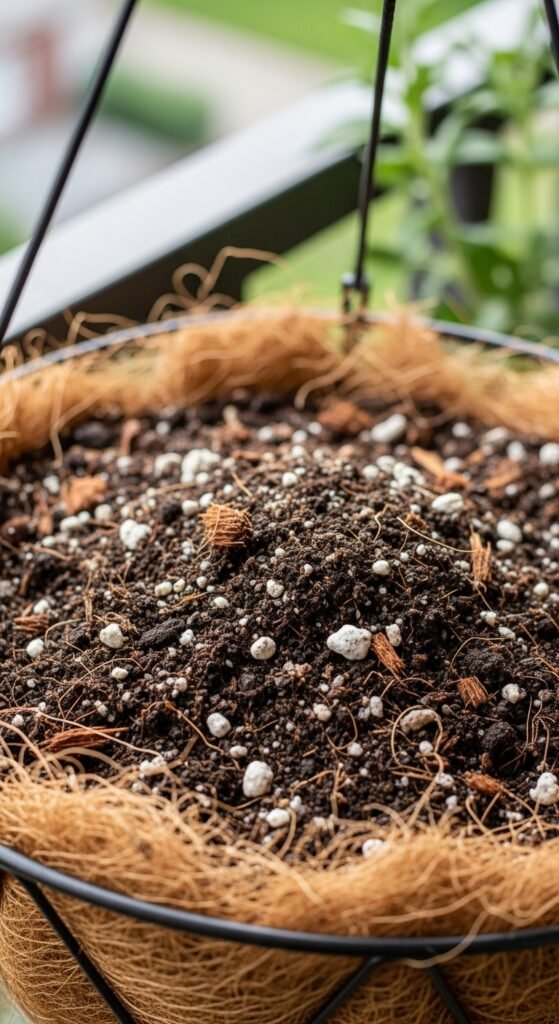
Assemble by blending two parts coco coir, one part perlite, and one part compost. Hydrate the coir first if it’s compressed. For container ideas, check best soil for container gardening. Transplant your herbs, pressing the mix firmly around roots for stability.
7) Raised Bed Optimized Blend
Design for elevated gardens with a mix of topsoil, compost, and sand, tailored as a soil mix for herbs in spacious setups.
Benefits encompass better warmth and drainage in spring, extending your growing season. The depth allows deep-rooted herbs like rosemary to thrive. You’ll harvest more abundantly with this nutrient-packed foundation.
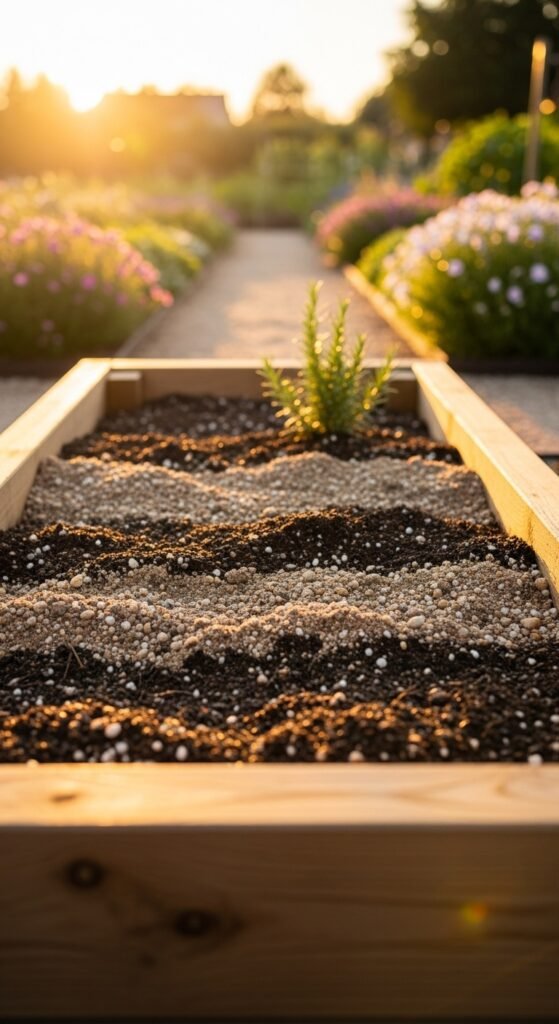
Create it using equal parts topsoil, compost, and sand. Layer in your beds, turning to integrate. Draw from our advice on best soil mix for raised beds. Plant companions together for natural pest control and enhanced flavors.
8) Seed Starting Lightweight Formula
For germinating herb seeds, use a fine mix of vermiculite, perlite, and peat, ensuring delicate seedlings get the best start in your soil mix for herbs.
Why effective? It promotes even moisture and warmth, crucial for high germination rates. Sterile components minimize damping-off diseases, giving your herbs a strong foundation.
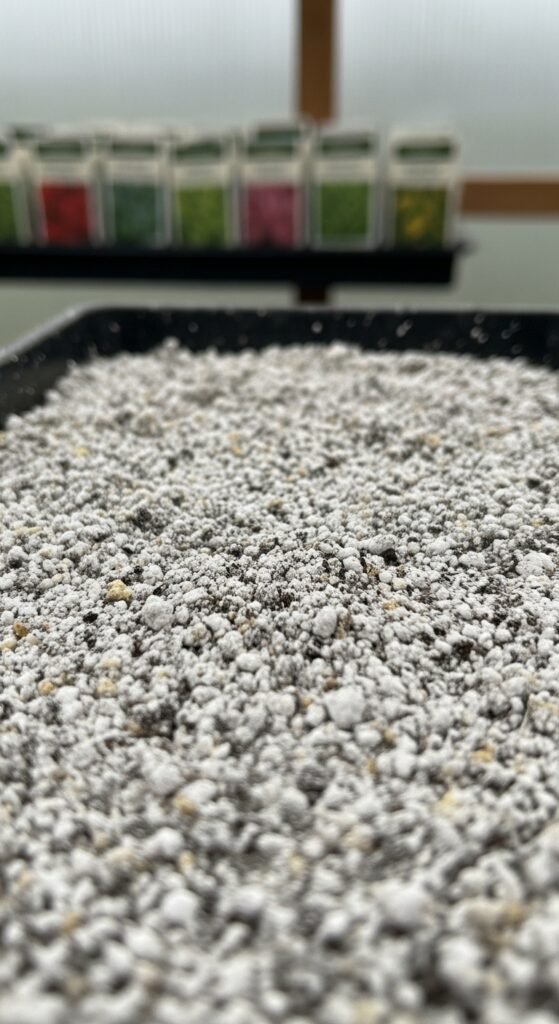
Combine equal parts of each, sifting for smoothness. Moisten before sowing seeds shallowly. Once sprouted, transition to a richer mix. Reference seed starting soil mix for variations. This method saves money on store-bought starters.
9) Organic Fertilizer-Enriched Mix
Infuse worm castings or bone meal into a base of potting soil and compost, crafting a nutrient-dense soil mix for herbs without synthetics.
This approach builds soil health organically, supporting beneficial insects and microbes. Herbs develop deeper flavors and resilience against pests. It’s cost-effective for large gardens.
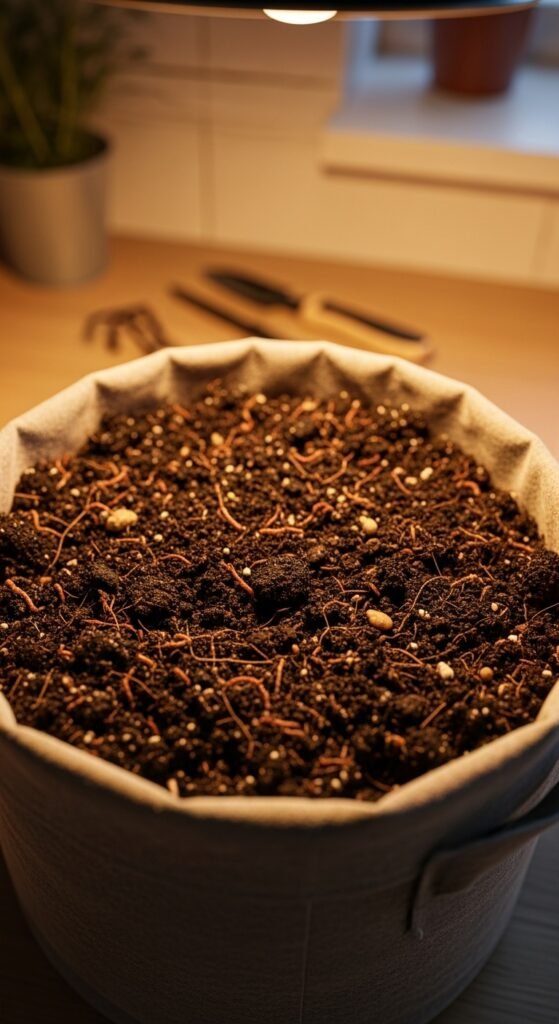
Mix two parts potting soil, one part compost, and a quarter part fertilizer. Blend gently to preserve structure. For vegetable parallels applicable to herbs, see organic fertilizer for vegetables. Apply to established plants, top-dressing as needed for boosts.
10) Aroid-Inspired Chunky Mix
Adapt recipes for tropical plants by adding bark and charcoal to peat and perlite, suiting herbs that need extra aeration in humid spots.
Advantages include preventing root rot in wet climates and encouraging epiphytic-like growth for herbs like oregano. The chunky texture improves oxygen access.
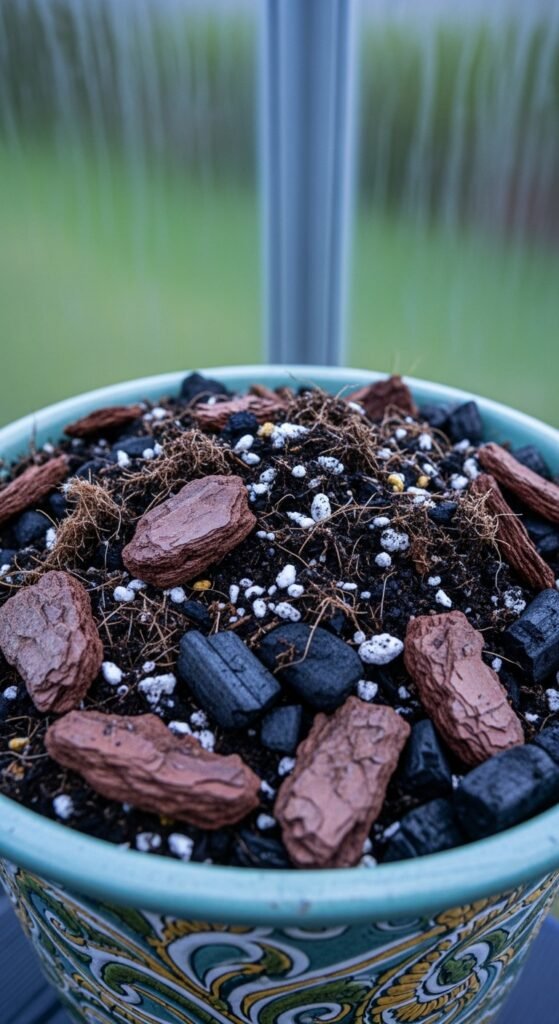
Formulate with one part each of peat, perlite, bark, and charcoal. Chop bark finely. Inspired by aroid soil mix recipe, adjust for your herbs. Use in hanging baskets for trailing varieties, ensuring good airflow.
11) Coffee Grounds Amended Blend
Incorporate used coffee grounds into compost and soil, creating an acidic-loving soil mix for herbs like parsley that benefit from mild acidity.
This recycles waste while adding nitrogen, enhancing leaf production. It deters slugs naturally and improves tilth over time.
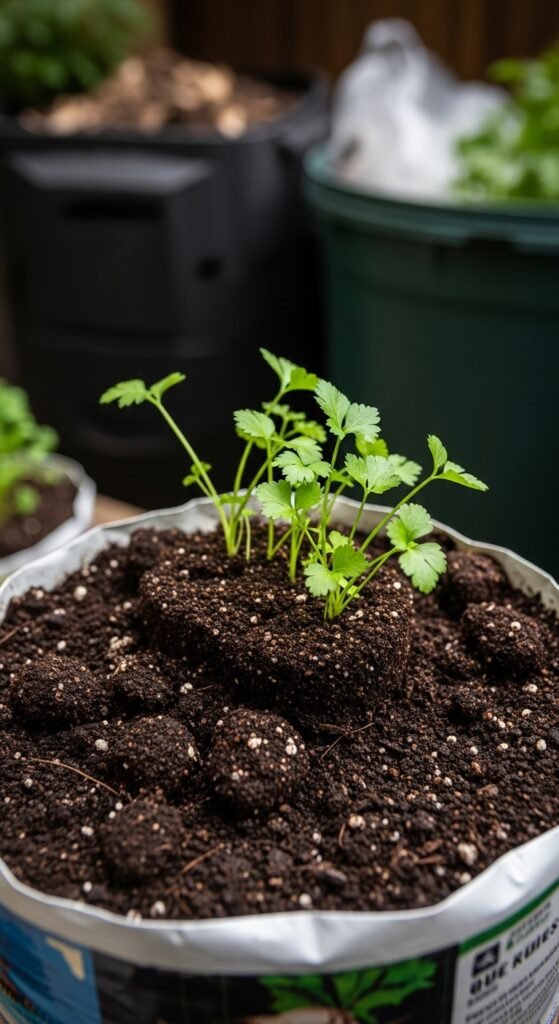
Ratio: Two parts soil, one part compost, half part grounds. Mix and let mellow for a week. Explore more uses in coffee grounds in garden. Scatter around bases post-planting for ongoing benefits.
12) Herb-Specific Indoor Formula
Tailor for windowsill growing with sterile potting mix, perlite, and slow-release fertilizer, optimizing your soil mix for herbs in low-light homes.
It maintains cleanliness indoors while providing steady nutrition. Your kitchen herbs will stay fresh and accessible year-round.
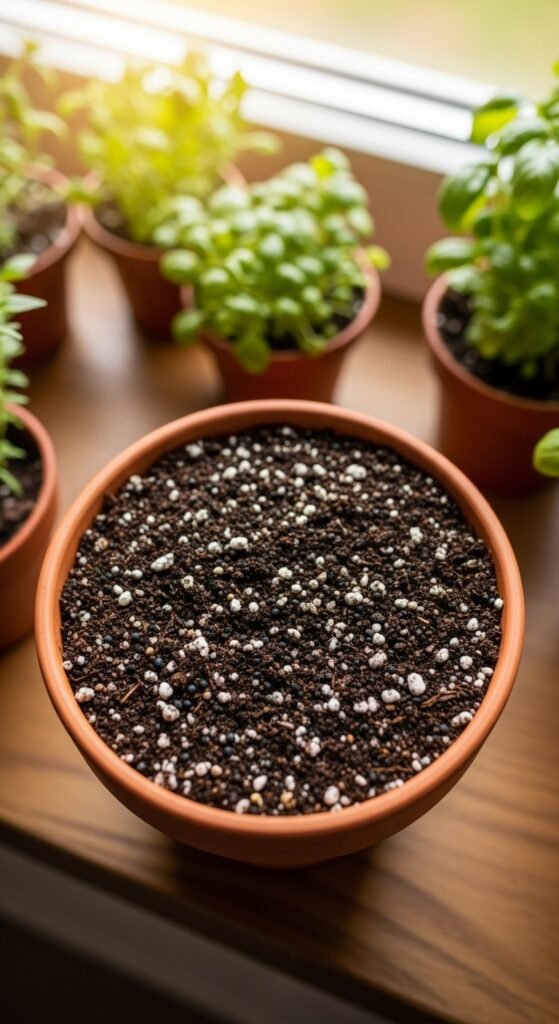
Blend three parts potting mix, one part perlite, and fertilizer per package. Sterilize if needed. Align with best potting soil for indoor plants. Rotate pots for even growth, harvesting regularly.
13) Bokashi Fermented Enrichment
Use bokashi bran to ferment kitchen scraps, then mix into soil for a probiotic-rich soil mix for herbs that supercharges microbial life.
Benefits: Faster decomposition and nutrient availability, leading to vigorous plants. It’s urban-friendly for small spaces.
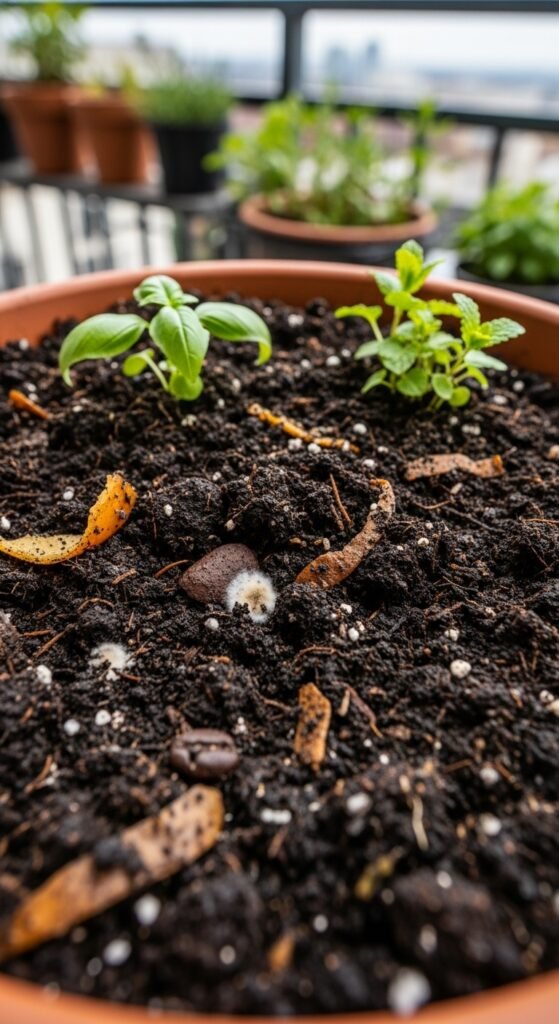
After fermentation, incorporate one part bokashi compost with three parts soil. Bury scraps shallowly. Dive deeper into bokashi composting. Ideal for refreshing tired pots mid-season.
14) Pumice-Alternative Drainage Mix
Swap perlite for pumice in a coco coir and compost base, offering durable drainage in your soil mix for herbs over multiple seasons.
Pumice’s longevity prevents breakdown, maintaining structure longer. It holds minerals, benefiting herb nutrition subtly.
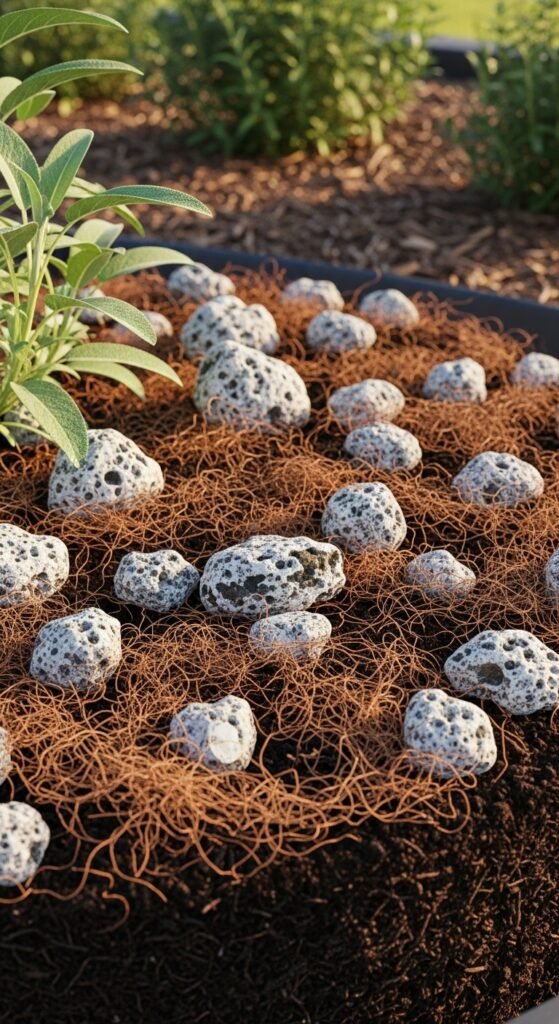
Mix two parts coir, one part pumice, one part compost. Wet slightly for handling. For comparisons, read perlite vs pumice again if needed. Suits woody herbs like sage in permanent planters.
15) Custom Beginner-Friendly Starter
Keep it simple with bagged potting soil enhanced by compost and sand, a forgiving soil mix for herbs for new gardeners.
This builds confidence with reliable results, teaching soil basics. Affordable and scalable for expanding collections.
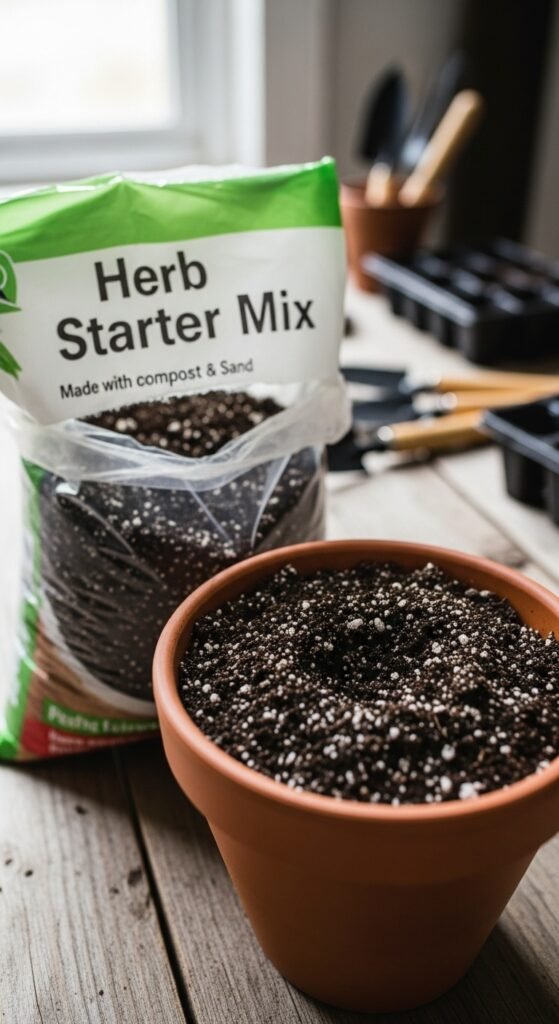
Combine equal parts potting soil, compost, and sand. No special tools required. Start with basics from herb gardening for beginners. Experiment as you gain experience, noting what your herbs prefer.
Key Principles for Herb Soil Success
Understanding Drainage Needs
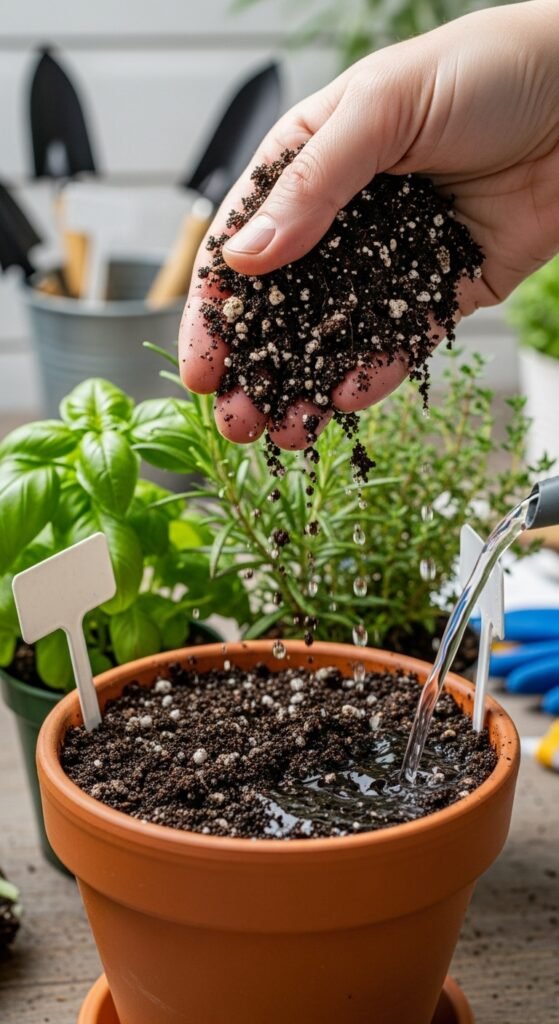
Always prioritize aeration to avoid root issues; test by squeezing a handful—if it crumbles easily, it’s good.
Balancing Nutrients Organically
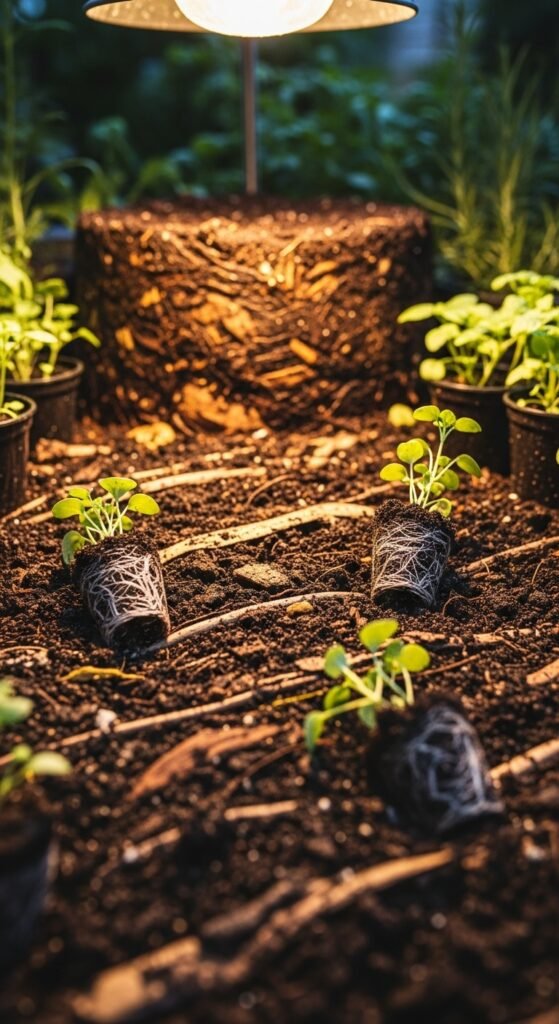
Use natural amendments like compost to maintain fertility without overwhelming delicate herb roots.
Adapting to Your Climate
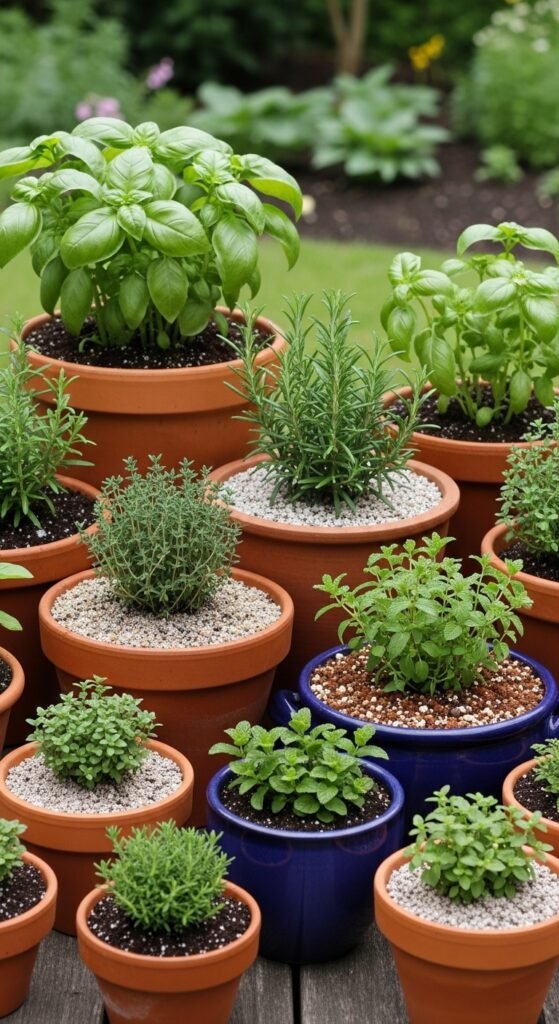
Adjust mixes for humidity or dryness; add more sand in wet areas, vermiculite in arid ones.
Frequently Asked Questions
What is the best pH for soil mix for herbs?
Most herbs prefer a slightly acidic to neutral pH between 6.0 and 7.0. Test your mix and amend with lime if too acidic or sulfur if alkaline.
Can I reuse old soil mix for herbs?
Yes, but refresh it with fresh compost and check for pests. Rotate crops to prevent nutrient depletion.
How often should I change the soil mix for potted herbs?
Annually for annuals, every 2-3 years for perennials. Top-dress with compost in between for maintenance.
Is store-bought potting soil sufficient for herbs?
It can be, but customizing with drainage materials improves results, especially for specific herb needs.
What if my herbs show yellow leaves in the soil mix?
This often indicates overwatering or nutrient deficiency. Improve drainage and add balanced fertilizer sparingly.