Storing dried herbs effectively ensures that you maintain their aromatic qualities and medicinal benefits for extended periods. As a gardener, you understand the effort involved in cultivating and harvesting herbs, so proper storage prevents waste and maximizes usability in your culinary or therapeutic endeavors. By choosing the right methods, you can avoid common pitfalls such as moisture buildup or flavor degradation.
The key to successful storing dried herbs lies in controlling environmental factors like light, heat, and humidity. This approach not only extends shelf life but also preserves the essential oils that give herbs their distinctive profiles. Whether you grow your own in an indoor herb garden or purchase them, these ideas will help you organize and protect your collection efficiently.
Explore the following strategies to enhance your herb storage routine, incorporating simple yet effective techniques tailored for everyday use.
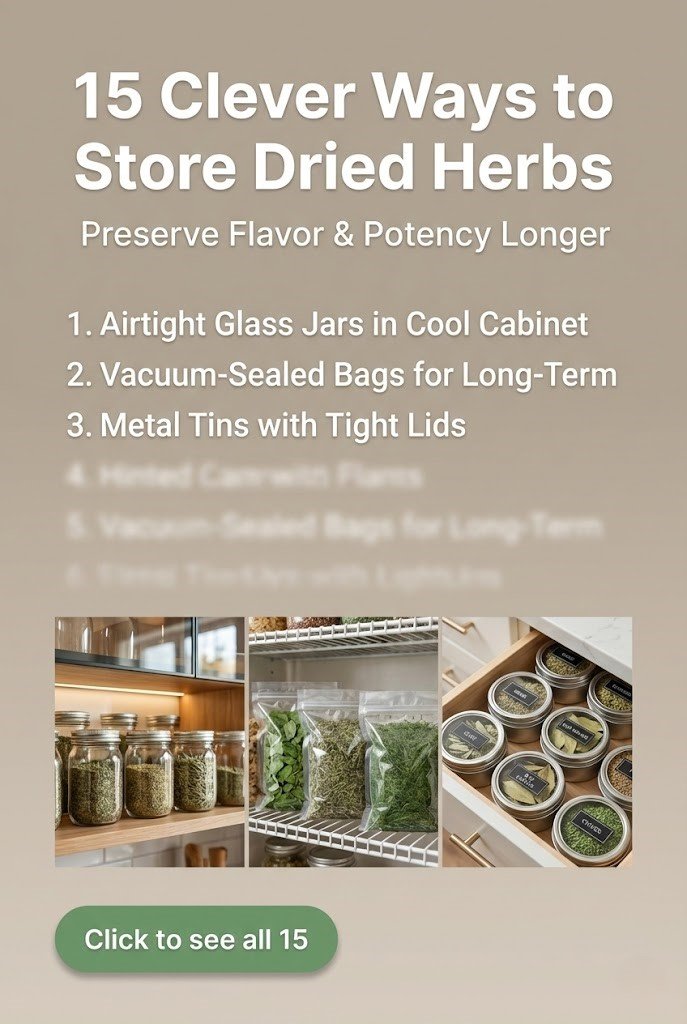
1) Airtight Glass Jars in a Cool Cabinet
You can store dried herbs in airtight glass jars placed inside a cool, dark cabinet to shield them from light and air exposure. This method involves selecting clear or amber glass containers that seal tightly, preventing oxygen from diminishing the herbs’ potency over time.
The primary benefit is extended shelf life, often up to one to three years, while retaining vibrant flavors and aromas essential for cooking. Glass is non-reactive, ensuring no unwanted tastes leach into your herbs, unlike some plastic options.
To implement this, fill jars three-quarters full to allow for expansion, label with the herb name and date, and position them away from heat sources like stoves. Regularly check for signs of moisture; if any appears, discard affected herbs to avoid mold. This straightforward approach complements your herb gardening for beginners efforts by preserving your harvest effectively.
2) Vacuum-Sealed Bags for Long-Term Preservation
Vacuum-sealed bags offer an excellent solution for storing dried herbs when you anticipate infrequent use. By removing air from the bags, you minimize oxidation, which is a leading cause of flavor loss in dried botanicals.
Key advantages include compactness for storage in limited spaces and protection against pests, making it ideal for bulk quantities from your garden. This technique can double the typical storage duration compared to standard methods.
Begin by placing dried herbs into food-grade vacuum bags, then use a sealer to extract air and create an airtight environment. Store these in a pantry or freezer for added longevity. If you’ve recently prepared herbs using techniques from our drying herbs at home guide, this step ensures they remain potent for future recipes.
3) Metal Tins with Tight-Fitting Lids
Opt for metal tins equipped with secure lids when storing dried herbs to provide a durable, light-blocking container. These tins are particularly useful for frequently accessed herbs, as they open easily while maintaining a strong seal.
Notable benefits encompass resistance to breakage and an opaque design that guards against UV rays, preserving color and efficacy. Metal also deters rodents, adding a layer of security in storage areas prone to infestations.
To use this method, transfer your dried herbs into clean tins, filling them loosely to avoid crushing leaves. Label externally and store in a drawer or shelf at room temperature. For herbs like parsley you’ve dehydrated following our dehydrate parsley instructions, tins keep them crisp and ready for seasoning.
4) Freezer Storage in Resealable Bags
You might consider freezing dried herbs in resealable plastic bags for scenarios requiring ultra-long preservation. Although dried, freezing further halts degradation processes, especially in humid climates.
Significant perks include indefinite shelf life potential and retention of volatile compounds that contribute to taste. This is especially effective for herbs with high oil content, preventing rancidity.
Portion herbs into small bags, expel excess air before sealing, and place in the freezer. Thaw only what you need to minimize condensation. This pairs well with alternative preservation like freezing fresh herbs, allowing versatile use from your harvest.
5) Hanging Mesh Bags in a Dry Pantry
Hanging mesh bags provide a breathable yet protective option for storing dried herbs, particularly whole leaves or stems. Suspend them in a dry pantry to promote air circulation while keeping dust at bay.
Essential gains involve space-saving vertical storage and natural humidity control, reducing mold risks. Mesh allows you to visually inspect herbs without opening containers.
Select food-safe mesh bags, fill with dried herbs, and hang from hooks or rods. Ensure the pantry remains cool and ventilated. If you’ve crafted a drying setup inspired by our herb drying rack DIY, transition directly to this storage for seamless preservation.
6) Spice Drawer Organizers with Labeled Compartments
Utilize spice drawer organizers featuring divided compartments for storing dried herbs in an accessible, systematic manner. This setup keeps everything visible and prevents cross-contamination of flavors.
Core benefits feature easy retrieval during meal prep and optimized space in kitchens with limited cabinets. Custom labels enhance organization, saving time in busy routines.
Arrange ground or crushed herbs in small jars within the organizer, labeling each with contents and expiration. Position the drawer away from heat. For indoor-grown varieties from your vertical herb garden, this method maintains order from garden to table.
7) Amber Glass Bottles on Shelves
Amber glass bottles on open shelves serve as both functional storage and decorative elements for dried herbs. The tinted glass filters harmful light, safeguarding sensitive compounds.
Prominent advantages include aesthetic appeal in your kitchen and quick access for daily use. Bottles are reusable, promoting sustainability in your gardening practices.
Fill bottles with dried herbs, cork or cap securely, and display on shelves in indirect light. Rotate stock to use older batches first. This complements herbs like cilantro processed via our dehydrate cilantro method, blending utility with style.
8) Vacuum Jars with Pump Mechanisms
Employ vacuum jars equipped with manual pumps for storing dried herbs, creating a low-oxygen environment that extends usability. These are suitable for premium or home-grown collections.
Vital benefits encompass superior air removal compared to standard lids and portability for travel or gifting. Pumps allow resealing after each use.
Pump out air after filling the jar, store in a cupboard, and repressurize as needed. Ideal for herbs dried using an air fryer for drying herbs, ensuring lasting quality.
9) Wooden Boxes with Dividers
Wooden boxes fitted with dividers offer a rustic approach to storing dried herbs, absorbing minor moisture fluctuations naturally. Choose untreated wood to avoid chemical interactions.
Key strengths include eco-friendliness and a charming display option for pantries. Dividers facilitate categorization by herb type or use.
Line sections with parchment if needed, fill with herbs in pouches, and close the lid. Store in a stable environment. This method enhances your experience with companion planting insights from our herb companion chart.
10) Silica Gel Packets in Containers
Incorporate silica gel packets into your herb containers when storing dried herbs to actively combat humidity. These desiccants maintain dryness without altering flavors.
Important benefits involve prolonged freshness in variable climates and reusability after drying packets in an oven. They prevent clumping effectively.
Add a packet to airtight jars or bags containing herbs, replacing periodically. Monitor for saturation. Pair this with root cellar concepts from our root cellar ideas for comprehensive preservation.
11) Magnetic Spice Tins on Refrigerator
Magnetic spice tins affixed to your refrigerator provide convenient storage for dried herbs, utilizing vertical space efficiently. Opt for tins with clear lids for easy identification.
Noteworthy perks include space optimization in small kitchens and immediate accessibility during cooking. Magnets ensure stability without shelves.
Attach filled tins to the fridge side, labeling as necessary. Avoid direct heat exposure. This innovative setup suits herbs from your windowsill setup, as detailed in our windowsill herb garden article.
12) Cloth Pouches in Drawers
Cloth pouches stored in drawers allow for breathable yet contained storage of dried herbs, ideal for whole forms. Natural fabrics like cotton permit slight airflow.
Essential advantages feature gentleness on delicate leaves and easy customization for different quantities. Drawers protect from light effectively.
Sew or purchase pouches, fill with herbs, tie securely, and organize in drawers. Refresh contents annually. Integrate with beginner tips from our best herbs to grow indoors recommendations.
13) Stackable Plastic Containers
Stackable plastic containers facilitate organized storing of dried herbs in pantries with height constraints. Choose BPA-free options for safety.
Principal benefits encompass modular design for expansion and transparency for quick viewing. Stacking maximizes vertical space.
Label and fill containers, stacking stably on shelves. Use in cool areas. This system works seamlessly with drying techniques like our outdoor herb drying rack suggestions.
14) Infused Oil Bottles for Dual Use
Create infused oil bottles as a creative way to store dried herbs while enhancing oils for cooking. This combines storage with flavor infusion.
Significant gains include multifunctional use and reduced need for separate containers. Infusions add depth to dishes effortlessly.
Submerge dried herbs in neutral oil within bottles, seal, and store in a dark place. Strain after weeks. Draw from culinary herb pruning guides like our basil pruning for fresh inputs.
15) Wall-Mounted Racks with Jars
Wall-mounted racks holding small jars provide an accessible and visually appealing method for storing dried herbs. This frees counter space while keeping herbs at hand.
Core advantages involve decorative integration into kitchen decor and efficient use of wall areas. Racks allow for easy rotation of stock.
Mount the rack securely, fill jars with herbs, and attach. Position away from direct sunlight. Enhance with designs from our herb garden design ideas for cohesive aesthetics.
Key Principles for Effective Herb Storage
Temperature Management
Maintain storage areas between 50-70°F to prevent heat-induced degradation of essential oils in dried herbs. Avoid placements near ovens or windows.
Moisture Control Strategies
Use desiccants or airtight seals to keep humidity low, as excess moisture can lead to mold. Regularly inspect and ventilate storage spaces.
Light Exposure Minimization
Store in opaque or tinted containers to block light, which fades colors and reduces potency. Dark cabinets or pantries are optimal choices.
Frequently Asked Questions
How long can dried herbs be stored effectively?
Dried herbs typically retain optimal flavor for 1-3 years when stored properly in cool, dark, airtight conditions. Ground herbs may degrade faster than whole leaves.
What are the best containers for storing dried herbs?
Airtight glass jars or metal tins are recommended, as they prevent air and moisture ingress while being non-reactive to herb compounds.
Should dried herbs be refrigerated?
Refrigeration is not necessary but can extend life in humid environments; however, ensure containers are sealed to avoid condensation.
How do I know if my stored dried herbs have gone bad?
Check for faded color, lack of aroma, or presence of mold. If herbs smell musty or have clumped, discard them promptly.
Can I store dried herbs in the freezer?
Yes, freezing in airtight bags preserves quality longer, especially for infrequently used herbs, without significantly altering texture upon thawing.