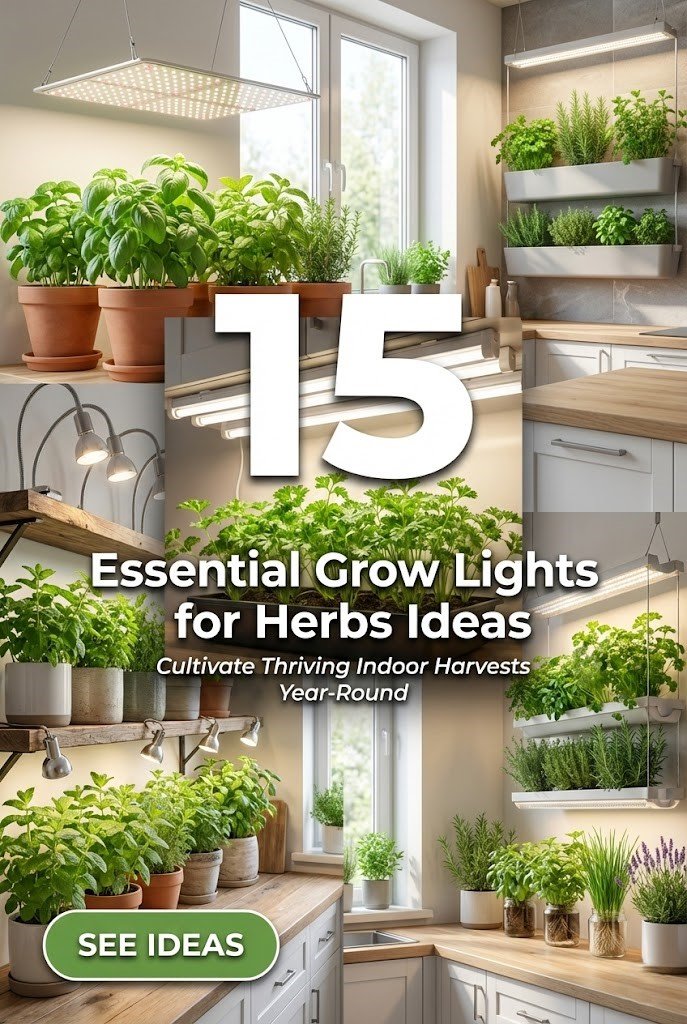
You may find that growing herbs indoors presents unique challenges, particularly with limited natural sunlight. Grow lights for herbs provide a reliable solution, simulating the sun’s spectrum to promote healthy growth and robust flavors. These specialized lights ensure your herbs receive the necessary energy for photosynthesis, even in low-light environments such as kitchens or apartments.
Investing in the right grow lights for herbs allows you to enjoy fresh, homegrown ingredients year-round. Whether you are a novice gardener or an experienced enthusiast, these lights can transform your indoor space into a productive herb haven. By optimizing light exposure, you prevent leggy stems and encourage lush foliage, enhancing both the aesthetic and culinary value of your plants.
Explore these 15 ideas to integrate grow lights effectively into your herb-growing routine. Each suggestion focuses on practical applications, helping you select and position lights for maximum benefit.
1) Full-Spectrum LED Panels for Year-Round Basil Cultivation
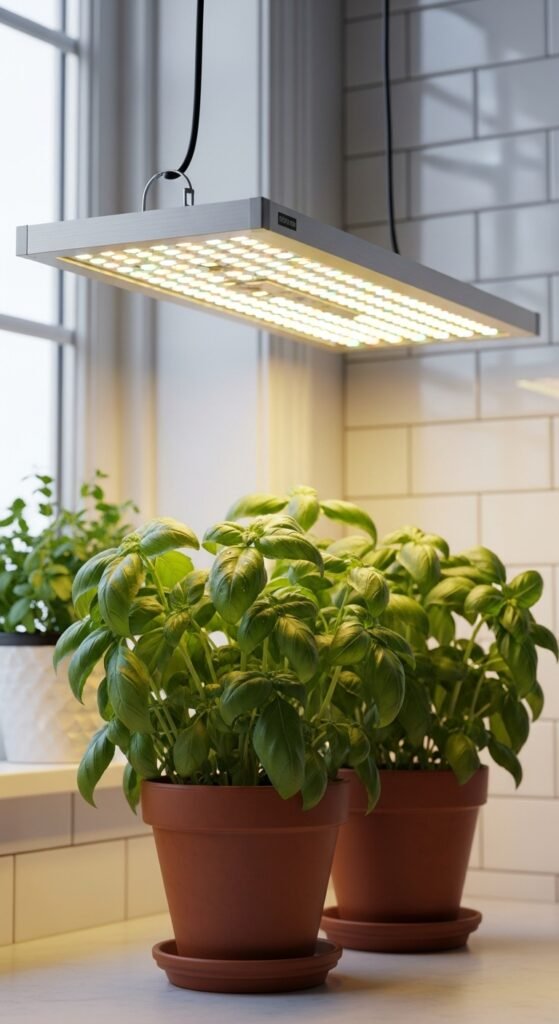
You can utilize full-spectrum LED panels to mimic natural sunlight, ensuring your basil thrives indoors regardless of the season. These panels emit a balanced range of wavelengths, including blue for vegetative growth and red for flowering, which supports robust leaf development. Position the lights 6-12 inches above your plants, adjusting as they grow to avoid burning the delicate leaves.
The key benefit lies in their energy efficiency and low heat output, making them ideal for small spaces like kitchen counters. You will notice healthier, more aromatic basil ready for harvest in just a few weeks. For optimal results, run the lights for 14-16 hours daily, simulating long summer days.
To integrate this into your setup, start with a simple shelf system. Combine it with an indoor herb garden arrangement, where the panels illuminate multiple pots simultaneously. This approach not only saves space but also encourages consistent growth across your herb collection, yielding bountiful results without excessive maintenance.
2) Adjustable Clip-On Lights for Compact Mint Setups
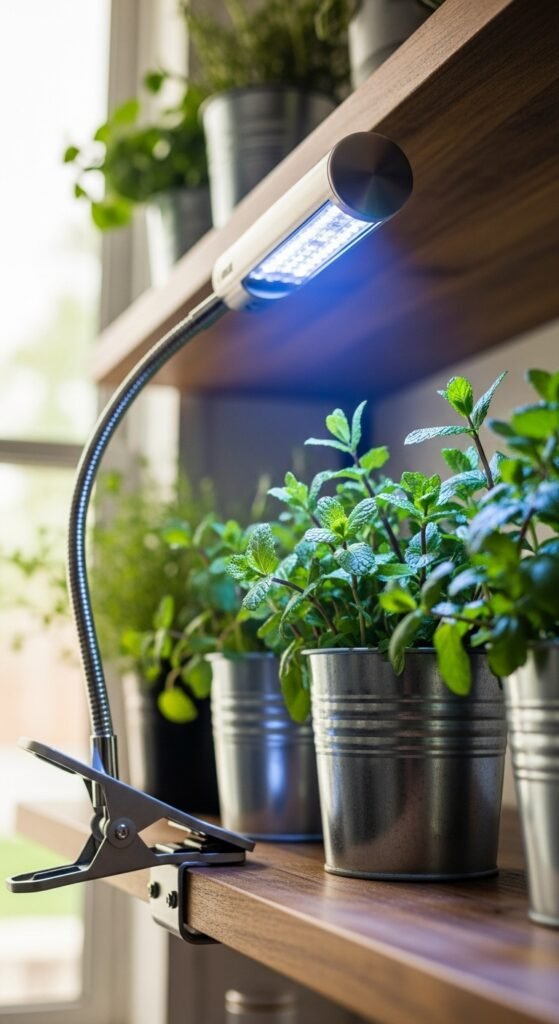
You might appreciate adjustable clip-on grow lights for their versatility in small areas, perfect for nurturing mint varieties indoors. These lights attach easily to shelves or counters, directing focused illumination precisely where needed. Opt for models with flexible arms to accommodate plant height changes over time.
Why choose this? The targeted lighting prevents etiolation, ensuring compact, flavorful mint leaves. Operate them for 12-14 hours daily to maintain vigorous growth, especially in shaded corners of your home.
Implementation is straightforward: clip the light onto a nearby surface and set a timer for consistency. Pair this with a kitchen herb garden for easy access during cooking. You will achieve a steady supply of fresh mint, enhancing teas and dishes while minimizing space usage.
3) Fluorescent Tubes for Economical Parsley Growth
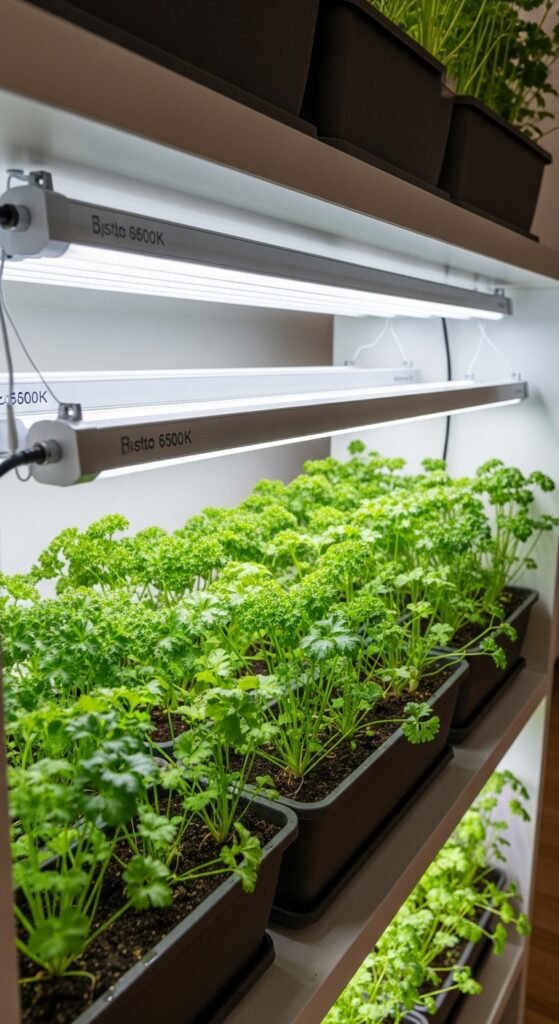
You can rely on fluorescent tube lights for cost-effective parsley cultivation, offering broad coverage for multiple plants. These tubes provide cool, even light that supports steady foliage production without generating excess heat. Install them horizontally above your setup for uniform exposure.
This option excels due to its affordability and long-lasting performance, ideal for budget-conscious gardeners. Aim for 14 hours of daily operation to replicate optimal growing conditions, promoting dense, healthy parsley bunches.
Set up by mounting the fixtures on a basic rack system. Enhance your arrangement with a DIY indoor herb garden, allowing the tubes to illuminate an entire tray. You will enjoy continuous harvests, adding fresh flavor to your meals effortlessly.
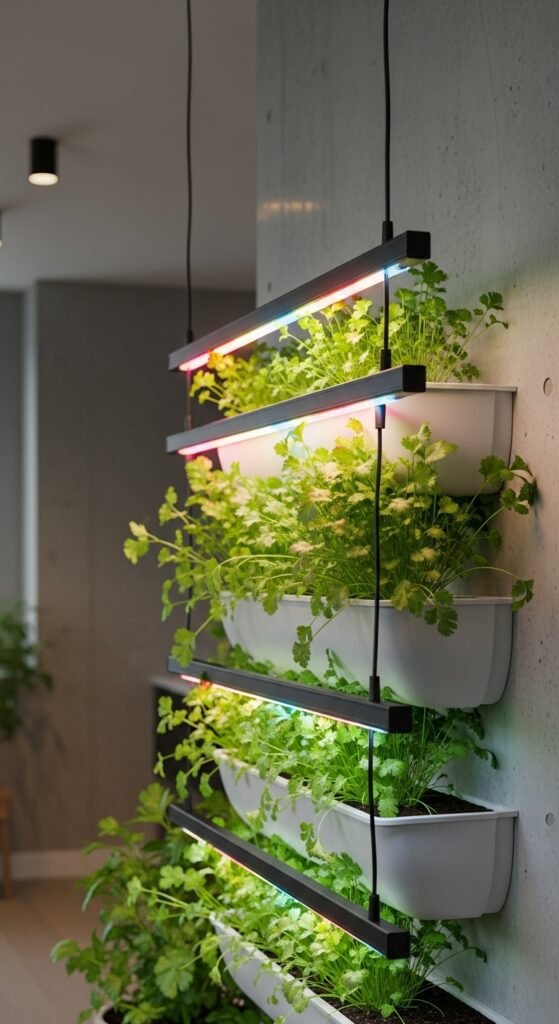
4) Hanging LED Strips for Vertical Cilantro Farming
You should consider hanging LED strips to maximize vertical space when growing cilantro, enabling multi-tiered arrangements. These strips deliver concentrated light along plant rows, fostering quick regrowth after harvesting. Suspend them from ceilings or shelves for adjustable height control.
The space-saving design makes this ideal for apartments, while their low energy use keeps costs down. Provide 12-16 hours of light daily to encourage lush, bolt-resistant cilantro.
Easy to install, simply hook the strips and connect to a power source. Integrate with a vertical indoor herb garden for efficient use of wall space. You will harvest vibrant cilantro repeatedly, perfect for enhancing your culinary creations.
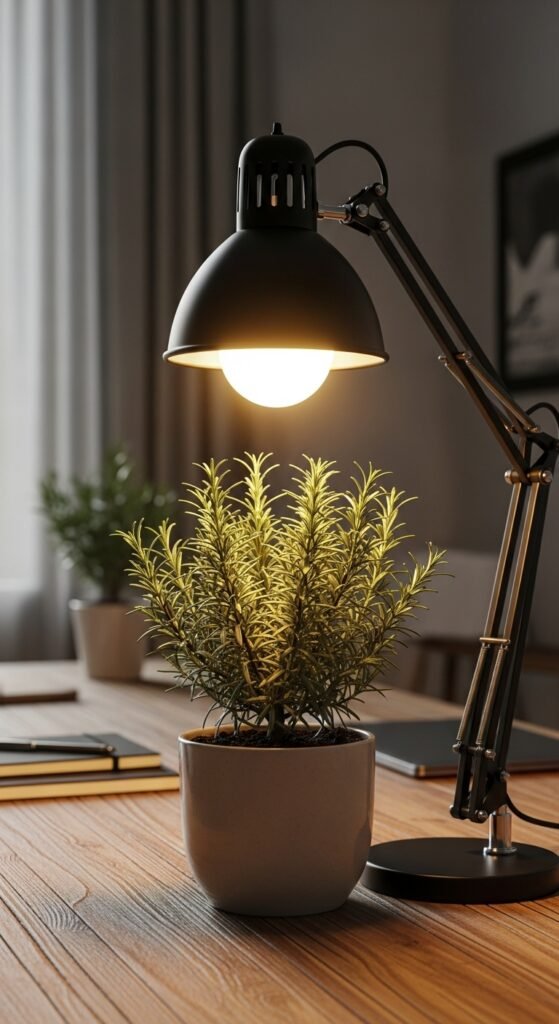
5) Desk Lamp Conversions for Rosemary in Workspaces
You can repurpose standard desk lamps with grow bulbs for rosemary, blending functionality with decor in home offices. These conversions offer directed light, crucial for rosemary’s preference for bright conditions. Choose full-spectrum bulbs to support woody stem development.
This method stands out for its simplicity and integration into daily routines, ensuring consistent care. Run the light 14 hours daily to mimic Mediterranean sunlight, preventing needle drop.
Swap the bulb and position the lamp close to your plant. Complement this with hanging herb garden indoor elements for added variety. You will maintain a productive rosemary plant, ready for seasoning dishes right from your desk.
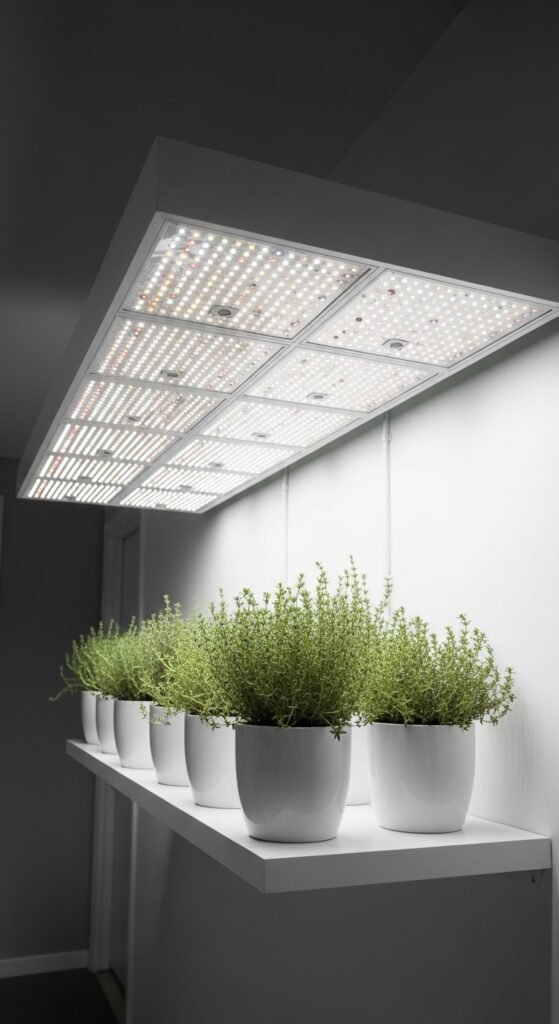
6) Panel Arrays for Thyme in Windowless Rooms
You might deploy panel arrays to illuminate thyme in areas lacking natural light, creating a controlled environment. These arrays cover larger surfaces, promoting even growth across multiple thyme plants. Select dimmable options for fine-tuned intensity.
Valued for their scalability, they suit expanding collections. Operate for 16 hours daily to sustain thyme’s compact habit and intense flavor.
Mount the panels on walls or stands. Pair with a best herbs to grow indoors selection to diversify your harvest. You will cultivate resilient thyme, enhancing your indoor gardening success.
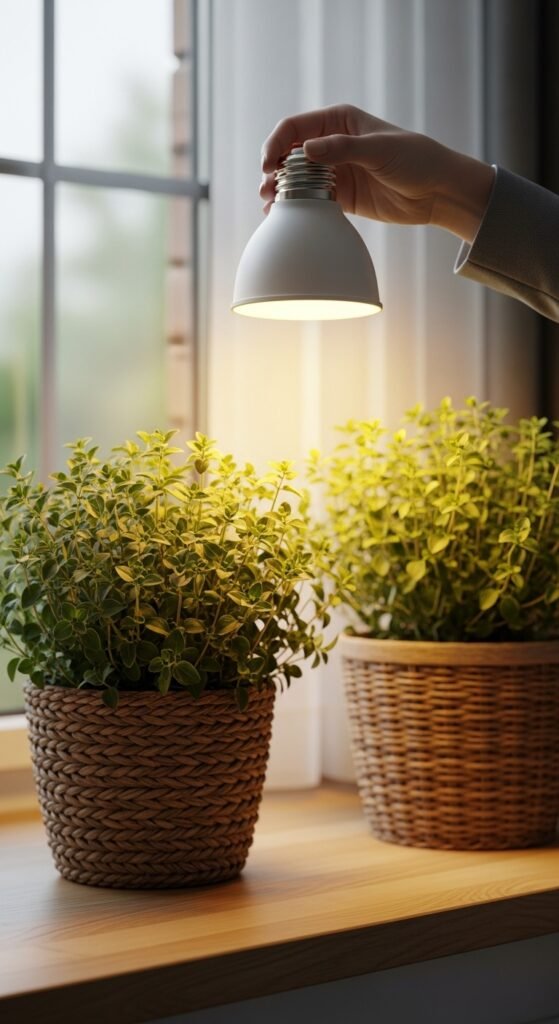
7) Portable Grow Bulbs for Oregano Mobility
You can use portable grow bulbs in sockets for oregano, allowing easy relocation as needed. These bulbs fit standard fixtures, providing essential spectra for oregano’s bushy form. Their plug-and-play nature simplifies setup.
This flexibility offers convenience for seasonal adjustments. Illuminate for 12-14 hours to foster strong, aromatic leaves.
Insert into lamps or overhead fixtures. Combine with grow lights for houseplants strategies for broader application. You will enjoy versatile oregano growth, adaptable to your living space.
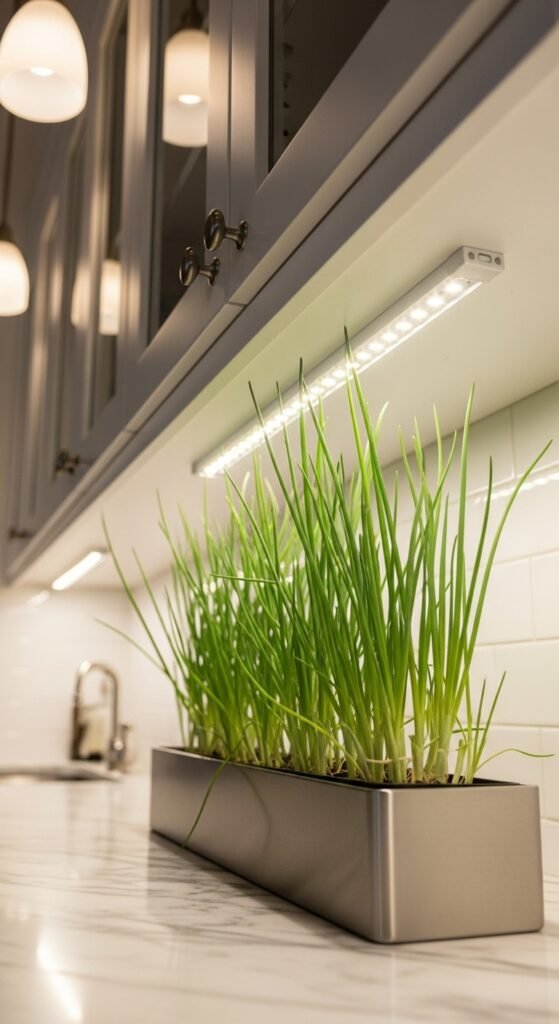
8) Under-Cabinet Strips for Chives in Kitchens
You should install under-cabinet LED strips for chives, optimizing counter space with downward light. These strips ensure chives receive ample illumination for straight, flavorful shoots. Their slim profile blends seamlessly into cabinetry.
The discreet installation enhances kitchen aesthetics while supporting growth. Set for 14 hours daily to prevent yellowing.
Affix beneath cabinets and wire appropriately. Link to countertop herb garden designs for a cohesive setup. You will have fresh chives at hand, elevating your cooking experience.
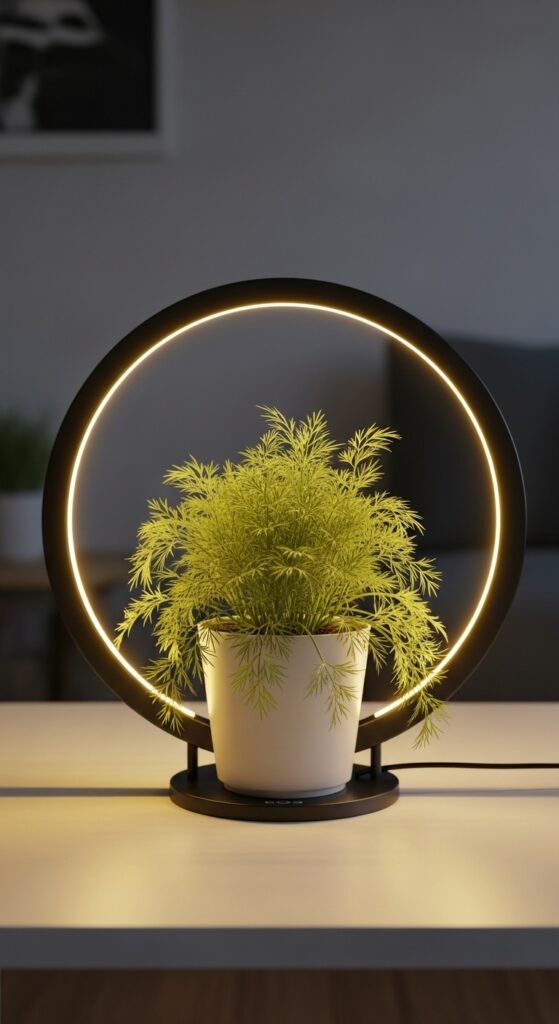
9) Ring Lights for Dill in Compact Areas
You can employ ring lights for dill, encircling plants for 360-degree exposure. These lights promote uniform growth, essential for dill’s feathery structure. Adjustable stands accommodate height increases.
Noted for comprehensive coverage, they minimize shading issues. Provide 12-16 hours of light to delay bolting.
Place the ring around your pot and adjust. Incorporate into a windowsill herb garden for supplemental boost. You will harvest abundant dill, ideal for pickling and seasoning.
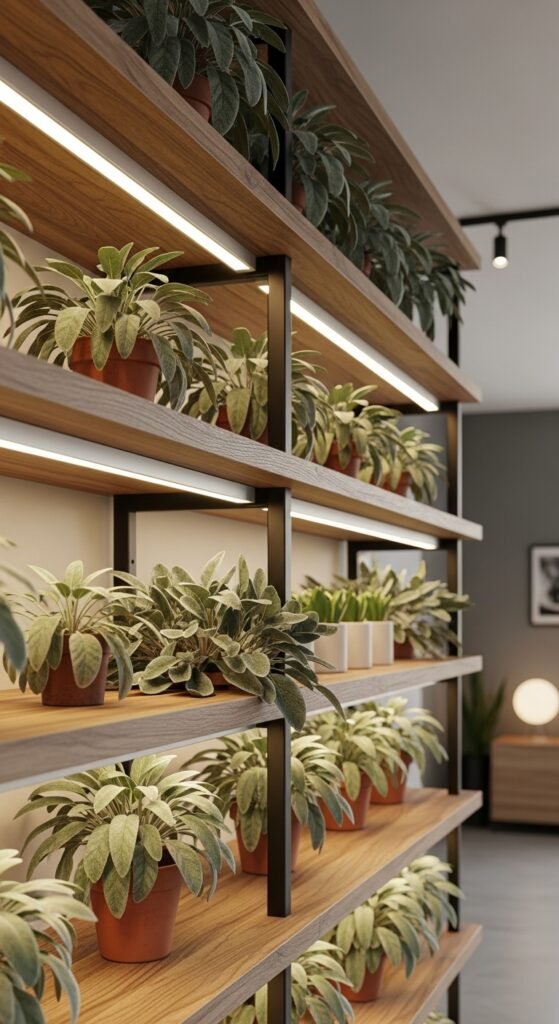
10) Bar Lights for Sage in Shelving Units
You might opt for bar-style grow lights for sage on shelves, spanning multiple levels efficiently. These bars deliver consistent light, supporting sage’s dense foliage. Waterproof models handle humidity well.
This setup’s multi-tier efficiency maximizes yield in limited spaces. Run 14 hours daily for optimal woodiness and flavor.
Secure to shelf undersides. Align with herb gardening for beginners tips to start simply. You will grow hardy sage, ready for culinary and medicinal uses.
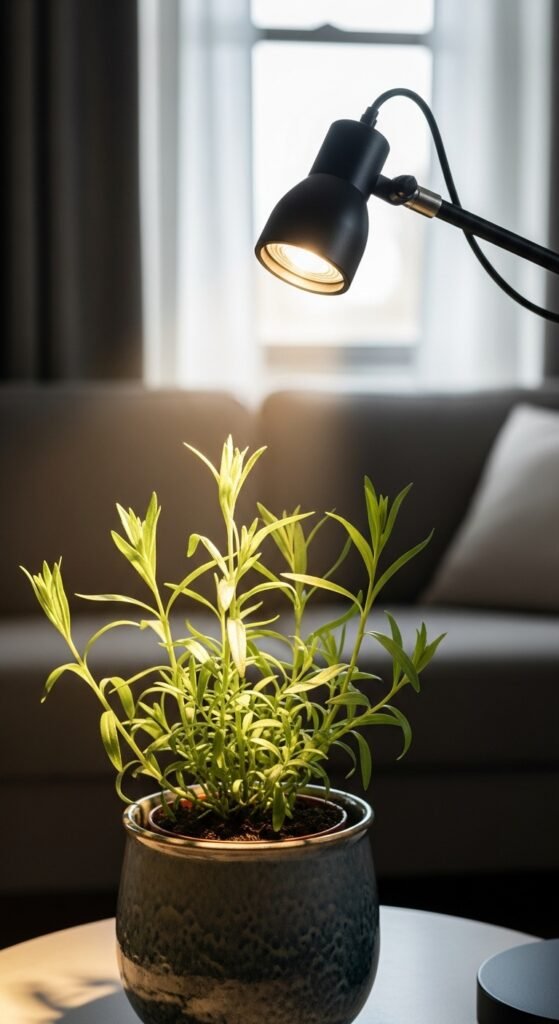
11) Spotlights for Tarragon in Focused Zones
You can use spotlights to highlight tarragon, concentrating light on individual plants. These focused beams encourage vigorous stem elongation and leaf production. Tiltable heads allow precise aiming.
Ideal for targeted intervention, they address specific light deficiencies. Illuminate 12-14 hours to maintain tarragon’s delicate aroma.
Mount on clamps or stands. Enhance with a best grow lights for herbs comparison for upgrades. You will sustain productive tarragon, enriching your herb repertoire.
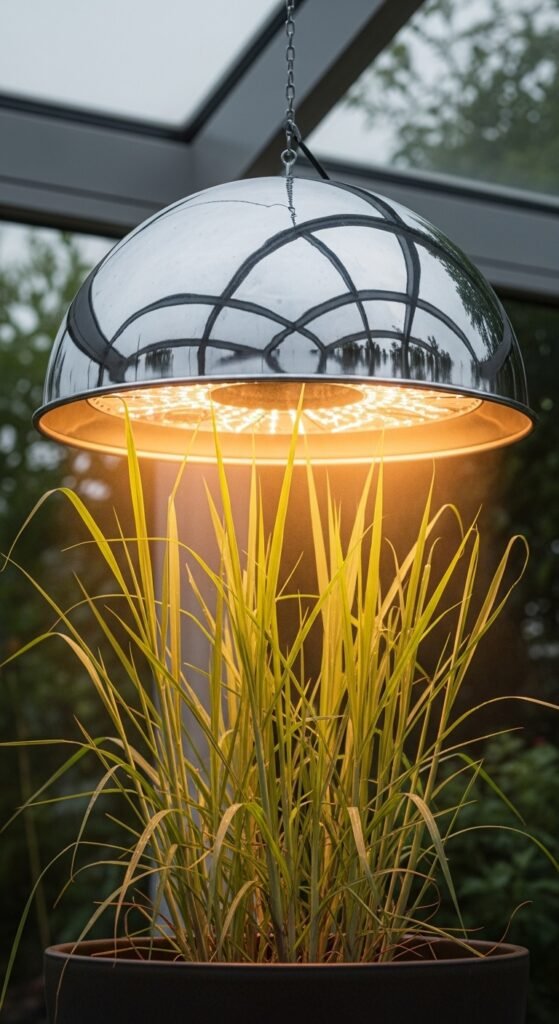
12) Dome Lights for Lemongrass in Enclosed Spaces
You should consider dome grow lights for lemongrass, enclosing light for humid microclimates. These domes trap warmth, aiding lemongrass’s tropical needs. Integrated fans circulate air effectively.
The contained environment boosts growth rates significantly. Operate 16 hours daily to simulate equatorial days.
Position over your container. Tie into broader herb garden gift ideas for sharing setups. You will produce tall, fragrant lemongrass stalks indoors.
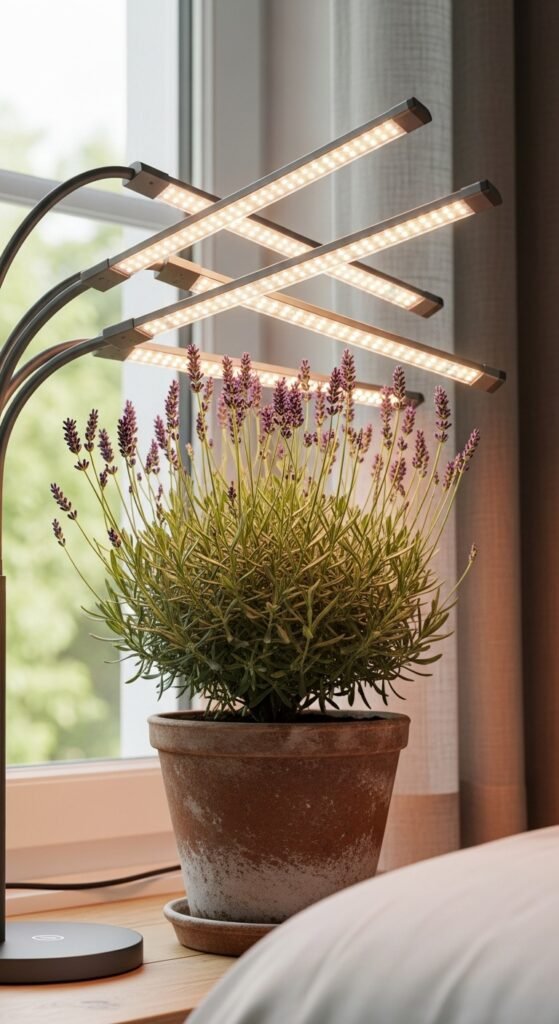
13) Flexible Arm Lights for Lavender in Adjustable Configurations
You can harness flexible arm lights for lavender, bending to follow plant contours. These arms provide adaptable positioning, crucial for lavender’s flowering. Choose UV-enhanced bulbs for bloom encouragement.
This adaptability offers customized care, preventing legginess. Provide 14-16 hours to foster compact, scented bushes.
Attach and maneuver as needed. Connect with click and grow herbs systems for automation. You will cultivate blooming lavender, adding fragrance to your home.
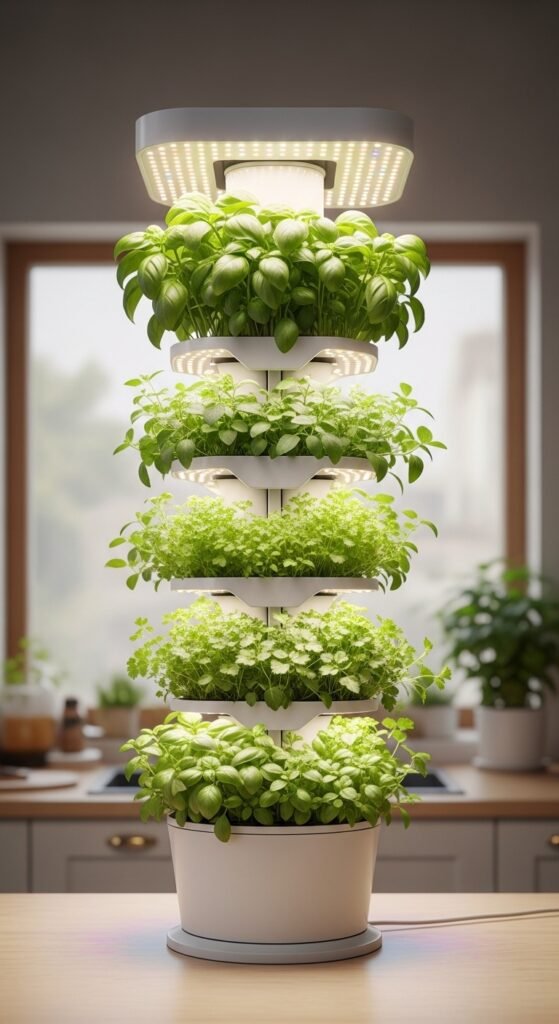
14) Tower Lights for Mixed Herb Towers
You might build with tower grow lights for stacked herb arrangements, illuminating all levels. These towers support diverse herbs like basil and mint vertically. Built-in timers ensure consistent cycles.
Valued for vertical productivity, they optimize floor space. Run 12-16 hours based on herb needs for balanced growth.
Assemble the tower and plant accordingly. Integrate herb wall planter concepts for expansion. You will harvest a variety of herbs efficiently.
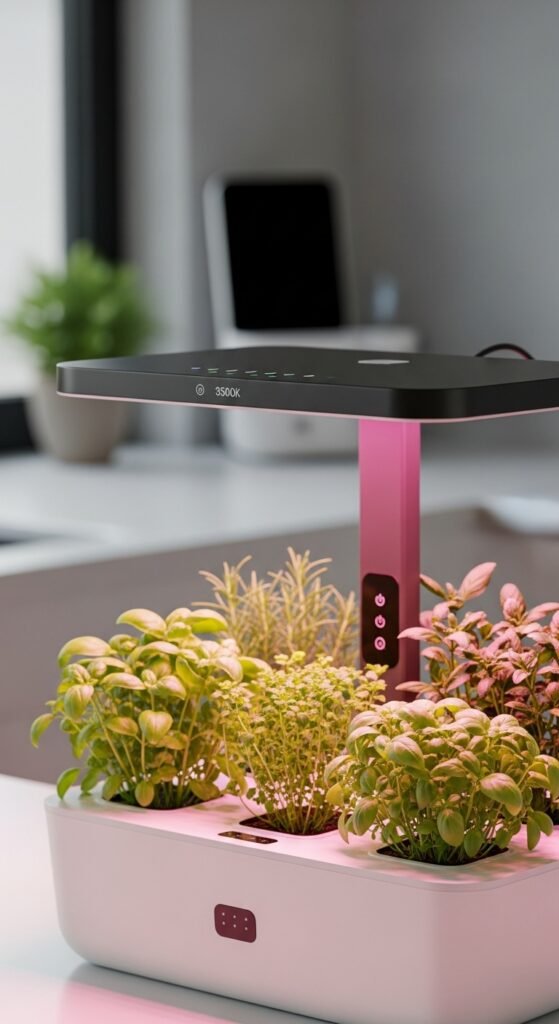
15) Smart LED Systems for Automated Herb Monitoring
You can adopt smart LED systems for herbs, featuring app-controlled adjustments. These systems monitor and adapt light based on plant responses. Sensors detect moisture and growth stages automatically.
The tech integration simplifies maintenance for busy schedules. Program for 14 hours daily, with spectrum shifts for different phases.
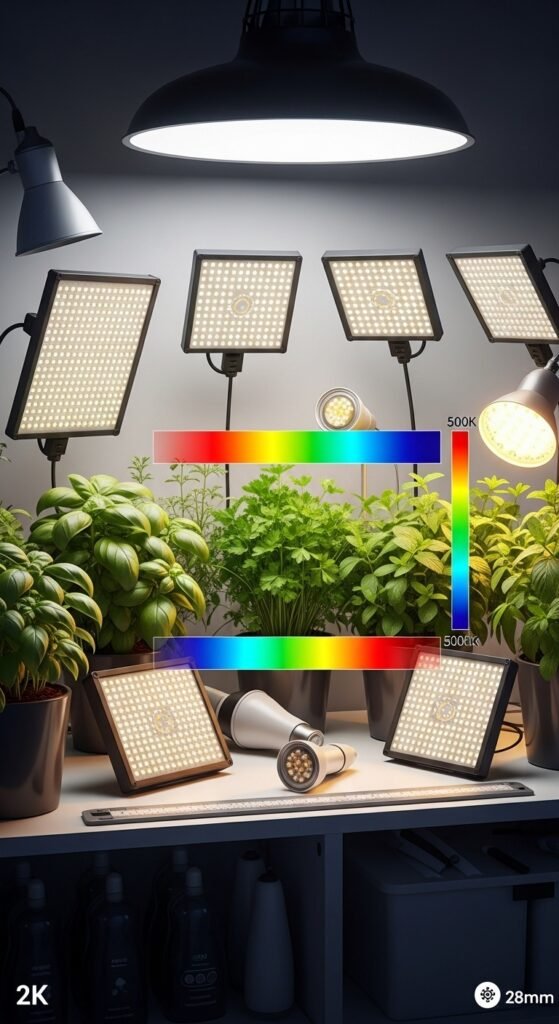
Install and sync with your device. Complement with self-watering herb planter for full automation. You will achieve effortless, high-yield herb production indoors.
Key Principles for Optimizing Grow Lights in Herb Gardening
Understanding Light Spectrum and Intensity
You need to grasp how different wavelengths affect herb growth. Blue light promotes leafy development, while red encourages flowering. Measure intensity in foot-candles to ensure your setup meets herb requirements, typically 200-400 for most varieties.
Timing and Duration Strategies
You should establish a consistent light schedule mimicking natural cycles. Most herbs thrive with 12-16 hours of exposure daily. Use timers to automate this, preventing stress from irregular patterns.
Maintenance and Energy Efficiency Tips
You can extend light lifespan through regular cleaning and proper ventilation. Opt for energy-efficient LEDs to reduce costs while maintaining performance. Monitor for heat buildup to protect delicate herbs.
Frequently Asked Questions
How do I choose the right wattage for grow lights?
Select wattage based on your growing area; aim for 20-40 watts per square foot for herbs. This ensures sufficient intensity without overwhelming your plants.
Can I use regular LED bulbs instead of grow lights?
Regular LEDs lack the full spectrum needed for optimal growth. Dedicated grow lights provide the necessary blue and red wavelengths for healthy herb development.
How far should grow lights be from herbs?
Position lights 6-12 inches above plants, adjusting as they grow. This distance prevents burning while delivering adequate illumination.
Do herbs need darkness periods under grow lights?
Yes, provide 8-12 hours of darkness daily. This rest period allows herbs to process energy and prevents stress from constant exposure.
What signs indicate insufficient light for herbs?
Look for leggy stems, pale leaves, or slow growth. These symptoms suggest increasing light duration or intensity for better results.