
Nothing ruins the tranquility of a backyard pond like a solar fountain that sputters and dies every time a cloud passes by. The problem isn’t usually the pump—it’s the panel sizing. Most DIY kits come with underpowered panels that only work in direct, blazing sunlight.
Use our Solar Pond Pump Calculator to design a robust system that keeps the water flowing steadily. We account for “Head Pressure” (lift height) and recommend the correct battery backup size for consistent performance.
Solar Pond Pump Calculator
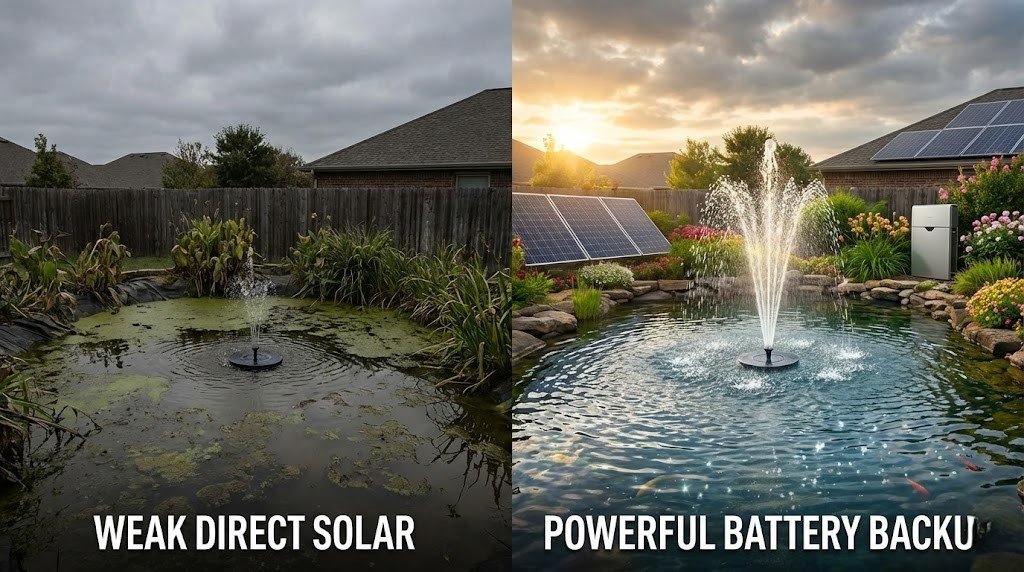
How to Use the Solar Pump Calculator
- Desired Flow (GPH): Gallons Per Hour. For a small fountain, 200 GPH is plenty. For a waterfall, you need 1,000+ GPH to create a nice sheet of water.
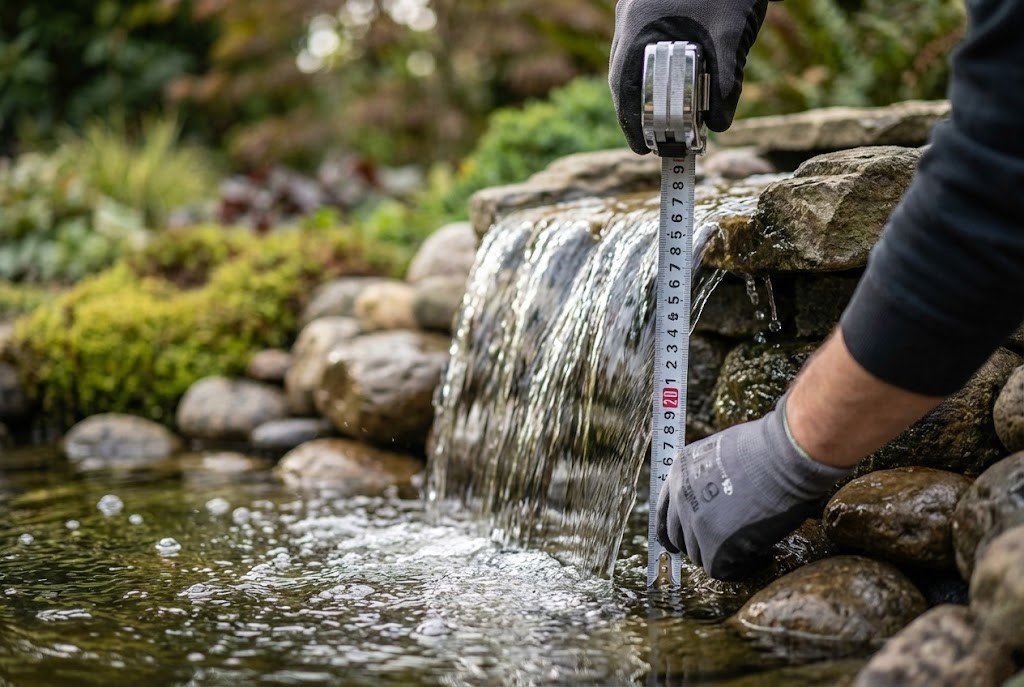
- Head Height (ft): The vertical distance from the surface of the pond water to the highest point where the water exits the tube.
- Run Time: How many hours per day do you want the water moving? If you run it at night, you will need a significantly larger battery.
Why We Built This: The “Cloud Buffer”
The “Secret Sauce” of our tool is the Cloud Buffer Logic. A solar panel rated for 50 watts rarely outputs 50 watts. Dust, angle, and heat reduce output. Our calculator automatically applies a 1.5x Safety Factor to your panel sizing.
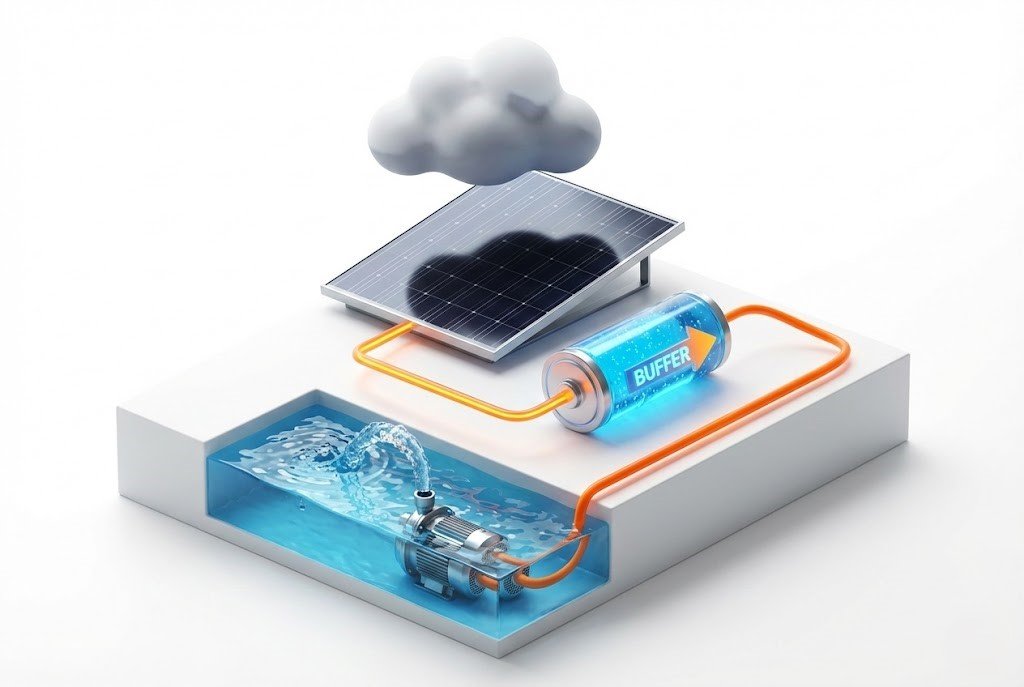
Furthermore, we calculate the specific Battery Capacity (Amp Hours) needed to act as a buffer, ensuring your fountain maintains a steady stream even during intermittent cloud cover.
Educational Guide: Head Pressure & Lift
The most common mistake beginners make is ignoring “Max Head.”
What is Head Height?
Pumps have to fight gravity. The higher they push water, the less flow they produce.
Example: A pump rated for 500 GPH might output 0 GPH if you try to push the water up 6 feet. This is called the “Shut-off Head.”
Sizing the Pump Curve
Always buy a pump with a Max Head rating at least 25% higher than your actual waterfall height. If your waterfall is 4 feet tall, buy a pump rated for at least 6 feet of lift to ensure you still get decent flow at the top.
Frequently Asked Questions
Q: Can I run a solar pump 24/7?
A: It is difficult and expensive. To run a pump through the night, you need a battery bank 3x to 4x larger than one designed for day use only, plus enough solar panels to charge that massive battery during the day while also running the pump.
Q: What voltage should I choose?
A: For small fountains (under 300 GPH), 12V is standard and cheap. For larger waterfalls (over 500 GPH), 24V systems are more efficient and use thinner wiring.
Q: Will my pump freeze in winter?
A: Yes. Solar pumps should be removed from the pond before the first freeze. Ice expansion can crack the pump housing and ruin the internal impeller.