
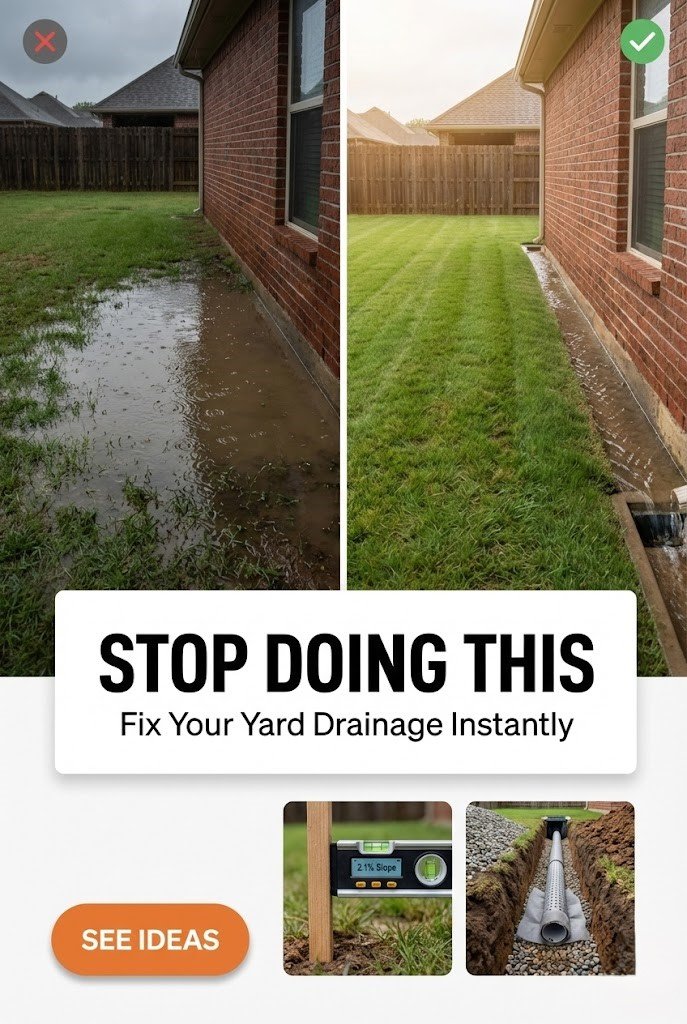
Whether you are installing a patio, building a wheelchair ramp, or just trying to keep rainwater out of your basement, getting the “Grade” right is critical. In landscaping, water flows downhill, but if that hill isn’t steep enough, water puddles. If it’s too steep, you risk soil erosion or dangerous mowing conditions.
Use our Grade Calculator to determine the percentage of slope and angle of your terrain. We allow you to mix units (e.g., a “6-inch drop” over “10 feet”) to make the math easy.
Slope & Grade Calculator
How to Use the Grade Calculator
- Rise: The vertical difference between the top and bottom of the slope. (Commonly measured in inches for small projects).
- Run: The horizontal distance covered.
- Analyze Results: The tool provides the Grade Percentage (standard for construction) and a Safety Check to ensure your slope fits your intended use.
Why We Built This: The “Secret Sauce” of Usability
The “Secret Sauce” of our tool is the Usage Logic Check. A number like “15%” doesn’t mean much until you know context. Our calculator instantly flags specific thresholds:
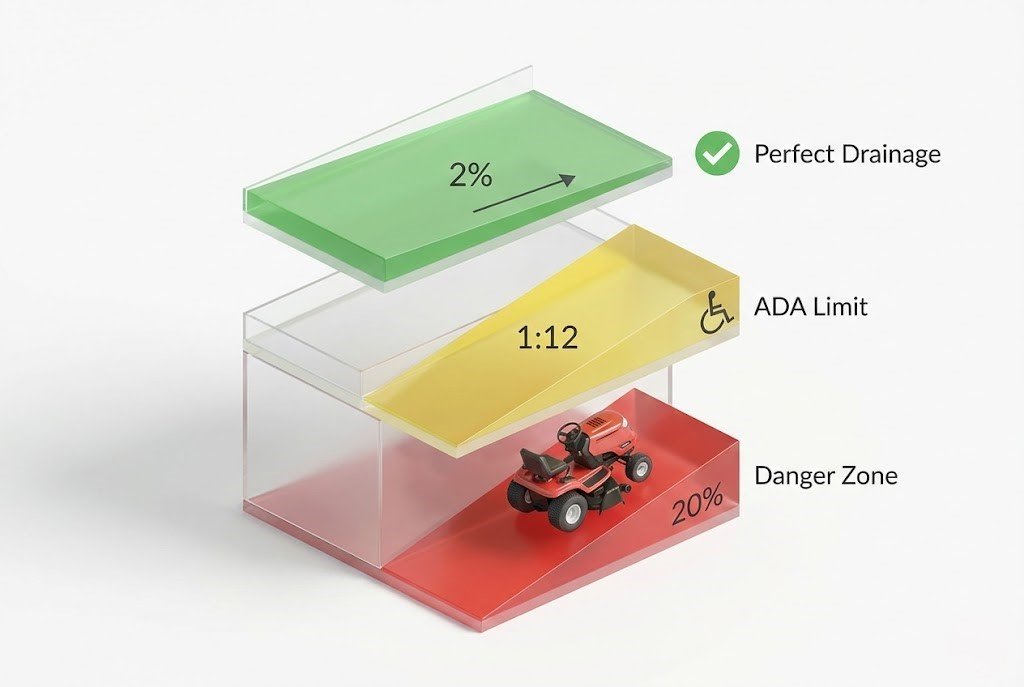
- 1-2% (1:50): The gold standard for drainage. It moves water without feeling like a hill.
- 8.3% (1:12): The absolute maximum slope for an ADA-compliant wheelchair ramp.
- 20% (1:5): The danger zone for ride-on mowers. Slopes steeper than this require specialized equipment or terracing.
Educational Guide: Understanding Slope
Slope is the relationship between vertical change and horizontal distance. It is often expressed as a ratio, an angle, or a percentage.
Why Drainage Matters
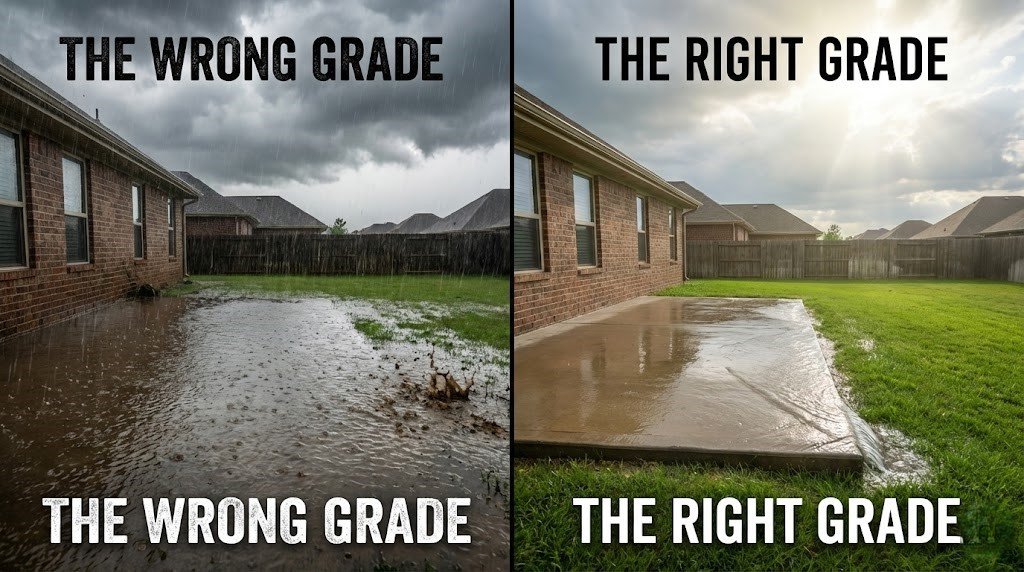
For paved surfaces (patios, driveways), you generally want a slope of 1/8 to 1/4 inch per foot (roughly 1-2%). This is imperceptible to the eye but allows gravity to pull rainwater away from your home’s foundation. Flatter slopes allow water to pool, which freezes in winter, cracking your concrete or pavers.
Calculating Retaining Walls
If you have a steep bank (over 20%) that is eroding, you may need a retaining wall. By cutting into the slope and installing a wall, you reduce the grade of the usable land above and below it, creating flat “terraces” for gardening.
Frequently Asked Questions
Q: What is the “Rise over Run” formula?
A: It is the simple math used to find slope. $\text{Slope} = \frac{\text{Rise}}{\text{Run}}$. To get a percentage, multiply the result by 100.
Q: How do I measure slope without fancy tools?
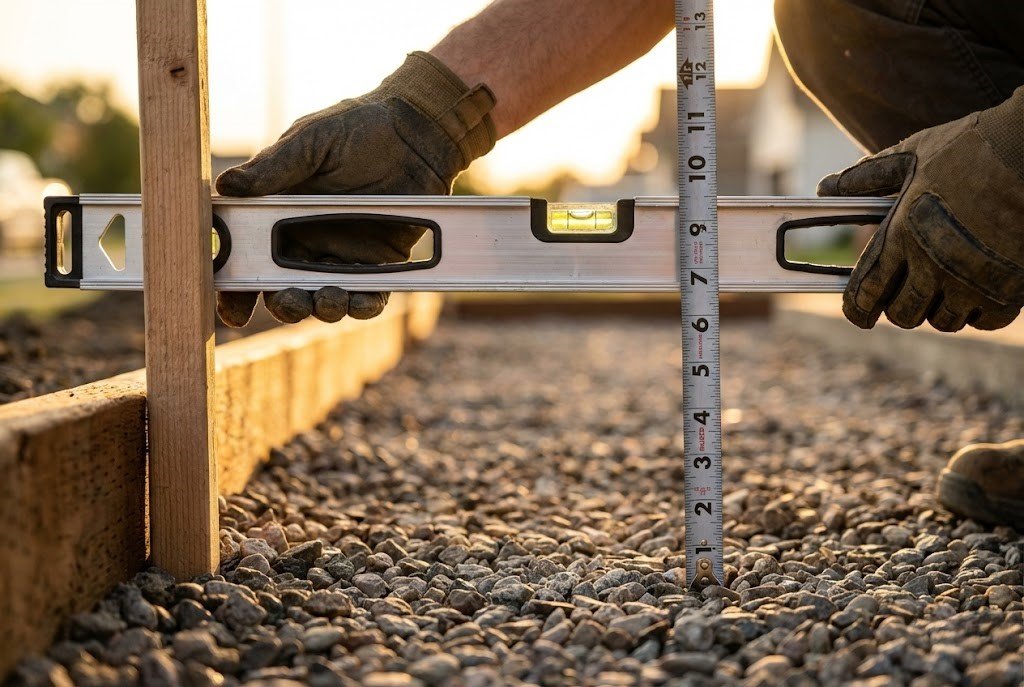
A: Use a 4-foot level and a tape measure. Place one end of the level on the high ground. Lift the other end until the bubble is centered. Measure the distance from the bottom of the raised end to the ground. That distance is your “Rise” over a 4-foot “Run.”
Q: What is the maximum slope for a driveway?
A: Generally, 12-15% is the maximum for a driveway. Anything steeper can be dangerous in icy conditions and may cause vehicles to bottom out at the transition points.