
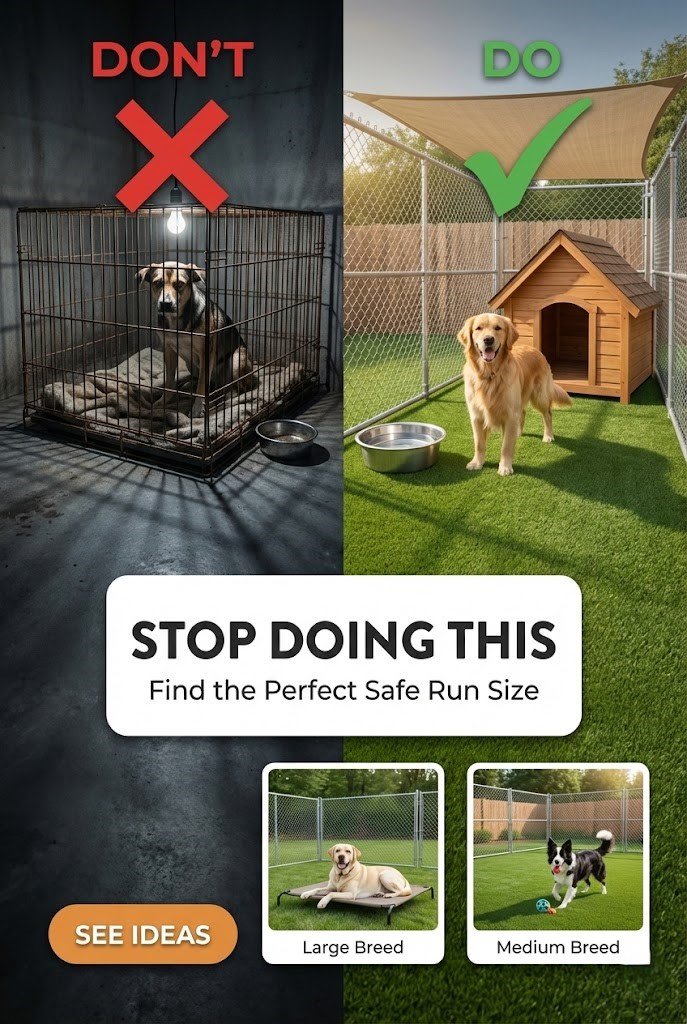
Building an outdoor dog run is about balancing safety with happiness. A kennel that is too small leads to anxiety, pacing, and barking. A kennel that is poorly designed can result in escape artists climbing over fences. The “right” size depends entirely on the size of your dog and how long they will be staying in the enclosure.
Use our Dog Run & Kennel Calculator to determine the minimum humane square footage required by USDA standards, as well as our recommended “Comfort Dimensions” for happy, healthy pets.
Dog Run & Kennel Size Calc
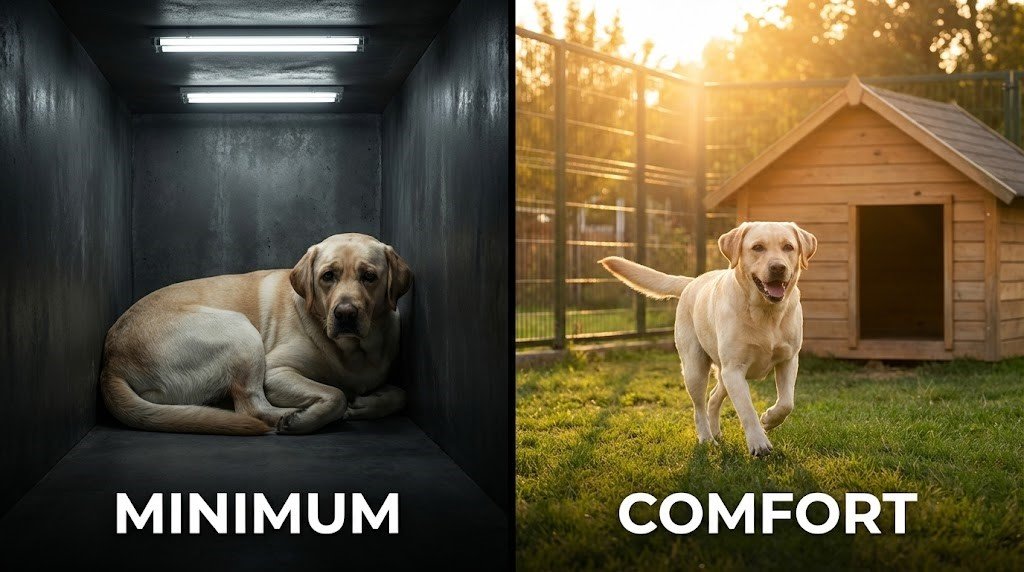
How to Use the Kennel Calculator
- Dog Size: Select the size category that best fits your pet.
- Small: Terriers, Beagles (Under 20 lbs).
- Medium: Border Collies, Spaniels (20-50 lbs).
- Large: Labs, Retrievers, Shepherds (50-90 lbs).
- Giant: Danes, Mastiffs (90+ lbs).
- Count: How many dogs will share this space simultaneously?
- Time Spent: A "holding pen" for 1 hour requires significantly less space than a "day run" where a dog spends 8 hours while you are at work.
Why We Built This: The "Comfort Factor"
The "Secret Sauce" of this tool is the comparison between USDA Mandates and Real Comfort. The USDA minimum requirement (Floor Space = (Length+6 inches)² / 144) is designed for temporary laboratory housing.
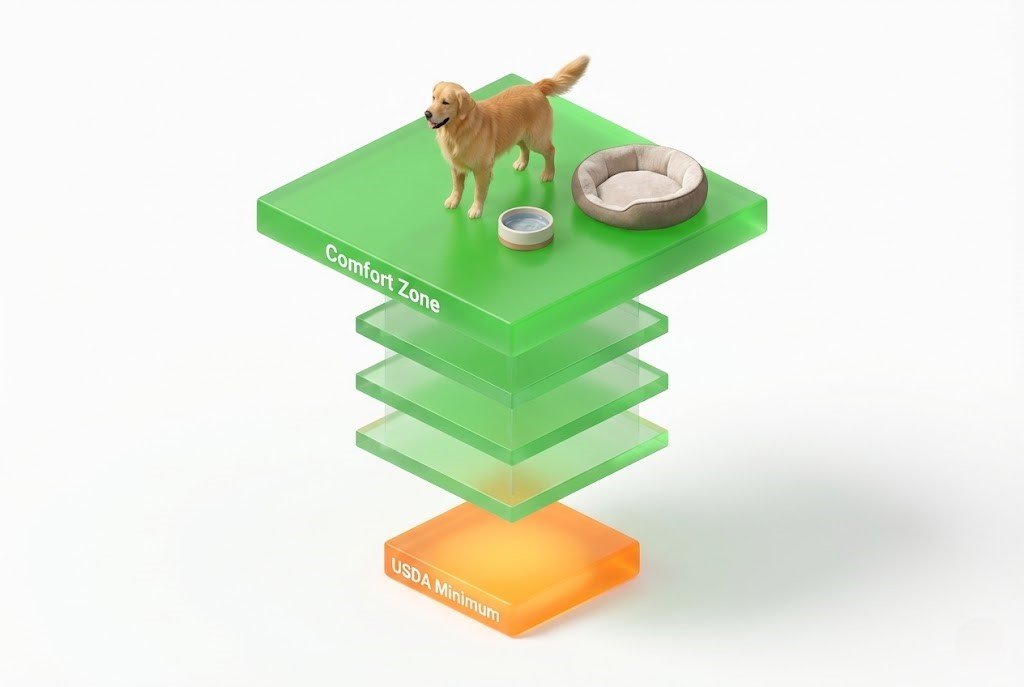
It is very small. Our calculator automatically applies a 3.5x Multiplier for "All Day" runs, giving your dog room to run, play, and separate their bathroom area from their sleeping area.
Educational Guide: Building a Safe Run
Once you have your dimensions, focus on the materials. A dog run is only as good as its weakest point.
1. Flooring Options
- Concrete: The most sanitary and easiest to clean, but hard on joints. Requires a slope for drainage.
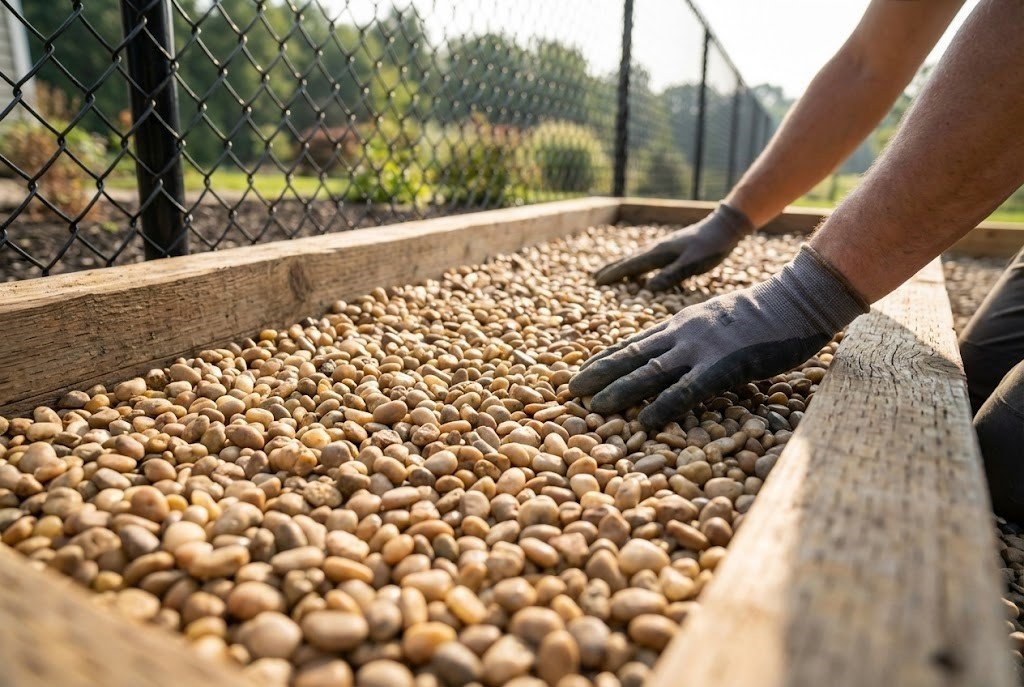
- Pea Gravel: Excellent drainage and softer on paws. Use a deep layer (4-6 inches) over landscape fabric. See our Gravel Calculator for tonnage.
- Grass: Looks nice initially, but high-traffic runs will turn to mud quickly. Not recommended for small runs.
2. Roofs & "Jumpers"
For medium to large dogs, a 4-foot fence is a hurdle, not a barrier. We recommend a minimum fence height of 6 feet. If you have a climber or a digger, consider a fully enclosed "Catio" style roof or burying wire mesh 12 inches underground around the perimeter to prevent tunneling.
3. Shade & Shelter
Every kennel must have a shaded area and a wind/rain block. Dogs can overheat quickly in direct sun. Position the kennel under a tree or install a UV-blocking tarp over at least 50% of the run.
Frequently Asked Questions
Q: How much space does a German Shepherd need?
A: For an all-day run, a German Shepherd needs at least 100 square feet (e.g., a 10x10 run). This allows space for a dog house, water bowl, and movement.
Q: Can I keep two male dogs in the same kennel?
A: Proceed with caution. Even friendly dogs can fight over resources in confined spaces. If housing two dogs together, increase the total calculated space by 20% to allow them to retreat from each other if needed.
Q: What is the best shape for a dog run?
A: Long, narrow runs (e.g., 5' x 20') are better than squares. They allow the dog to accelerate and run back and forth, providing more exercise than a square box of the same area.