
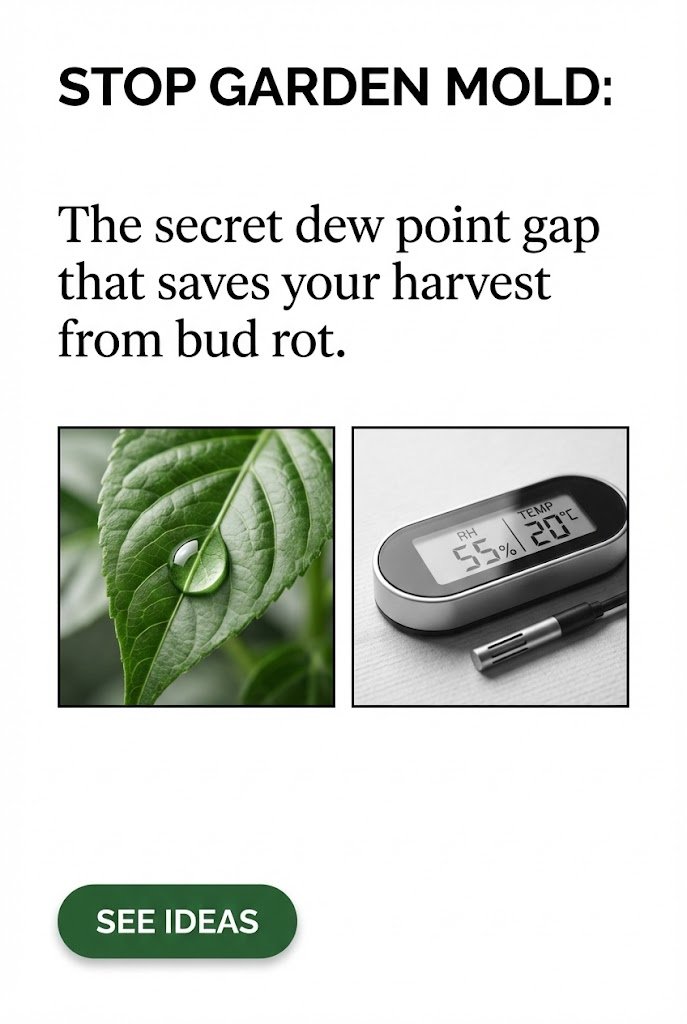
In the battle against garden pests, the invisible enemy is often the most destructive: moisture. Specifically, condensation. While most growers obsess over “Relative Humidity,” experienced horticulturists know that Dew Point is the true metric for safety. If the temperature of your leaves drops below the dew point, water forms on the surface, creating the perfect breeding ground for Powdery Mildew and Botrytis (Bud Rot).
Use our Dew Point Calculator to determine the exact temperature at which your air becomes saturated. Our tool includes a proprietary “Mold Risk” assessment that accounts for the fact that leaves are often cooler than the surrounding air.
Dew Point Calculator
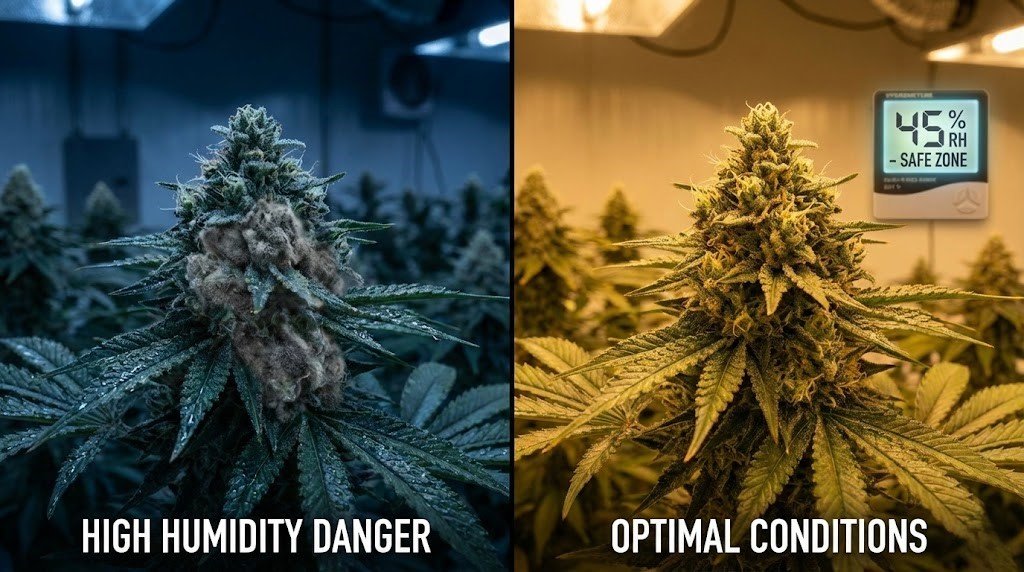
How to Use the Dew Point Calculator
- Air Temperature: Enter the current temperature of your grow space or greenhouse. Select Fahrenheit or Celsius.
- Relative Humidity: Enter the RH percentage from your hygrometer.
- Analyze Risk: The tool calculates the Dew Point and the "Safety Gap." If the gap is too small, you are at risk of nighttime condensation.
Why We Built This: The "Secret Sauce" of Leaf Temperature
The "Secret Sauce" of our tool is the Leaf Temperature Offset logic. In a grow room, leaves transpire (sweat), which cools them down. At night (lights off), plants radiate heat and can become 2°F to 4°F cooler than the air. Standard calculators ignore this.
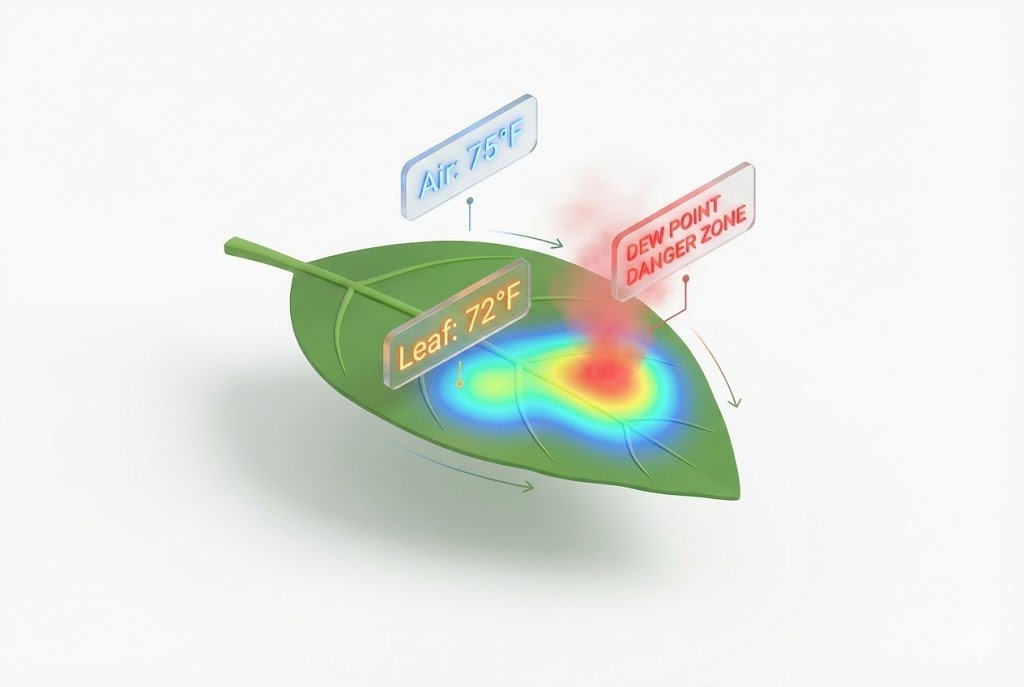
If your room is 70°F and the Dew Point is 68°F, the air seems safe. But if your leaves cool down to 67°F, they will be below the dew point, and water will condense directly on the buds. Our tool flags this "invisible danger zone" before you lose your crop.
Educational Guide: Dew Point vs. Relative Humidity
Understanding the relationship between these two metrics is key to VPD (Vapor Pressure Deficit) management.
What is Dew Point?
Dew Point is the temperature to which air must be cooled to become saturated with water vapor. When air cools to its dew point, the relative humidity reaches 100%, and water can no longer stay in gas form—it turns into liquid (dew).
Why Relative Humidity (RH) is Misleading
RH is relative to temperature. Warm air holds more water than cold air.
Example: Air at 80°F with 50% RH holds a certain amount of water. If that same air cools to 60°F at night, the RH might spike to 100% (Dew Point), causing rain inside your greenhouse. Tracking Dew Point gives you a fixed target to avoid.
Frequently Asked Questions
Q: What is a safe Dew Point for flowering plants?
A: Generally, you want to keep your Dew Point at least 10°F lower than your lowest nighttime temperature. This ensures that even if leaves cool down, they stay dry.
Q: How do I lower the Dew Point?
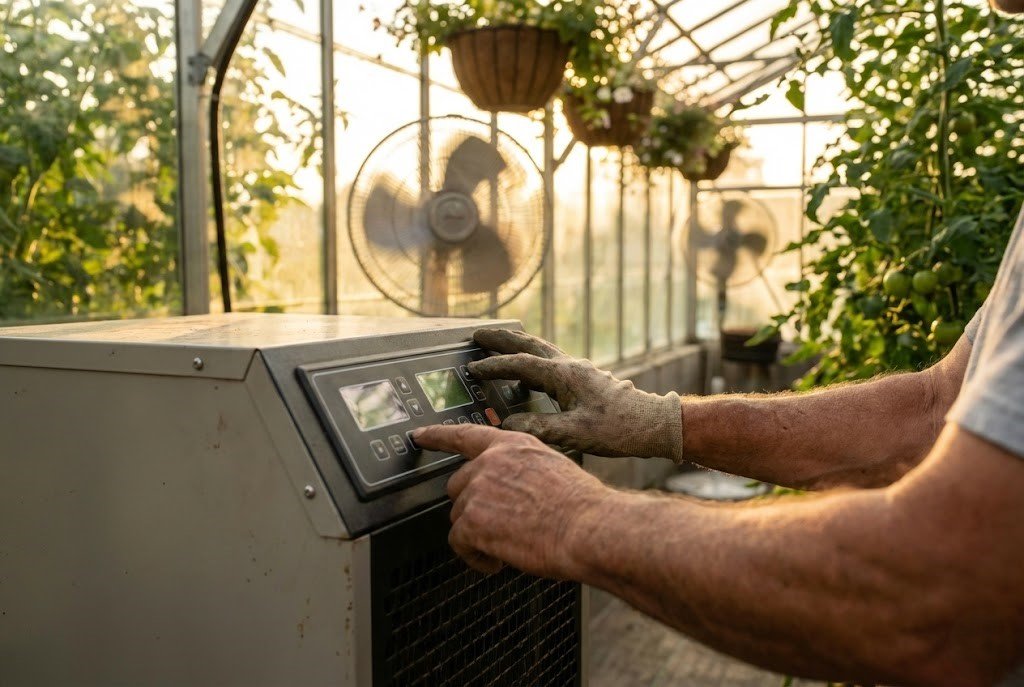
A: You must remove water from the air using a Dehumidifier. Simply heating the air lowers the Relative Humidity, but it does not change the Dew Point. To physically lower the condensation risk, you must extract the water.
Q: Why do I get mold even with low humidity?
A: This is usually due to poor airflow or micro-climates. Even if your room sensor reads 45% RH, the air inside a dense leafy canopy might be stagnant and significantly more humid. Always ensure oscillating fans are moving air across the leaves.