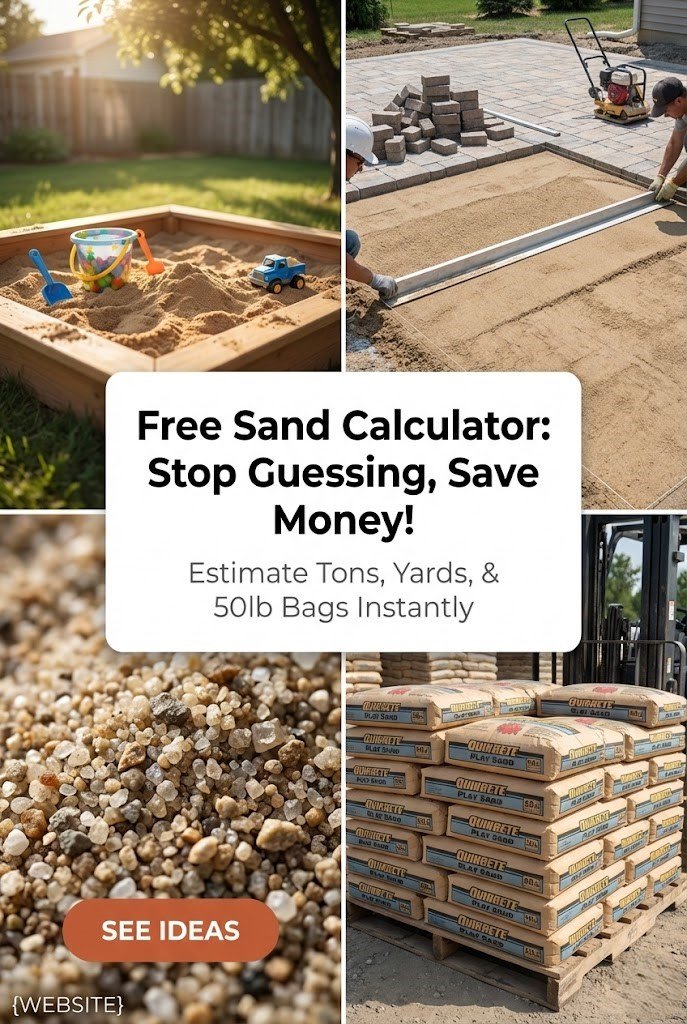
Whether you are building a safe backyard sanctuary with a new sandbox, leveling a base for a stone patio, or mixing custom concrete for a garden walkway, precision is key. Sand is surprisingly heavy, and ordering too much results in a waste of money and a permanent pile on your driveway. Ordering too little stops your project cold mid-way through a labor-intensive afternoon.
Our Sand Calculator solves the “density dilemma.” By selecting your specific use case, the tool automatically adjusts for the weight differences between fine play sand, coarse leveling sand, and heavy wet construction sand.
Project Sand Calculator
How to Use the Sand Calculator
- Project Use Case: Select your application. This sets the material density (lbs per cubic foot) to ensure weight accuracy.
- Dimensions: Enter the length and width of the area in feet, and the desired depth in inches.
- Results: View the total volume in Cubic Yards, the total weight in Tons, and the exact count of 50lb bags needed for retail purchase.
Why We Built This: The “Secret Sauce” of Sand Density
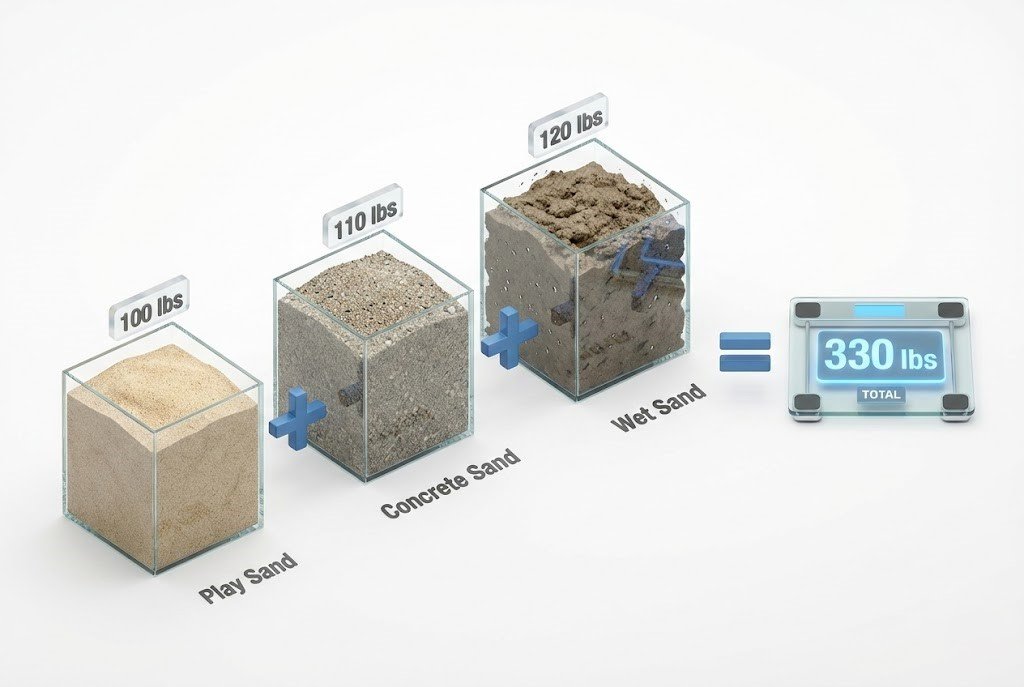
The “Secret Sauce” of our tool is the Density-to-Use Logic. Not all sand is the same weight. Dry, fine play sand is roughly 100 lbs/cf, while wet construction sand can climb to 120 lbs/cf due to moisture retention. Our calculator switches these values behind the scenes so you don’t over-stress your vehicle’s payload or under-budget your material costs.
We also provide specific Bags vs. Bulk conversions to help you decide if it’s cheaper to buy individual bags or order a dump truck delivery.
Educational Guide: Choosing the Right Sand
Selecting the wrong type of sand can lead to structural failure or safety hazards. Here is what you need to know about the most common garden sand types:
Play Sand
This is the only sand that should be used in children’s sandboxes. It has been washed and pressure-cleaned to remove dust, silt, and harmful minerals. It is also “sub-rounded,” meaning the grains are less jagged, making it safer for skin and eyes.
Concrete Sand (Coarse Sand)
Also known as “All-Purpose” or “Leveling” sand. It has larger, sharper grains. This is essential for Paver Base applications because the sharp grains “lock” together under pressure, creating a stable surface that won’t shift over time.
Masonry Sand
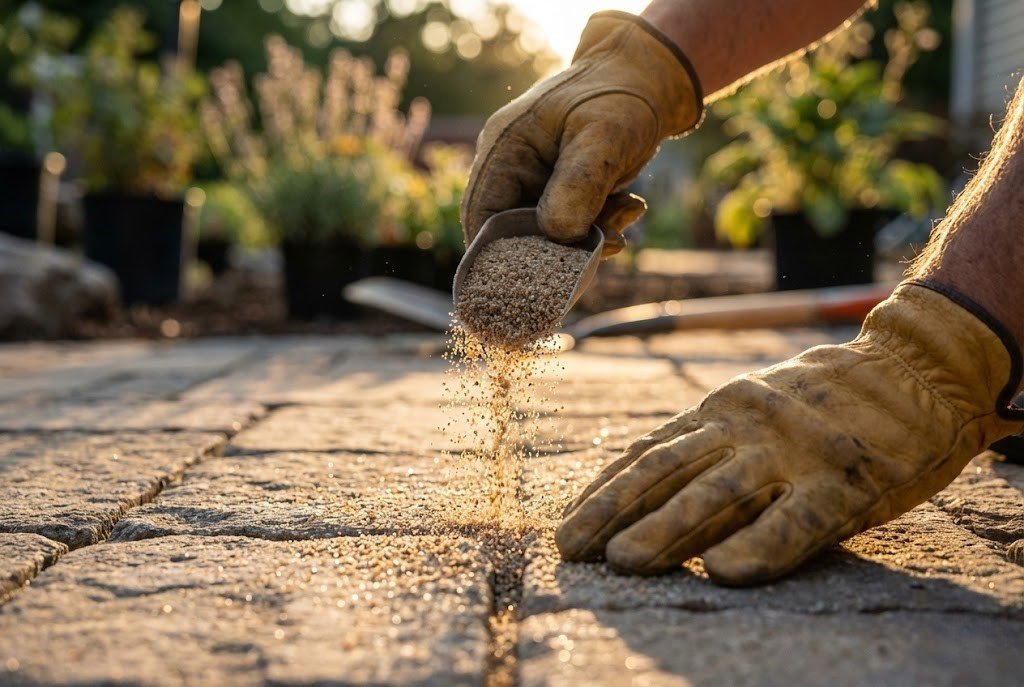
A very fine, clean sand used in mortar for brickwork or between paving stones. It is easy to spread and works well for filling small gaps, but it lacks the structural integrity required for a heavy base layer.
Pro Tip: When installing a sandbox, always use a breathable landscape fabric as a base layer before adding sand. This allows water to drain into the soil while preventing worms and dirt from mixing with your clean play sand.
Frequently Asked Questions
Q: How many bags of sand make a cubic yard?
A: Most standard bags of sand at home improvement stores are 0.5 cubic feet. Since there are 27 cubic feet in a cubic yard, you will need 54 bags to equal one cubic yard.
Q: How deep should the sand be for a sandbox?
A: For residential sandboxes, a depth of 4 to 6 inches is standard. This provides enough depth for digging and play without becoming unmanageable or overly expensive to fill.
Q: Why does wet sand weigh more?
A: Sand is porous. When water fills the gaps between the grains, it adds significant weight without increasing the volume. This is why “Wet Sand” is calculated at a higher density in our tool.