
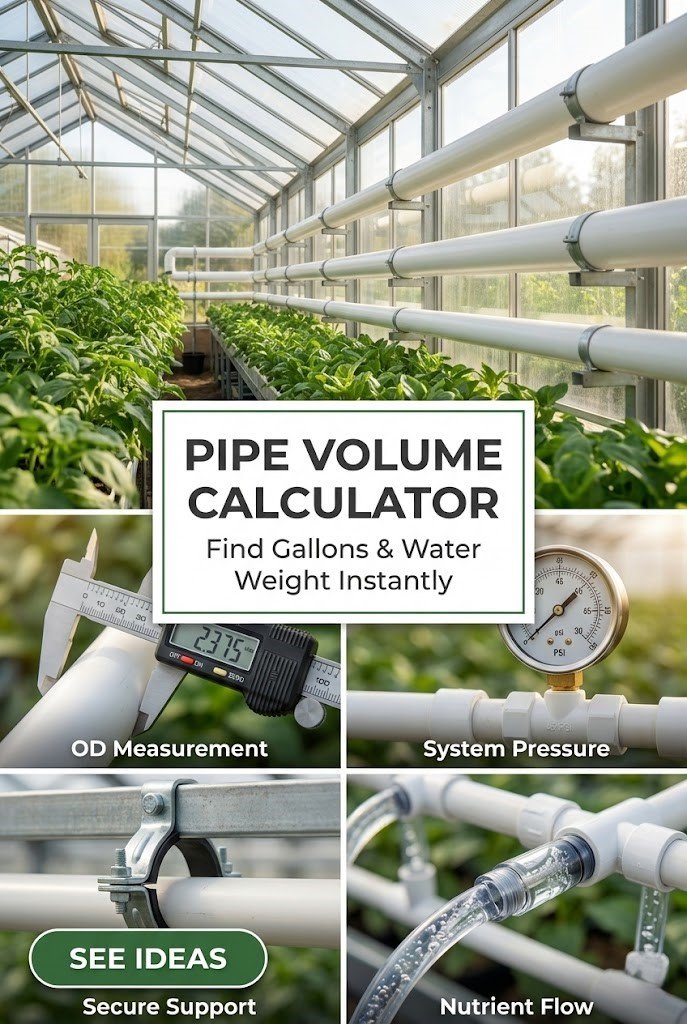
Whether you are designing a gravity-fed drip irrigation system for your vegetable garden or setting up a vertical NFT (Nutrient Film Technique) hydroponic rig, knowing the internal volume of your pipes is essential. Underestimating volume can lead to nutrient reservoirs running dry, while overestimating can cause pumps to struggle or structural supports to fail under the hidden weight of the water.
Use our Pipe Volume Calculator to instantly find the gallon capacity, cubic feet, and total water weight of your piping setup. Simply enter your pipe diameter and total length to get a precise material breakdown.
Pipe Volume Calculator
How to Use the Pipe Volume Calculator
- Pipe Length (ft): Enter the total linear distance of the pipe run. If you have multiple identical runs, use the Quantity field.
- Pipe Diameter (inches): Enter the internal diameter (ID) of the pipe. Standard PVC schedules (like Sch 40) have slightly different IDs than their nominal names.
- Quantity: If your system uses four identical 10-foot grow tubes, enter “10” for length and “4” for quantity.
Why We Built This: The “Secret Sauce” for System Safety
Most basic calculators give you volume but ignore Static Load. The “Secret Sauce” of this tool is the automatic Water Weight Calculation. Water is heavy—8.34 lbs per gallon.
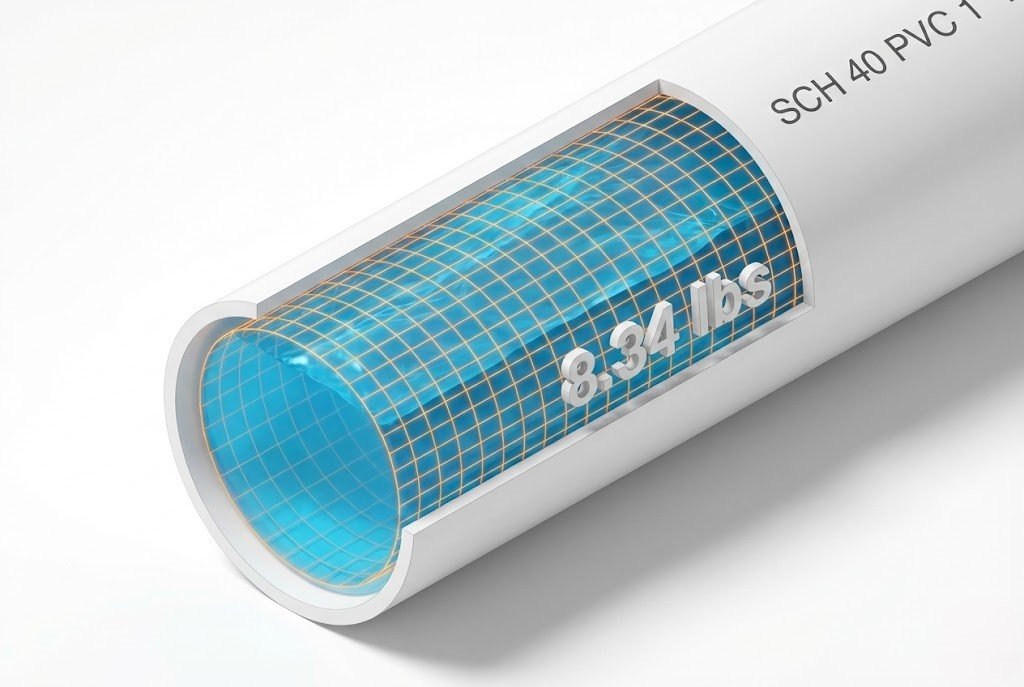
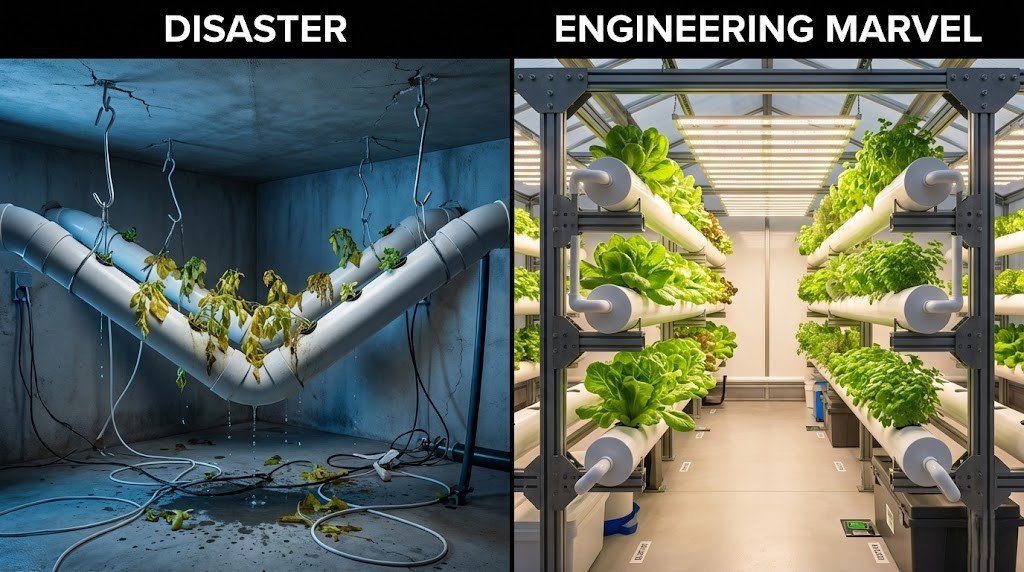
In a hydroponic setup where pipes are often suspended from greenhouse rafters or PVC racks, the weight of the water inside the pipe can easily exceed the weight of the pipe itself. Our tool ensures you know exactly how much stress you are putting on your hangers and supports.
Educational Guide: Volume and Irrigation Efficiency
In gardening, pipe volume determines “latency”—the time it takes for water or fertilizer to reach the plant once the pump turns on.
Nominal vs. Actual Diameter
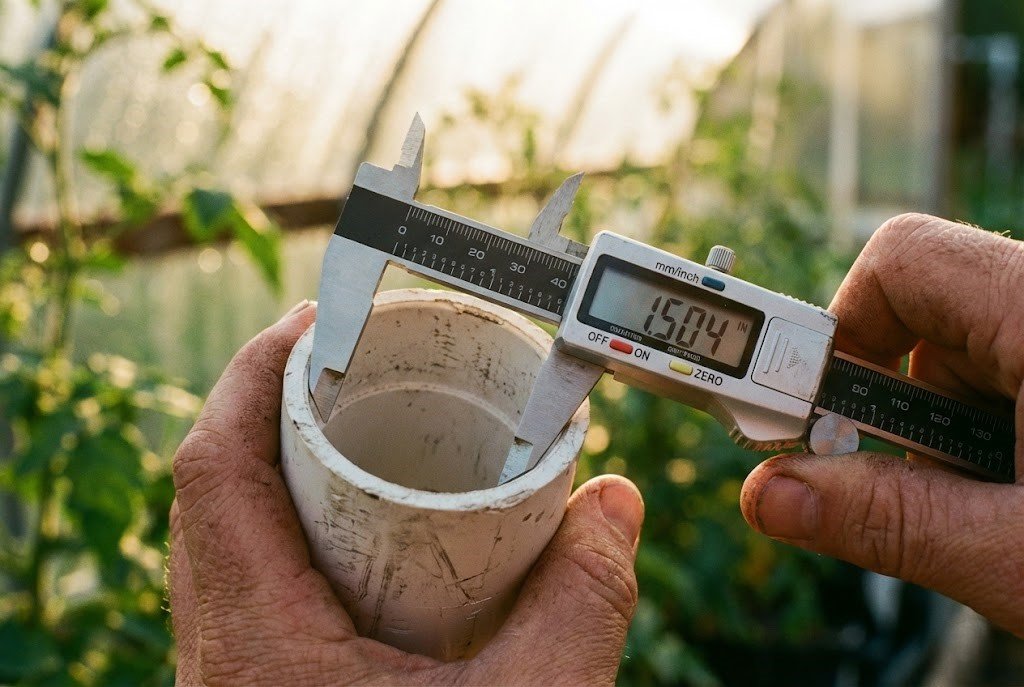
When using this calculator, precision matters. A 2-inch PVC pipe is rarely exactly 2 inches inside. Schedule 40 PVC (common for irrigation) has an internal diameter of roughly 2.047″, while Schedule 80 is thicker-walled with an ID of 1.913″. For small hobby systems, 2″ is fine, but for commercial hydroponic fertigation, using the decimal ID from a manufacturer spec sheet will give you the most accurate dosage results.
Fertilizer Calculations
If you are “slug dosing” or flushing a system, knowing the total system volume (Pipes + Reservoir) allows you to calculate the exact amount of water needed to achieve a full cycle change. This prevents waste and ensures your EC (Electrical Conductivity) levels remain stable.
Frequently Asked Questions
Q: How many gallons are in 100 feet of 1/2 inch irrigation tubing?
A: For standard 1/2″ (0.5″) ID tubing, 100 feet holds approximately 1.02 gallons of water.
Q: Does the pipe material affect the volume?
A: No, the material (PVC, Copper, PEX) does not change the volume, but the wall thickness of those materials changes the internal diameter. Always measure the inside of the pipe for the most accurate result.
Q: Why do I need to know the water weight?
A: If you are building a vertical garden or a wall-mounted hydroponic system, you must ensure your wall anchors or frame can handle the weight. A 4-inch PVC pipe full of water weighs about 5.4 lbs per linear foot!