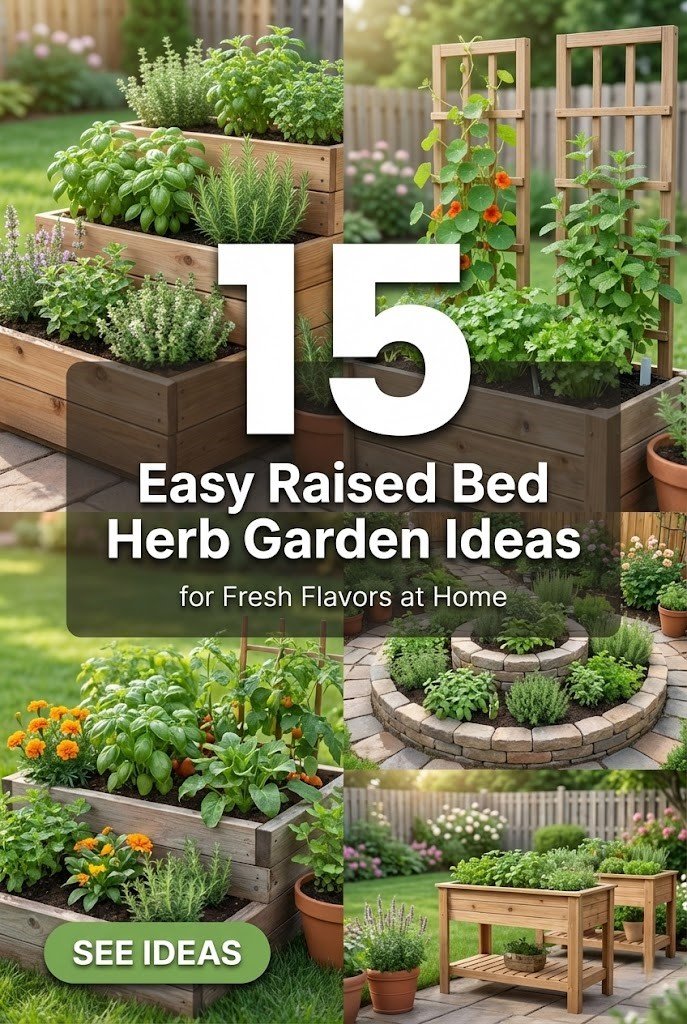
A raised bed herb garden offers you an efficient and accessible way to cultivate fresh herbs right in your backyard or patio space. By elevating the planting area, these gardens improve soil drainage, reduce weed intrusion, and provide better control over growing conditions, making them ideal for both novice and experienced gardeners. The main keyword, raised bed herb garden, encapsulates this approach, allowing you to grow a variety of aromatic and flavorful herbs like basil, rosemary, and thyme in a contained, organized manner.
You will appreciate the convenience of harvesting herbs at arm’s reach, enhancing your culinary experiences with homegrown ingredients that boast superior taste and nutritional value. Additionally, raised beds warm up faster in spring, extending your growing season and promoting healthier plant growth.
Implementing a raised bed herb garden not only boosts your self-sufficiency but also contributes to sustainable practices by reducing the need for store-bought produce. With proper planning, you can create a thriving oasis that provides continuous fresh flavors throughout the year.
1) Tiered Raised Bed Structure
A tiered raised bed herb garden involves constructing multiple levels within a single bed or using stacked planters to create varying heights. This design maximizes vertical space while allowing different herbs to receive optimal sunlight and drainage based on their needs.
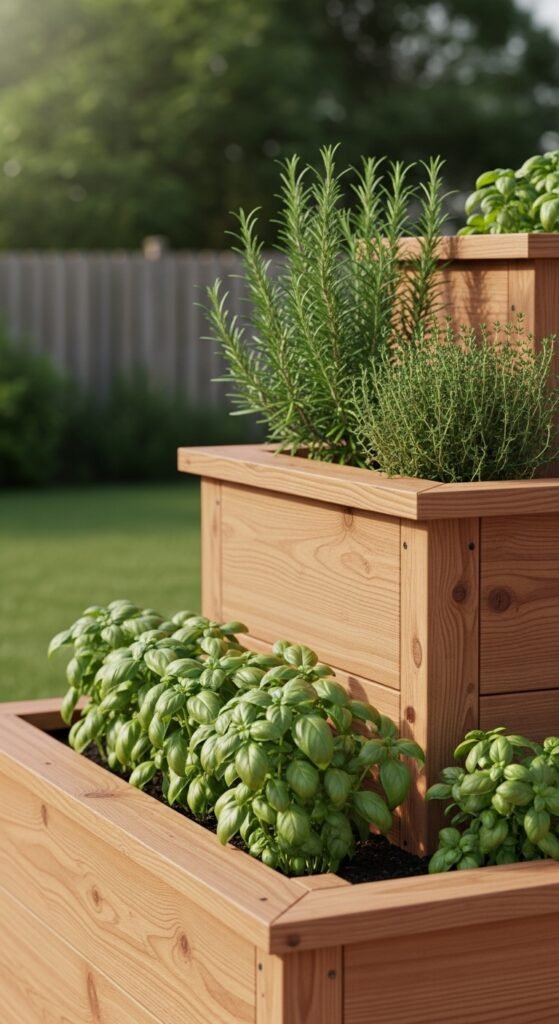
You benefit from increased planting area in compact spaces, making it perfect for small yards. The tiered setup also enhances accessibility, reducing the need to bend over extensively, and improves air circulation to prevent fungal issues. Visually appealing, it adds dimension to your garden landscape.
To implement this, select a sunny location and build frames using cedar wood for durability—consider linking to our guide on cedar raised bed plans for detailed instructions. Fill lower tiers with soil mix suited for herbs, planting taller varieties like rosemary at the back and trailing ones like oregano at the edges. Water from the top to ensure even moisture distribution, and mulch to retain soil warmth.
2) Companion Planting Integration
In a companion planting raised bed herb garden, you strategically pair herbs that mutually benefit each other, such as basil with tomatoes or chamomile with mint, to enhance growth and deter pests naturally.
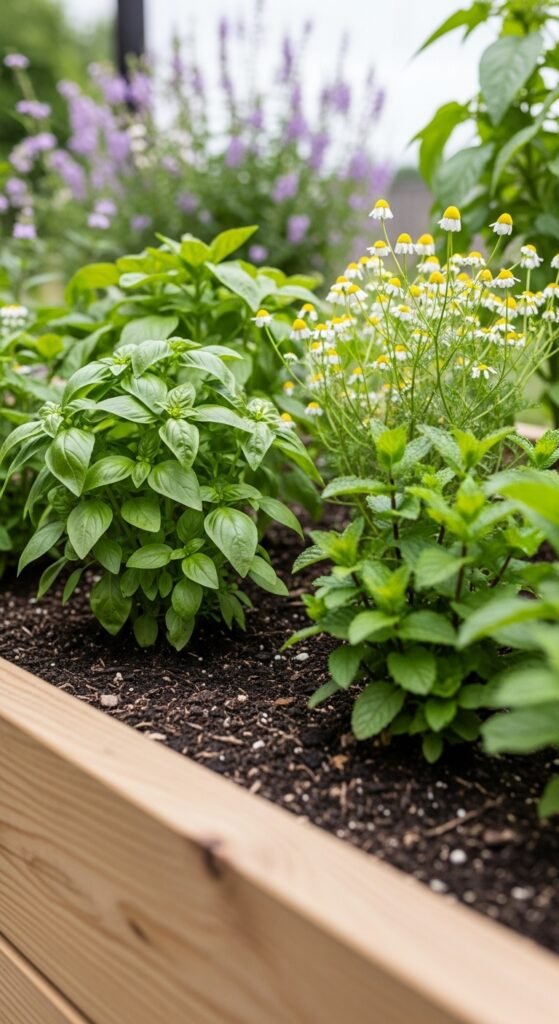
This approach yields healthier plants and higher yields by promoting biodiversity and natural pest control, reducing the reliance on chemicals. It also optimizes space usage, allowing you to cultivate more varieties in one bed while improving soil health through nutrient cycling.
Begin by mapping your bed layout, grouping compatible herbs—refer to our companion planting herbs resource for pairings. Amend the soil with organic matter for fertility, planting seeds or seedlings at recommended depths. Monitor interactions closely, adjusting as needed to maintain balance, and harvest regularly to encourage continuous production.
3) Vertical Trellis Addition
Incorporating vertical trellises in your raised bed herb garden allows climbing herbs like thyme or pole beans to grow upwards, freeing ground space for bushier plants below.
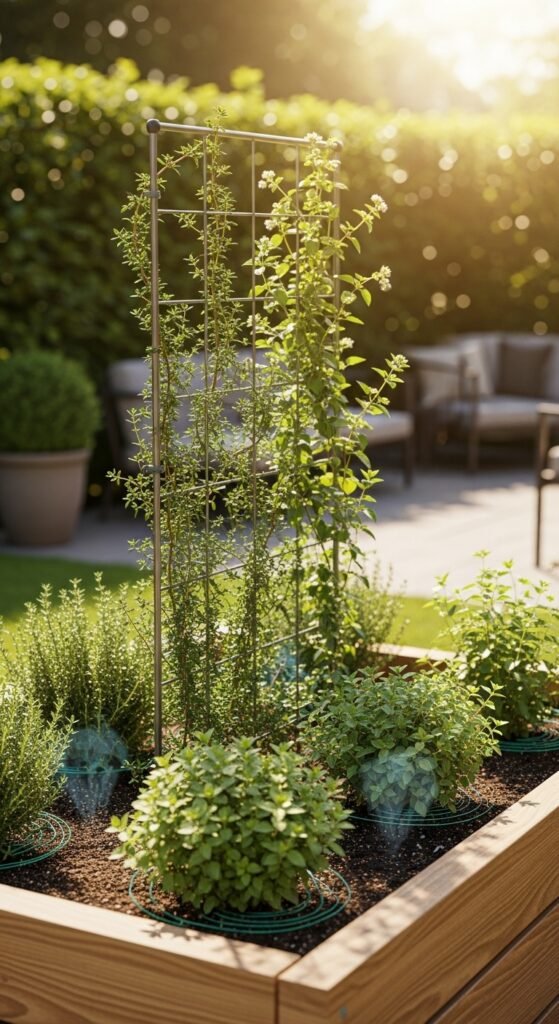
You gain maximized yield in limited areas and better sunlight exposure for all plants, leading to robust growth. This method also facilitates easier harvesting and reduces disease risk by improving airflow around foliage.
Install sturdy trellises along the bed’s edges using bamboo or metal—explore our garden trellis ideas for inspiration. Plant climbing herbs at the base, training vines gently as they grow. Ensure the structure supports mature plant weight, and position the bed in full sun for optimal results.
4) Self-Watering System Setup
A self-watering raised bed herb garden features reservoirs or wicking systems that deliver moisture directly to roots, maintaining consistent soil hydration without manual intervention.
This innovation provides water efficiency and reduced maintenance, preventing over or under-watering issues that can stress herbs. It is particularly advantageous in hot climates, ensuring steady growth and flavorful harvests.
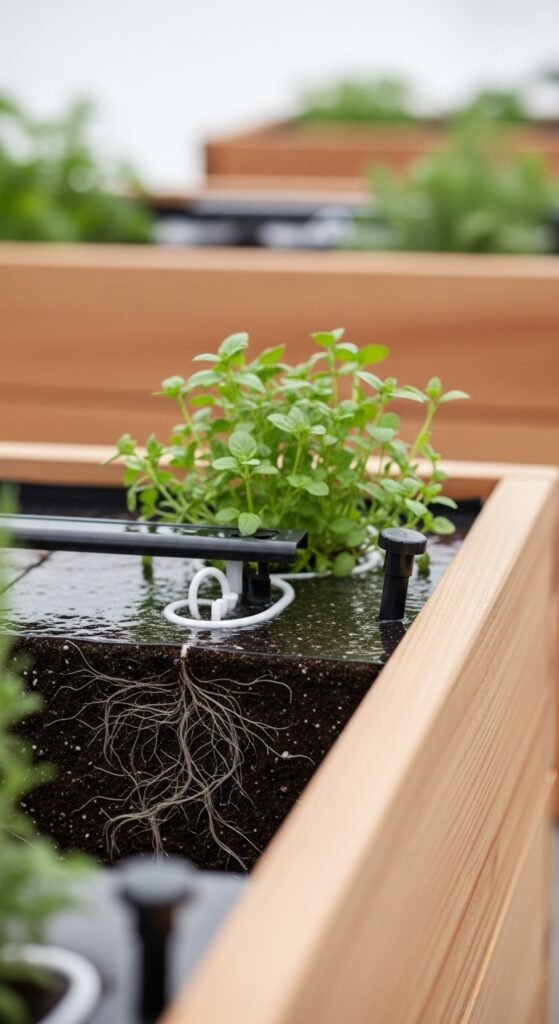
Construct by adding a sub-irrigation layer with perforated pipes or reservoirs beneath the soil. Fill with a well-draining mix—consider our advice on compost for raised beds to enhance nutrient retention. Refill the reservoir periodically, monitoring plant health to adjust as seasons change.
5) Themed Herb Sections
Divide your raised bed into themed sections, such as culinary, medicinal, or aromatic zones, grouping herbs like parsley and sage for cooking or lavender and echinacea for healing purposes.
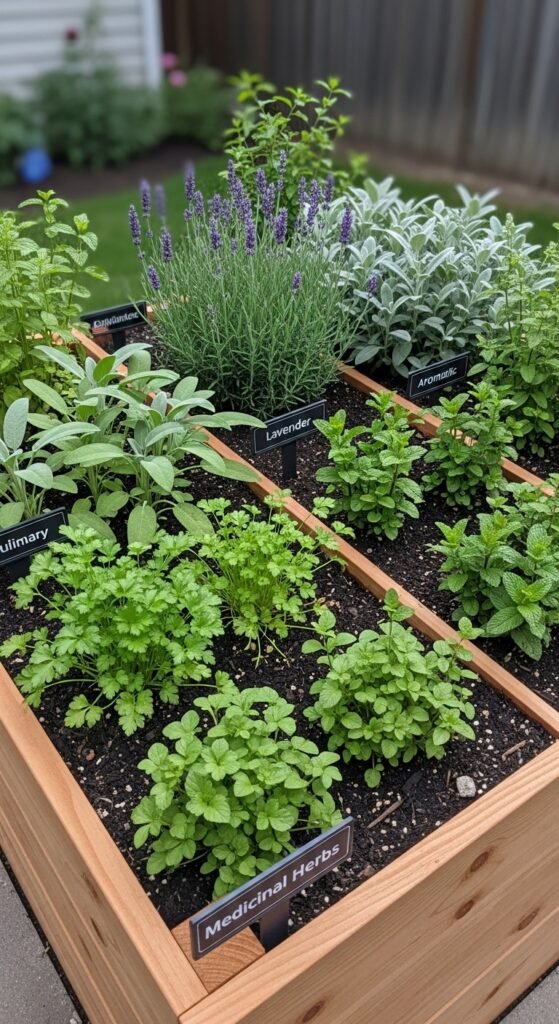
You achieve organized access and educational value, making it simpler to locate and use specific herbs. This zoning also allows tailored care, optimizing conditions for each group’s preferences.
Mark sections with labels or dividers in your bed design. Plant according to sunlight and soil needs, incorporating companion principles for synergy. Maintain by pruning selectively, ensuring each theme thrives independently yet cohesively.
6) Mobile Raised Bed Design
Mobile raised beds on wheels enable you to relocate your herb garden as needed, adapting to sunlight patterns or protecting from weather extremes.
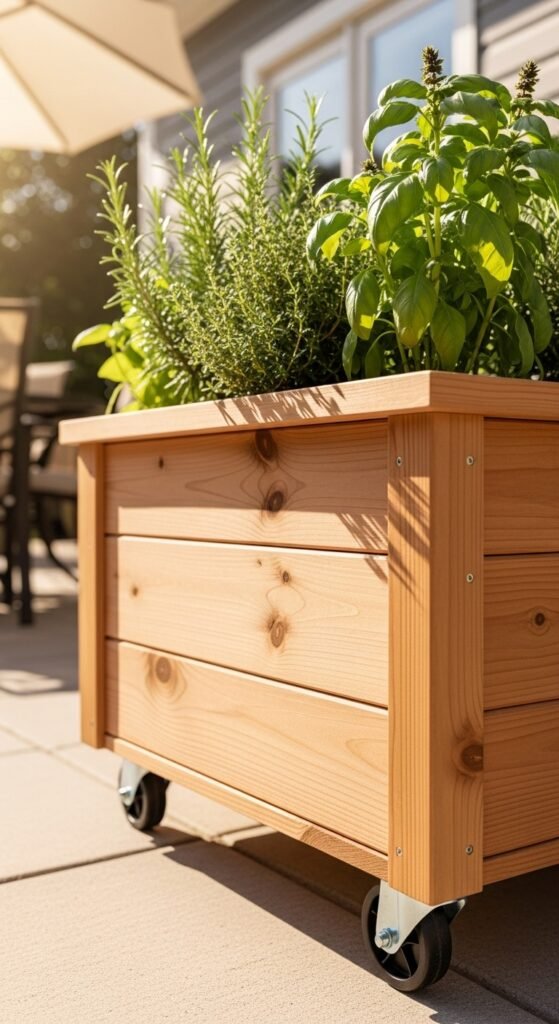
This flexibility offers adaptability to changing conditions, prolonging the growing season and safeguarding delicate herbs. It is ideal for renters or those with variable yard layouts.
Build using lightweight materials with casters attached to the base. Fill with portable soil blends, planting versatile herbs. Move the bed to sunnier spots during cooler months, securing wheels for stability.
7) Integrated Pest Management
An integrated pest management raised bed herb garden incorporates natural barriers, companion flowers, and beneficial insects to control pests without harsh chemicals.
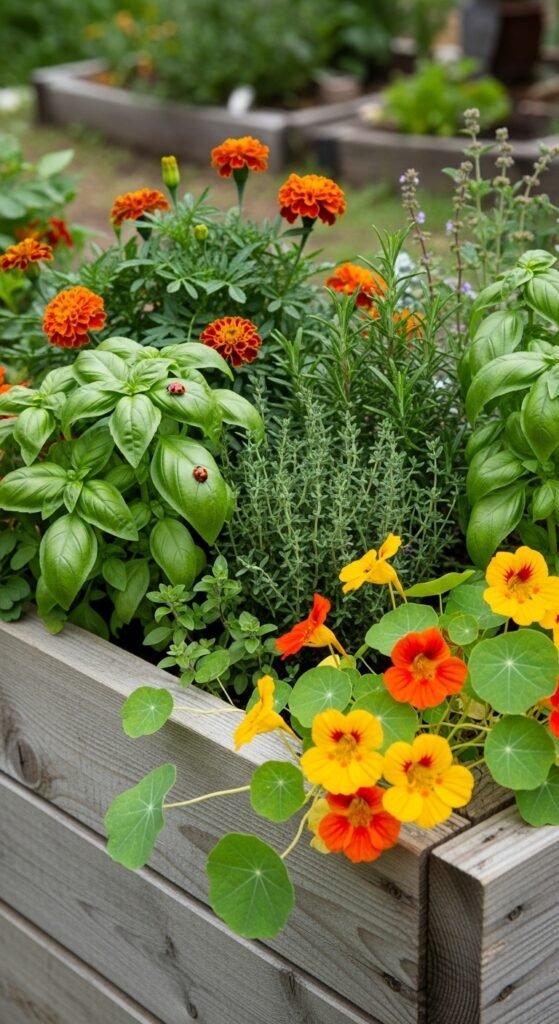
You enjoy eco-friendly protection and pollinator attraction, fostering a balanced ecosystem that supports herb vitality. This reduces crop losses and promotes sustainable gardening practices.
Plant marigolds or nasturtiums around herbs as repellents—draw from our deer proof raised bed strategies for additional defenses. Introduce ladybugs for aphid control, inspecting regularly to address issues early.
8) Square Foot Gardening Method
Apply square foot gardening by dividing your raised bed into one-foot grids, planting herbs densely according to space requirements for efficient use.
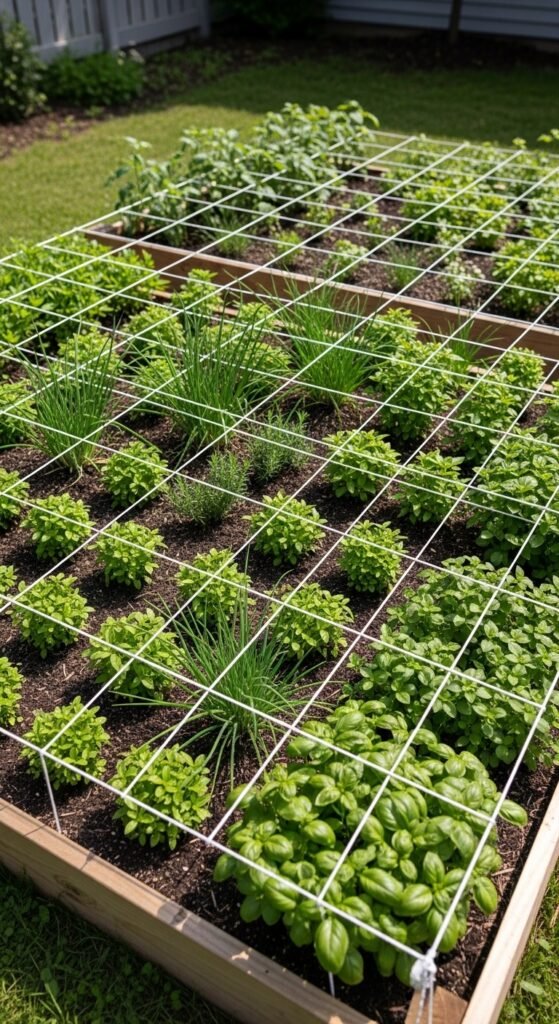
This technique delivers high productivity in small areas with minimal weeding, conserving resources while maximizing output. It simplifies planning and rotation for sustained soil health.
Grid the bed with strings or wood strips. Assign herbs per square—basil in one, multiple chives in another. Rotate annually to prevent depletion, fertilizing lightly for ongoing nourishment.
9) Greenhouse Cover Extension
Equip your raised bed with a removable greenhouse cover or hoop house to extend the growing season for tender herbs.
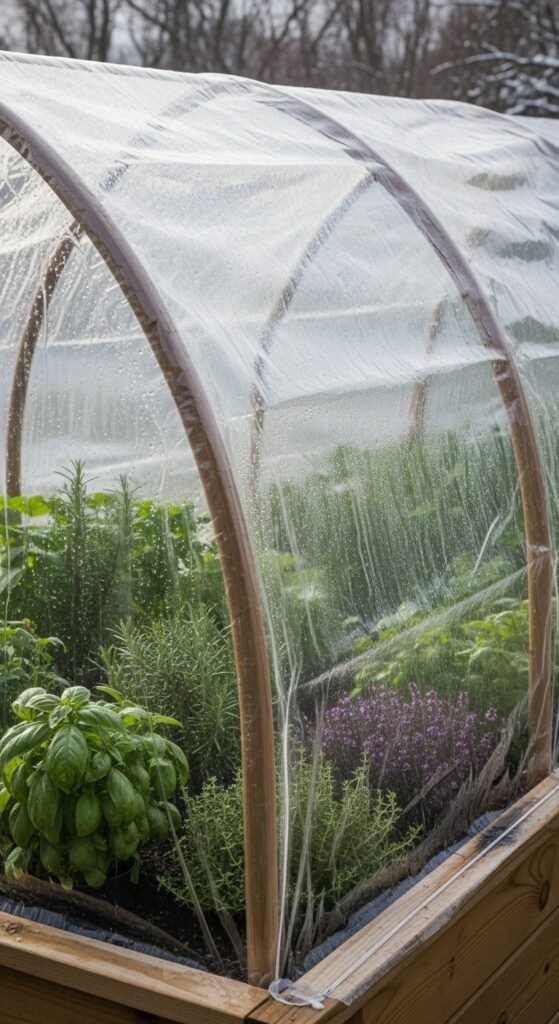
You secure year-round harvesting potential, shielding plants from frost and pests while regulating temperature. This enhances flavor development in controlled environments.
Install hoops over the bed, draping with plastic sheeting. Ventilate on warmer days to avoid overheating. Plant cold-hardy herbs underneath, monitoring humidity to prevent mold.
10) Spiral Herb Configuration
A spiral raised bed herb garden arranges plants in a coiled mound, creating microclimates for diverse herb needs within one structure.
This design provides space-saving diversity and aesthetic appeal, accommodating sun-loving and shade-tolerant herbs efficiently. It improves drainage at the top for Mediterranean varieties.
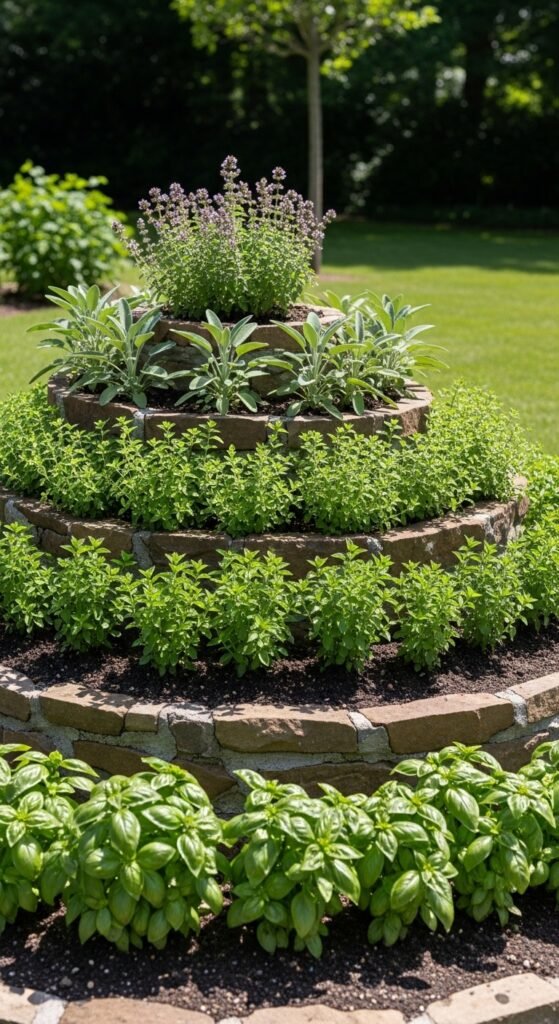
Build by piling soil in a spiral shape, starting low and winding upwards. Plant drought-resistant herbs at the peak and moisture-loving ones at the base—consult our spiral herb garden for construction tips.
11) Accessible Elevated Beds
Elevated raised beds position the herb garden at waist height, facilitating easy access for those with mobility challenges.
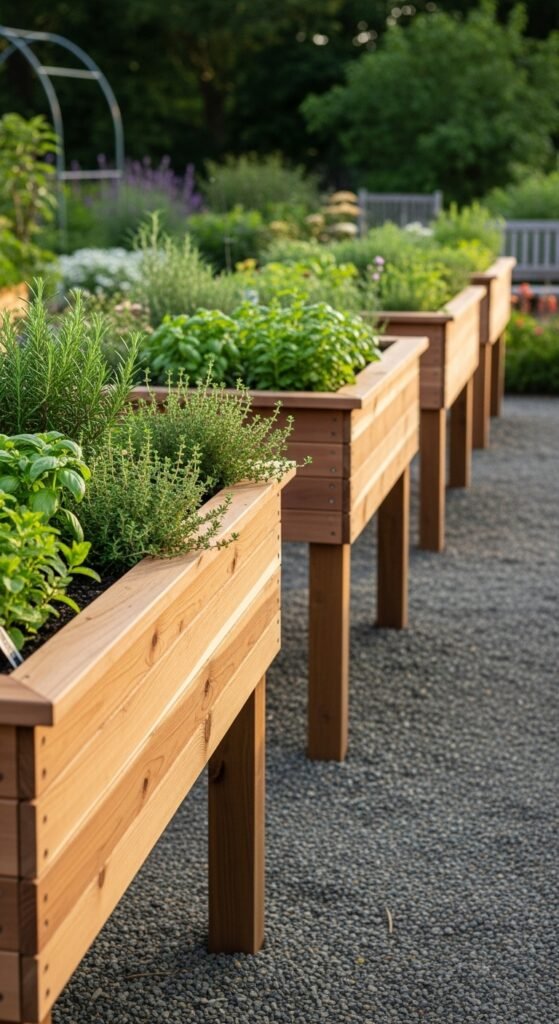
You experience ergonomic comfort and inclusive gardening, minimizing strain while encouraging frequent interaction with your plants. This setup also deters ground pests effectively.
Construct using taller frames or legs for support. Fill with enriched soil, planting reachable herbs. Position in accessible locations, adding paths for wheelchair navigation if required.
12) Drought-Tolerant Selection
Focus on drought-tolerant herbs like sage and oregano in your raised bed, selecting varieties that thrive with minimal watering.
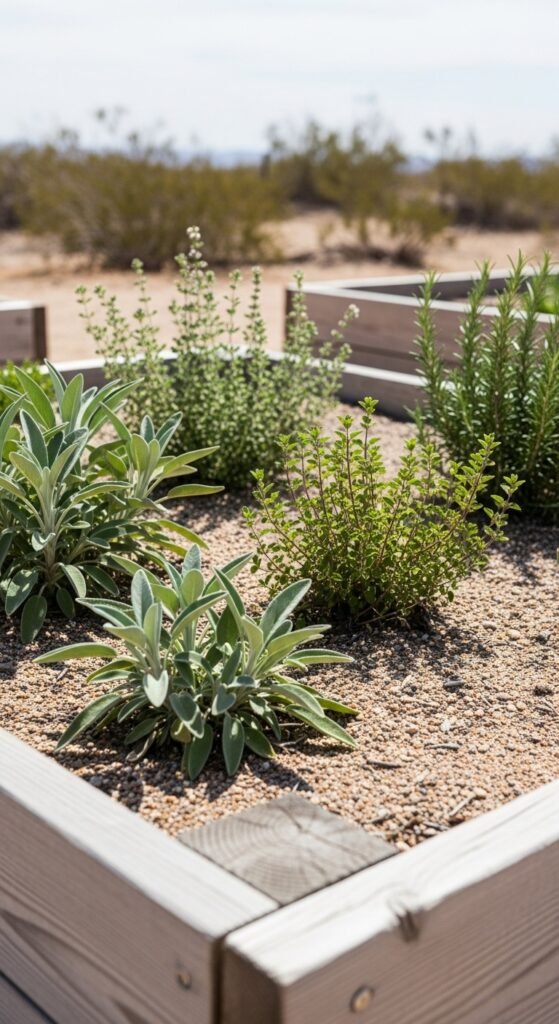
This choice ensures water conservation and resilient growth in arid conditions, maintaining flavor intensity without frequent irrigation. It suits eco-conscious gardeners seeking low-maintenance options.
Prepare the bed with sandy soil amendments for drainage. Space plants adequately for air flow, mulching heavily to retain moisture. Water deeply but infrequently to encourage deep roots.
13) Pollinator-Friendly Enhancements
Incorporate pollinator-attracting flowers alongside herbs in your raised bed to boost biodiversity and fruit set.
You foster ecosystem health and improved pollination, leading to abundant harvests. This integration creates a vibrant, sustainable garden environment.
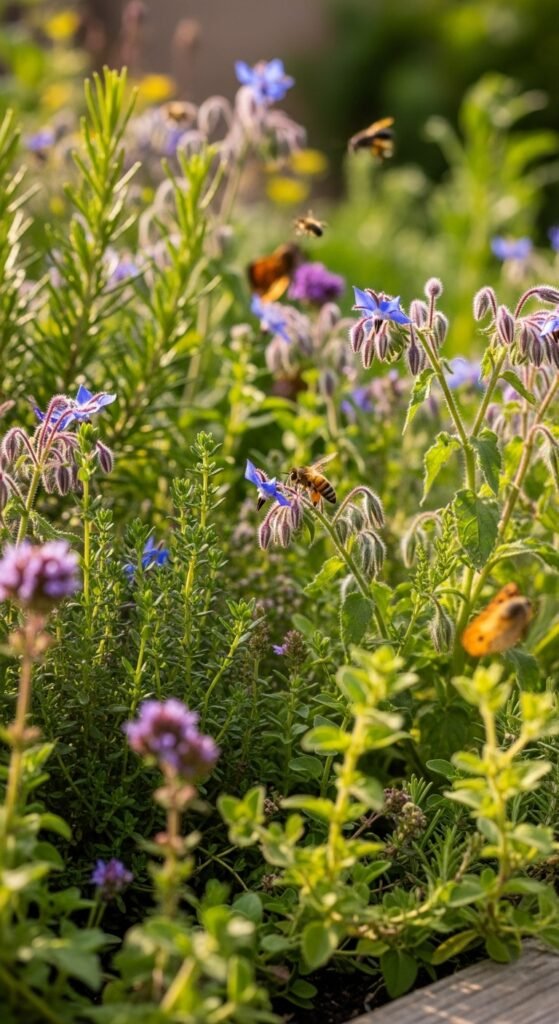
Interplant bee-friendly blooms like borage with herbs. Avoid pesticides, providing water sources nearby. Observe pollinator activity to refine plant selections over time.
14) Year-Round Succession Planning
Plan succession planting in your raised bed herb garden, sowing seeds at intervals for continuous supply throughout seasons.
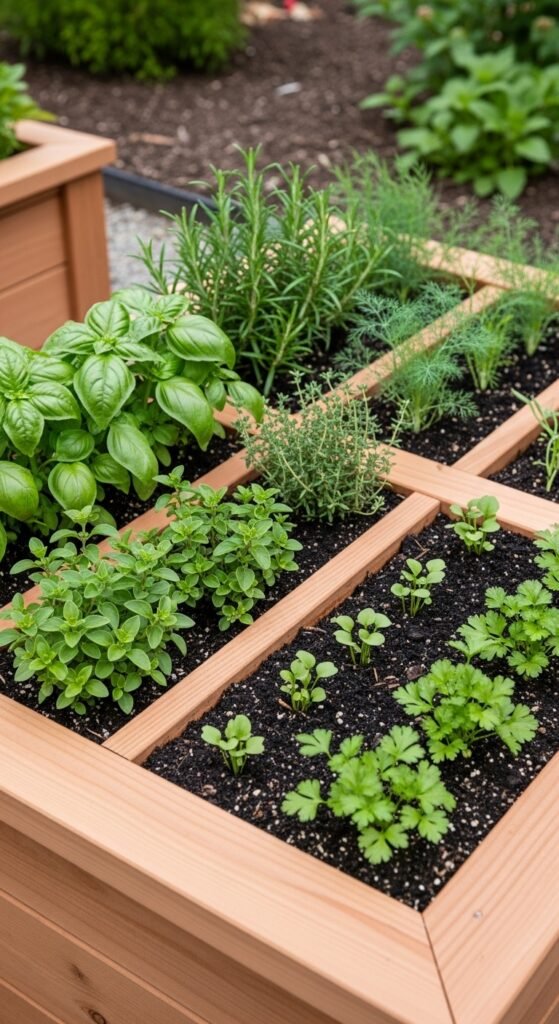
This strategy guarantees uninterrupted fresh herbs, optimizing bed usage and preventing gaps in production. It adapts to climate variations seamlessly.
Chart planting schedules based on herb maturity rates. Harvest outer leaves first, replanting cleared spots promptly. Use row covers for protection during transitions.
15) Aesthetic Bordering and Pathways
Enhance your raised bed with decorative borders and integrated pathways, using stones or wood to define edges and access points.
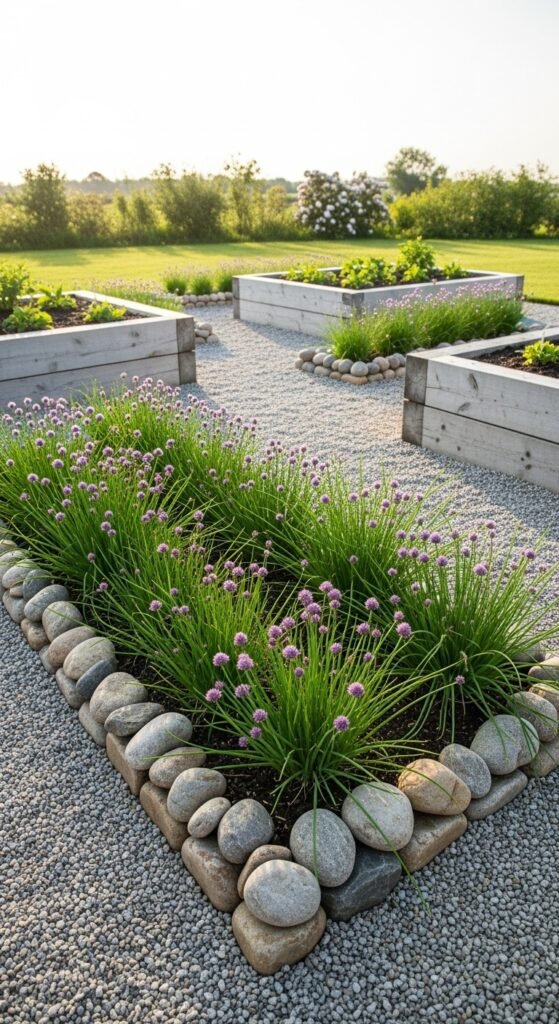
You create visual interest and practical navigation, elevating the garden’s appeal while facilitating maintenance. This design element blends functionality with beauty.
Outline the bed with chosen materials, laying gravel paths for weed suppression. Plant edging herbs like chives for dual purpose. Maintain by trimming borders regularly for neatness.
Key Principles for Success
Soil Preparation Essentials
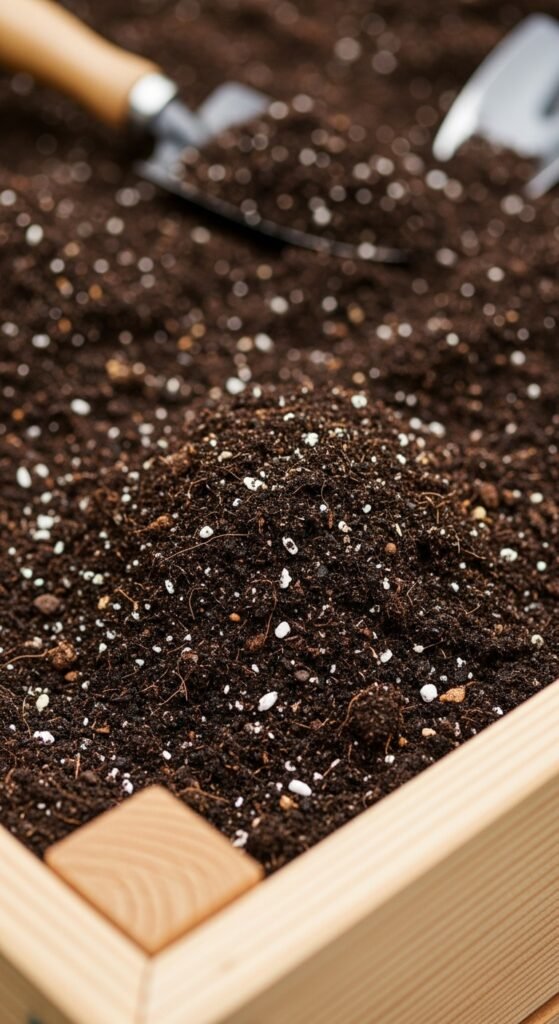
Prioritize quality soil in your raised bed herb garden by mixing compost, peat, and vermiculite for optimal drainage and nutrients. Test pH levels to ensure they range between 6.0 and 7.0, adjusting with lime if necessary. This foundation supports vigorous root development and flavorful herb production.
Maintenance Best Practices
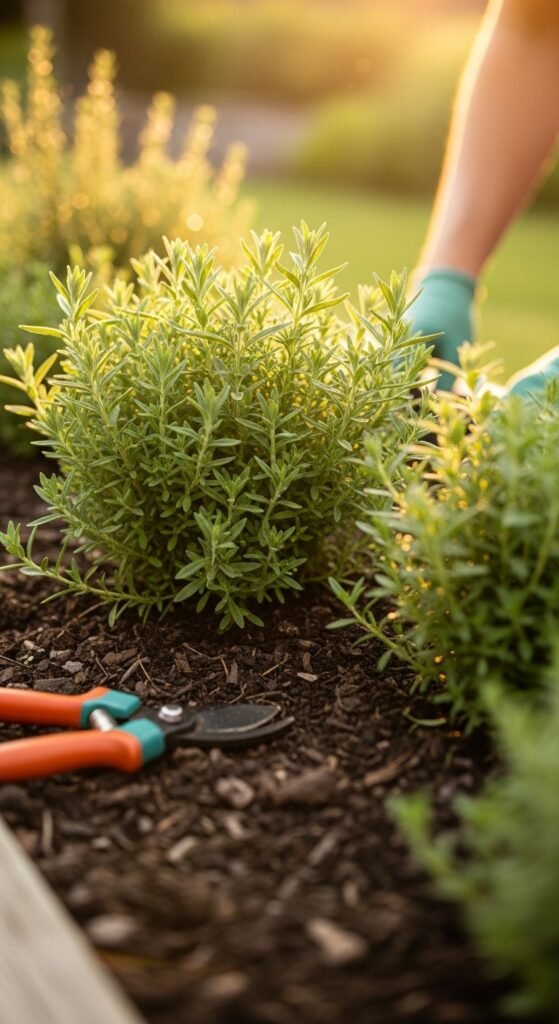
Regularly inspect for pests and diseases, applying organic remedies promptly. Mulch to conserve moisture and suppress weeds, refreshing annually. Prune herbs to encourage bushiness, harvesting in the morning for peak essential oils.
Seasonal Adaptation Strategies
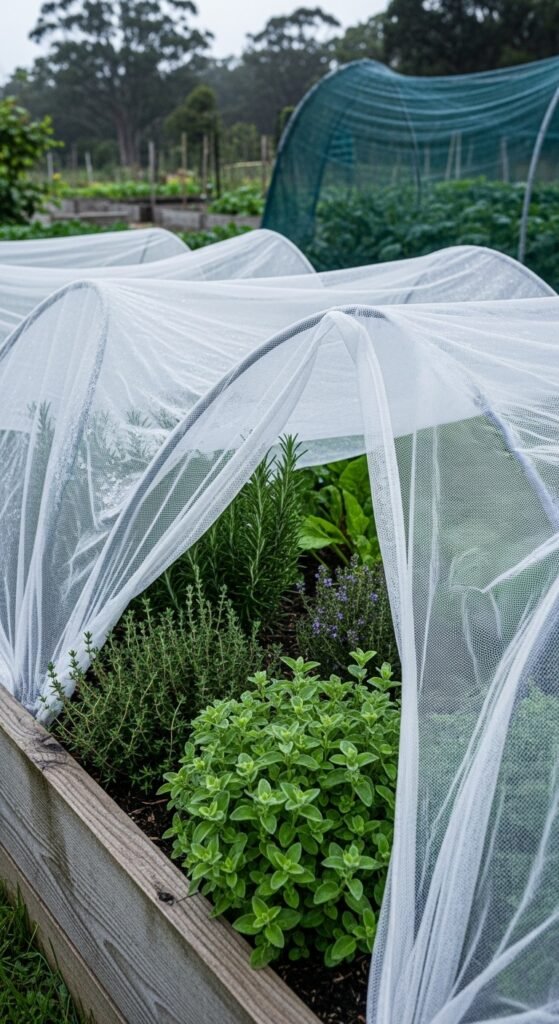
Adapt your garden by rotating crops and incorporating cover crops in off-seasons to maintain soil health. Use frost cloths in winter and shade nets in summer to protect herbs from extremes, ensuring consistent yields.
Frequently Asked Questions
What is the ideal size for a raised bed herb garden?
A standard size of 4 feet by 8 feet provides ample space for a variety of herbs while remaining accessible from all sides. Adjust based on your available area and herb selection, ensuring the bed is no wider than 4 feet to avoid reaching issues.
How often should I water my raised bed herbs?
Water when the top inch of soil feels dry, typically 1-2 times per week depending on weather. Deep, infrequent watering promotes strong roots; avoid overhead sprinkling to prevent leaf diseases.
Can I grow herbs in shaded areas?
Many herbs prefer full sun, but options like mint and parsley tolerate partial shade. Assess your site’s light exposure and choose shade-adapted varieties for best results.
What common mistakes should I avoid?
Avoid overcrowding plants, which leads to poor air circulation and disease. Also, ensure proper drainage to prevent root rot, and rotate herbs annually to maintain soil vitality.
How do I overwinter herbs in raised beds?
Mulch heavily around perennials and cover with burlap or row covers during freezes. For annuals, harvest before frost or propagate indoors for the next season.