

Growing zucchini in raised beds offers an efficient approach to vegetable gardening, allowing you to control soil quality, drainage, and pest management more effectively than traditional in-ground methods. Raised beds elevate the planting area, reducing soil compaction and improving root development for healthier plants. This technique is particularly beneficial for zucchini, a prolific summer squash that thrives in well-drained, nutrient-rich environments, enabling you to achieve bountiful harvests with minimal space.
By incorporating raised beds into your gardening strategy, you can extend the growing season, enhance accessibility for maintenance, and optimize water usage. The elevated structure minimizes weed intrusion and facilitates better air circulation, which helps prevent common fungal issues. Whether you are a seasoned gardener or beginning your journey, these ideas will guide you in cultivating robust zucchini plants that produce abundantly throughout the season.
1) Selecting Optimal Bed Dimensions
You should begin by choosing raised bed dimensions that accommodate zucchini’s sprawling growth habit. A standard recommendation is beds measuring 4 feet wide by 8 feet long and at least 12 inches deep, providing ample space for roots to expand while allowing easy access from both sides. This setup prevents soil compaction from foot traffic and supports healthy plant development.
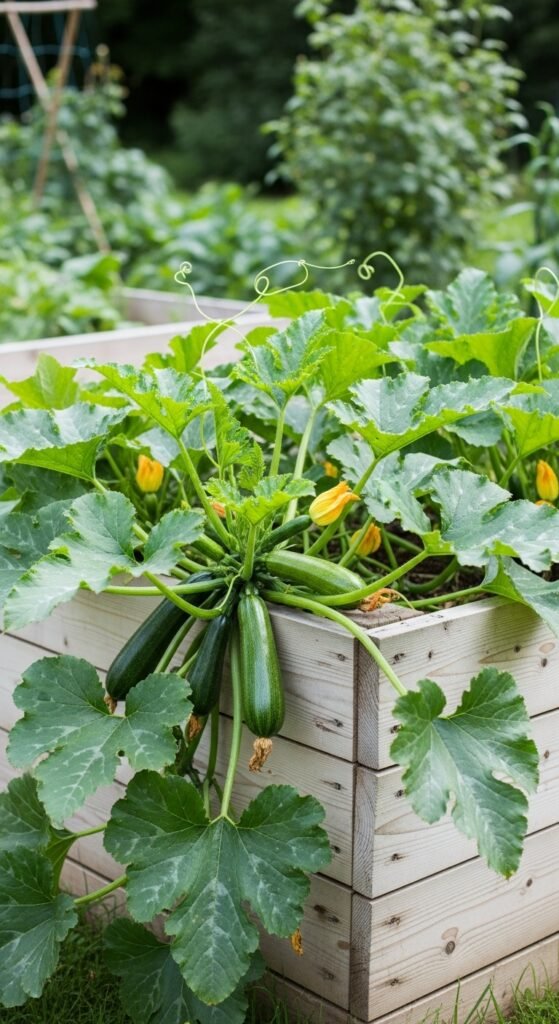
The primary benefit lies in improved yield potential, as properly sized beds ensure zucchini vines have room to spread without overcrowding, reducing competition for nutrients and sunlight. Enhanced drainage in these beds also minimizes root rot risks, promoting vigorous growth.
To implement this, construct or purchase beds using untreated lumber or composite materials. Fill them with a balanced soil mix, positioning them in a sunny location receiving at least six hours of direct light daily. Monitor plant spacing at 2-3 feet apart to optimize airflow and harvest efficiency.
2) Preparing Nutrient-Rich Soil Mixes
For successful zucchini cultivation, prepare a soil mix comprising equal parts compost, topsoil, and perlite or vermiculite to ensure excellent drainage and fertility. This combination provides the essential nutrients zucchini requires for rapid growth, while the organic matter retains moisture without waterlogging the roots.
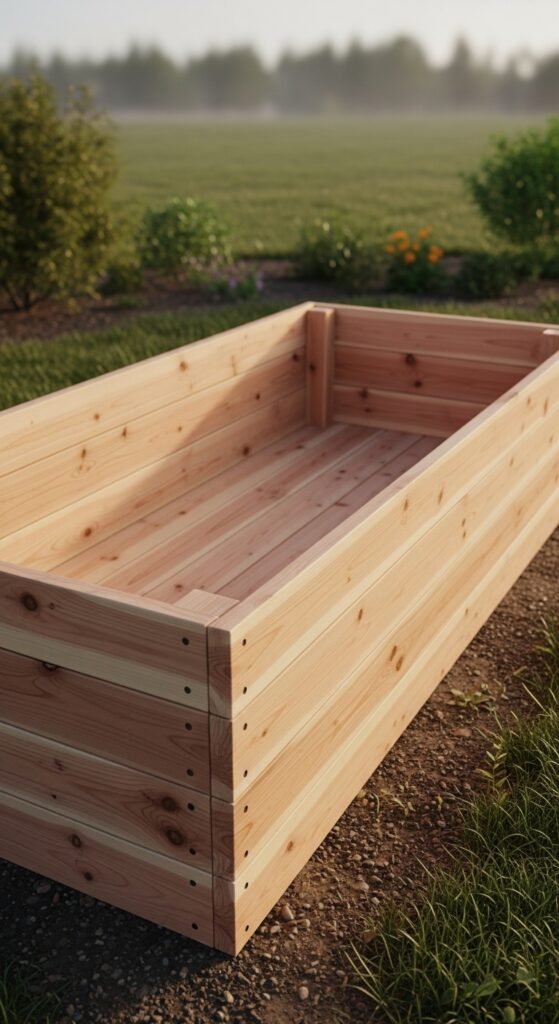
Such preparation is crucial because zucchini are heavy feeders, and nutrient-dense soil supports larger fruits and sustained production. Improved soil structure enhances microbial activity, fostering a healthy ecosystem that bolsters plant resilience against diseases.
Start by testing your existing soil pH, aiming for 6.0-7.0, and amend accordingly with lime or sulfur. Incorporate slow-release fertilizers during filling, and top-dress with compost mid-season. For added sustainability, consider integrating cover crop mixes in off-seasons to replenish soil vitality.
3) Implementing Proper Plant Spacing
You must space zucchini plants 24-36 inches apart within the raised bed to allow for their expansive vines and to facilitate adequate sunlight penetration. This arrangement prevents shading and promotes even ripening of fruits.
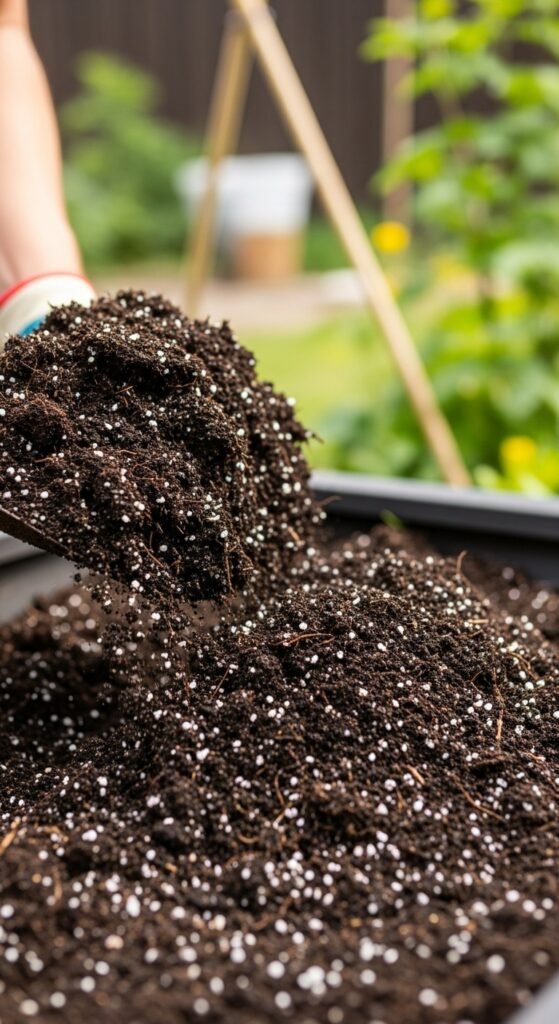
Proper spacing is vital for reducing humidity buildup, which can lead to powdery mildew, a common zucchini ailment. Optimized airflow around plants minimizes fungal risks and encourages pollinator access, resulting in higher fruit sets.
Mark planting spots with stakes before sowing seeds or transplanting seedlings. As vines grow, gently train them outward to maintain order. If space is limited, explore vertical options to complement this strategy effectively.
4) Incorporating Companion Planting Strategies
Enhance your zucchini growth by planting companions like nasturtiums, marigolds, or basil nearby in the raised bed. These plants deter pests such as squash bugs and aphids while attracting beneficial insects.
This method boosts biodiversity, improving overall garden health and potentially increasing zucchini yields through natural pest control. Pest repulsion without chemicals aligns with sustainable practices, preserving soil integrity.
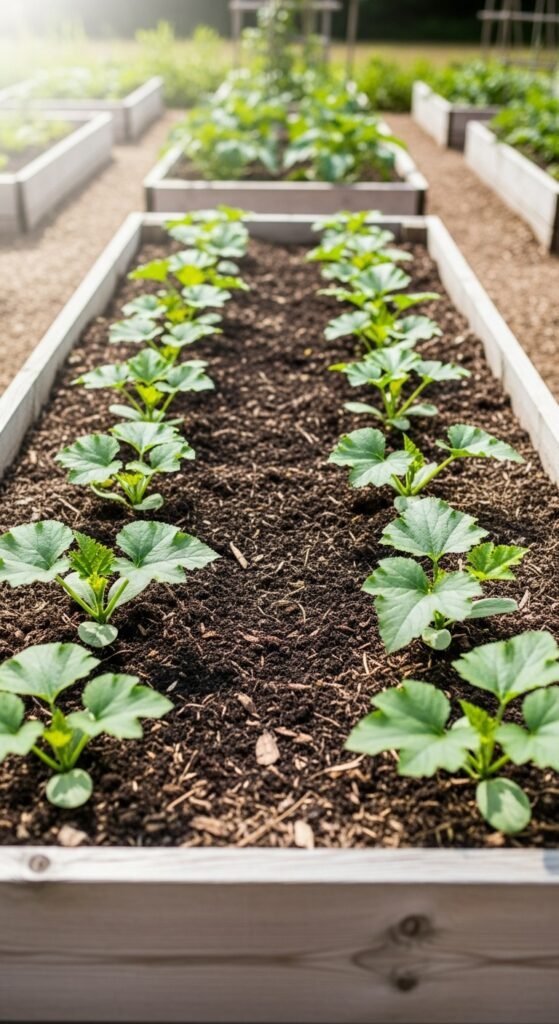
Position companions at bed edges or intersperse them among zucchini. Monitor interactions to ensure no competition for resources. For deeper insights, reference permaculture guilds to refine your planting combinations.
5) Utilizing Vertical Trellising Systems
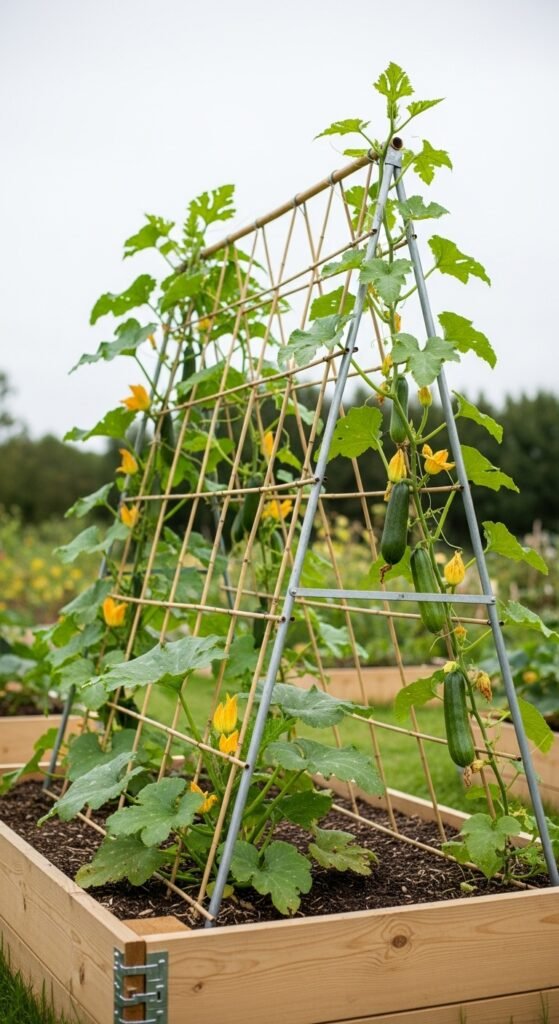
To save space and improve harvests, install trellises or A-frames in your raised beds for zucchini to climb. Select sturdy materials like bamboo or metal to support the weight of maturing fruits.

Vertical growth elevates foliage, enhancing air circulation and reducing soil-borne disease exposure. Increased sunlight exposure on all sides leads to more uniform fruit development and easier picking.
Secure vines gently with ties as they grow, ensuring the structure is anchored firmly. This approach is ideal for compact gardens. Similar techniques can be adapted from trellis ideas for cucumbers, given their comparable vining nature.
6) Applying Effective Mulching Techniques
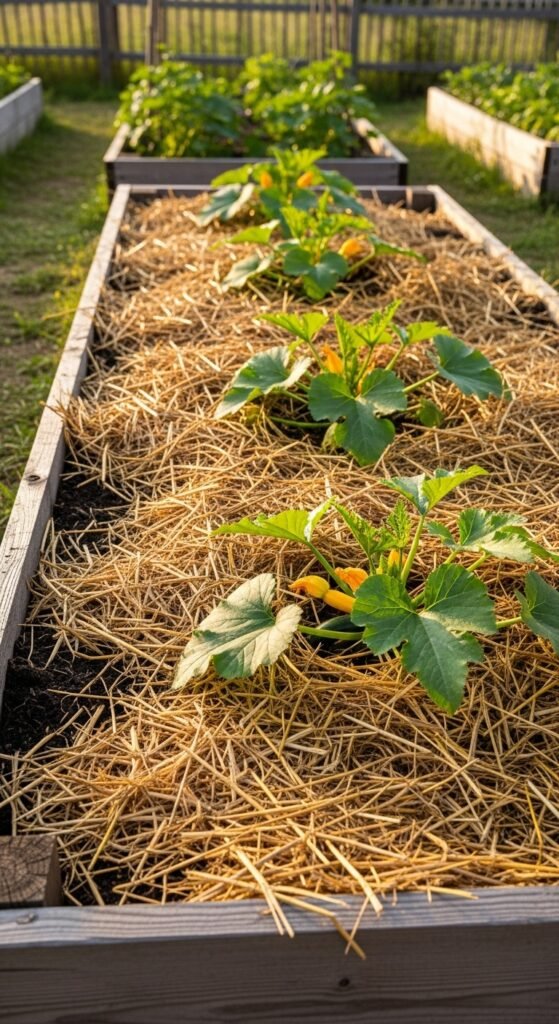
Apply a 2-3 inch layer of organic mulch, such as straw or wood chips, around zucchini plants in raised beds to conserve moisture and suppress weeds.
Mulching maintains consistent soil temperature, crucial for root health during fluctuating weather. Moisture retention reduces watering frequency, conserving resources and preventing stress-related issues.
Spread mulch after seedlings establish, avoiding direct stem contact to prevent rot. Replenish as needed throughout the season for sustained benefits.
7) Establishing Consistent Watering Schedules
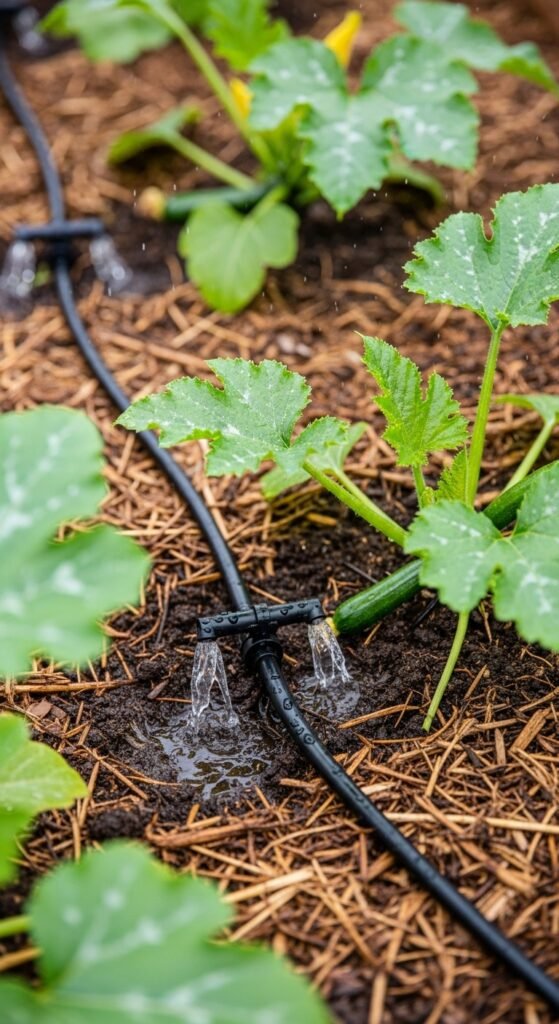
You need to water zucchini deeply but infrequently, aiming for 1-2 inches per week, adjusted for rainfall, to encourage deep root systems in raised beds.
Consistent moisture prevents blossom end rot and supports steady fruit production. Even hydration ensures plump, flavorful zucchini without cracking.
Use soaker hoses or drip irrigation for targeted delivery, watering early in the morning to minimize evaporation. Monitor soil moisture with a probe, and consider seasonal adjustments based on summer watering schedules.
8) Integrating Natural Pest Management
Employ natural methods like introducing ladybugs or using neem oil sprays to manage pests in your zucchini raised beds.
This approach protects beneficial organisms while controlling threats like aphids or squash vine borers. Ecological balance sustains long-term garden health without synthetic chemicals.
Inspect plants regularly, removing eggs or larvae by hand. For specific issues, such as Japanese beetles in the garden, apply targeted barriers or traps.
9) Administering Balanced Fertilization
Fertilize zucchini with a balanced, organic product high in potassium to support fruiting, applying every 4-6 weeks during the growing season.

Proper nutrition fuels vigorous growth and abundant yields. Nutrient optimization prevents deficiencies that could stunt development or reduce quality.
Incorporate compost tea for gentle feeding, testing soil periodically to avoid over-fertilization.
10) Performing Timely Pruning Practices
Prune excess leaves and suckers from zucchini plants to improve airflow and direct energy toward fruit production in raised beds.
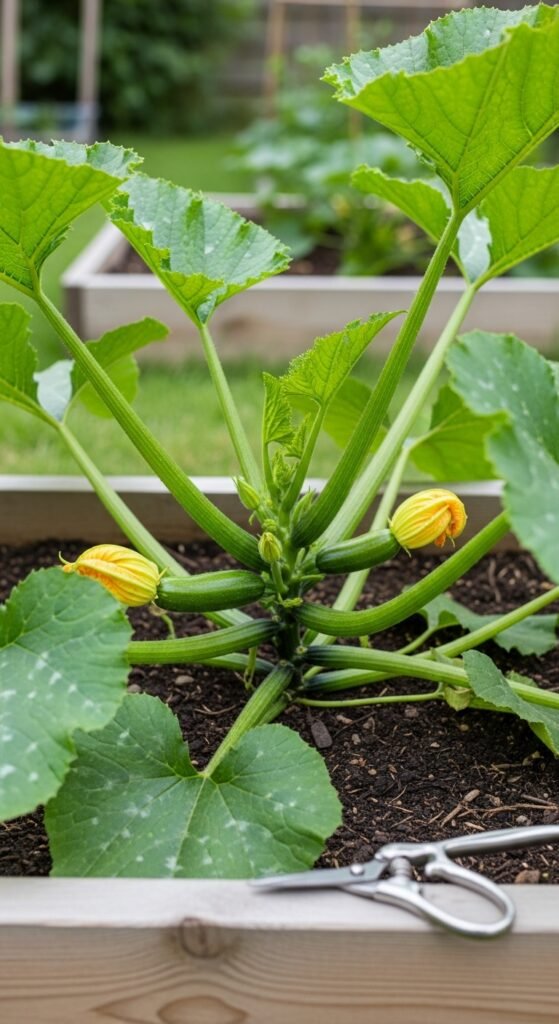
This practice reduces disease susceptibility and simplifies harvesting. Focused energy allocation results in larger, higher-quality fruits.
Use clean shears, pruning in dry conditions to minimize infection risks. Limit removal to 20-30% of foliage at a time.
11) Adopting Succession Planting Methods
Plant zucchini seeds in staggered intervals every 2-3 weeks to extend your harvest period within the raised bed framework.
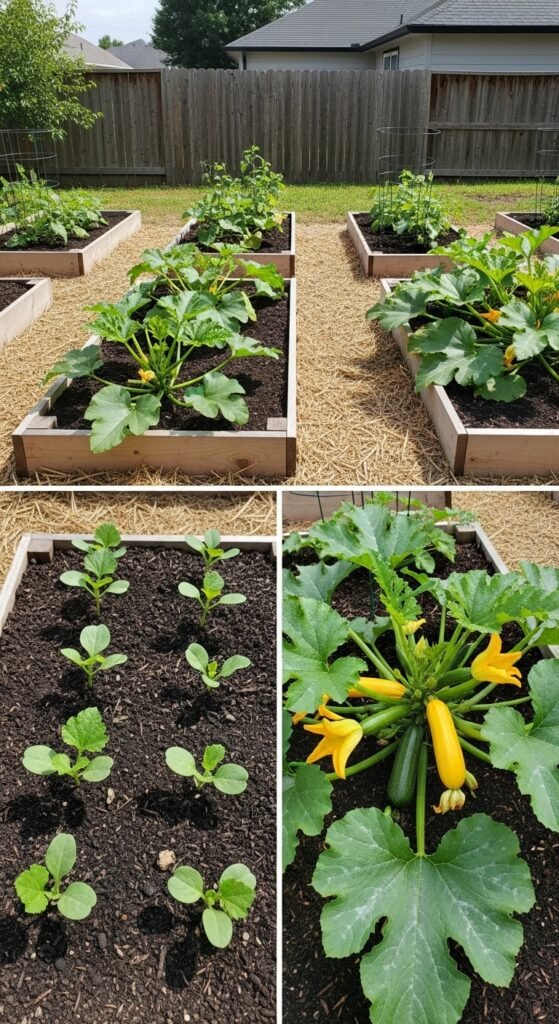
Succession planting ensures a continuous supply, avoiding gluts. Prolonged productivity maximizes your bed’s output over the season.
Plan based on your region’s growing window, rotating spots to maintain soil health.
12) Choosing Resilient Zucchini Varieties
Select disease-resistant varieties like ‘Black Beauty’ or ‘Cocozelle’ suited for raised bed conditions to enhance success rates.
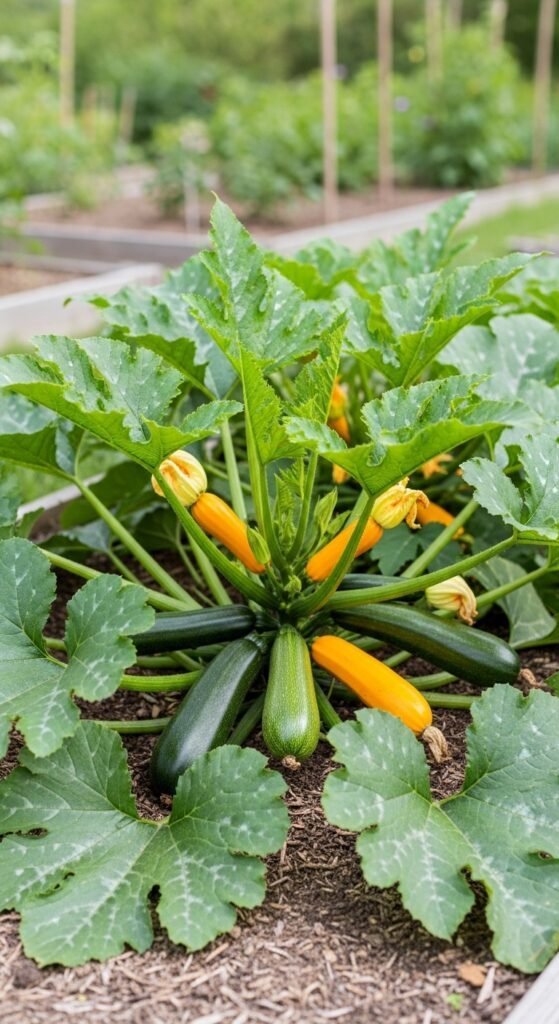
These cultivars offer reliability against common issues, ensuring consistent performance. Genetic advantages reduce maintenance needs and boost yields.
Research local adaptations, sourcing seeds from reputable suppliers for optimal results.
13) Providing Seasonal Frost Protection
Protect young zucchini from late frosts using row covers or cloches in raised beds to safeguard tender growth.
This extends your planting window, allowing earlier starts. Weather resilience preserves plants for full-season productivity.
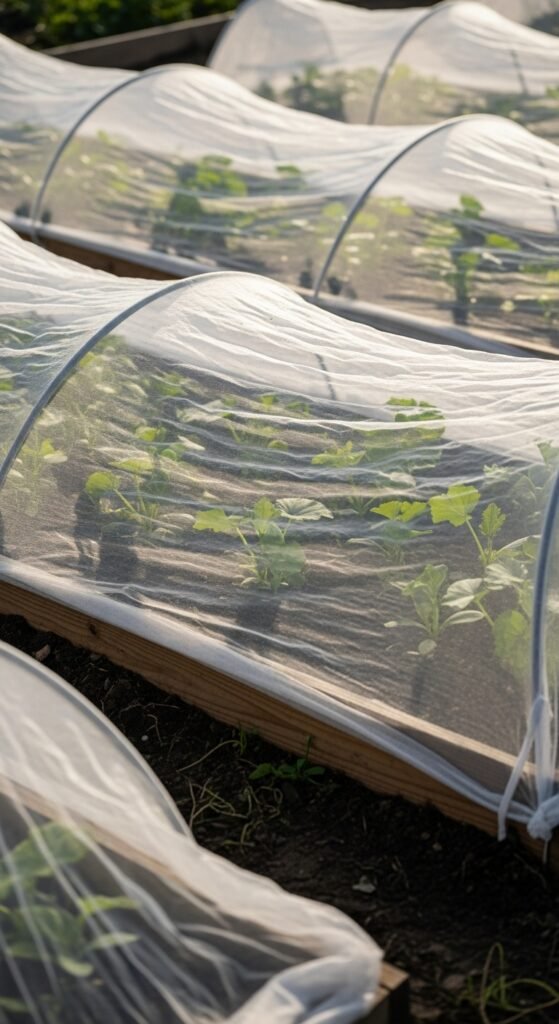
Monitor forecasts and deploy covers as needed, removing them during warm days. Explore additional frost protection for plants strategies for comprehensive care.
14) Installing Shade Cloth for Heat Management
During peak summer heat, drape 30-50% shade cloth over raised beds to shield zucchini from intense sun exposure.
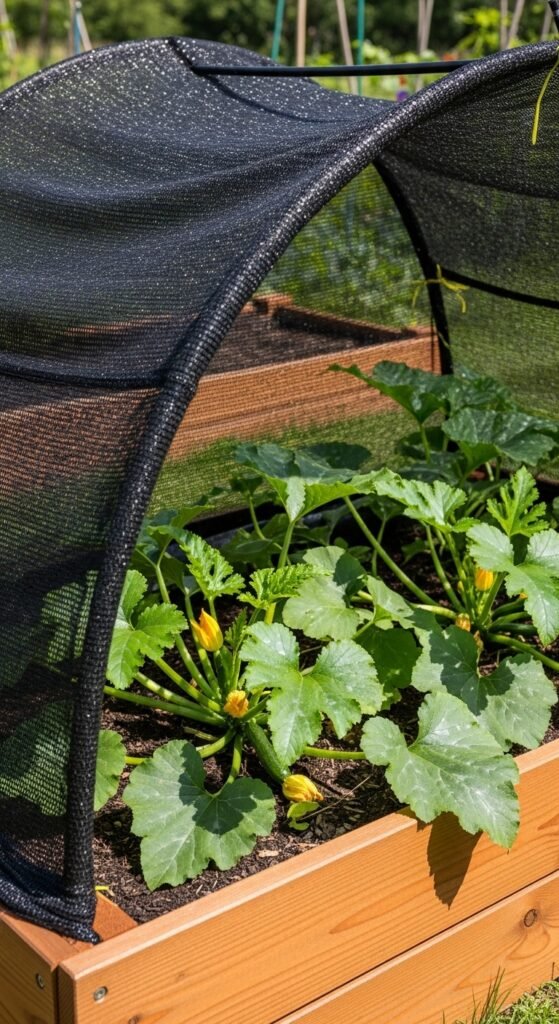
This prevents wilting and sunscald on fruits. Temperature moderation maintains plant vigor in hot climates.
Secure cloth on frames, adjusting coverage based on conditions. For installation guidance, refer to shade cloth for gardens.
15) Exploring Preservation Techniques for Harvests
Once harvested, preserve excess zucchini through methods like dehydration or canning to extend enjoyment beyond the season.

Preservation maximizes your efforts, reducing waste. Year-round availability of home-grown produce enhances self-sufficiency.
Slice and dehydrate for chips, or prepare relishes. Detailed recipes can be found in dehydrate zucchini chips or canning zucchini relish guides.
Key Principles for Successful Zucchini Cultivation in Raised Beds
Maintaining Soil Health
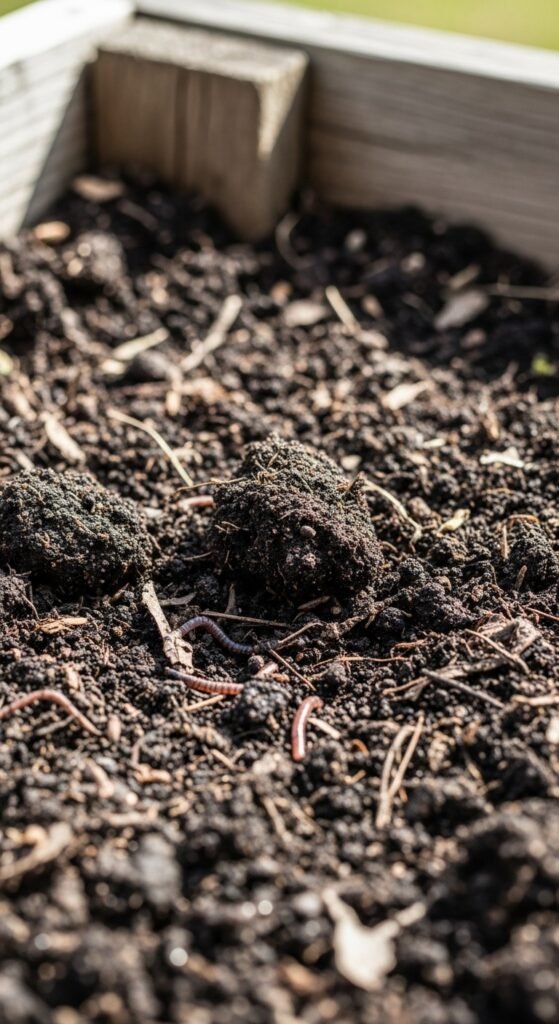
Prioritize ongoing soil amendments with organic matter to sustain fertility and structure, ensuring long-term productivity for your zucchini crops.
Optimizing Water and Nutrient Delivery
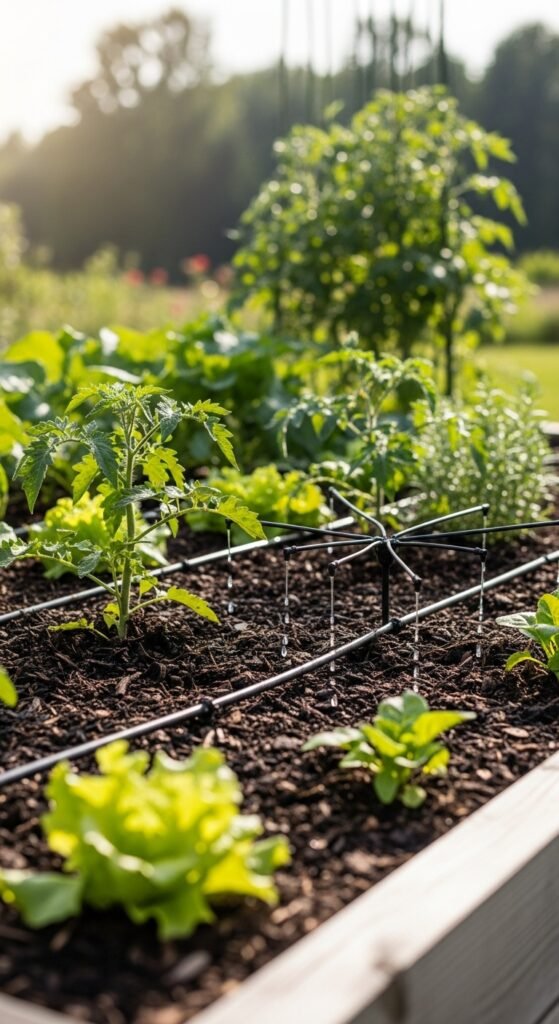
Implement efficient systems like drip irrigation combined with mulching to deliver water and nutrients precisely, minimizing waste and supporting consistent growth.
Preventing Common Pests and Diseases
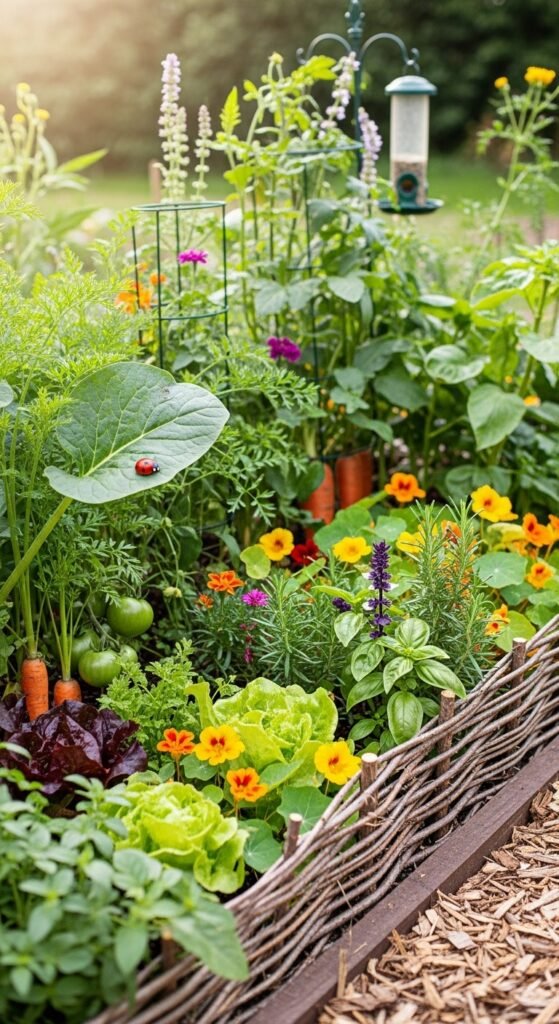
Adopt integrated pest management, including crop rotation and companion planting, to proactively address threats and maintain healthy zucchini plants.
Frequently Asked Questions
How deep should raised beds be for growing zucchini?
Raised beds for zucchini should ideally be at least 12 inches deep to accommodate root development, though 18-24 inches is preferable for optimal drainage and soil volume.
What is the best soil pH for zucchini in raised beds?
The optimal soil pH for zucchini ranges from 6.0 to 7.0, promoting nutrient uptake and preventing deficiencies that could affect plant health and fruit quality.
How often should I water zucchini in raised beds?
Water zucchini deeply once or twice weekly, providing 1-2 inches of moisture, adjusted based on weather conditions to maintain even soil dampness without saturation.
Can zucchini be grown vertically in raised beds?
Yes, zucchini can be trained vertically using trellises in raised beds, which saves space and improves air circulation, though bush varieties may require less support.
What companions pair well with zucchini in raised beds?
Companions such as marigolds, nasturtiums, and herbs like basil work well, as they deter pests and enhance pollination, contributing to a balanced ecosystem.