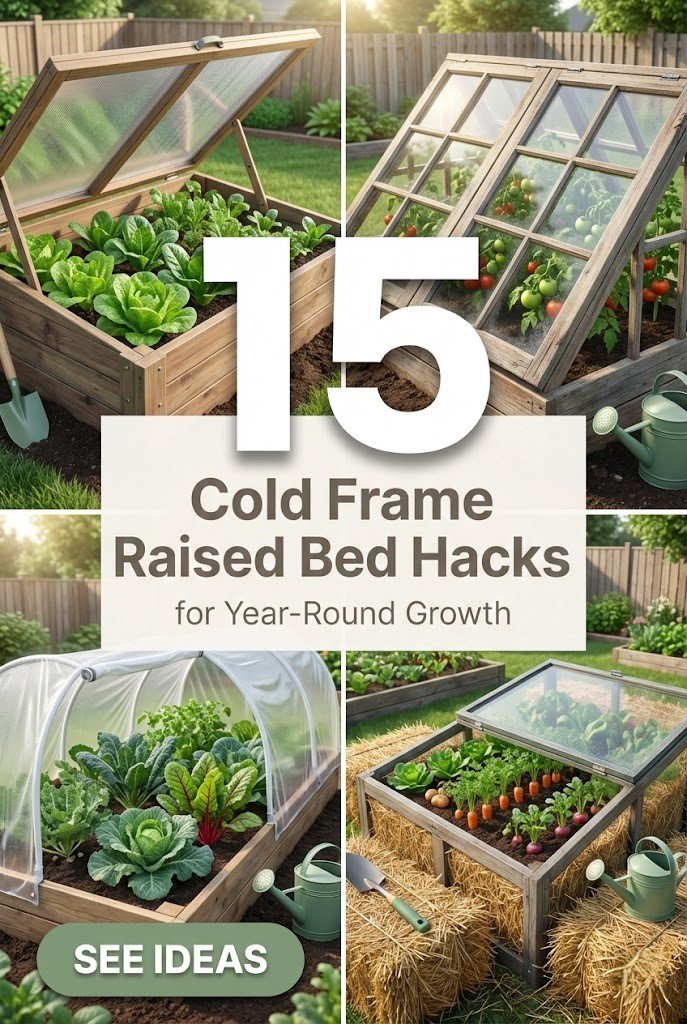
You may be seeking ways to protect your plants from unpredictable weather while maximizing your garden space. A cold frame raised bed combines the benefits of elevated planting areas with a protective enclosure, allowing you to start seeds earlier in spring and harvest later into fall. This setup enhances soil drainage, reduces pest issues, and provides a controlled microclimate for tender seedlings and vegetables.
By integrating a cold frame into your raised bed design, you create an efficient system that promotes healthier plant growth and increases yield. Whether you are a novice gardener or an experienced horticulturist, these ideas offer practical solutions tailored to various needs and environments.
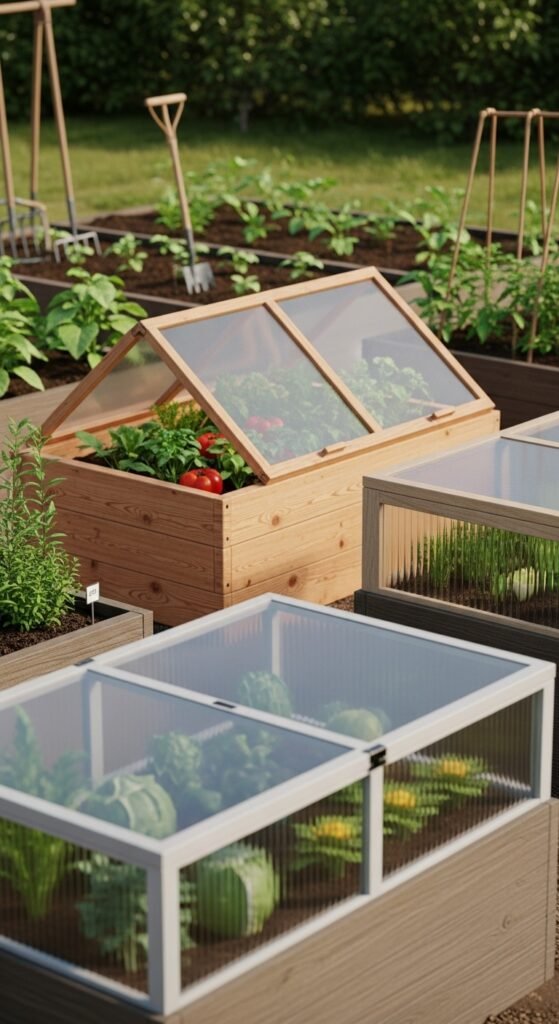
Explore the following concepts to inspire your next gardening project, ensuring year-round productivity in your outdoor space.
1) Basic Wooden Frame with Hinged Lid
You construct a simple raised bed using untreated lumber, topped with a hinged polycarbonate lid for easy access. This design measures approximately 4 feet by 8 feet, providing ample space for rows of lettuce or herbs. The wooden sides retain heat effectively, while the transparent lid allows sunlight to penetrate, creating a warm environment for early-season planting.
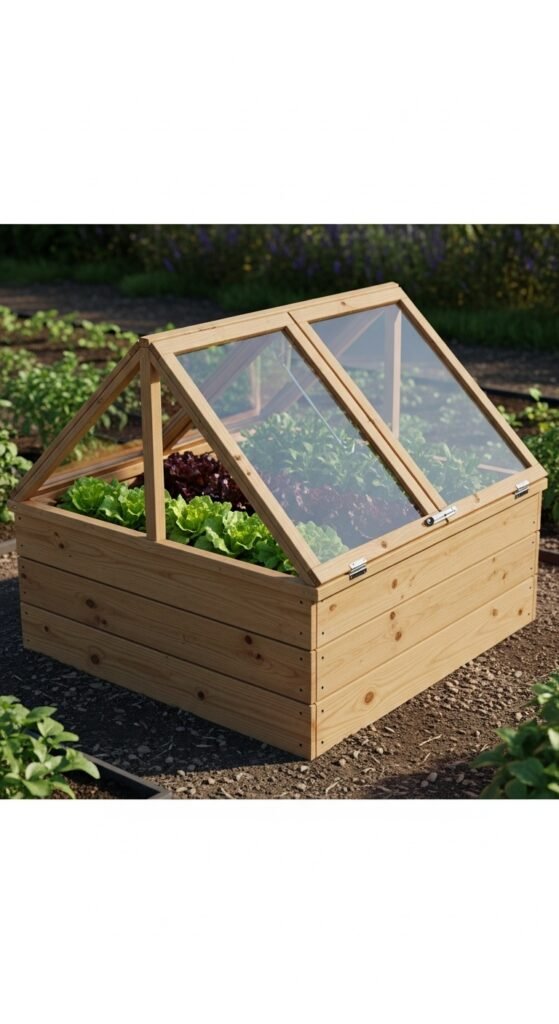
The primary benefit lies in its affordability and simplicity, enabling you to extend your growing period by several weeks without advanced tools. It shields plants from frost and wind, fostering robust root development. To implement this, select a south-facing location for optimal sun exposure. Assemble the bed with screws for durability, and attach the lid using weather-resistant hinges. Fill with a nutrient-rich soil mix, and monitor internal temperatures to prevent overheating on sunny days.
For enhanced frost protection, consider incorporating elements from frost protection strategies to safeguard delicate seedlings during unexpected cold snaps.
2) Recycled Window Cold Frame Integration
You repurpose old windows to form a slanted lid over a raised bed built from reclaimed wood or bricks. The angled design facilitates rainwater runoff and maximizes light capture, ideal for starting tomatoes or peppers indoors before transplanting.
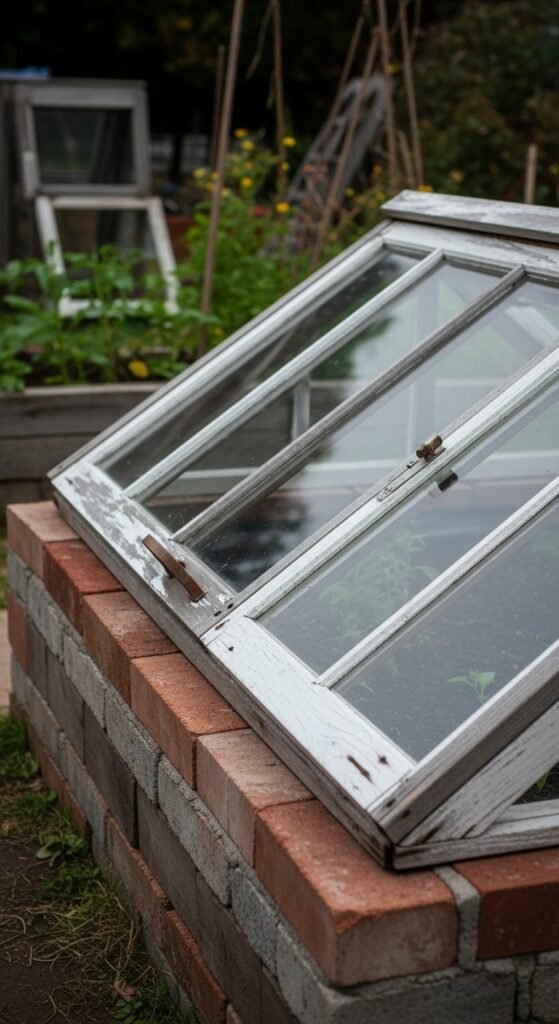
This approach promotes sustainability by reducing waste and costs, while offering excellent insulation against cold nights. It allows you to experiment with heirloom varieties that require a longer growing season. Begin by sourcing salvaged windows of similar size. Construct the bed frame to match the window dimensions, ensuring a snug fit. Secure the windows with hinges or props for ventilation. Add a layer of compost for soil enrichment, and position the setup in a sheltered area to minimize wind damage.
To complement this setup, explore milk jug greenhouse techniques for additional small-scale protection options.
3) PVC Hoop House Over Raised Bed
You install flexible PVC pipes arched over a standard raised bed, covered with clear plastic sheeting to create a mini tunnel effect. This adaptable structure can be easily removed during warmer months, serving dual purposes throughout the year.
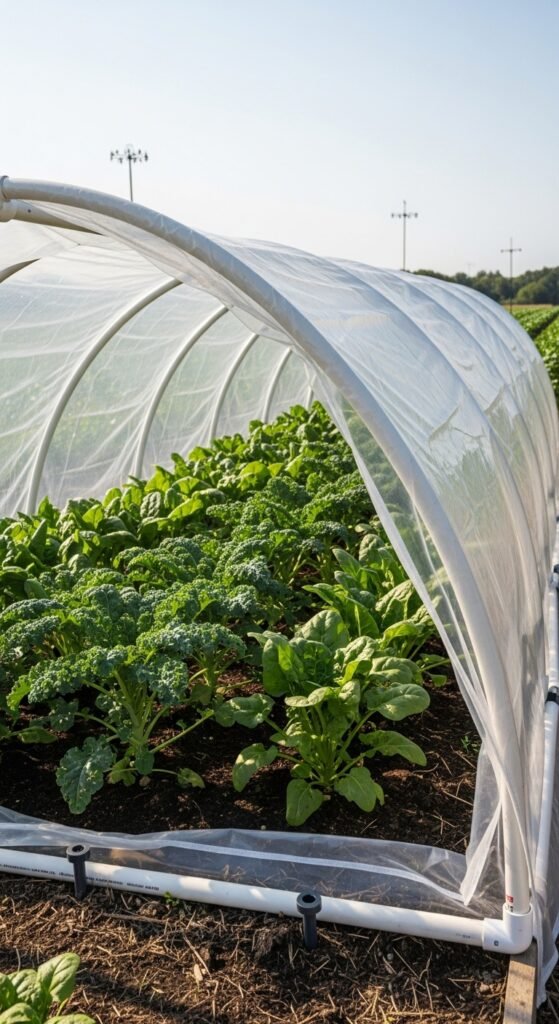
The key advantage is its low cost and portability, providing frost resistance while allowing air circulation through adjustable ends. It supports crops like kale or spinach in cooler climates. To build it, bend PVC pipes into hoops and anchor them into the bed’s soil or sides. Drape UV-resistant plastic over the frame, securing with clips. Ensure proper tension to withstand wind, and incorporate vents for temperature control.
For soil preparation in this system, integrate winter cover crops to maintain fertility between seasons.
4) Automated Venting Cold Frame
You equip a raised bed cold frame with automatic vent openers that respond to temperature changes, using wax cylinders to lift the lid without manual intervention. This high-tech addition suits busy gardeners who cannot monitor conditions constantly.
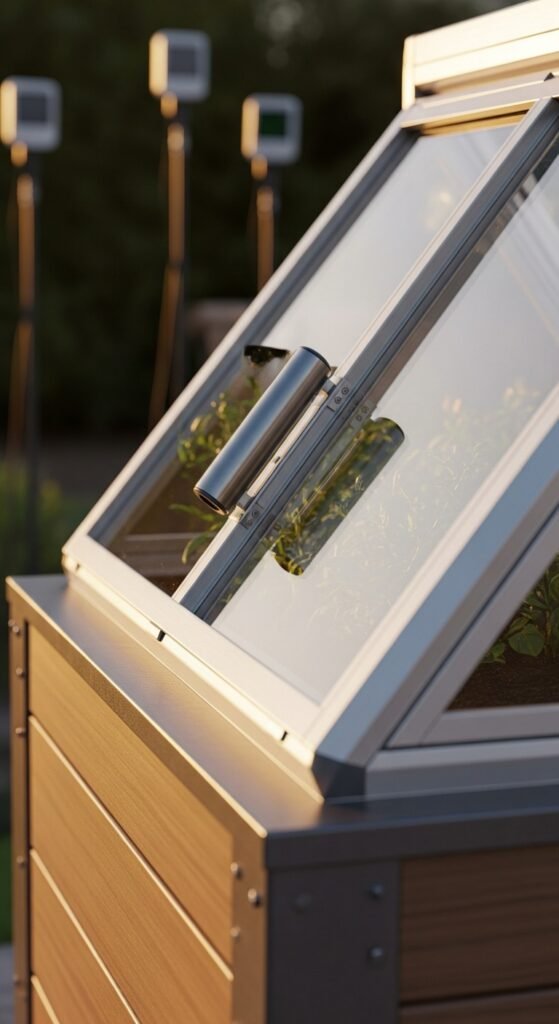
It prevents overheating and ensures consistent airflow, optimizing plant health and reducing disease risk. Suitable for nurturing delicate flowers or early vegetables. Install the vents on a sturdy wooden or metal frame bed. Attach the automatic mechanisms per manufacturer instructions, calibrating for your local climate. Use quality glazing material for the lid to enhance durability.
To further improve efficiency, consider pairing with drip irrigation systems for precise watering within the enclosed space.
5) Straw Bale Insulated Design
You surround a central planting area with straw bales, topped with a glass or plastic lid, leveraging the bales’ natural insulation properties. This temporary setup is perfect for short-term cold protection in transitional seasons.
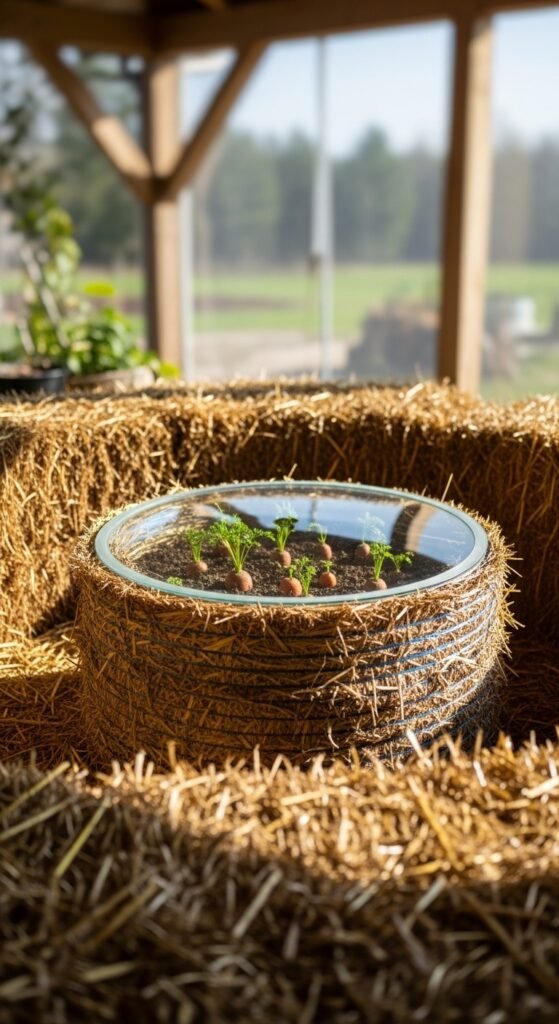
The insulation retains heat effectively, decomposing bales enrich the soil over time, promoting eco-friendly gardening. Ideal for root vegetables like carrots. Arrange bales in a rectangular formation, filling the interior with soil. Place the lid securely on top, ensuring stability. As bales break down, incorporate them into compost for future use.
Enhance your knowledge by reviewing low tunnel gardening methods, which share similarities in protective covering techniques.
6) Tiered Multi-Level Cold Frame
You create stacked raised beds with individual cold frames for each level, allowing varied microclimates within a compact vertical space. This is especially useful in small yards or urban settings.
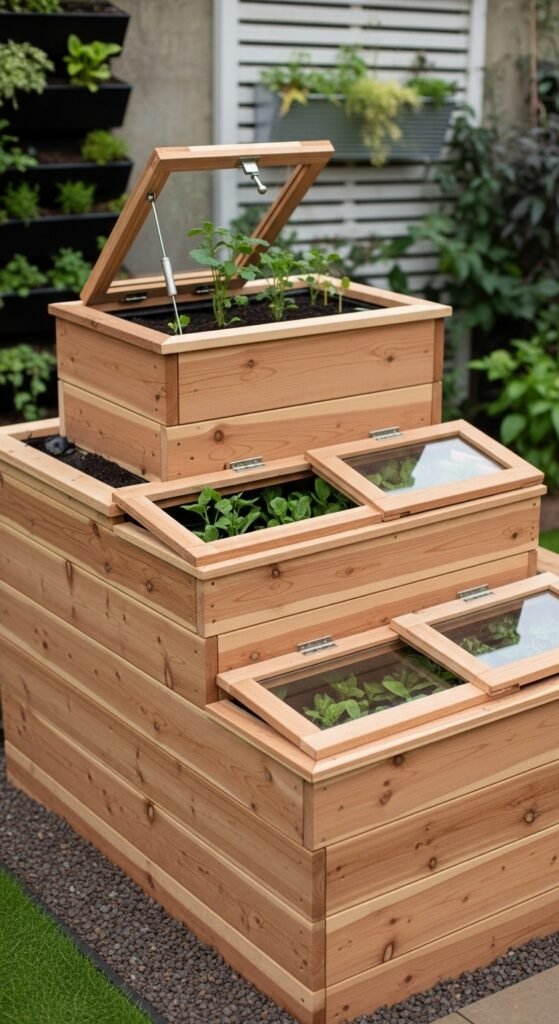
It maximizes sunlight exposure and facilitates crop rotation, increasing overall productivity. Plant shade-tolerant species lower and sun-loving ones higher. Build using cedar boards for resistance to rot, installing hinged lids on each tier. Ensure structural support for stability, and fill with layered soil for drainage.
For companion planting in tiers, draw inspiration from permaculture guilds to optimize plant interactions.
7) Solar-Powered Heated Bed
You incorporate solar panels to power low-voltage heating cables beneath the soil in a raised bed cold frame, maintaining consistent warmth during cold spells.
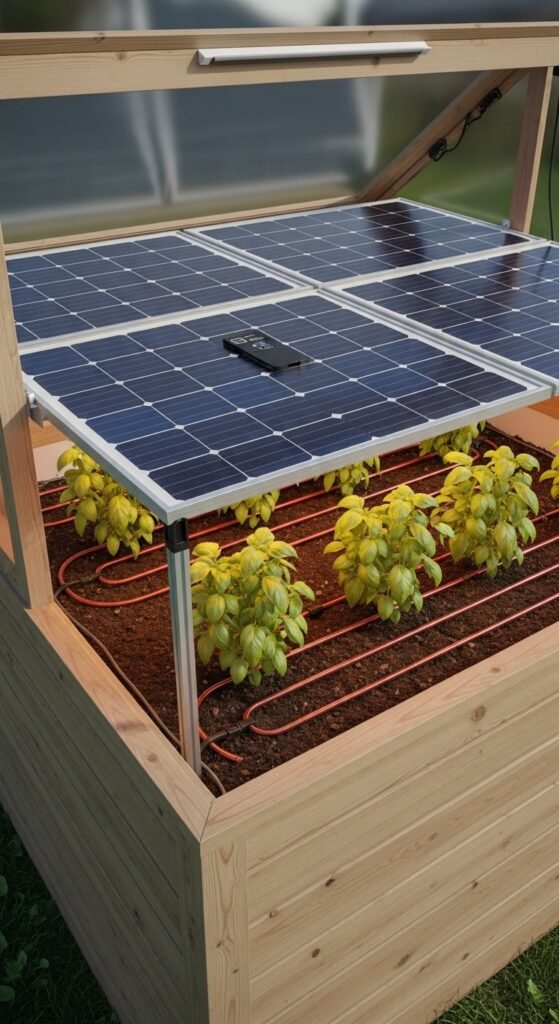
This extends the growing season significantly, enabling year-round cultivation in moderate climates. It benefits heat-loving crops like basil. Position solar panels nearby, wiring them to heating elements buried shallowly in the soil. Cover with a insulated lid for heat retention.
To align with sustainable practices, explore passive solar greenhouse designs for complementary energy-efficient ideas.
8) Mobile Wheeled Cold Frame
You mount a raised bed cold frame on sturdy wheels, allowing relocation to follow sunlight or avoid harsh weather. This flexibility suits dynamic garden layouts.
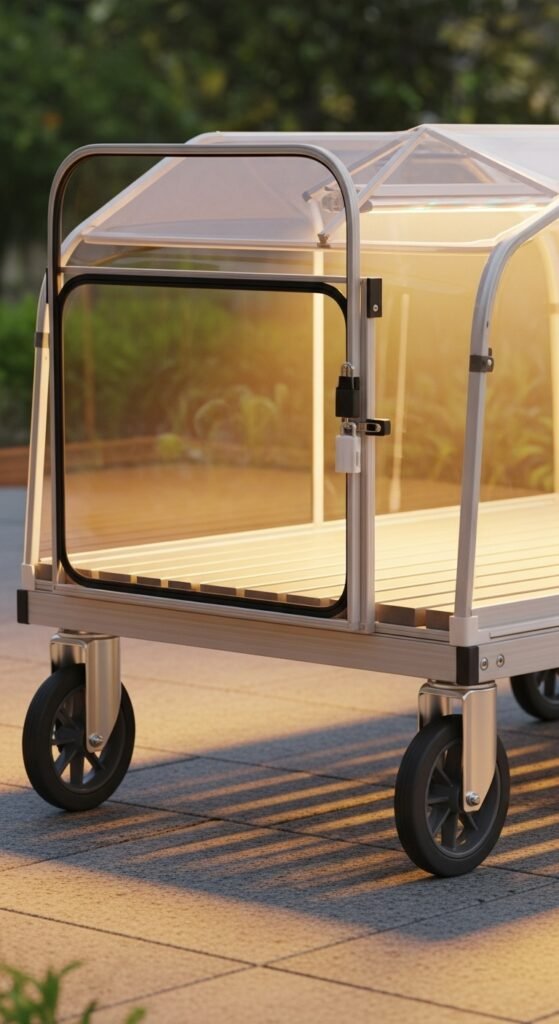
It optimizes light exposure and protects against seasonal changes, enhancing plant vitality. Construct the bed with lightweight materials, attaching casters rated for outdoor use. Include a locking mechanism for stability.
For soil enhancement during moves, utilize home composting techniques to refresh the medium as needed.
9) Hugelkultur-Inspired Raised Bed
You build a cold frame over a hugelkultur mound, layering wood debris, compost, and soil for natural heat generation and moisture retention.
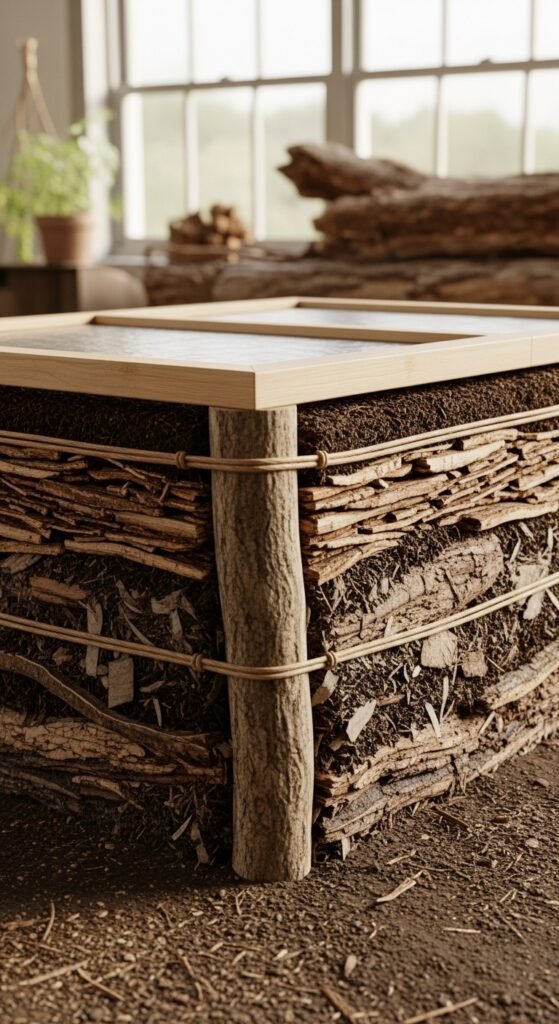
This method improves soil fertility over time and reduces watering needs, ideal for drought-prone areas. Top with a simple frame lid. Start by piling logs and branches, covering with organic matter before adding topsoil.
Learn more about this technique through hugelkultur bed construction guidelines.
10) Keyhole Garden with Cold Frame
You design a circular raised bed with a central composting access point, covered by a dome-shaped cold frame for protection.
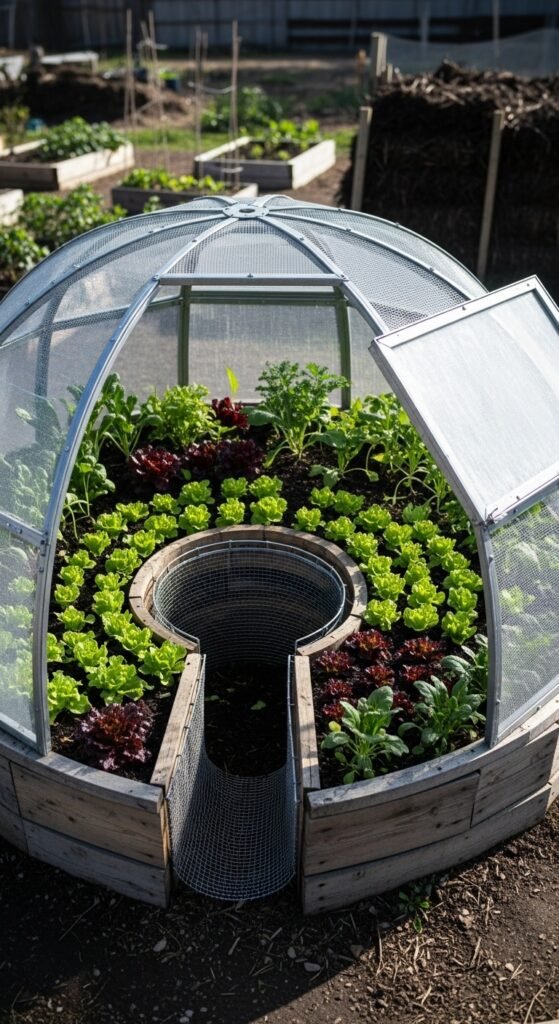
It facilitates efficient nutrient distribution and conserves space, supporting intensive planting. Fill the center with kitchen scraps, surrounding with planting zones. Use wire mesh for the frame structure.
Expand your understanding with keyhole garden principles for optimal layout.
11) Wicking Bed Cold Frame System
You integrate a self-watering reservoir into the raised bed base, topped with a cold frame to minimize evaporation and maintain humidity.
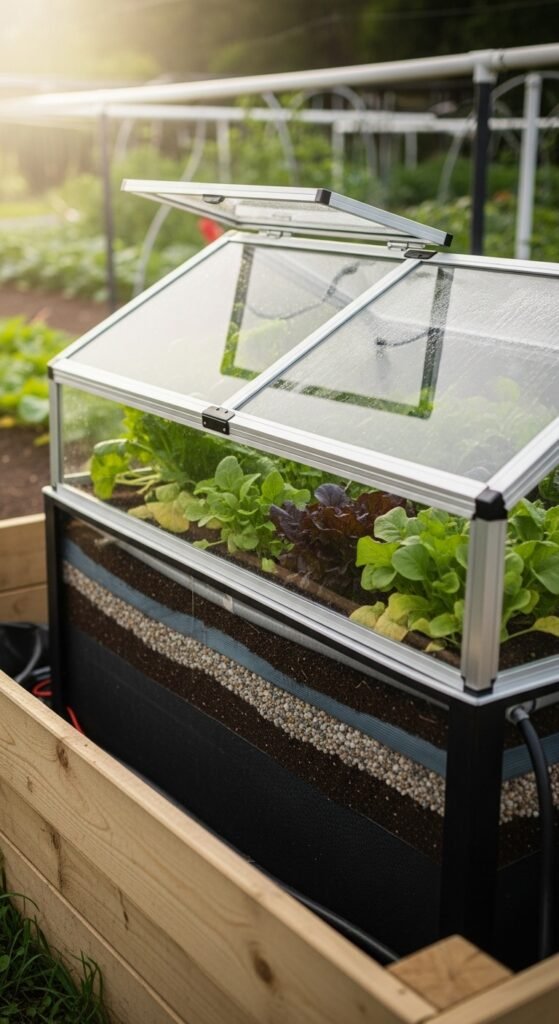
This conserves water and ensures consistent moisture, beneficial for consistent crop yields. Install a water pipe for easy refilling, layering gravel and soil above.
For similar self-sustaining designs, refer to wicking bed setups.
12) Urban Balcony Compact Version
You adapt a small raised bed with a foldable cold frame for balcony use, utilizing vertical space and lightweight materials.
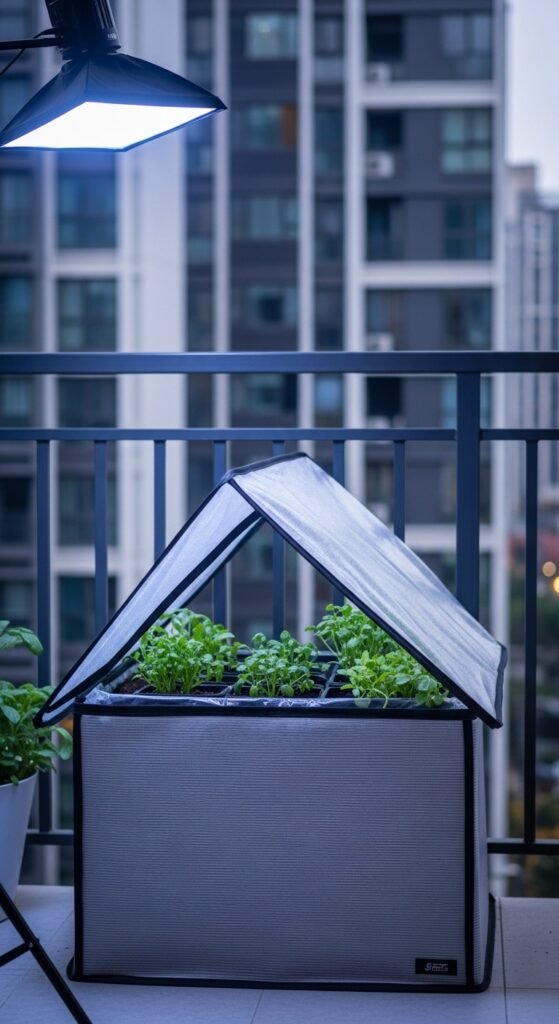
It enables city dwellers to grow fresh produce despite limited area and exposure. Choose portable pots or boxes, attaching a collapsible lid.
13) Community Garden Large-Scale Model
You scale up a raised bed cold frame for shared spaces, incorporating modular sections for multiple users.
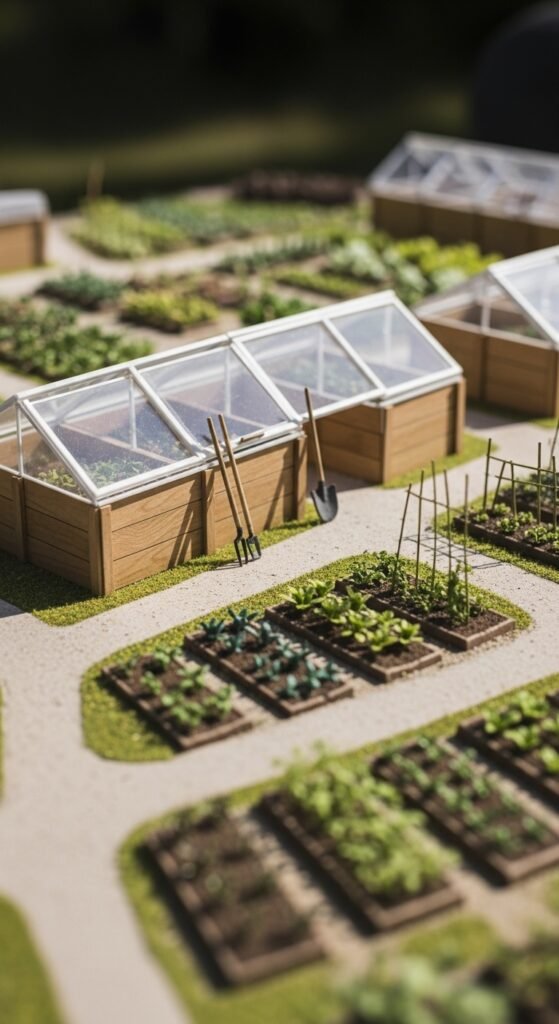
This fosters community engagement and shared resources, increasing collective harvest. Plan for accessible paths and durable construction.
14) Decorative Ornamental Cold Frame
You enhance a standard raised bed cold frame with aesthetic elements like carved wood or stained glass accents.
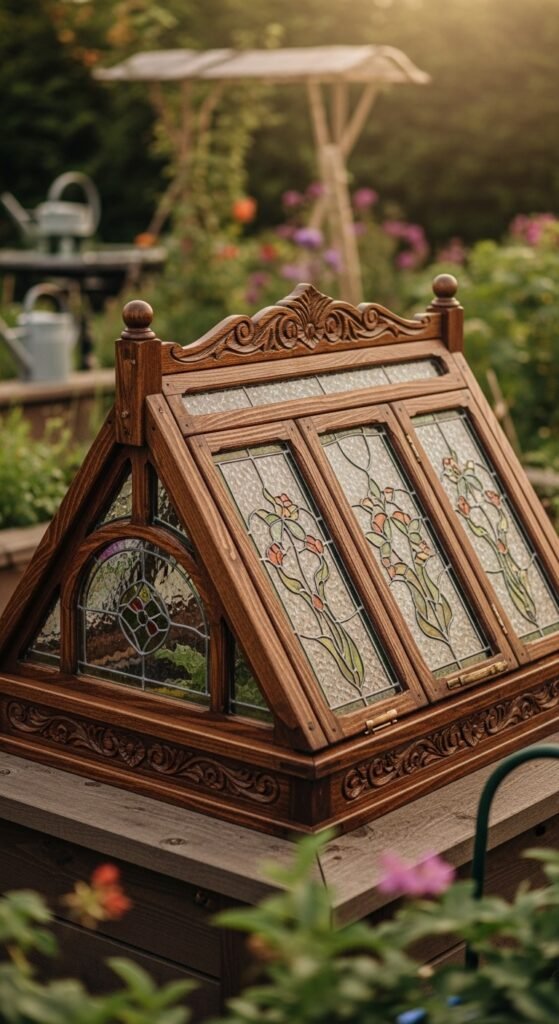
It blends functionality with visual appeal, elevating your garden’s design. Select weatherproof finishes and integrate planting for beauty and utility.
15) Eco-Friendly Bamboo Construction
You use sustainable bamboo for both the raised bed and cold frame structure, paired with biodegradable coverings.
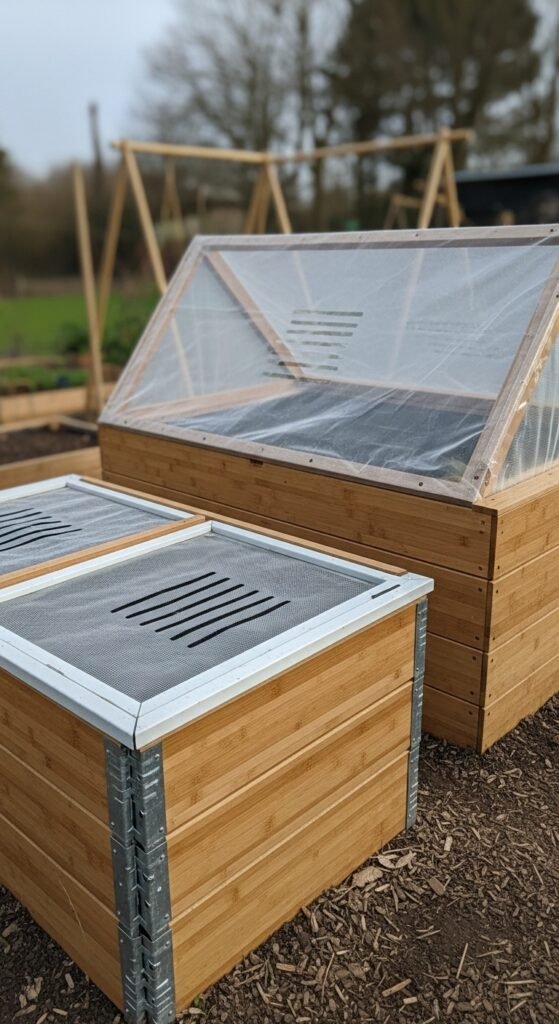
This minimizes environmental impact while providing sturdy protection. Assemble with natural bindings, ensuring ventilation slits.
Key Principles for Maintaining Cold Frame Raised Beds
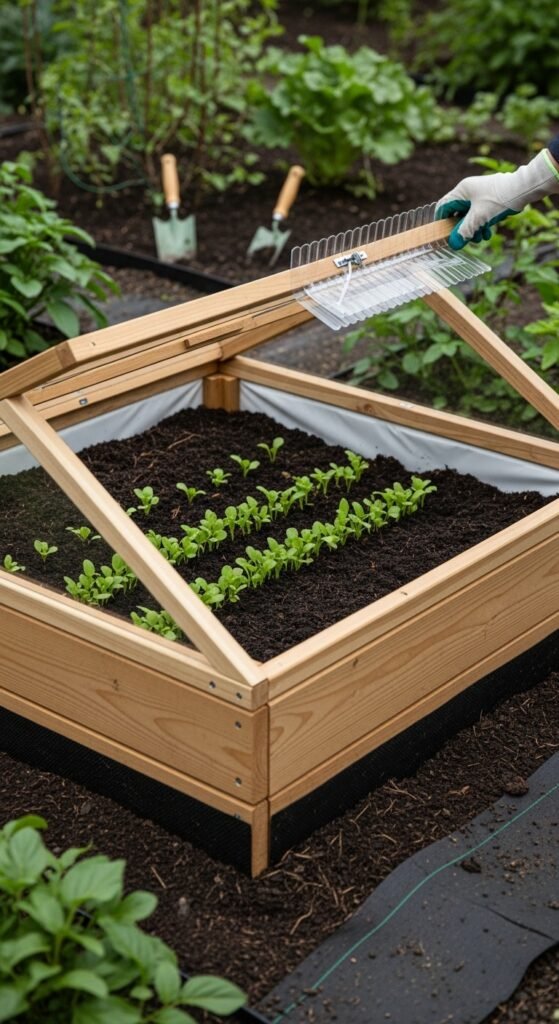
Soil Preparation and Nutrition
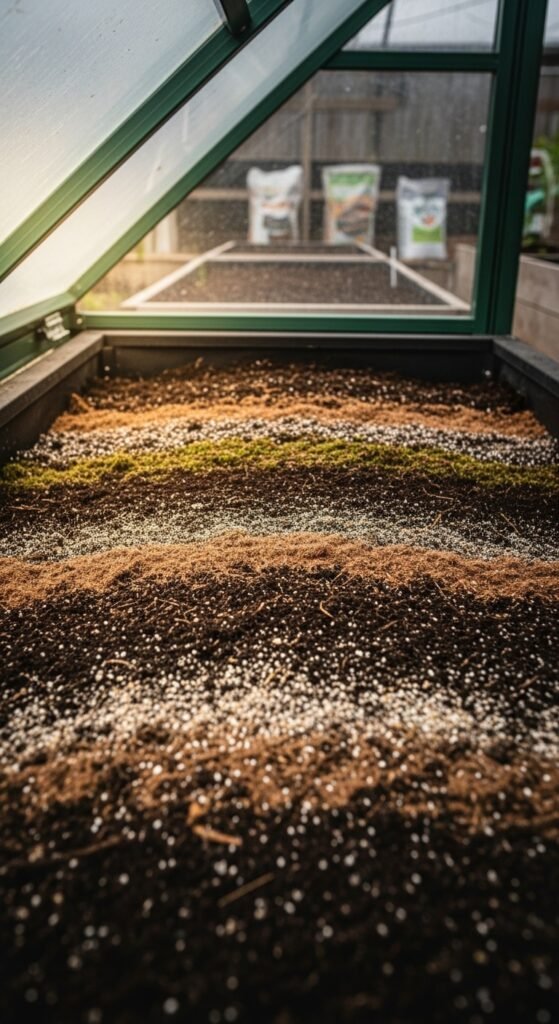
You prioritize well-draining, fertile soil to prevent waterlogging and support root health. Incorporate organic matter regularly to sustain nutrient levels.
Ventilation and Temperature Management
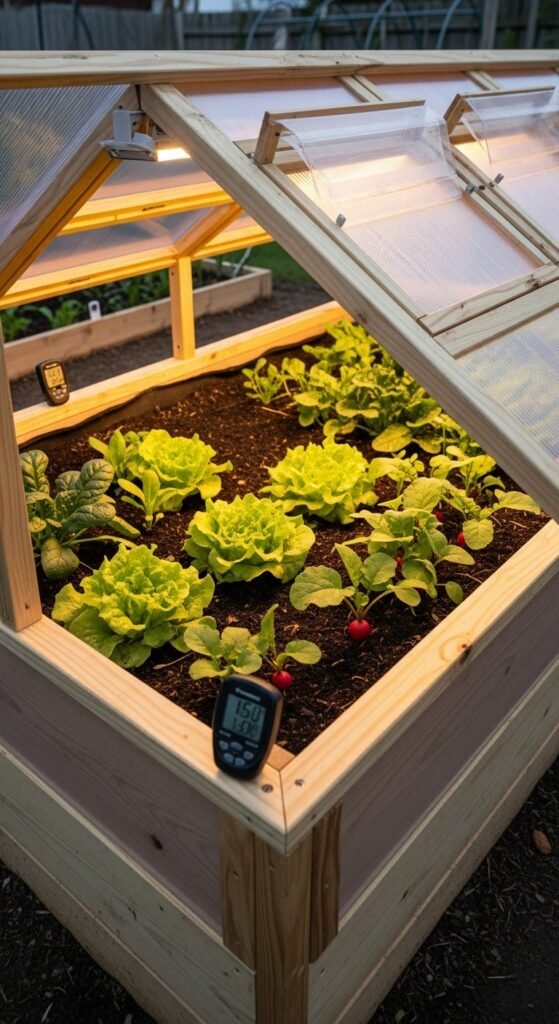
You monitor and adjust vents to avoid condensation and overheating, maintaining an ideal range of 50-70°F for most crops.
Pest and Disease Control
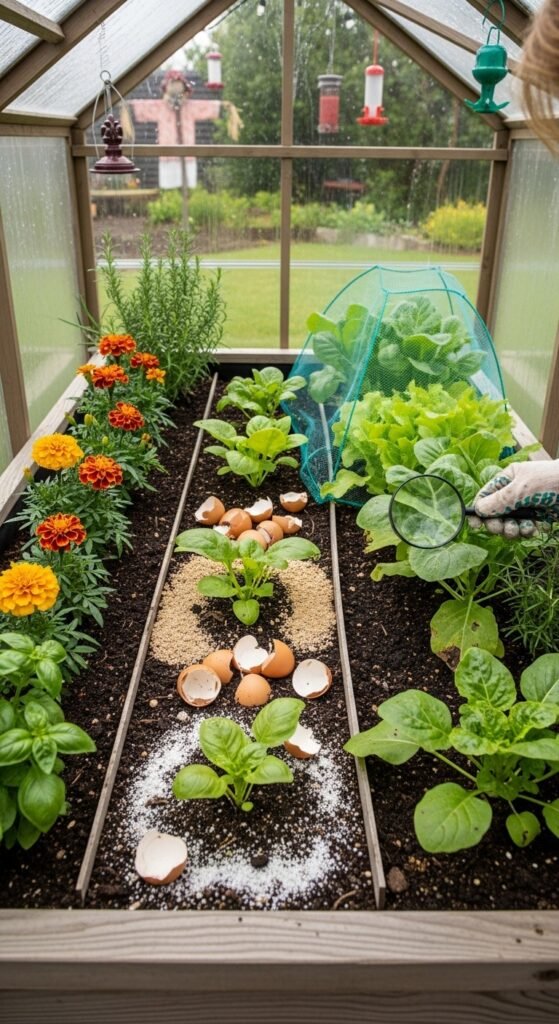
You inspect regularly for signs of infestation, employing natural barriers and companion planting to deter common threats.
Frequently Asked Questions
What is the ideal size for a cold frame raised bed?
The optimal dimensions depend on your space and needs, but a 4×8 foot bed offers a balance of accessibility and capacity for most home gardeners.
How do I prevent overheating in my cold frame?
Install vents or props to allow air circulation on warmer days, and shade the lid during intense sunlight to maintain moderate internal temperatures.
Can I use a cold frame raised bed year-round?
Yes, with proper insulation and crop selection, you can cultivate hardy vegetables through winter in milder climates.
What materials are best for constructing the frame?
Untreated wood, polycarbonate, and recycled glass provide durability and effective light transmission for long-term use.
How often should I water plants in a cold frame raised bed?
Check soil moisture weekly, watering sparingly as the enclosure reduces evaporation compared to open beds.