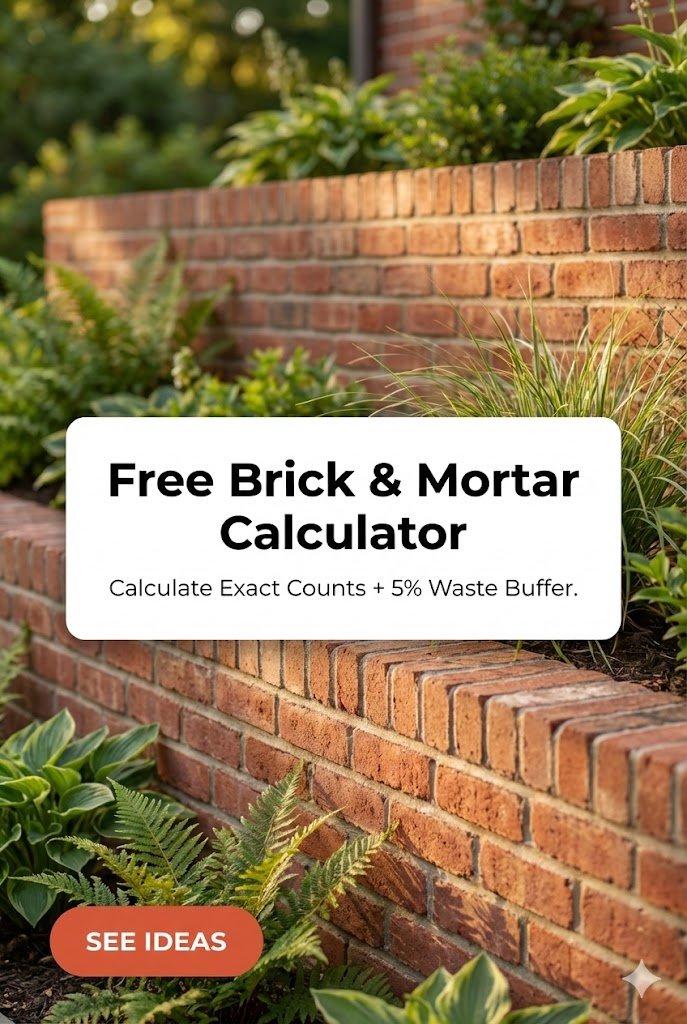
Whether you are building a classic red-brick raised garden bed or a charming herringbone-pattern walkway, the most frustrating part of masonry is running out of materials mid-way. Bricks are heavy, and mortar dries quickly; you want to order exactly what you need in a single delivery to save on shipping and labor.
Our Brick Calculator is designed specifically for homeowners and gardeners. It handles the math for different brick sizes and mortar joint thicknesses, providing an accurate count that includes a safety margin for breakage.
Brick & Mortar Calculator
How to Use the Brick Calculator
- Usage Mode: Select Vertical Wall for structures like retaining walls or planters. Select Edging/Paver if you are laying bricks flat on the ground for a path.
- Dimensions: Enter the length and height (or width for paths) in feet.
- Brick Size:
- Standard: The most common brick (8″ x 2-1/4″).
- Modular: Slightly shorter, designed to fit evenly in 4-inch modules.
- Queen: Larger face area, requiring fewer bricks per square foot.
- Mortar Joint: Standard joints are 3/8″. Choosing a 1/2″ joint will slightly reduce the number of bricks needed but increase your mortar consumption.
Why We Built This: Accuracy and Breakage
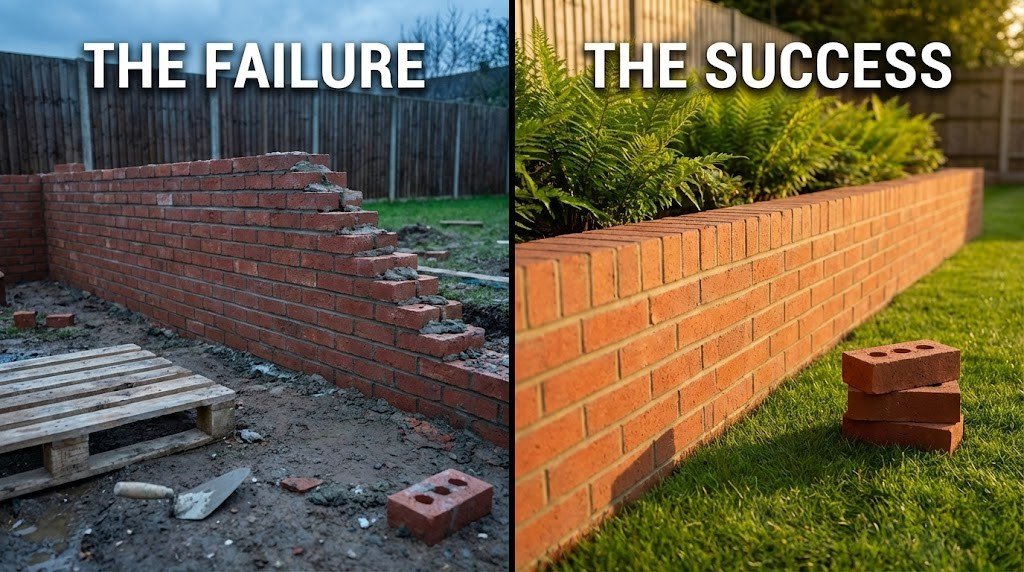
The “Secret Sauce” of our tool is the hard-coded 5% Waste Factor. Unlike wood or vinyl, bricks are brittle. In every pallet, there are inevitably a few “clinkers” with cracks, and you will certainly break a few while making cuts for corners or ends.
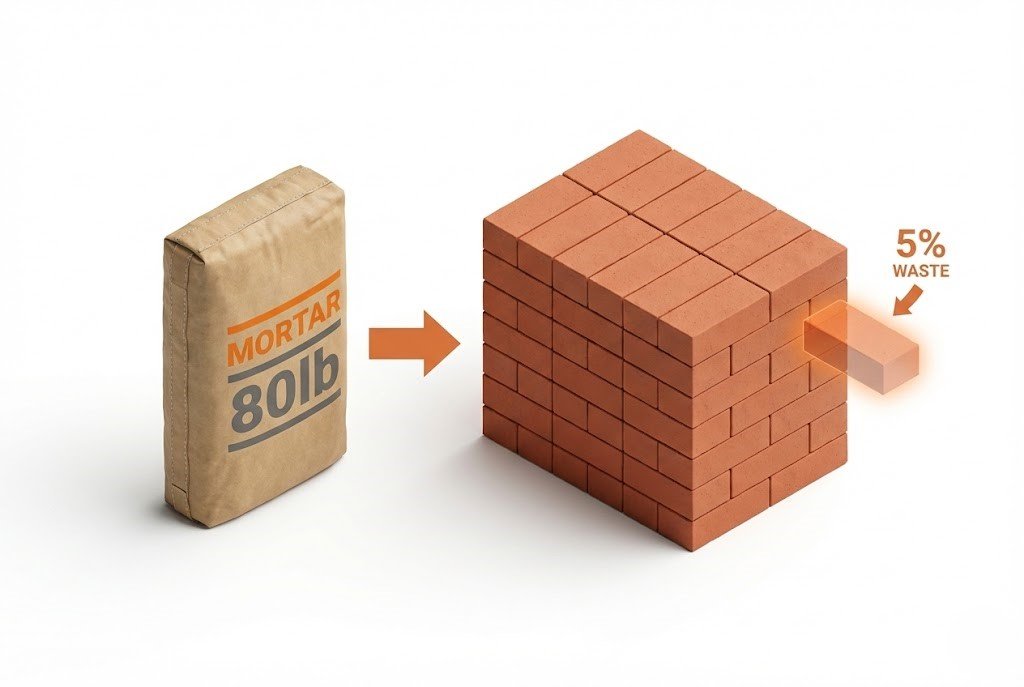
We also provide a Mortar Bag Estimator based on an 80lb bag yield, so you don’t have to guess how many bags of pre-mix to grab at the hardware store.
Educational Guide: Choosing the Right Brick for the Garden
When using bricks in a gardening context, the type of brick matters more than the color.
SW vs. MW Bricks
Bricks are rated by their ability to handle moisture and freezing. For garden walls that touch the soil, you should always look for SW (Severe Weathering) grade bricks. These are fired at higher temperatures to be less porous. MW (Moderate Weathering) bricks are fine for siding on a house but may crumble over time if used as a retaining wall in wet garden soil.
Mortar Types
For most DIY garden projects, Type N mortar is the standard. It is flexible enough to handle the slight movements of a garden wall without cracking. For heavy-duty retaining walls, you might consider Type S, which has a higher compressive strength.
Frequently Asked Questions
Q: How many bricks are in a square foot?
A: For a standard vertical wall with a 3/8″ mortar joint, there are approximately 6.75 bricks per square foot.
Q: How much mortar do I need for 100 bricks?
A: On average, one 80lb bag of pre-mixed mortar will lay approximately 30 to 35 standard bricks. For 100 bricks, you should purchase 3 to 4 bags.
Q: Can I lay bricks without mortar for a garden edge?
A: Yes, this is called “dry-stacking.” It is great for low edging, but any wall over 12 inches tall should be mortared or structurally reinforced to prevent it from tipping under the pressure of wet soil.