
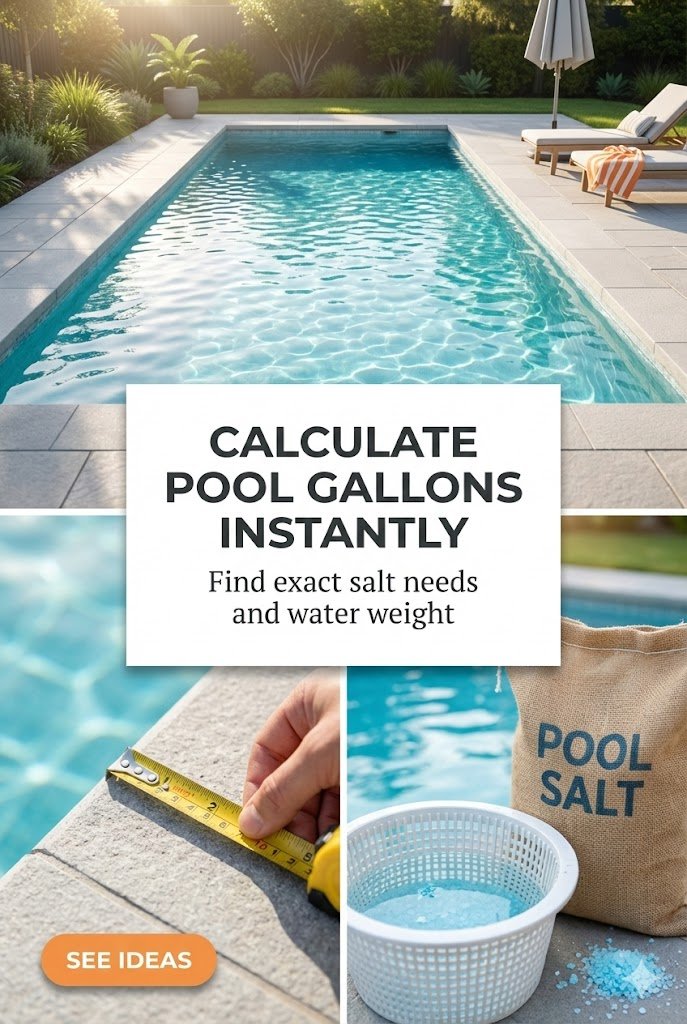
Knowing your pool’s exact volume is the single most important number for pool maintenance. If you underestimate the volume, your chemical treatments will be too weak, leading to algae. If you overestimate, you waste money and risk chemical burns. Additionally, knowing the total water weight is critical if you are installing a pool on a deck or elevated patio.
Use our free Pool Volume Calculator below to find your total gallonage, total water weight, and the amount of salt needed for a fresh start-up.
Pool Volume Calculator
Calculate Gallons, Salt Needs & Weight
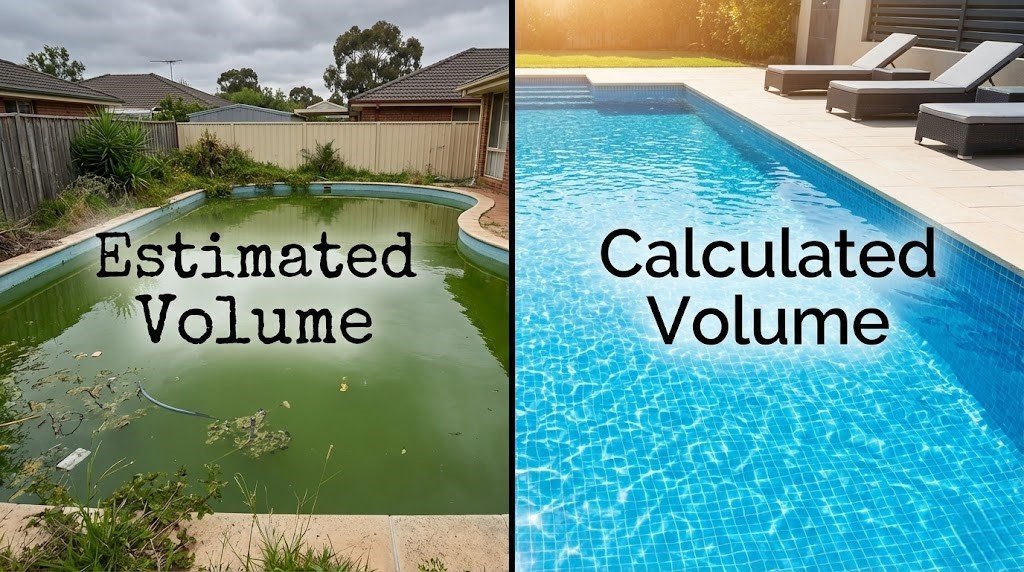
How to Use This Calculator
We support the three most common pool shapes:
- Rectangle: Measure the length and width of the water surface (not the coping).
Logic: Length × Width × Avg Depth × 7.5 - Round: Measure the diameter across the center.
Logic: Diameter² × Avg Depth × 5.9 - Oval: Measure the longest length and widest width.
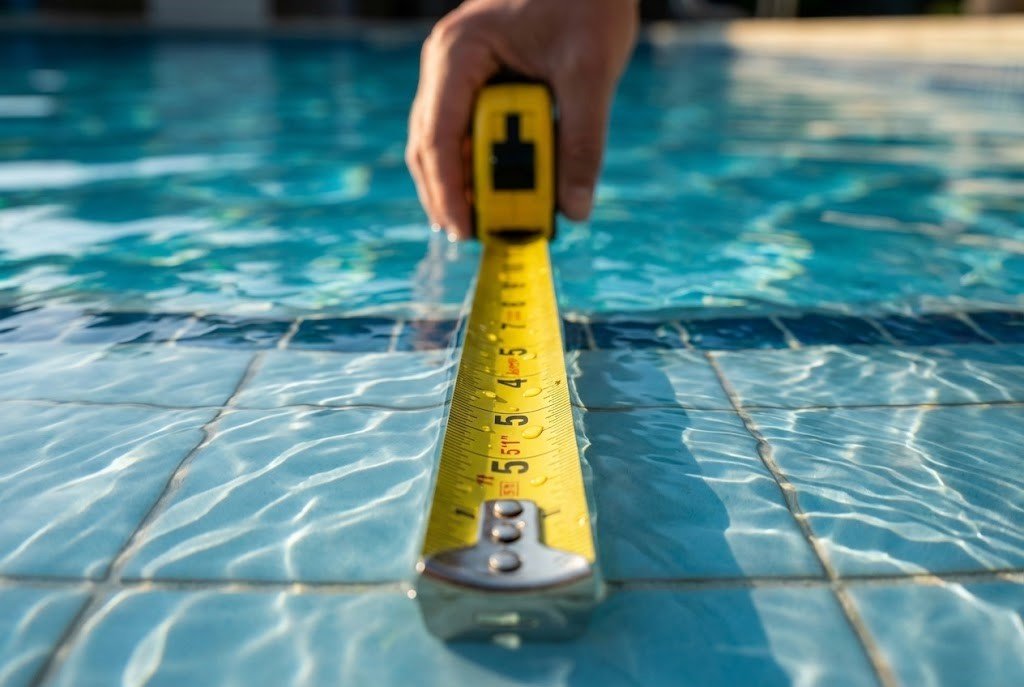
Logic: Length × Width × Avg Depth × 6.7 (Adjusted for irregular curves) - Average Depth: If your pool slopes from 3ft shallow to 6ft deep, your average is (3+6)/2 = 4.5ft.
Why We Built This (The “Secret Sauce”)
Most calculators just give you a gallon number. We provide two additional safety metrics:
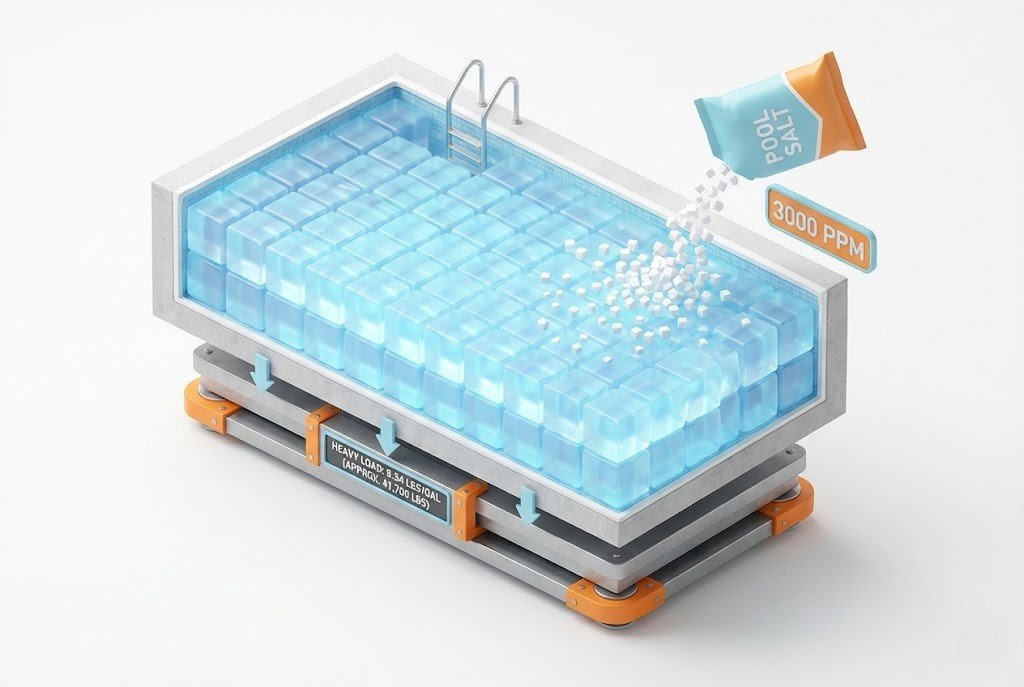
- Start-Up Salt Calculator: If you are converting to a saltwater pool, you generally need to hit 3000 PPM (Parts Per Million). Our tool automatically calculates the bags of salt needed to reach this baseline from zero.
- Structural Weight: Water is heavy (8.34 lbs per gallon). A small 5,000-gallon pool weighs over 20 Tons. Our calculator displays this weight so you can check if your deck or patio foundation can handle the load.
Educational Guide: Why Volume Matters for Chemicals
Almost every chemical dose on a bottle is based on “Per 10,000 Gallons.”
- Shock: Usually 1 lb per 10,000 gallons.
- Algaecide: Usually 4-8 oz per 10,000 gallons.
- Muriatic Acid: Dosing depends heavily on precise volume to lower pH without crashing your alkalinity.
If you guess your pool is 20,000 gallons but it’s actually 15,000, you are consistently overdosing your water by 33%, which can damage your liner and pump seals.
Frequently Asked Questions (FAQ)
How do I calculate volume for a kidney-shaped pool?
For a kidney pool, measure the longest length, then measure the width at the two widest bulges (A and B). The formula is: Length × (Width A + Width B) × 0.45 × Avg Depth × 7.5. Alternatively, use our “Oval” setting for a close approximation.
Does pool volume change with water level?
Yes. If your water level drops by 6 inches, you lose a significant amount of volume. However, for chemical dosing, we calculate based on the design capacity (filled to the middle of the skimmer).
How much does pool water weigh?
Fresh water weighs approximately 8.34 pounds per gallon. A typical 24ft round above-ground pool (13,500 gallons) weighs roughly 112,000 lbs (56 Tons).