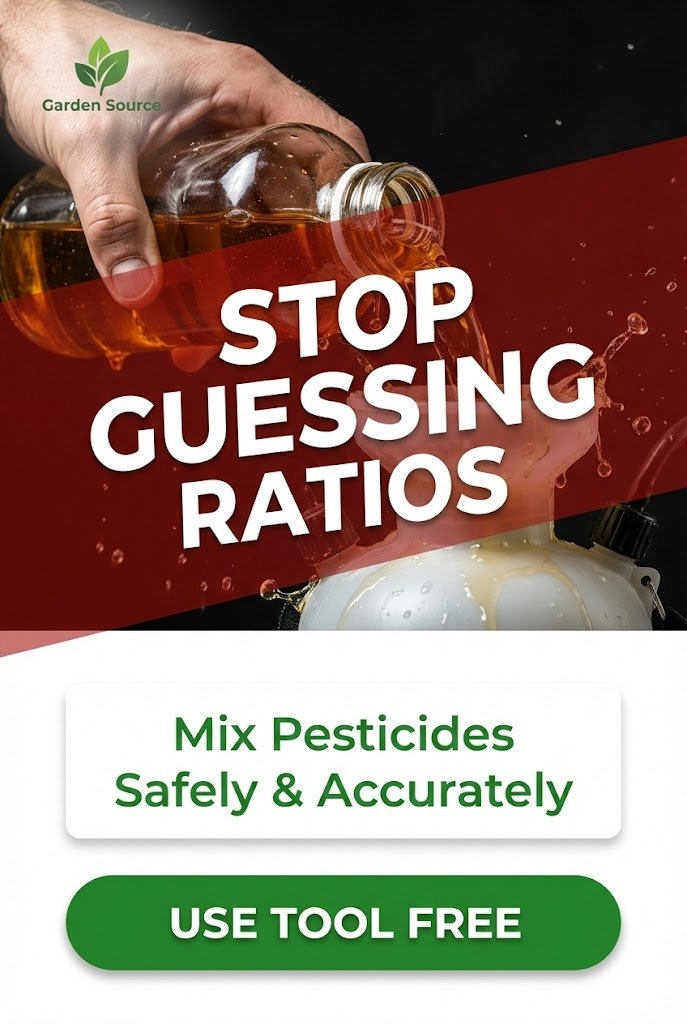
When it comes to garden chemicals—whether organic neem oil or synthetic herbicides—the difference between a “cure” and a “disaster” is the dose. Mixing too weak wastes your money and builds pest resistance. Mixing too strong can burn your plants, poison your soil, and harm local pollinators.
⚠️ Pesticide Dilution Calc
This calculator is a guide only. The manufacturer’s label is the law. Always wear gloves, eye protection, and long sleeves when mixing.
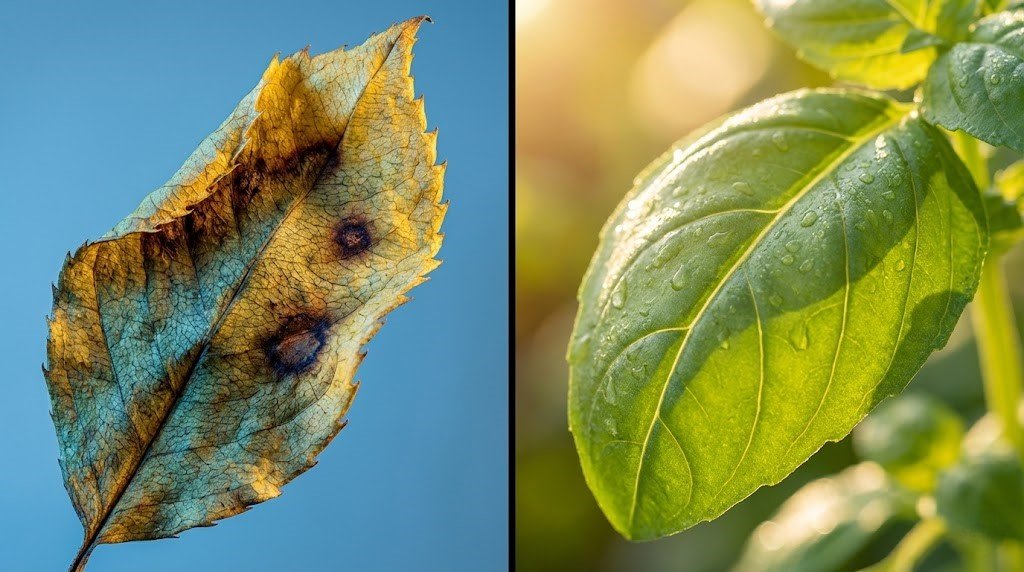
The problem? Labels are confusing. They often list rates like "1.5 ounces per gallon," but you might only have a 1-quart hand sprayer. Stop guessing. Use our Pesticide Safety Dilution Calculator below to find the exact amount of concentrate you need in common measurements like Tablespoons and Teaspoons.
How to Use This Tool
Precision is vital for safety. Here is how to use the calculator:
- Tank Size: Enter the size of your sprayer in Gallons. If you have a standard 1-quart hand trigger sprayer, enter 0.25. If you have a backpack sprayer, it is likely 4.0.
- Label Rate: Look at the back of the bottle for the "Mixing Instructions." Enter the amount of concentrate required per 1 gallon of water.
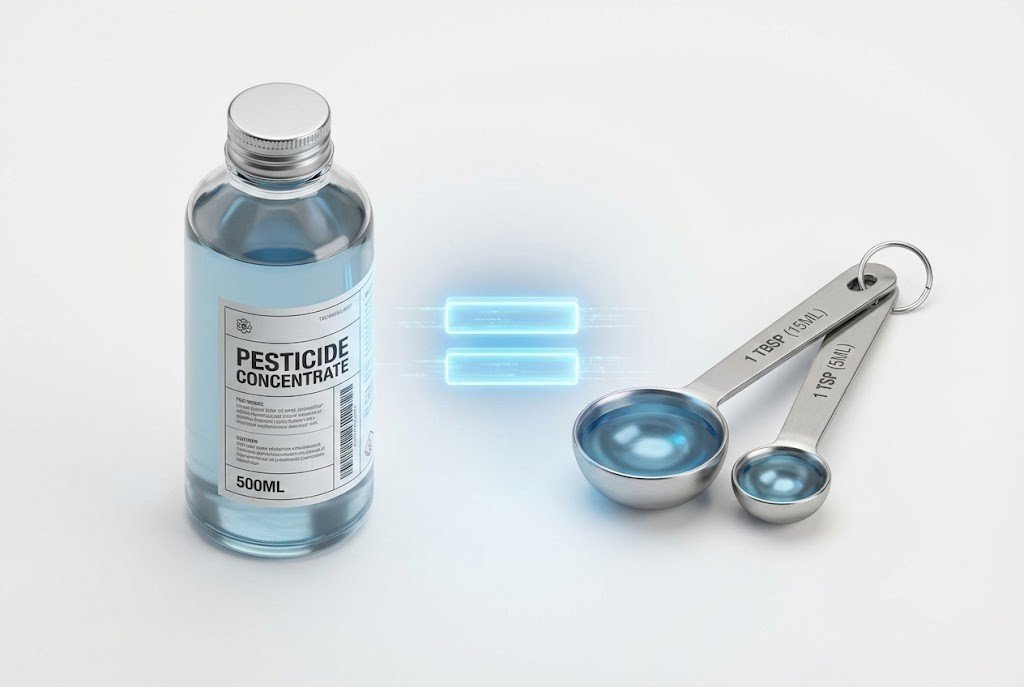
- The Result: We convert the "Fluid Ounces" into Tablespoons (Tbsp) and Teaspoons (Tsp) because most home gardeners don't own a graduated cylinder, but everyone has measuring spoons.
Why We Built This (The "Secret Sauce")
We built this tool because "Garden Math" creates dangerous situations.
The "Glug" Method Fails:
Many gardeners just pour a "glug" of chemical into the tank. This often results in a mix that is 3x or 4x stronger than recommended. This leads to Phytotoxicity (chemical burn on leaves) and runoff that contaminates groundwater. Our tool emphasizes small, precise measurements to prevent this.
Educational Guide: Spraying Safely
Before you open that bottle, follow the "PPE" protocol.
1. PPE (Personal Protective Equipment)
Chemicals can absorb through your skin and eyes. Even for organic sprays, you should always wear:
• Rubber Gloves: Nitrile is best.
• Eye Protection: Safety glasses or goggles.
• Long Sleeves & Pants: Never spray in shorts and sandals.
2. The "Garden Only" Rule
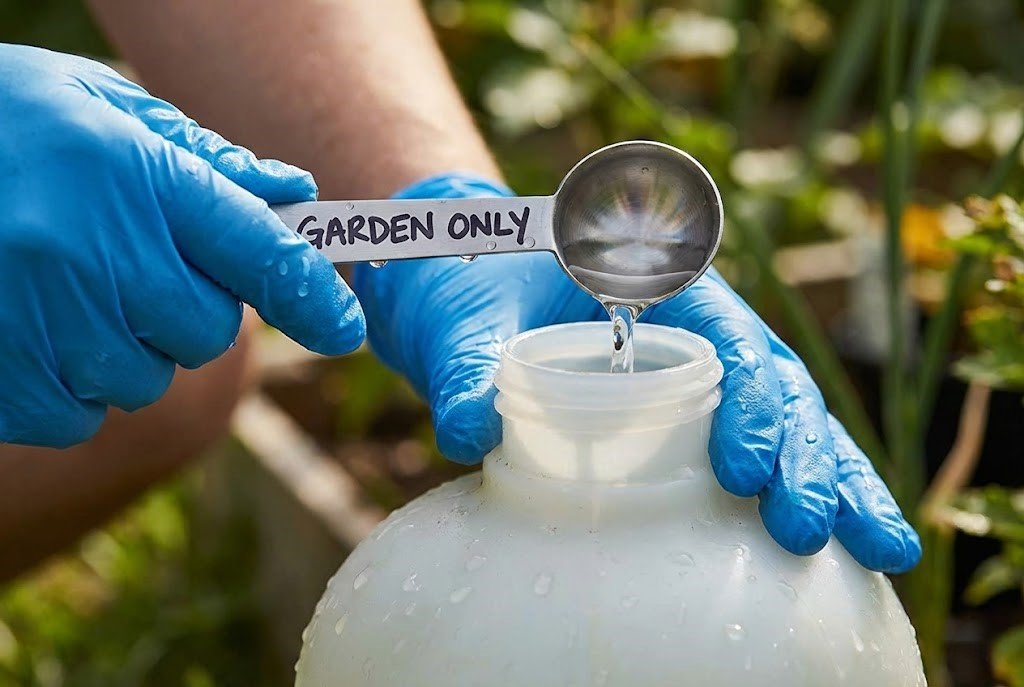
Never use your kitchen measuring cups for pesticides. Buy a cheap set of plastic measuring spoons and a glass measuring cup. Mark them clearly with a permanent marker ("POISON" or "GARDEN ONLY") and store them in your garage or shed, far away from the kitchen.
3. Spot Testing
If you are trying a new mixture, spray just one or two leaves first. Wait 24 hours. If the leaves turn yellow or crispy, your mix was too strong, or the plant is sensitive. Check our guide on identifying pest damage vs chemical burn.
Frequently Asked Questions
Can I save leftover mixed pesticide?
No. Once mixed with water, most pesticides begin to break down immediately due to hydrolysis (reacting with water pH). A mix sitting in the tank for a week will likely be ineffective. Only mix exactly what you plan to use that day.
How many teaspoons are in a tablespoon?
There are 3 Teaspoons in 1 Tablespoon. There are 2 Tablespoons in 1 Fluid Ounce. Our calculator handles these conversions for you automatically.
How do I dispose of extra pesticide?
Never pour it down the drain or into a storm sewer. The best way to dispose of excess mix is to apply it to a labeled target site (e.g., spray the rest on the weeds you missed). If you have concentrated chemical to dispose of, take it to your local hazardous waste facility.