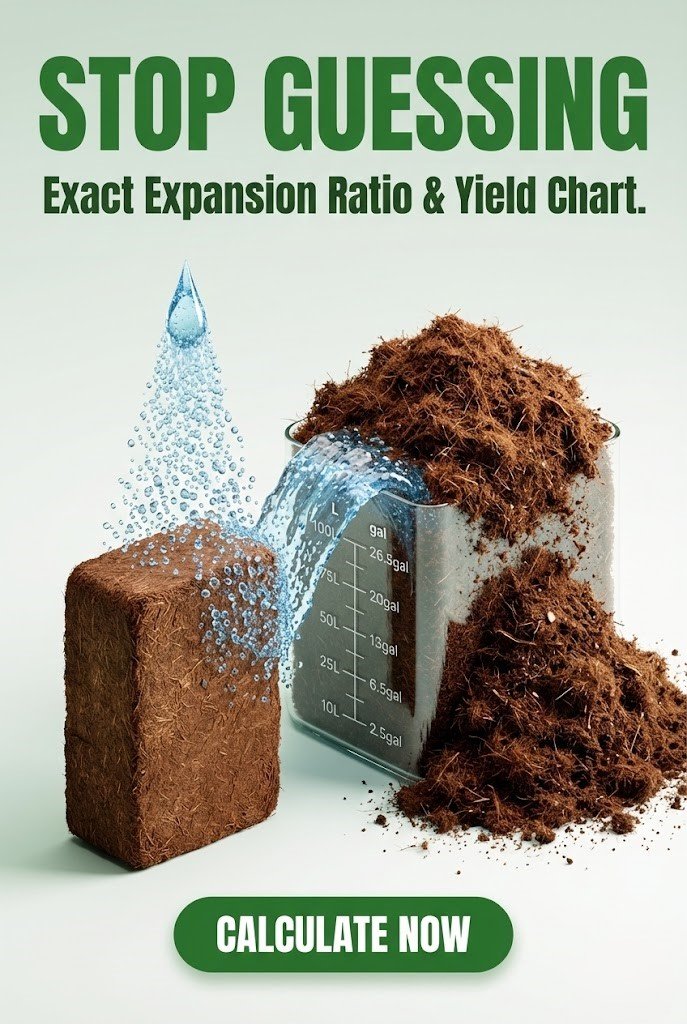
Coco coir is one of the most sustainable and versatile growing mediums available today, but buying it can be confusing. It is almost always sold in highly compressed, dehydrated bricks that look nothing like the final product. You see a small brick on the shelf, but once you add water, it explodes in size.
🥥 Coco Coir Expansion Calc
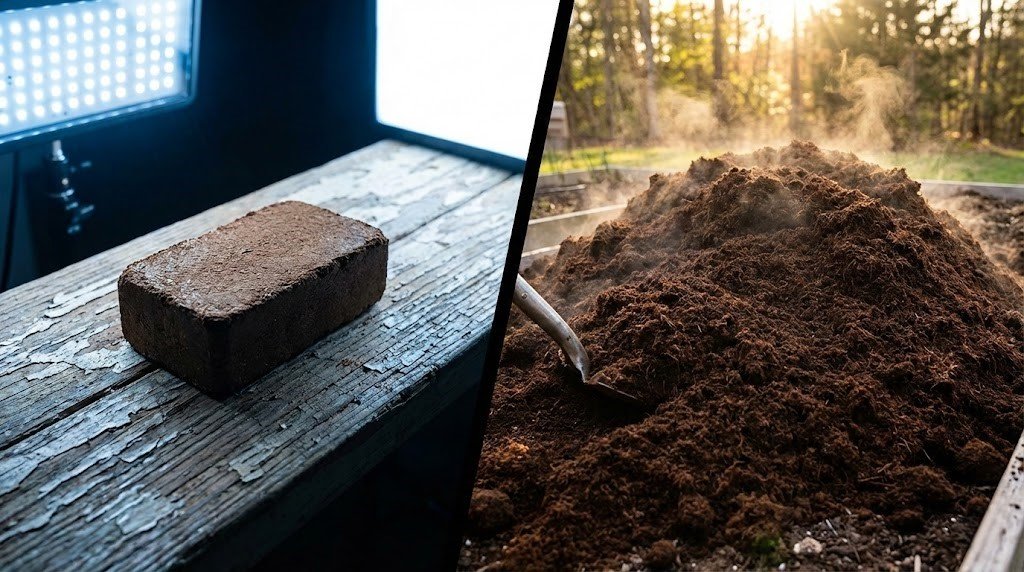
How many bricks do you need to fill your raised bed or pots? Stop guessing. Use our Coco Coir Expansion Calculator below to convert compressed weight into usable soil volume.
How to Use This Tool
Because coir is sold by weight but used by volume, the math requires conversion:
- Select Product: Choose the standard sizes (Small 650g Brick or Large 5kg Block) or enter a custom weight if you have a bulk bag.
- Enter Quantity: How many bricks do you plan to buy?
- The Result: We calculate the total volume in both Liters (the standard horticultural unit) and US Gallons so you know exactly how many pots you can fill.
Why We Built This (The “Secret Sauce”)
Most product labels claim “Expands up to 80 Liters!” but that is often an exaggeration under perfect laboratory conditions.
The Real-World Factor:
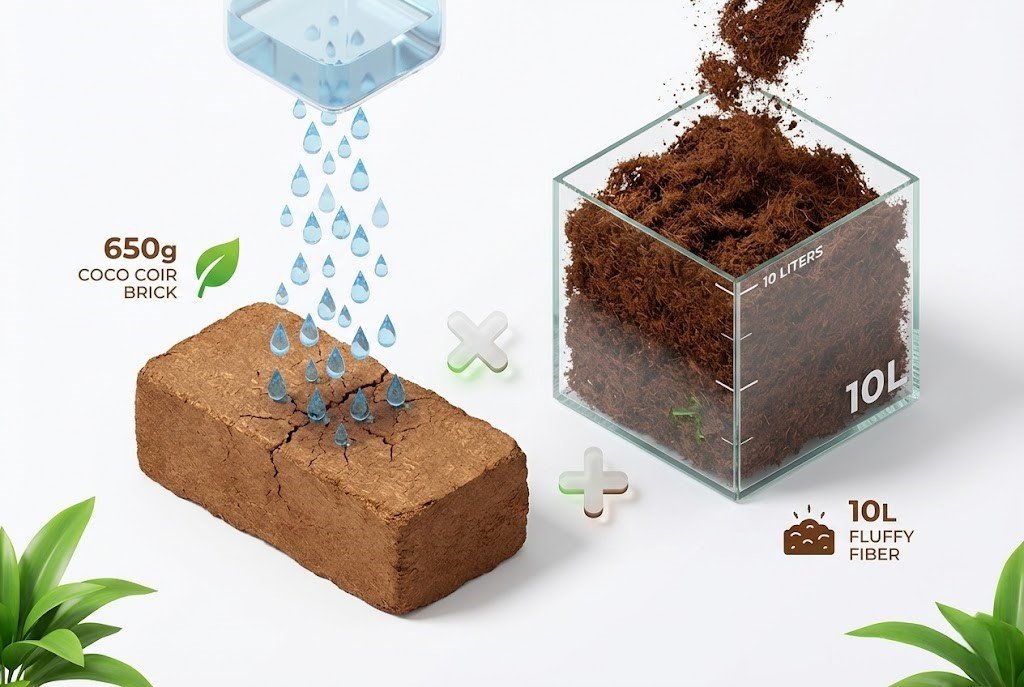
We use a conservative expansion ratio of 14 Liters per Kilogram (approx 1.7 gallons per lb). This accounts for the fact that you likely won’t fluff it perfectly or wait 24 hours for maximum saturation. This ensures you buy enough material to finish your project without running back to the store.
Educational Guide: Hydrating Coco Coir
Turning that hard brick into fluffy soil is easy if you follow the right steps.
1. Use Warm Water
While cold water works, warm water penetrates the compressed fibers significantly faster. Place your brick in a large bucket (5-gallon size for a small brick, wheelbarrow for a 5kg block) and pour the water over it.
2. The “Buffering” Step
Raw coco coir naturally holds onto Calcium and Magnesium while releasing Potassium. This can cause nutrient lock-out for your plants. If your coir isn’t pre-buffered (check the label), you should mix in a Calcium-Magnesium supplement (Cal-Mag) during the hydration process to balance the chemistry.
3. Fluff It Up
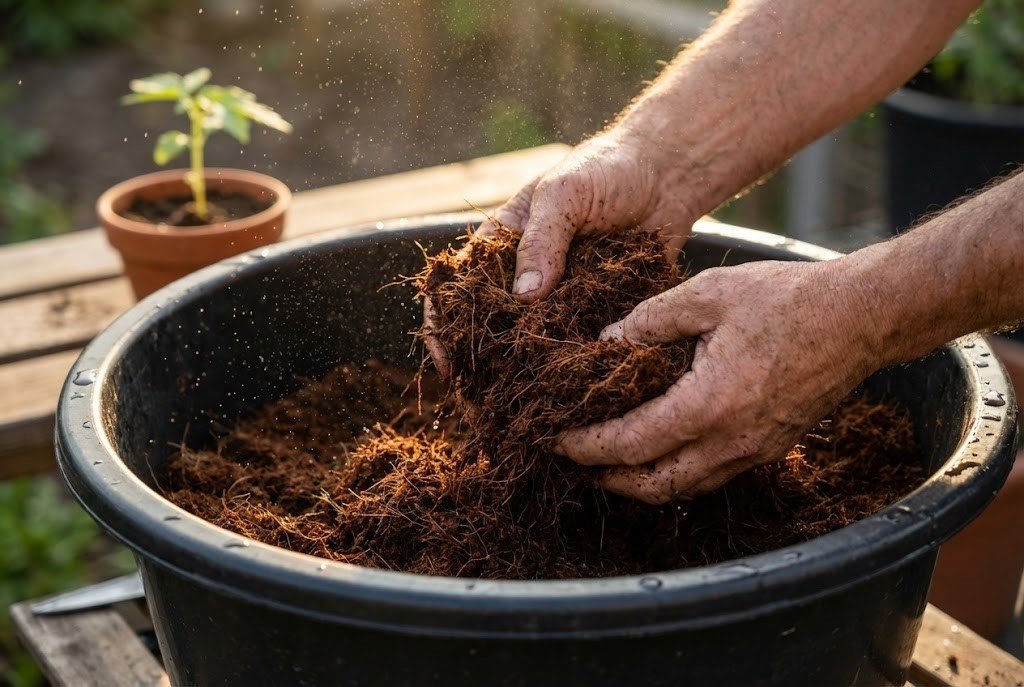
Don’t just let it sit. Once the water absorbs (usually 15-20 minutes), get your hands or a garden hoe in there and break up the clumps. This aeration introduces oxygen and ensures the texture is uniform before you plant.
Frequently Asked Questions
Is coco coir the same as peat moss?
They act similarly (holding water) but are very different. Peat moss is acidic (pH 3-4) and mined from bogs. Coco coir is neutral (pH 6-7) and is a renewable byproduct of the coconut industry. Most growers find coir easier to re-wet if it dries out.
Does coco coir have nutrients?
No. Coco coir is an inert growing medium, meaning it has almost zero N-P-K value. You must add compost or liquid fertilizer to it if you want your plants to grow. It is purely for structure and water retention.
How much water does a 5kg block need?
A large 5kg block typically requires about 4 to 5 gallons (15-18 liters) of water to fully hydrate. Start with 3 gallons, let it absorb, and then add more slowly to avoid creating a soupy mess.