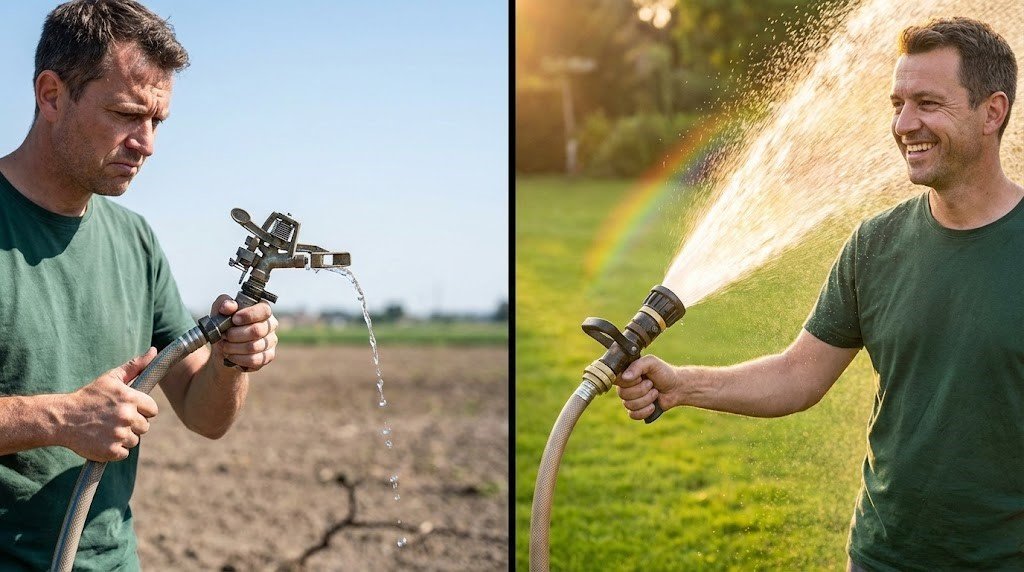
Buying a sprinkler system without knowing your flow rate is like buying shoes without knowing your size. If you hook up a massive impact sprinkler to a weak hose spigot, it won’t spin. If you hook up delicate drip lines to high-pressure flow, you might blow the fittings apart.
💧 Water Hose Flow Rate
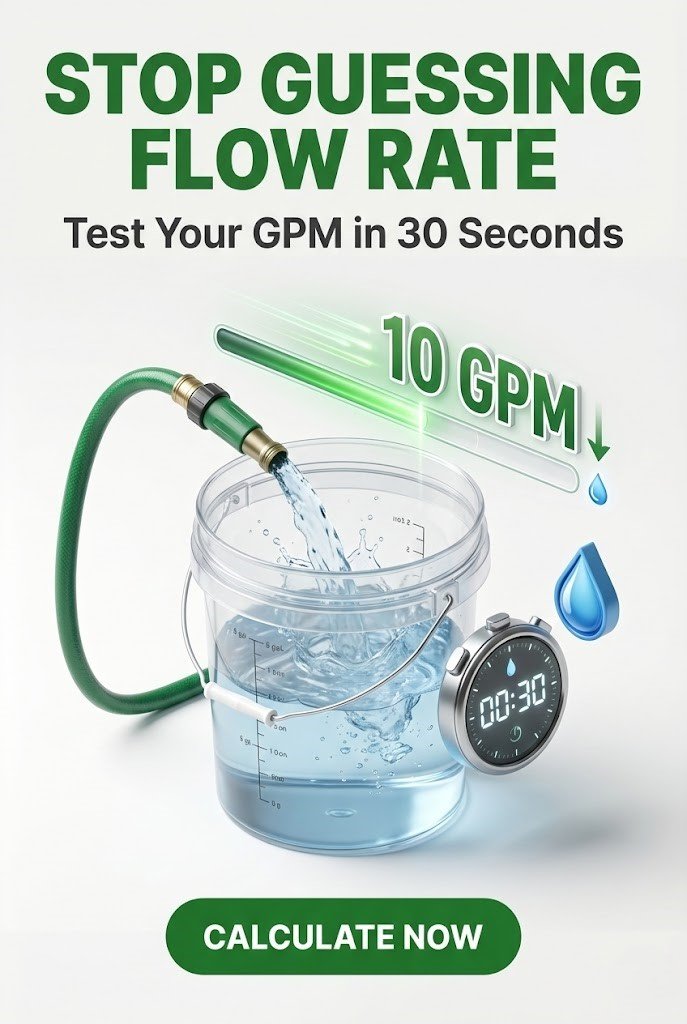
You don't need expensive plumbers' tools to figure this out. The "Bucket Test" is the industry standard for measuring water capacity. Use our Water Hose Flow Rate Calculator below to convert your bucket test into usable GPM (Gallons Per Minute) data.
How to Use This Tool (The Bucket Test)
To get an accurate reading, follow these simple steps:
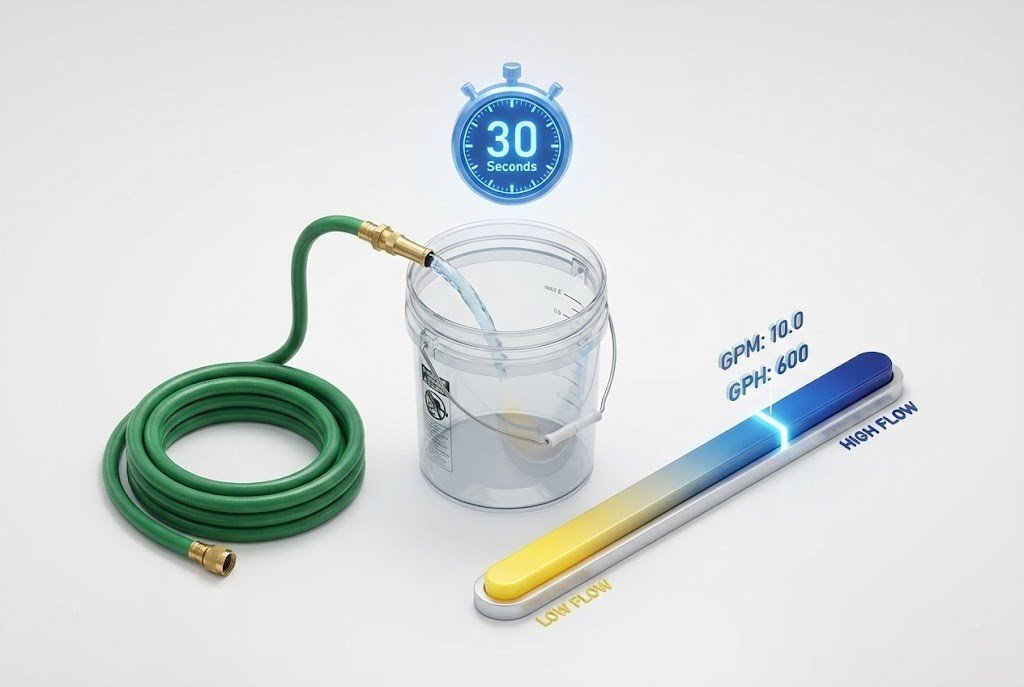
- Get a Bucket: Use a standard 5-gallon bucket (like the ones from hardware stores). If you don't have one, a 1-gallon milk jug works too.
- Get a Timer: Open the stopwatch app on your phone.
- Run the Test: Turn your spigot on full blast. Place the hose in the bucket and start the timer instantly. Stop the timer the second the water hits the rim.
- Calculate: Enter the bucket size and your time into the tool above.
Why We Built This (The "Secret Sauce")
Most irrigation product packaging lists requirements in GPM (Gallons Per Minute) or GPH (Gallons Per Hour). However, nobody intuitively knows their faucet's flow rate.
We Contextualize the Data:
Knowing you have "4.2 GPM" is just a number. Our tool tells you what that number means.
Under 2 GPM? Stick to drip irrigation.
Over 6 GPM? You have enough power to run large oscillating sprinklers or fill large raised beds quickly.
Educational Guide: Matching Flow to Function
Once you know your number, you can design a system that actually works.
1. Drip Irrigation (GPH)
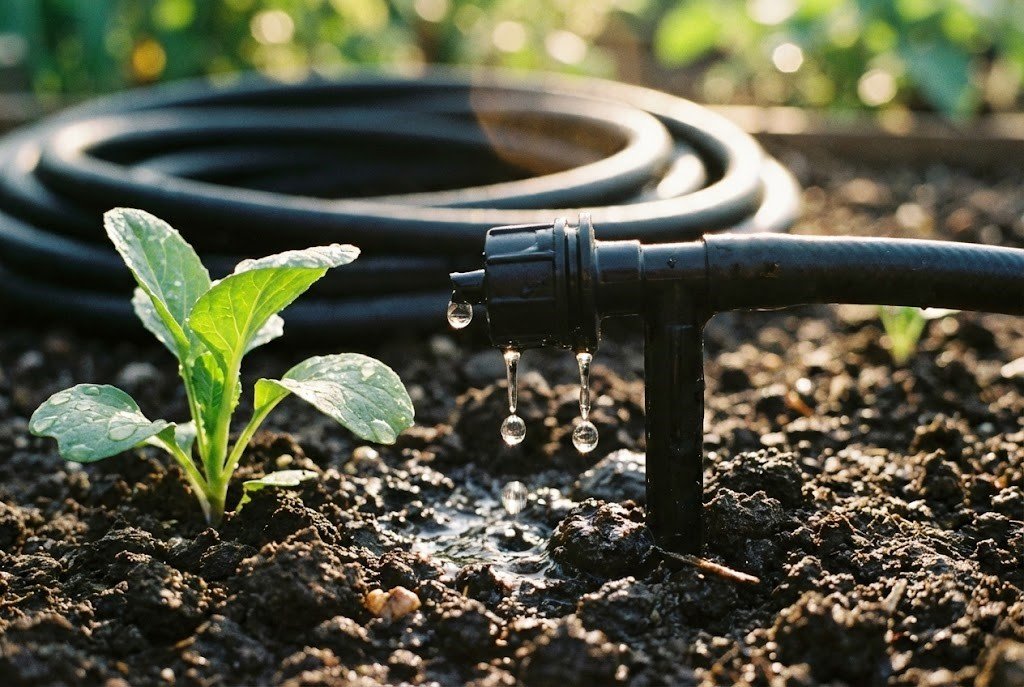
Drip systems are measured in Gallons Per Hour (GPH) because they run slowly. If our calculator says you have 300 GPH available, and your drip emitters use 1 GPH each, you know you can theoretically run 300 emitters on that single zone (minus friction loss).
2. Sprinklers (GPM)
Sprinklers are thirsty. A typical oscillating fan sprinkler uses 3 to 5 GPM. If your spigot only outputs 4 GPM, you cannot daisy-chain two sprinklers together—they will just dribble water.
3. Friction Loss
Remember that flow rate drops over distance. A 100-foot hose delivers less water than a 10-foot hose due to friction inside the pipe. If your garden is far from the house, consider using a wider diameter hose (3/4 inch vs 5/8 inch) to maintain flow.
Frequently Asked Questions
What is the average home water flow rate?
The average residential outdoor spigot delivers between 5 and 10 Gallons Per Minute (GPM). Anything below 4 GPM is considered low flow, often caused by old galvanized pipes or low municipal pressure.
Does hose length affect flow rate?
Yes, significantly. The longer the hose, the more friction reduces the water pressure and flow. For maximum flow, use the shortest hose possible with the widest diameter (5/8 inch or 3/4 inch).
How do I increase my flow rate?
You can't easily increase the pressure coming from the city, but you can maximize what you have. Remove any kinks in the hose, check that the spigot valve is fully open, and ensure your vacuum breaker (anti-siphon valve) isn't clogged with debris.