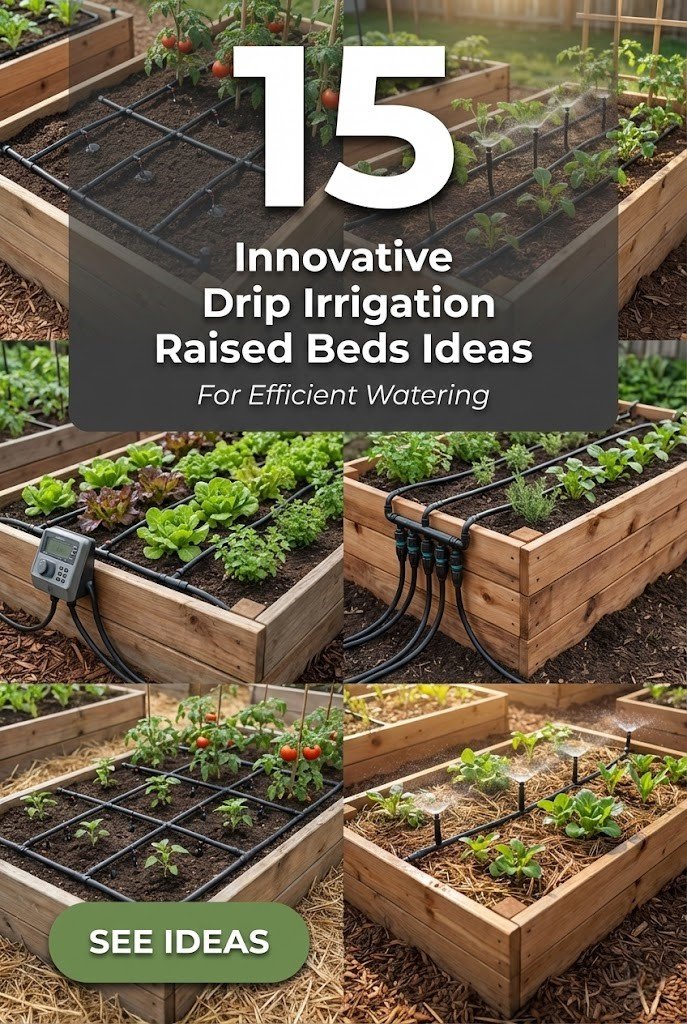
Drip irrigation raised beds represent an optimal solution for gardeners seeking precise water delivery while minimizing waste. This system involves tubing and emitters that release water slowly and directly to plant roots, promoting healthier growth and reducing evaporation. You will appreciate how it conserves water resources, especially in regions with limited rainfall or during dry seasons, ensuring your plants receive consistent moisture without overwatering.
Implementing drip irrigation in raised beds enhances soil structure and prevents common issues like fungal diseases from overhead watering. It allows you to customize flow rates based on plant needs, making it suitable for vegetables, herbs, and flowers alike. By integrating this method, you can achieve higher yields with less effort, aligning with sustainable gardening practices that benefit both your garden and the environment.
As you explore these ideas, consider your garden’s specific layout and crop types to select the most effective configuration. This approach not only saves time on manual watering but also supports robust plant development throughout the growing season.
1) Basic Tubing Layout for Beginners
You can start with a straightforward drip irrigation setup in your raised beds by laying mainline tubing along the bed’s perimeter and connecting emitters at each plant base. This ensures even water distribution without excess runoff. Position the tubing under a layer of mulch to protect it from sun damage and maintain soil moisture longer. Adjust emitter flow rates to match plant requirements, such as higher for thirsty tomatoes and lower for drought-tolerant herbs.
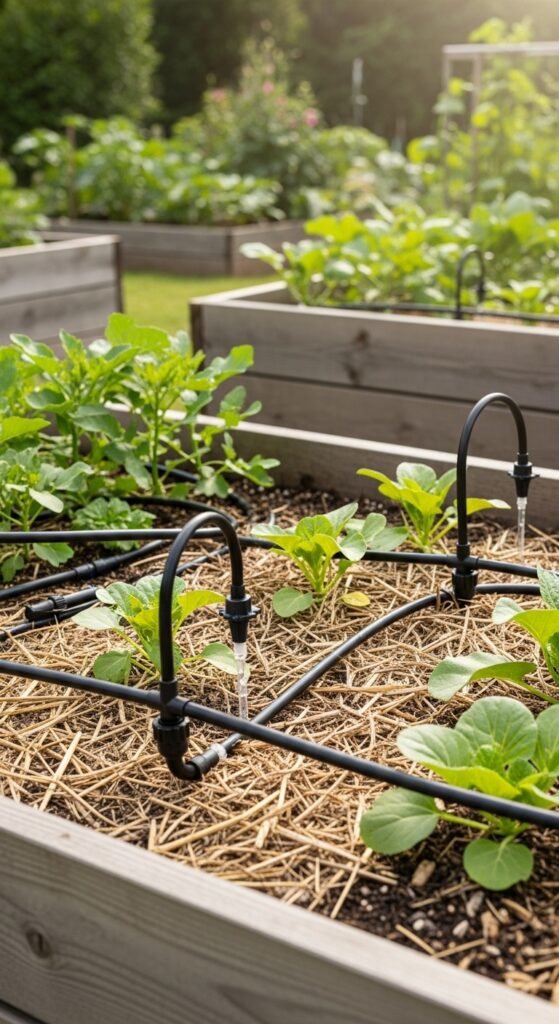
The benefits include reduced weed growth since water targets plants directly, and prevention of leaf wetness that could lead to diseases. Installation is simple: secure the tubing with stakes and connect to a garden hose or faucet timer for automation. Over time, you will notice improved root development and healthier foliage, making this an ideal entry point for efficient gardening.
To enhance this system, incorporate a filter to prevent clogs from debris. For more advanced options, explore our guide on drip irrigation setup to refine your configuration. This method typically requires 120-150 words per item, but focus on practical application for best results.
2) Gravity-Fed System with Elevated Reservoir
You can utilize gravity to power your drip irrigation in raised beds by positioning a rain barrel or tank higher than the beds. Connect tubing from the reservoir to emitters, allowing water to flow naturally without pumps. This eco-friendly approach conserves energy and integrates seamlessly with rainwater harvesting, providing a sustainable water source.
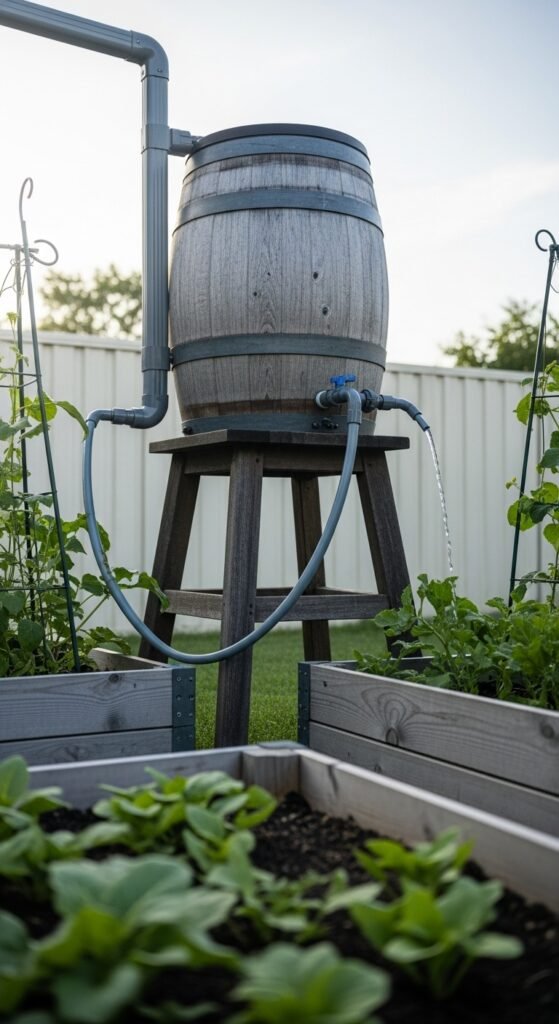
The key advantage is its low maintenance, as gravity ensures consistent pressure for even watering. Monitor the reservoir level regularly and add a float valve for automatic refilling if connected to a main supply. This setup is particularly effective for sloped gardens where elevation differences enhance flow efficiency.
Combine it with mulch to retain moisture, reducing refill frequency. For beds with varying plant heights, adjust emitter placements accordingly. If you’re interested in similar water-saving techniques, check our article on gravity drip irrigation for detailed plans.
3) Automated Timer Integration for Precision
You can enhance your drip irrigation raised beds by adding a programmable timer to the faucet, scheduling water delivery at optimal times like early morning to minimize evaporation. Select a timer with multiple zones if managing several beds, allowing customized cycles based on soil type and plant needs.
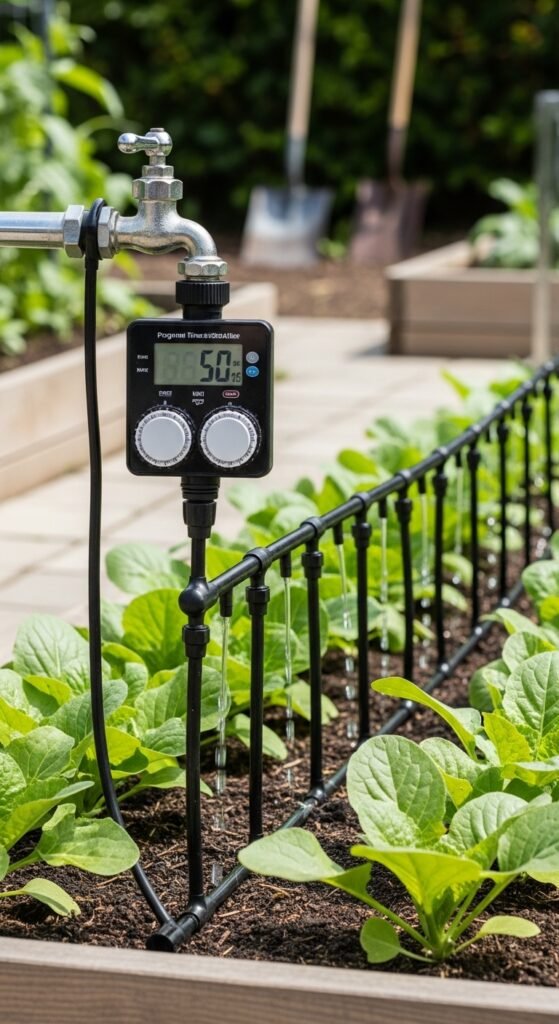
This automation prevents overwatering and ensures consistent moisture, promoting deeper root systems and healthier plants. Battery-operated models offer reliability during power outages, while smart timers connect to weather apps for rain-delay features, further optimizing water use.
Install inline pressure regulators to maintain steady flow. Over time, you will save on water bills and reduce labor. For comprehensive irrigation control, refer to our resource on raised bed irrigation systems.
4) Multi-Zone Configuration for Diverse Crops
You can divide your raised beds into zones with separate drip lines for different crops, such as one for root vegetables needing less water and another for leafy greens requiring more. Use valves to control each zone independently, tailoring irrigation to specific plant groups.
This targeted approach maximizes efficiency, avoiding waste on areas with varying moisture demands. It also simplifies adjustments during seasonal changes or crop rotations. Incorporate flow meters to monitor usage and fine-tune settings for optimal performance.
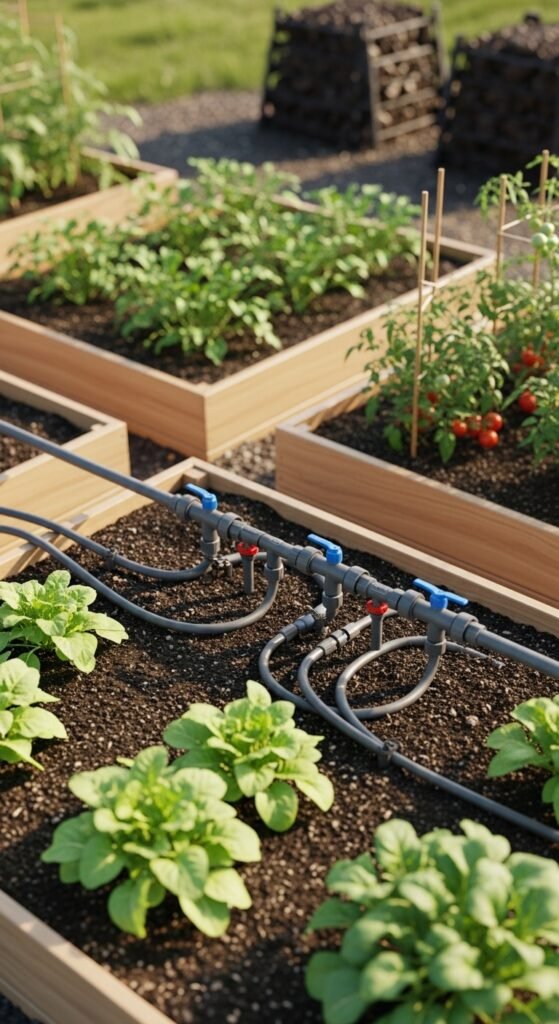
Layer the system with organic mulch to enhance retention. This method supports sustainable practices by conserving resources. Explore more on zoning in our discussion of drip irrigation for gardens.
5) Solar-Powered Pump Enhancement
You can incorporate a solar-powered pump into your drip irrigation raised beds for off-grid operation, ideal for remote garden locations. The pump draws water from a barrel or pond, delivering it through tubing to emitters, powered solely by sunlight.
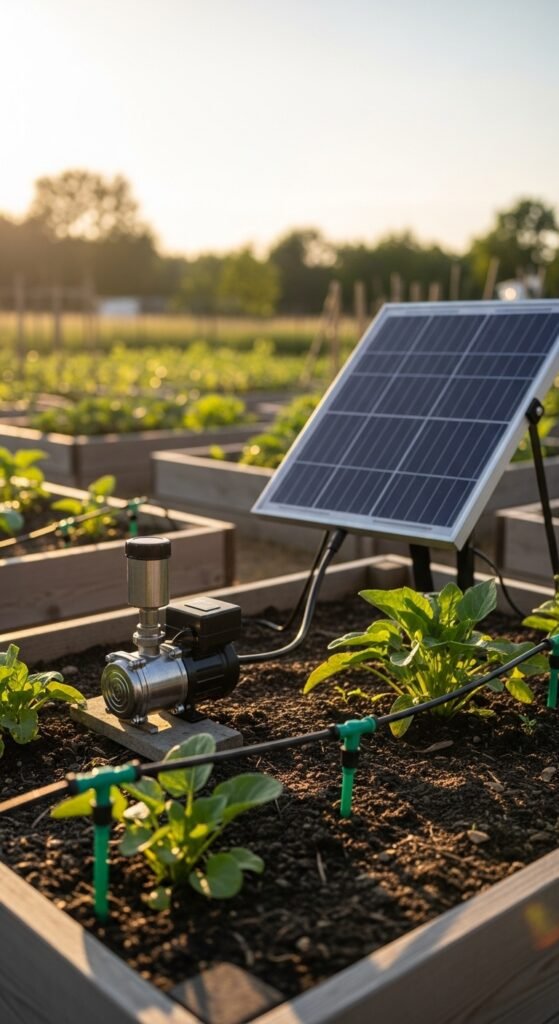
This renewable energy solution reduces electricity costs and environmental impact while ensuring reliable watering. Choose panels with battery storage for cloudy days, maintaining consistent flow. It’s particularly beneficial for larger beds where manual pumping is impractical.
Position panels for maximum sun exposure and secure connections to prevent leaks. You will enjoy the autonomy this provides in your gardening routine.
6) Inline Emitter Customization for Plant Needs
You can select adjustable inline emitters for your drip irrigation in raised beds, allowing precise control over water output per plant. For instance, use higher-flow emitters for fruiting vegetables and lower for herbs, optimizing resource allocation.
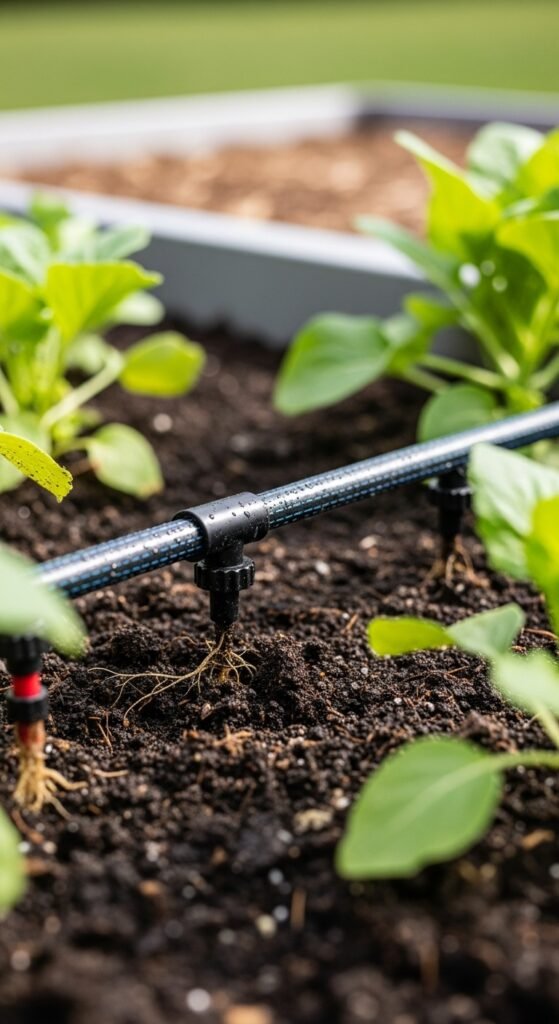
This customization minimizes waste and supports plant health by delivering water directly to roots. Replace standard emitters as needed during installation, and periodically check for blockages to maintain efficiency.
Pair with a pressure-compensating design for uniform distribution across uneven terrain. This flexibility adapts to your garden’s evolution. For soil preparation tips, see our post on best soil mix for raised beds.
7) Rain Barrel Integration for Sustainability
You can connect your drip irrigation raised beds to a rain barrel system, capturing rooftop runoff for natural watering. Install an overflow diverter and filter to keep water clean, then link to tubing for gravity-fed delivery.
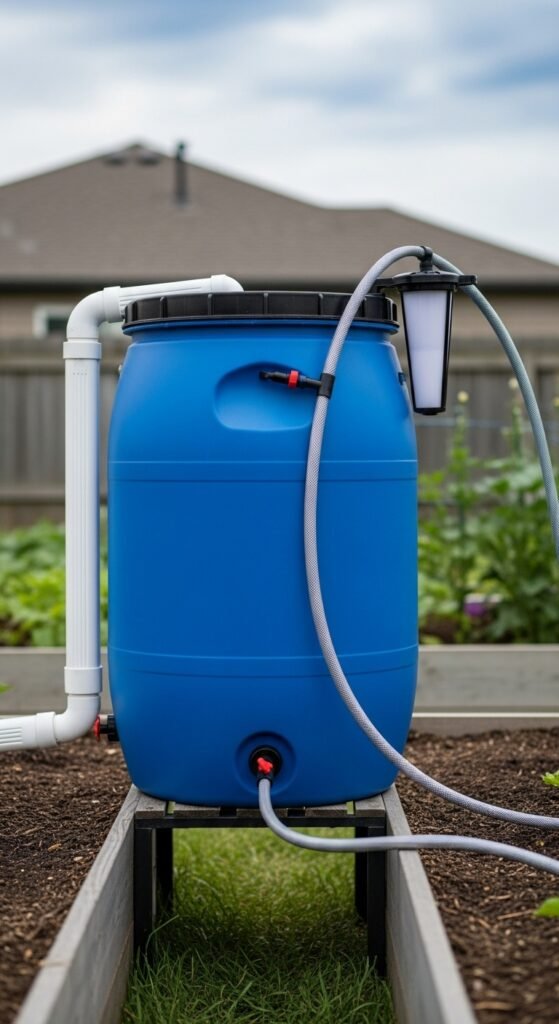
This method promotes water conservation and reduces reliance on municipal supplies, enriching soil with natural nutrients. Monitor barrel levels and supplement during dry spells to ensure steady supply.
Elevate the barrel for better pressure. You will contribute to eco-friendly gardening while enjoying cost savings.
8) Mulch-Integrated Drip Lines for Moisture Retention
You can bury drip lines slightly under mulch in your raised beds, enhancing water retention and suppressing weeds. The mulch insulates the soil, reducing evaporation and maintaining even temperatures for root health.
This combination extends watering intervals, saving time and resources. Choose organic mulches like straw or wood chips that decompose to improve soil fertility over time.
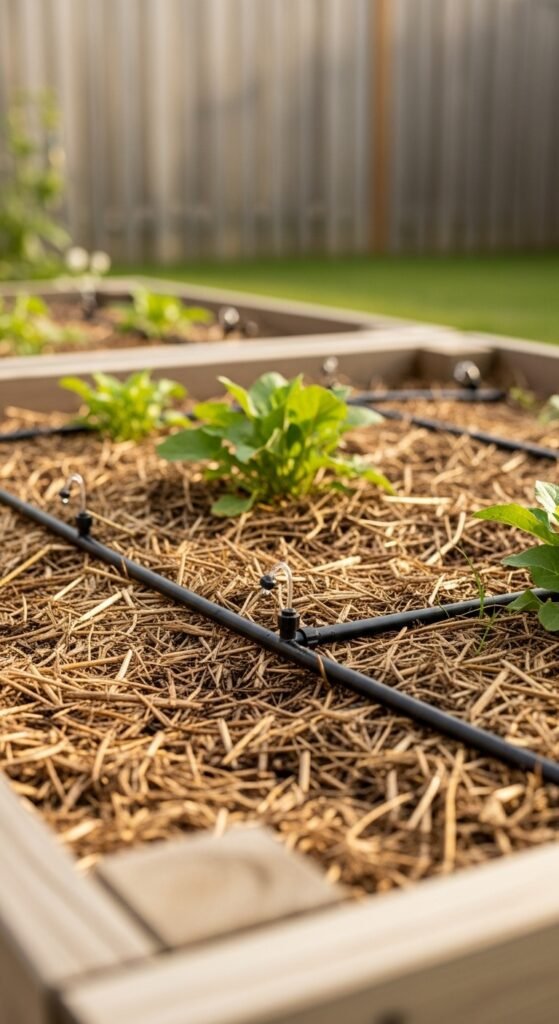
Ensure lines are accessible for maintenance. This technique is especially useful in arid climates. Learn about layered bed methods in our guide to hugelkultur raised bed.
9) Smart Sensor Technology for Real-Time Adjustments
You can add soil moisture sensors to your drip irrigation system in raised beds, triggering watering only when needed. Connect to a smart controller that adjusts based on real-time data, preventing under or overwatering.
This technology optimizes efficiency, conserving water and promoting vigorous growth. App integration allows remote monitoring and tweaks from your phone, ideal for busy gardeners.
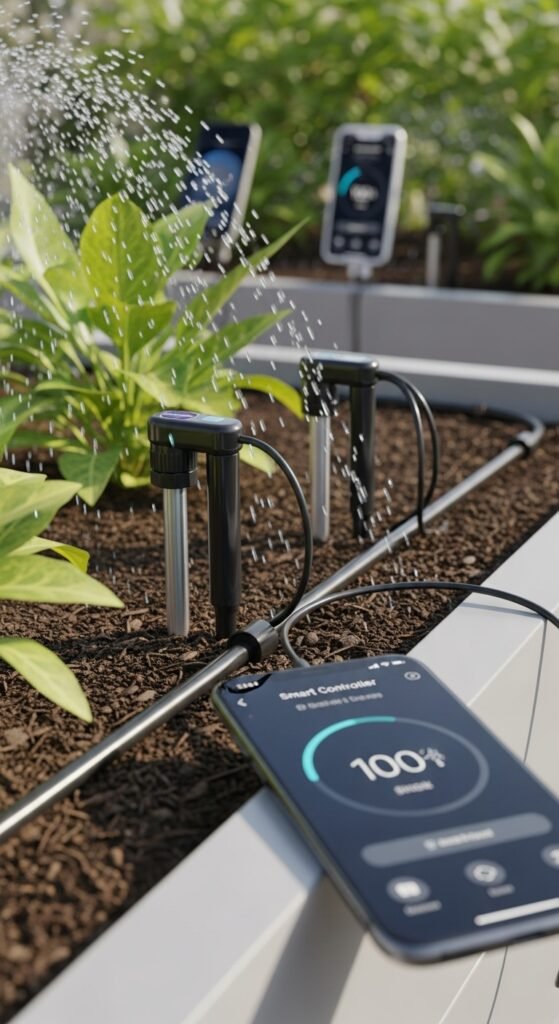
Calibrate sensors to your soil type for accuracy. You will achieve precise control with minimal intervention.
10) Tiered Bed Design with Cascading Irrigation
You can design tiered raised beds with drip irrigation cascading from top to bottom, utilizing gravity for multi-level watering. Install lines at each tier’s base, ensuring lower levels benefit from upper overflow if any.
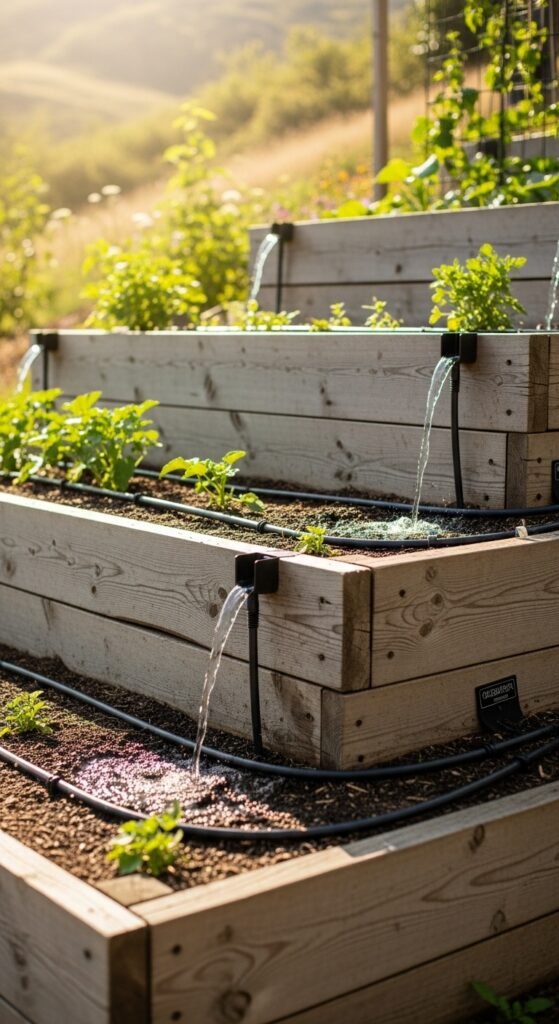
This setup maximizes space in sloped yards and diversifies planting options. It efficiently distributes water across elevations, supporting varied crops in compact areas.
Use retaining walls for stability and add valves for independent control. This innovative layout enhances garden aesthetics and functionality.
11) Herb-Specific Emitters for Compact Beds
You can tailor drip irrigation in compact raised beds for herbs by using low-flow emitters spaced closely, delivering minimal water to shallow roots. This prevents waterlogging and encourages dense, flavorful growth.
The precision suits herbs’ varying needs, like more for basil and less for rosemary. It also conserves water in small spaces, making it perfect for urban gardens.
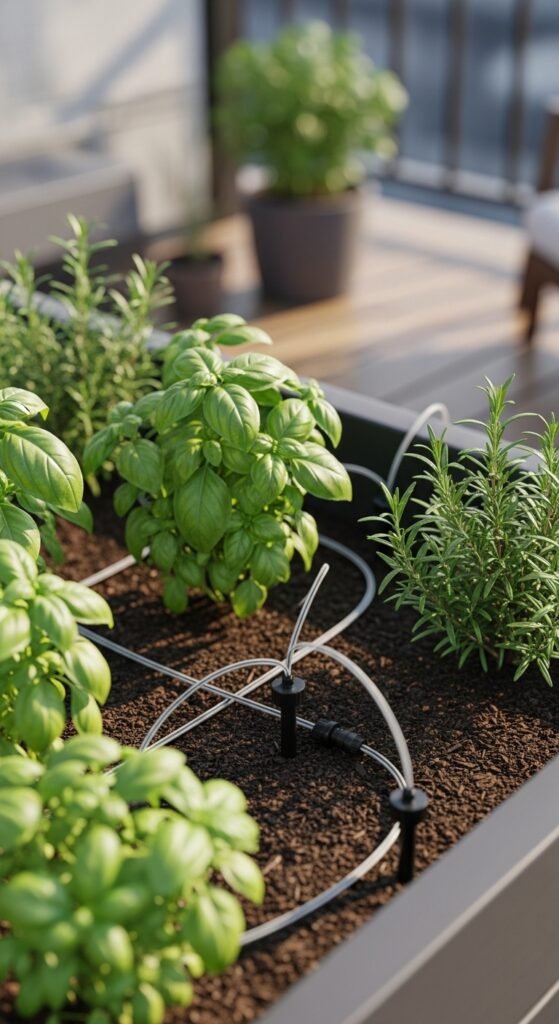
Group similar herbs together for zoning. You will harvest fresh produce with ease. For self-sustaining options, review our article on self-watering raised bed.
12) Vegetable Garden Zoning with Adjustable Flows
You can zone your vegetable raised beds with drip irrigation, assigning different flow rates to rows of tomatoes, peppers, and greens. This ensures each receives optimal hydration without excess.
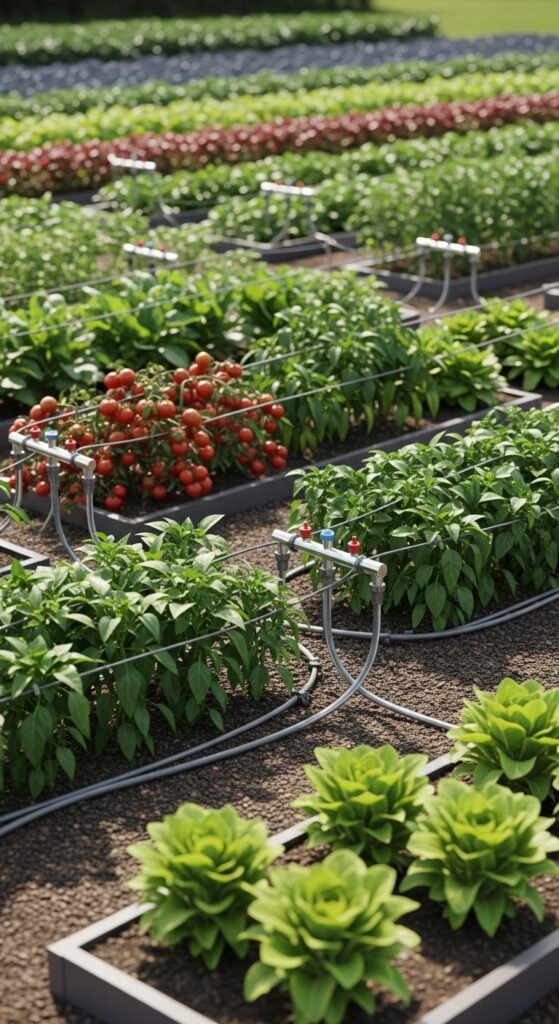
The zoning boosts yields by addressing specific crop demands, reducing disease risks from uneven moisture. Use manifold splitters for easy expansion as your garden grows.
Monitor and adjust seasonally. This strategic planning elevates your vegetable production. Discover more in our overview of raised bed vegetable garden.
13) Winter-Ready System with Drainage Features
You can prepare your drip irrigation raised beds for winter by incorporating drainage valves to empty lines, preventing freeze damage. Flush the system before cold sets in and store removable parts indoors.
This maintenance extends equipment life and ensures readiness for spring. Insulate exposed components with covers for added protection in mild climates.
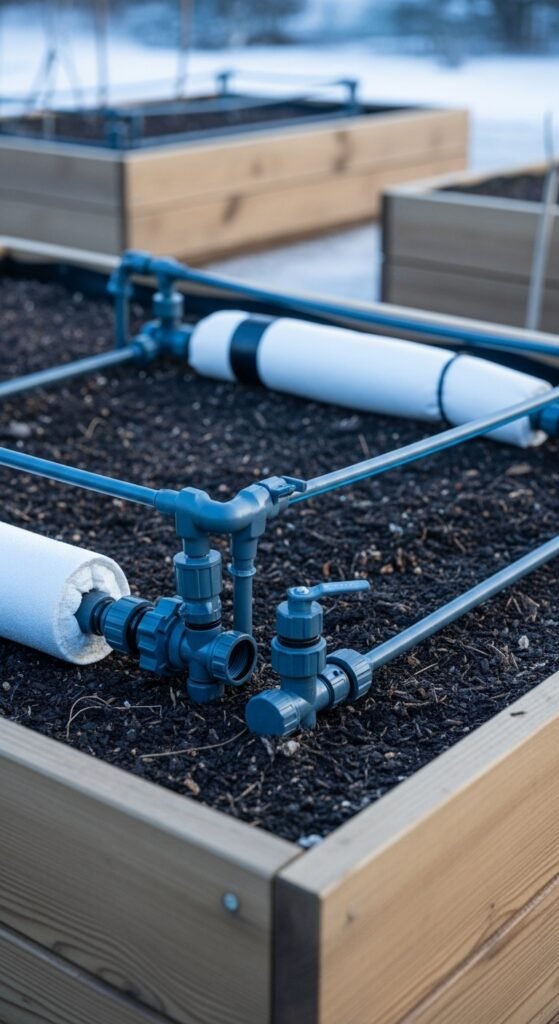
Plan for easy reconnection. You will avoid costly repairs and maintain system integrity year-round.
14) Eco-Friendly Materials for Long-Term Use
You can choose biodegradable or recycled tubing for your drip irrigation in raised beds, supporting sustainable practices. These materials resist UV degradation and integrate well with organic gardening.
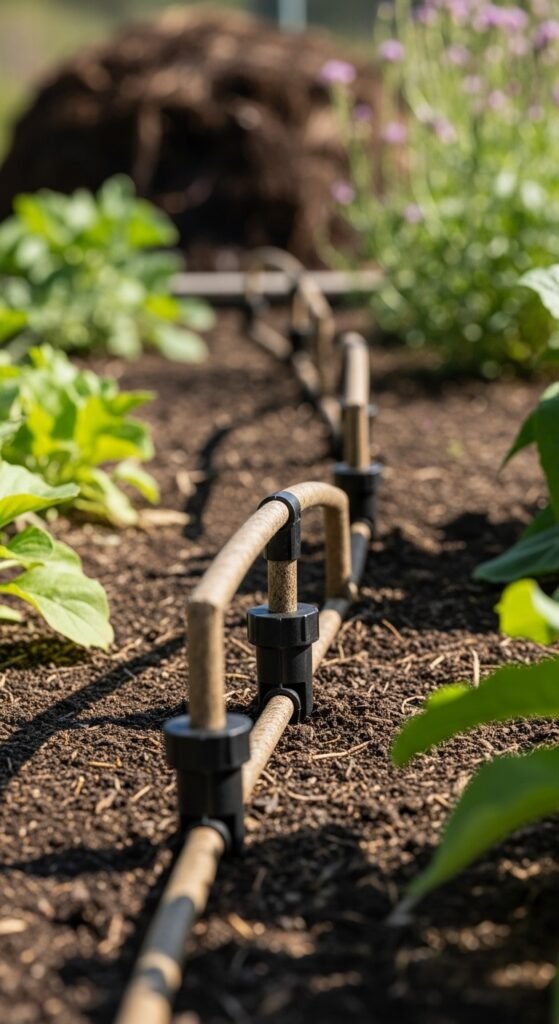
The eco-focus reduces environmental footprint while providing reliable watering. Opt for emitters made from durable, non-toxic plastics to ensure safety for edible crops.
Recycle old components responsibly. This choice aligns with green initiatives in your garden.
15) Combined Soaker Hose Alternative for Flexibility
You can alternate drip lines with soaker hoses in raised beds for versatile irrigation, especially in irregularly shaped areas. Soakers provide gentle seepage, complementing emitters for comprehensive coverage.
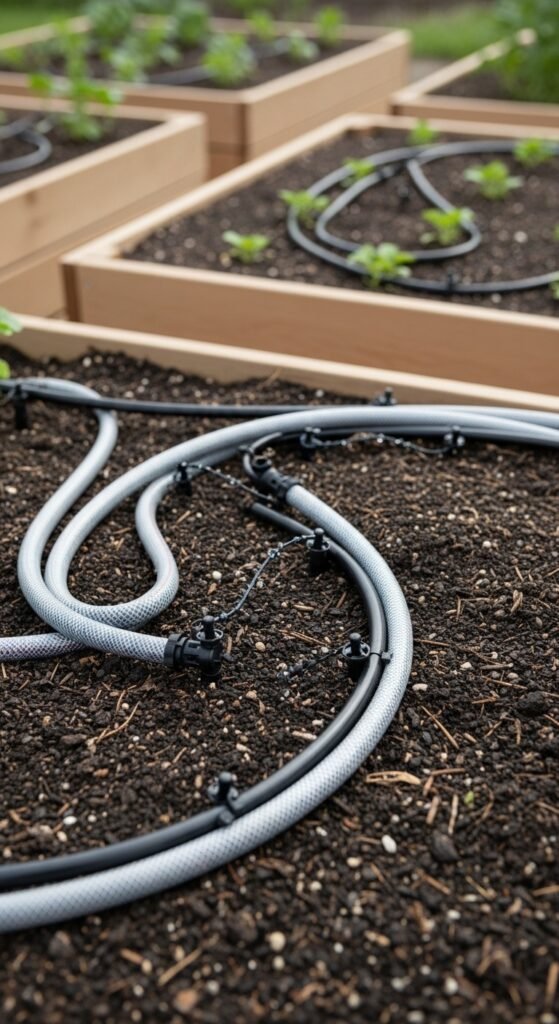
This hybrid offers backup during high-demand periods and adapts to plant spacing changes. It’s cost-effective for expanding gardens without full system overhauls.
Compare options to suit your needs. For insights on choices, consult our comparison of soaker hose vs drip.
Key Principles of Drip Irrigation in Raised Beds
Water Conservation Strategies
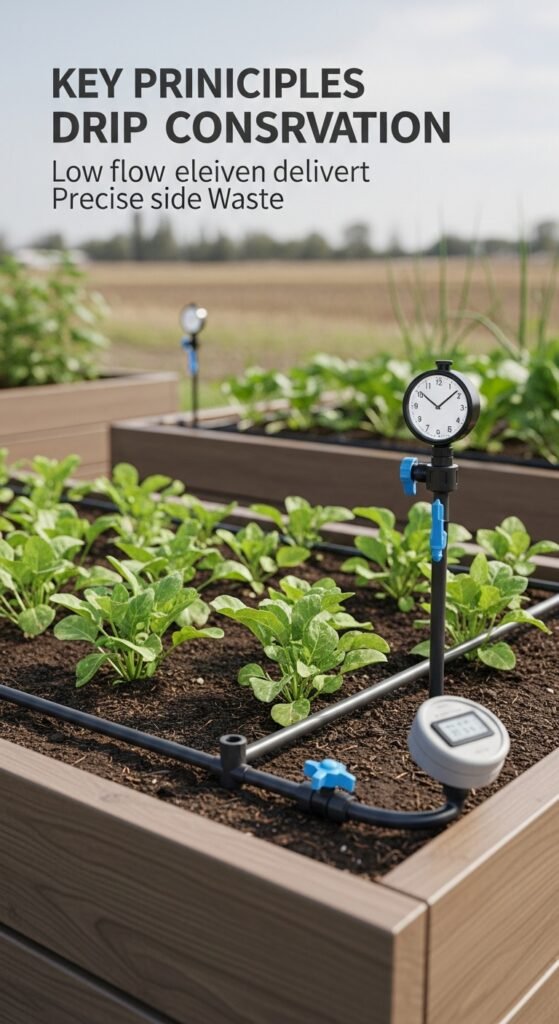
You should prioritize low-flow emitters and timers to minimize water usage, aligning with sustainable practices. Regular system checks prevent leaks, ensuring every drop counts.
Soil Health Integration
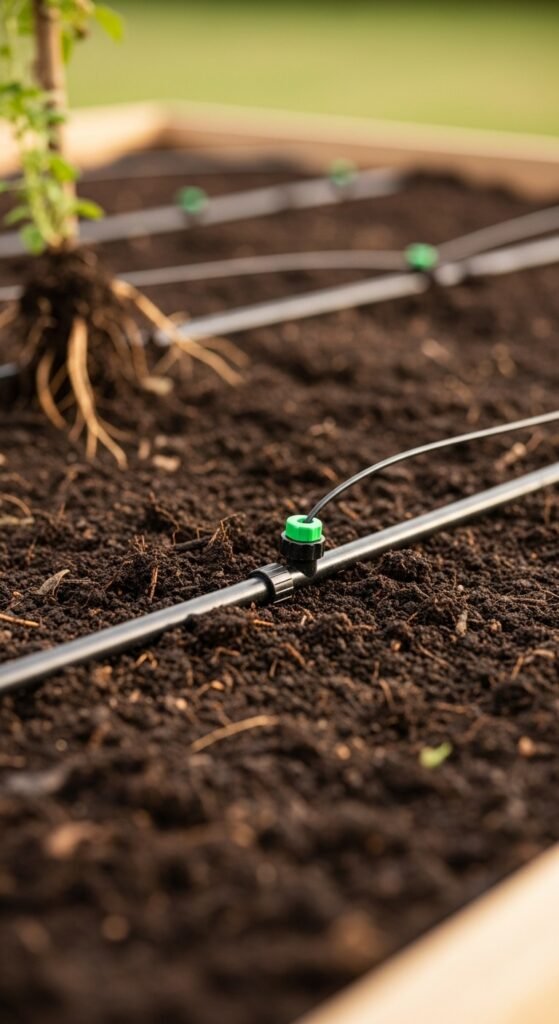
You can enhance soil by combining irrigation with compost amendments, fostering microbial activity for nutrient-rich beds. This synergy supports long-term plant vitality.
Maintenance Best Practices
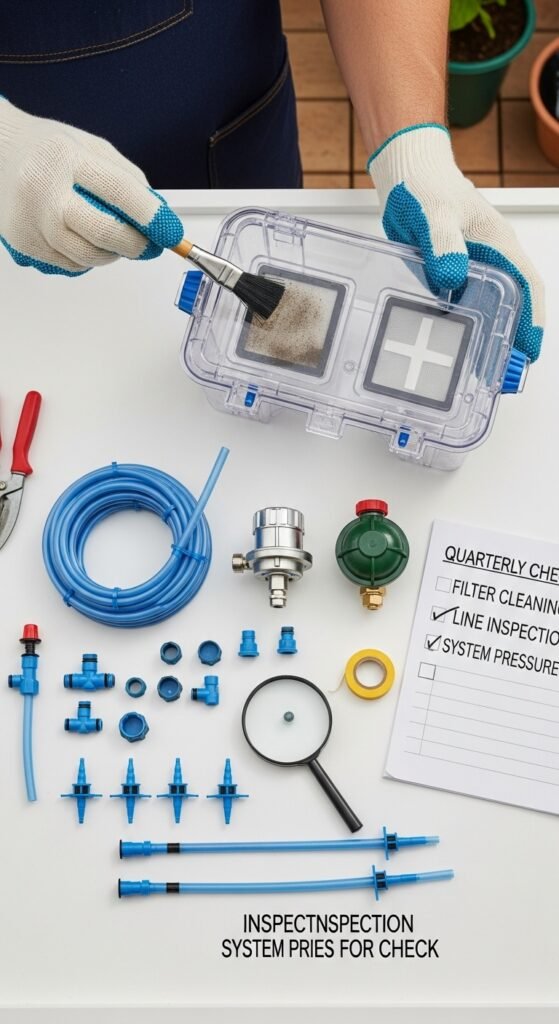
You must clean filters quarterly and inspect lines for clogs, extending system lifespan. Proper storage during off-seasons preserves functionality.
Frequently Asked Questions
What is the ideal emitter spacing for raised beds?
Emitters should be spaced 12-18 inches apart, depending on plant density and soil type, to ensure even moisture distribution without overlap.
How often should I water with drip irrigation?
Water 2-3 times per week for 30-60 minutes, adjusting based on weather and plant needs to maintain consistent soil dampness.
Can drip irrigation work in clay soil raised beds?
Yes, but use lower flow rates to prevent runoff, and amend soil with organics to improve drainage and absorption.
What pressure is needed for effective drip systems?
Maintain 15-30 PSI using regulators to ensure uniform water delivery across the beds without bursting lines.
Is mulching necessary with drip irrigation?
While not mandatory, mulching significantly enhances moisture retention and weed suppression, complementing the system’s efficiency.