
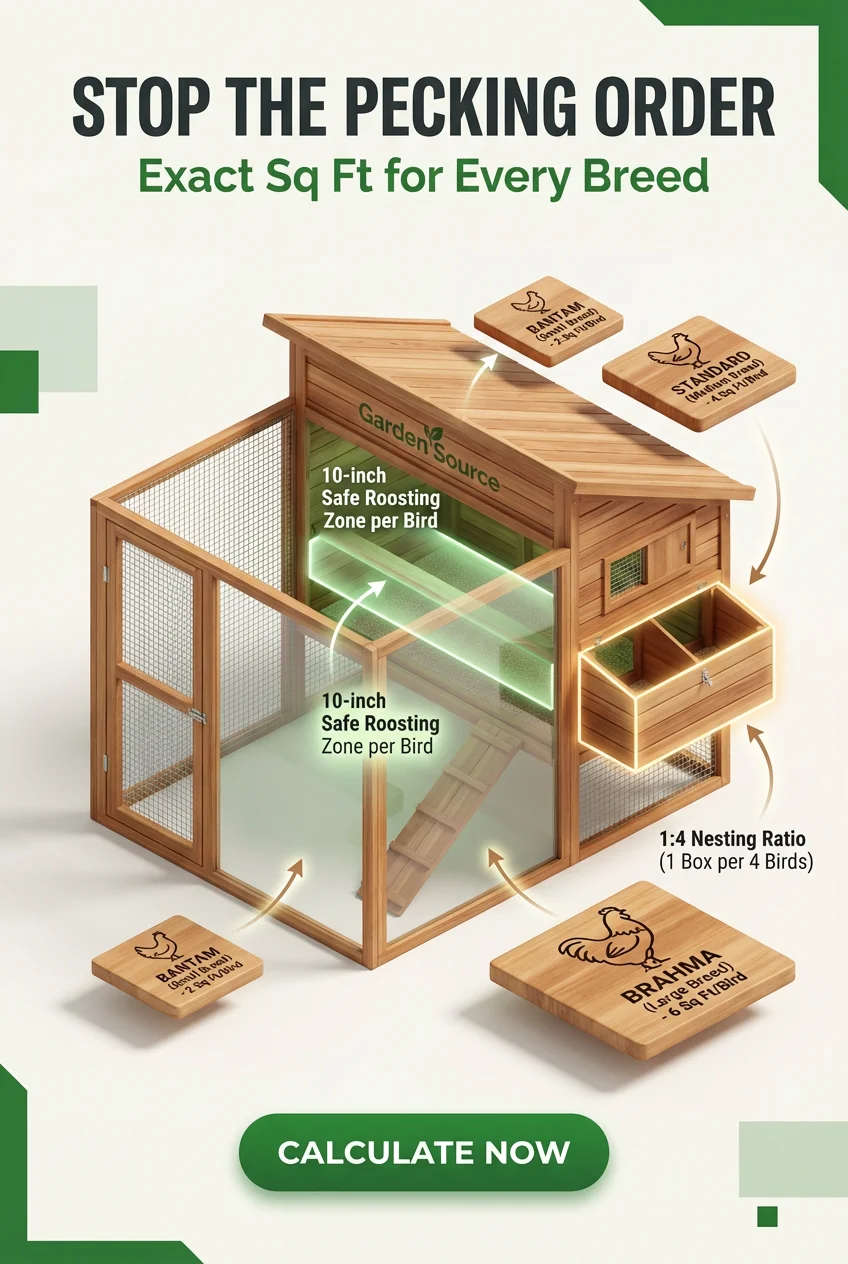
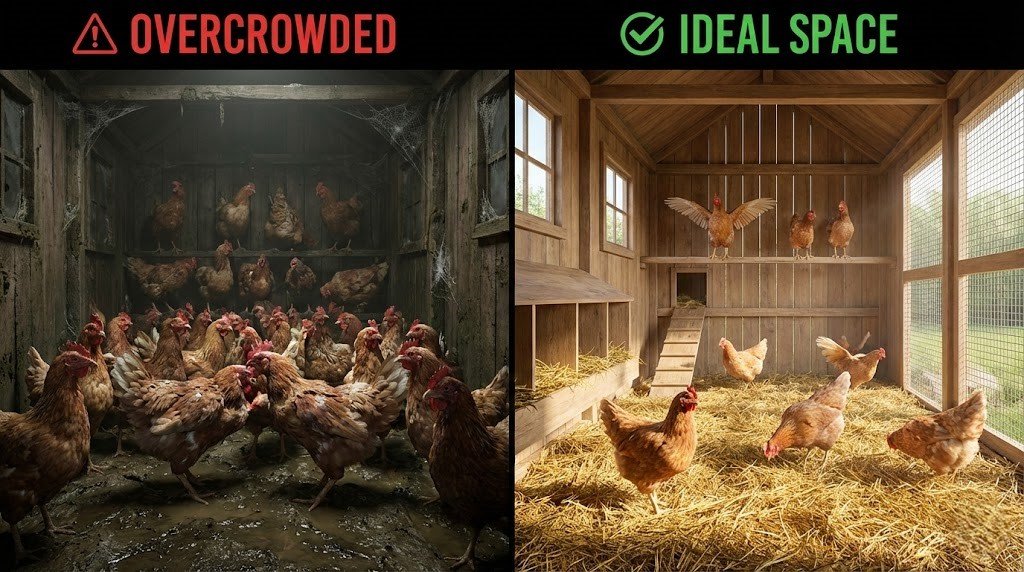
Building or buying a chicken coop is exciting, but getting the dimensions wrong is the most common mistake new backyard farmers make. Overcrowded chickens become stressed, which leads to behavioral issues like pecking, bullying, and a significant drop in egg production. A coop that is too small also traps moisture and ammonia, leading to respiratory diseases.
Use our Chicken Coop Calculator to determine exactly how much interior coop space, outdoor run area, and roosting length your specific flock needs based on their breed size and lifestyle.
Chicken Coop Size Calculator
How to Use the Chicken Coop Calculator
- Number of Chickens: The total count of birds you plan to house. We always recommend planning for 2-3 extra birds (chicken math is real!).
- Breed Size: Choose between Bantams (small), Standard breeds (like Rhode Island Reds), or Giant breeds (like Brahmas or Jersey Giants).
- Access Type: "Free Range" assumes they spend all day in the garden, requiring less run space. "Confined Run" means they spend 24/7 in the coop/run setup.
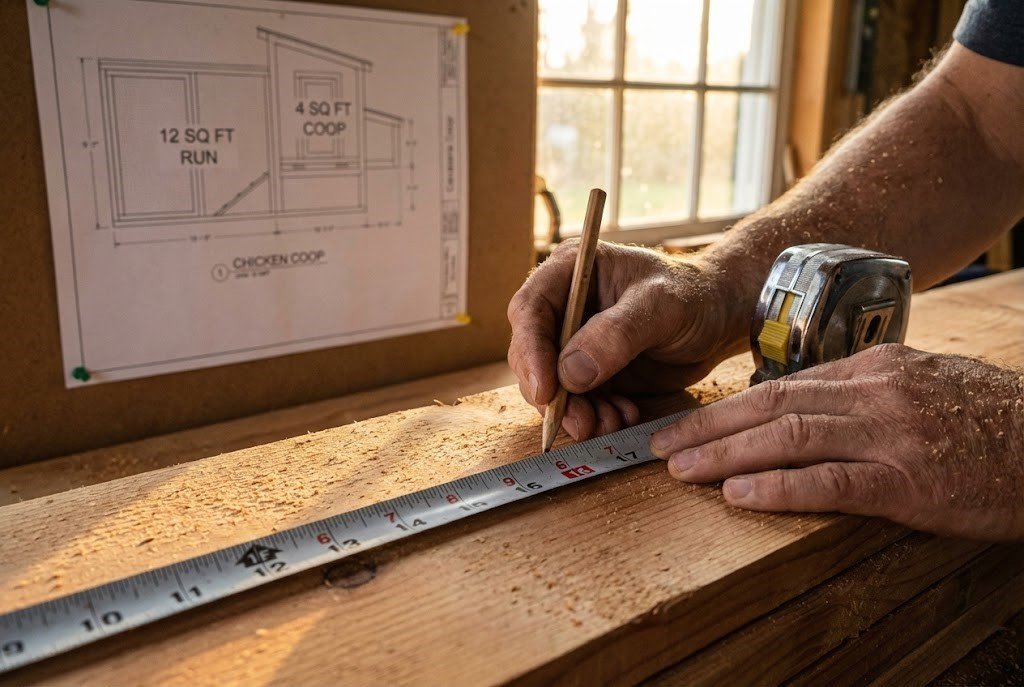
- Planned Size: Enter the square footage of a coop you are considering to check if it safely accommodates your flock.
Why We Built This: Preventing "Pecking Orders"
The "Secret Sauce" of this tool is the Overcrowding Alert. Unlike generic calculators, we factor in the psychology of the flock. When chickens don't have enough elbow room, they establish a brutal pecking order.
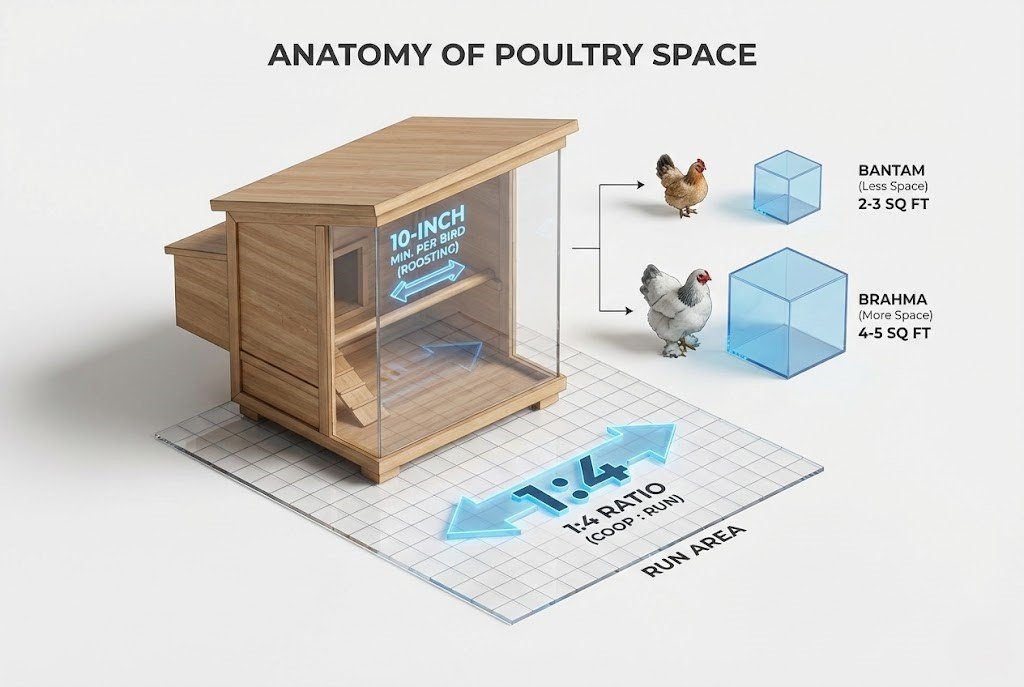
Our calculator ensures you have enough Roosting Length (10 inches per bird) so they don't fight for a spot at night, and the correct Nesting Box Ratio (1 box per 4 hens) to prevent egg-laying competition.
Educational Guide: Space Requirements by Breed
Not all chickens are the same size, and their housing shouldn't be either. Standard backyard layers require about 4 square feet of indoor space and 10 square feet of outdoor space. Bantams, being roughly half the size, can thrive with 2 square feet indoors. However, if you live in a climate with long, snowy winters where birds stay inside for days, you should double the indoor square footage to prevent cabin fever.
Don't forget vertical space! Chickens love to roost high. Ensure your coop has enough height to place roosts at least 18 inches off the floor, but higher than the nesting boxes to prevent them from sleeping (and pooping) where they lay eggs.
Frequently Asked Questions
Q: How many nesting boxes do I need for 10 chickens?
A: You need 3 nesting boxes. The general rule is one box for every 3 to 4 hens. Even with plenty of boxes, you'll often find they all wait in line for the "favorite" one!
Q: Can a chicken coop be too big?
A: Technically, no, but a massive coop with only 2 chickens might be harder for the birds to keep warm with their body heat during extreme winter nights.
Q: What is the minimum roosting space per chicken?
A: You should allow for 10 to 12 inches of bar space per standard-sized chicken. In the winter, they will huddle together for warmth, but in the summer, they need the extra room to spread their wings and stay cool.