
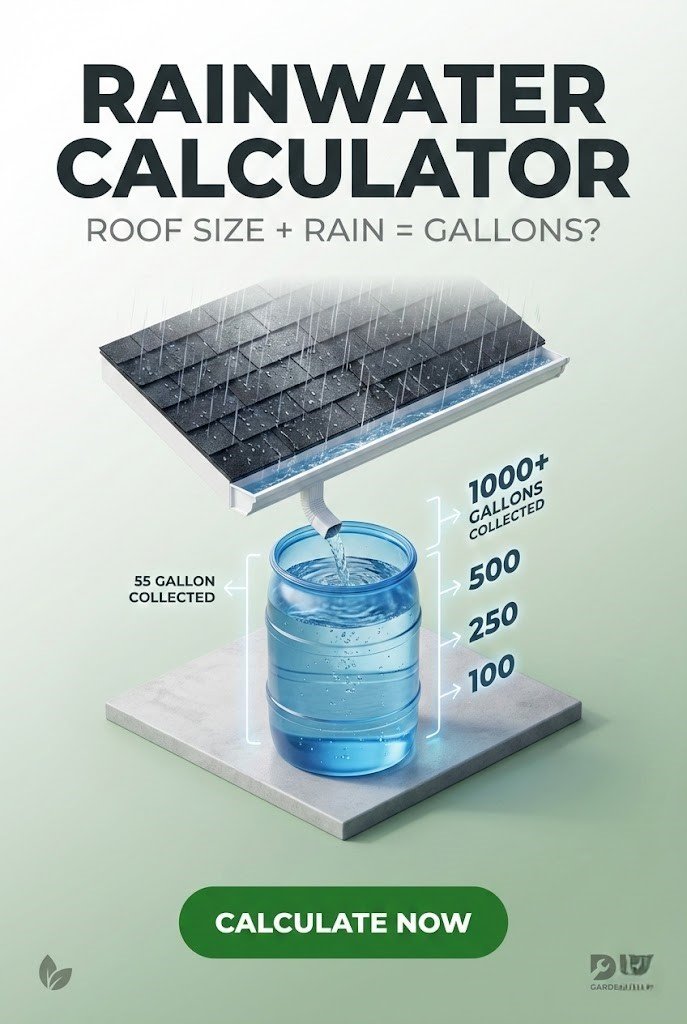
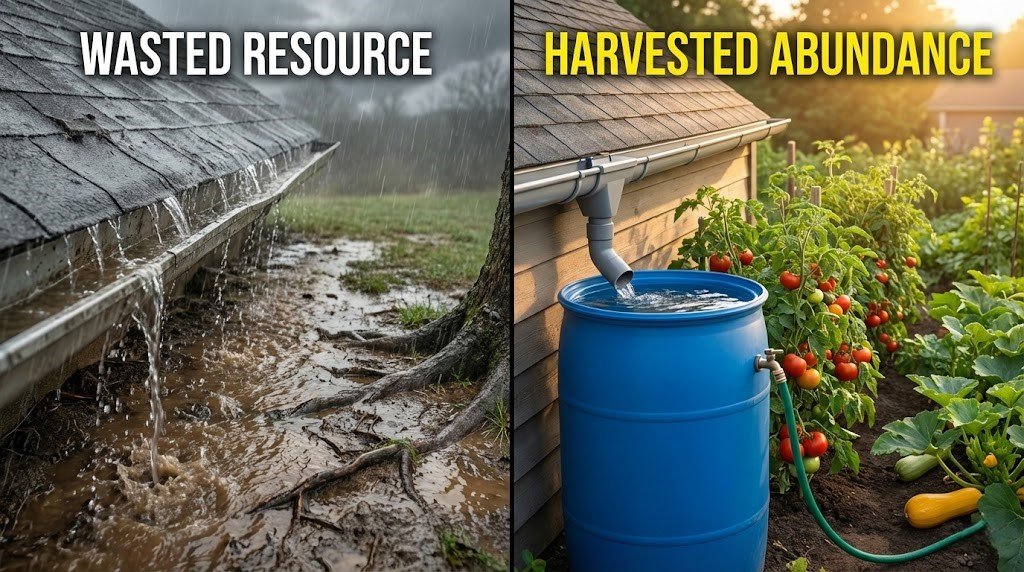
Most gardeners look up at the sky during a storm and see bad weather. Smart gardeners see free resources falling from the heavens. Rainwater is superior to municipal tap water—it is free of chlorine, pH balanced, and highly oxygenated.
But how much water can you actually catch? Is it enough to water your raised beds all summer? The volume is often shocking. Just 1 inch of rain on a standard roof can yield hundreds of gallons. Use our Rainwater Collection Calculator below to size your system correctly.
🌧️ Rainwater Collection Calc
How to Use This Tool
To get an accurate estimate, you need just three numbers:
- Roof Footprint: Measure the Length and Width of your house (or the specific section of roof feeding the gutter). Note: Measure the flat ground footprint. You do not need to calculate the slope of the roof.
- Rainfall Event: Enter a specific amount (e.g., "1 inch") to see what a standard storm yields, or enter your annual rainfall to see your yearly potential.
- Analyze the Result: The tool calculates total gallons and converts that into 55-gallon drums, so you know exactly how many barrels to buy.
Why We Built This (The "Secret Sauce")
Many online calculators use the raw physics formula (Area × Rain × 0.623). While mathematically correct, it is realistically wrong.
The 90% Efficiency Rule:
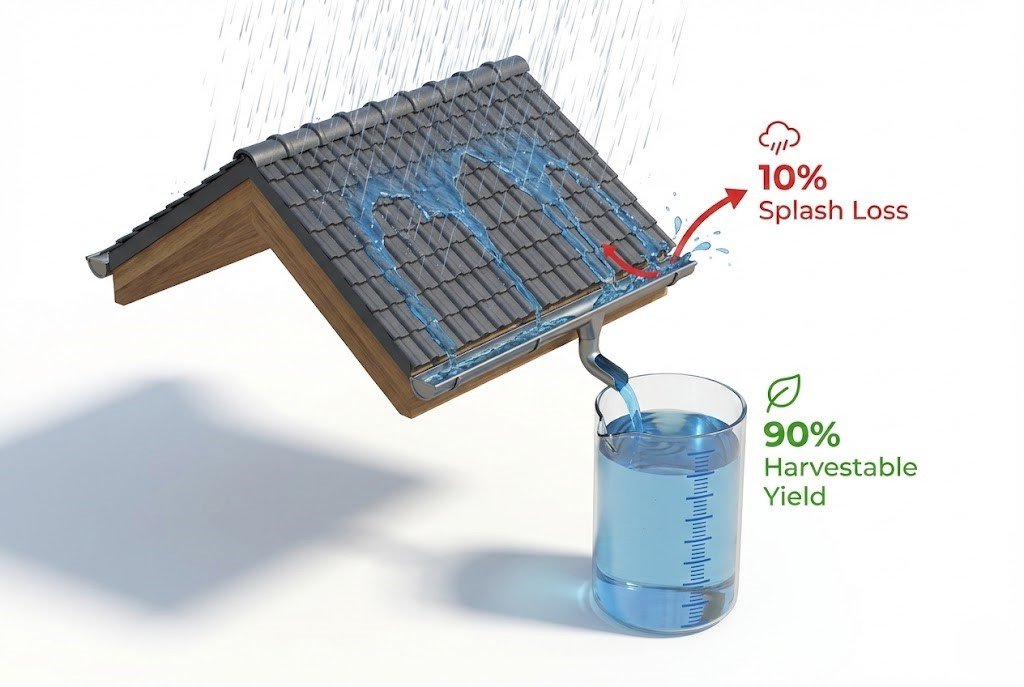
In the real world, you lose water. High winds cause splash-out. Asphalt shingles absorb small amounts. Debris screens deflect flow. Our calculator automatically applies a 10% loss factor (Efficiency Coefficient of 0.90). This gives you a conservative, honest number that you can actually rely on for garden planning.
Educational Guide: Designing Your System
Once you know your volume, you need to manage it. Here is how to set up a safe system.
1. The "First Flush" Diverter
The first few gallons of rain wash bird droppings, pollen, and dust off your roof. You don't want that sludge in your barrel. A "first flush" diverter is a simple pipe that captures this initial dirty water before allowing clean water to flow into your tank.
2. Linking Barrels (Daisy Chaining)
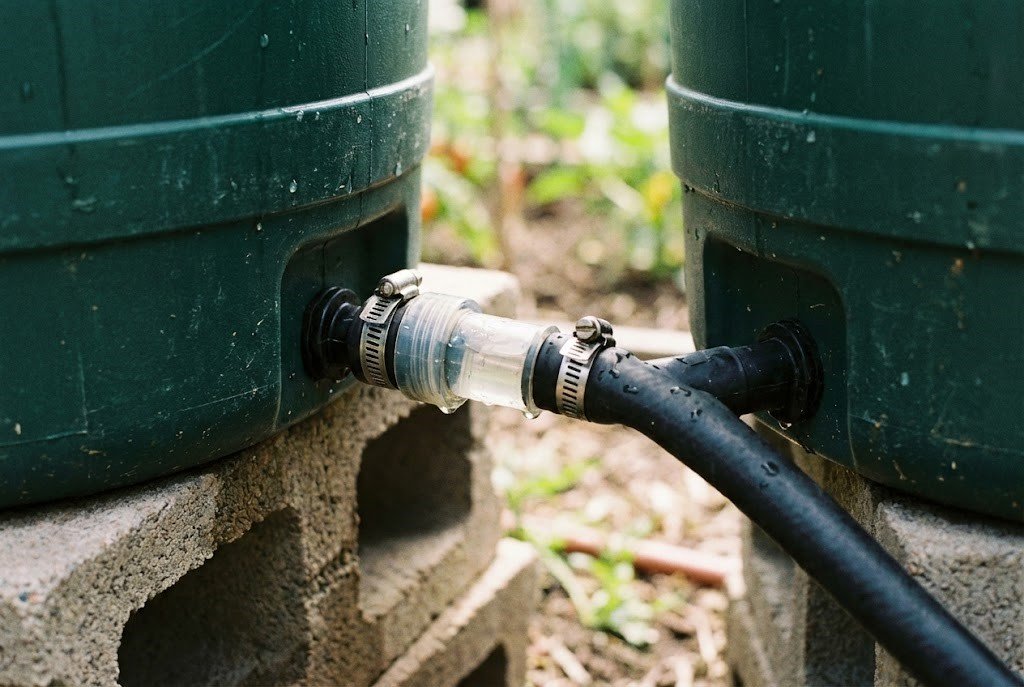
As you will see from the calculator, a single 55-gallon drum fills up fast. To capture a real storm, you need capacity. You can link multiple barrels together at the bottom using simple hose kits. This allows them to fill and drain simultaneously, acting as one giant tank.
3. Usage Safety
Rainwater is perfect for ornamentals and lawns. For vegetable gardens, apply the water to the soil (drip irrigation), not the leaves, to minimize bacterial risks. Never drink rainwater from an asphalt roof without a professional filtration system.
Frequently Asked Questions
How many gallons is 1 inch of rain on 1,000 sq ft?
Mathematically, 1 inch of rain on a 1,000 square foot roof equals 623 gallons. However, after accounting for evaporation and splash-out efficiency (90%), you will harvest approximately 560 gallons.
Does roof slope affect rainwater collection?
Surprisingly, no. A flat roof and a steep roof with the same "footprint" (width x length on the ground) collect the exact same amount of rain. The steep roof has more surface area, but it intercepts the same amount of falling raindrops.
Is collecting rainwater legal?
In almost all US states, yes. It is encouraged to reduce strain on municipal storm drains. However, some states like Colorado and Utah have specific restrictions on volume or methods. Always check your local county regulations.