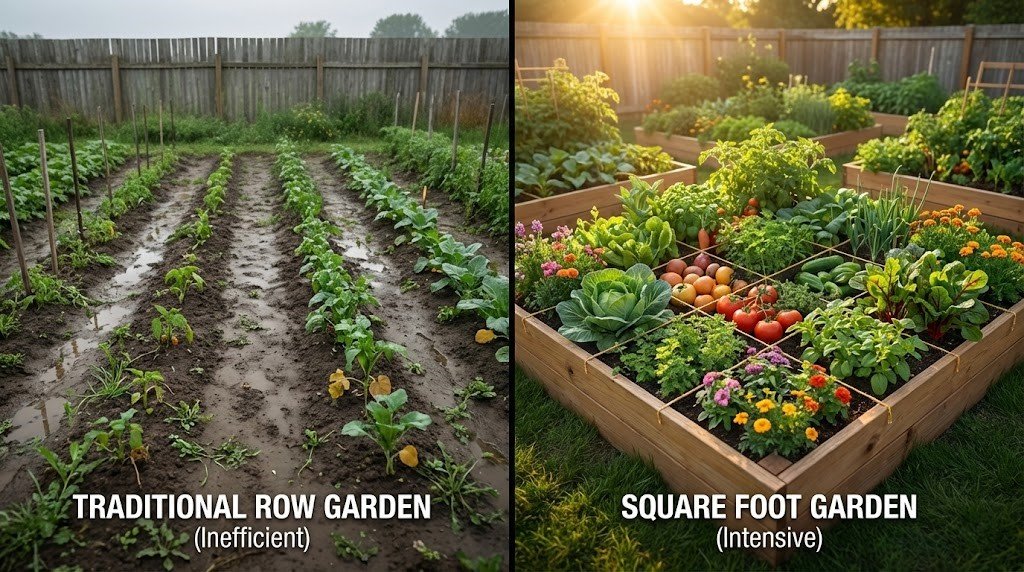
Traditional row gardening is great for farmers with tractors, but for home gardeners, it wastes a huge amount of space on walking paths. If you want to grow 100% more food in 80% less space, the solution is Square Foot Gardening (SFG).
The concept is simple: divide your raised bed into a 1×1 foot grid, and plant a specific number of vegetables in each square based on their size. But remembering if carrots are “9 per square” or “16 per square” gets confusing. Use our Visual Square Foot Gardening Planner below to see exactly how many plants fit in your bed.
🟩 Square Foot Gardening Planner
How to Use This Tool
This planner takes the math out of the grid method:
- Bed Dimensions: Enter the width and length of your raised bed in feet. (e.g., The classic size is 4x4).
- Select Vegetable: Choose the crop you want to plant. We have programmed the specific "density rules" for each plant family.
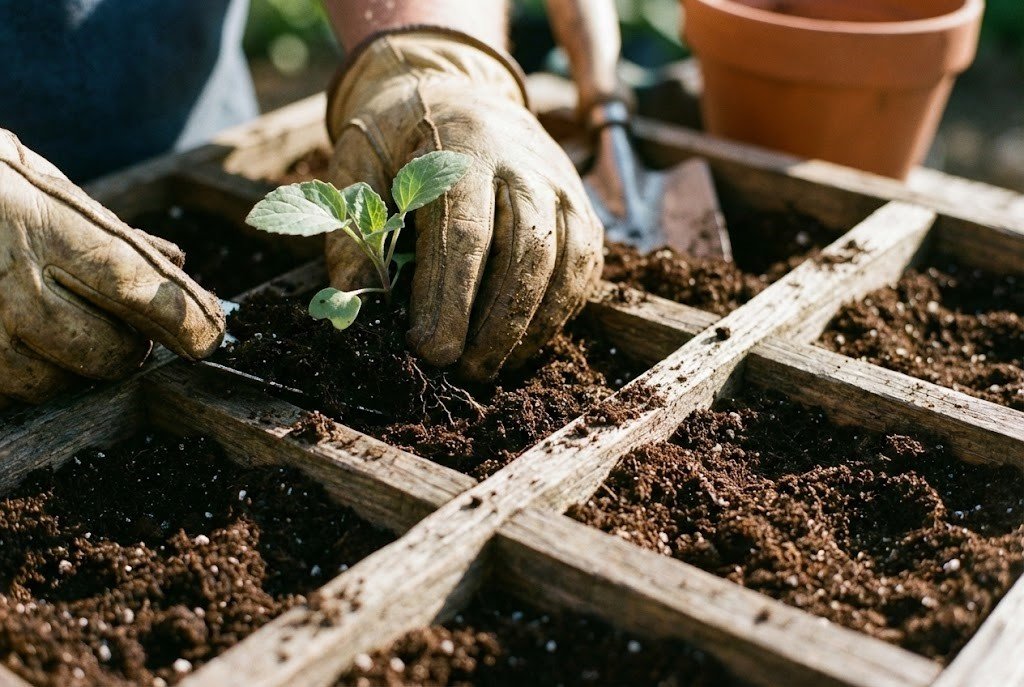
- Visualize: Click the button to see a visual map of your bed. The grid shows you exactly how the plants are spaced (1, 4, 9, or 16 dots per square).
Why We Built This (The "Secret Sauce")
Most planting calculators just give you a number like "30 plants." That doesn't help you visualize the layout. We built a Dynamic Grid Generator.
When you select "Carrots," our tool doesn't just calculate the number; it actually generates a visual grid showing 16 dots in every single square foot. This helps beginners understand the incredible density potential of this method compared to traditional rows.
Educational Guide: The Rules of the Grid
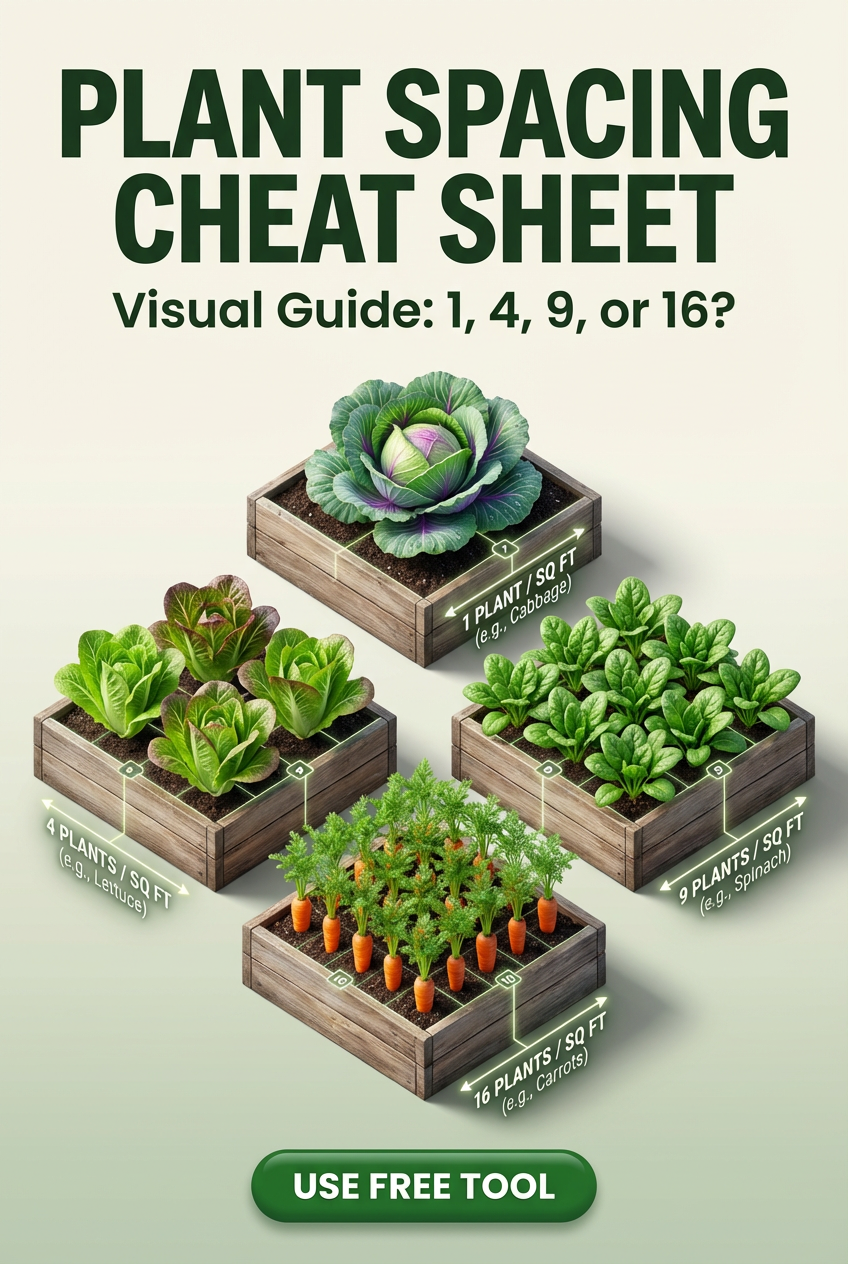
Square Foot Gardening relies on four main spacing categories. Memorize these, and you won't even need the calculator next time.
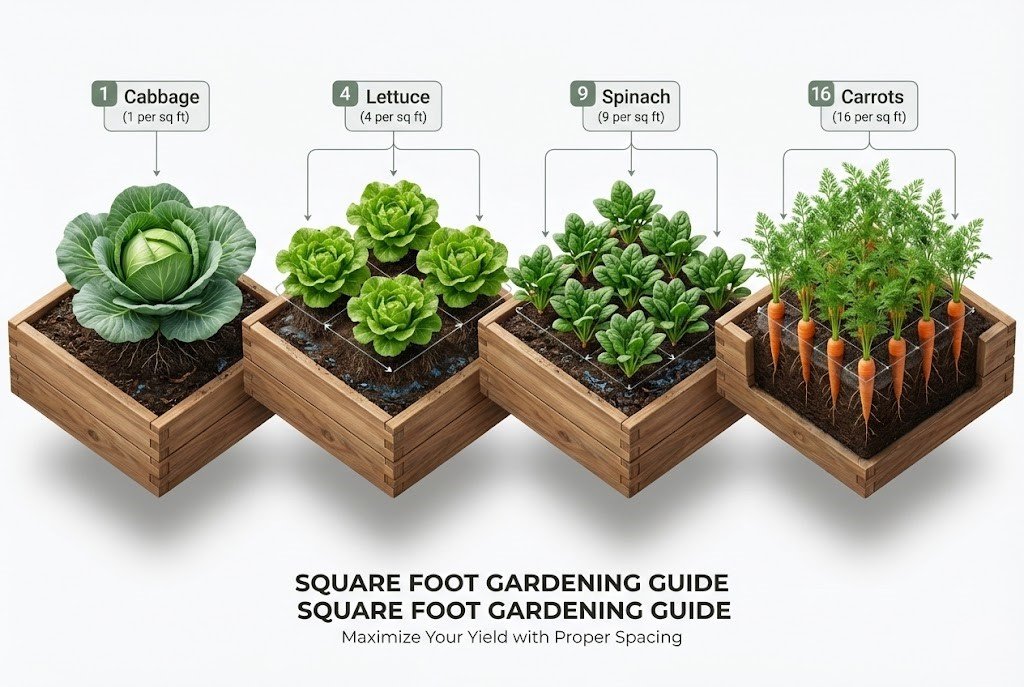
1. The "Extra Large" (1 per 2 Sq Ft)
Some plants are just too big for one square. Summer squash, zucchini, and melons usually require two squares (a 1x2 foot space) to sprawl. Don't try to cram them in!
2. The "Large" (1 per Sq Ft)
Tomatoes, Peppers, Eggplants, Cabbage.
These plants get big. Place one plant right in the center of the square. Note: Tomatoes will still need vertical support like a trellis or cage. See our ideas for supporting vertical crops.
3. The "Medium" (4 per Sq Ft)
Lettuce, Swiss Chard, Garlic.
Plant these in a 2x2 grid pattern within the square. This is perfect for "cut and come again" salad greens.
4. The "Small" (9 per Sq Ft)
Spinach, Beets, Bush Beans.
Plant these in a 3x3 grid. It feels tight, but as long as your soil is rich in organic compost, they will thrive.
5. The "Tiny" (16 per Sq Ft)
Carrots, Radishes, Scallions.
Plant these in a 4x4 grid. This is where SFG shines—you can harvest 256 carrots from a single 4x4 raised bed!
Frequently Asked Questions
How deep should a square foot garden be?
The standard depth is 6 inches. Because you are using a perfect soil mix (Mel's Mix) that is loose and friable, roots don't need to dig as deep as they do in hard ground soil. However, for root crops like carrots, 10-12 inches is better.
Do I need to put dividers in my bed?
Yes! The grid is the most important part. Without physical dividers (using wood lath, twine, or PVC), you will naturally drift back into row planting spacing. The grid forces you to respect the density limits.
Can I mix vegetables in one bed?
Absolutely. That is the beauty of SFG. You can plant 4 squares of lettuce, 2 squares of tomatoes, and 10 squares of carrots all in the same 4x4 box. This creates "polyculture," which naturally confuses pests and reduces disease spread.