
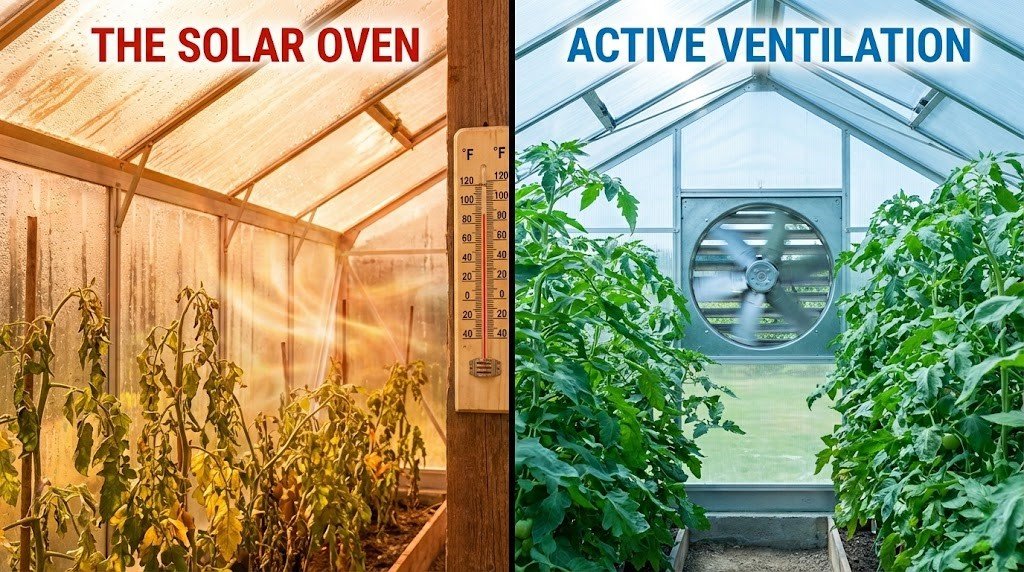
A greenhouse without proper ventilation is just a solar oven. In the summer, temperatures inside can skyrocket 20-30 degrees higher than the outside air, cooking your plants in minutes. The key to keeping them cool isn’t just opening a door—it’s active exhaust.
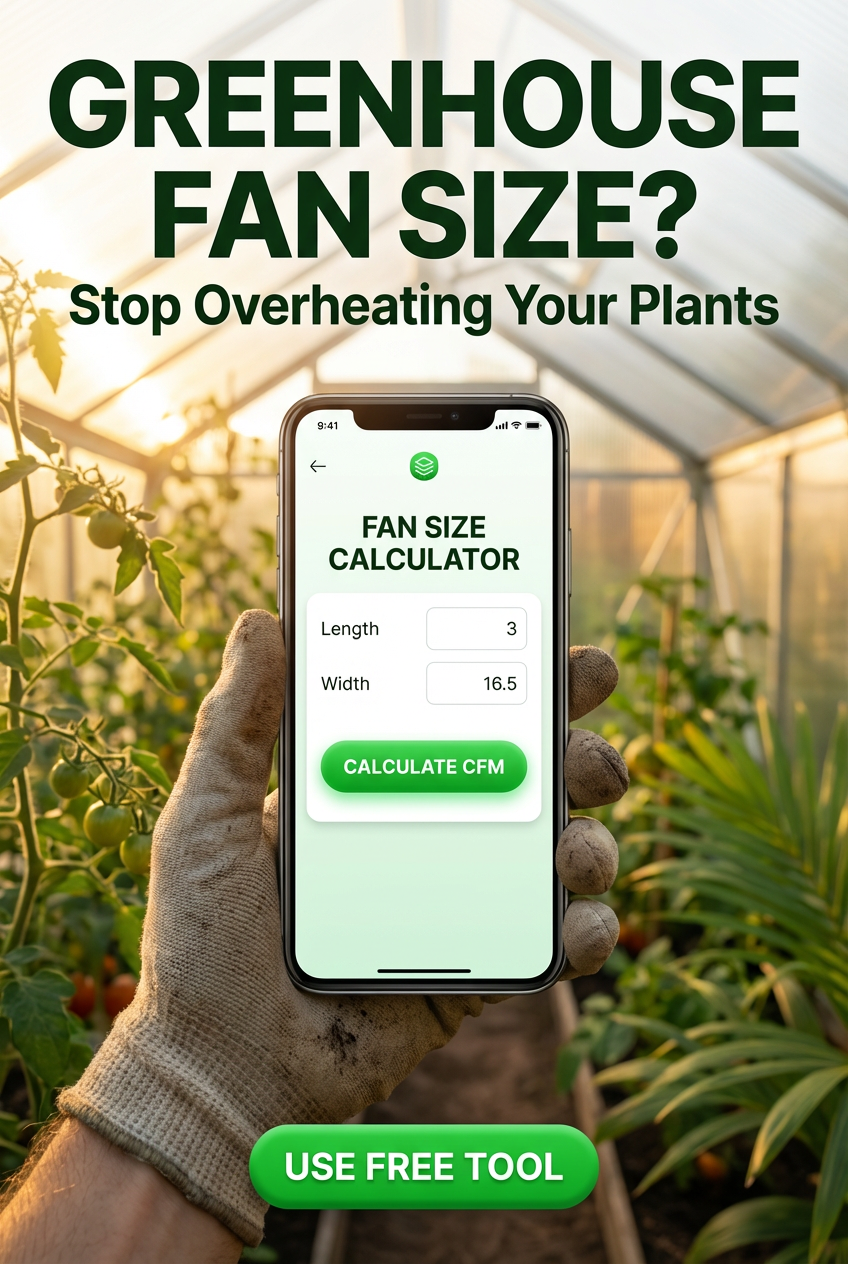
But what size fan do you need? Fan power is measured in CFM (Cubic Feet per Minute). If you buy a fan that is too weak, the heat will build up faster than it can be pushed out. Use our Free Greenhouse Fan CFM Calculator below to find the minimum power rating required for your specific structure.
💨 Greenhouse Fan CFM Calculator
Standard Calculation: 1 air exchange per minute.
How to Use This Tool
Ventilation math is based on air volume. Here is how to measure your space for accurate results:
- Enter Dimensions: Measure the Length, Width, and average Height of your greenhouse. (If you have a peaked roof, estimate the average height between the sidewall and the peak).
- Select Shade Factor: This is critical. A greenhouse covered in shade cloth stays cooler than one sitting in naked, direct sun. Select your exposure level.
- Get Your CFM: The result is the minimum Cubic Feet per Minute rating you need. When buying a fan, look for this number on the box.
Why We Built This (The "Secret Sauce")
Many generic calculators simply multiply Length × Width × Height and give you the volume. That works for a warehouse, but not for a greenhouse that traps solar energy.
We added a Solar Gain Factor:
- The "One Minute" Rule: The industry standard for greenhouses is to exchange the entire volume of air once every minute. Our calculator starts there.
- The Heat Buffer: If you told us you aren't using shade cloth, our tool automatically multiplies the result by 1.2 (+20%). This extra power is necessary to fight the rapid heat buildup from direct sunlight.
Educational Guide: Setting Up Ventilation
Buying the fan is step one. Installing it correctly is step two. To create effective airflow, follow these physics principles.
1. High Exhaust, Low Intake
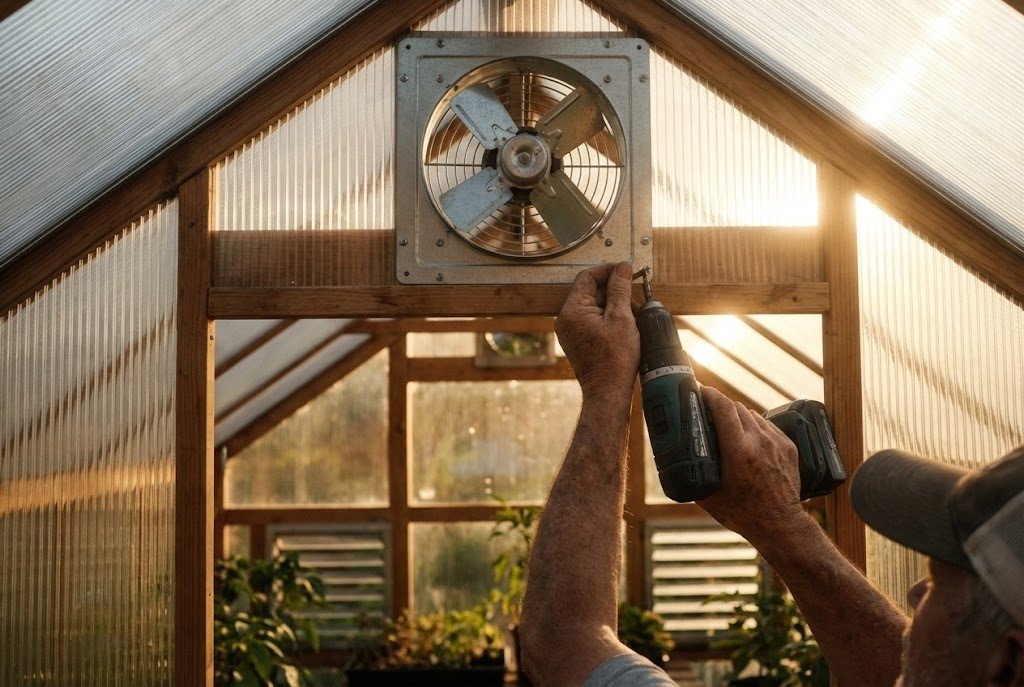
Hot air rises. Mount your exhaust fan high up on the back wall near the peak. Mount your intake vents (louvers) low down on the opposite wall. This draws cool air across the plants and pulls hot air out the top.
2. The Intake Must Match the Outtake
A powerful fan is useless if it is trying to suck air through a tiny hole. Your intake vents should offer a total opening area roughly 1.5 times larger than the fan size to prevent the motor from straining.
3. Automate It
Don't rely on remembering to plug it in. Use a simple thermostat plug. Set it to turn on at 85°F. This is crucial for protecting temperature-sensitive crops like tomatoes or peppers. Check our guide on automating greenhouse temperature for more tips.
Frequently Asked Questions
What does CFM stand for in fans?
CFM stands for Cubic Feet per Minute. It measures the volume of air a fan can move. For example, a 1,000 CFM fan can empty a 1,000 cubic foot room of air in exactly one minute.
Is it better to have one big fan or two small fans?
Two smaller fans are often better than one giant one. It provides redundancy (if one breaks, the other still works) and allows for "staged" cooling—you can run one fan on mild days and both fans on hot days.
Do I need a fan for a small hobby greenhouse?
Yes. Even small 6x8 greenhouses can reach 120°F in summer. While roof vents help, they rely on wind. An active exhaust fan guarantees air exchange even on calm, hot days.