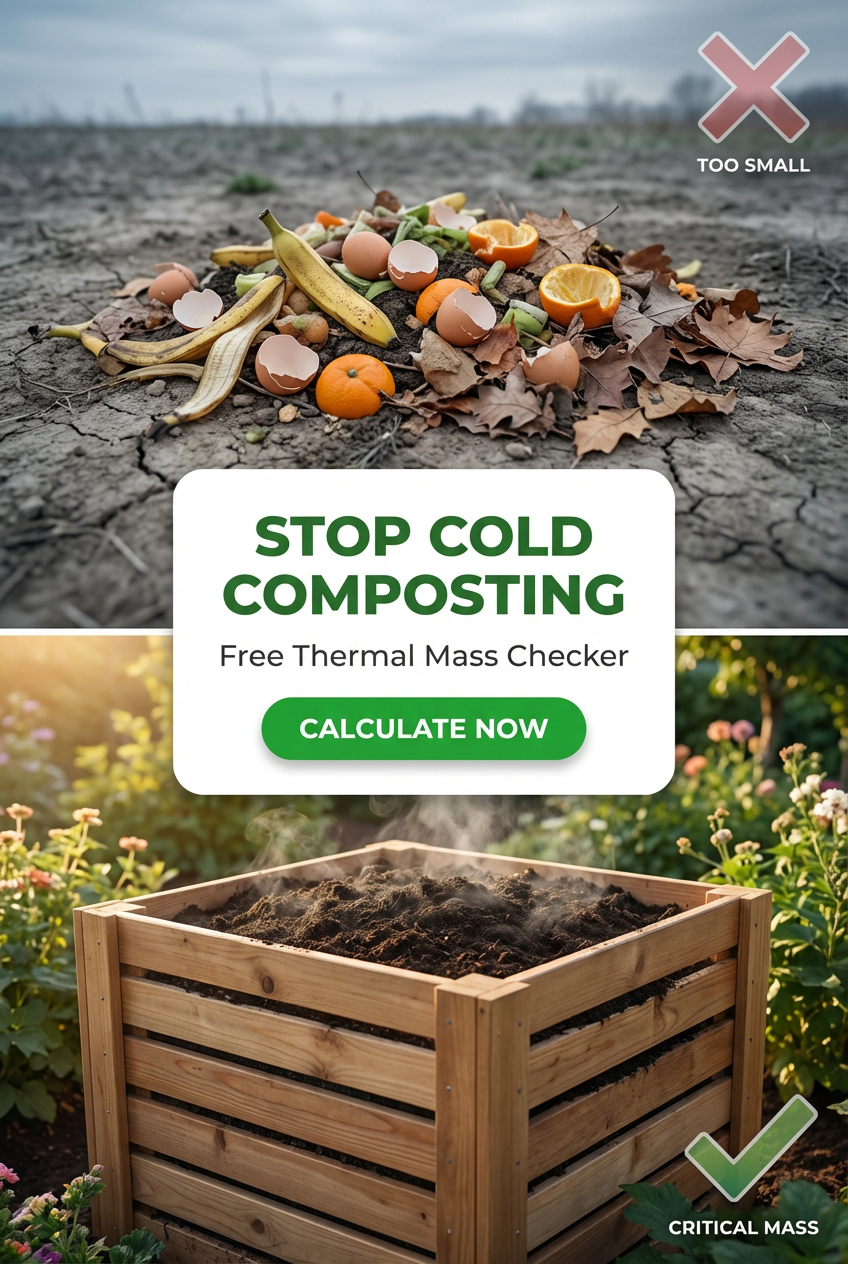
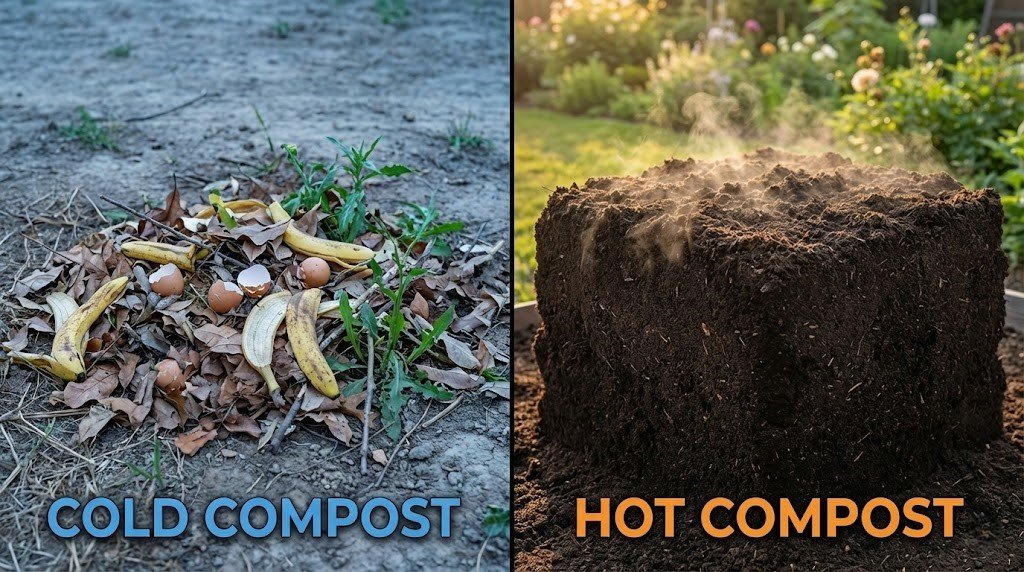
The difference between a pile of rotting garbage and “Black Gold” often comes down to one thing: Mass. Composting is a biological process driven by billions of bacteria. Like a crowded room, these bacteria generate heat as they work. If your pile is too small, the heat escapes before it can build up, resulting in a slow “cold pile” that takes a year to break down. If the pile is large enough, it self-insulates, creating a “hot pile” that can finish in weeks.
Use our Compost Bin Volume Calculator to determine if your setup meets the critical 1 Cubic Yard (3’x3’x3′) threshold required for rapid, thermophilic composting.
Compost Bin Calculator
How to Use the Compost Calculator
- Bin Shape: Select your setup. Use Box for pallet bins or timber bays. Use Cylinder for wire geobins or tumblers.
- Dimensions: Enter the size in feet. (e.g., standard pallets are usually 4 ft long).
- Material: Select what you plan to fill it with. This helps estimate the total weight capacity of the bin, which is useful for knowing how much “finished product” you will eventually harvest.
Why We Built This: The “Secret Sauce” of Critical Mass
The “Secret Sauce” of our tool is the Thermal Mass Check. Many beginners build small 2×2 bins and wonder why the pile never heats up.
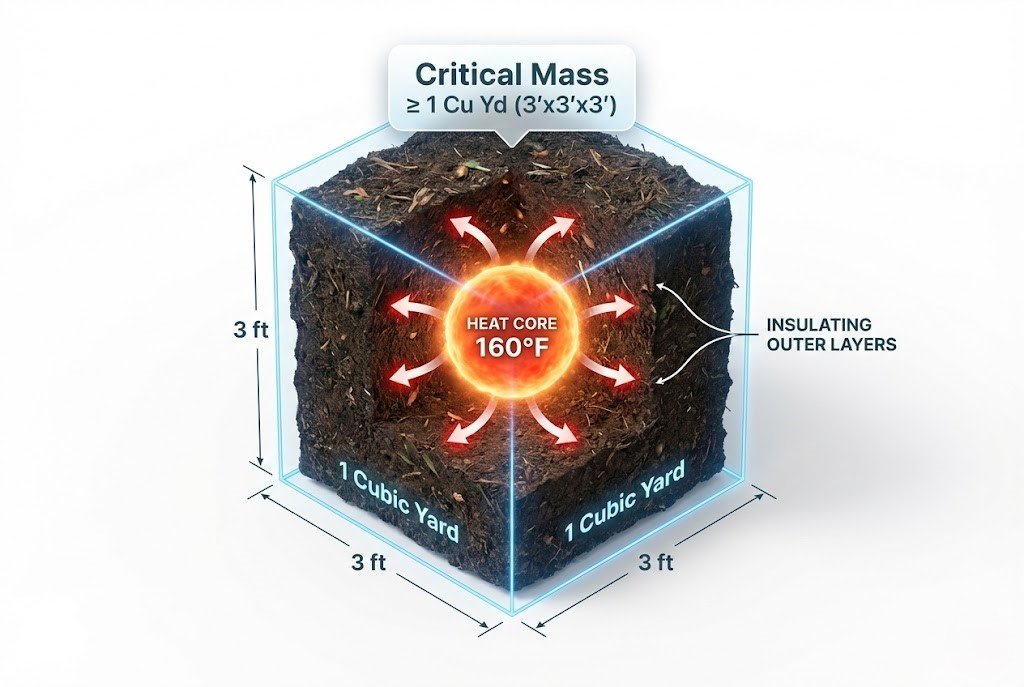
Science tells us that a pile smaller than 27 cubic feet (1 cubic yard) has too much surface area relative to its core volume—it cools down faster than the bacteria can heat it up. Our tool visually indicates if you are in the “Cold Zone” or the “Hot Zone,” saving you months of waiting.
Educational Guide: The Rules of Hot Composting
To achieve temperatures of 130°F–160°F (which kills weed seeds and pathogens), you need four ingredients balanced correctly.
1. Critical Mass (Volume)
As calculated above, you need at least 3 feet x 3 feet x 3 feet of material. If you can’t fill a bin this size all at once, stockpile your leaves (Browns) in bags until you have enough grass/scraps (Greens) to build the pile in one weekend.
2. C:N Ratio (Browns vs. Greens)
A hot pile needs a ratio of roughly 30:1 Carbon to Nitrogen.
- Greens (Nitrogen): Grass clippings, coffee grounds, vegetable scraps.
- Browns (Carbon): Dry leaves, shredded cardboard, straw, sawdust.
A simple rule of thumb is to layer 2 buckets of Browns for every 1 bucket of Greens.
3. Moisture & Oxygen
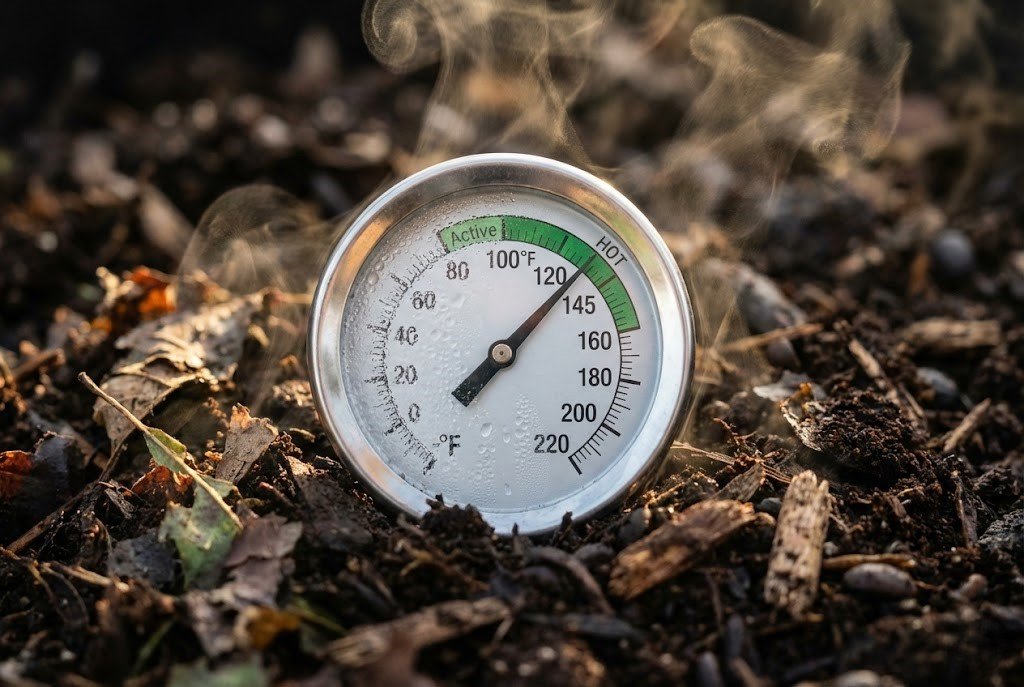
Your pile should feel like a wrung-out sponge. If it’s too dry, the bacteria go dormant (add water). If it’s too wet, they drown and the pile goes anaerobic and smelly (add dry browns and turn the pile). Turning the pile introduces oxygen, which fuels the heat spike.
Frequently Asked Questions
Q: My bin is smaller than 1 cubic yard. Can I still compost?
A: Yes! You will just be “Cold Composting.” It works perfectly fine, but it will take 6–12 months to finish, and it won’t get hot enough to kill weed seeds. Keep weeds out of small bins.
Q: How much compost will a 3x3x3 bin produce?
A: Compost shrinks significantly as it decomposes. A full 1 cubic yard bin of raw material will typically yield about 0.3 to 0.5 cubic yards of finished compost.
Q: Why does my compost smell like ammonia?
A: Too much Nitrogen (Greens) and not enough oxygen. The pile is going anaerobic. Turn the pile immediately and mix in a large amount of dry leaves or shredded cardboard to absorb the excess moisture and nitrogen.