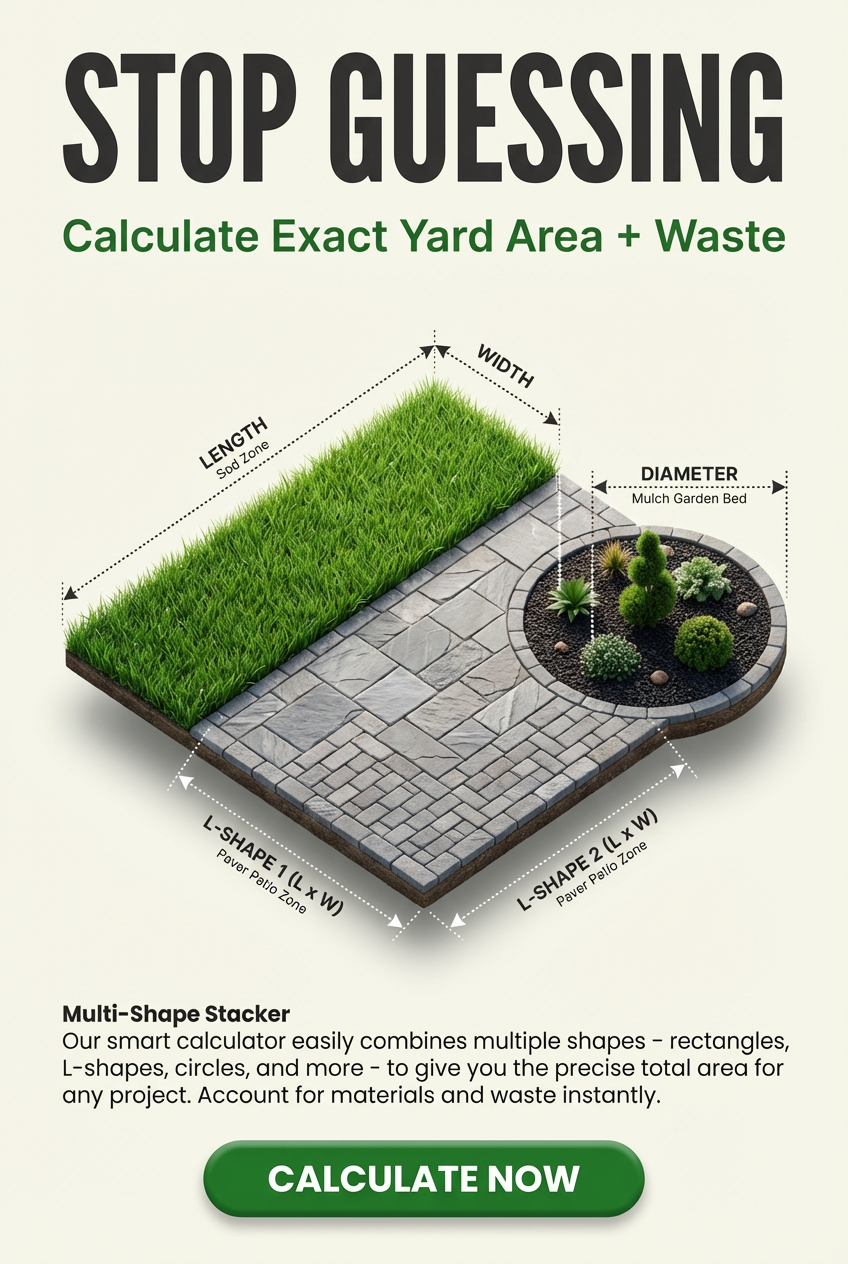
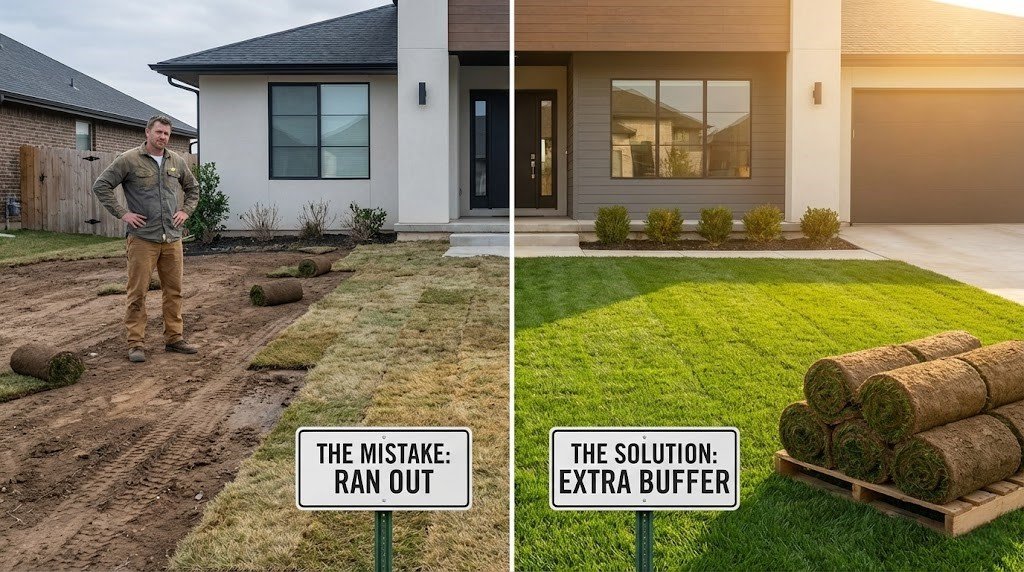
Whether you are ordering sod for a new lawn, mulch for your flower beds, or pavers for a patio, the most critical number you need is square footage. Miscalculating this leads to expensive second-delivery fees or piles of wasted material on your driveway. Our Square Footage Calculator is designed to handle more than just simple rectangles, allowing you to map out your entire yard with precision.
How to Use the Square Footage Calculator
- Choose Your Shape: Select from Rectangle, L-Shape (Composite), Circle, or Triangle to match your garden bed or patio layout.
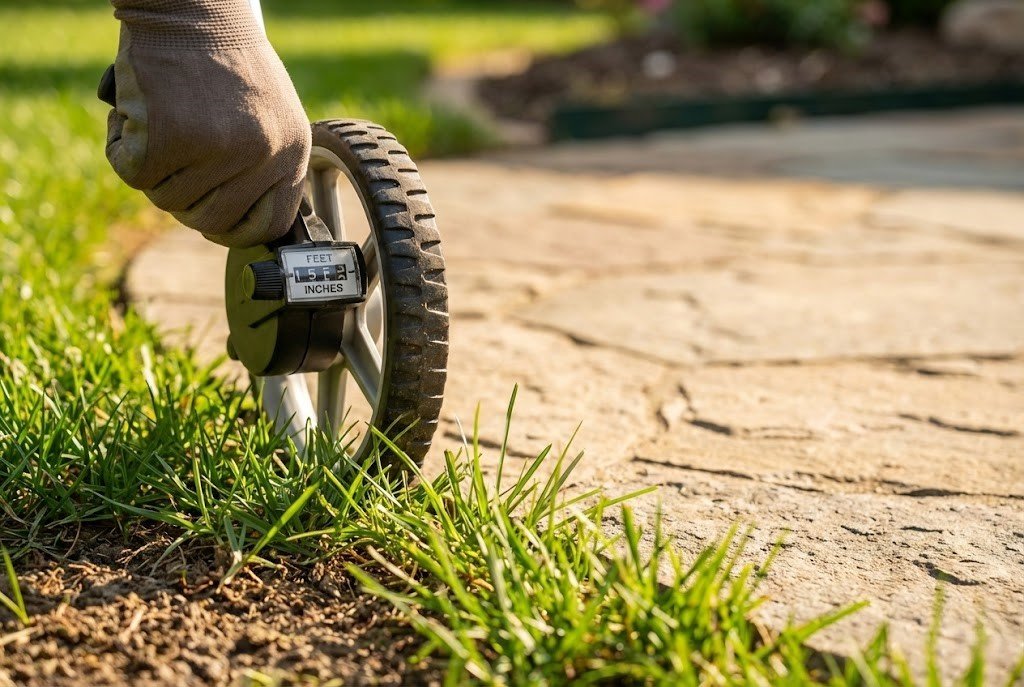
- Enter Dimensions: Input your measurements in feet. For circular beds, you only need the radius (distance from the center to the edge).
- Stack Your Areas: Use the “+ Add” button to save multiple sections. This is perfect for calculating a project that has a front yard, side yard, and backyard component simultaneously.
- Waste Factor: The final “Project Total” automatically includes a 10% waste buffer to account for cuts, breakage, and uneven edges.
Why We Built This: The “Secret Sauce” of Landscape Math
The “Secret Sauce” of our tool is the Multi-Shape Stacker. Most online calculators force you to do one shape at a time and write the numbers down on a scrap of paper. Our tool lets you calculate the rectangle for the main lawn, the circle for the oak tree bed, and the L-shape for the walkway, summing them all up in one place. Furthermore, we’ve hard-coded a 10% Material Waste Factor into the grand total. In landscaping, you always need a little more than the exact mathematical area to account for corner trims and settling.
Educational Guide: Mastering Area Measurement
Measuring a yard isn’t always straightforward. Most properties aren’t perfect squares, which is why professionals use the “Divide and Conquer” method.
Breaking Down Complex Shapes
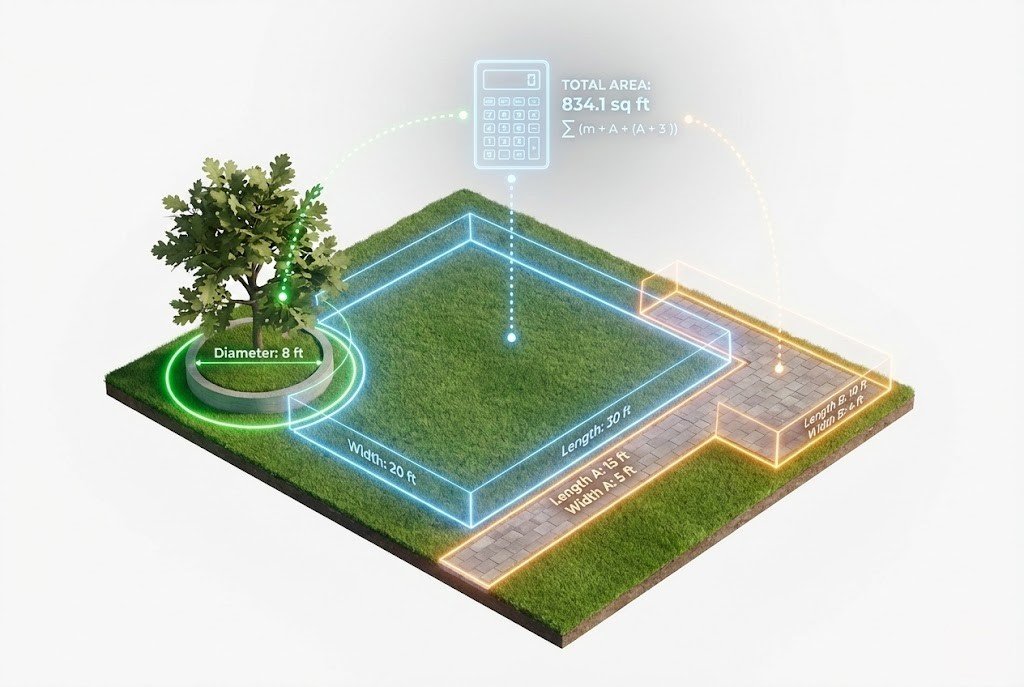
If your yard looks like a strange polygon, try to visualize it as a collection of rectangles and triangles. Measure each one separately and use the “Add Area” feature of our calculator to combine them. For curved borders, a circular calculation is often the most accurate approximation.
The Importance of 10% Waste
Why do we add 10%?
- Sod: Rolls of grass often have minor gaps or need to be cut to fit curves.
- Pavers: You will almost certainly break a few stones while cutting them to fit a border.
- Mulch/Soil: Ground levels are rarely perfectly flat; a 10% buffer ensures you don’t end up with a “thin spot” at the end of the job.
Frequently Asked Questions
Q: How do I calculate square footage for a circle?
A: Measure from the center of the circle to the outside edge (this is the radius). The formula is π × r². Our calculator does this automatically when you select the Circle shape.
Q: How many square feet are in an acre?
A: There are 43,560 square feet in one acre. If your project total exceeds this number, you may want to look into bulk agricultural pricing for your materials.
Q: Should I measure in inches or feet?
A: For best results with this tool, measure in feet. If you have a measurement like 10 feet 6 inches, enter it as 10.5.