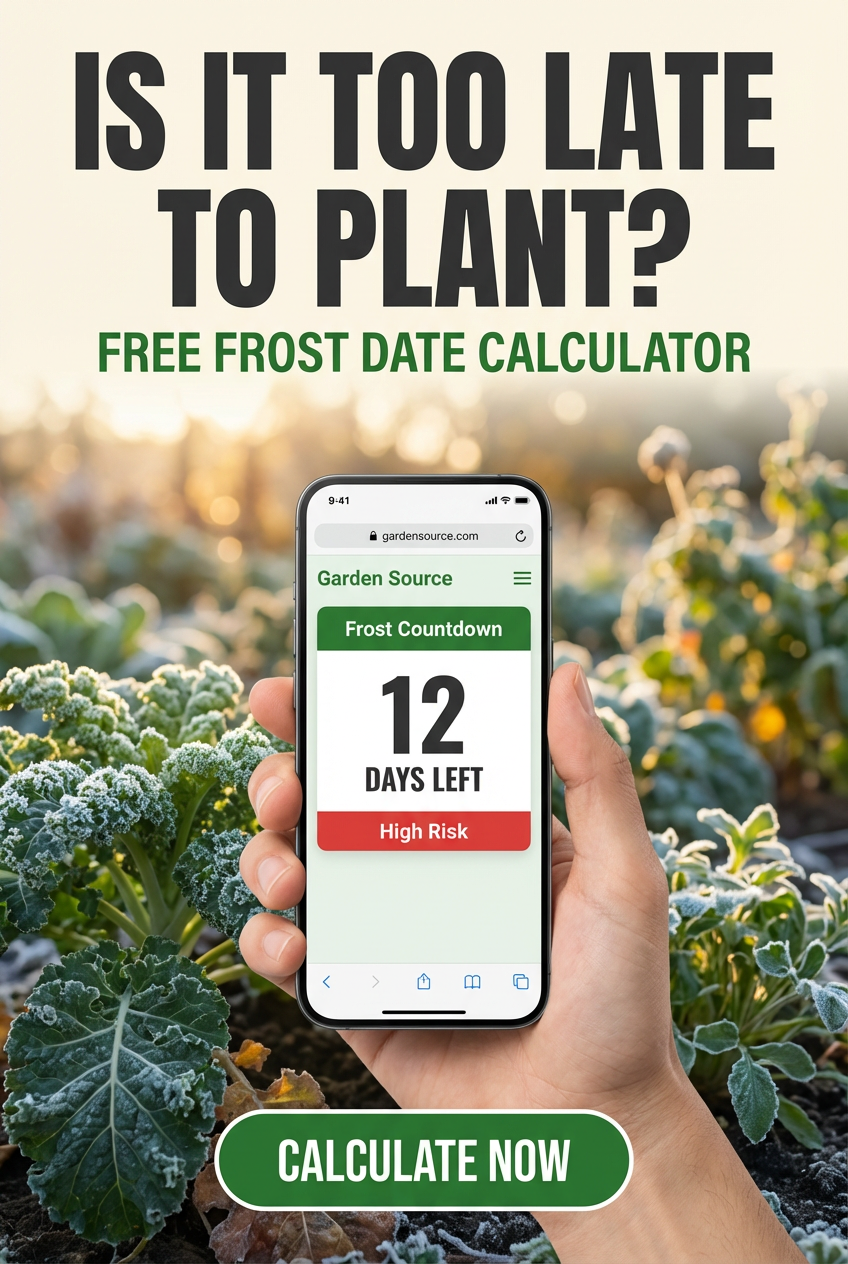
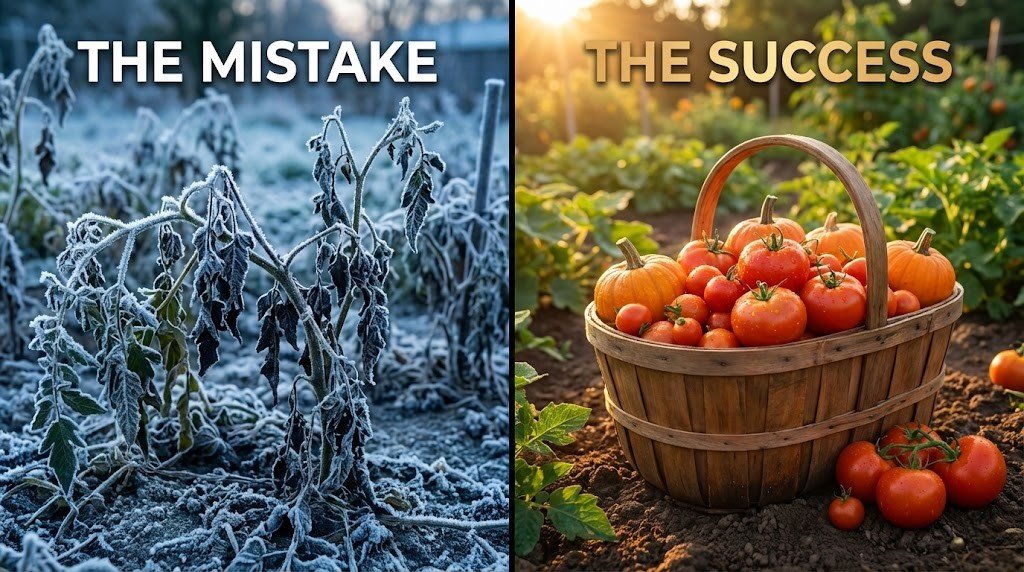
In the gardening world, the first frost is the ultimate deadline. It’s the night when your vibrant summer peppers and tomatoes will turn to mush if they aren’t protected. Knowing your estimated frost date isn’t just about curiosity; it’s about survival for your plants. If you plant a crop that needs 90 days to mature, but you only have 60 days left on the calendar, you are wasting your seeds, water, and labor.
Our First Frost Date Calculator gives you a real-time countdown based on your USDA Hardiness Zone. Stop guessing when to harvest and start planning your season with scientific precision.
First Frost Date Countdown
How to Use the Frost Date Countdown
- Select Your Zone: Choose your USDA Hardiness Zone from the dropdown. We’ve used the average historical frost dates for each zone as the baseline.
- Analyze the Days: The tool calculates the difference between today and your local frost date.
- Check the Crop Warning: Look at the "Secret Sauce" box to see which crops are now a "No-Go" for your remaining time frame.
Why We Built This: The "Secret Sauce" of Crop Maturity
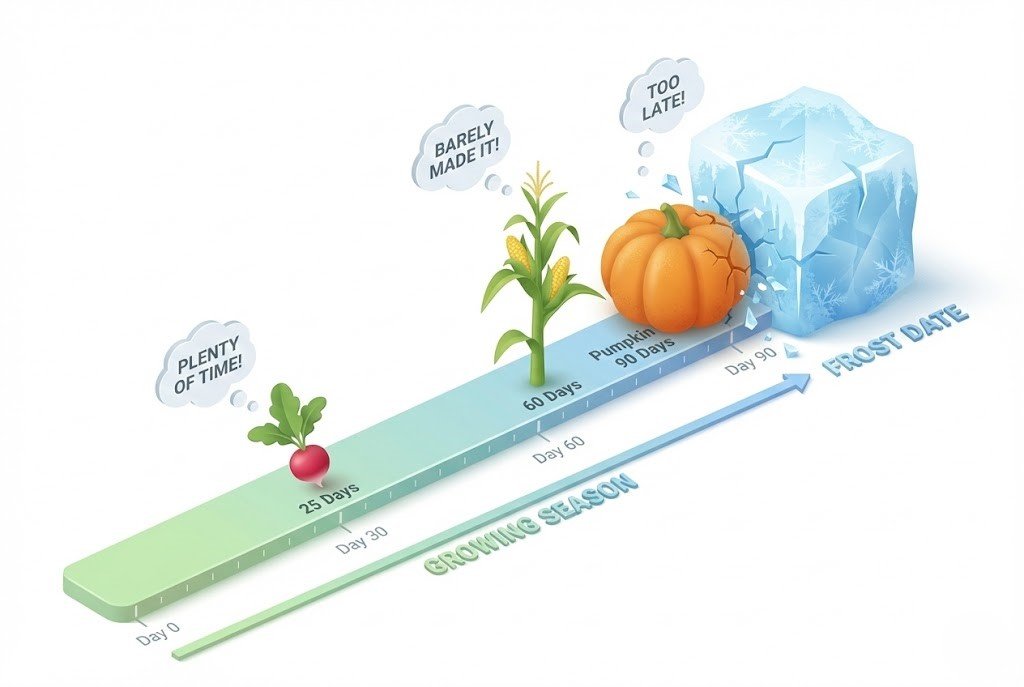
Most frost calculators simply give you a date. Ours is built for real gardeners. The "Secret Sauce" of this tool is the Maturity Logic. Every seed packet has a "Days to Maturity" number. Our tool compares your countdown to common garden staples like pumpkins, corn, and tomatoes. If the countdown is shorter than the maturity time, it warns you instantly. We also include a Season Extender calculation, showing you how much extra time you can "buy" by using row covers or cold frames.
Educational Guide: Preparing for the First Frost
Frost occurs when the air temperature drops below 32°F (0°C), causing water vapor to freeze on plant surfaces. For "warm-weather" crops, this is lethal.
Tender vs. Hardy Crops
It is important to know which plants in your garden are "Tender" and which are "Hardy."
- Tender (Kill at 32°F): Tomatoes, peppers, cucumbers, basil, and squash. These must be harvested or covered.
- Hardy (Survive to 25°F): Kale, spinach, carrots, and Brussels sprouts. In fact, some of these crops actually taste sweeter after a light frost as the plant converts starches to sugars to prevent freezing.
Using Row Covers to Beat the Clock
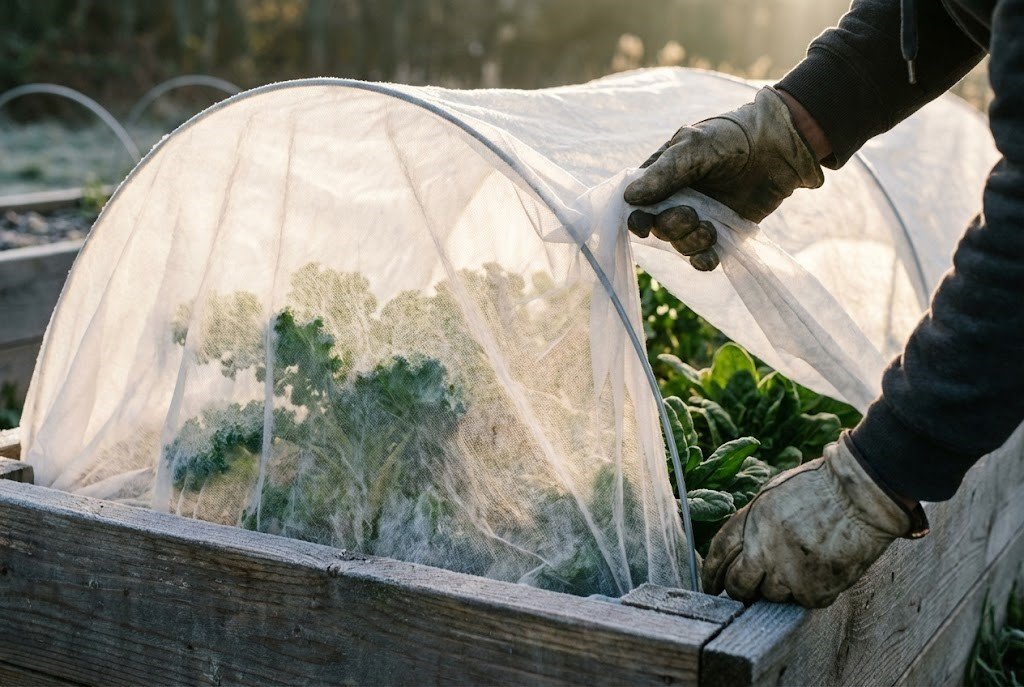
A simple frost blanket or row cover can raise the temperature under the fabric by 4 to 6 degrees. This may not sound like much, but it can extend your growing season by 2 to 3 weeks, allowing those last few green tomatoes to ripen on the vine. Our calculator automatically shows you this "extended date" to help you decide if it's worth the investment.
Frequently Asked Questions
Q: Is the frost date 100% accurate?
A: No. These dates are based on historical averages (usually a 50% probability). You should always monitor your local 10-day weather forecast as the predicted date approaches.
Q: What is the difference between a "Frost" and a "Freeze"?
A: A Light Frost occurs between 29°F and 32°F. It will kill tender plants. A Hard Freeze occurs when temperatures stay below 28°F for several hours, which can kill even some hardy vegetables and damage the roots of potted plants.
Q: Should I water my plants before a frost?
A: Yes! Moist soil absorbs more solar radiation during the day and radiates more heat at night than dry soil. Watering your garden deeply before a cold snap can actually help protect the plants.