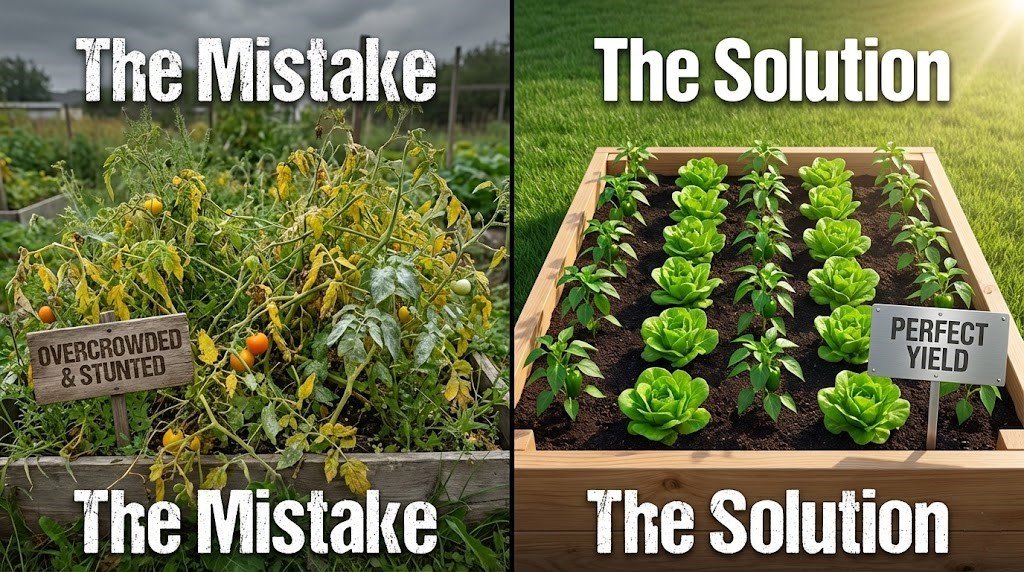
One of the most common mistakes in gardening is overcrowding. It is tempting to squeeze in “just one more tomato,” but plants that are too close together compete for nutrients and become breeding grounds for fungal diseases like powdery mildew.
Whether you are planning a traditional farm row garden or a modern intensive raised bed, spacing is everything. Use our Free Plant Spacing Calculator below to determine exactly how many vegetables will fit in your plot without overcrowding them.
📐 Plant Spacing Calculator
How to Use This Tool
We designed this calculator to handle the two most common planting styles:
- Enter Dimensions: Input the length and width of your growing area in feet.
- Select Method:
- Grid / Square Foot: Best for raised beds. Plants are spaced equidistantly in all directions (e.g., carrots spaced 3 inches apart in a grid).
- Traditional Rows: Best for large in-ground gardens. This calculates spacing between plants in a row, and the wider spacing required between the rows for walking.
- Enter Spacing: Input the inches required (check your seed packet).
Why We Built This (The "Secret Sauce")
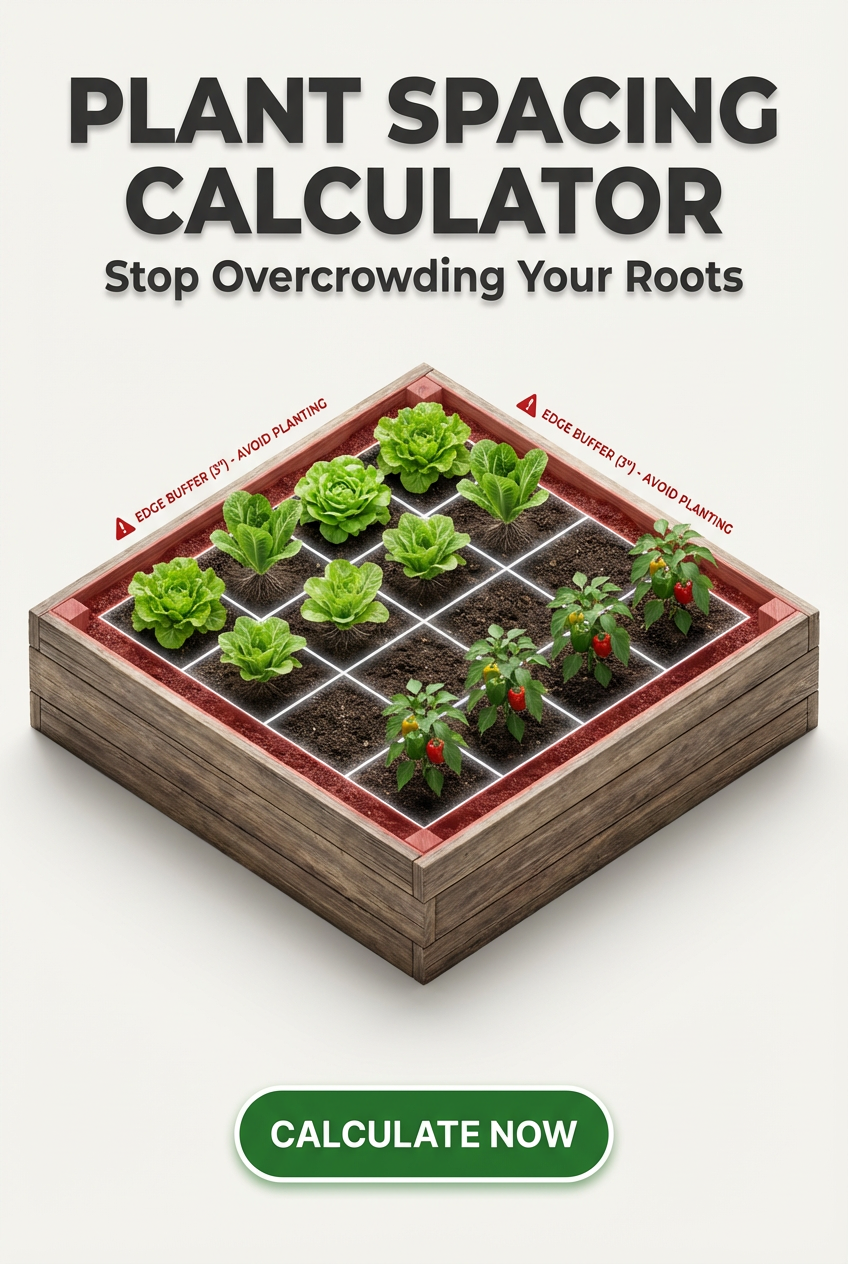
Most calculators assume you can plant on the very edge of your garden box. If you do that, the soil dries out faster, and the roots hit the wood or metal sides, stunting the plant.
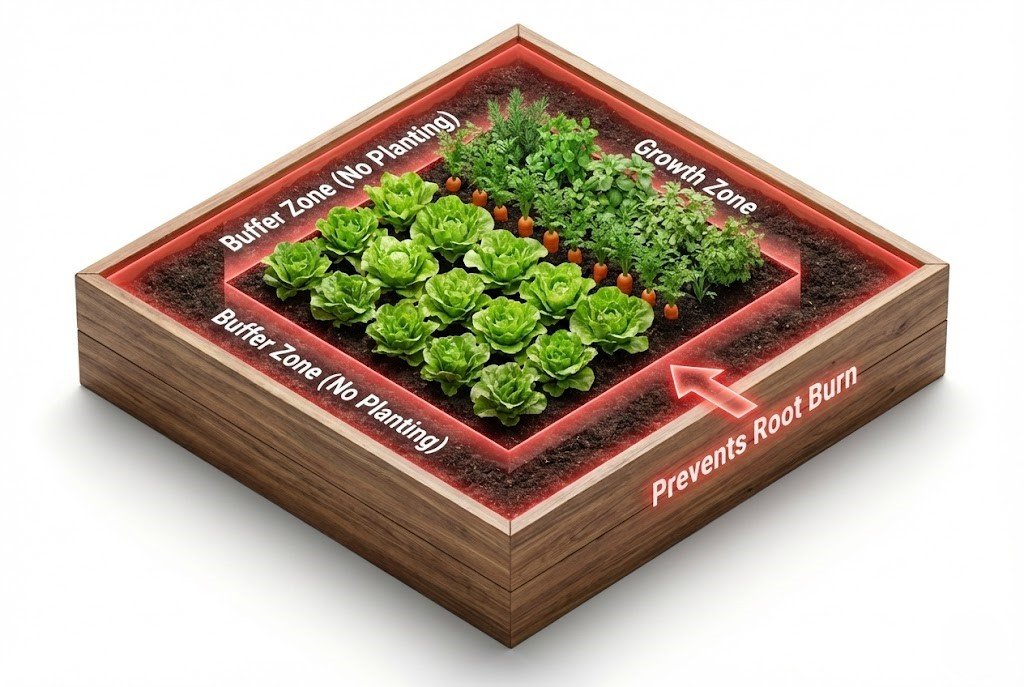
The Edge Buffer Rule: Our calculator automatically subtracts a 6-inch buffer from your total dimensions (3 inches on each side). This ensures your count is realistic and that every plant has enough soil volume to thrive, not just the ones in the middle.
Educational Guide: Grid vs. Row Planting
Which method should you choose? It depends on your soil and your back.
1. Square Foot / Grid Planting
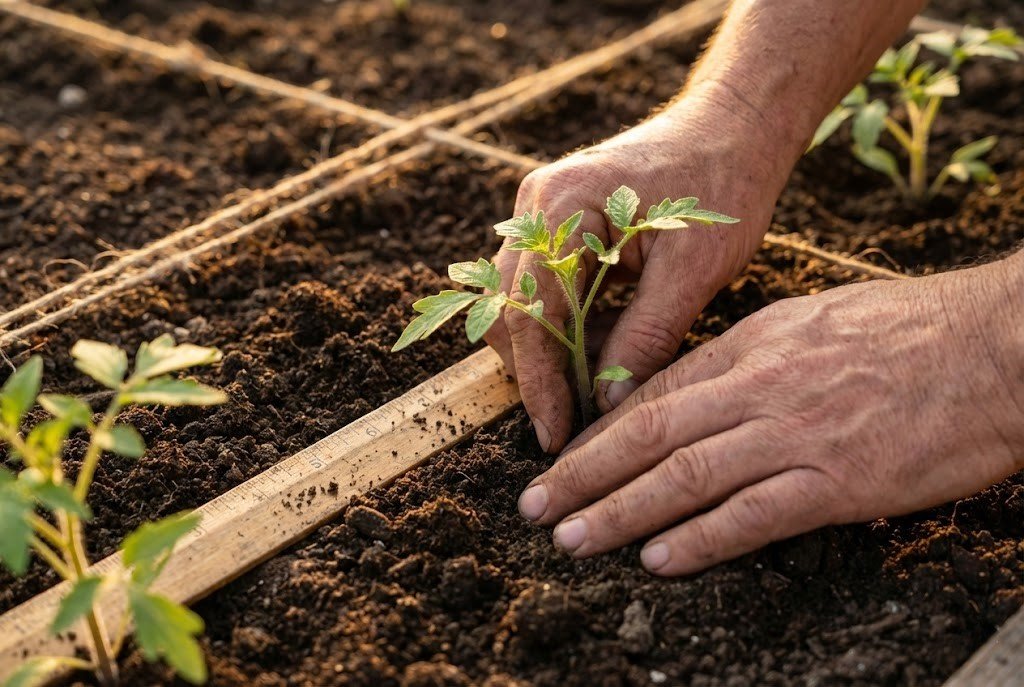
This method maximizes yield in small spaces. By eliminating walking paths between rows, you can fit 4x more produce in the same area. This is the standard for raised beds filled with high-quality compost mixes that don't need rototilling.
2. Row Planting
If you have a large in-ground garden and use a hoe or tiller to control weeds, you need space to walk. Row planting gives plants plenty of airflow and makes harvesting easier, but it takes up more space.
3. Don't Forget Vertical Space
If your calculator says you can only fit 6 cucumbers, remember you can grow up. Using trellises allows you to space vining crops tighter. Check our guide on filling deep beds for ideas on supporting vertical growth.
Frequently Asked Questions
Does this calculator work for triangular beds?
This tool works best for rectangular or square beds. For triangular or odd-shaped beds, estimate the "average" width and length, or break the bed into smaller square sections to calculate an estimate.
What happens if I plant closer than recommended?
Planting 10-20% closer than recommended is called "intensive gardening" and can work if you have excellent soil and water frequently. However, overcrowding often leads to smaller vegetables, nutrient deficiencies, and the rapid spread of diseases due to poor airflow.
How do I find the spacing for my specific vegetable?
The best source is always the back of your seed packet. It will list "Seed Spacing" and "Row Spacing." If you threw the packet away, a general rule of thumb is: Tomatoes (24"), Peppers (18"), Lettuce (6-8"), and Carrots (3").