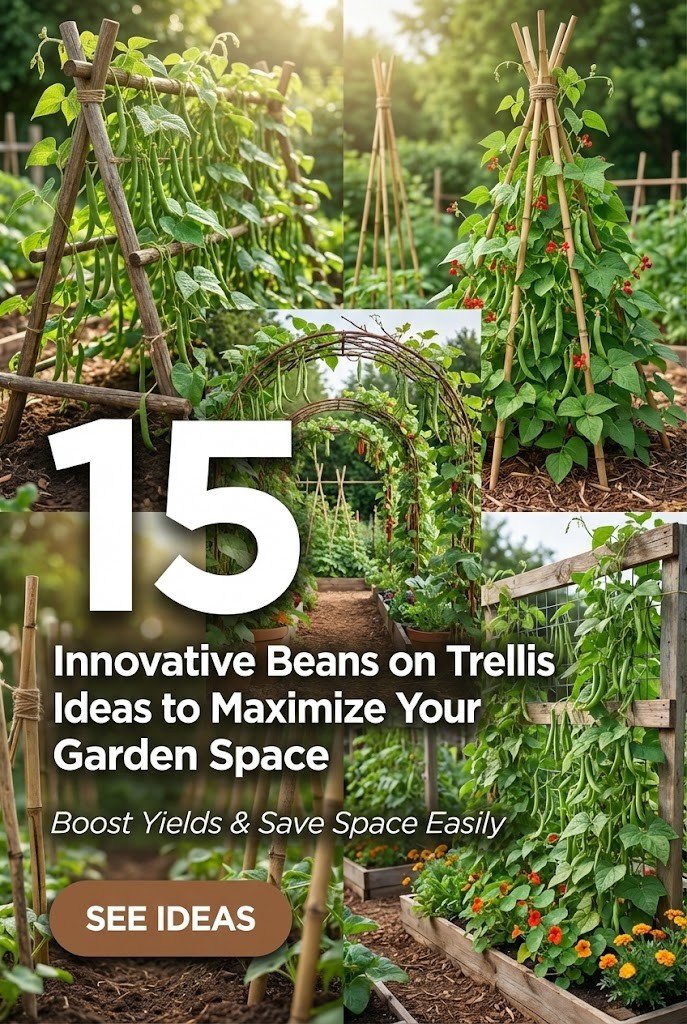
Growing beans on trellis is a smart way to elevate your vegetable garden, both literally and figuratively. By training your bean vines upward, you save precious ground space, improve air circulation, and make harvesting a breeze. This vertical gardening technique is perfect for pole beans, runner beans, and other climbing varieties, allowing you to produce abundant yields even in small yards or urban settings.
The beauty of beans on trellis lies in their versatility—you can customize supports to fit your style, budget, and space. Whether you’re a beginner or seasoned gardener, these structures not only support healthy growth but also add visual interest to your landscape. Plus, they promote better pest control and disease prevention by keeping foliage off the ground. Get ready to transform your garden with these creative ideas that blend functionality and aesthetics.
1) Classic A-Frame Trellis
You’ll love the simplicity of a classic A-frame trellis for your beans, constructed from wooden stakes or metal rods leaning against each other like a tent. This design provides sturdy support for multiple rows of beans, allowing vines to climb both sides for maximum productivity.
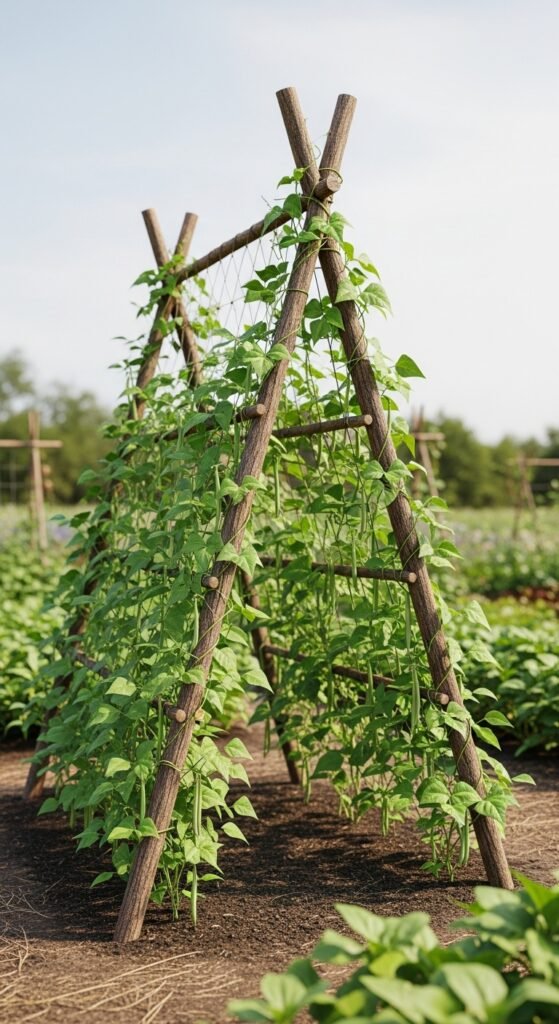
Why choose this? It offers excellent stability in windy areas and easy access for pruning and picking. In small gardens, it doubles as a space-saver, creating a shaded spot underneath for companion plants. To build it, drive two pairs of poles into the ground about 4-6 feet apart, tie the tops together, and add horizontal crossbars for extra grip. Plant your beans at the base, and watch them thrive vertically, yielding up to twice the harvest compared to bush varieties.
For similar setups with other veggies, consider exploring cucumber trellis ideas to expand your vertical options.
2) Teepee Bean Structure
Embrace a playful yet practical approach with a teepee structure, ideal for beans on trellis in family gardens. Gather 4-6 long bamboo poles, bundle the tops together with twine, and fan out the bases to form a conical shape that’s both fun and functional.
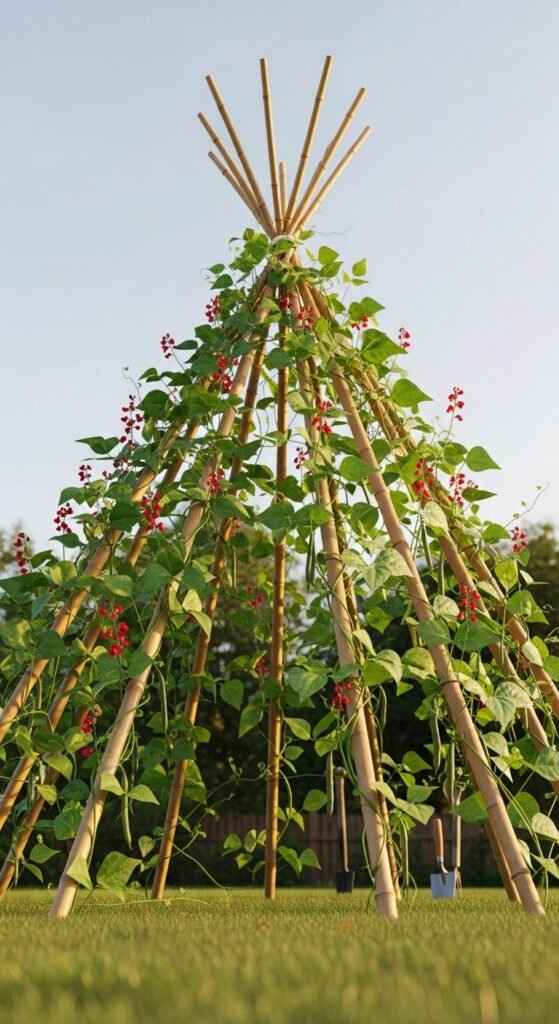
This method shines because it encourages dense planting in a compact footprint, perfect for kids to hide under while learning about gardening. The natural ventilation reduces mildew risks, ensuring healthier plants. Set it up by spacing poles evenly in a circle, securing with string or wire midway up for stability. Sow bean seeds around the perimeter, guiding tendrils as they emerge. You’ll enjoy bountiful pods dangling like ornaments, easy to spot and harvest.
If you’re into bean-specific designs, a bean teepee trellis can inspire variations tailored to your space.
3) Vertical Wall-Mounted Trellis
Transform a blank wall or fence into a productive space with a vertical wall-mounted trellis for your beans. Use lattice panels, wire grids, or even repurposed pallets attached securely to the surface, creating a living green screen.
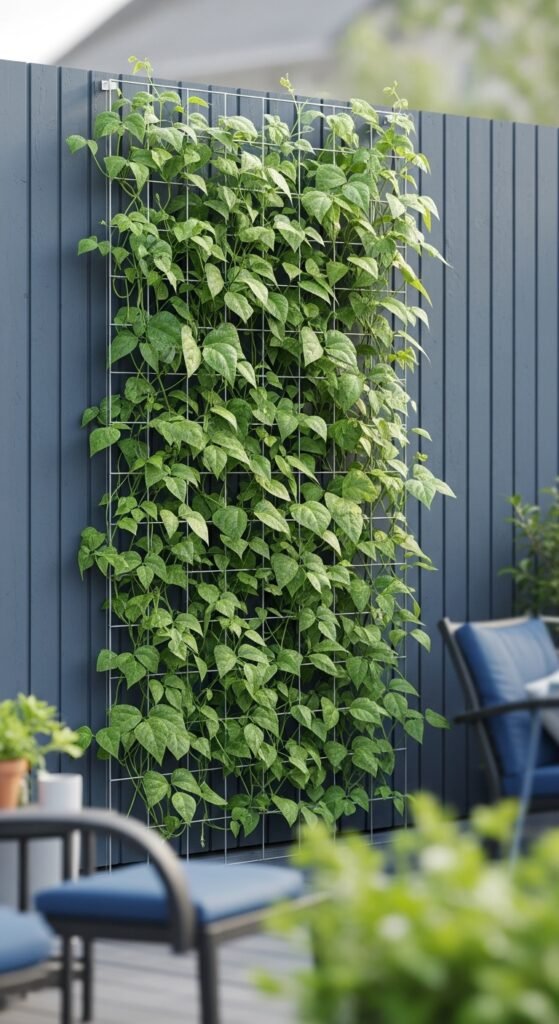
The appeal here is urban-friendly space optimization, turning unused vertical real estate into a thriving bean patch. It also provides privacy and shade, enhancing your outdoor living area. Install by anchoring the frame with brackets, ensuring it’s rated for the weight of mature vines. Plant beans in soil or containers at the base, training them upward with gentle ties. This setup boosts sunlight exposure for faster growth and simpler maintenance, yielding crisp beans without bending over.
For broader inspiration, check out vertical garden ideas to integrate more elements into your design.
4) Arched Trellis Pathway
Create an enchanting garden entrance with an arched trellis pathway lined with climbing beans. Bendable metal arches or PVC pipes form the curved frame, connected in a series to make a tunnel-like structure.
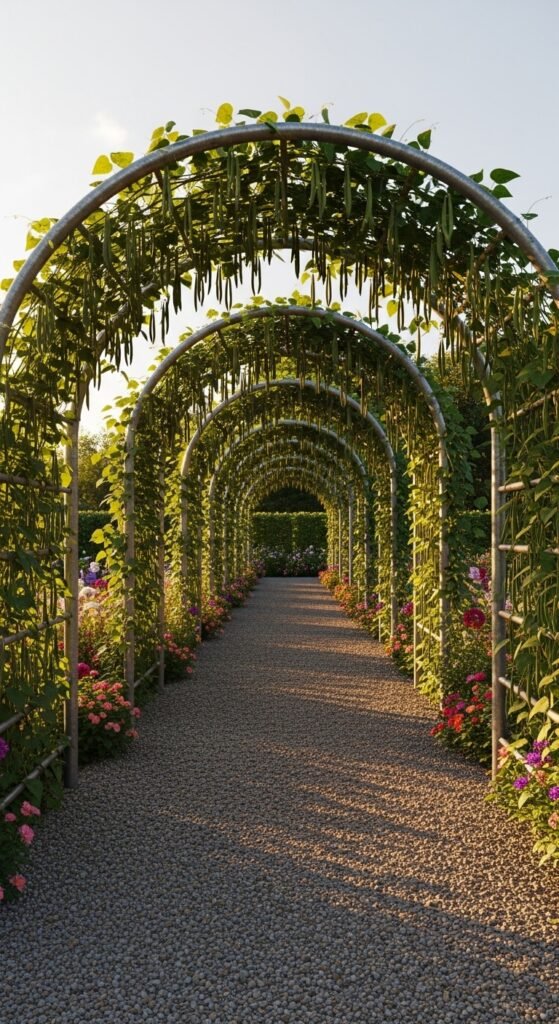
This idea excels in adding architectural drama and functional height to your plot, while the beans provide edible decor. Walking underneath offers a sensory experience with dangling pods overhead. Assemble by staking arches every few feet, linking with horizontal wires for vine support. Sow beans on both sides, encouraging them to meet at the top. You’ll harvest more efficiently from standing position, and the structure can double for other climbers in off-seasons.
Similar concepts work well for peas—explore pea trellis options for complementary planting.
5) Recycled Ladder Trellis
Give new life to an old wooden ladder by repurposing it as a trellis for beans, leaning it against a wall or freestanding with added supports. Its rungs provide perfect perches for vines to climb naturally.
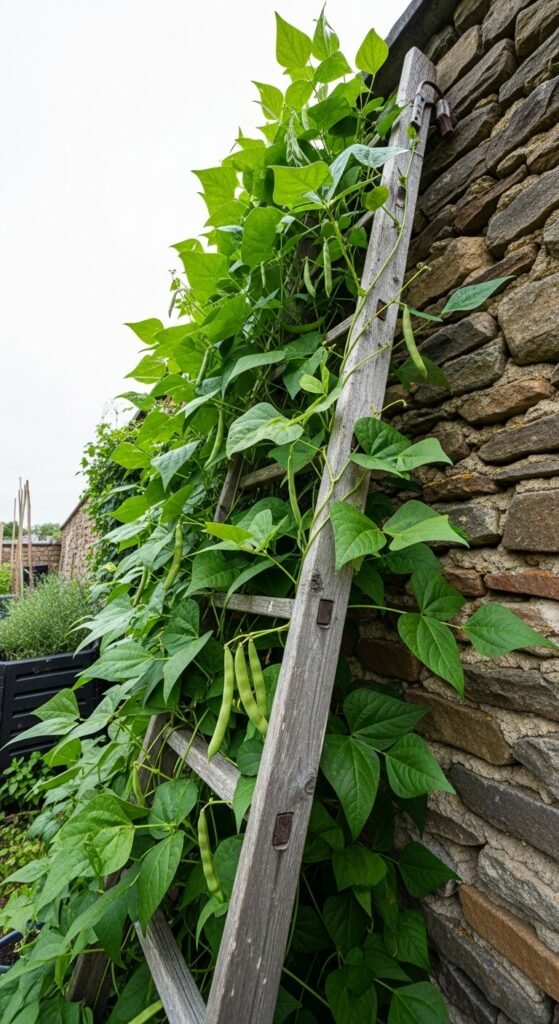
Opt for this eco-friendly choice to achieve cost-effective vertical growth without buying new materials. It’s quick to set up and adjustable for different bean varieties. Secure the ladder firmly, perhaps burying the legs slightly for stability. Plant seeds along the base, weaving tendrils through the steps as they grow. This not only saves money but also adds rustic charm, with beans ripening evenly in full sun exposure.
For more upcycled supports, consider tomato cage alternatives that adapt easily to beans.
6) Wire Mesh Panel Trellis
Utilize sturdy wire mesh panels, like those from hardware stores, to build a flat or angled trellis for your beans. Mount them between posts or directly to a fence for a minimalist look.
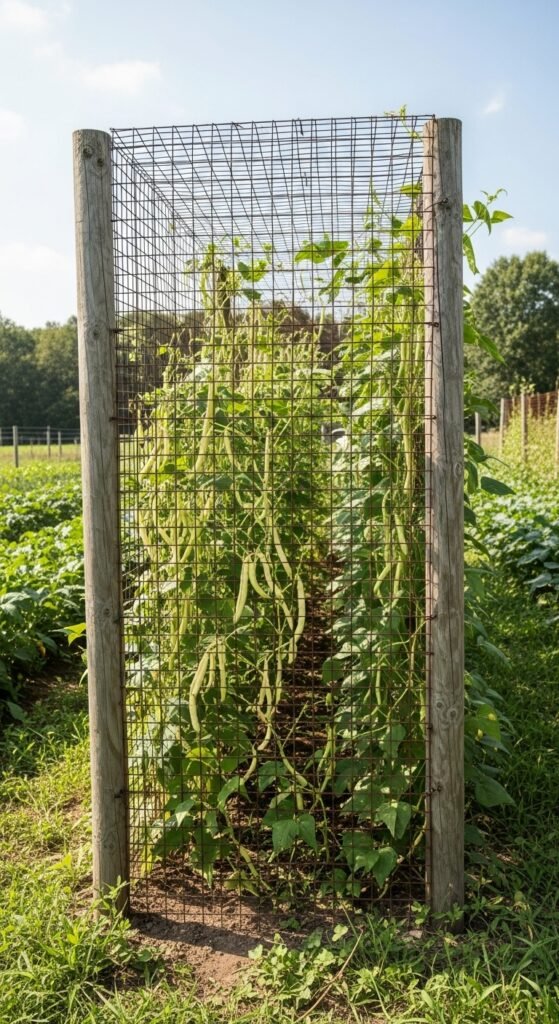
This durable option delivers long-lasting support and easy customization, resisting weather while allowing ample airflow. It’s ideal for large-scale planting, supporting heavy yields without sagging. Install by digging post holes, setting panels vertically, and securing with ties. Germinate beans nearby, guiding shoots through the grid. You’ll appreciate the low-maintenance design, with fewer tangles and straightforward harvesting from both sides.
Extend this to other veggies with garden trellis ideas for a cohesive setup.
7) Bamboo Pole Grid
Craft a grid from bamboo poles lashed together horizontally and vertically, forming a lightweight yet strong trellis for beans. This natural material blends seamlessly into organic gardens.
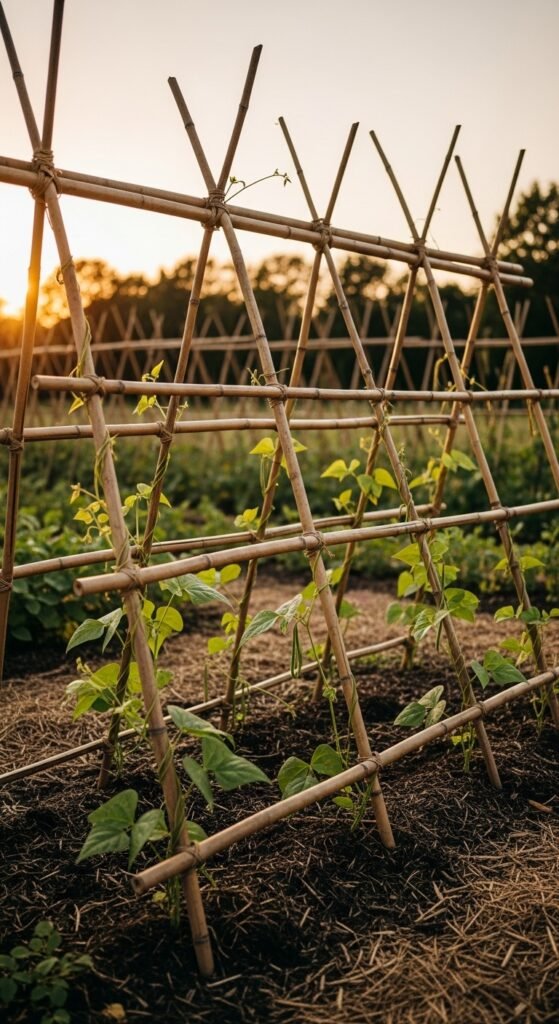
Choose it for its biodegradable appeal and quick assembly, promoting sustainable practices. The open structure enhances light penetration for robust growth. Tie poles at intersections with garden twine, staking the frame securely. Plant pole beans at intervals, letting them twine upward naturally. Expect vibrant foliage and plentiful pods, with the added bonus of easy disassembly at season’s end.
For raised bed integrations, try a DIY raised bed trellis to elevate your bamboo design.
8) Cattle Panel Archway
Bend heavy-duty cattle panels into arches for a robust trellis system supporting beans on both sides. These galvanized steel grids are built to last, handling vigorous vines effortlessly.
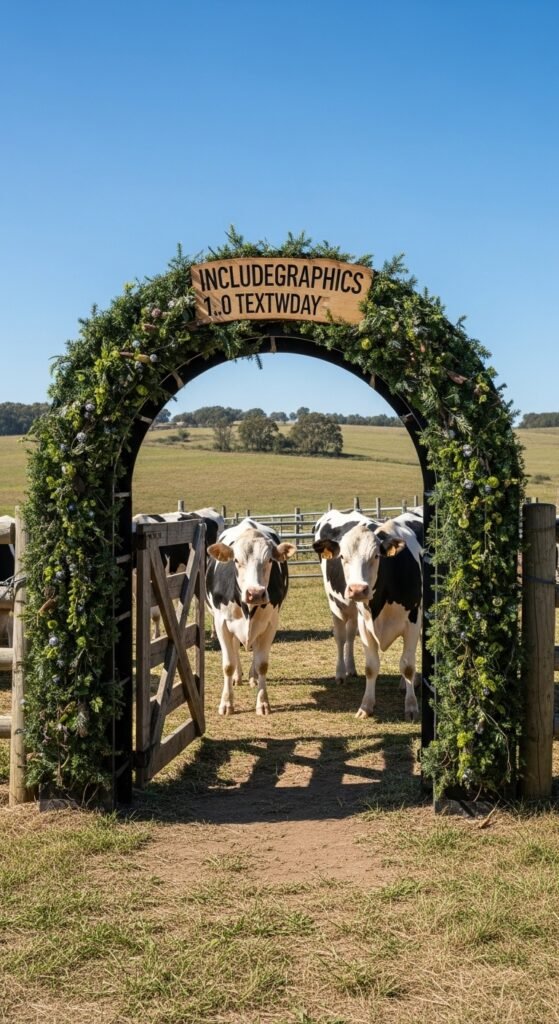
This heavy-hitter provides superior strength for high-yield varieties, creating a productive tunnel in larger gardens. It withstands elements better than wood, reducing replacement needs. Anchor ends deeply in soil or with rebar, then curve into shape. Sow beans along the base, training them over the top for a green canopy. Harvesting becomes a joy as pods hang within reach, boosting your overall output.
Adapt for fruits like melons with melon trellis ideas for versatile use.
9) Container Balcony Trellis
For urban dwellers, a container-based trellis attaches to pots or railings, allowing beans to climb in limited spaces like balconies. Use foldable screens or mini lattices for flexibility.
It offers portable vertical gardening, ideal for renters or small patios, bringing fresh produce to city life. The setup maximizes sunlight on elevated surfaces. Secure the trellis to sturdy containers filled with rich soil, planting climbing beans deeply. Water consistently and fertilize for vigorous growth up the support. You’ll savor homegrown beans without a yard, adding greenery to your view.
Pair with vertical vegetable garden techniques for more compact ideas.
10) Three Sisters Companion Trellis
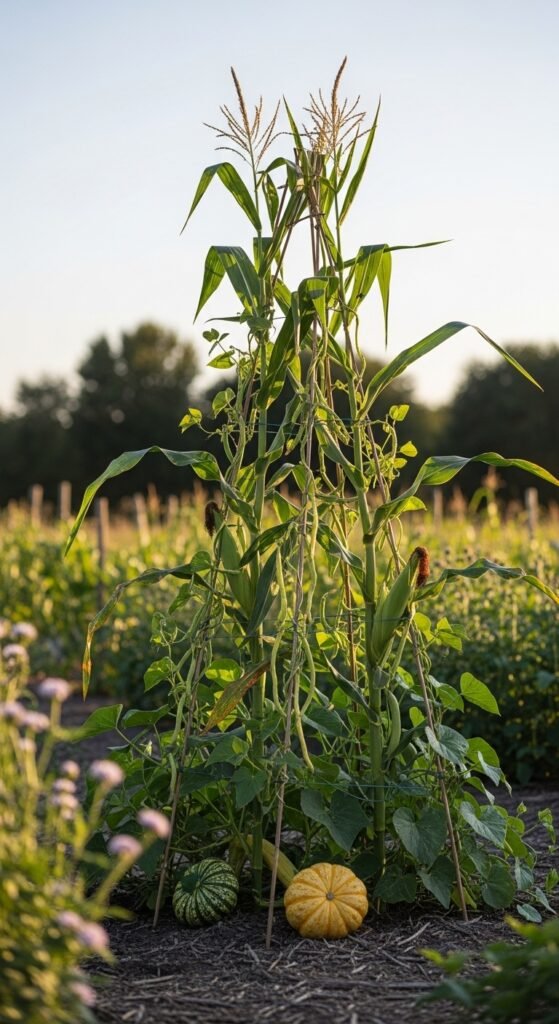
Incorporate beans into the traditional Three Sisters method, using corn stalks as natural trellises while squash spreads below. This symbiotic planting enhances soil fertility naturally.
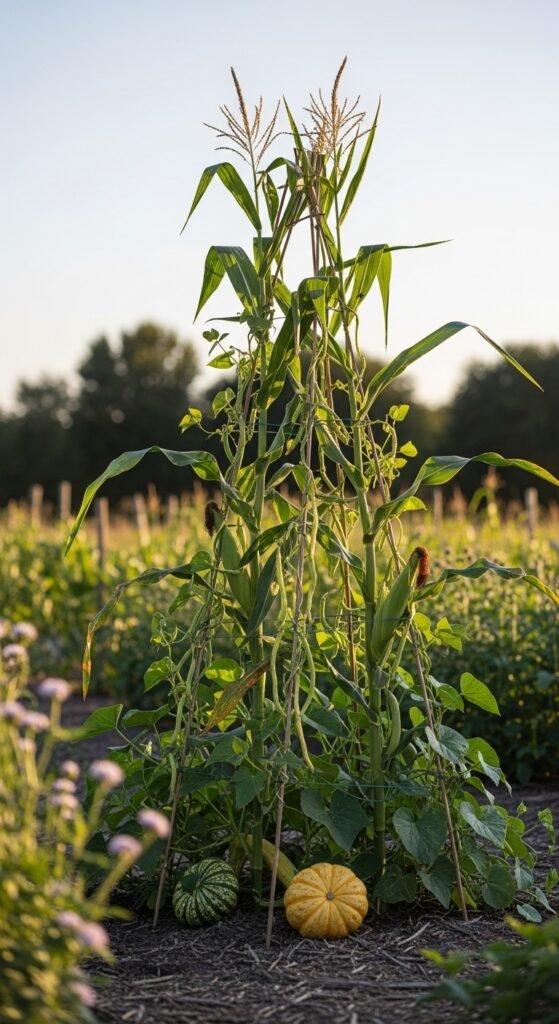
The genius is in mutual benefits: nitrogen-fixing from beans, support from corn, and weed suppression from squash. It’s a low-effort, high-reward system. Plant corn first, then beans around the bases once stalks are tall, adding squash last. Guide bean vines gently onto corn. Enjoy a diverse harvest from one plot, with improved flavor and resilience against pests.
11) Decorative Obelisk Trellis
Add elegance with a pyramid-shaped obelisk trellis, often metal or wood, placed as a focal point for beans in ornamental gardens. Its tapering design guides vines skyward gracefully.
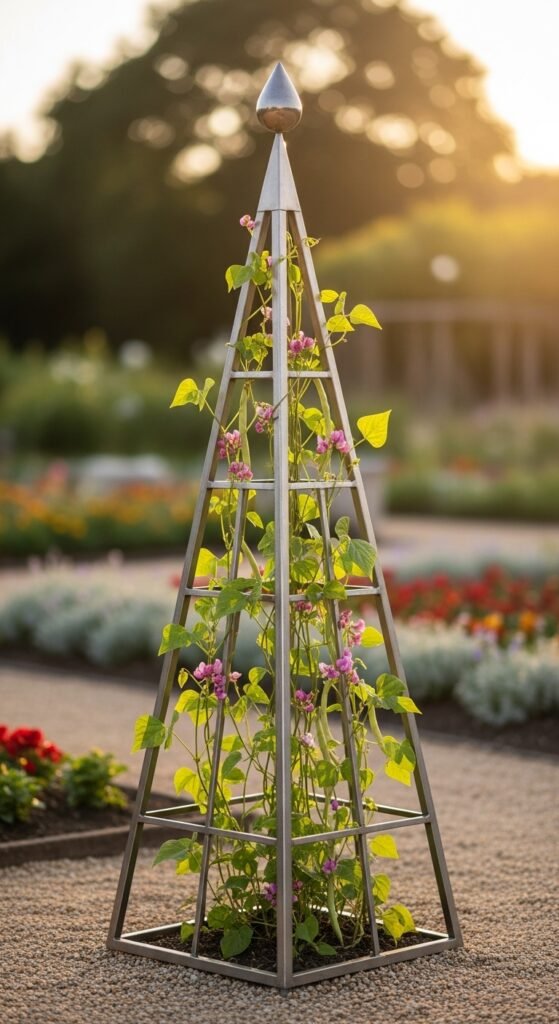
This aesthetic choice delivers visual appeal alongside productivity, blending edibles into landscapes. It’s stable and suitable for windy spots. Position in full sun, anchoring firmly, and plant beans circling the base. As they climb, the structure becomes a living sculpture, with pods easy to pluck from lower levels. Perfect for mixing flowers and veggies.
For grander scales, consider pergola ideas to incorporate similar climbing supports.
12) Pergola-Integrated Trellis
Extend your outdoor space by integrating beans into a pergola, draping vines over beams for shade and sustenance. This larger structure supports multiple plants year-round.
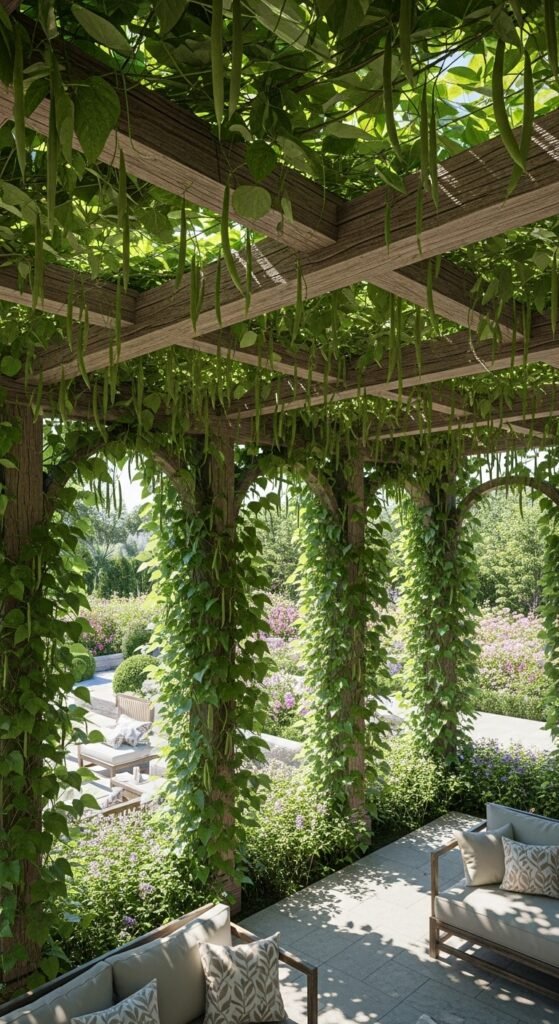
It combines leisure with utility, creating a cool retreat under bean-laden vines. The overhead growth maximizes vertical space dramatically. Train beans along wires strung between posts, starting from ground-level planters. Prune for even coverage, harvesting from ladders or below. You’ll gain privacy, ambiance, and fresh produce in one multifunctional feature.
13) String and Stake Trellis
Keep it simple with strings tied between tall stakes, forming a vertical net for beans to ascend. This budget-friendly option uses twine or fishing line for invisible support.
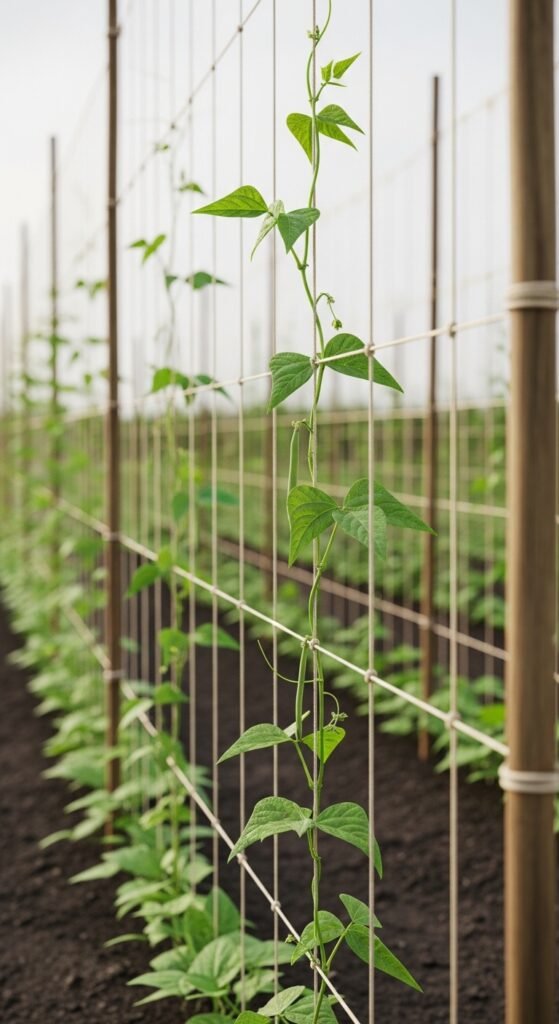
Its strength lies in adjustability and minimalism, fitting any garden size without overwhelming visuals. Easy to install and remove seasonally. Drive stakes deeply, spacing 2-3 feet apart, and weave strings horizontally. Plant beans underneath, coaxing tendrils onto lines. Benefit from untangled growth and spotless beans, ready for picking without hassle.
14) Upcycled Pallet Trellis
Repurpose wooden pallets by standing them upright or leaning as trellises for beans, filling slats with soil for added planting if desired. A sustainable DIY project.
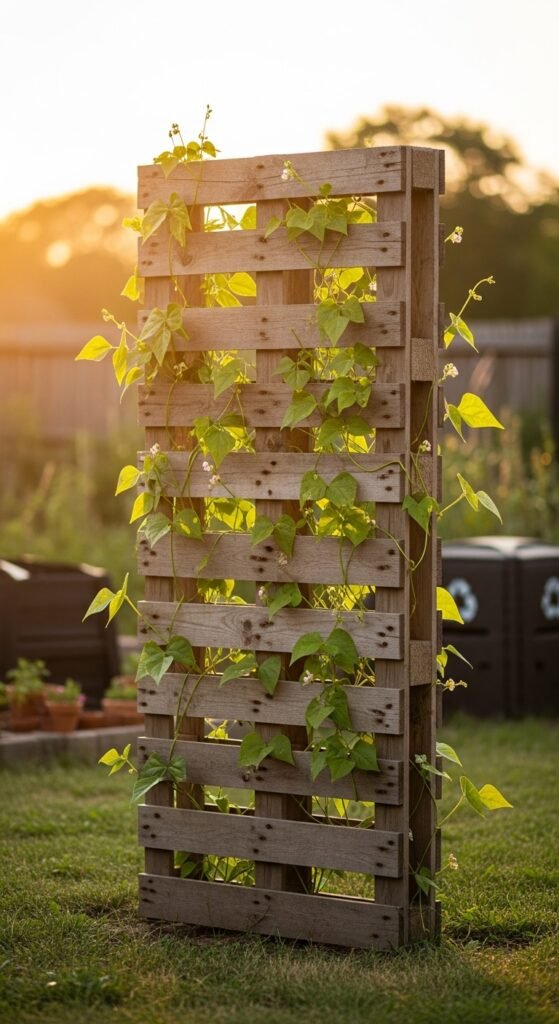
This resourceful idea promotes zero-waste gardening and creativity, turning trash into treasure. It’s sturdy for heavy vines and adds texture. Sand and treat pallets for safety, securing with braces. Sow beans in front, guiding through openings. You’ll achieve eco-conscious yields, with the bonus of vertical herb companions in pockets.
15) Hydroponic Vertical Tower
Go high-tech with a hydroponic tower trellis, where beans grow in stacked modules with nutrient-rich water circulation, no soil needed.
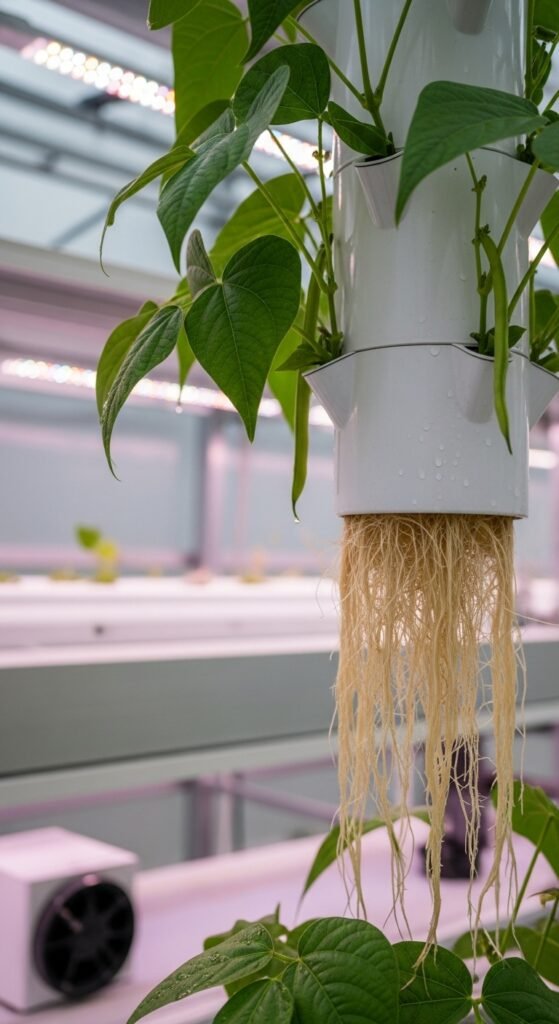
This innovative system yields faster growth and higher efficiency in controlled environments like greenhouses. It’s water-saving and pest-resistant. Assemble the tower per kit instructions, planting bean seedlings in net pots. Monitor pH and nutrients for optimal climbing. Harvest clean, flavorful beans year-round, revolutionizing your small-space production.
Key Principles for Successful Beans on Trellis
Choosing the Right Bean Varieties
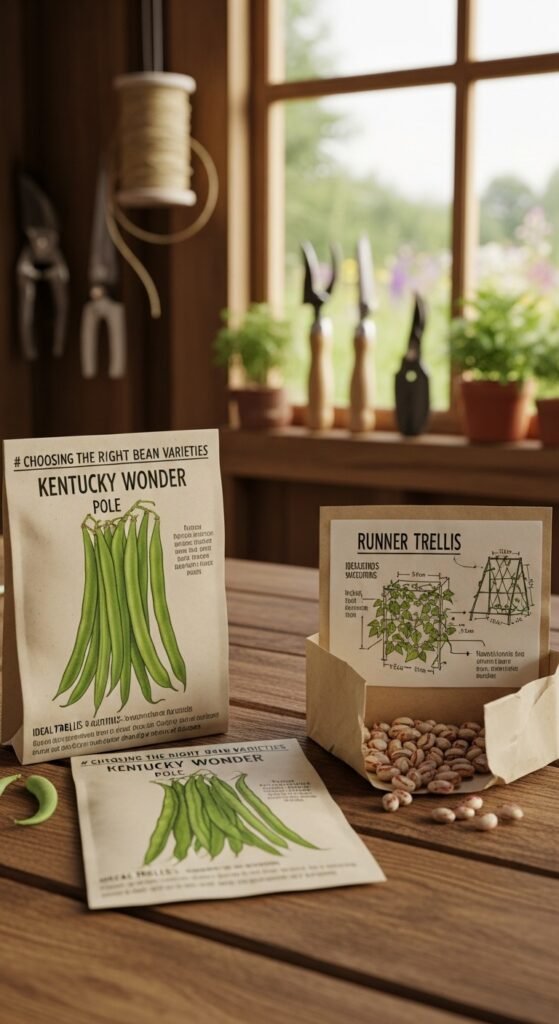
Select pole or runner beans like ‘Kentucky Wonder’ or ‘Scarlet Runner’ for their vigorous climbing habits. These thrive on trellises, producing longer seasons than bush types.
Soil and Sunlight Essentials
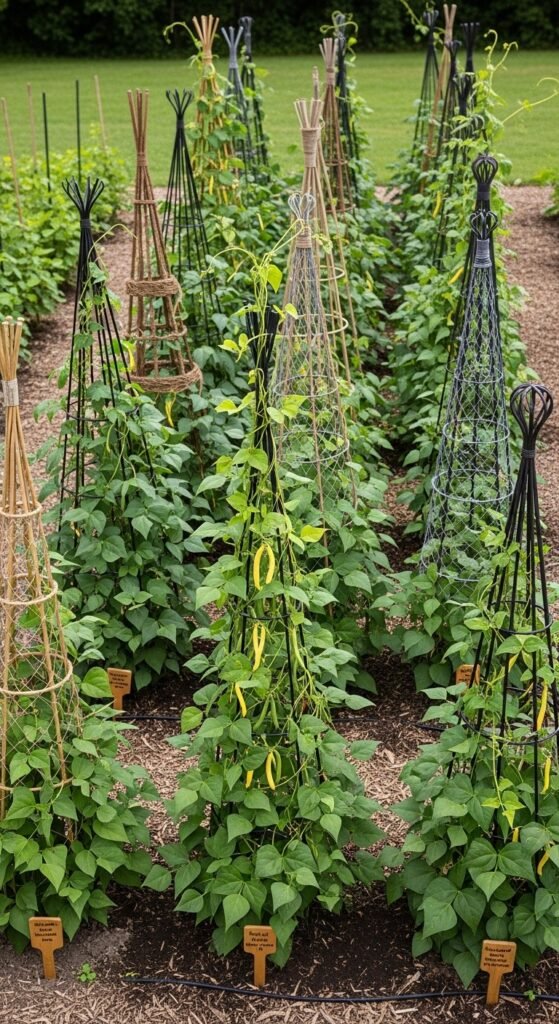
Ensure well-drained, fertile soil with full sun exposure—at least 6-8 hours daily. Amend with compost for nutrient boost, maintaining pH around 6.0-7.0.
Maintenance Tips
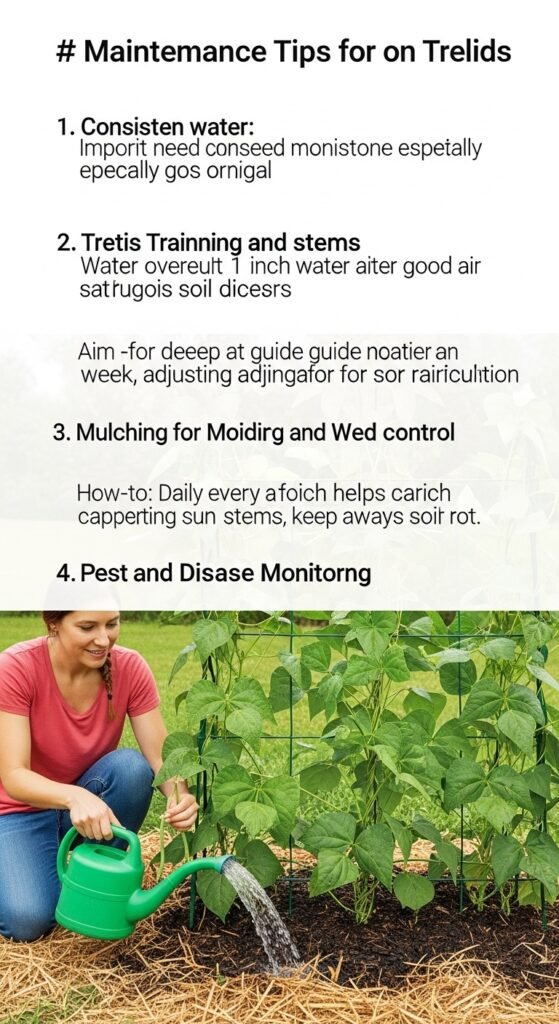
Water consistently at the base, mulch to retain moisture, and tie loose vines gently. Monitor for aphids or rust, using organic controls for healthy, productive plants.
Frequently Asked Questions
What types of beans are best for growing on a trellis?
Pole beans and runner beans are ideal, as they naturally climb and produce extended harvests. Avoid bush beans, which don’t require support.
How tall should a trellis be for beans?
Aim for 5-8 feet high, depending on the variety. This allows full vine extension without overcrowding.
Can I grow beans on a trellis in pots?
Yes, use large containers with good drainage and sturdy trellises attached. Ensure consistent watering and fertile potting mix.
When should I plant beans for trellis growing?
After the last frost in spring, when soil warms to 60°F. Direct sow seeds for best results.
How do I prevent beans from falling off the trellis?
Choose stable structures and gently tie vines with soft ties. Regular pruning helps maintain balance.