Transforming your balcony into a thriving vegetable garden is an excellent way to enjoy fresh produce right at home, even in a bustling city. A balcony vegetable garden maximizes limited space, promotes sustainability, and provides a rewarding hobby that connects you with nature. Whether you’re a beginner or seasoned gardener, these ideas will help you cultivate healthy veggies while enhancing your outdoor area.
Starting a balcony vegetable garden requires considering factors like sunlight, wind exposure, and container choices. With the right setup, you can harvest tomatoes, herbs, and greens throughout the season. This approach not only saves money on groceries but also reduces your carbon footprint by minimizing food transportation. Embrace the joy of homegrown flavors with these innovative strategies tailored for urban living.
1) Vertical Trellis Systems
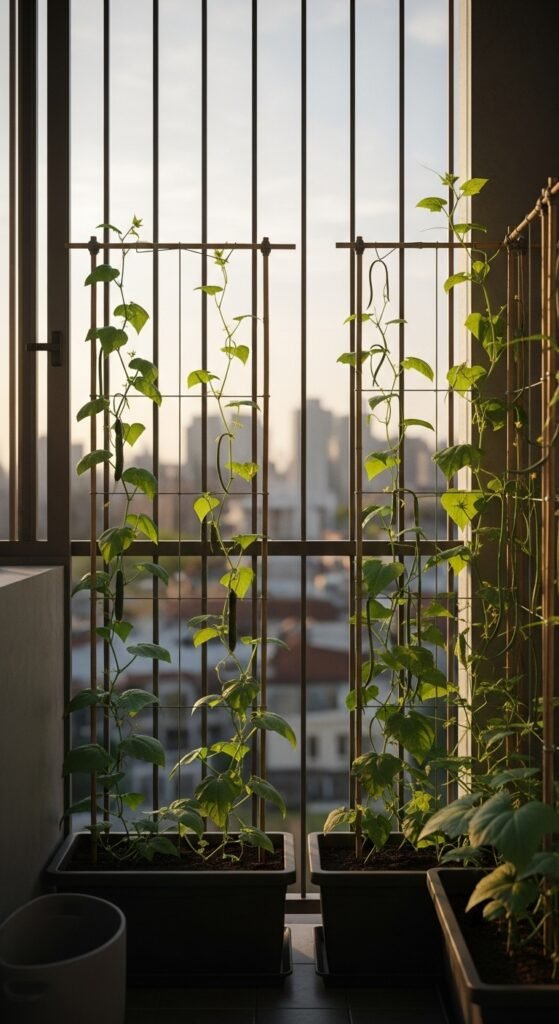
You can optimize your balcony’s vertical space by installing trellis systems for climbing vegetables like cucumbers and beans. These structures allow plants to grow upward, freeing up floor area for other pots. Vertical gardening increases yield in small spaces and improves air circulation, reducing disease risks. Choose sturdy materials like bamboo or metal that withstand wind.
To set up, secure the trellis to your balcony railing or wall, ensuring it’s stable. Plant seeds or seedlings at the base in deep containers with well-draining soil. Train vines to climb by gently tying them with soft ties. Water consistently and fertilize every two weeks for robust growth. This method not only boosts productivity but also creates a green privacy screen. For more on growing vegetables vertically, explore specialized techniques that enhance your setup.
2) Container Variety Selection
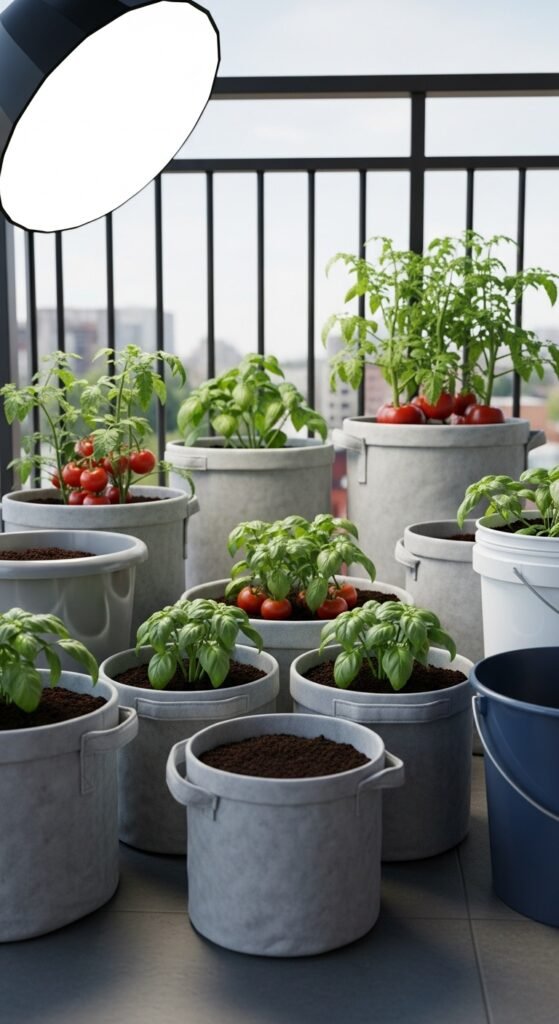
Selecting the right containers is crucial for a successful balcony vegetable garden. Opt for pots, grow bags, or recycled buckets that suit your space and plant needs. Lighter materials like fabric pots are ideal for balconies to avoid excess weight. Ensure containers have drainage holes to prevent root rot.
Group vegetables with similar water and sun requirements together for efficiency. For instance, pair tomatoes with basil in larger pots. This companion approach deters pests naturally and maximizes space. Start with high-quality potting mix amended with compost for nutrients. Rotate containers seasonally to optimize sunlight exposure. By choosing versatile containers, you create a flexible garden that adapts to your balcony’s conditions, yielding bountiful harvests.
3) Herb-Integrated Beds
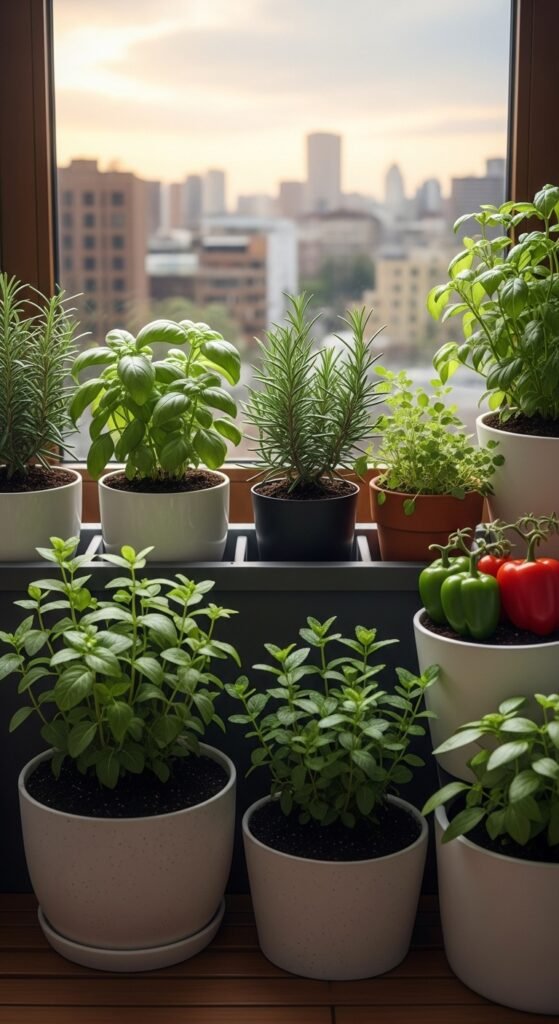
Incorporate herbs into your balcony vegetable garden to enhance flavor and repel pests. Plant basil, mint, or rosemary alongside veggies like tomatoes or peppers. Herbs provide natural pest control and attract pollinators, boosting overall garden health. Use tiered planters to separate aggressive growers like mint.
Begin by filling containers with herb-specific soil that’s well-draining and slightly alkaline. Sow seeds or transplant seedlings, spacing them appropriately. Water moderately, as herbs prefer drier conditions than most vegetables. Harvest leaves regularly to encourage bushy growth. This integration not only saves space but also elevates your culinary experiences. Check out ideas for growing herbs in containers to refine your mixed planting strategy.
4) Tomato Hanging Baskets
Hanging baskets are perfect for growing tomatoes in a balcony vegetable garden, especially cherry varieties that trail beautifully. This setup utilizes overhead space, keeping fruits off the ground and reducing pest issues. Choose baskets with liners to retain moisture and nutrients.
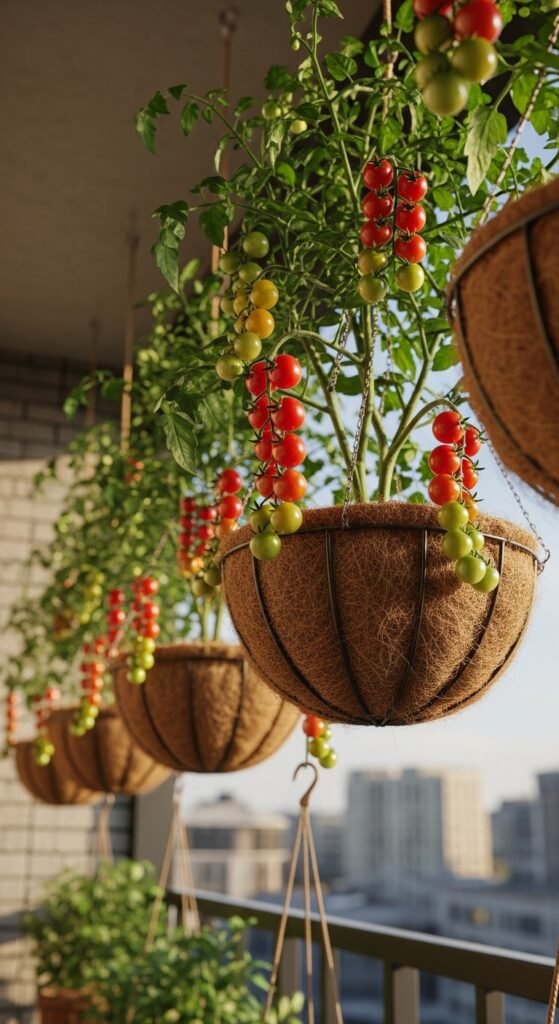
Fill with rich, loamy soil and add slow-release fertilizer. Plant one tomato per basket for ample room. Position in full sun, watering deeply when the top inch of soil dries. Support heavy fruits with additional ties if needed. You’ll enjoy fresh, sun-ripened tomatoes without crowding your floor. This method is ideal for small balconies, providing both aesthetics and functionality. For detailed guidance, consider techniques from growing tomatoes in pots.
5) Leafy Greens in Rails
Utilize balcony railings for growing leafy greens like lettuce, spinach, or kale in attached planters. These shallow-rooted veggies thrive in compact spaces with partial shade. Quick harvests make them ideal for continuous cropping, ensuring fresh salads all season.
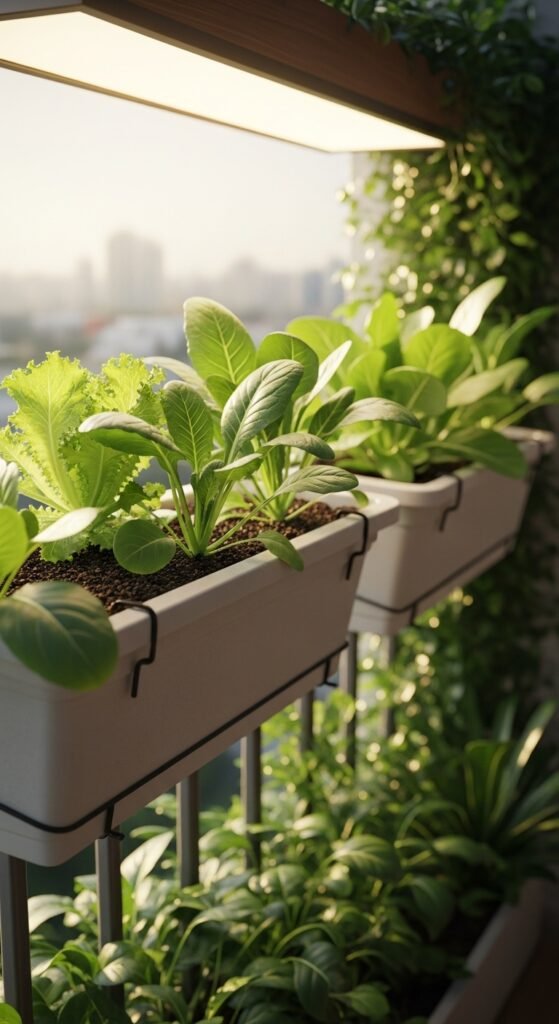
Attach rail planters securely and fill with lightweight potting mix. Sow seeds densely and thin as needed. Water regularly to keep soil moist but not soggy. Fertilize lightly every few weeks. This approach maximizes unused space and adds greenery to your view. It’s perfect for beginners, offering easy access for harvesting. Enhance your setup with tips on balcony herb gardens for complementary plantings.
6) Root Veggie Deep Pots
For root vegetables like carrots or radishes, use deep pots in your balcony vegetable garden to allow proper development. These crops need loose soil to prevent forking. Deep containers promote straight, healthy roots and are space-efficient on balconies.
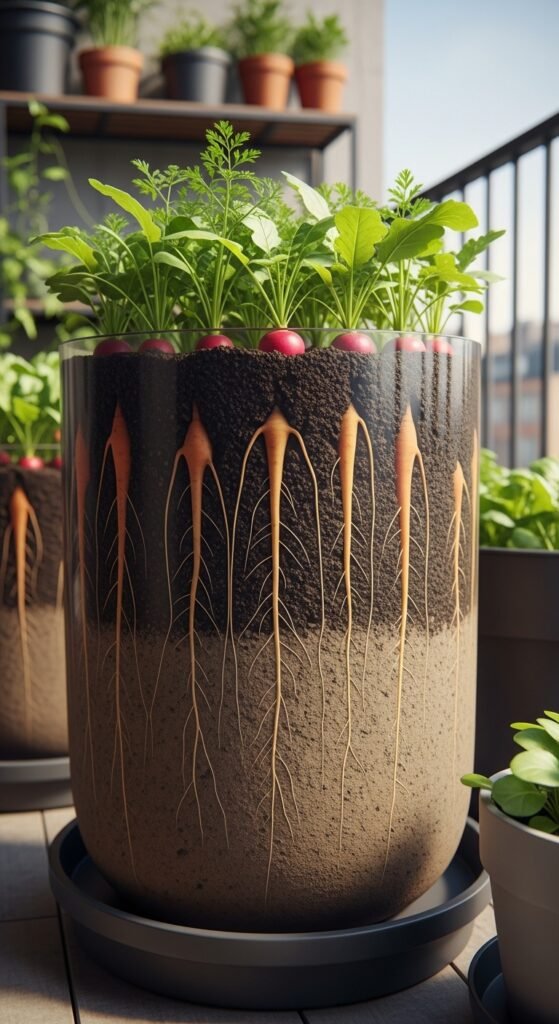
Select pots at least 12 inches deep, filling with sandy loam mix. Sow seeds thinly and cover lightly. Keep soil consistently moist for germination. Thin seedlings to avoid crowding. Harvest when roots reach desired size for tender produce. This idea suits sunny spots, yielding nutritious veggies with minimal effort. Pair with surface crops for layered gardening.
7) Climbing Vine Supports
Support climbing vines like peas or pole beans with custom frames in your balcony vegetable garden. These plants grow vertically, saving precious floor space. Enhanced sunlight exposure leads to better yields and easier picking.
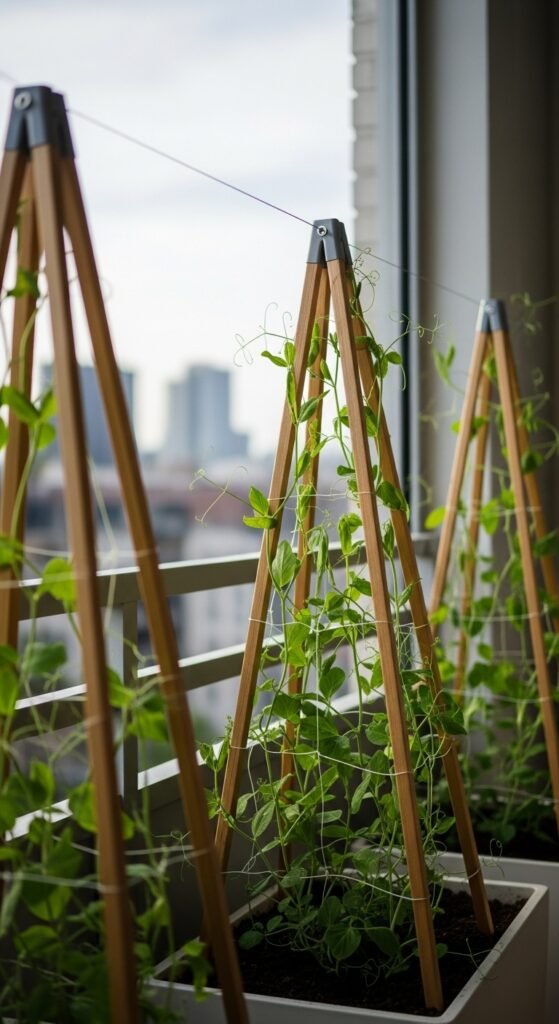
Build simple A-frames or use netting attached to walls. Plant at the base in fertile soil, guiding tendrils as they grow. Water at the roots to avoid leaf diseases. Fertilize with balanced nutrients. This technique creates a lush, productive screen. It’s great for windy balconies, providing stability. Explore more on container vegetable gardening to integrate vines effectively.
8) Hydroponic Window Units
Set up small hydroponic systems on your balcony for soilless vegetable growing. Ideal for lettuce or herbs, these units use nutrient-rich water. Faster growth rates and higher yields make hydroponics efficient for urban spaces.
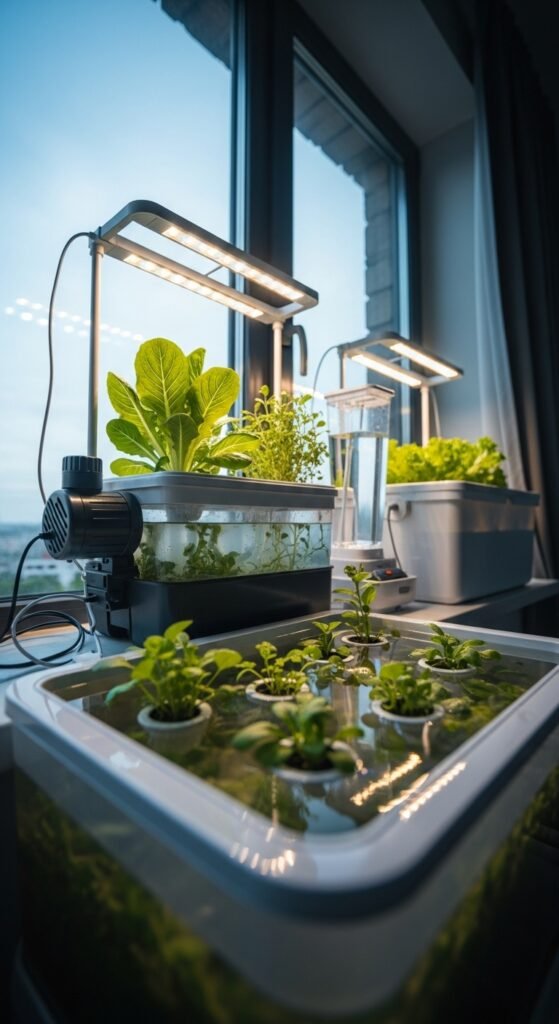
Choose compact kits with pumps and reservoirs. Mix nutrients per instructions and monitor pH levels. Place in bright light, recirculating solution daily. Harvest leaves as needed. This method conserves water and eliminates soil mess. It’s perfect for balconies with limited weight capacity, offering year-round production.
9) Self-Watering Innovations
Incorporate self-watering planters into your balcony vegetable garden for consistent moisture. These containers have reservoirs that wick water to roots. Reduced watering frequency is ideal for busy urbanites, preventing drought stress.
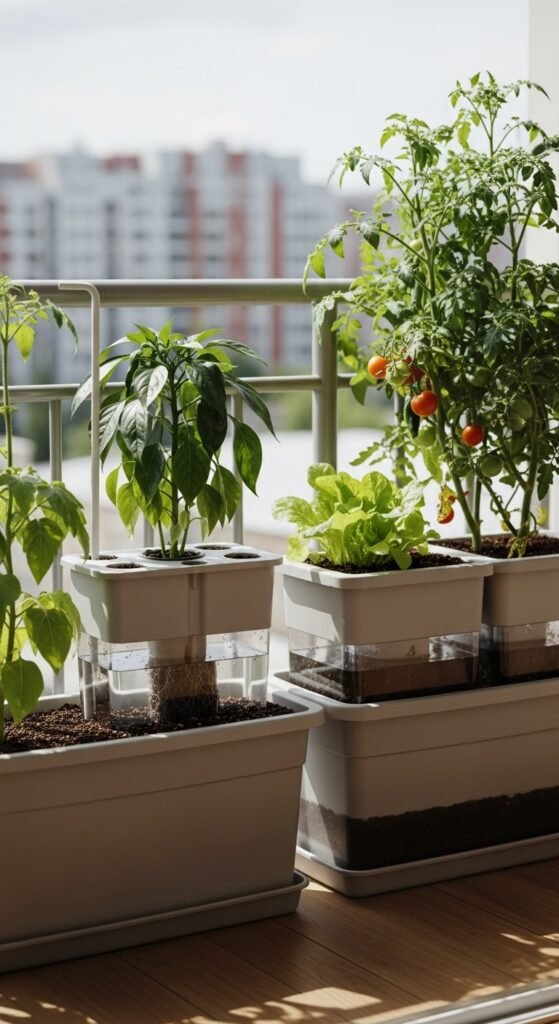
Fill the bottom with water and plant in the upper section with potting mix. Suitable for tomatoes, peppers, or greens. Refill reservoirs weekly, adding liquid fertilizer. Position in optimal sun. This system promotes healthy roots and bountiful crops. It’s a game-changer for forgetful gardeners, ensuring vitality.
10) Companion Pairings
Use companion planting in your balcony vegetable garden to boost health and yields. Pair tomatoes with marigolds to deter nematodes. Natural synergies improve pest resistance and soil fertility without chemicals.
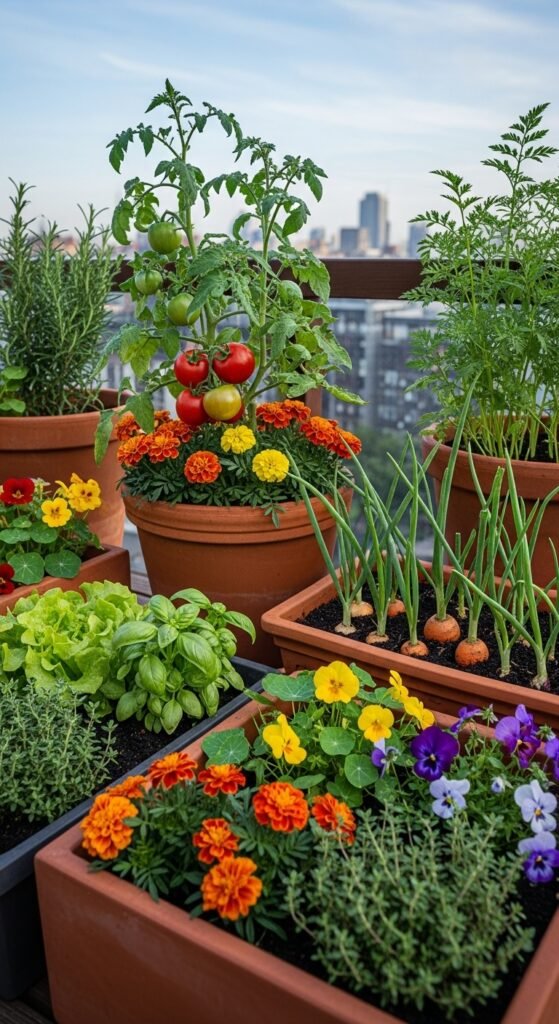
Plan layouts with compatible plants, like carrots and onions. Use mixed pots for space efficiency. Monitor for issues and rotate annually. This holistic approach enhances biodiversity. Harvest companion herbs for added benefits. For inspiration, look into growing peppers in pots alongside companions.
11) Natural Pest Barriers
Implement natural barriers in your balcony vegetable garden to protect against pests. Use netting or row covers for birds and insects. Chemical-free protection keeps your produce safe and organic.
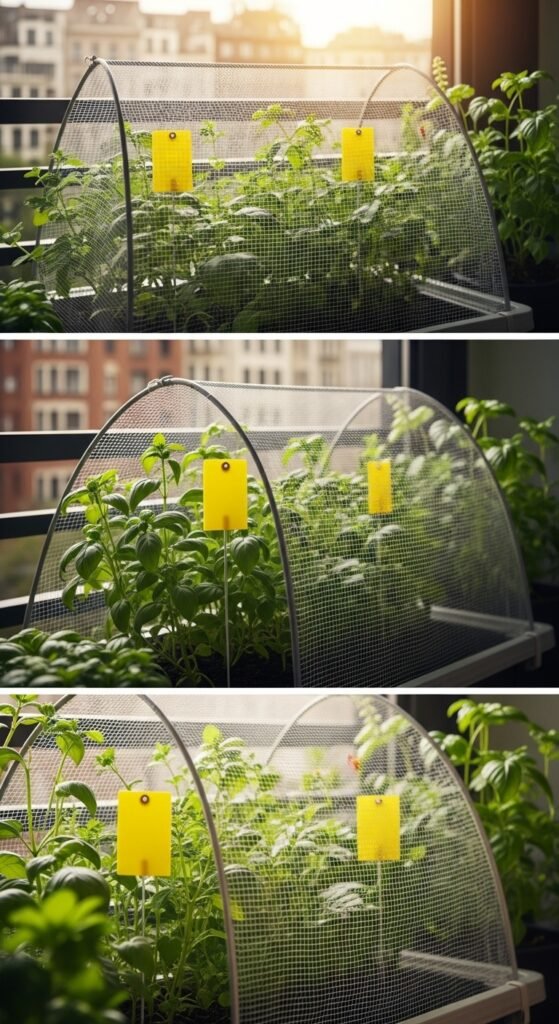
Drape materials over frames, securing edges. Plant aromatic herbs around veggies to repel aphids. Inspect regularly and remove pests by hand. This method maintains ecosystem balance. It’s essential for balconies near wildlife, ensuring undamaged harvests. Combine with sticky traps for comprehensive control.
12) Harvest Timing Tips
Master harvest timing in your balcony vegetable garden for peak flavor and nutrition. Pick greens young and often to encourage regrowth. Regular harvesting prolongs productivity and prevents bolting in heat.
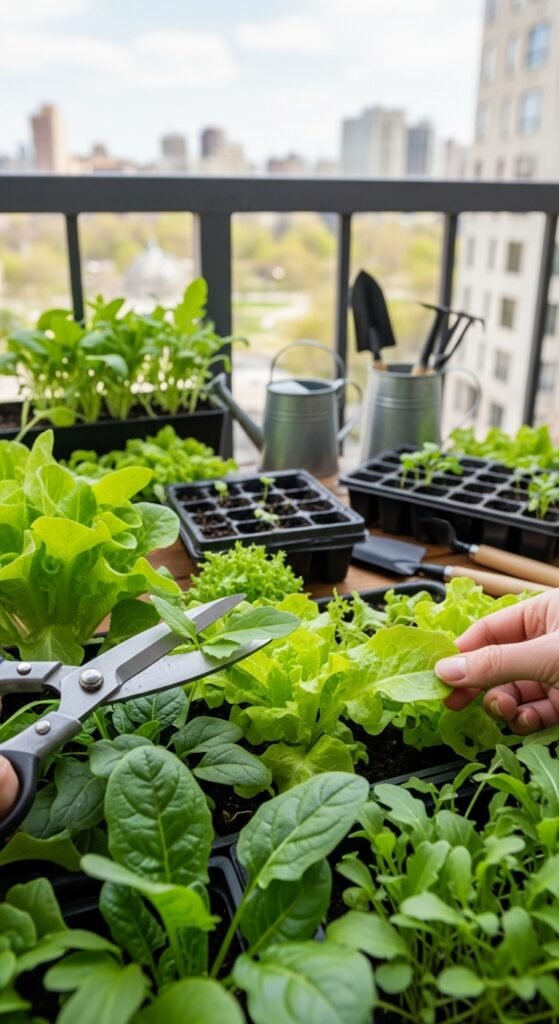
Check plants daily, using shears for clean cuts. Store produce properly to extend freshness. This practice maximizes your small space output. Experiment with succession planting for continuous supply. It’s rewarding to enjoy homegrown veggies at their best. Reference guides on growing strawberries in pots for specific timing.
13) Seasonal Crop Rotations
Rotate crops seasonally in your balcony vegetable garden to maintain soil health. Switch from summer tomatoes to fall kale. Prevents nutrient depletion and reduces disease buildup in containers.
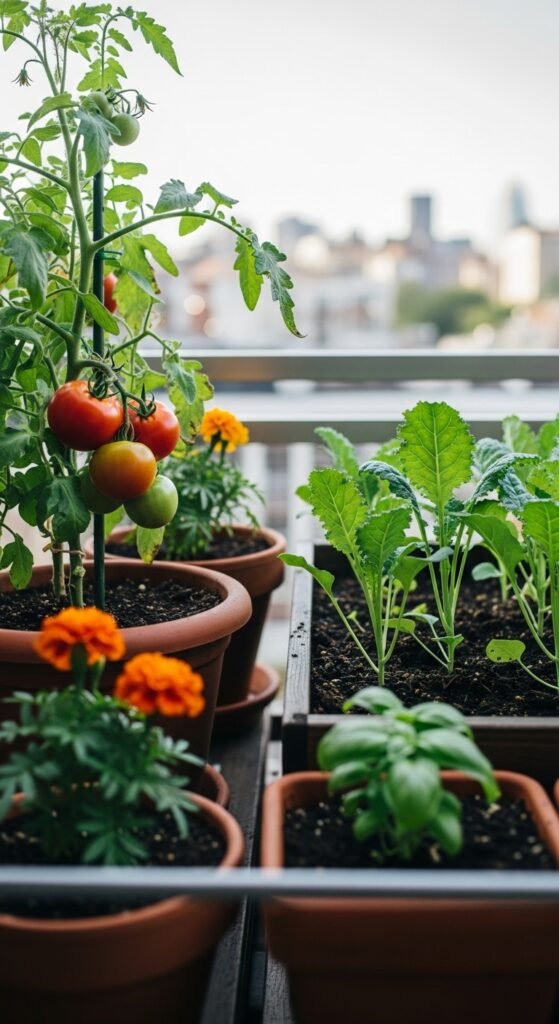
Plan rotations based on plant families, refreshing soil each time. Use compost to replenish nutrients. This strategy sustains long-term productivity. It’s vital for limited spaces, keeping your garden vibrant year-round. Adapt to your climate for optimal results.
14) Supplemental Lighting
Add LED grow lights to your balcony vegetable garden for shaded areas or extended seasons. These energy-efficient options mimic sunlight. Consistent light ensures steady growth, especially in urban canyons.
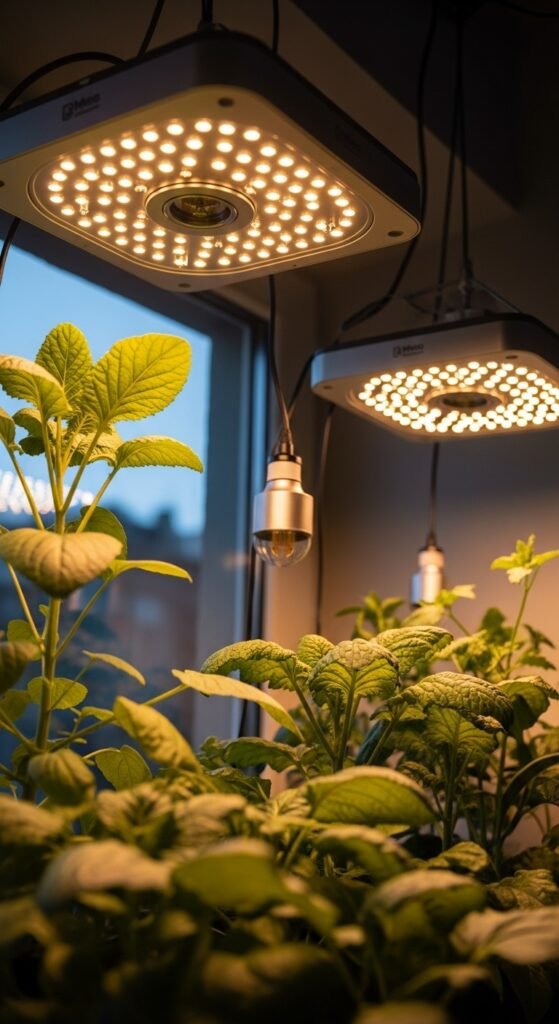
Install fixtures above plants, timing for 12-16 hours daily. Choose full-spectrum bulbs for best results. Monitor plant response and adjust height. This tech boosts yields in low-light conditions. It’s ideal for year-round gardening, expanding your possibilities.
15) Space-Saving Foldables
Use foldable or stackable elements in your balcony vegetable garden for flexibility. Collapsible trellises or tiered stands store easily. Adaptable designs accommodate changing needs and weather.
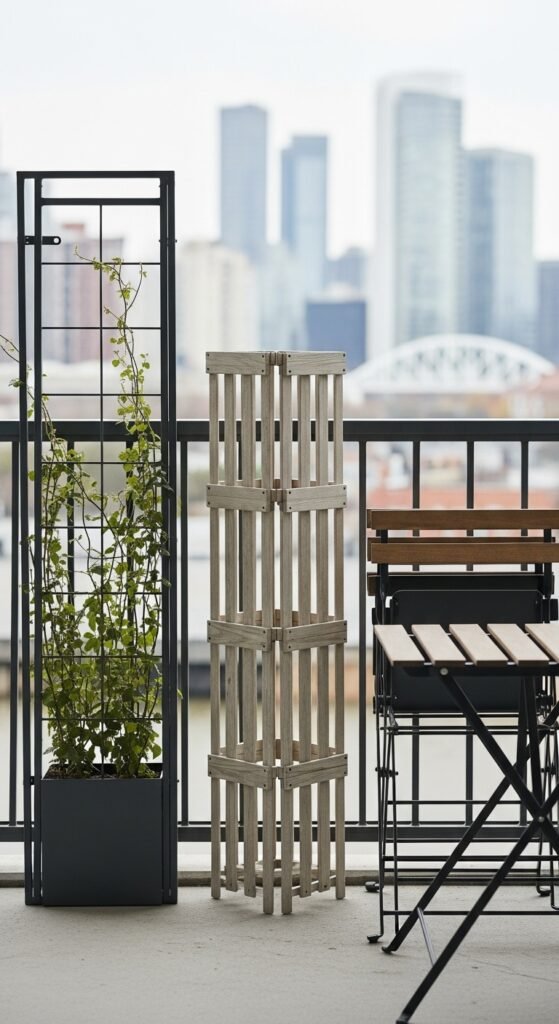
Select weather-resistant materials for durability. Arrange for easy access and airflow. This idea maximizes tiny spaces without permanent fixtures. Harvest efficiently and reconfigure as seasons change. It’s perfect for renters, offering portable productivity. Incorporate concepts from balcony garden ideas to customize further.
Key Principles for Successful Balcony Vegetable Gardening
Soil and Nutrient Management
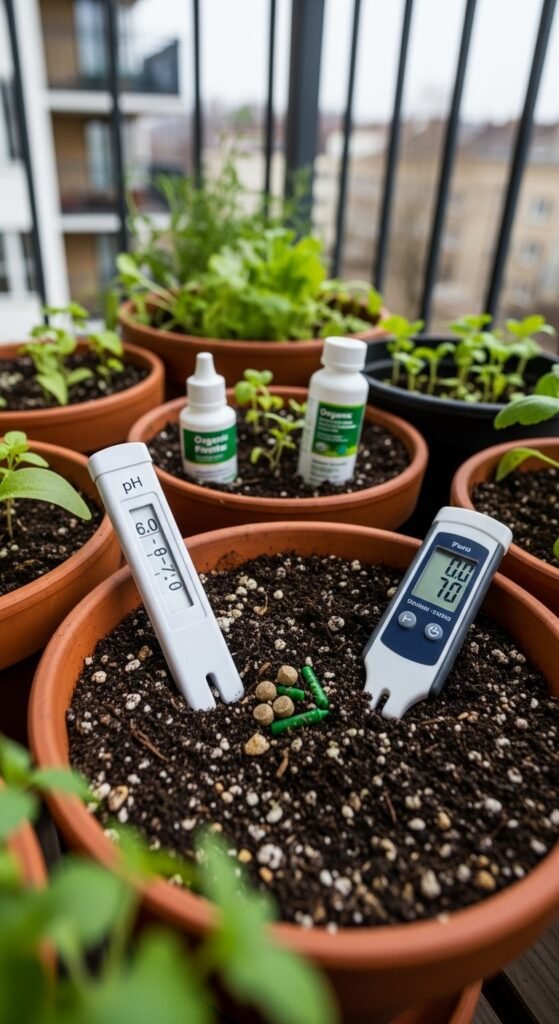
Maintain fertile soil by mixing potting soil with compost and perlite for drainage. Test pH regularly and amend as needed for vegetables preferring 6.0-7.0. Rotate nutrients with organic fertilizers to sustain growth.
Watering and Irrigation Techniques
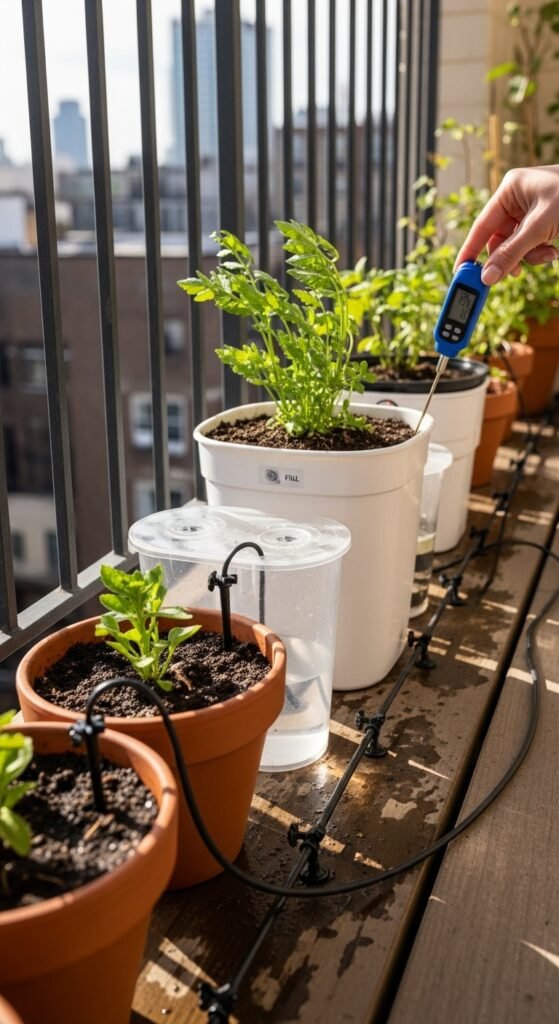
Water deeply but infrequently to encourage strong roots, checking soil moisture daily. Use drip systems or self-watering pots to conserve water and prevent evaporation in windy balcony conditions.
Pest and Disease Prevention
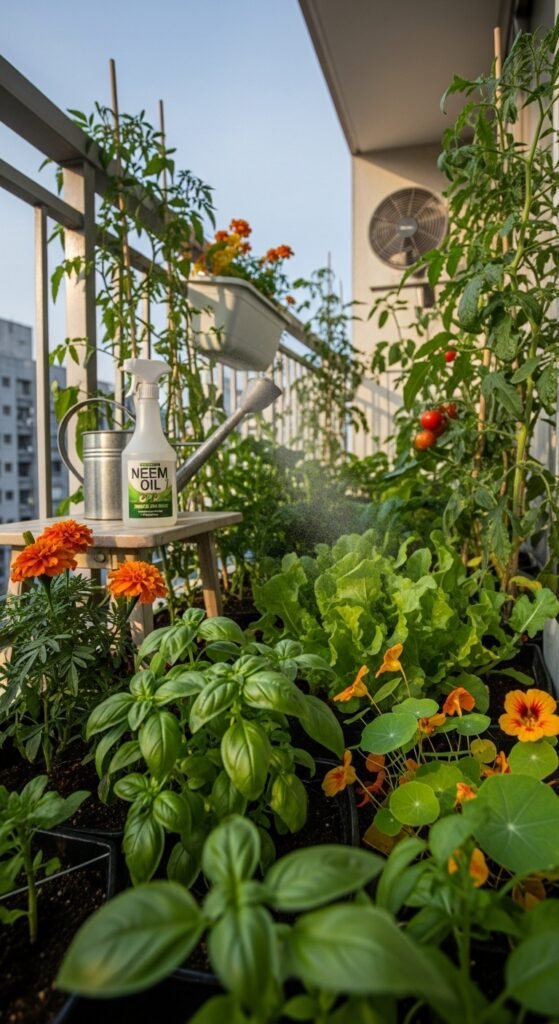
Inspect plants weekly for signs of pests, using neem oil or companion plants for natural control. Promote air circulation and avoid overhead watering to minimize fungal issues common in confined spaces.
Frequently Asked Questions
What vegetables grow best in a balcony vegetable garden?
Compact varieties like cherry tomatoes, lettuce, radishes, and herbs thrive in balcony settings. Choose based on sunlight and space, focusing on dwarf or container-specific breeds for optimal results.
How much sunlight does a balcony vegetable garden need?
Most vegetables require at least 6-8 hours of direct sunlight daily. South-facing balconies are ideal, but you can supplement with grow lights for shadier spots to ensure healthy growth.
Can I start a balcony vegetable garden with limited space?
Yes, use vertical planters, hanging baskets, and stackable pots to maximize area. Focus on high-yield, compact plants and efficient layouts to create a productive garden even in small balconies.
How do I prevent pests in my balcony vegetable garden?
Encourage beneficial insects, use organic sprays like neem oil, and maintain cleanliness. Regular inspections and proper spacing help catch issues early, keeping your garden healthy without harsh chemicals.