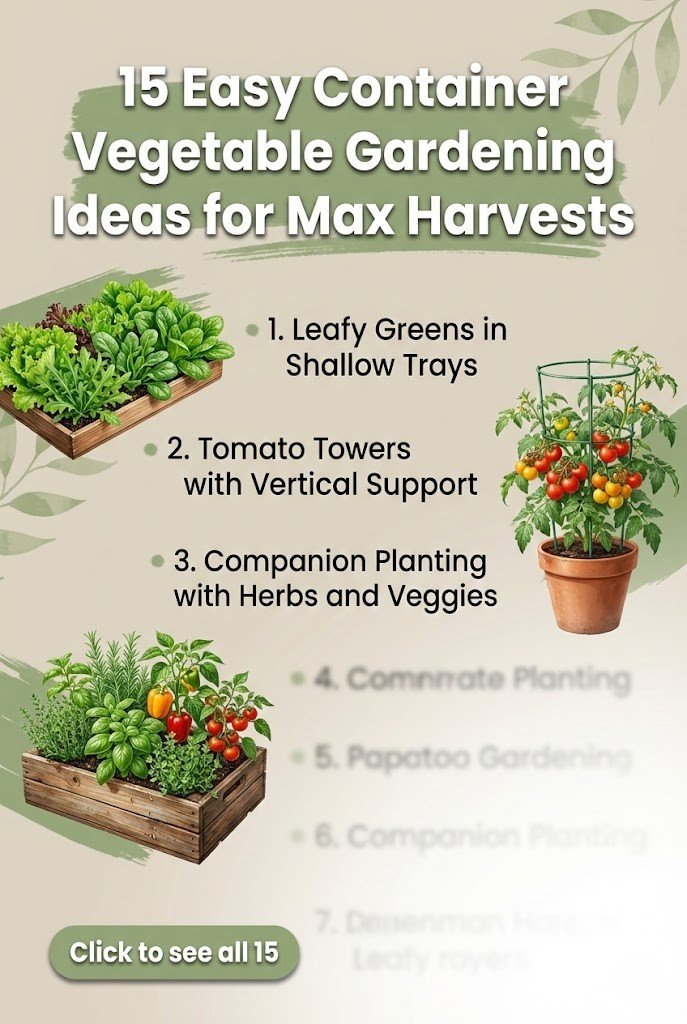
Container vegetable gardening transforms limited spaces into productive havens, allowing you to grow fresh produce right on your balcony, patio, or windowsill. This approach is perfect if you’re dealing with poor soil, small yards, or urban living, offering flexibility and control over your plants’ environment. By choosing the right containers, soil, and varieties, you can enjoy bountiful harvests without a traditional garden bed.
The beauty of container vegetable gardening lies in its accessibility and efficiency. You can easily monitor water, nutrients, and pests, leading to healthier plants and higher yields. Plus, it’s a sustainable way to reduce grocery bills and enjoy homegrown flavors. Whether you’re a beginner or seasoned gardener, these ideas will help you optimize your setup for maximum productivity.
1) Leafy Greens in Shallow Trays
You can kick off your container vegetable gardening journey with leafy greens like lettuce, spinach, and arugula in shallow trays or window boxes. These veggies thrive in compact spaces, requiring just 6-8 inches of soil depth. Plant seeds densely for continuous harvesting by snipping outer leaves, ensuring a steady supply throughout the season.
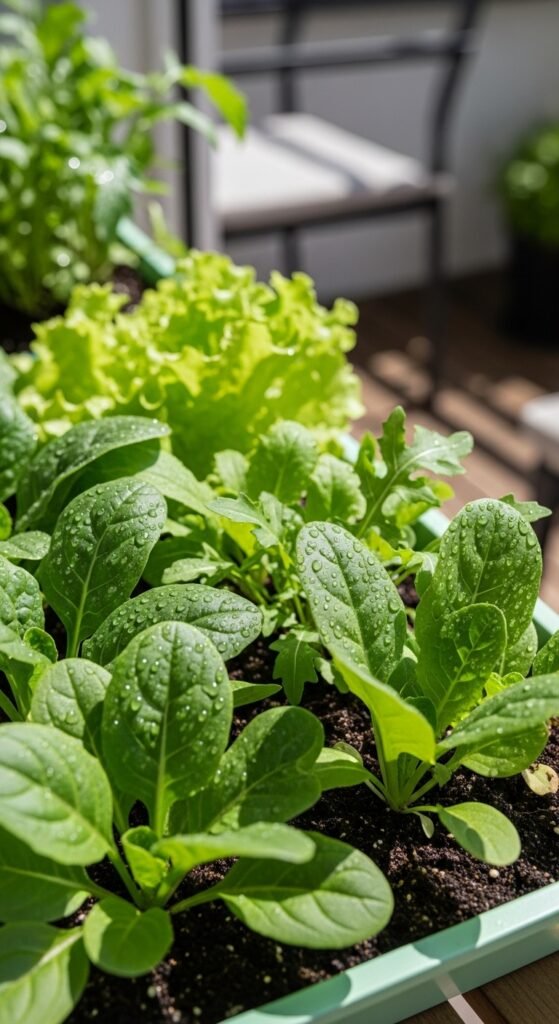
The key benefit is quick growth, with harvests possible in as little as 30 days, making them ideal for impatient gardeners. They also tolerate partial shade, perfect for balconies with limited sun. To succeed, use well-draining potting mix and water consistently to prevent bolting. For deeper insights into nurturing these in pots, explore starting container gardening as a beginner.
Rotate trays for even light exposure, and fertilize lightly every few weeks with a balanced liquid feed. This method not only maximizes space but also adds vibrant greenery to your outdoor decor.
2) Tomato Towers with Vertical Support
Elevate your container vegetable gardening by growing indeterminate tomatoes in large pots with built-in trellises or cages. Choose varieties like cherry or grape tomatoes that produce abundantly in confined spaces. Position them in full sun, at least 6-8 hours daily, and use 5-gallon buckets or fabric pots for root development.
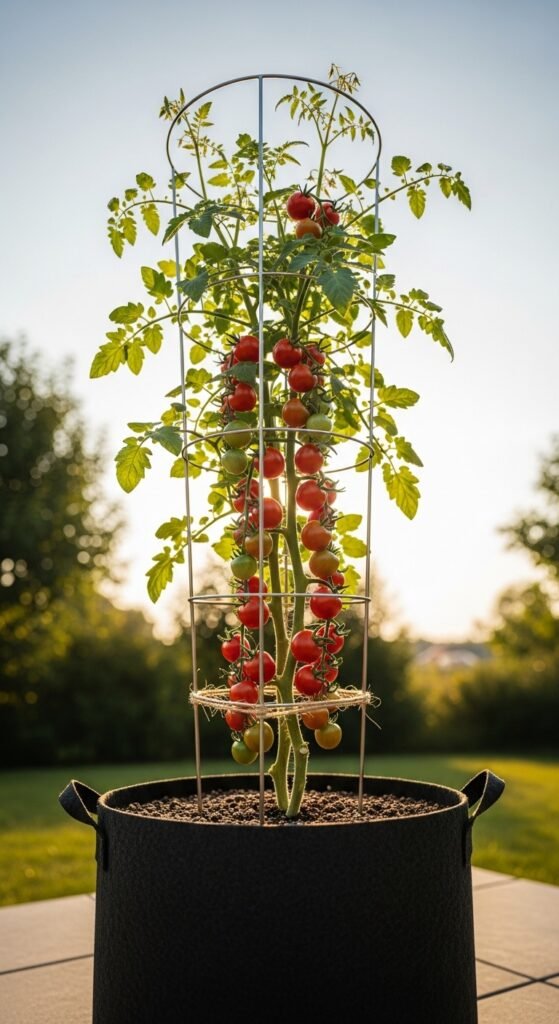
Enjoy prolific yields from a single plant, often dozens of fruits per season, while saving floor space through vertical growth. This setup reduces disease risk by improving air circulation. Prune suckers regularly and tie stems to supports as they grow. If you’re interested in specialized techniques, check out growing tomatoes in containers for expert tips.
Water deeply but infrequently to encourage strong roots, and mulch the soil surface to retain moisture. This innovative approach turns a simple pot into a towering bounty of fresh tomatoes.
3) Companion Planting with Herbs and Veggies
Incorporate companion planting in your container vegetable gardening to boost yields and deter pests naturally. Pair basil with tomatoes in the same pot to enhance flavor and repel hornworms, or plant marigolds alongside beans to ward off aphids. Use large containers, at least 12 inches deep, to accommodate multiple plants.
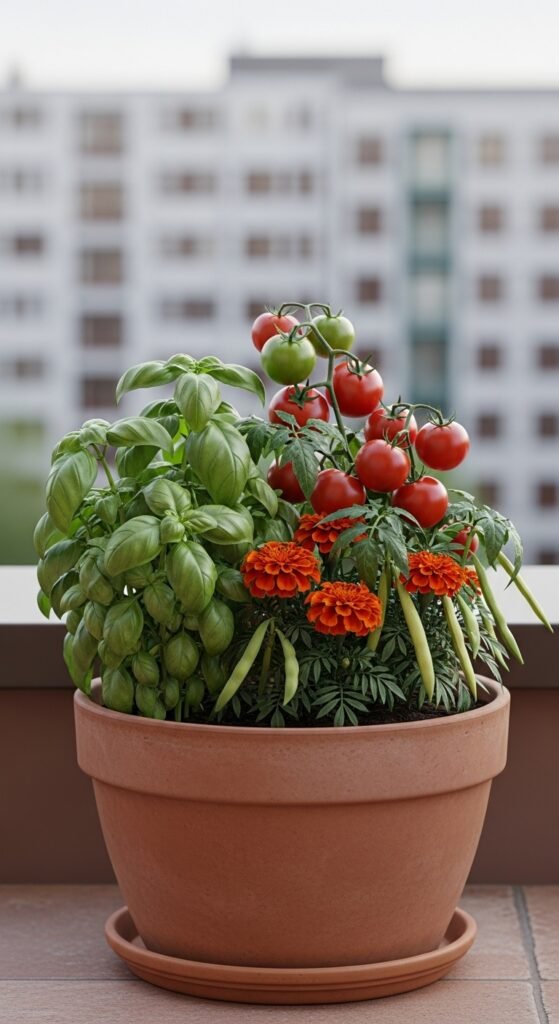
The advantage is mutual support, where herbs improve vegetable growth and vice versa, leading to healthier, more resilient crops. This method optimizes space and reduces the need for chemical interventions. Select compatible pairs based on similar water and light needs. For more on efficient setups, consider top vegetables suited for pots.
Monitor for overcrowding and thin as necessary. Fertilize with organic compost tea every month to sustain nutrient levels. This strategy creates a mini ecosystem in each container, maximizing your harvest effortlessly.
4) Potato Sacks for Easy Harvesting
Utilize grow bags or sacks for potatoes in your container vegetable gardening arsenal. Fill them partially with soil, plant seed potatoes, and add more soil as plants grow, creating layers for tuber development. Opt for breathable fabric bags to prevent rot and promote healthy roots.
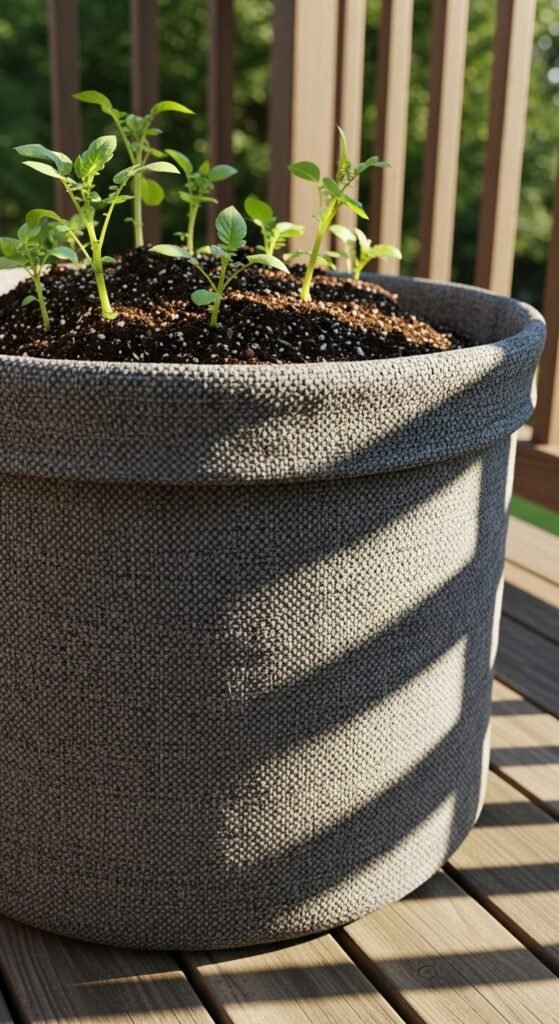
Harvest without digging by simply dumping the bag at season’s end, yielding pounds of spuds from a small footprint. This technique is ideal for patios where space is premium. Choose early varieties for quicker results. To refine your method, look into cultivating potatoes in pots.
Place in sunny spots and water evenly to avoid cracks in tubers. Add a slow-release fertilizer at planting. This hands-off approach delivers satisfying results with minimal effort.
5) Cucumber Vines on Trellises
Train cucumbers up trellises in containers for vertical container vegetable gardening success. Use 5-10 gallon pots with sturdy supports like bamboo stakes or wire frames to guide vines upward. Bush varieties work best for smaller spaces, producing crisp fruits without sprawling.
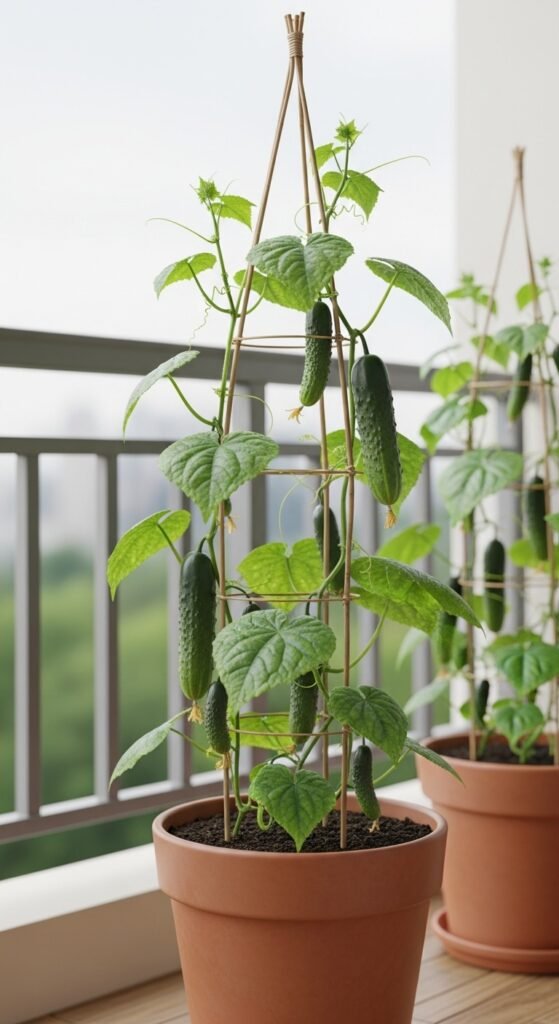
Save space while increasing airflow, which minimizes powdery mildew and boosts pollination for better yields. Harvest young for the best taste. Install the trellis at planting to avoid root disturbance later. For tailored advice, refer to raising cucumbers in pots.
Provide consistent moisture and mulch to retain soil humidity. Fertilize with a high-potassium feed during fruiting. This setup transforms your balcony into a productive vine haven.
6) Pepper Plants in Sunny Pots
Grow a variety of peppers, from sweet bells to hot chilies, in individual pots for your container vegetable gardening. Each plant needs a 3-5 gallon container with excellent drainage to thrive in full sun. Start with transplants for faster results.
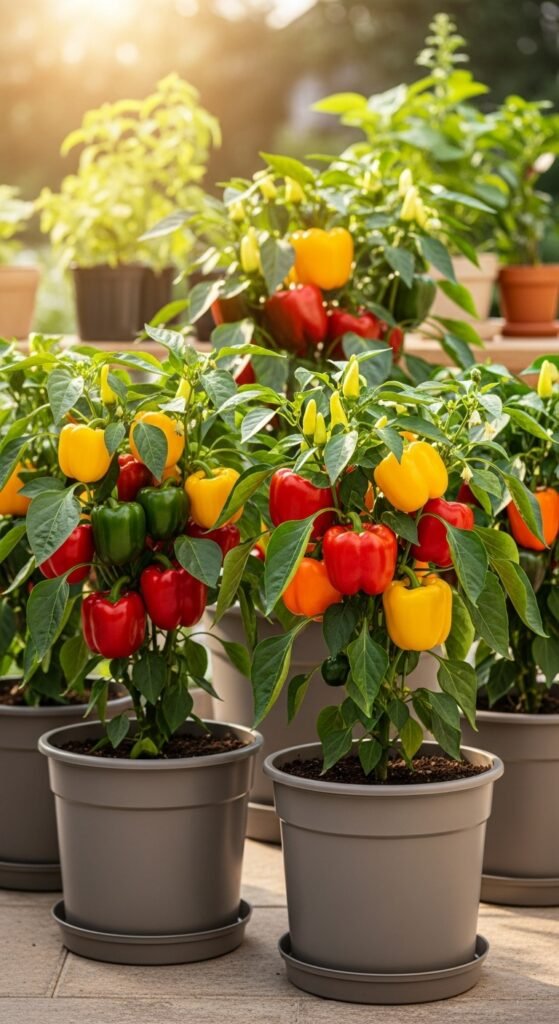
Reap colorful, vitamin-rich harvests that add spice to meals, with plants producing continuously until frost. This isolation prevents cross-pollination between types. Stake taller varieties to support heavy fruit loads. Enhance your skills with peppers in container tips.
Water when the top inch of soil dries, and use a balanced fertilizer every two weeks. This straightforward idea yields flavorful rewards with little space commitment.
7) Root Vegetables in Deep Containers
Dedicate deep pots to root veggies like carrots, beets, and radishes in your container vegetable gardening plan. Use containers at least 12 inches tall filled with loose, sandy soil to allow unimpeded growth. Sow seeds directly for best results.
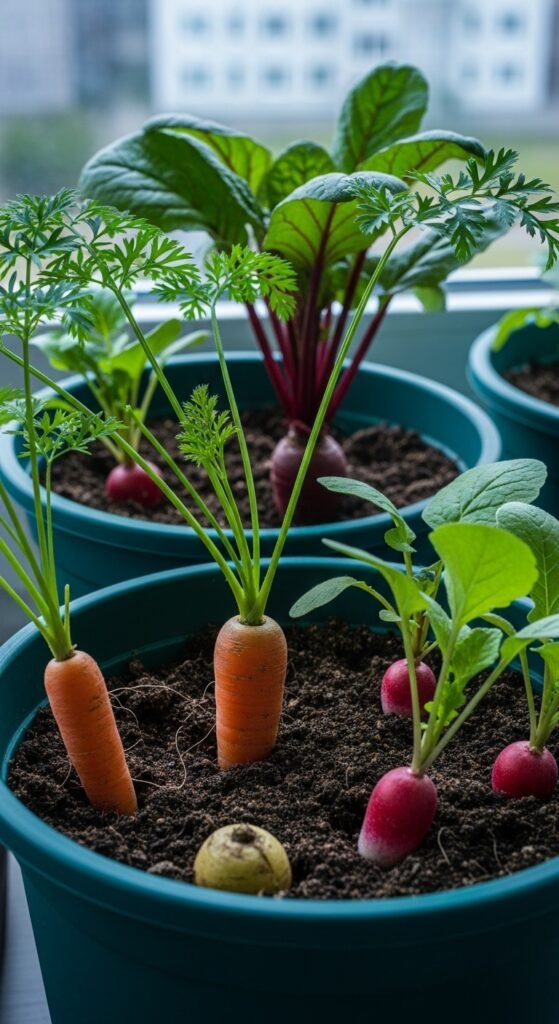
Achieve straight, sizable roots without the competition of in-ground weeds, perfect for fresh salads or roasting. These crops mature quickly, allowing multiple plantings per season. Thin seedlings to proper spacing for optimal size. For watering strategies, see effective container watering.
Position in partial sun to prevent bolting. Harvest as needed for tender produce. This method brings underground treasures to your elevated garden.
8) Compact Squash Varieties
Select bush-type squash for container vegetable gardening to fit zucchini or pattypan into medium pots. Provide 5-gallon containers with rich soil and full sun exposure. Hand-pollinate if bees are scarce in your area.
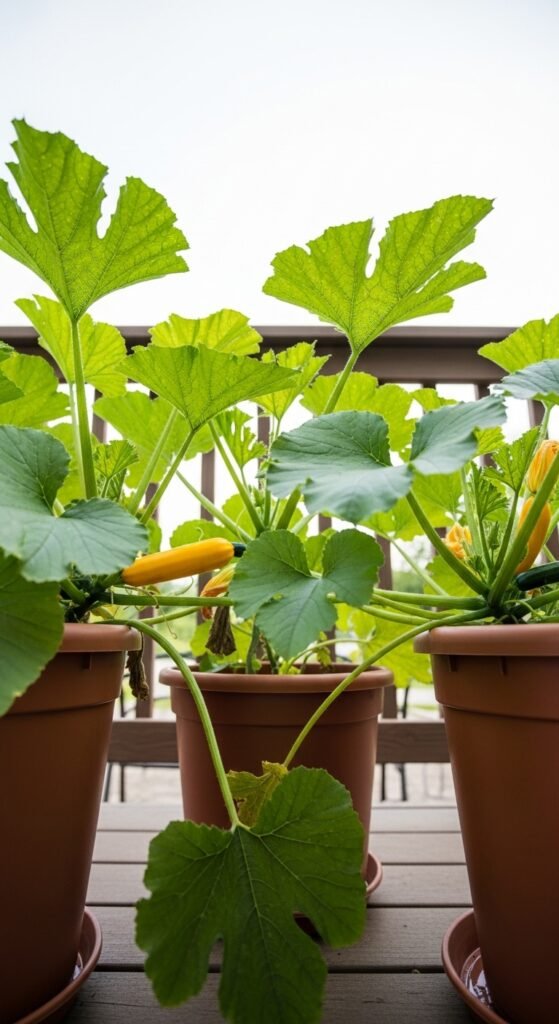
Enjoy versatile fruits from space-saving plants that yield generously over summer. This contains sprawl while maintaining productivity. Prune excess leaves for better air flow. Explore trellis options for containers if opting for vining types.
Water at the base to avoid foliar diseases and mulch to conserve moisture. This innovative choice adds summer staples to your harvest lineup.
9) Pole Beans on Balcony Rails
Harness balcony rails for pole beans in your container vegetable gardening, using hanging or rail-mounted pots with integrated trellises. Plant climbing varieties that twine upward, producing pods high above the ground.
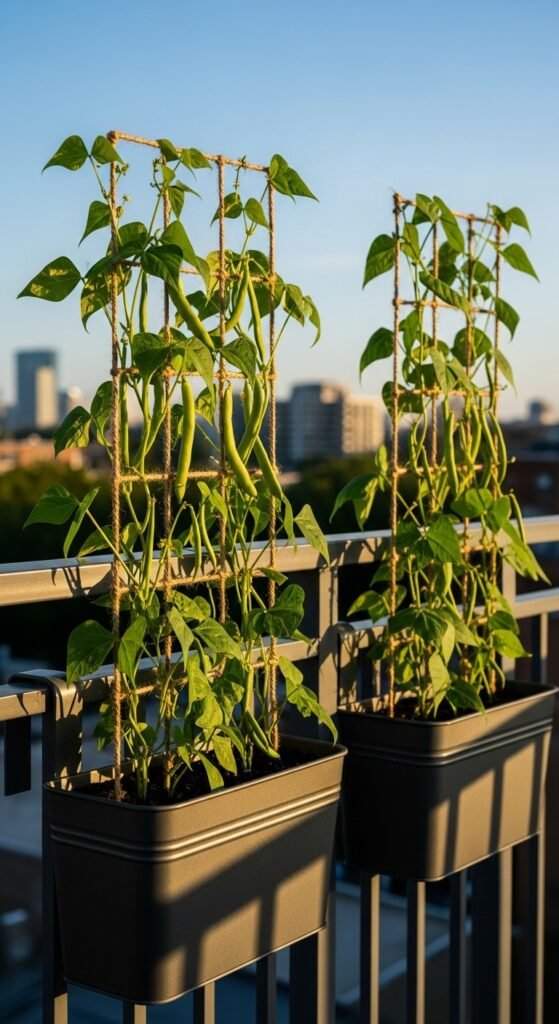
Maximize vertical space for nitrogen-fixing beans that enrich soil while providing protein-rich harvests. This setup is ideal for urban dwellers. Soak seeds before planting for better germination. For seasonal inspiration, view spring container setups.
Fertilize sparingly since beans fix their own nitrogen. Pick regularly to encourage more production. This elevates your garden literally and figuratively.
10) Quick-Radish Clusters
Interplant radishes in various containers throughout your vegetable gardening setup for rapid rewards. Their shallow roots fit in small pots or as fillers around slower growers, ready in 20-30 days.
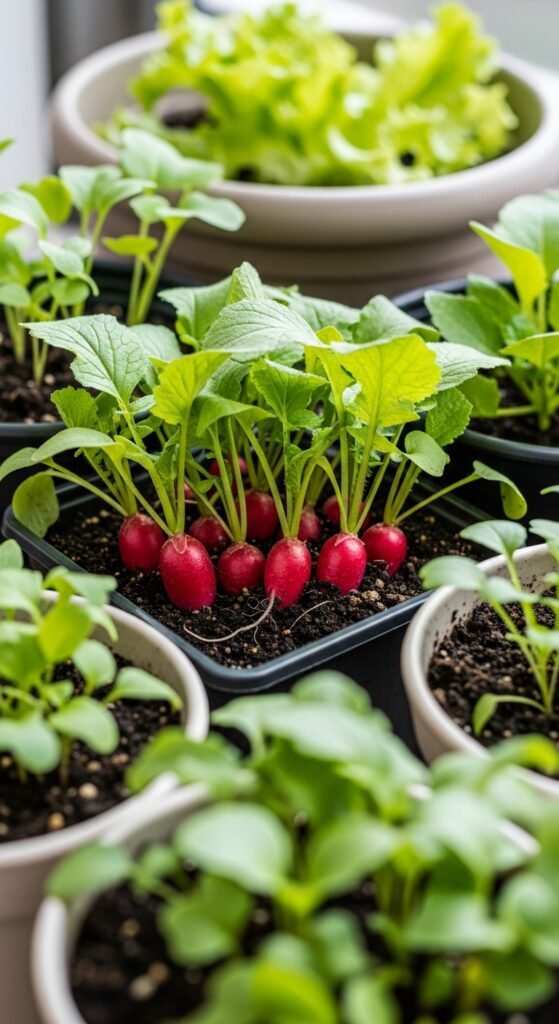
Boost soil utilization with these peppery roots that loosen compacted mix and deter pests. Harvest young for mild flavor in salads. Succession plant every two weeks for continuous supply.
Keep soil moist for crisp textures. This filler crop enhances overall productivity without demanding extra space.
11) Eggplant in Ornamental Pots
Cultivate eggplants in decorative containers for both beauty and bounty in container vegetable gardening. Choose compact varieties suited to pots of 5 gallons or more, in sunny locations.
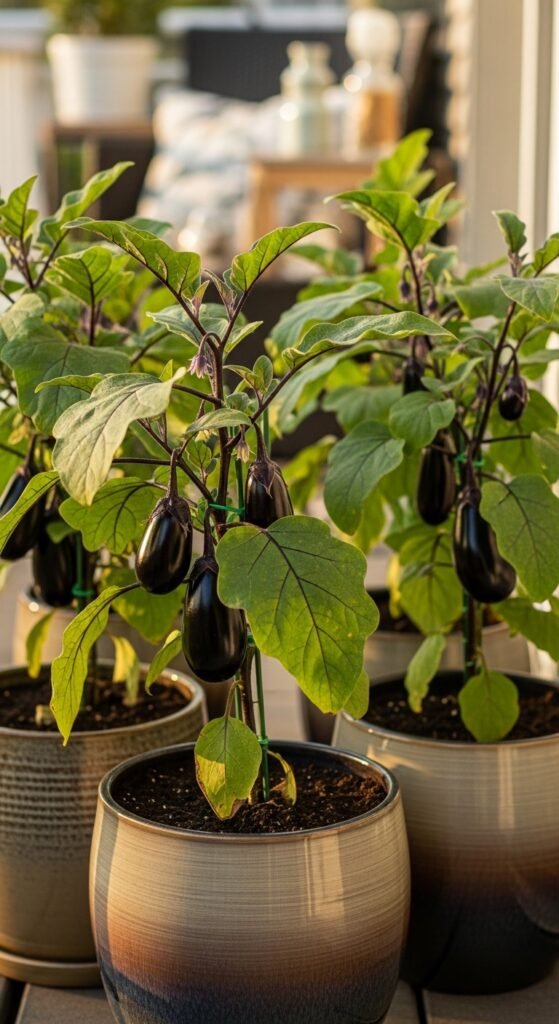
Harvest glossy fruits for grilling or roasting, with plants adding exotic foliage to your display. Stake to support heavy yields. Water deeply and mulch to maintain even moisture.
Fertilize with phosphorus-rich feeds for better fruit set. This dual-purpose idea merges aesthetics with edibility seamlessly.
12) Onion and Garlic Bulb Sets
Plant onion sets or garlic cloves in clustered pots for easy container vegetable gardening. Use wide, shallow containers to accommodate multiple bulbs, spacing them appropriately.
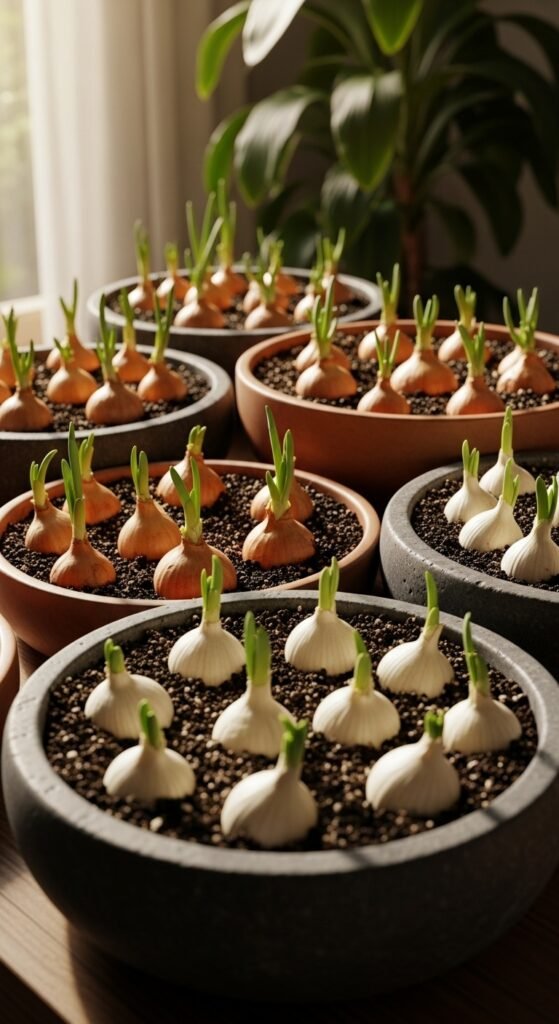
Gain aromatic staples that store well, enhancing your kitchen independence. These alliums repel pests when interplanted. Cure harvested bulbs in dry shade.
Provide full sun and minimal water once established. This low-maintenance option builds flavor foundations.
13) Kale for Extended Seasons
Extend your container vegetable gardening into cooler months with hardy kale in large pots. Varieties like Tuscan or curly kale withstand frost, producing nutritious leaves.
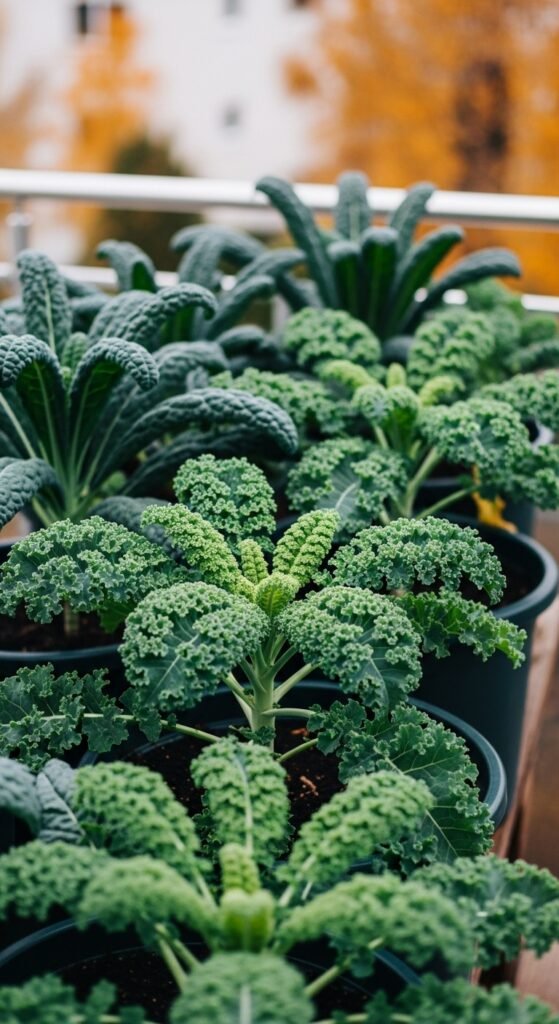
Secure vitamin-packed greens when other crops fade, with cold improving sweetness. Harvest outer leaves continuously. Protect from harsh winds if needed.
Use rich soil and fertilize monthly. This resilient choice ensures year-round productivity.
14) Bush Beans in Window Boxes
Opt for bush beans in window boxes or rail planters for compact container vegetable gardening. These self-supporting plants yield pods without trellises, ideal for small areas.
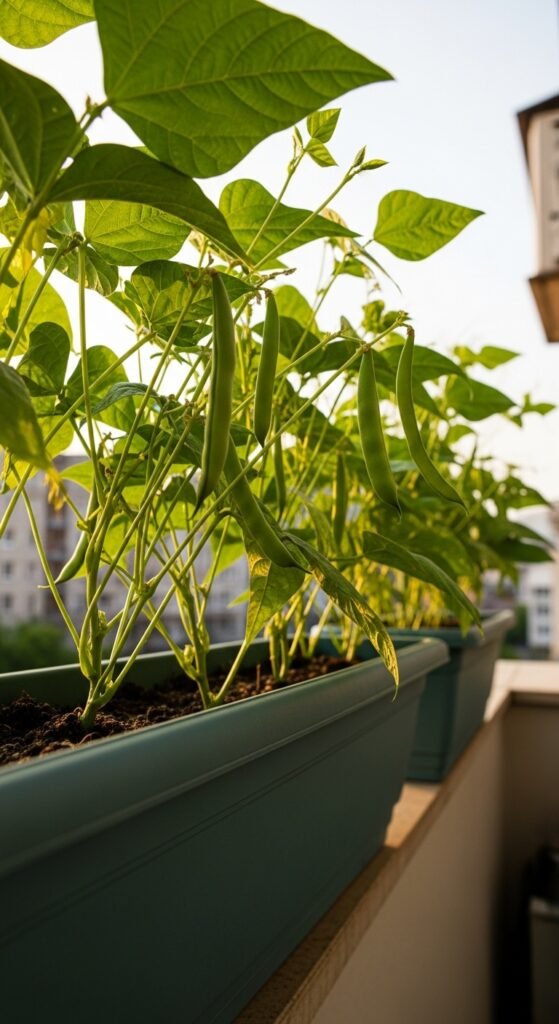
Collect tender beans repeatedly, promoting bushier growth through picking. Succession sow for ongoing harvests. Inoculate seeds for better nitrogen fixation.
Position in sun and water consistently. This accessible idea fits even the tiniest spaces.
15) Microgreens on Windowsills
Grow microgreens like broccoli or radish sprouts indoors in trays for ultra-fast container vegetable gardening. Use shallow containers with seed-starting mix under bright windows or grow lights.
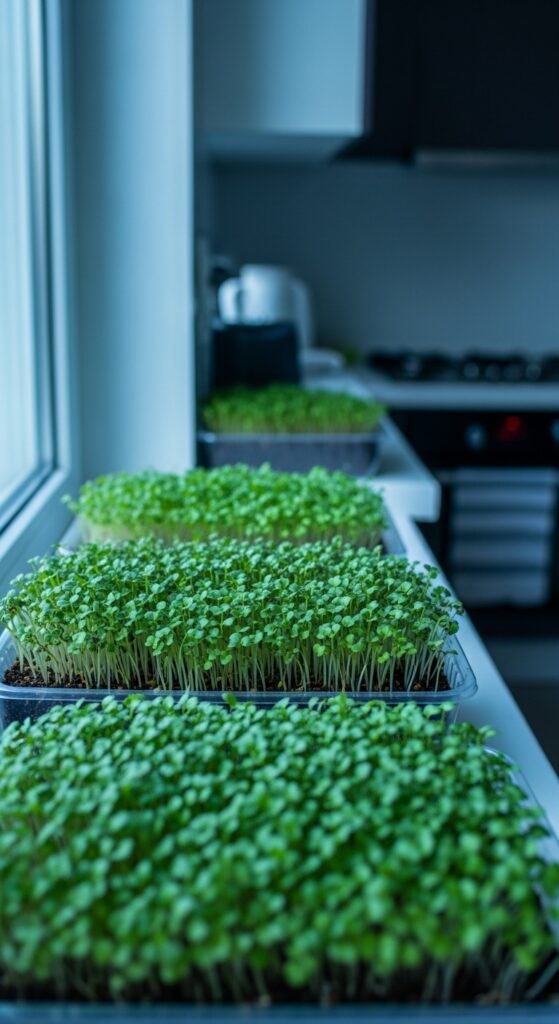
Reap nutrient-dense shoots in 7-14 days, perfect for salads or garnishes. This method suits apartment living without outdoor space. Snip at soil level when ready.
Keep moist and rotate for even growth. This speedy technique delivers fresh produce year-round.
Key Principles of Container Vegetable Gardening
Choosing the Right Containers
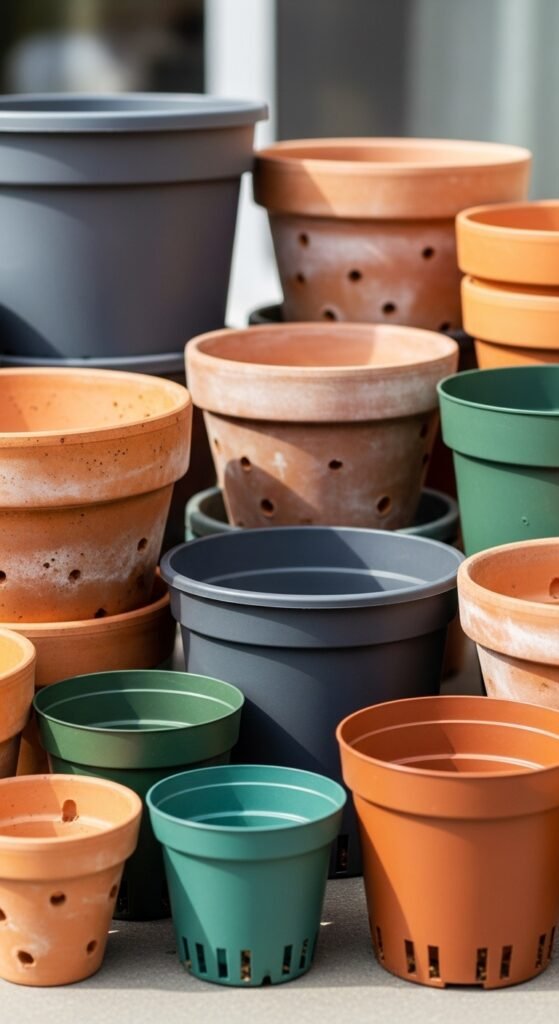
Select pots with adequate drainage holes to prevent root rot, opting for sizes that match your plants’ mature root systems. Materials like terracotta breathe well but dry quickly, while plastic retains moisture longer.
Soil and Nutrient Management
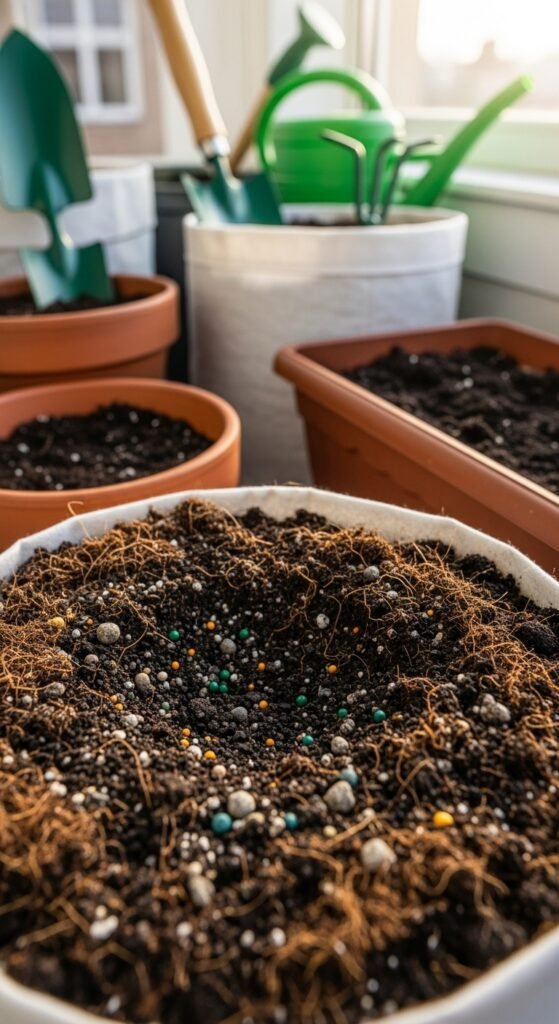
Use high-quality potting mix designed for containers, avoiding garden soil that compacts. Incorporate slow-release fertilizers and compost to sustain nutrients, refreshing annually for best results.
Pest and Disease Prevention
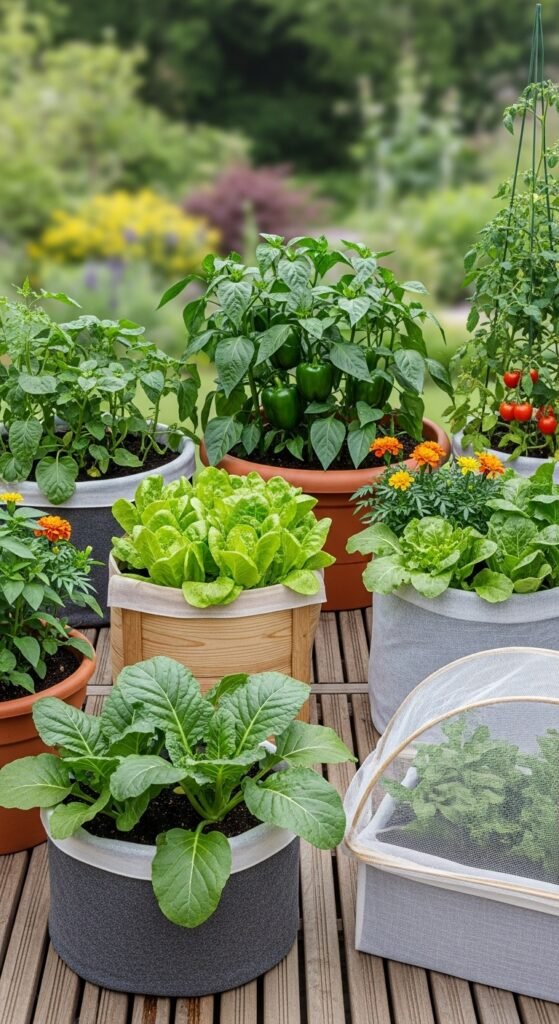
Inspect plants regularly for issues, using organic sprays as needed. Promote airflow and avoid overhead watering to minimize fungal problems in your setup.
Frequently Asked Questions
What size containers do I need for vegetables?
Most vegetables require at least 1-5 gallon pots, depending on the plant. Root crops need deeper containers, while herbs and greens can thrive in shallower ones.
How often should I water container vegetables?
Check soil daily; water when the top inch feels dry. Factors like sun exposure and pot material influence frequency, typically 1-2 times per day in hot weather.
Can I grow vegetables in containers year-round?
Yes, with proper selection of cold-hardy varieties and protection like moving pots indoors or using covers during frost.
What are common mistakes in container vegetable gardening?
Overwatering, using poor soil, and neglecting fertilization often lead to issues. Start small and observe your plants’ needs.
Do container vegetables need full sun?
Most require 6-8 hours of direct sunlight, but leafy greens tolerate partial shade. Match plants to your available light conditions.