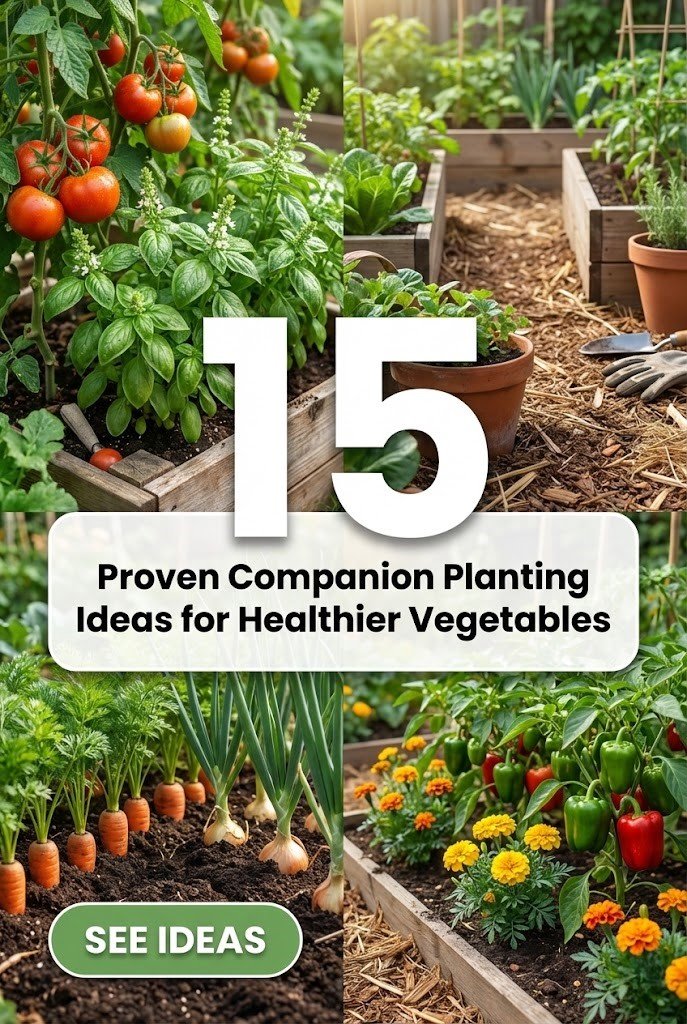
Companion planting is a time-tested gardening technique where you grow different plants together to help each other thrive. In vegetable gardens, this method boosts harvests by deterring pests, attracting beneficial insects, improving soil fertility, and making efficient use of space. By pairing compatible vegetables with herbs, flowers, or other veggies, you create a natural, balanced ecosystem that reduces the need for chemical interventions.
For beginners and seasoned gardeners alike, companion planting with vegetables can transform your plot into a productive haven. Whether you’re dealing with limited space or challenging pests, these strategic pairings offer practical solutions. Start by observing your garden’s conditions and experiment with these ideas tailored to your climate and soil.
Incorporating companions not only enhances growth but also promotes biodiversity, leading to healthier plants and tastier produce. Let’s dive into 15 proven companion planting combinations for vegetables.
1) Tomatoes with Basil
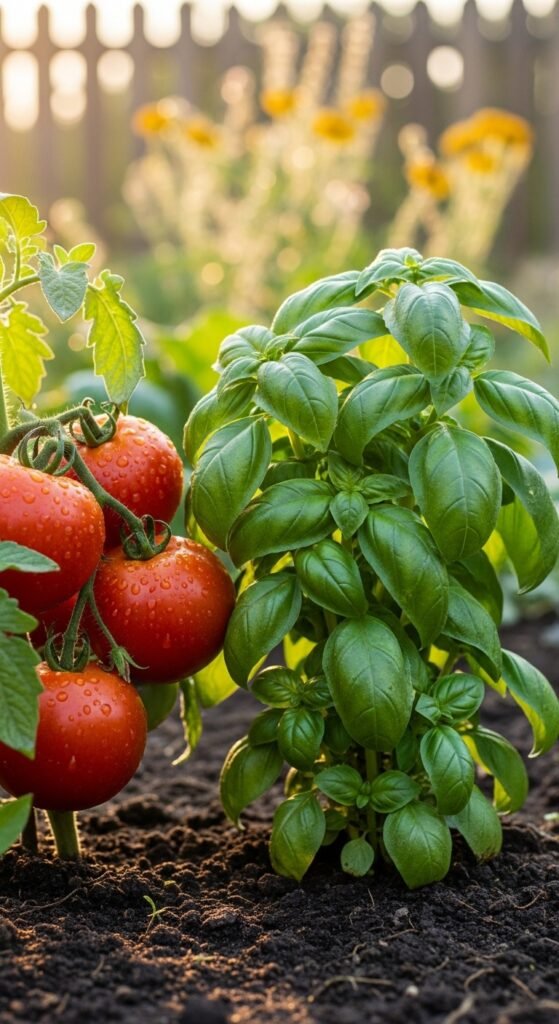
Plant basil at the base of your tomato plants. Basil repels flies, mosquitoes, and tomato hornworms while enhancing tomato flavor through shared aromas. This duo also attracts pollinators for better fruit set. Space basil 12 inches from tomatoes and harvest leaves regularly to encourage bushiness. You’ll enjoy fewer pests and more vibrant harvests.
Combine this with knowledge of mosquito-repelling plants for broader pest protection in your garden.
2) Carrots and Onions
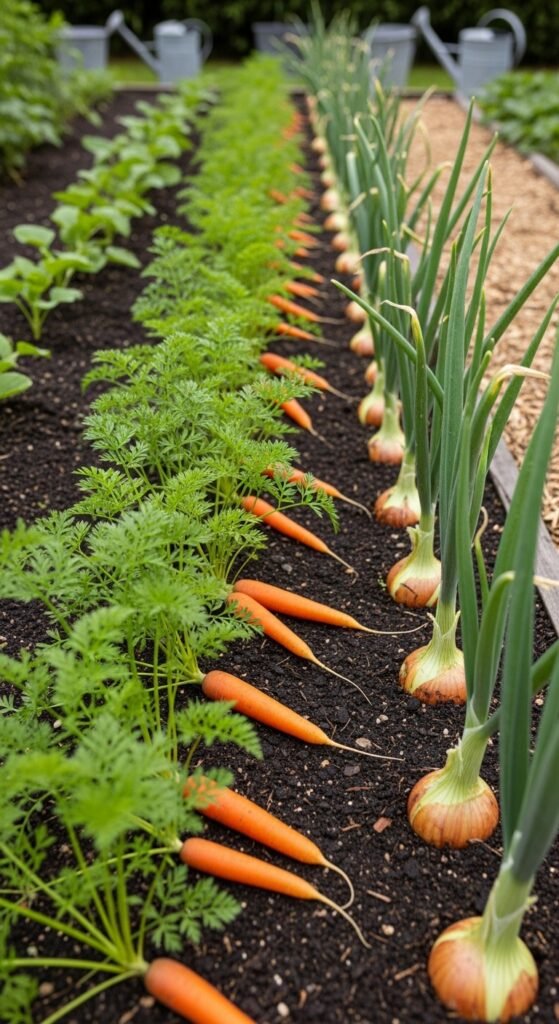
Interplant onions or leeks among carrot rows. Onions mask the carrot scent, deterring carrot root flies, while carrots loosen soil for onion bulbs. This pairing maximizes space and reduces pest damage without sprays. Sow onions first, then add carrots nearby once established. Expect straighter carrots and healthier onions.
3) Corn, Beans, and Squash (Three Sisters)
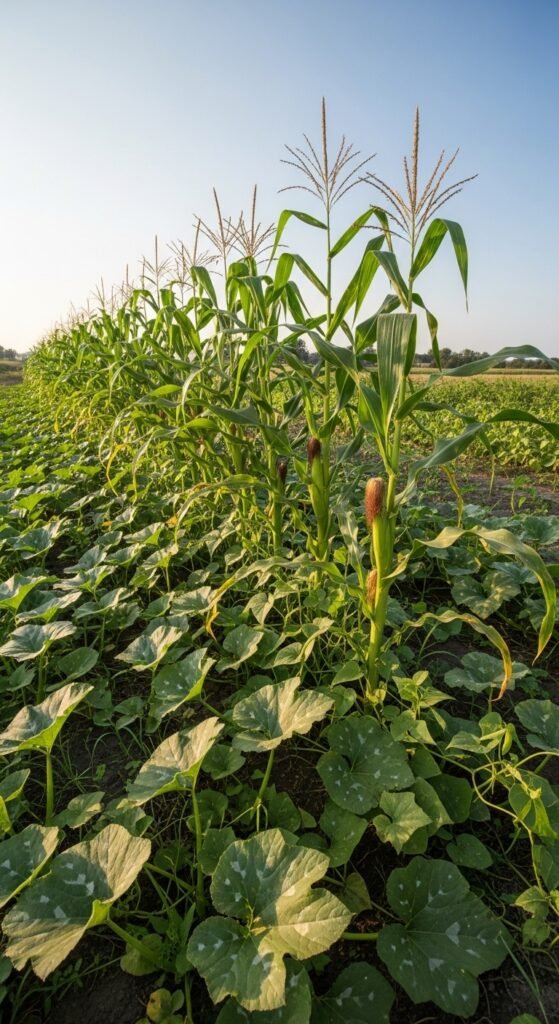
This Native American method plants corn for bean support, beans to fix nitrogen in soil, and squash to shade weeds and retain moisture. Ideal for large spaces, it creates a self-sustaining guild. Plant corn in blocks, add beans when corn is knee-high, and intersperse squash. This boosts yields sustainably.
4) Peppers with Marigolds
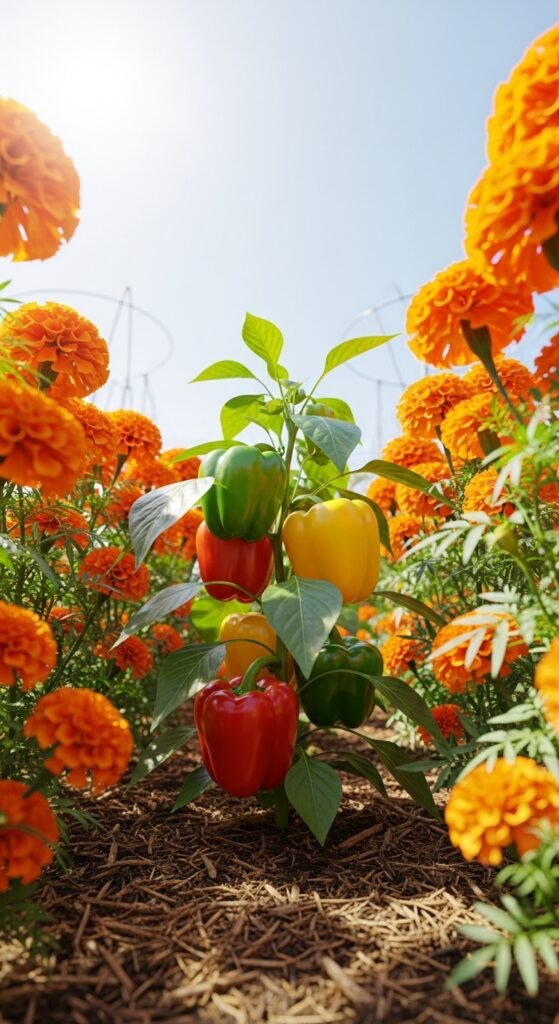
Border pepper plants with marigolds to repel nematodes, aphids, and other soil pests. Marigolds also attract ladybugs that eat harmful insects. The bright flowers add visual appeal. Plant marigolds 6-8 inches from peppers and deadhead to prolong blooming. Peppers grow stronger with fewer root issues.
5) Cucumbers and Nasturtiums
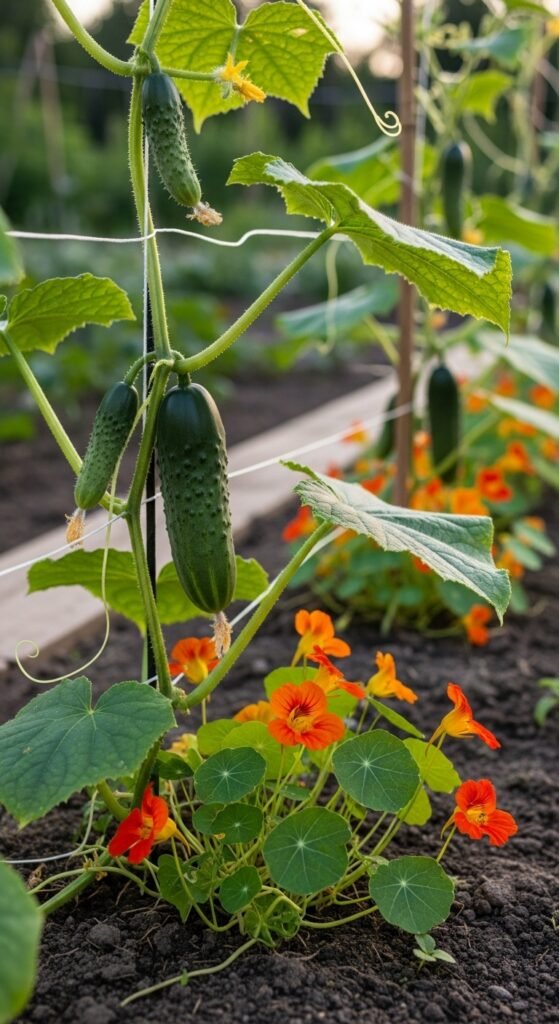
Grow nasturtiums near cucumbers as a trap crop for aphids and cucumber beetles. Nasturtiums lure pests away while being edible themselves. They also improve pollination. Trail nasturtiums at the base or edges. For support structures, check trellis ideas for cucumbers.
6) Beans and Potatoes
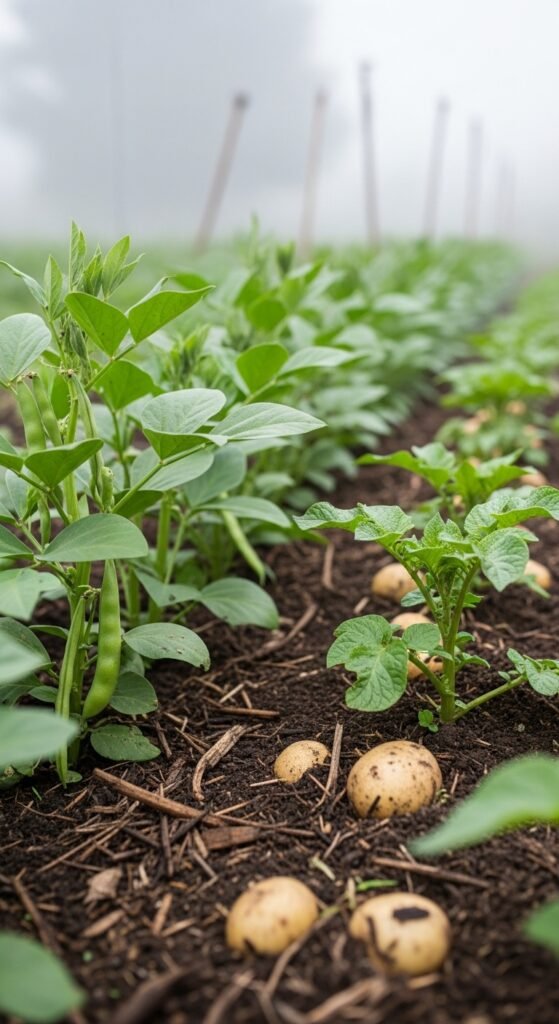
Bush beans planted with potatoes deter Colorado potato beetles, and beans enrich soil with nitrogen for heavy-feeding potatoes. Avoid pole beans to prevent shading. Sow beans after potatoes emerge. This combo reduces beetle damage and improves potato quality.
7) Lettuce and Tall Vegetables like Tomatoes
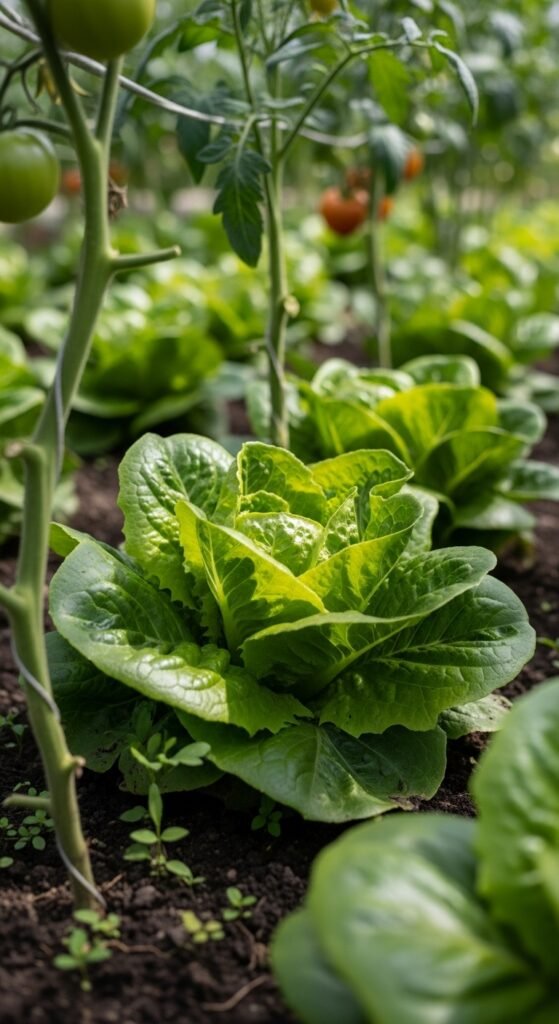
Use lettuce as a living mulch under tomatoes or corn for shade and moisture retention. Lettuce benefits from the dappled light and helps suppress weeds. Harvest outer leaves continuously. This interplanting extends lettuce season in heat.
8) Garlic with Tomatoes
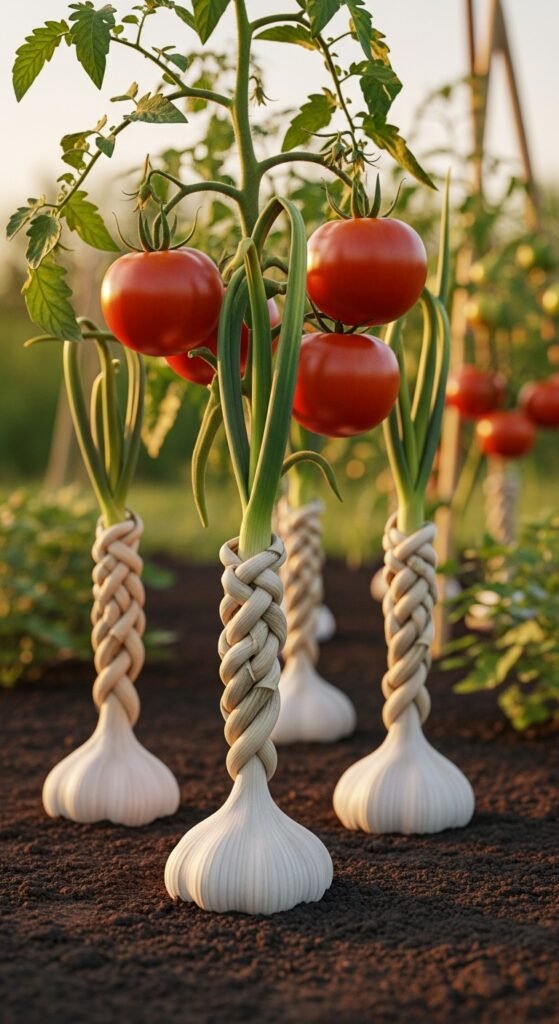
Garlic planted near tomatoes repels spider mites and aphids while acting as a natural fungicide against blight. It fits well in small spaces. Plant garlic cloves in fall for summer harvest; see how to plant garlic in fall for tips. Tomatoes stay healthier with this pungent partner.
9) Cabbage and Dill
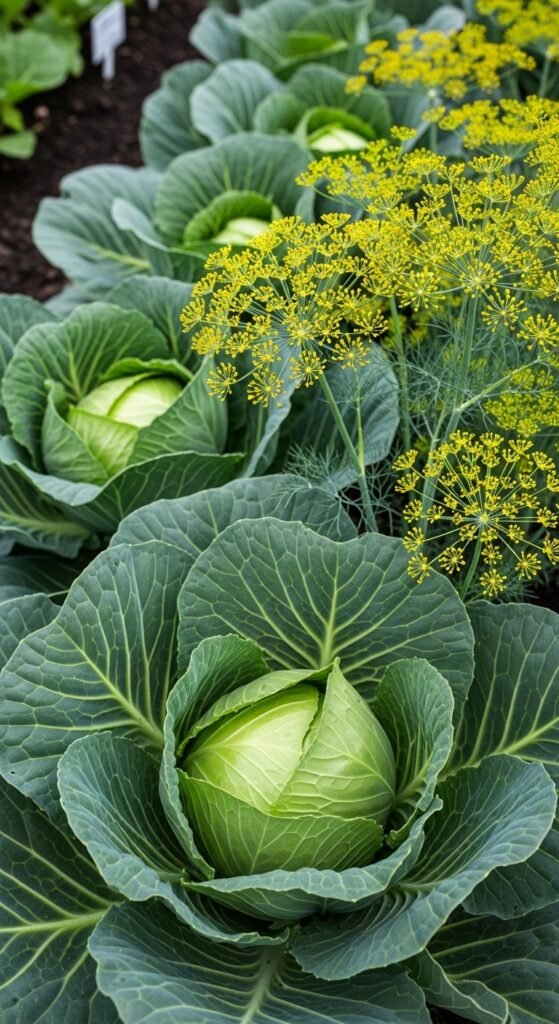
Dill attracts beneficial wasps that parasitize cabbage worms and loopers. It also improves cabbage flavor. Plant dill sparingly to avoid self-seeding overload. This encourages natural pest control in brassica beds.
10) Peas and Carrots
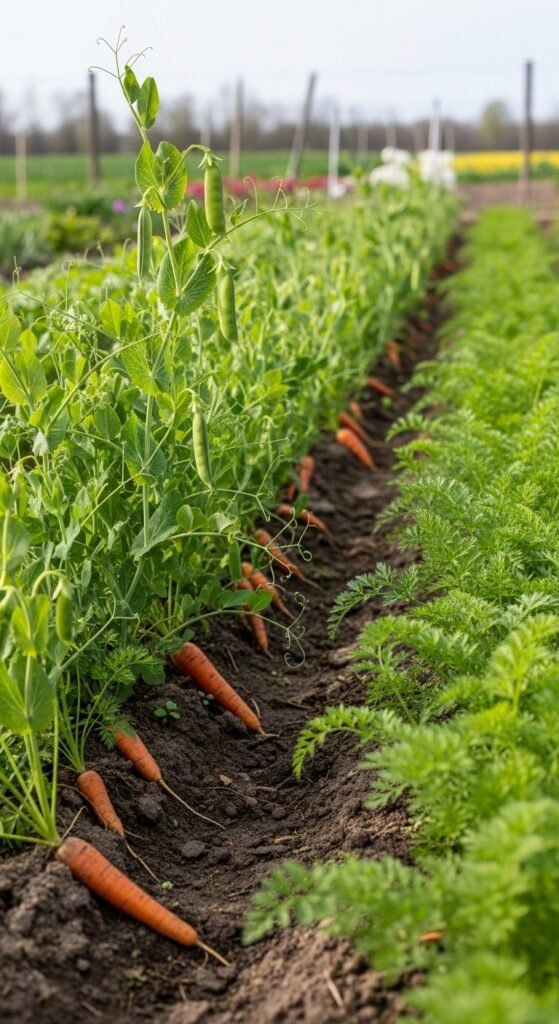
Peas provide light shade for carrots, while carrots break up soil for pea roots. Both are cool-season crops that mature at similar times. Sow in alternating rows. Enjoy dual harvests from the same bed efficiently.
11) Broccoli and Rosemary
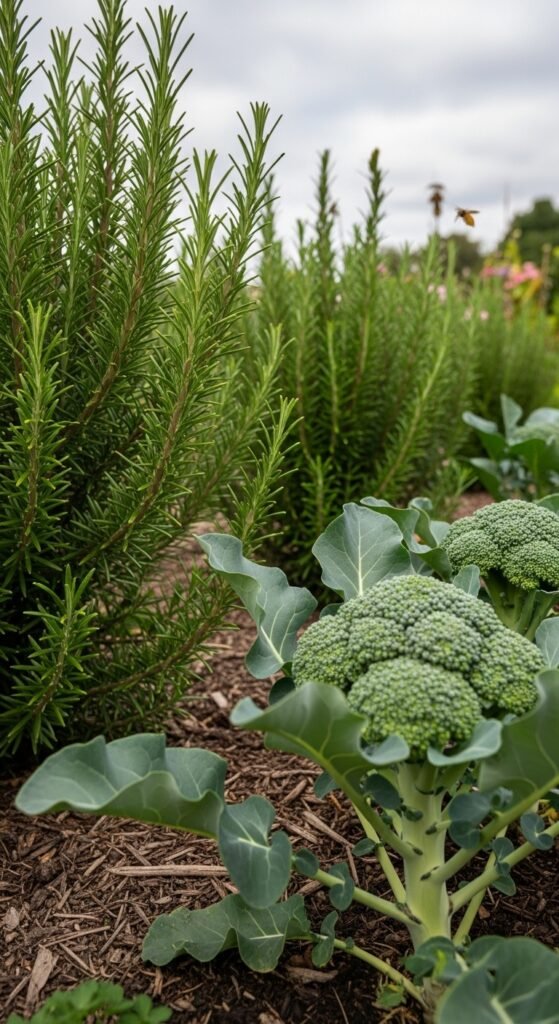
Rosemary’s strong scent deters cabbage moths and flea beetles from broccoli. It also attracts pollinators. Plant rosemary at bed edges for easy access. Broccoli heads form without as much pest intervention.
12) Radishes and Spinach
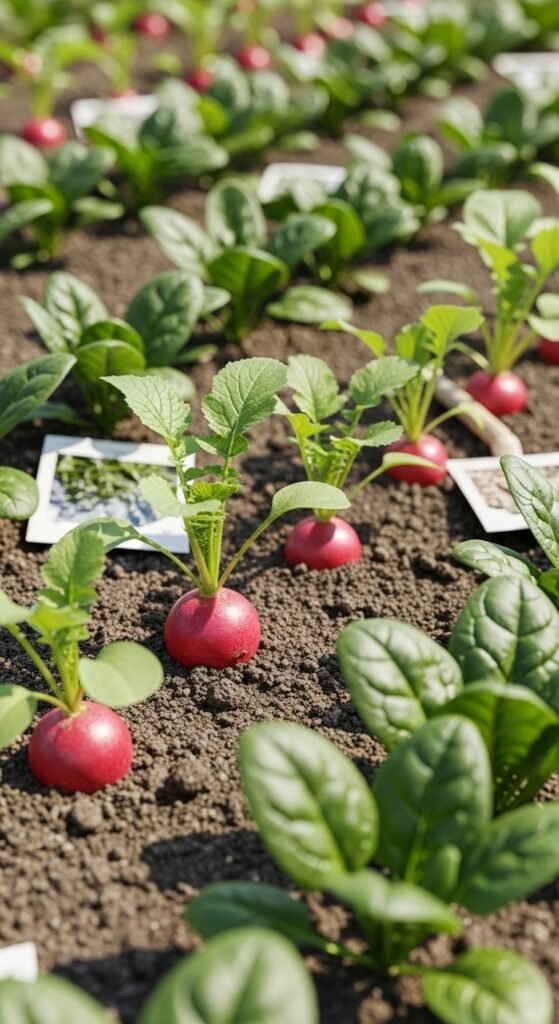
Fast-growing radishes loosen soil and mark rows for slower spinach. They deter flea beetles that target both. Harvest radishes early to free space. This quick combo optimizes spring planting.
13) Eggplant and Beans
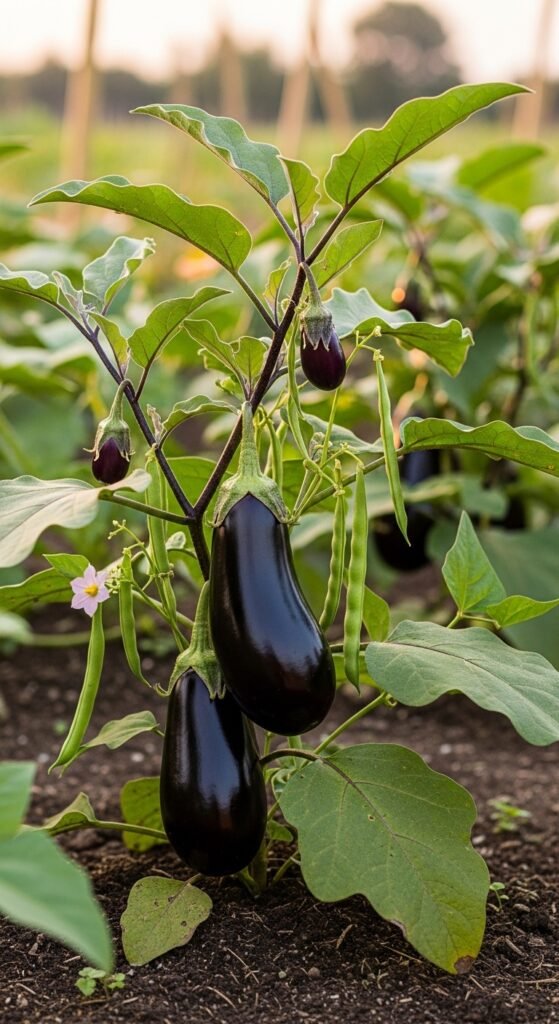
Beans fix nitrogen for nutrient-hungry eggplant and repel flea beetles. Bush varieties work best to avoid competition. Interplant for robust eggplant growth and fewer pest holes.
14) Beets and Lettuce
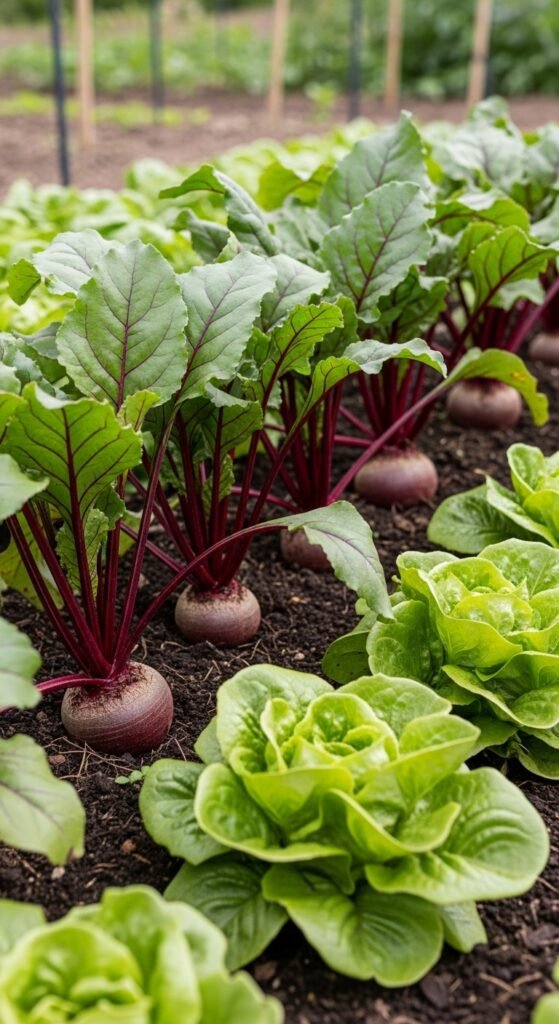
Lettuce shades beet roots to prevent bolting, while beets’ deep roots bring up nutrients. Both tolerate partial shade. Plant in mixed rows for continuous greens and roots.
15) Squash and Marigolds

Marigolds repel squash bugs and vine borers with their odor. They also attract beneficial insects. Border squash hills with marigolds. Squash vines produce more fruit with reduced pest pressure.
Frequently Asked Questions
What is companion planting?
Companion planting involves growing different plants together to provide mutual benefits like pest deterrence, pollination support, and nutrient sharing.
Why should I use companion planting in my vegetable garden?
It promotes natural pest control, improves soil health, maximizes space, and can enhance flavors and yields without relying on chemicals.
Are there plants that shouldn’t be grown together?
Yes, avoid planting potatoes near tomatoes due to shared diseases, or fennel near most vegetables as it inhibits growth.
Can herbs be used in companion planting for vegetables?
Absolutely, herbs like basil, dill, and rosemary are excellent companions that repel pests and attract beneficial insects.
How do I start companion planting?
Begin with a garden plan, research compatible pairs for your crops, and observe results, adjusting as needed for your specific conditions.